Posted on

World War II Army Field Manuals

This page will list some Field Manuals that are hard to find or ones that I find interesting. Easy 39th has a larger list of field manuals and Pamphlets, so you can head to that page if you don’t see what you want here.

In addition, for a fuller list, you can find about 1,000 of them between 1940-1945 on the Archive.org website. So if you don’t see one here try looking there.

Finally, if you want field manuals from 1946 to the early 2010s, this Google site lists the field manuals broken down by number. You could likely also review the Archive.org website to locate a field manual.

Misc Field Manuals

A Manual for Courts-Martial US Army 1928 – Corrected to April 1943 | Outlines how to conduct a courts-martial. Updated in 1943.

Physical Standards in WWII by Lt Gen Leonard Heaton 1967 | Outlines standards for soldiers. Note the height and weight standards table, which was used to mark categorization, such as 1A. For a historical review of Army height and weight standards, see: Body Composition And Military Performance: Origins Of The Army Standards.

The Army did provide a regulation that if you were overweight, you could still be accepted if the weight could be brought under control. Those under 105 pounds weren’t considered.

Army Air Force Manuals

Warbird Philosophy has a robust list of vintage aviation manuals and publications. Many of them appear to be Army Air Force-related. More so than what I can list here.

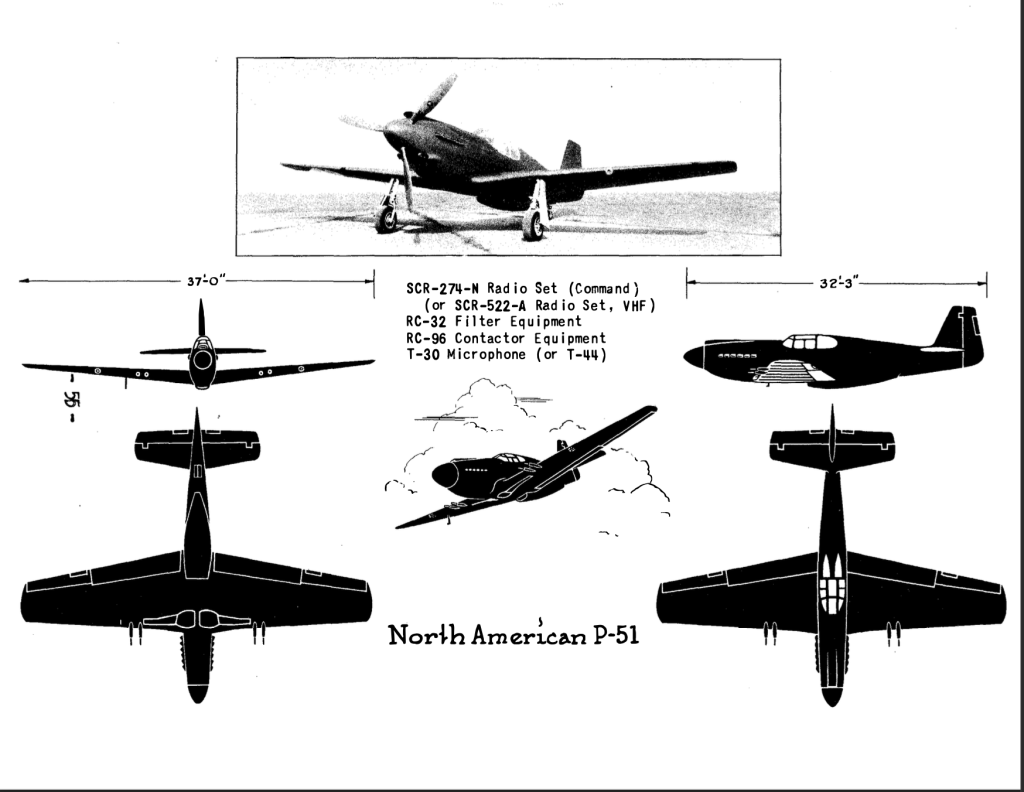
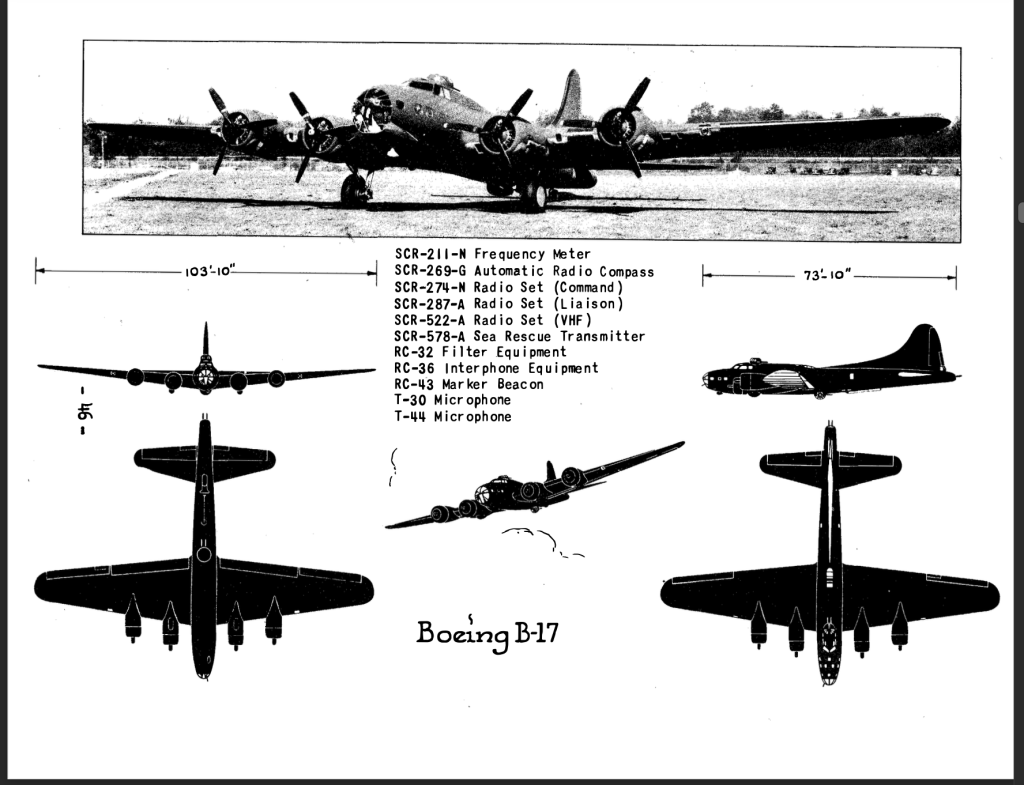
Wikipedia Commons has a list of vintage aviation logos, along with line drawings and silhouettes of planes.

Cavalry Manuals

FM 2-5 Cavalry Drill Regulations Horse March 1944 | Drill, movement, and usage of horse units.

FM 2-7 Cavalry Drill Regulations Mechanized March 1944 | Describes drill, movement, and inspections.

FM 2-10 Mechanized Elements April 1941 | General outline of drill and movement of mechanized units.

FM 2-15 Employment of Cavalry April 1941 | Describes how to use horse cavalry units.

FM 2-20 Cavalry Reconnaissance Troop Mechanized Feb 1944 | The purpose of this manual is to present the organization, characteristics, and missions of the cavalry reconnaissance troop, mechanized; and to set forth doctrine for its training and tactical employment. Tim O’Neill has some notes on how to employ this in a historical reenactment here.

Engineer Manuals

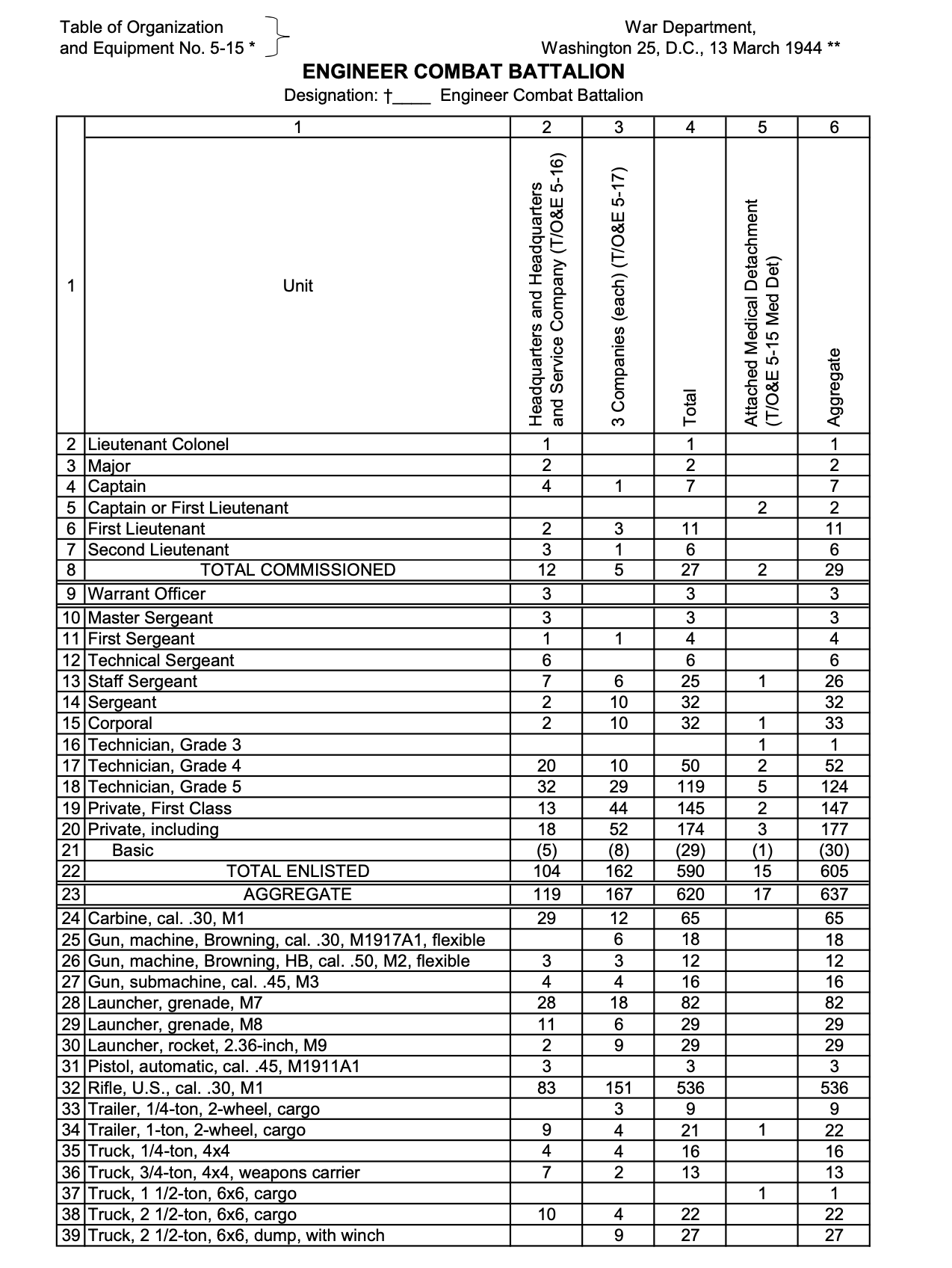
FM 5-5 Engineer Troops Oct 1943 | Outlines structure and duties for different Engineer units like combat battalion, armored, motorized, mountain, airborne, light ponton, heavy ponton, bridge, light, depot, parts, maintenance, dump truck, topographic, camouflage, water supply, special service, base equipment, heavy shop, port repair ship, port construction, petroleum distribution, gas generation, utilities, forestry, and fire-fighting.

For an older version see: FM 5-5 Troops and Operations Jan 1941

FM 5-15 Field Fortifications Feb 1944 | Explains how to construct various fortifications such as foxholes, machine gun towers, gun platforms, weapons emplacements for mortars, machine guns, anti-aircraft systems, radar, bunkers, and trench systems.

One interesting note is that it’s expected to take 1.5hrs to dig a foxhole for a soldier with a rifle.

For an older version see: FM 5-15 Field Fortifications Oct 1940.

For the Vietnam era see FM 5-15 Field Fortifications Aug 1968.

FM 5-20 Camouflage Basic Principles Feb 1944 | Outlines basic camouflage ideas such as form disruption, tone contrasts, and natural and artificial materials. Includes how to camouflage in deserts, jungles, snow, and temperate zones.

For the older version see: FM 5-20 Camouflage June 1940.

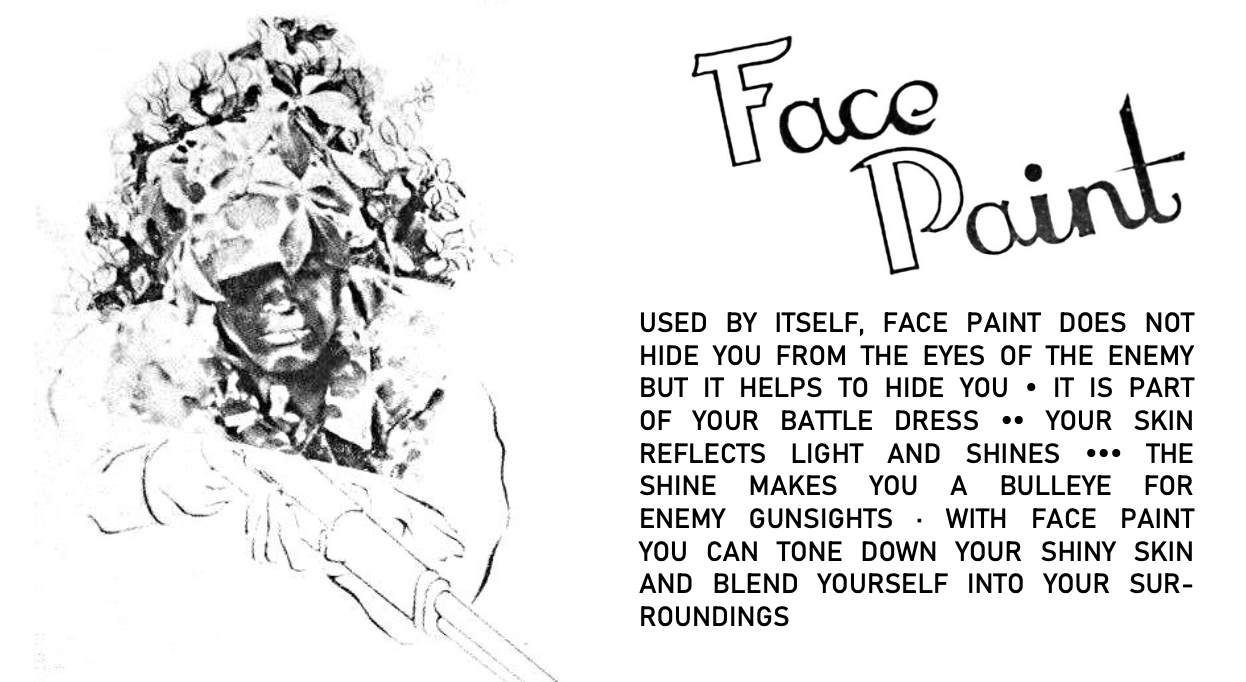
FM 5-20A Camouflage of Individuals and Infantry Weapons Jan 1944 | Outlines dos and don’ts when it comes to blending into patterns, creating foxholes, creating machine gun pits, creating mortar pits, creating anti-tank gun pits, shadows and light, observation, darkening equipment, shines and shiny objects, backgrounds and silhouettes.

One thing to note is that if you’re moving at night and you hear the pop of a flare drop to the ground. If you cannot stand still and drop your head (the face can shine). Flares give off lots of shadows and mess with your natural night vision. It’s possible the enemy won’t see you standing.

FM 5-20B Camouflage of Vehicles April 1944 | Applies the basics of camouflage to hide vehicles.

FM 5-20C Camouflage of Bivouacs Command Posts Supply Points and Medical Installations May 1944 | Applies the basics of camouflage to hide different positions. Outlines techniques for concealment for bivouacs command posts, supply points, waterpoints, and battalion, collecting, clearing medical stations.

Prior to the concealment operation, there should be a camouflage plan as indicated by the officer in charge.

FM 5-20D Camouflage of Field Artillery Feb 1944 | Applies the basics of camouflage to hide artillery. Looks at using decoy positions, aids, and artillery net sets No. 5 and No. 2. In addition, provides information on how to conceal a .50 caliber machine gun, 75mm Pack Howitzer, and how to paint it.

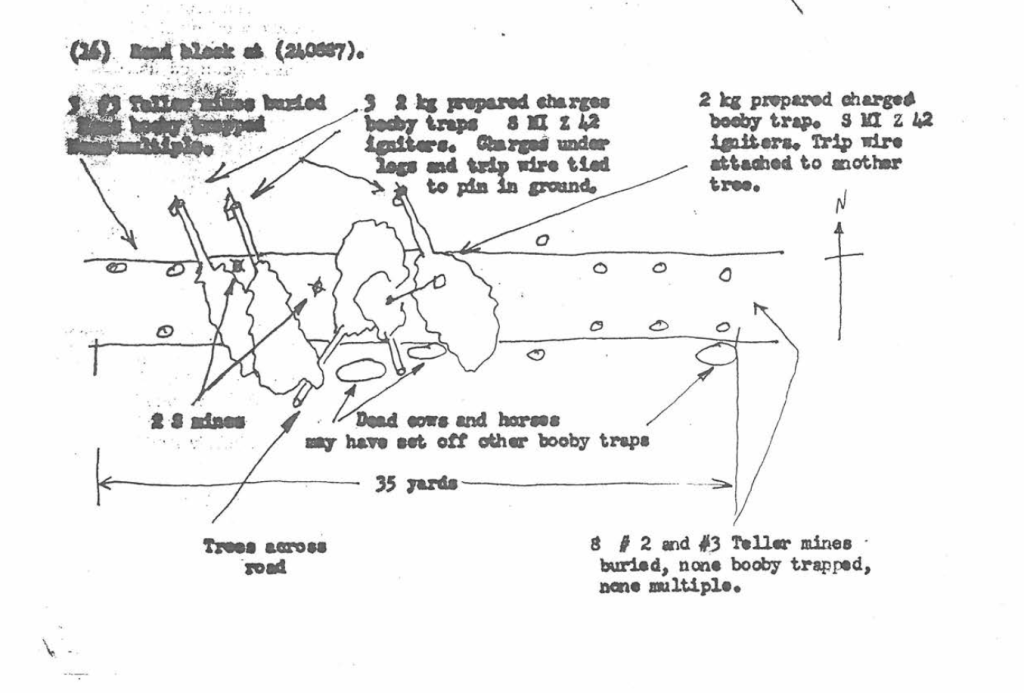
FM 5-31 Land Mines and Bobby Traps Nov 1943 | Explains tools used to lay down a mine field, different types of mine fields, how to create a mine field, how to remove mines, different types of mines from the US, Germany, France, Hungry, Japan, Netherlands, Britan, Italy, and Russian (though no mines are shown). Also includes how to bobby trap with fuzes and what to look for.

Field Artillery Manuals

FM 6-5 Field Artillery Organization and Drill Oct 1939 | Training and drill for field artillery batteries.

FM 6-20 Field Artillery Manual Tactics and Technique Feb 1944 | Describes how to use field artillery in different battle environments.

For an older version see: FM 6-20 Field Artillery Manual Tactics and Technique July 1940.

FM 6-40 Field Artillery Gunnery June 1945 | Describes the principles and tactical considerations of field artillery gunnery.

For an older version see: FM 6-40 Field Artillery Firing Manual Oct 1939.

FM 6-75 Service of the 105mm Howitzer M2 Truck-Drawn Dec 1941 | Drill, maintenance, and tactical usage of the M2 105mm Howitzer. Note that in 1962, the howitzer was renamed the M101A1.

Infantry Manuals

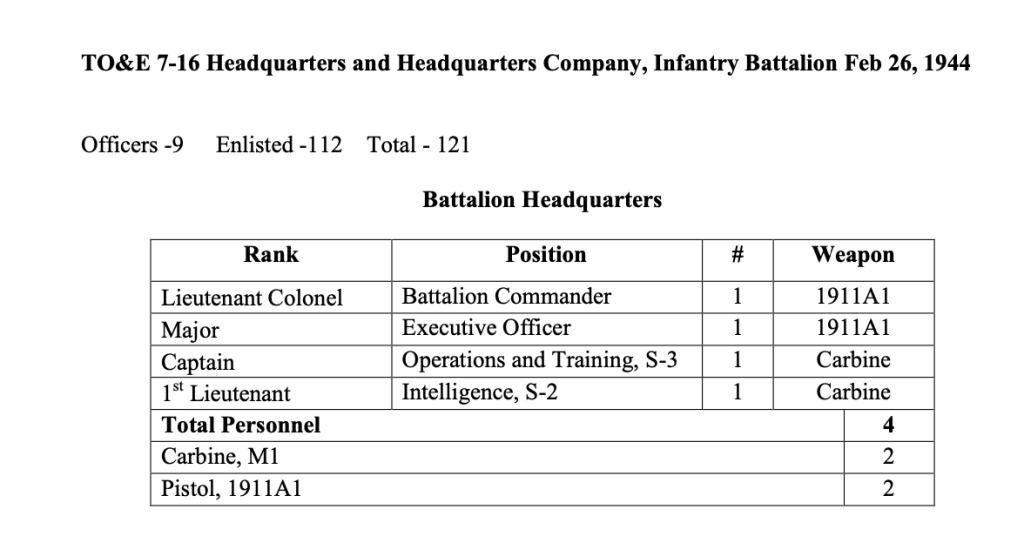
FM 7-5 Organization and Tactics of the Rifle Battalion Oct 1940 | Describes the structure and tactical considerations of the rifle battalion.

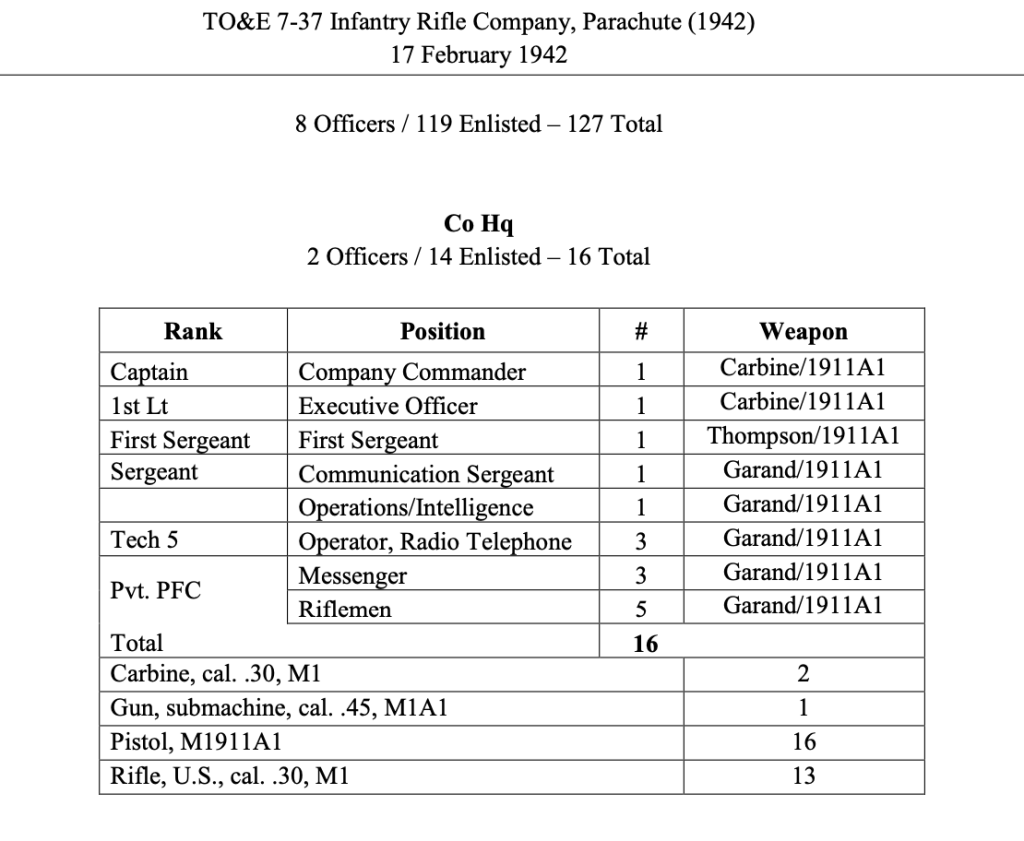
FM 7-10 Rifle Company, Infantry Regiment March 1944 | Describes the structure and organization of the rifle company. Includes riflemen jobs and responsibilities, and the weapons platoon, which uses .30 caliber machine guns and 60mm mortars. Discusses movement, attack, defense, and formations for different tactical considerations.

For the older version, see: FM 7-10 Rifle Company, Rifle Regiment June 1942.

FM 7-15 Heavy Weapons Company Rifle Regiment May 1942 | Describes the structure and composition of the heavy weapons company along with tactical considerations, attacking, defending, movement, and camouflage. Weapons of the company are .30 caliber machine guns and 81mm mortars.

What’s neat is the descriptions of building and conducting observation posts.

FM 7-20 Rifle Battalion Oct 1944 | Describes the role structure and organization of the Rifle Battalion as well as its tactical nature.

For an older version, see: FM 7-20 Rifle Battalion Sept, 1942

FM 7-24 Communication in the Infantry Division Dec 1944 – Describes the conduct of wire, radio, and other communications of the infantry division during various types of movements. The SCR-536/BC-611 is used at the company level. The SCR-300/BC-1000 is used at the battalion level.

Wire is the primary means of communication in the attack. Division Signalmen will remain with the regimental command post to maintain and extend lines.

FM 7-25 Infantry Field Manual Headquarters Company, Intelligence and Signal Communication, Rifle Regiment Oct 7th 1942 – Outlines jobs and roles of the intelligence and reconnaissance platoon and the communication platoon.

FM 7-35 Antitank Company Infantry Regiment and Antitank Platoon Infantry Battalion March 1944 | Describes and organization of the antitank company and platoon.

The crew-served weapons are the 57-mm antitank gun, the antitank rocket launcher (the Bazooka), and the caliber .50 machine gun.

(2) The individual weapons are the rifle, the carbine, and the pistol.

For the older version, see: FM 7-35 Antitank Company Rifle Regiment May 1941.

FM 7-37 Cannon Company Infantry Regiment March 1944 | Organization and structure of the Cannon Company. The cannon company consists of the following weapons:

(1) The crew-served weapons are the 105-mm howitzer (the M101A1), the antitank rocket launcher (the Bazooka), and the caliber .50 machine gun.

(2) The individual weapons are the carbine and rifle.

FM 7-40 Rifle Regiment Feb 1942 | Outlines organization and structure along with roles and responsibilities of a rifle regiment. Includes how it operates in different environments such as movement and defense.

Medical Manuals

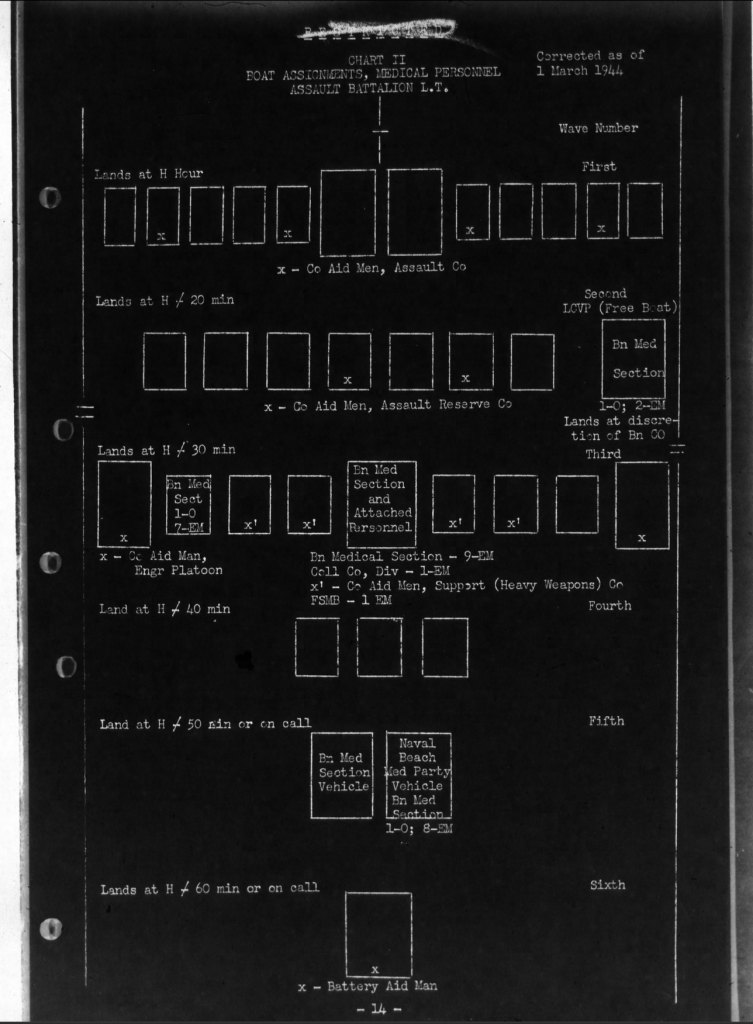
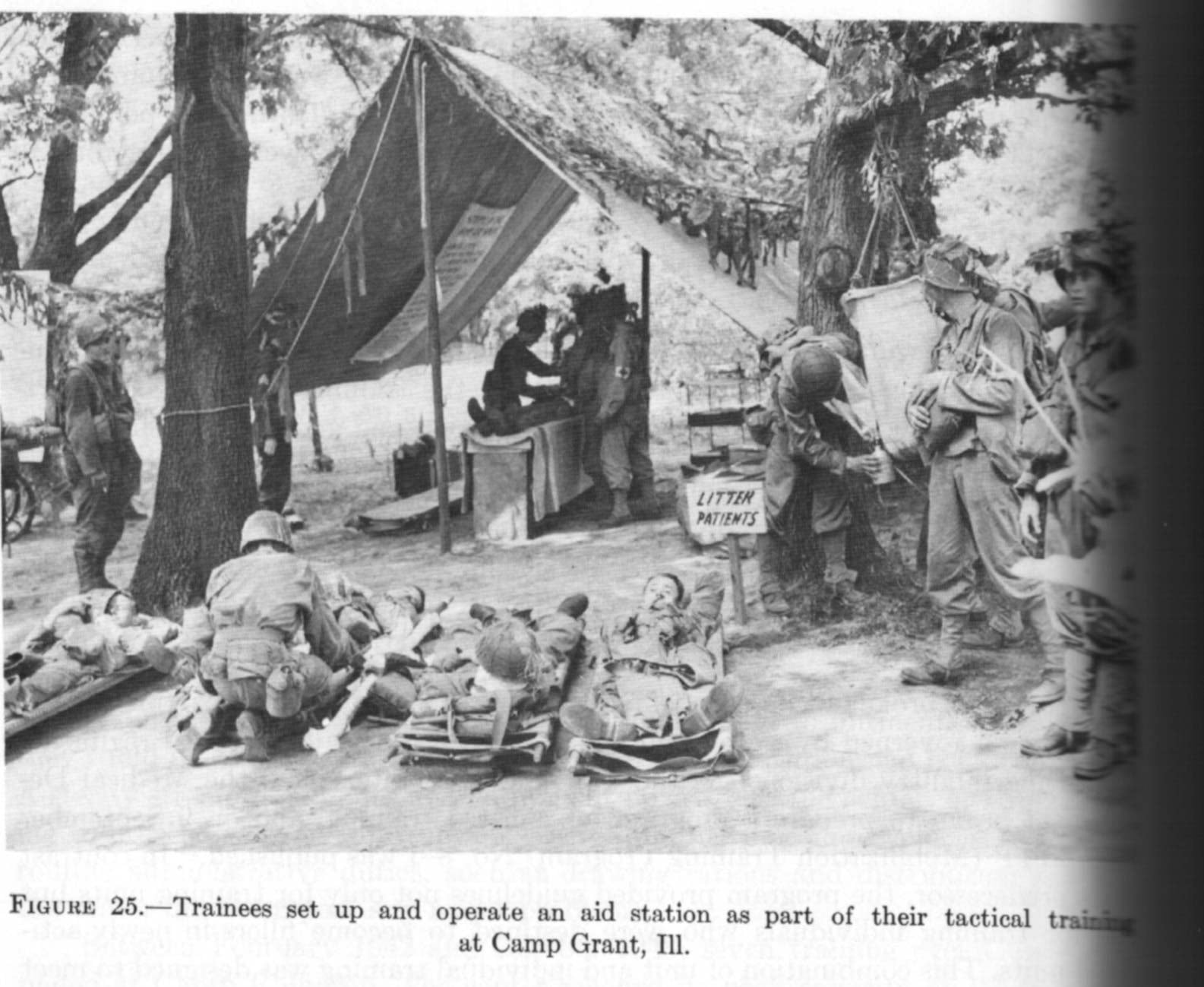
Instructors’ guide for a Medical Department Mobilization Training Program 8-101 – This is a complete 8-hour-a-day, 6-day-a-week, 4-month basic training program for medical unit personnel.

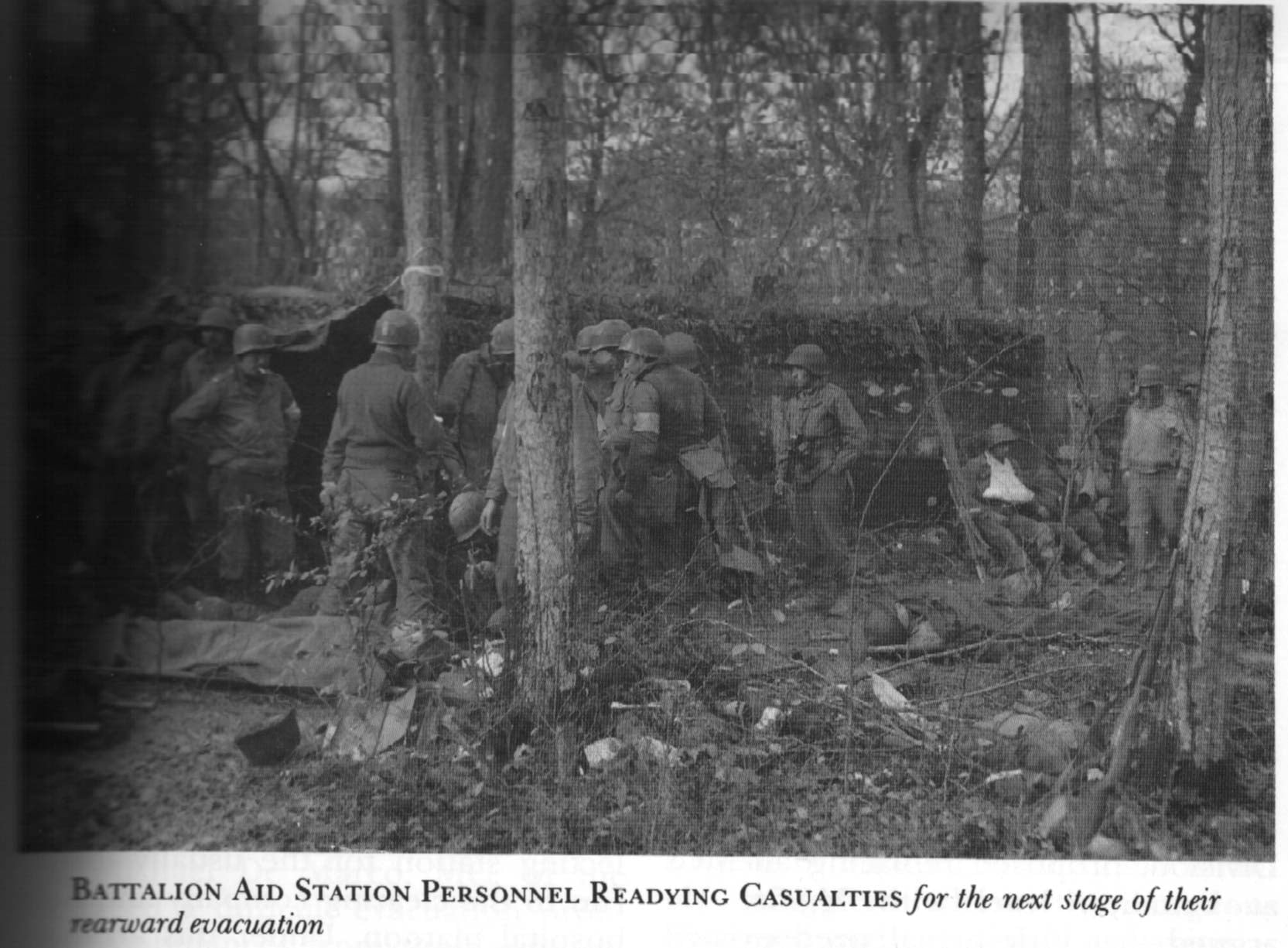
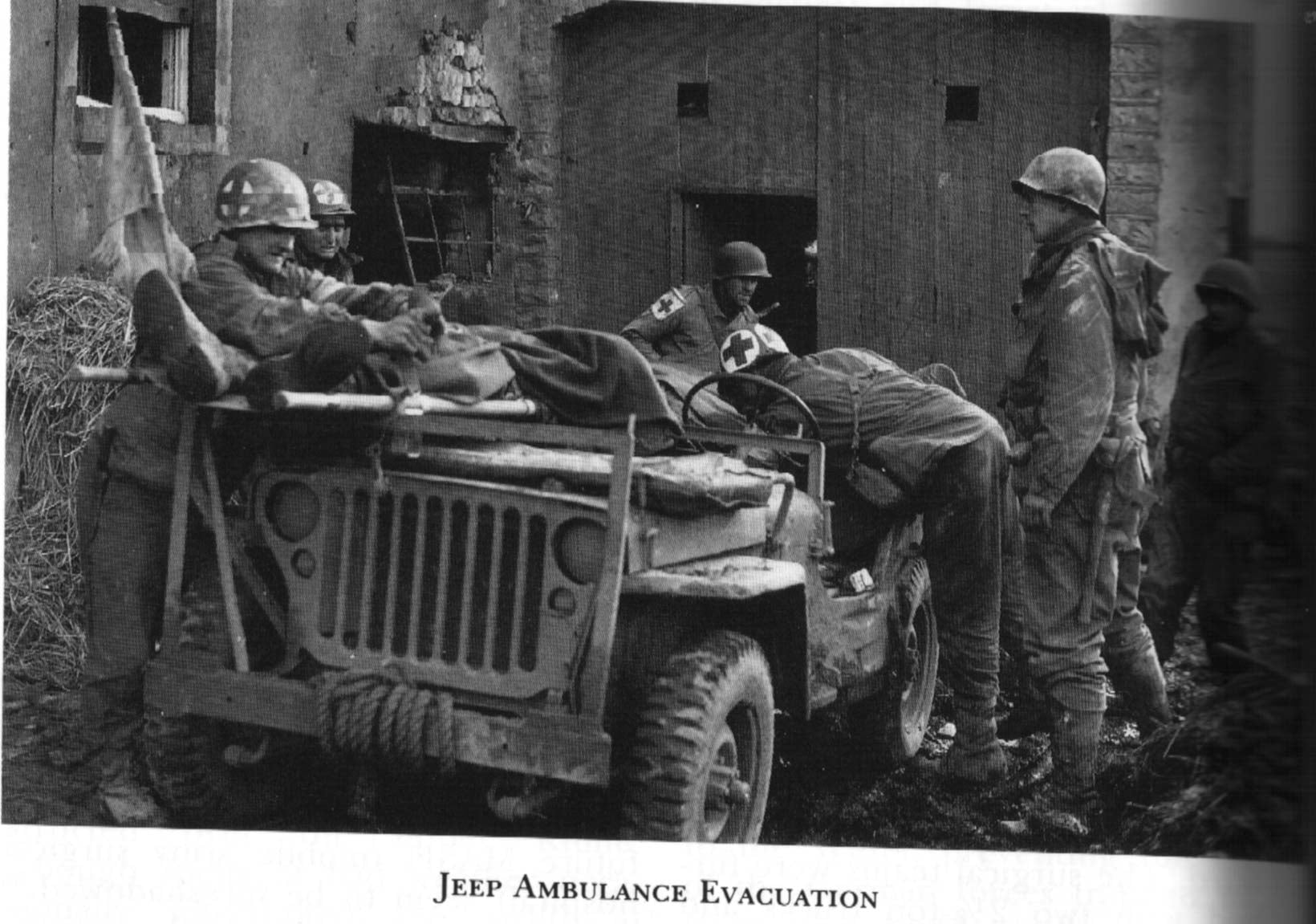
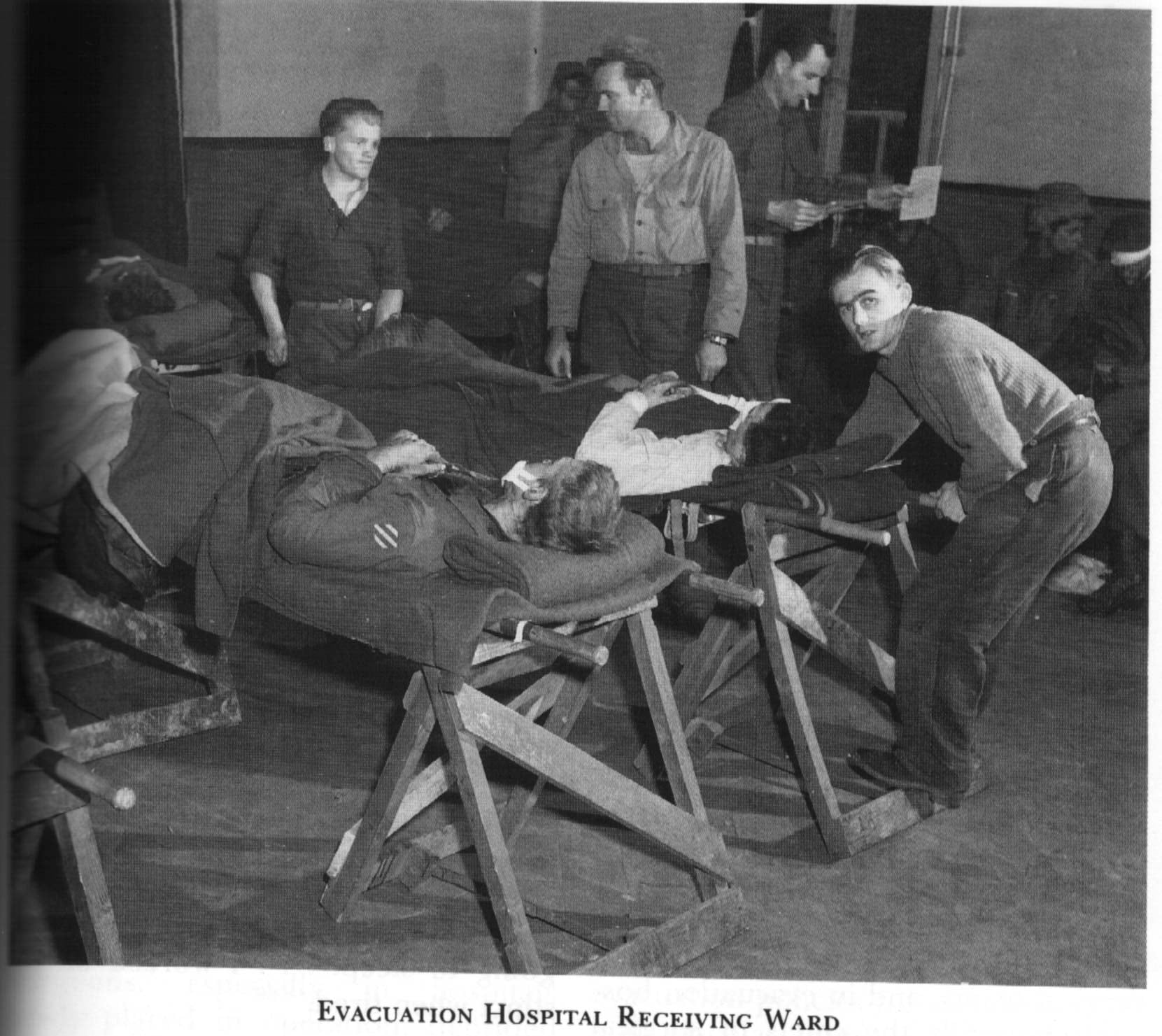
What I find interesting is that it shows what should be part of a battalion aid station and how combat aid men (aka “medics”) are used in the medical organization chart.

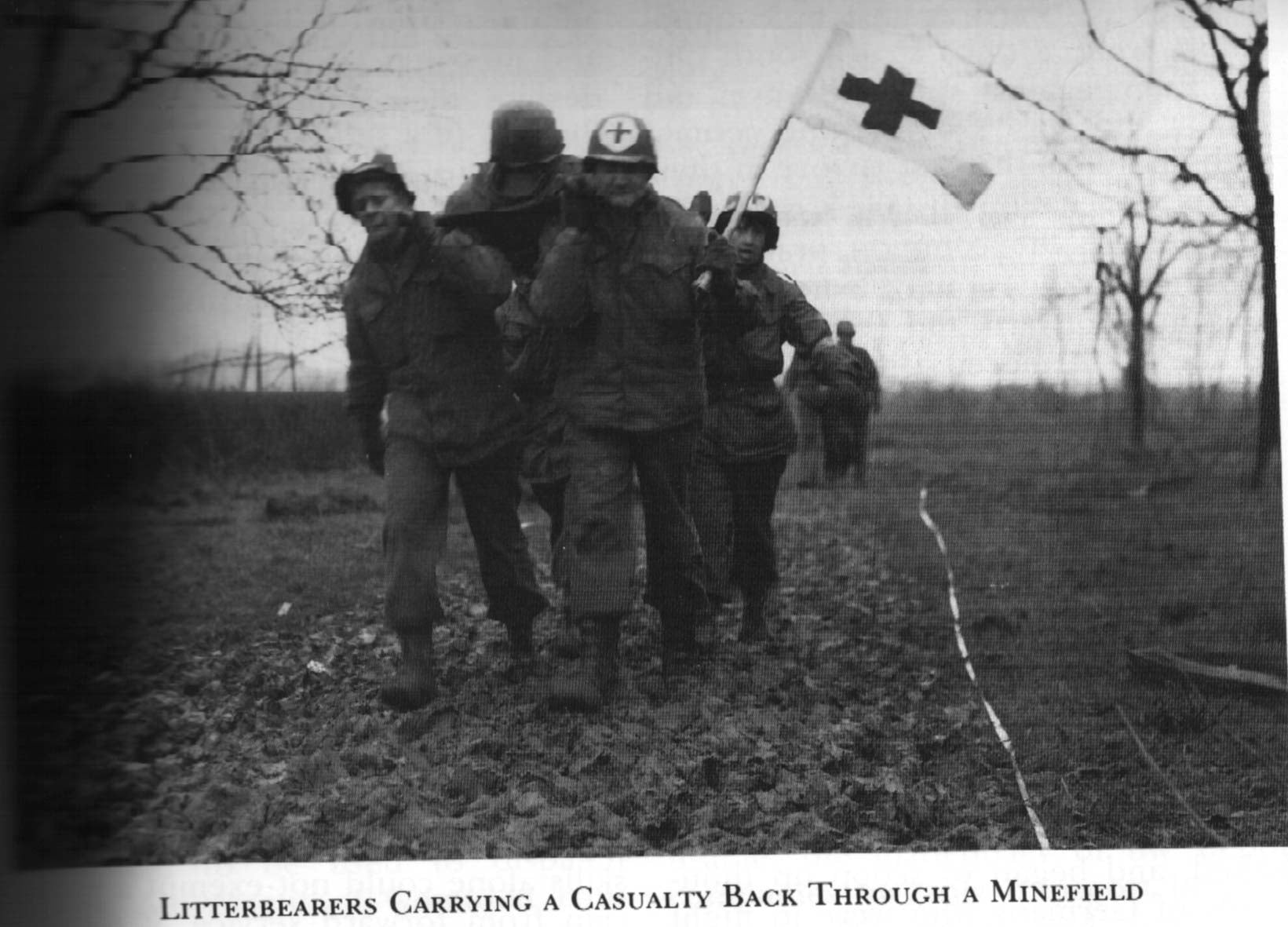
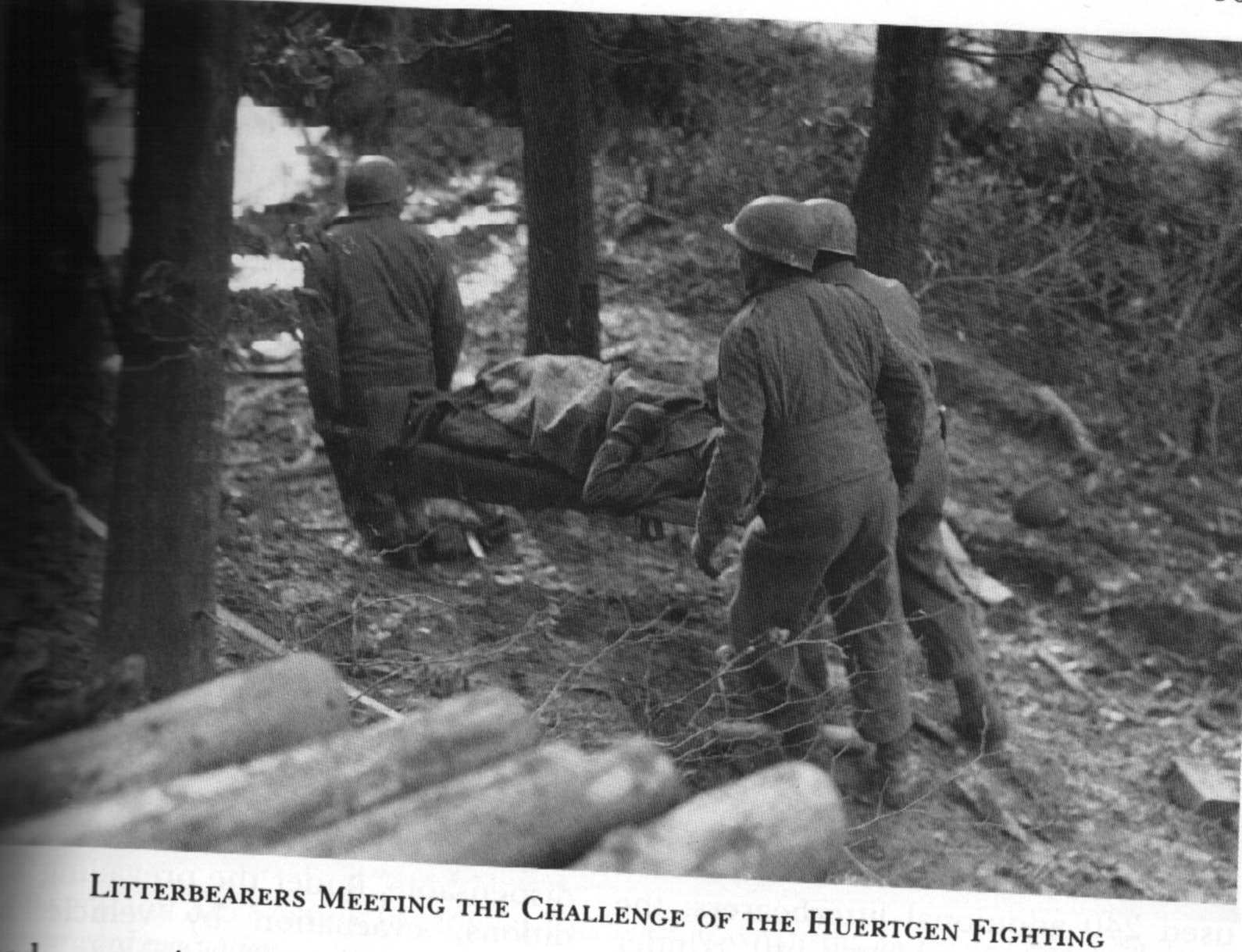
Essentially they treat wounded and try to pool them together and litter bearers bring them to the battalion aid station for further treatment.

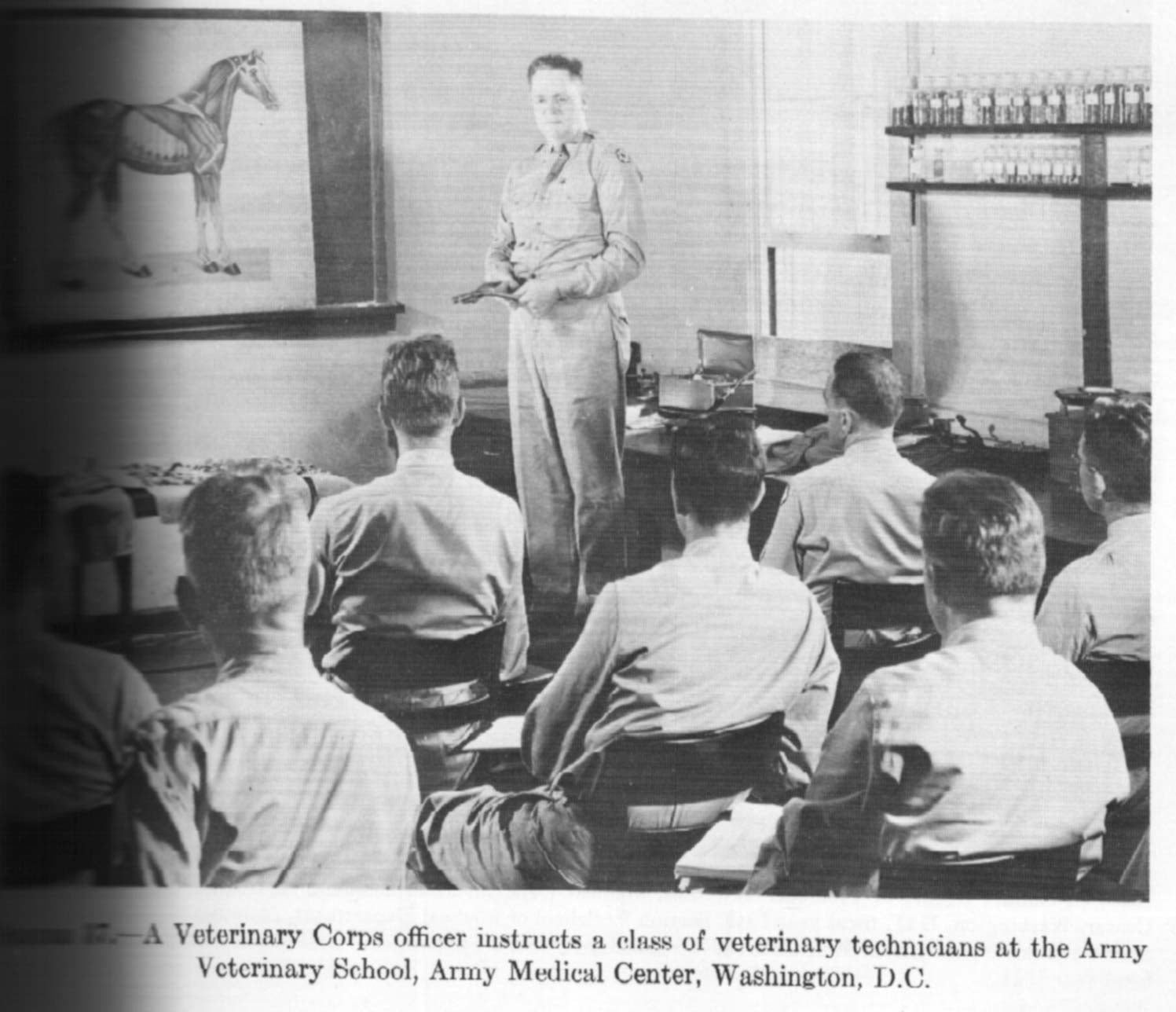
FM 8-5 Medical Department Units of a Theater of Operations May 1945 | Describes how various medical units and subdivisions operate including Infantry, Armored, Airborne, Hospitals, Medical Labs, Medical Depots, Dispensaries, Hospital Ships, Hospital Trains, Medical Air Evacuation, Malaria Control, Veterinary, and Museum and Medical Arts (which outlines new medical techniques and collects specimens).

For an older version see: FM 8-5 Medical Department Units of a Theater of Operations Jan 1942.

FM 8-10 Medical Service of Field Units March 1942 – Outlines the jobs, structure, and organization of different medical units. Describes equipment available to officers and enlisted men.

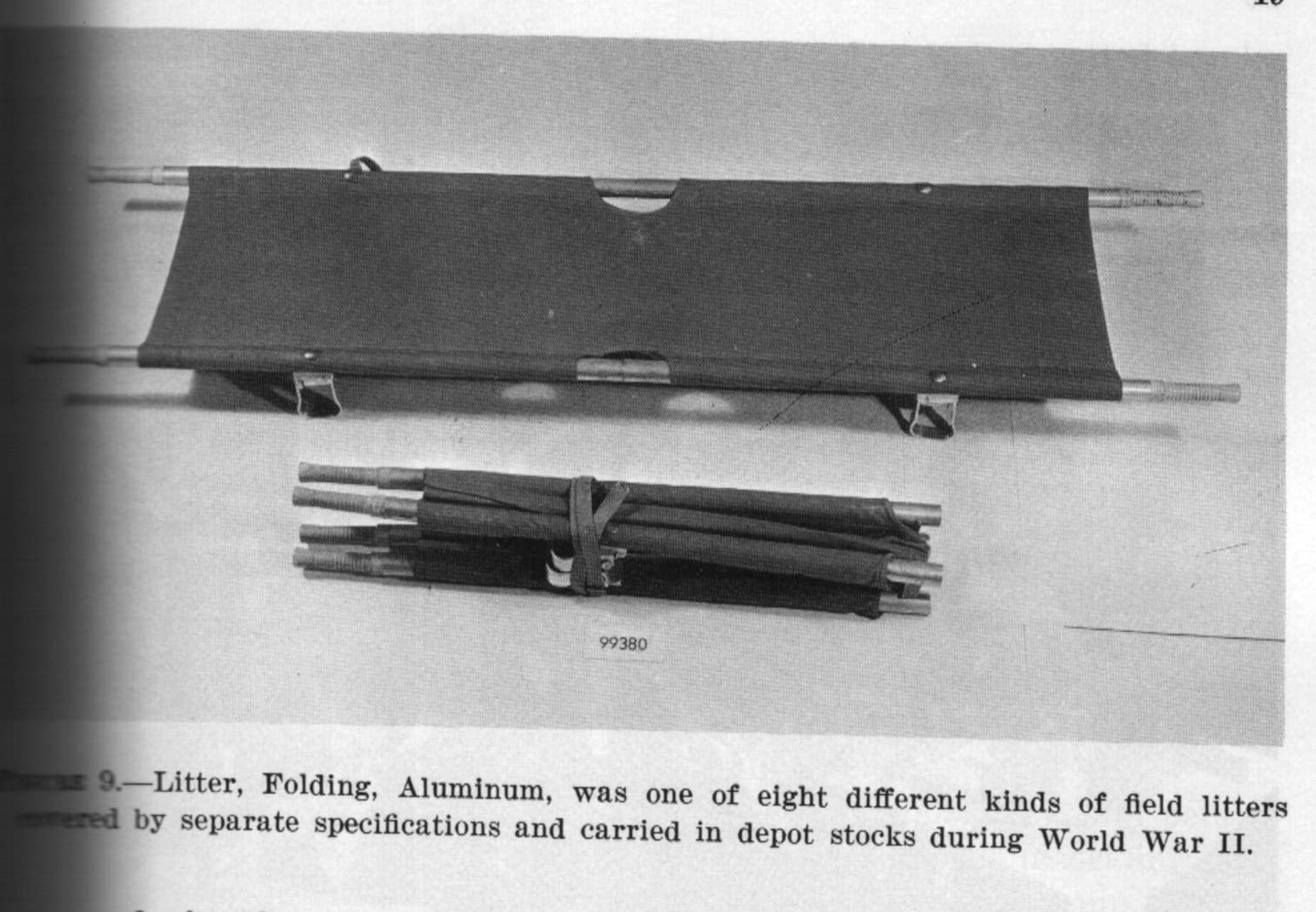
FM 8-35 Transportation of the Sick and Wounded Feb 1945 | Describes carry types and instructions/commands for litter usage.

For an older version, see: FM 8-35 Medical Field Manual Transportation of the Sick and Wounded Feb 1941.

FM 8-40-Medical Field Manual Field Sanitation Aug 1940 – Contains information on how to clean and stay sanitary when dealing with diseases, foods, water, cooking, bathing, cleaning, trapping bugs, and human waste.

FM 8-45 Records of Morbidity and Mortality Sick and Wounded Oct 1940 | Describes medical coding and how to fill out various medical forms for sick and wounded soldiers.

FM 8-55 Medical Reference Data March 1941 | A guide for modeling battlefield casualties and other information related to conducting medical operations. Much of it is based on WW1 stats.

Ordnance Manuals

FM 9-6 Ammo Supply June 1944 | Describes how to supply ammunition to units in various situations. Includes forms and management and how to deal with captured ammo.

FM 9-10 Ordnance Field Maintenance April 1942 | Describes the operations of running an ordnance field shop to repair items.

FM 9-5 Ordnance Service in the Field July 1942 | Describes how to conduct Ordnance activities in the field.

FM 9-20 Ordnance Ammunition Company and Battalion July 1942 | Describes roles and responsibilities and structure of the company, platoon, and battalion of ammunition units. Essentially how to run these unit types.

FM 9-25 Ordnance Company Depot Sept 1942 | Describes roles, structure, responsibilities, organization of the company and platoons. Essentially how to run a company ordnance depot.

Quartermaster Manuals

FM 10-5 Quartermaster Operations April 1943 | Describes the role of the quartermaster from a high-level perspective.

For an older version see: FM 10-5 Quartermaster Operations March 1941.

FM 10-10 Quartermaster Service in Theater of Operations March 1942 | Describes the role of the quartermaster from a high-level perspective.

FM 10-16 General Fabric Repair May 2000 | This isn’t a WW2 field manual but it contains helpful information about how to fix clothing. So I thought it would be good to post a copy here.

FM 10-35 Quartermaster Truck Companies July 1945 | Describes basic information for a functioning quartermaster truck company. Including structure, loading, defense, convoy and maintenance.

FM 10-38 Quartermaster Base Depot Supply Sales Company July 1945 | Provides basic information on how to run a base deport (and port) supply and sales company.

FM 10-63 Graves Registration Jan 1945 | Outlines function and purpose of Graves Registration, burials, collection of effects, and reporting.

FM 11-25 Aircraft Warning Service Aug 1942 | Outlines aircraft warning service, the organization and structure, and communications systems.

FM 11-150 Photomail Operation (V-Mail) April 1945 | How to run, process, train and operate a V-Mail operation.

FM 12-50 The Band July 1946 | Outlines structure and organization of The Band. Includes, formations, training requirements, marching orders, instrument diagrams, and instrument cleaning.

Band members have the mission of furnishing music at formations, providing entertainment, and doing combat duties for the unit the band is organically assigned such as:

  • (1) To provide or assist in providing local security of headquarters and bivouacs. This employment includes antitank defense and defense against troops transported by air.
  • (2) To serve as prisoner of war escorts and to guard prisoners in unit areas.
  • (3) To assist the medical detachment by serving as litter bearers.
  • (4) To assist in handling supplies at dumps and train bivouac areas.

For an earlier version see: FM 28-5 The Band March 1941

FM 12-105 Army Postal Service May 1943 | Describes duties and responsibilities as well as structure and organization of sending mail, cablegrams, and radiograms.

FM 16-5 The Chaplain Jan 1952 | This is a post-WW2 field manual, but the duties and responsibilities outlined are likely similar to what the Chaplain did.

Armored Force Manuals

Armor Reenacting for Reenactors by Tim O’Neill, Rob Thomas, and Al Kose– A wonderful primer on using tanks in a reenactment setting as well as tanks in general. Discusses the armored forces, tank basics, armament, tank destroyers, armored infantry, engaging a tank, and German armor.

FM 17-27 Armored 81mm Mortar Squad and Platoon July 1942 | Discuss tactical employment of mortar squad and platoon in tank units.

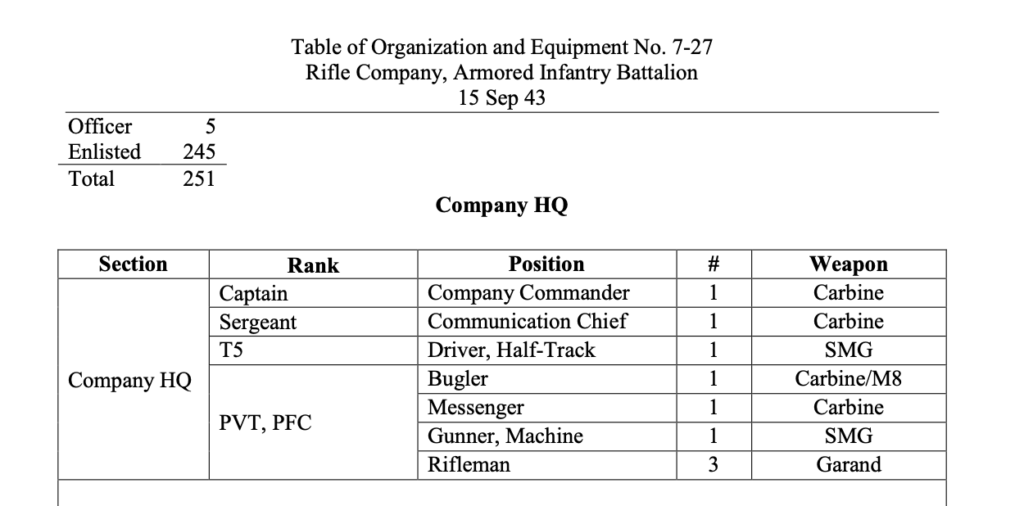
FM 17-42 Armored Infantry Battalion Nov 1944 | Describes the armored infantry battalion’s employment, structure, and tactics. Tim O’Neill has another copy of the book with some intro notes for how to use this correctly in a historical reenactment here.

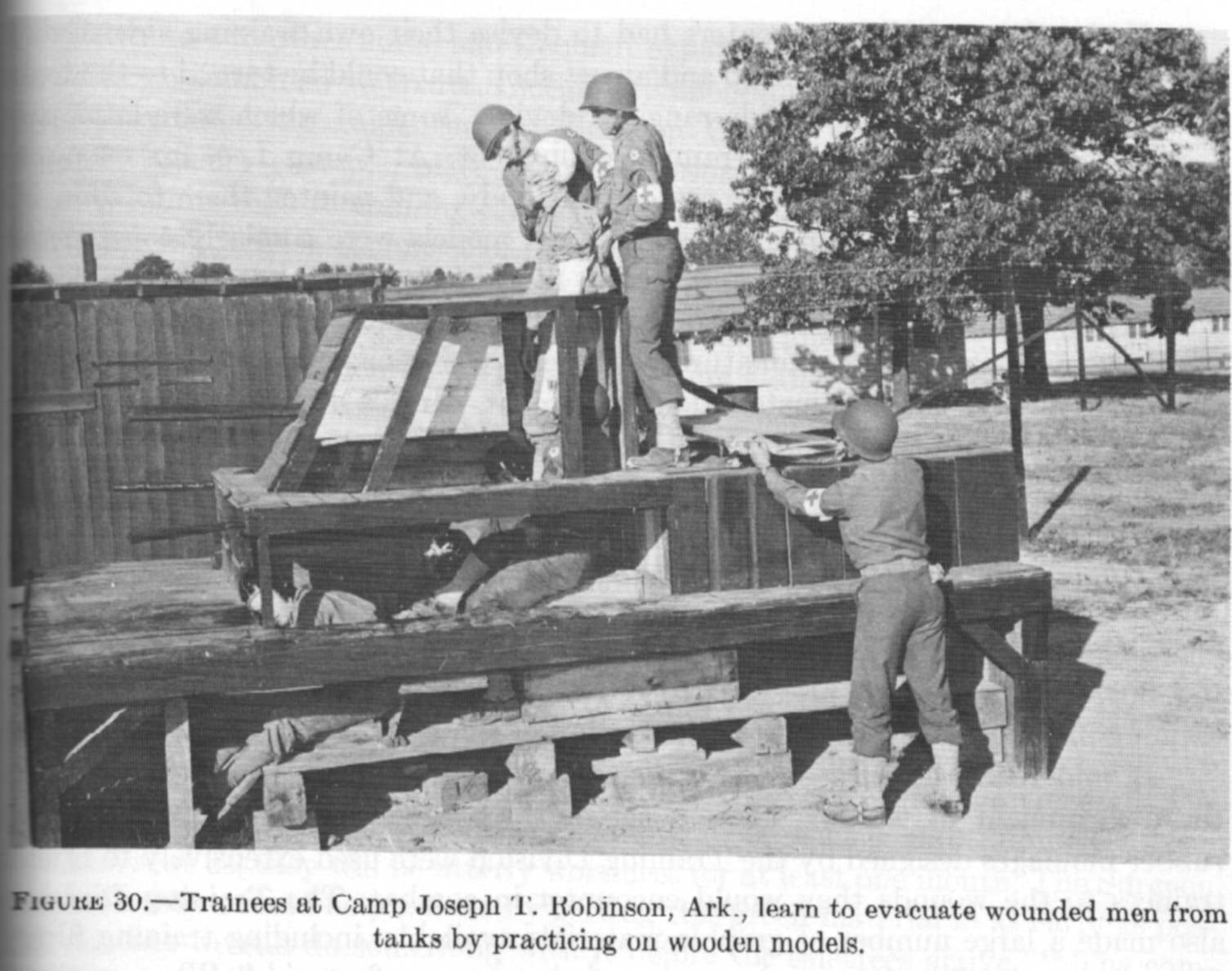
FM 17-80 Armored Medical Units Aug 1944 | Explains the structure and organization of the units involved, such as signal, collecting, and clearing platoons. Describes extraction techniques from tanks, including the Pistol Belt Hitch.

Military Police

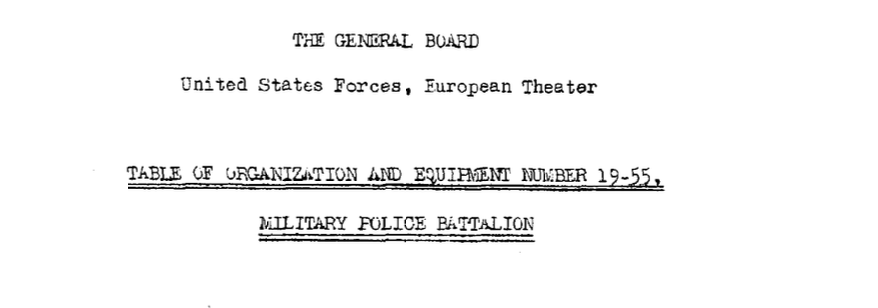
FM 19-5 Military Police June 1944 | Describes roles, duties, expectations, functions, and structure of MP, including patrolling and controlling traffic.

FM 19-15 Domestic Disturbances July 1945 | Describes rules and laws governing the handling of domestic disturbances. Includes formations and tactics, and the use of chemical weapons.

FM 19-10 MPs in Towns & Cities Jan 1945 | Describes how to patrol and secure towns/cities as well as the organization and structure of the Military Police HQ.

Interestingly, if handcuffs are not available, the hands may be fastened by using a belt or necktie, which is first passed around each wrist, followed by a few turns between the wrists. (See fig. 16.) When the hands are in front, the knot or the buckle should be placed over the hands. It is good practice to secure the belt or necktie to the waist belt of the prisoner.

FM 20-15 Tents and Tent Pitching FEB 1945 – a guide that covers how to pitch various tents. While not included in the manual, I did include schematics on adding a wood frame to the M1934 Pyramidal Tent and a diagram on making collapsible tent poles.

Collapsible tent poles for large tents weren’t, to the best of my knowledge, in WW2, but since these poles are long, breaking them down makes it easier to pack and travel with them.

I had these made for me once, and I used them as the center or ridge pole in my tent.

FM 20-15 Pole and Frame Supported Tents, Sept 1964, is a newer edition that covers tents from WW2, like the M1942 Assembly Tent

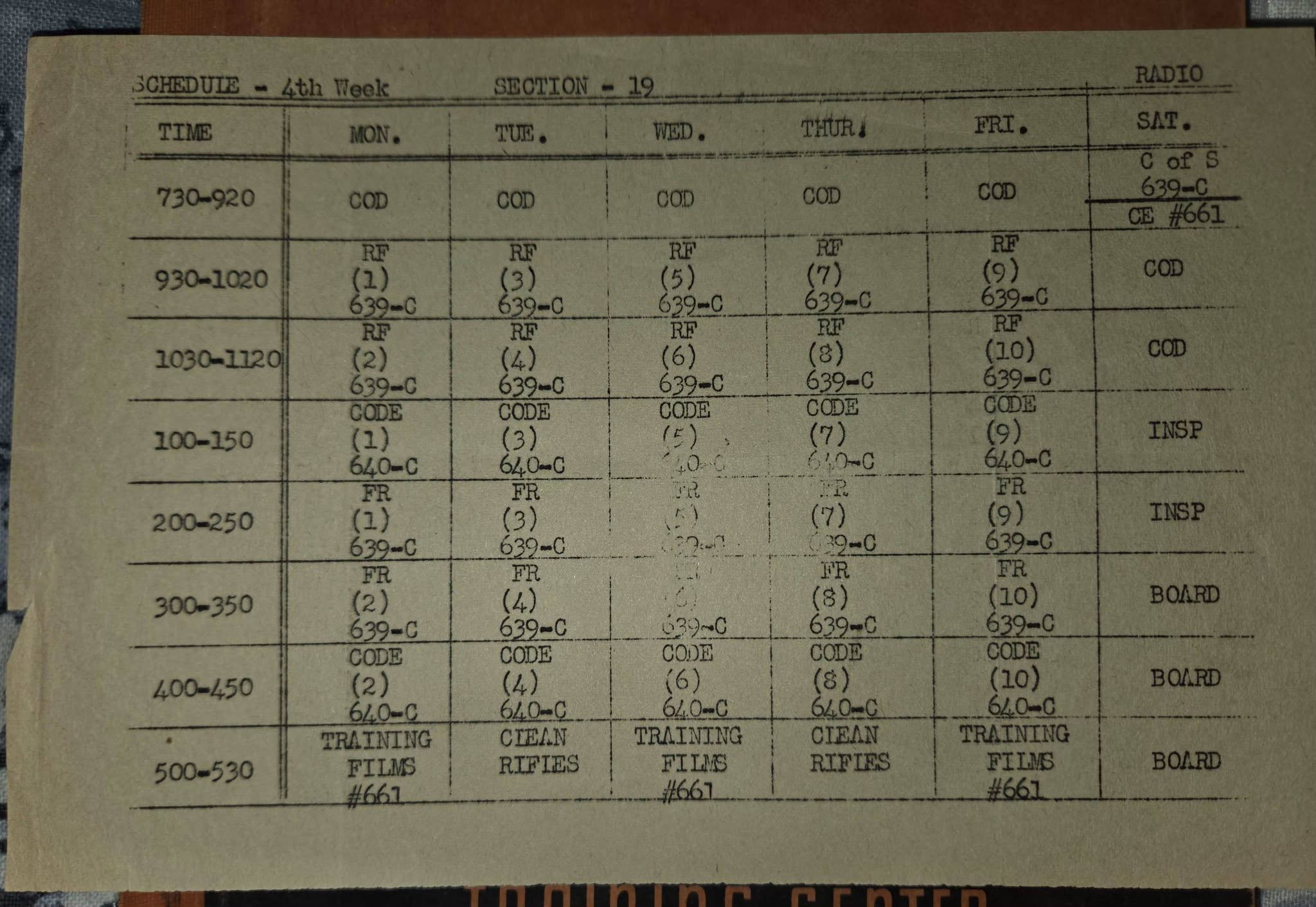
FM 21-5 Military Training July 1941 | Describes how to conduct and create a training program. Gives the Heavy Weapons squad of a rifle platoon as an example training program.

Basically, create the lesson plan, review field manuals, and describe the schedule.

For an earlier version from Oct 1940 with Tim O’Neill notes on using this in a reenactment setting, see here.

FM 21-6 List of Publications for Training Jan 1945 | Describes a list of publications, including Field Manuals, Firing Tables, Lubrication Orders, Mobilization Training Programs, Technical Bulletins, Technical Manuals, and Training Circulars.

See FM 21-6 1944, FM 21-6 1943, FM 21-6 1942 (which includes a list of films and film strips before they gave films their own manual), and FM 21-6 1941 for older versions.

FM 21-7 List of War Department Films, Film Strips, and Recognition Film Slides Jan 1945 | Describes the library of films for soldiers.

Each year has different films available. See FM 21-7 1944 and FM 21-7 1943 for older versions.

At the end of each film, the instructor should have an activity that enhances or assesses learning, such as a short quiz. Finally, in the 1943 manual (not sure why they’re not mentioned in the others), when showing 35mm films, a fire extinguisher and a bucket of sand should be nearby as the films use flammable nitrate. Also, it looks like to show films on a projector, you need to be certified.

The Chief Signal Officer was responsible for obtaining films.

In 1945, all combat soldiers were required to view the following “Fighting Men” series training films (TF)

  • 21-1007 Snafu.
  • 21-1018 Keep It Clean.
  • 21-1019 Crack That Tank.
  • 21-1020 How To Get Killed In One Easy Lesson.
  • 21-1021 Wise Guy.
  • 21-1024 Kill or Be Killed.
  • 21-1026 On Your Toes.
  • 21-1027 Latrinograms.
  • 21-1028 Heroes.
  • 21-1029 On Your Own.
  • 21-1375 Time Out.
  • 21-2014 Baptism of Fire.
  • 21-2015 Secret Weapon.
  • 21-2056 By Your Command.

In 1945, all military personnel were required to view the following special films and War Information films:

  • TF 30-1315 Postal Censors
  • OF 1 Prelude to War
  • OF 2 The Nazis Strike
  • OF 3 Divide and Conquer
  • OF 4 The Battle of Britain
  • OF 5 The Battle of Russia
  • OF 16 Know Your Ally – Britain
  • OF (RF) 51 The Negro Soldier

In 1945, soldiers at reception centers were required to view the following training films:

  • 21-2067 Introduction to the Army.
  • 8-1238 Sex Hygiene
  • 8-2060 PickUp. (Maybe shown in lieu of 8-1238.)
  • 8-155 Personal Hygiene.
  • 21-2048 Military Courtesy.
  • 11-235 Articles of War.
  • 19-2034. A.W.O.L. and Desertion.
  • 8-2047 First Aid for Battle Injuries.
  • 8-2049 First Aid for Non-Battle Injuries.
  • 7-248 Instruction of the Soldier, Dismounted, Without Arms, Position and Facings.
  • 30-2033 SuckerBait.

FM 21-10 Military Sanitation July 1945 | Explains how to deal with human waste, ticks, fleas, lice, rats, flies, grease, garbage, showering/bathing, etc. As well as cooking cleanliness.

FM 21-11 – First Aid for Soldiers April 1943 | Discusses basic first aid for soldiers, including using the first aid packet/kits, splints, tourniquets, carrys, wounds, etc.

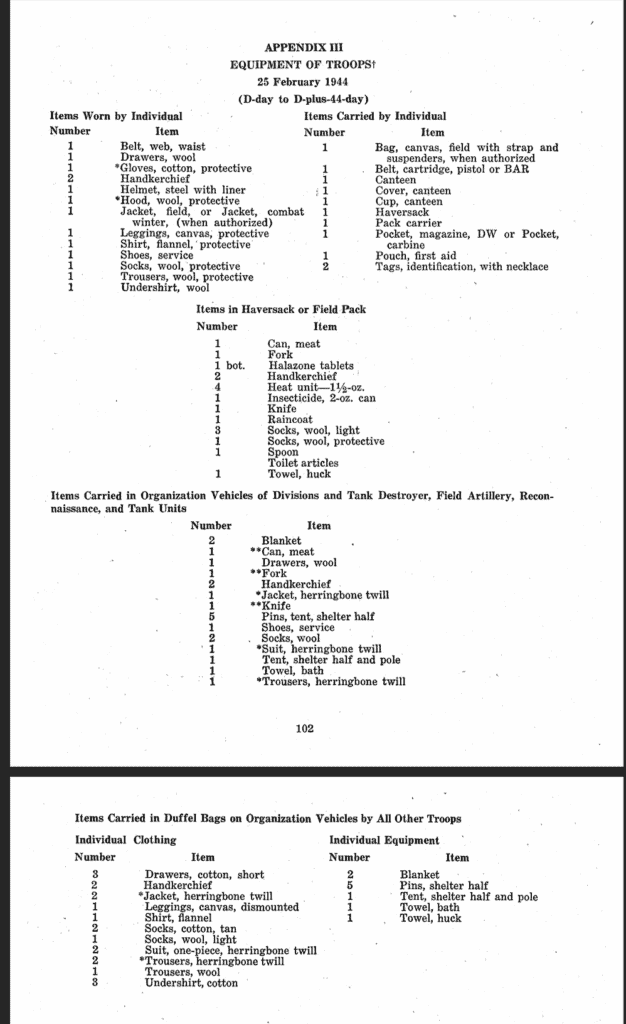
FM 21-15 Individual Clothing and Equipment April 1945 – Describes how to pack equipment and take care of it. Including the M1928 pack and blanket roll, the M1936 Musette bag and the Horseshoe Roll, and the new M1945 upper pack and lower pack. Also describes where the equipment should be located on the soldier.

For an older version that describes equipment location, see: FM 21-15, Aug 1941 Equipment, Clothing, and Tent Pitching Supplemental.

FM 21-25 Elementary Map and Aerial Photograph Reading Aug 1944 | Basic information about maps, compasses, and aerial photos.

For the older copy, see: FM 21-25 Elementary Map and Aerial Photograph Reading April 1941

FM 21-22 Watermanship April 1944 | Describes swimming and stroking techniques. As well as how to swim through fire and fight off different animals like sharks.

For sharks hit it on its nose. For swimming through fire when submerged, look for dull areas as it’s less likely to have fire on the service. Bright areas are likely to have fire on the surface.

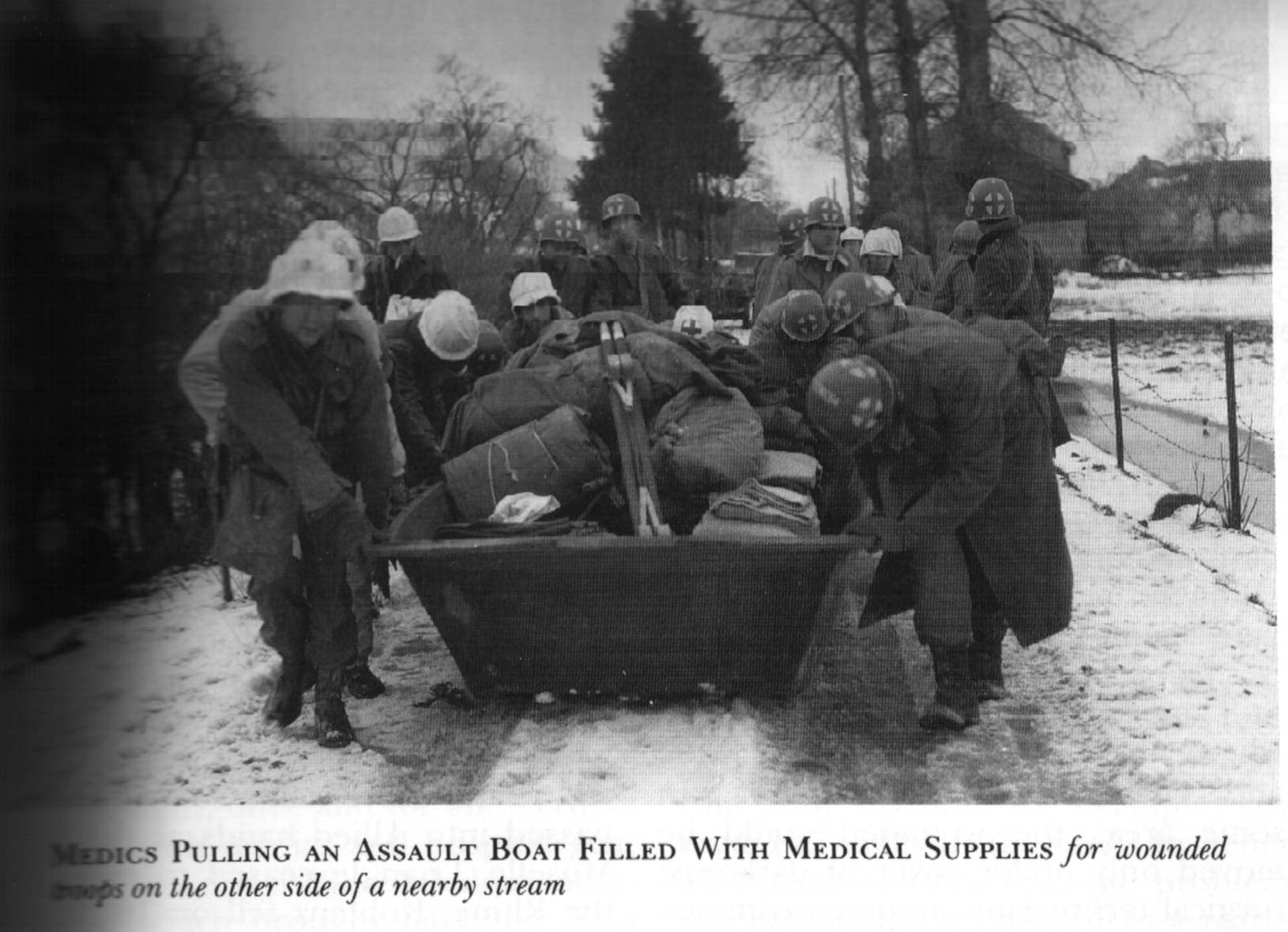
Covers how to board and use, and operate life boats, storm boats, and M2 Assault Boat.

FM 21-20 Physical Training March 1941 | Exercise techniques including stretches, movements (with and without arms), swimming, and physical contests.

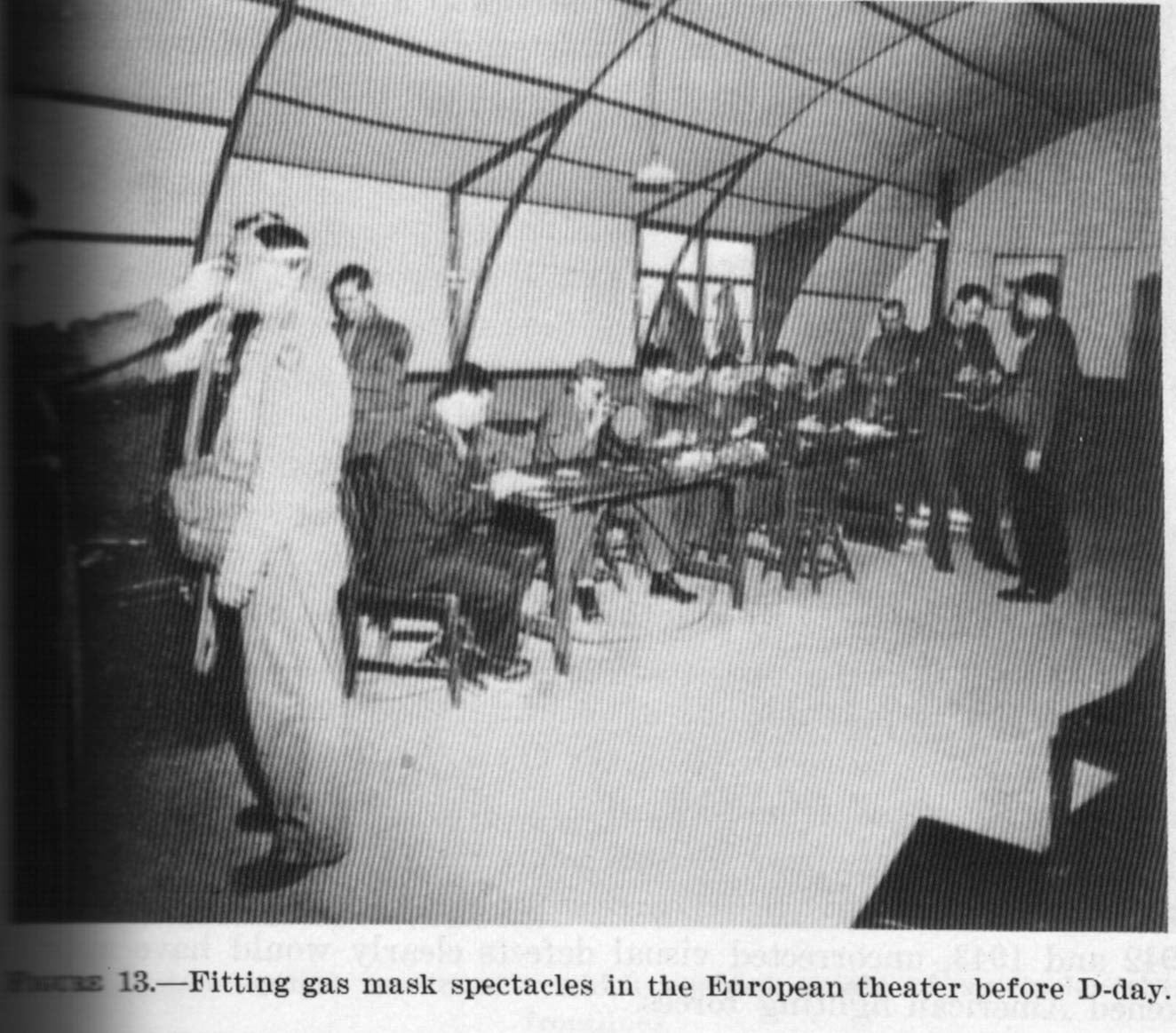
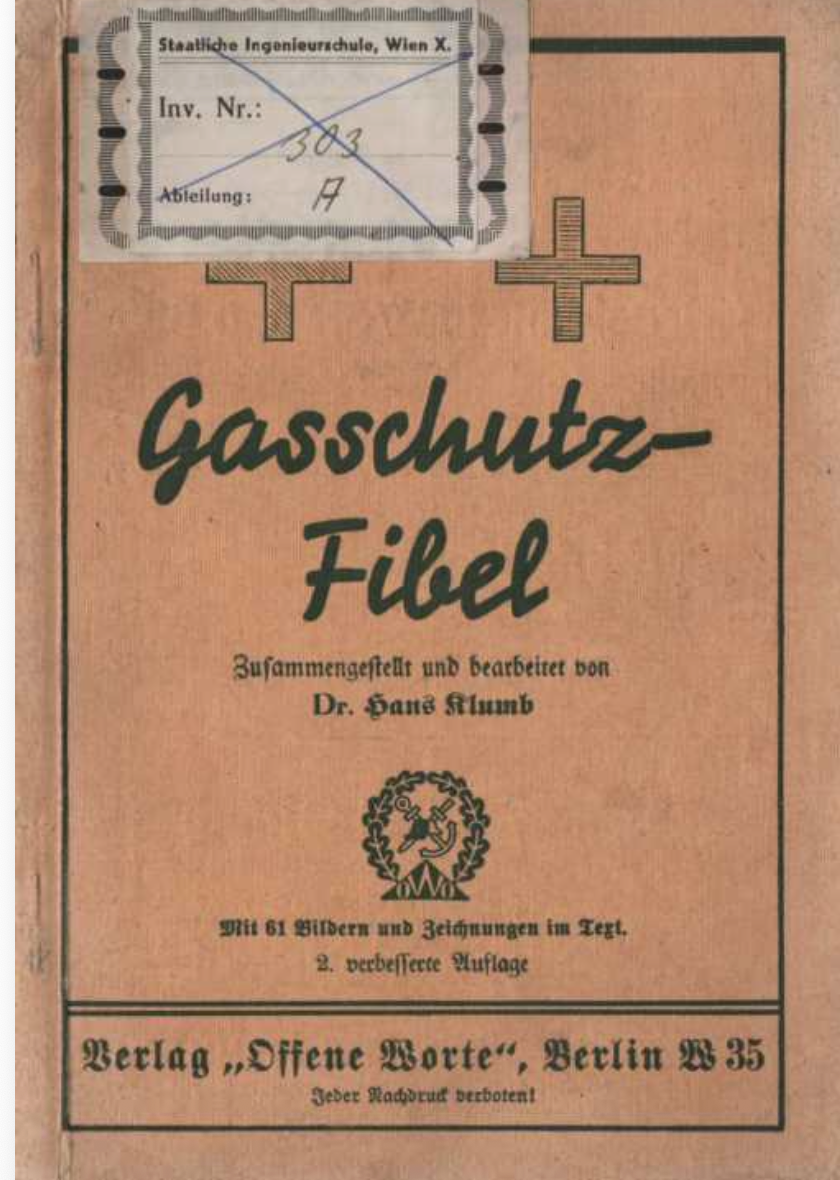
FM 21-40 Defense Against Chemical Attack May 1940 | Describes how to conduct a defense against a gas attack. Includes gas mask usage for cavalry and infantry, dugout construction, and gas operation.

FM 21-75 Scouting, Patrolling, and Sniping Feb 1944 | Explains tactics and movement for scouting, patrolling, and sniping. Includes map making, formations, and conducting patrols in different kinds of environments such as open terrain, roads, jungle, and snow.

Discusses how to move, ambush employment, and conduct route selection at night. Note: If you hear the flare go off, drop to the ground before it lights up. If it lights up, you should freeze and not move. Movement catches the eye, whereas standing still, you might just look like a shadow.

When doing observations, be sure to blend with the background and not be silhouetted against the sky. When peeking out a window, stand back in the shadows.

FM 21-100 Soldiers Handbook Dec 1941 | Explains basic information on how to be a soldier. Includes uniform care and wearing, saluting, equipment, manual of arms, squad movement and formation, scouting, orientation, messaging, and first aid.

FM 22-5 Infantry Drill Regulations Aug 1941 | Describes marching, movement, and formations for different kinds of scenarios such as approach, skirmish, assault, motor, and anti-aircraft employment.

Focuses mostly on the company and the levels below. Includes rifle and heavy weapons. Outlines how to signal with a hand and whistle.

FM 23-5 US Rifle Caliber 30 M1 Garand July 1940 | Describes the care, use, and training of the M1 Garand Rifle.

An updated FM 23-5 from 1965 has better instructions and images for disassembly, cleaning, and repairing.

FM 23-6 M1917 Rifle Oct 1943 | Describes care, training, and usage of the M1917 Rifle.

FM 23-7 M1 Carbine May 1942 | Describes care, training, and use of the M1 Carbine.

FM 23-10 US Rifle Caliber 30 M1903 Sept 1943 | Describes care, training, and use of the M1903 Rifle

FM 23-15 Browning Automatic Rifle Caliber 30 M1918A2 with Bipod Aug 1940 | Describes care and usage of the automatic rifle with bipod.

See: FM 23-15 Browning Automatic Rifle Caliber 30 M1918A2 June 1943 for an updated version of the manual. Includes a section on squad/BAR team tactics.

FM 23-20 Browning Automatic Rifle Caliber 30 M1918 Without Bipod Oct 1918 | Describes care and usage of the automatic rifle without bipod.

FM 23-25 Bayonets 1943 | Describes tactics, training, and techniques for using Bayonets and Knifes.

For the older FM 23-25 that focuses on the M1905 bayonet see: FM 23-25 Bayonet M1905 Jan 1940

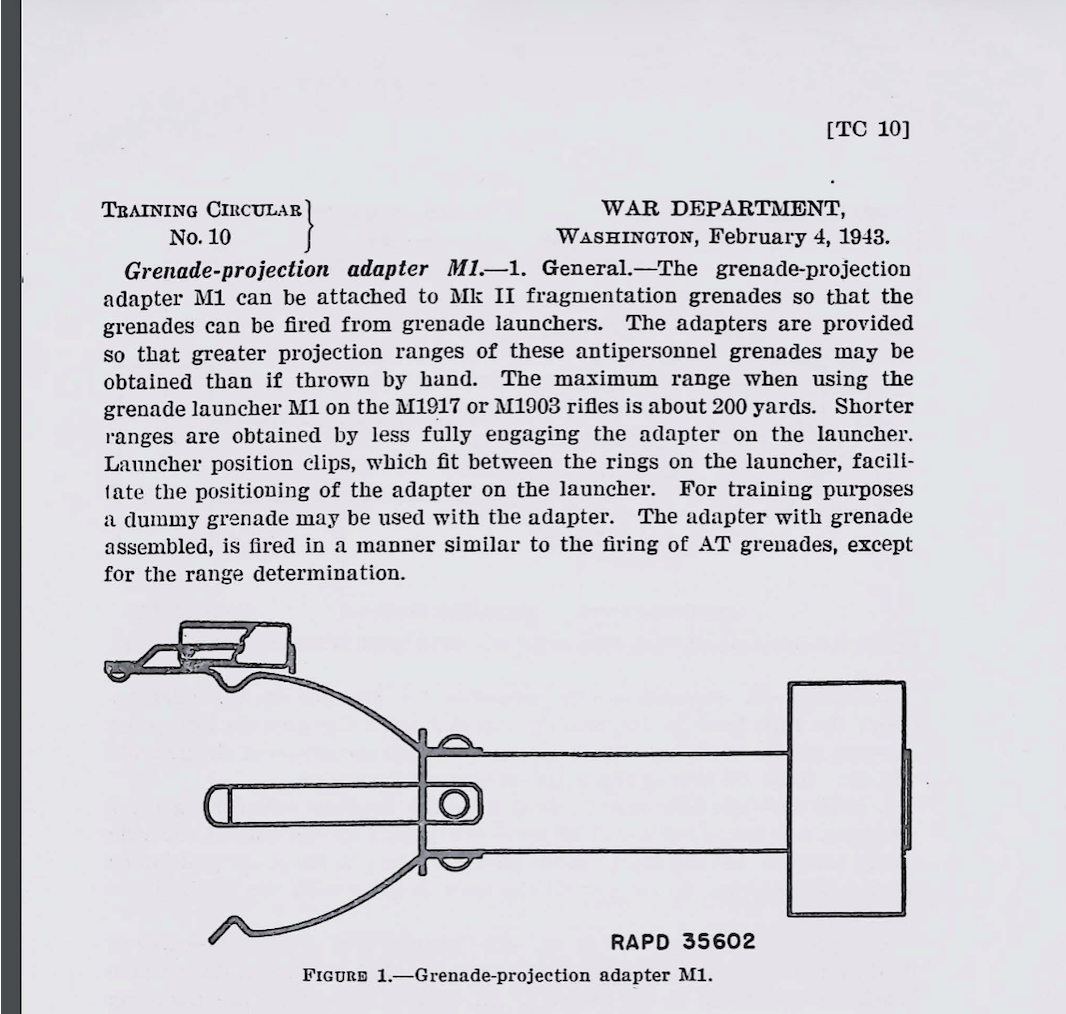
FM 23-30 Hand and Rifle Grenades Rocket AT and HE 2.36inch Feb 1944 | Discusses usage, techniques and types of bazooka rockets, bazookas, grenades, and rifle grenades.

FM 23-35 Pistols and Revolvers June 1946 | Describes care, training, drill, usage, and operation of Colt M1911, Col M1917 Revolver, Smith and Wesson M1917 Revolver.

For the earlier FM 23-35 see: FM 23-35 Automatic Pistol 45 M1911 and M1911A1 April 1940. This manual focuses just on the M1911 and doesn’t include revolvers.

FM 23-45 Browning Machine Gun, Caliber .30, HB M1919A4 Ground 1940 | Describes care and operation of the .30 Caliber M1919a4 machine gun.

FM 23-75 37mm Gun M1916 April 1940 | Describes care and operation of the 37mm M1916 gun.

FM 23-80 37mm Gun Tank M5 Mounted in Tanks June 1941 | Describes care and operation of the 37mm M5 gun in tanks.

FM 23-81 37mm Gun Tank M6 Mounted in Tanks April 1942 | Describes care and operation of the M6 37mm gun mounted inside tanks.

FM 23-95 75mm Tank Gun M2 Mounted in Medium Tank M3 May 1942 | Describes the care and operation of the M2 gun inside the M3 Tank (called Lee).

Signal, Radio, and Communication

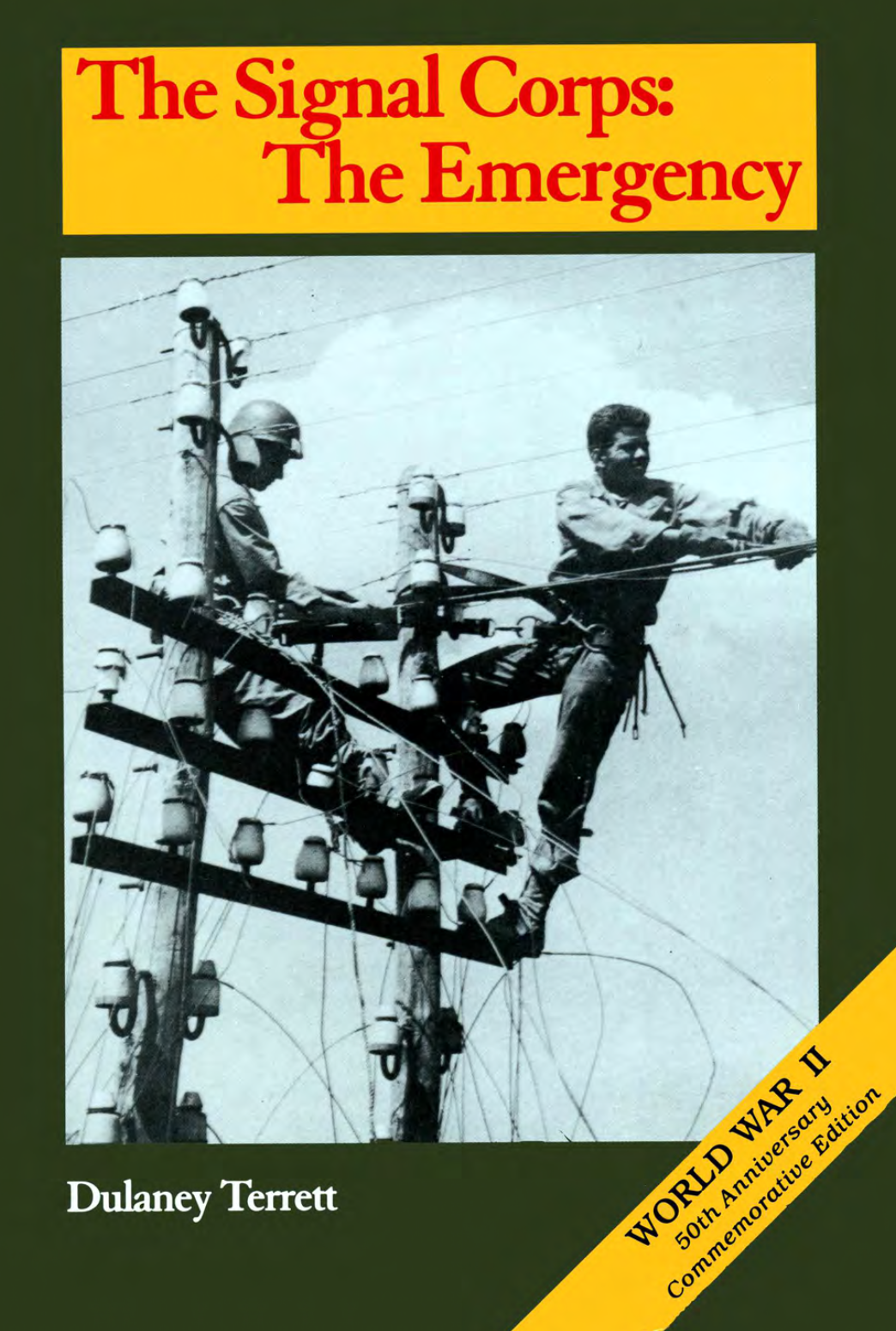
FM 24-5 Signal Communication, Oct 19th, 1942 – Methods and techniques for installing, operating, maintaining, and planning for signal communication within division and smaller units.

Has sections on splicing, the M-94 and M-209 cipher and convertor cryptography devices, as well as other signal types like visual, pigeon, lamps, panels, radio, morse code, wire etc.

FM 24-6 Radio Operators Manual June 1945 – Describes procedures and training for field radio operators. Includes signs, signals, and nets.

FM 24-18 Radio Communication Jan 1944 – Explains radio communication fundamentals and methods and techniques involved in installing the equipment.

FM 24-20 Field Wire Systems 4 OCT 1944 | Discusses different kinds of wire systems as well as the installation of field phones, switchboards, telegraphs, and other signal corps equipment. Also includes how to maintain the system and an example telephone directory.

TABLE No III – WIRE – A guide that shows the composition, insulation, weight, measurements, and remarks of the different kinds of wire.

It’s noted that the 130 Assault wire causes a lot of trouble and needs to be protected. Any dampness in it causes issues. So holes need to be patched with tape.

Also, in a report of the 397th Infantry Regiment of the 100th Division regarding W-143 wire, they say

“The wire is unsuited for small units as the wire cannot be sufficiently carried on a reel, the insulation doesn’t break when the wire does, making it hard to troubleshoot, and it takes too long to splice as the insulation doesn’t come off fast enough – especially when under fire.”

FM 25-5 Animal Transport June 1939 | Describes how to ride, control, manage, and take care of a horse. Includes a description of lashing equipment and saddling. The 1940 change is added.

FM 25-6 Dog Sled Jan 1941 | Explains sleds, dog shoes, sled packing techniques, first aid for dogs, harnesses, kennels, food, lashing etc.

FM 25-7 Pack Transportation Aug 1944 | Discusses saddles, training, pack movement, hitches, and slinging cargo to an animal.

FM 25-10 Motor Transport March 1942 | Describes how to drive a truck, including signs, keeping the right distance, tows etc.

FM 26-5 Interior Guard Duty Jan 1942 | How to conduct interior guard duty of military posts and camps. This includes organization and structure, as well as duties/responsibilities, and dealing with prisoners.

FM 27-5 Civil Affairs Dec 1943 | How to set up governance of civilians when the enemy has been defeated.

While not a field manual, Public Safety Manual – Civil Affairs 1944 outlines how to preserve public safety.

For more information, see Civil Affairs in World War II which is a study on the topic from the Center for Strategic and International Studies.

FM 27-15 Military Law Domestic Disturbances Feb 1941 | Outlines how to handle riots. Includes example scenarios.

FM 27-10 Rules of Land Warfare Oct 1940 | Discusses the rules for conducting land warfare.

The Judge Advocate Generals School No 7 Rules for Land Warfare Sept 1943 is a study guide for the manual and goes into more legal details.

FM 28-105 Special Service Company Jan 1944 | Explains the duties of the company, including structure and organization, and the packing of materials, as well as how to provide athletic, entertainment, music, radio, theatrical, motion picture, library, publications (like a soldier newspaper), and field canteens and exchanges.

It includes a list of items of the different kinds of kits:

Kit A and A-1 – Sports and Games. One interesting thing is that the kit describes books to be used in playing the activities. Such as: Active Games and Contests (1935), TM 21-220 Sports and Games May 1942, among others.
Kit B and B-1 – Radio and Phonograph Equipment
Kit C – Library books
Kit D – Musical Instruments and Accessories – Music Books
Kit E – Theatrical Equipment and Supplies
Kit J – PH-408 Projector Equipment
Kit I – Printing and Publishing

See TM 21-205 Special Service Officer May 1942 for the officer manual.

FM 29-5 Military Police Dec 1941 | Guidelines for structure and organization for the Military Police, including collecting stragglers during combat, traffic control (in both day and during “blackout” conditions), escorting, and other duties.

FM 30-26 Regulations for Correspondents Jan 1942 | Outlines rules and uniforms for correspondents. Makes mention of a “visiting correspondent” status that appears to be someone who was authorized outside the normal procedure. Includes the three different changes to the manual.

The proper uniform for accredited correspondents is that of an officer, but without all insignia of grade or arm or service, and without black and gold piping on field caps, officers’ hat cords, or officers’ insignia on the garrison cap if worn.

b. The uniform includes the wearing of the official brassard on the left arm. The brassard is a green cloth band, 4 inches wide, with the appropriate word, “Correspondent,” “Photographer,” “Radio Commentator,” “Correspondent Chauffeur,” “Photographer Chauffeur,” “Radio News Chauffeur,” “Correspondent Messenger,” “Photographer Messenger,” or “Radio News Messenger,” in white block letters 1 /4 inches in height. This will be furnished by the War Department Bureau of Public Relations at the time of appointment.

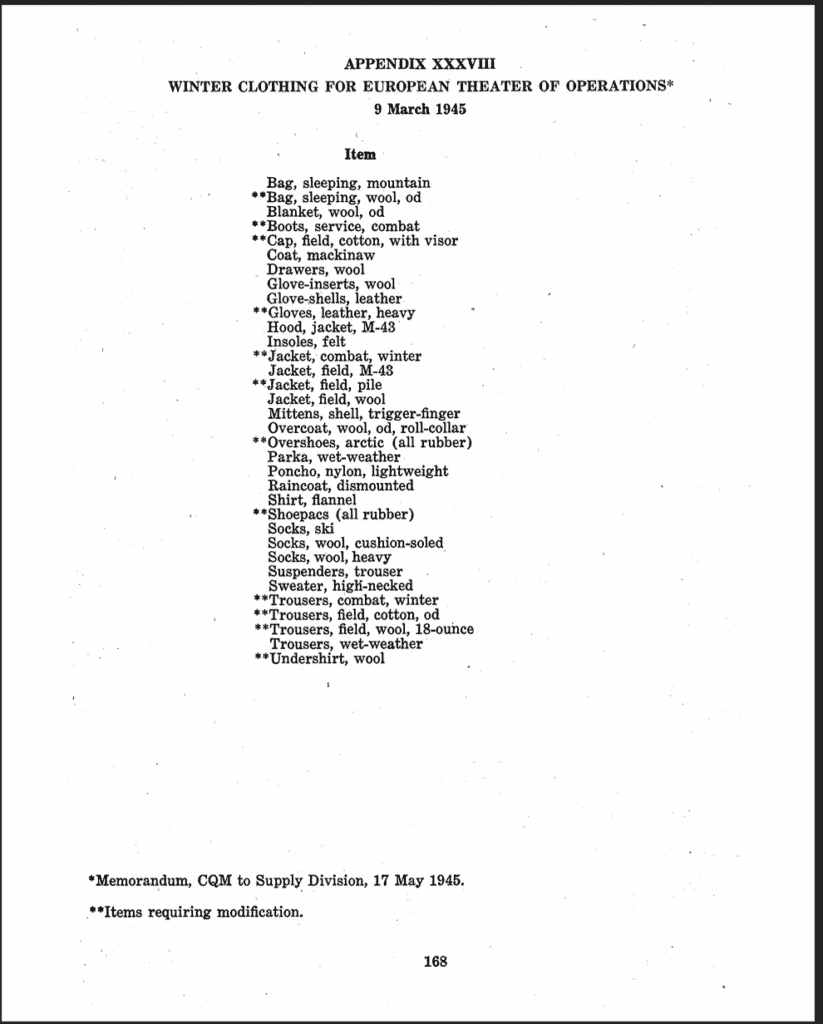
c. Articles of special clothing and equipment which are issued to officers and enlisted men in cold climates may be issued to correspondents. These articles must be turned in before departure from the theater of operations or base command.

d. Accredited correspondents will not wear civilian clothing while serving with the field force.

FM 30-27 Regulations for Civilian Operations Analysts, Scientific Consultants, and Technical Observers Accompanying US Army Forces in the Field Aug 1944 | A guide for specific types of civilian personnel. One example is munitions experts from weapons companies who want to see how the ordnance they produce works on the battlefield. Includes rank and pay, capture, uniform, discipline, transportation, and censorship.

Military Intelligence

FM 30-30 Military Intelligence Identification of US Government Aircraft Feb 1942 | Highlights US aircraft.

Also, the FM 30-30 Recognition Pictorial Manual, which shows the profiles of different US, Allied, and Enemy planes.

FM 30-42 Military Intelligence Identification of Foreign Armored Vehicles German Japanese Russian and Italian Oct 1942 | Highlights the types of tanks.

The older FM 40-42 from June 1941 covers foreign armored vehicles of German, Japanese, Russian, Italian, and French.

FM 30-102 Handbook on Aggressor Military Forces June 1947 | A post-war guide that outlines the rise and structure of an aggressor nation. For use with post-war wargaming scenarios.

FM 31-10 Coast Defense July 1941 | A high-level descriptive overview of how to provide coastal defense.

FM 31-15 Operations in Snow and Extreme Cold 1941 | How to conduct operations in the snow. This is the older version. For the updated one, see: FM 70-15 Operations in Snow and Extreme Cold NOV 1944 .

FM 31-30 Tactics and Technique of Airborne Troops May 1942 | Describes training and combat operations for Airborne troops.

FM 31-50 Attack Fortified Position Combat in Towns Jan 1944 – Explains how to conduct an attack on an enemy bunker, other fortified position, and in an urban environment from a squad, platoon, company, and battalion perspective.

I’ve also created a document that focuses just on the urban combat part of the manual that you can download.

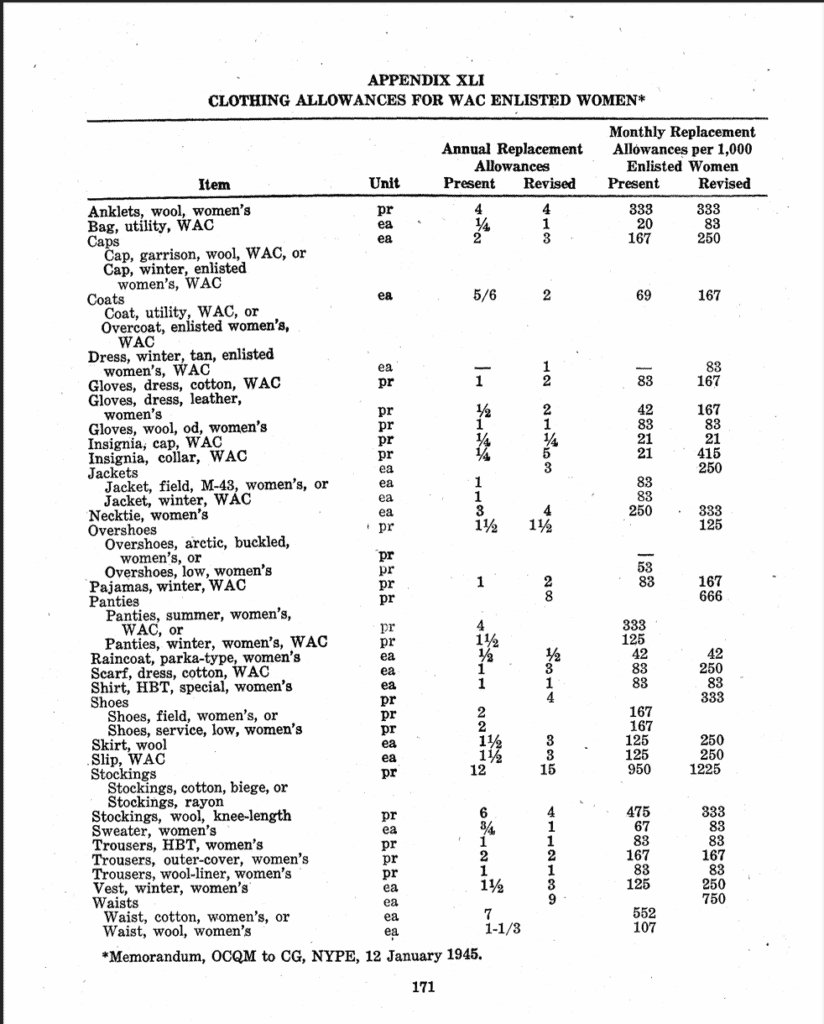
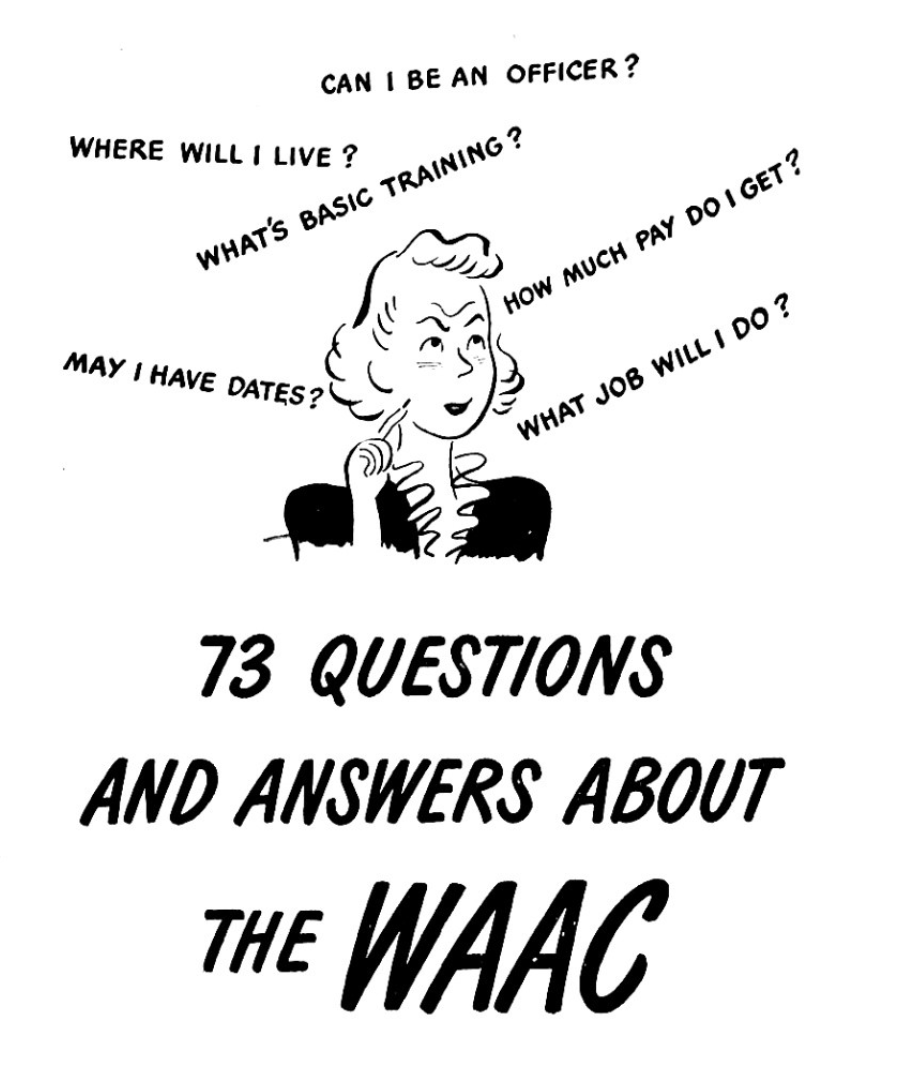
FM 35-20 WAC Physical Training July 1943 | Describes exercises for Women’s Army Corps members.

AntiAircraft Artillery

FM 44-2 Employment of AntiAircraft Artillery Automatic Weapons Dec 1944 | Focuses on the placement and usage of 40mm antiaircraft gun and the M51 machine gun carriage unit with the quad 50 caliber machine guns.

FM 44-4 Employment of AntiAircraft Artillery Guns June 1945 | Focuses on the setup and placement of the 90mm M1A1 and M2 and 120mm M1 anti-aircraft guns, but does make mention of 50 caliber machine guns. Also includes other equipment that’s part of the fire control like SCR-584 radar, M4 Tractor, and M9 Director and trailer.

FM 44-6 Employment of AntiAircraft Artillery Searchlights March 1945 | Explains how to use a searchlight in combat operations. Includes placement, communication, supply, and methodology.

Transportation Corps

FM 55-25 Ports Oversea Headquarters and Headquarters Companies May 1945 | Describes the structure and organization of Oversea Port Headquarters.

FM 55-105 Water Transportation Oceangoing vessels Sept 1944 | Information for transportation corps members on oceangoing vessels.

FM 55-130 Small Boats and Harbor Craft Jan 1944 | Information for transportation corps members who operate in a small boat or harbor.

FM 70-10 Mountain Operations Dec 1944 | How to conduct operations in the mountains. Including movement, climbing, patrolling, eating, cooking etc.

FM 72-20 Jungle Warfare Oct 1944 | Explains how to conduct warfare in the jungle, including bivouacking, fighting, patrolling, eating, cooking, etc.

FM 70-15 Operations in Snow and Extreme Cold NOV 1944 | Describes how to conduct warfare in a snowy and cold environment, including cooking, sled building, shooting, trenches, etc.

Staff Officer’s Field Manuals

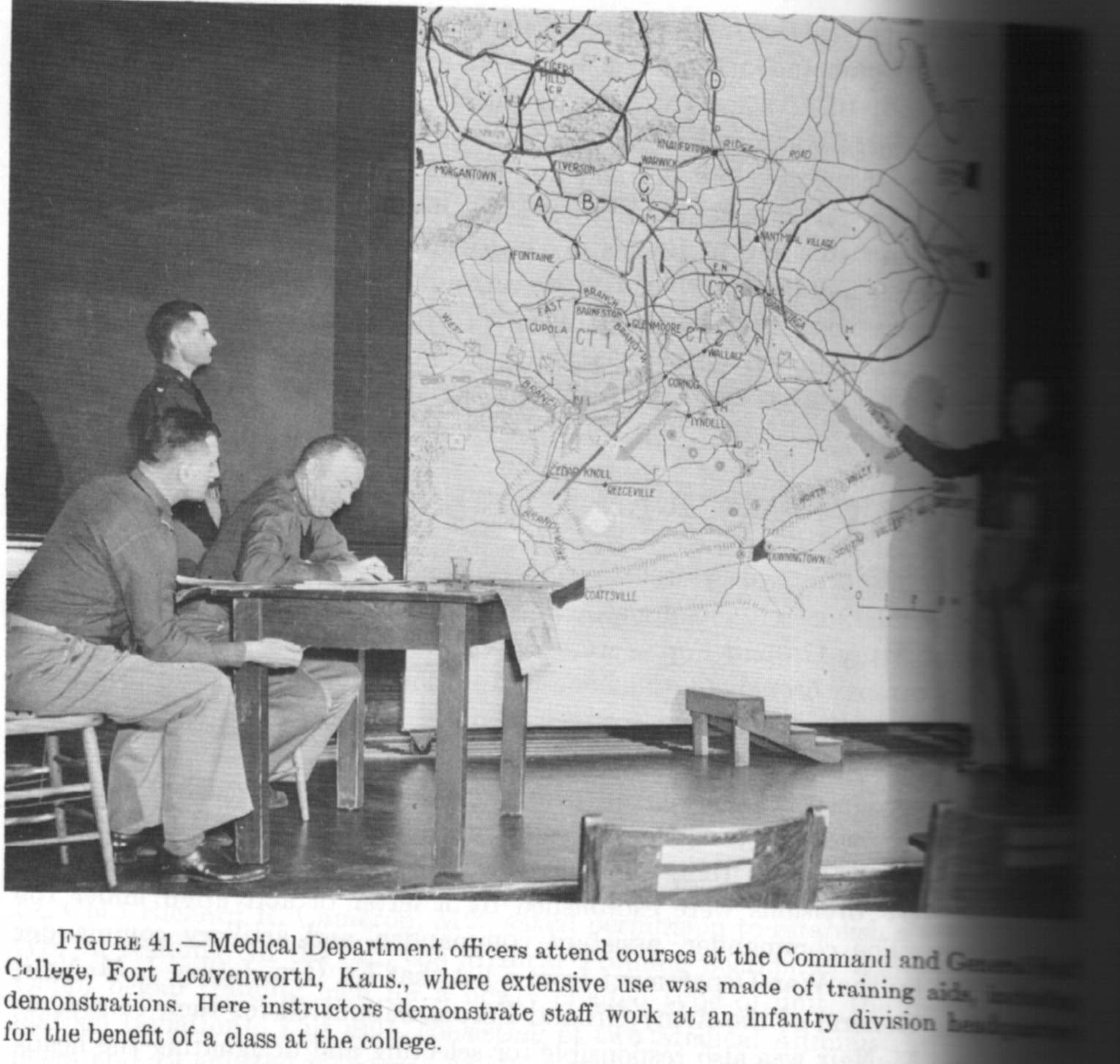
FM 100-5 Field Service Regulations Operations June 1944 | Describes doctrines in leading troops and tactics in combined arms operations.

FM 100-10 Field Service Regulations Administration Nov 1943 | Describes an overview of how to administrate different army branches.

FM 101-5 Staff Officers Field Manual The Staff and Combat Orders Aug 1940 | Outlines how to issue combat orders. Essentially, you can do it in any communication method, but you have to give the receiver of the orders time to reconnoiter and place troops etc.

FM 101-10 Staff Officers Field Manual Organization Technical and Logistical Data June 1941 – A manual that outlines the organization, technical, and logistical data of various Army branches. Including transportation, feeding, equipment, communication, and labor requirements.

For example, Labor requirements for handling supplies are computed on the average of one-half ton per man per hour for 10 hours each day. This figure is for planning purposes only.

FM 101-15 Staff Officers Field Manual Traffic Circulation and Control Jan 1943 – Explains how to control and plan for traffic, both military and civilian.

Staff Officers Field Manual for Amphibious Operations Etc 1944 – Outlines what’s needed and required to conduct a successful Amphibious invasion among the Army, Navy, Marines, and Army Air Corps.

Of special note is the battalion radio network for all branches involved. As well as tables at the end that show approximate material/time usage for various activities like digging foxholes and using water.

FM 105-5 Umpire Manual April 1942 and FM 105-5 Umpire Manual MAR 1944 – Outlines how to be an umpire during a wargame.

Other

OSS Field Manuals

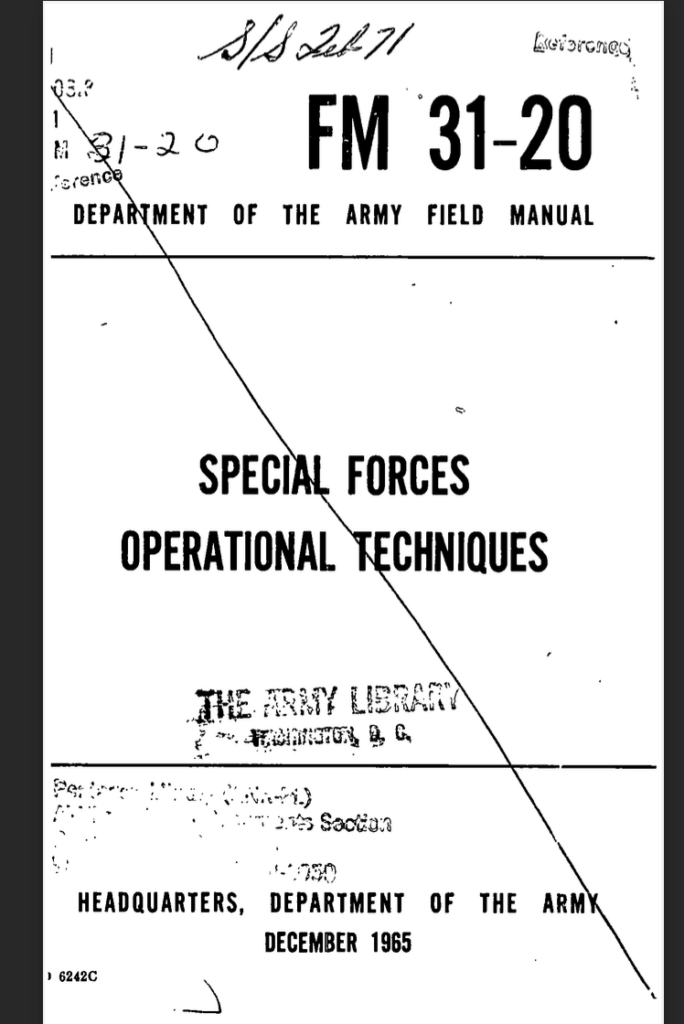
OSS Special Operations Field Manual, Strategic Services Feb 1944 – Discusses planning and coordination for a special service operation.

OSS Operational Groups Field Manual April 1944 – Outlines organization, structure, procedures, training, personality types, and supply of Operational Groups (OG). An OG is a small, uniformed party of specially trained and qualified soldiers tasked with carrying out specific missions.

OSS Morale Operations Field Manual, Jan 1943 – Outlines planning of operations for subverting the morale of civilian and military populations. Examples include rumor spreading, blackmail, forgery, creation of and exploitation of “incidents” that can be used to create division, coups, creating distrust, creating false hope, propaganda leaflets etc.

OSS Operational Group Command Booklet Dec 1944 – A booklet that outlines the overall command and control structure for the OSS.

OSS Maritime Unit Booklet – Discusses the structure, command, and control of the Maritime Unit of the OSS. The unit was responsible for providing special equipment like The Limplet explosive device, and Pin-up Girl explosive device, and kayaks. Other equipment includes the Beach Sand Augur and Underwater Pen and Pencil.

As well as providing ferrying operations and maritime sabotage.

OSS Maritime Unit Field Manual July 1944 – Discusses organization, command, structure, equipment, and planning for maritime operations.

Interestingly, “Detailed descriptions of this special equipment are given in a secret pamphlet, ‘Underwater Operations’, prepared for the Maritime Unit, December 1943,” and this pamphlet doesn’t appear to be available online anywhere.

OSS Secret Intelligence Field Manual March 1944 – Discusses how, what, and where to gather secret intelligence information. Includes a diagram of how an agent cell system works.

OSS Simple Sabotage Field Manual No 4 Jan 1944 – Discusses things individual citizens can do to sabotage enemy activities. Examples include releasing moths in a movie theater and clogging sewage lines.

Posted on

World War II Army Technical Manuals

Below is a selection of Technical Field Manuals. For a fuller list, you can find about 1,000 of them between 1940-1945 on the Archive.org website. So if you don’t see one there, try looking there.

Phrase Books

TM 30-606 German Phrase Book Nov 1943 – How to speak German.

TM 30-341 Japanese Language Guide June 1943 – Reproduction guide on how to speak Japanese

Technical Bulletin

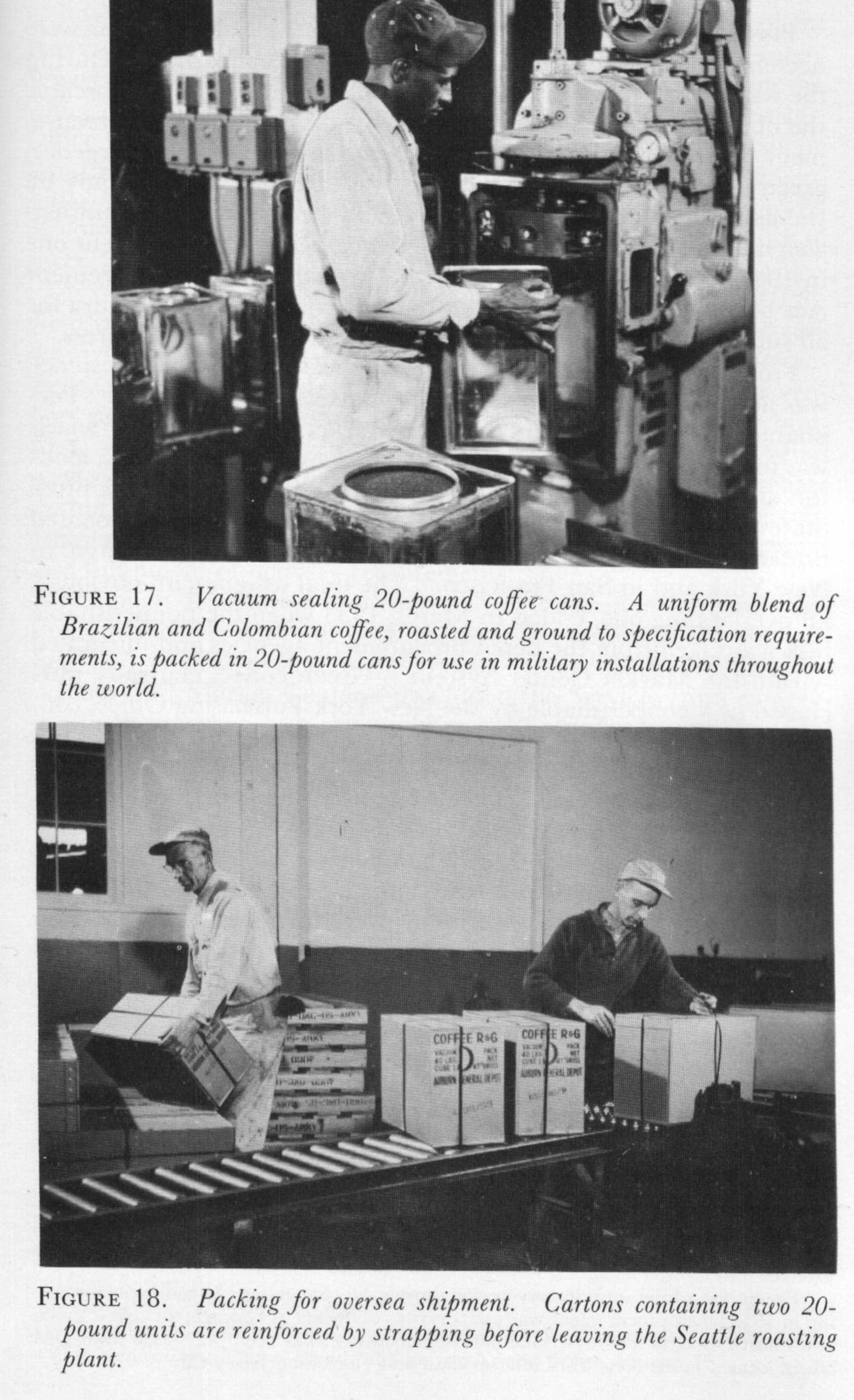
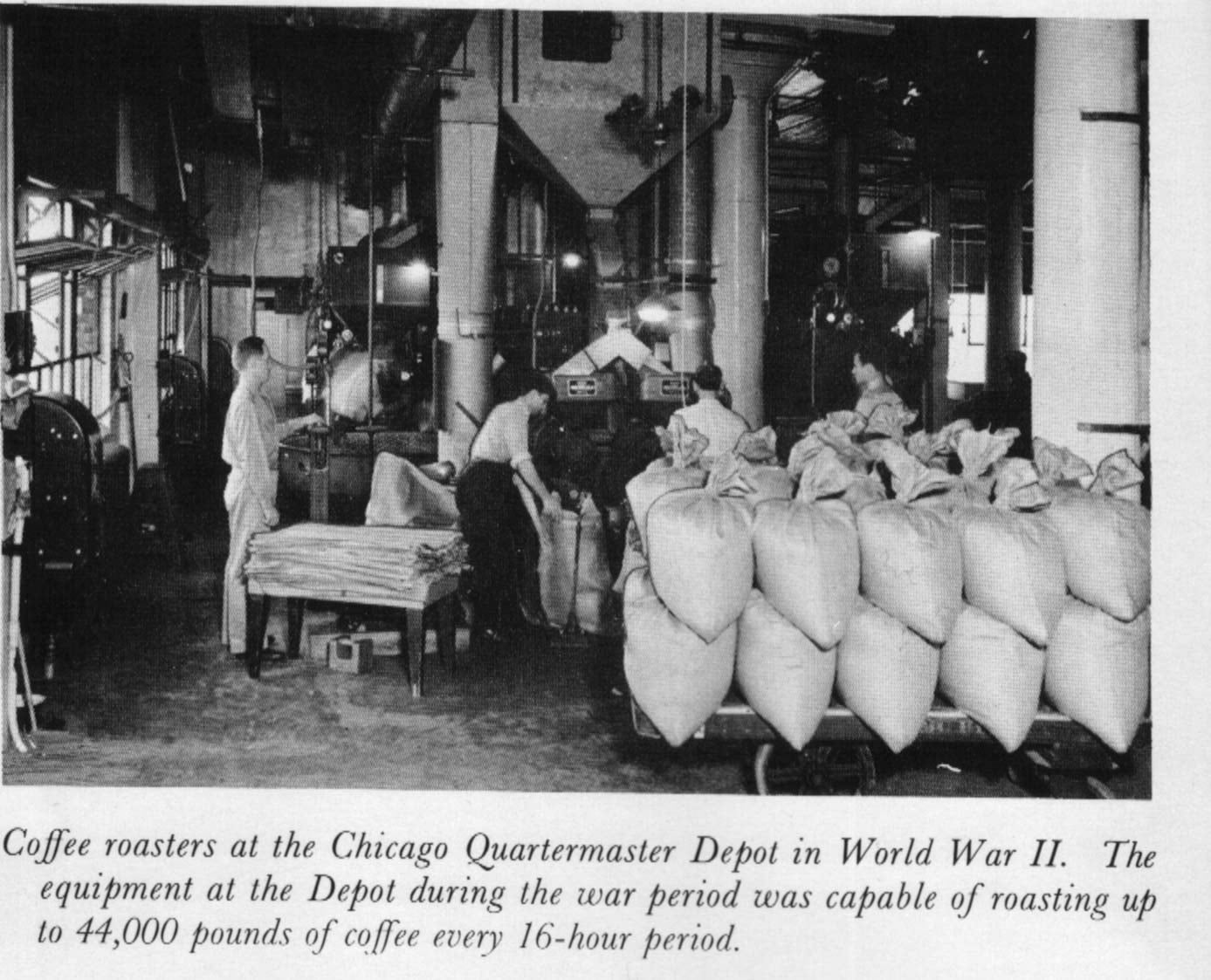
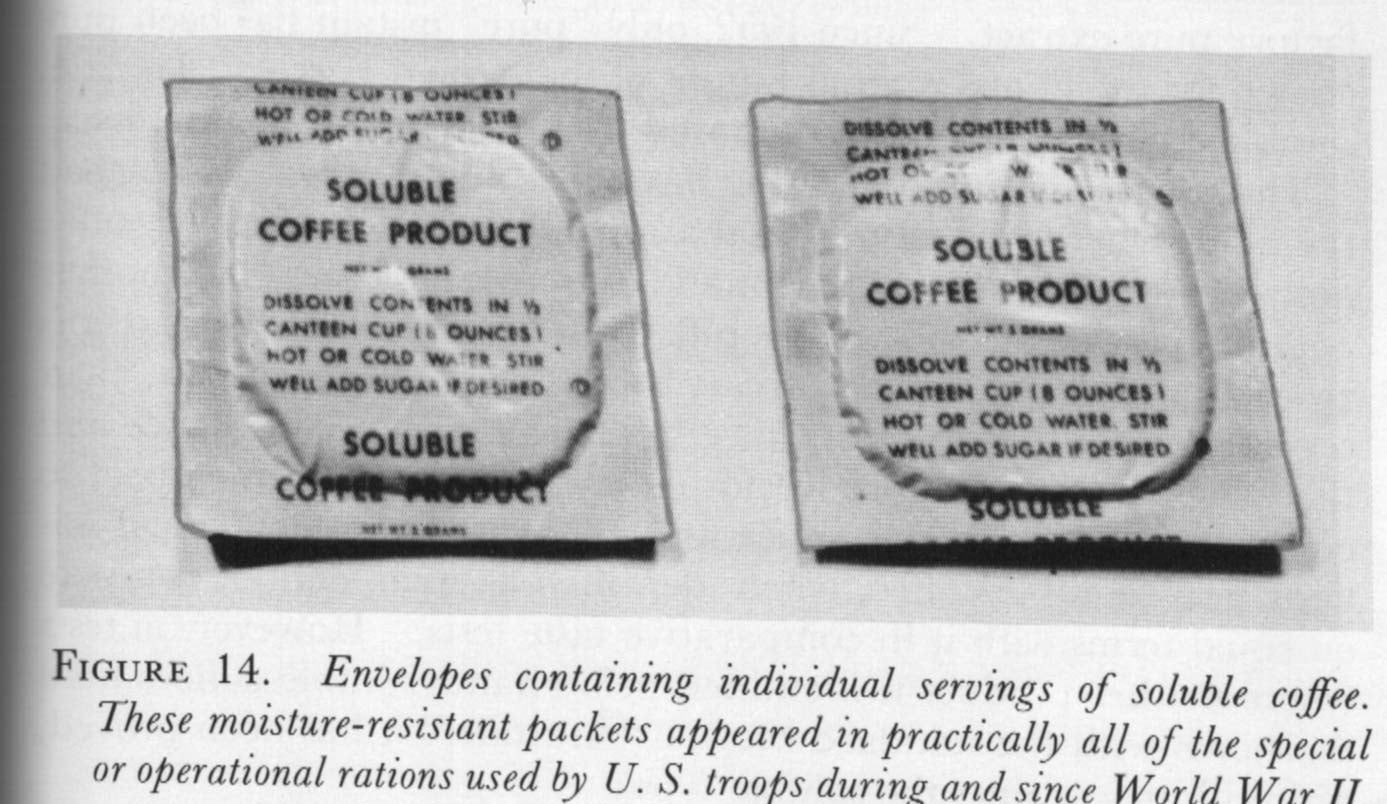
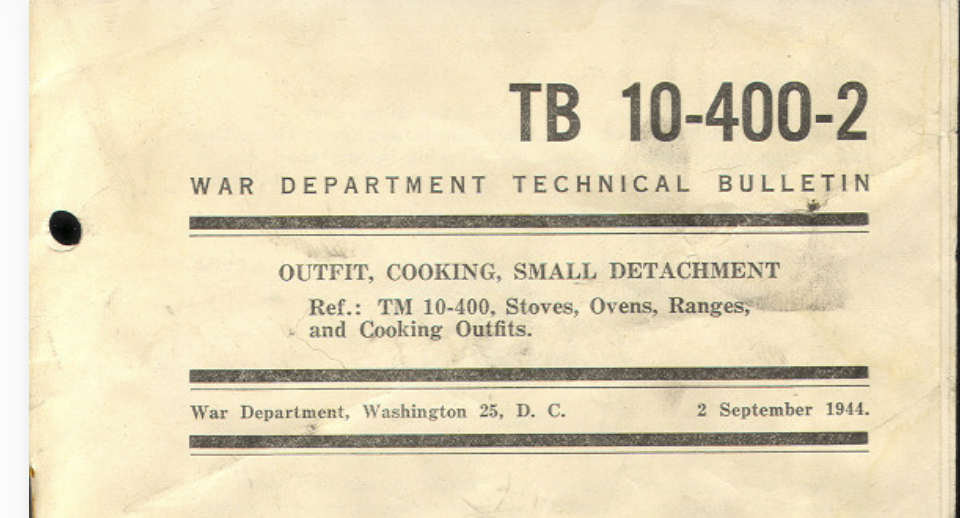
TB 10-405-1 Coffee Brewing, March 1944 – This is a technical bulletin that outlines additional and supplementary instructions on how to make coffee. For a general outline, refer to TM 10-405, the Army Cook.

The bulletin outlines how to brew coffee in an open kettle, a single urn, a double urn, and urns attached to boilers. It also explains how to make Iced Coffee.

Other

Automotive

Ordnance

TM 9-1900 Ammunition General June 1945 – Describes handling, procedures, types, boxes, and packing of different kinds of bombs, artillery, shells, mortars, mines, grenades, rockets, rifle grenades, and magazine storage buildings.

TM 9-1990 Small Arms Ammunition May 1942 – Includes the May 1943 revisions. Describes handling, procedures, types, boxes, and packing of different kinds of small arms ammo.

TM 9-2005 Vol 3 Ordnance Material General Dec 1942 | Describes various pieces of ordnance available to the US Army.

Pigeons

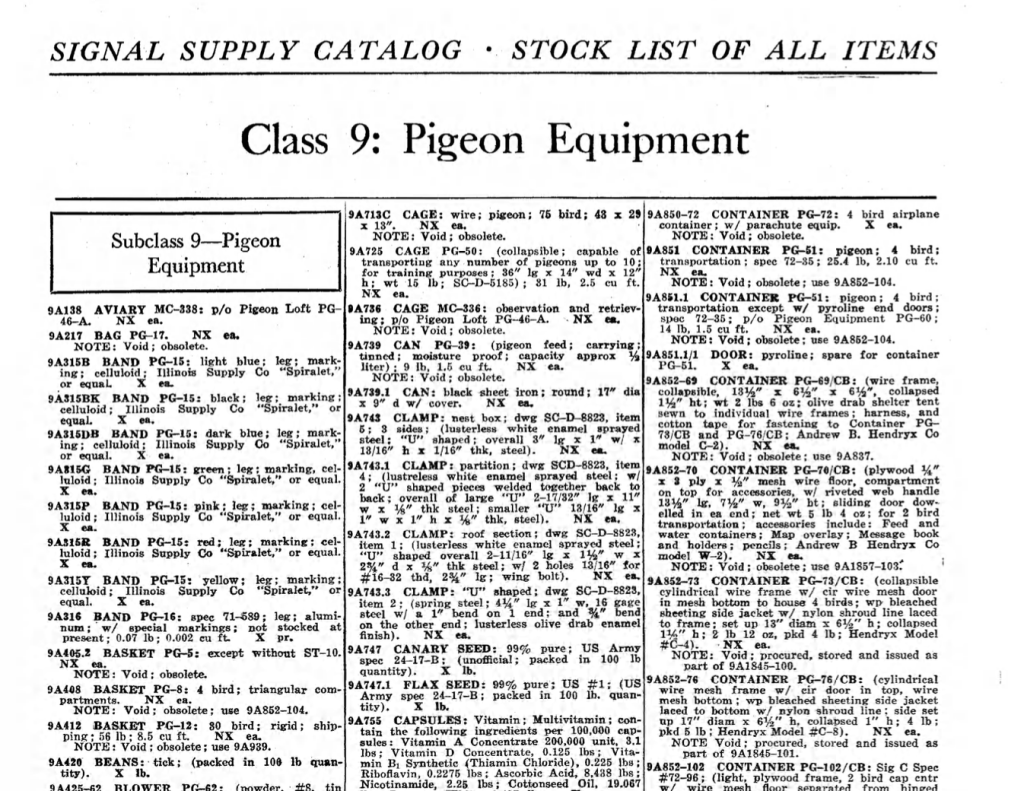
TM 11-410 The Homing Pigeon Jan 1945 – A technical manual for using Homing Pigeons.

Pigeons can also be released from aircraft: See The Handling and Release of Pigeons from Aircraft.

Some Pigeons were raised from existing Signal Corps Pigeon stock, while others were donated, as this article indicates: Tuna Clubs Pigeons Enlist in the Army New Jersey Feb 1943.

For a history of Pigeons in WW1, see: Feathers of Honor.

TM 11-2016 Switchboard SB-5/PT April 1944 – A lightweight 6-drop switchboard.

TM 11-2361 Camera PH-324 Kodak 35mm Camera – Outlines how to use the camera. More information on other cameras in WW2 see: Cameras for the World War II Reenactor

Cooking

TM 10-405 The Army Cook: 1941. This pamphlet supersedes TM210-152, December 31, 1935.

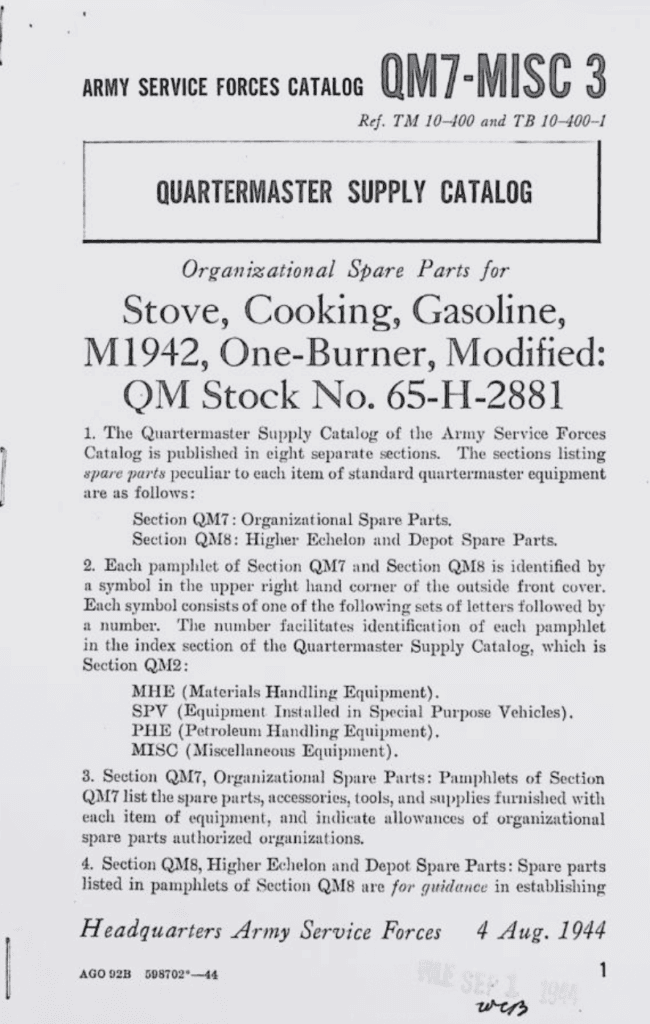
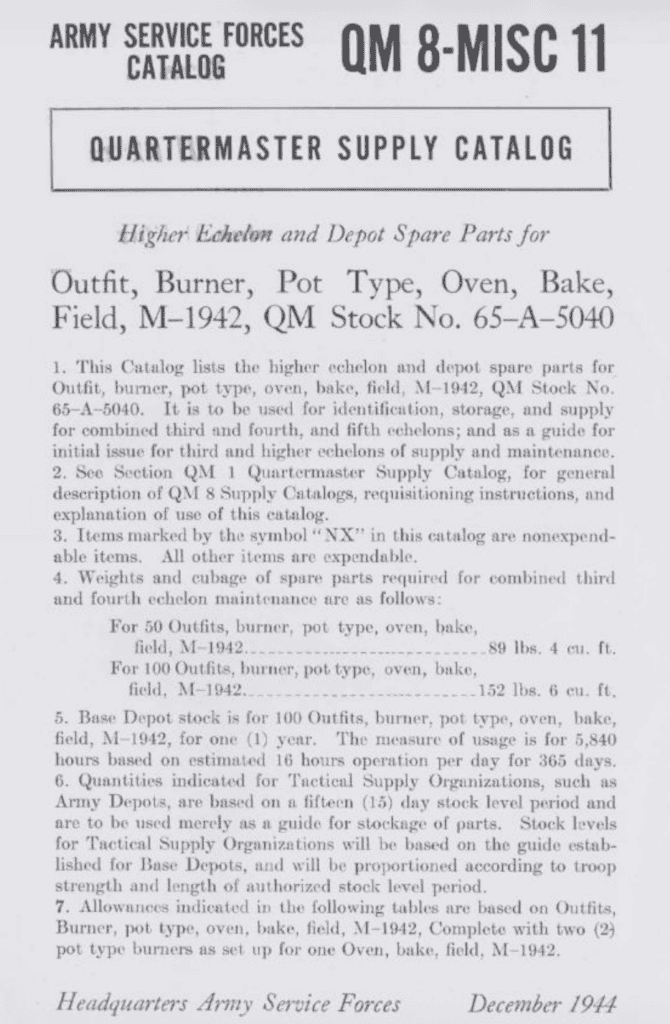
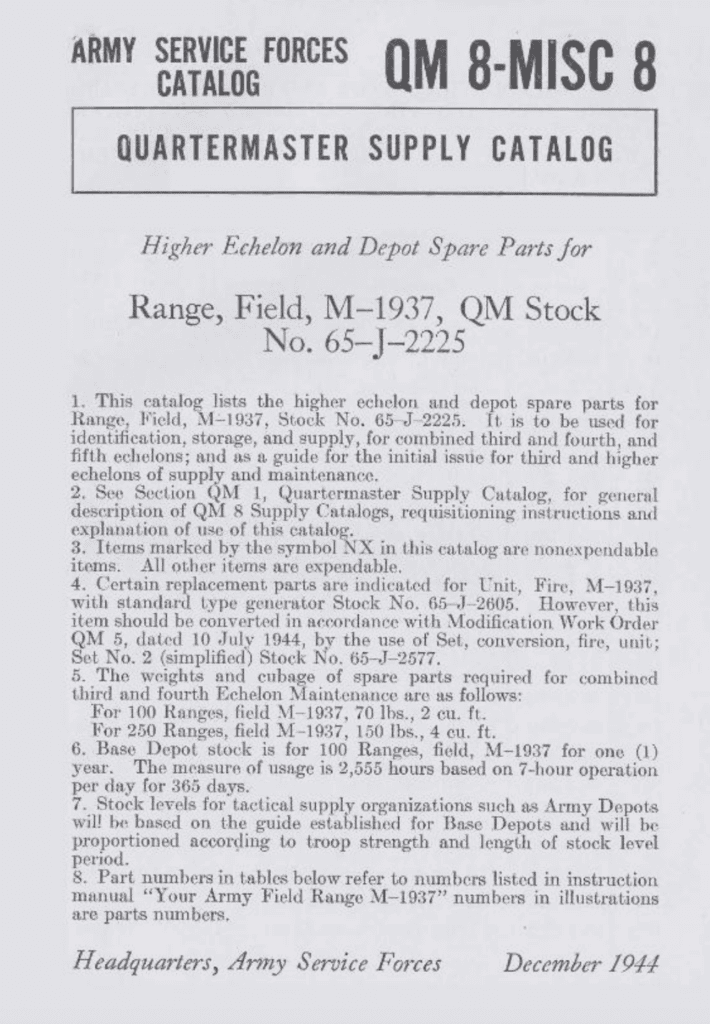
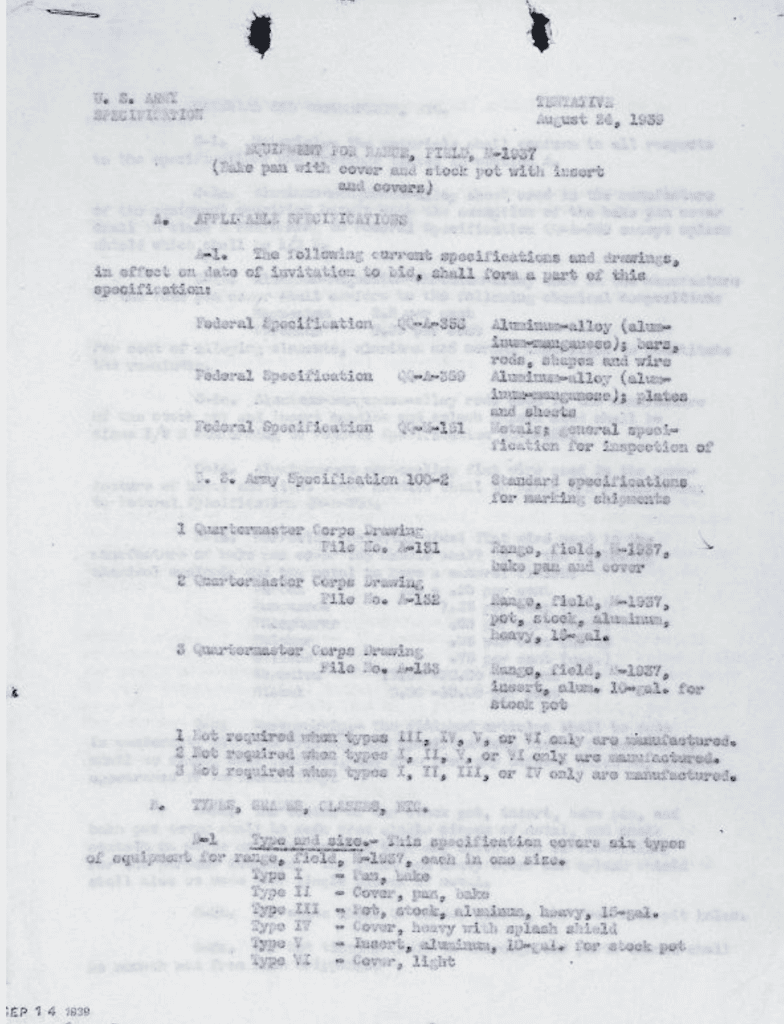
While not a part of the manual, I included a 4-page document on the Procedure (SOP) for Company Field Kitchens. Date unknown. It’s essentially a “Cliff Notes” version of how to set up a field kitchen.

One interesting note is that the Mess Sgt was to carry into the field –

Feldkochbuch fur Warme Lander | 1940 | 1941 | 1942 – German Army field cookbook. Note that cookbooks may contain Swastikas and other potentially offensive material. The website author publishes them for purely historical and educational reasons and thinks these ideas belong exactly where they are, the dustbin of history.

Manual of Military Cooking and Dietary 1933 London – British Army cookbook. Note that the book may contain references to imperialism or empire-building. The website author publishes them for purely historical and educational reasons and thinks these ideas should remain in the trash can of history. People have a right to self-determination.

Religious

TM 16-205 The Chaplain 1941 | Discusses how to perform chaplain services and duties.

For a history of the chaplain technical manual, refer to: THE OPERATIONAL, SOCIAL, AND RELIGIOUS INFLUENCES UPON THE ARMY CHAPLAIN FIELD MANUAL, 1926-1952 by Robert Nay.

Administrative

TM 12-255: Administrative Procedures Nov 1st 1942. Outlines various procedures to deal with different kinds of issues like transfers, leaves, induction, reception, detachment, discharge, pay, death, arrest, punishment, medical treatment, accounting, issuing of clothing and equipment, procurement, property transfer, lost or damaged property, vehicle accidents, courts-martial and many more! For some notes and problems on administrating a front-line infantry regiment, see this report on the 318th Infantry Regiment by Capt Louis Pickering dated Sept 2nd 1944.

TM 12-230 Service Record – Oct 18th, 1944. Outlines how to fill out the service record. A supplement to AR 345-125.

TM 12-253-CORRESPONDENCE – Oct 1st 1944. Explains how to write and fold letters in accordance with the preferred military style. Includes a style and grammar guide and numerous examples.

Signal Corps

TM 37-305 Typewriter Maintenance Nov 1944 – A zip file that contains images of the manual as well as an HTML document with the text.

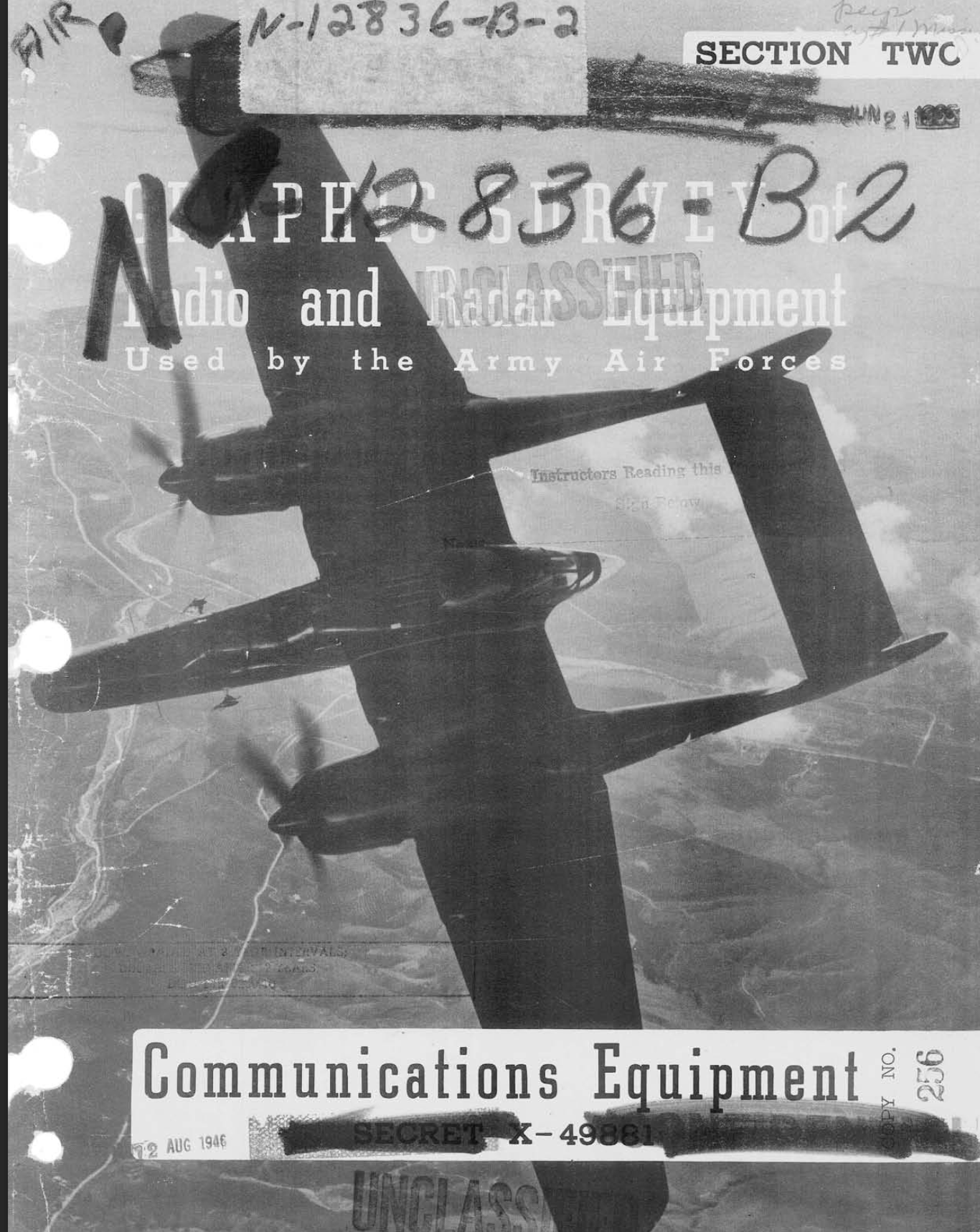
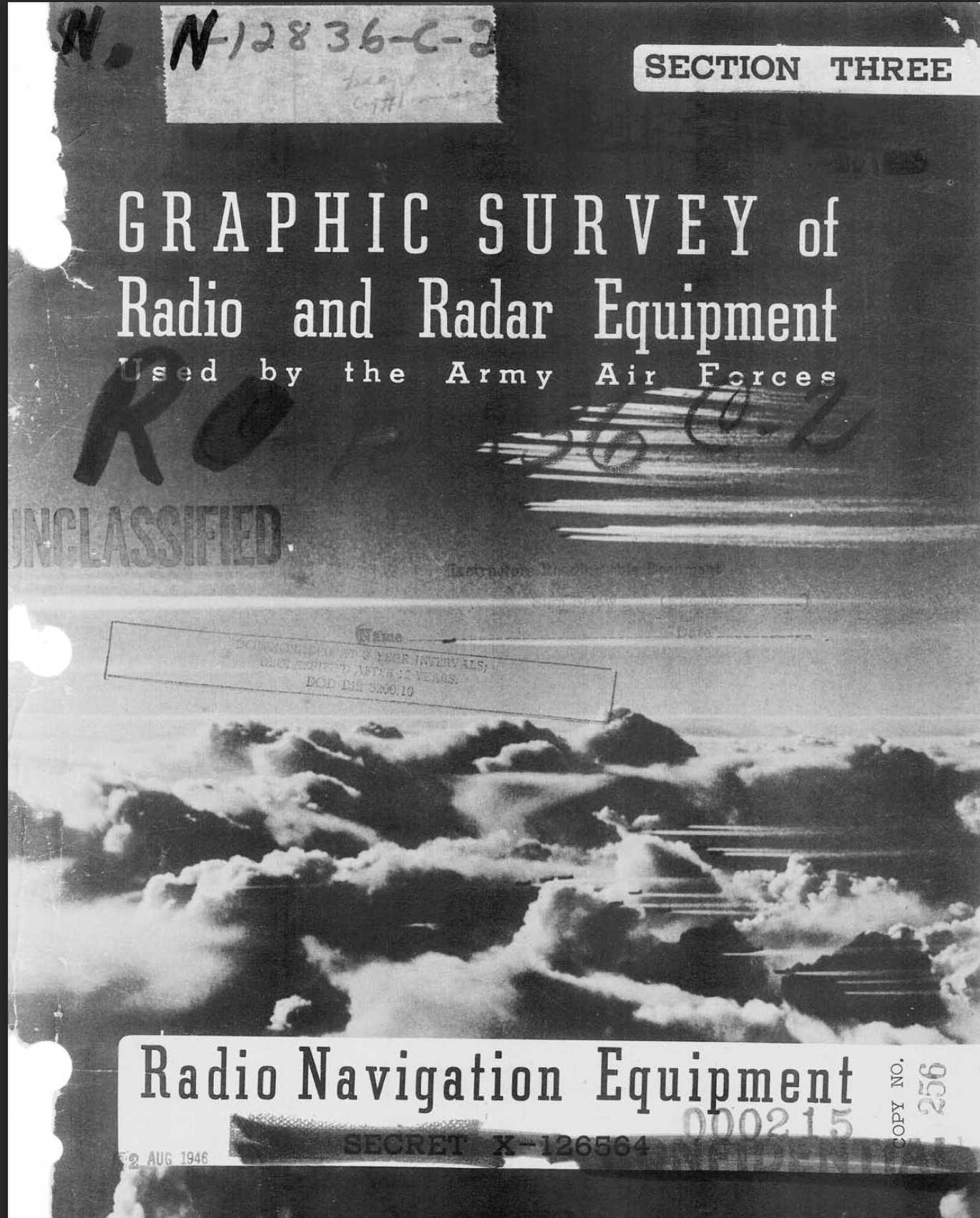
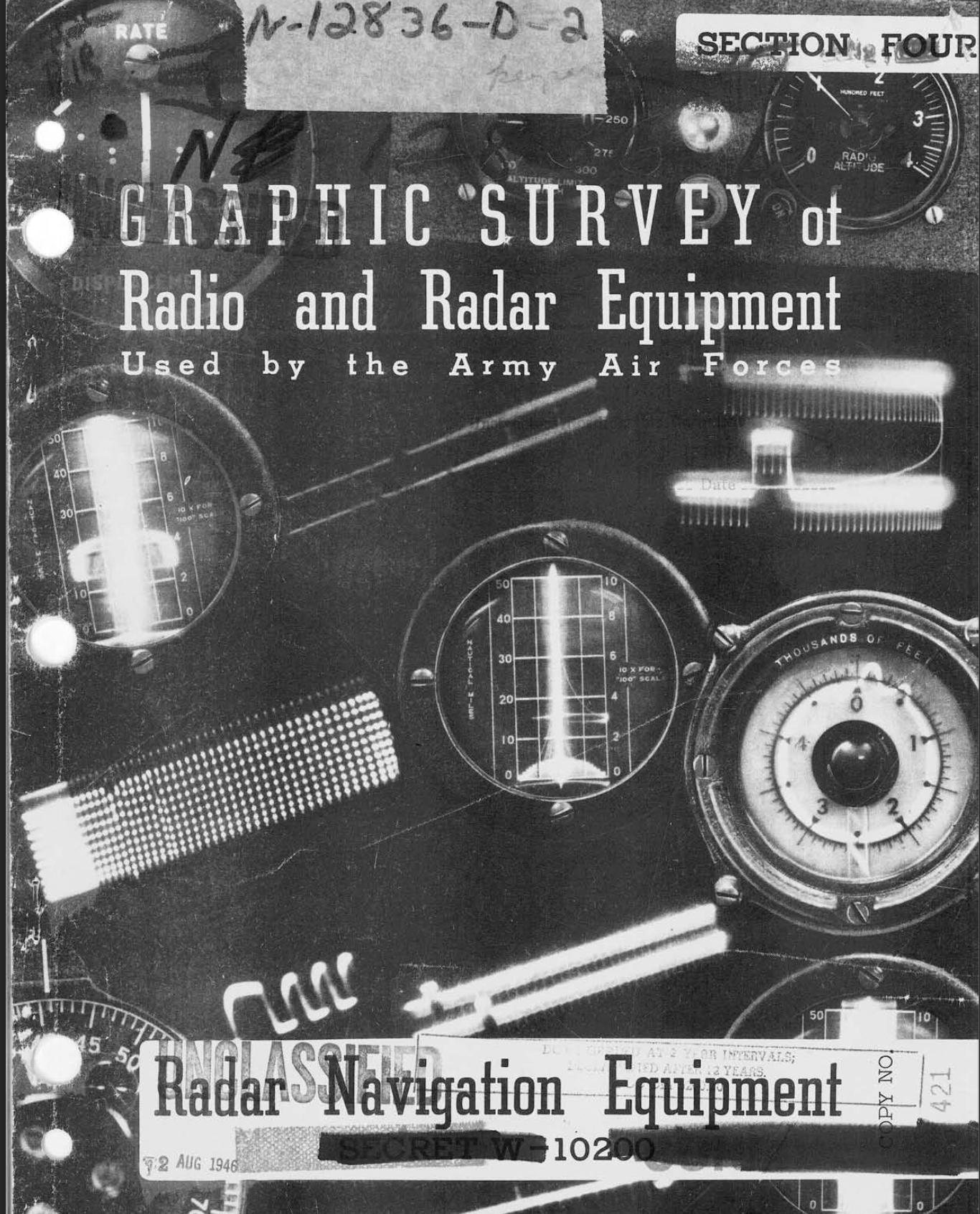
TM 11-227 Signal Communication Equipment Directory Radio Communication Equipment April 1944 – A listing of available radio equipment available to the Army, including SCR-300, SCR-536, mine sweeping units, etc. Anything that uses a radio device for communicating is listed.

TM 11-242 Radio Set SCR-300a Feb 1945 – The manual for the SCR-300 radio set. This radio set could not speak to the SCR-536 / BC-611 radio set.

TM 11-235 Radio Sets SCR-536a through f May 1945 – The famous “Handy-talkie”. This unit could not work with the BC-611/SCR-300 radio units. There are only minor differences in circuits and components among the variants. The exception is SCR-536g which provides jacks at the bottom for a headphone/mic unit (which starts to make it similar to the Korean war era PRC-6).

Interestingly, for bad weather, it recommends covering the unit with the small protective arms covers placed over rifles (ie those green waterproof bags).

The unit also has the Homing Modification Kit MC-619 accessory unit. This helps to home in on a transmission and find it.

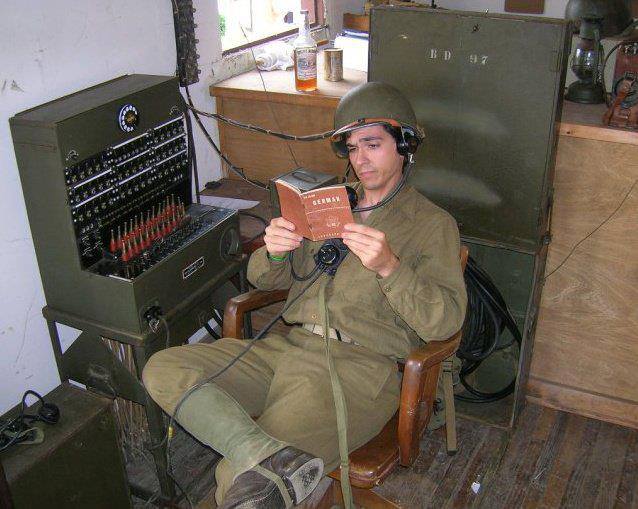
TM 11-330 Switchboards BD-71 and BD-72: Oct 29th 1943. The maintenance, management, care and use guide for the BD-71 and BD-72 switchboards and associated equipment. BD-71 is the 6-line switchboard and BD-72 is the 12-line. The manual makes reference that among BD-72, BD-72a, and BD-72b only minor differences exist among them. If someone knows what they are let me know!
There is also an older manual: BD-71 and BD-72 Switchboards Instructions from 1937 and is a preliminary issue but I’ve included it here for historical reasons.

For more on the fungal treatment of Signal Corps equipment see: Signal Corps Technical Information Letter Nov 1944 No 36

TM 11-332 Telephone Central Office Set TC-4 June 1942 – This set consists of two units the Panel BD-97 and the SB 96.

TM 11-333 Telephones EE8ab MAR 1945 | Describes usage, maintenance, and troubleshooting of the EE8 field phones.

TM 11-351 Telegraph Sets TG-5 TG-5-A and TG-5-B June 1945 | Describes operating instructions, maintenance, repair, and usage.

Telegraph Set TG-5-(*) is a portable, open- circuit, field set designed for telegraph communication over short lines. The set may be used on ground return circuits obtained by simplexing a telephone circuit, or on other ground return or metallic circuits. The range of the equipment will vary with the type of line wire used, the condition of the wire, whether the wire is wet or dry, and whether the wire is on the ground or in the air. The telegraph set will operate satisfactorily over field wire circuits of any length likely to be encountered within divisions or subordinate units, provided the lines are well constructed.

NOMENCLATURE. Telegraph Sets TG-5, TG-5-A, and TG-5-B are referred to in this manual as Telegraph Set TG-5-(). Such nomenclature refers to any one or all of the above three models. Similarly, Relay refers to Relays BK-7, BK-7-A, and BK-7-B; Case CS-49-() refers to Cases CS-49 and CS-49-A; Key J-41-() refers to Keys J-41 and J-41-A; Interrupter BZ-7-C) refers to Interrupters BZ-7-A, BZ-7-C, BZ-7-J, and BZ-7-N; and Interrupter BZ-5-(*) refers to Interrupters BZ-5 and BZ-5-G.

The differences between the units are changes in some of the internal parts. TG-5-B is the more powerful unit as it can handle greater resistance on the line (up to 72k ohms).

TM 11-348 Telephone Repeater TC-29-A April 1943 – This helps improve transmission over wire (W-110b) or cable (CC-358) or open lines. It’s not a unit per se but a bunch of different items like Power Supply PE-204, EE8s, and EE99a that when combined make this repeater unit.

TM 11-361 Test Sets EE65 and EE65a through EE65e Feb 1943

There are minor differences in the several models of this set. All voltmeters are of 50,000 ohms resistance except on the test set EE-65, the voltmeter of which has a resistance of 3.000 ohms. The test set EE-65-B has a larger voltmeter and correspondingly deeper case cover. The test set EF-65 is equipped with a separate transmitter, a separate receiver, and a separate ground rod which are carried in the case; none of these items is a part of the other test sets. The key arrangement on test sets EE-65 and EE-65-A and -B is identical.

The test sets EE-65-C, -D, and E- are identical; they differ from the test set EE-65-A principally in having a sixth key and some differences in their key connections.

There is an EE65g that is made out of steel not aluminum, uses a different generator (GN-38b), updated wiring diagram, and panel to accommodate the new aluminum box.

TM 11-362 Reel Unit RL-31 July 1941 – This is for a reel unit to hold the larger DR4 wire drums and describes how to use and install it (such as on vehicles).

There’s also TM 11-362 Supplement for Reel Unit RL-31 June 1944 which is just instructions on how to install the new RL-31c unit on a truck. The RL-31c looks to be the RL-31 unit with a few different mounting brackets.

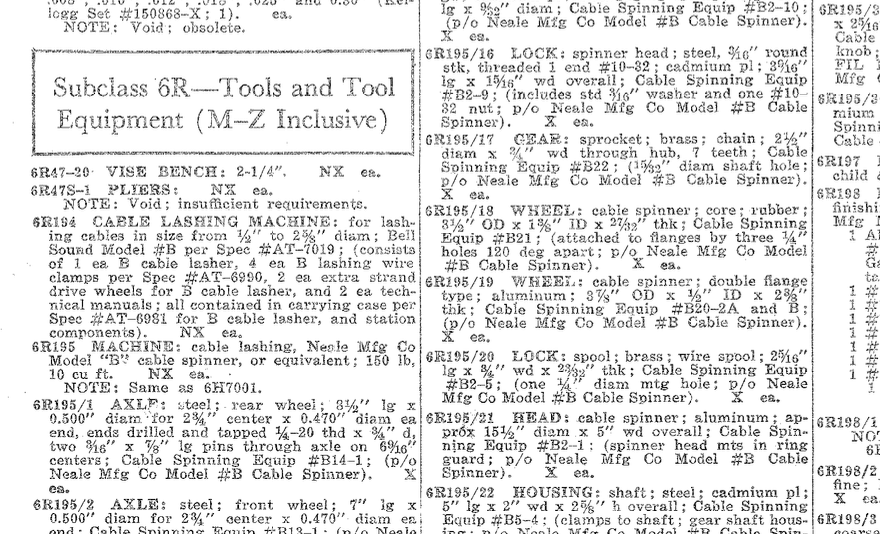
TM 11-349 Maintenance Equipment ME-22 Aug 1943: Contains instructions and an inventory list of all the items needed to fix field phones as part of a 3rd Echelon Maintenance.

TM 11-430 Storage Batteries for Signal Communication Except Those Pertaining to Aircraft Jan 1942 – Discusses how to store batteries safely including BB-52, BB-41 and BB-51.

TM 11-454 The Radio Operator April 1942 – Discusses how to use the radio.

TM 11-487 Electrical communication systems equipment Oct 1944 – Discusses electrical communication equipment and includes details, descriptions, remarks, and pictures. For use in planning complete communication systems. Links to Google Drive.

TM 11-487B Wire Communication Equipment March 1951 – a post-war document that still mentions a lot about WW2-era communication equipment.
TM 11-1140A Beacon Transmitter-Receiver AN/PPN-1a May 1944 | This was a transmitter used to help mark landing zones by Pathfinder units. For a discussion of Pathfinders and their communication equipment see: 507/82-A/B Pathfinders Operation – June 6 1944 (Normandy).

TM 11-2016 Switchboard SB-5/PT April 1944 – Switchboard SB-5/PT is a 6-line, portable, magneto-telephone switchboard for use primarily in field wire systems. It weighs only 12 pounds and for that reason is especially valuable for jungle and mountain operations. This switchboard is similar to the BD-9 and BD-11 in that it has an operator’s cord in addition to the line and trunk circuit cords, it has no talk-listen or ring keys, and it has no operator’s telephone. A Telephone EE-8 may be used as the operator’s telephone, and the magneto of this telephone will be used for ringing. The operator’s cord is terminated in a red plug to distinguish it from the line and trunk cords, which have black plugs. Switchboard SB-5/PT differs from the BD-9 and BD-11 in that each line and trunk circuit includes both a ring jack and a talk jack, instead of one common jack. SB-5/PT isn’t meant to replace BD-71 or BD-72.

TM 11-2250 Reel Equipment CE-11 Jan 1944 – The equipment designed to hold the smaller DR8 1/4 of a mile wire.

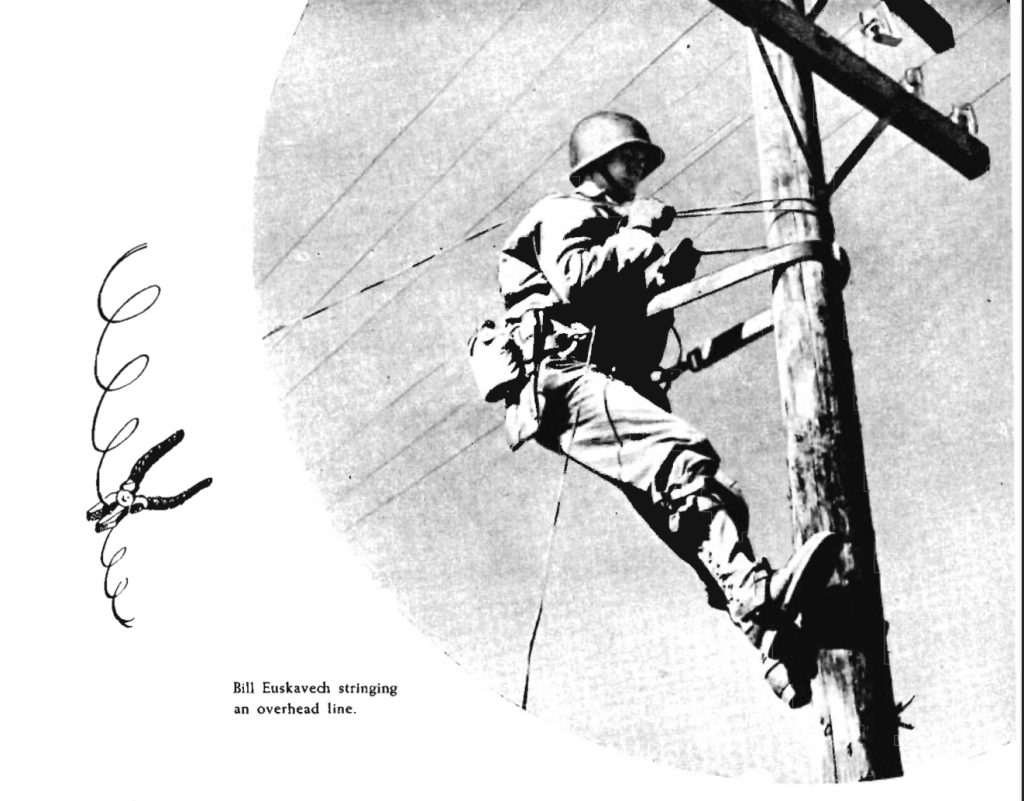
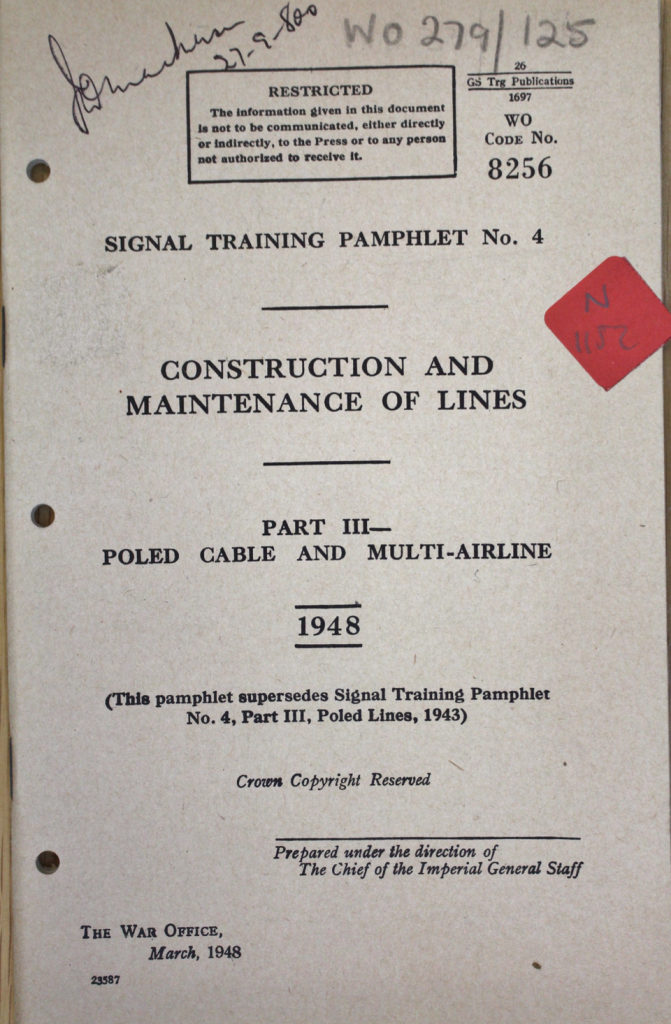
TM 11 2253 Open wire construction fixed plant March 1944 – This is a tentative manual (but probably doesn’t change much from the actual one). It discusses all aspects of installing telephone poles.

TM 11-2626 Test Unit I-176 July 1944 – Test Unit I-176 is an instrument designed to measure resistance, alternating current (ac), direct current (dc), and voltage over a wide range of values.

TM-11-4019 Radio Receiver and Transmitters Repair Instructions: BC-611-A, -B, -C, -D, -E, -and F Aug 1945 -Describes the differences between and how to repair various BC-611 (SCR-536) “walkie talkie” radios.

TM 11-4022 Radio Receivers and Transmitters BC-620abfghj June 1945 – This is a short-range (5miles) two-way radio device. The differences among the variants are that some output transformers have been changed to provide extra impedance to accommodate a 250ohm load as well as a 4,000ohm load.

Some models such as A, B, and H are modified in production to incorporate the Adapter
M-394, to permit the use of the meter and the
receiver amplifier tube of the set for alignment
procedure. All other models of Radio Receiver
and Transmitter BC-620-(*) are equipped with
Adapter M-394 by the manufacturer.

The unit is powered by Plate Supply Unit PE-97 if used in vehicles or BA-39 or BA-40 batteries if not. For the batteries, they need to be used in CS-79 and then connected to the unit. See: TM 11-605 SCR-509 AND SCR-510 NOV 1943 for more information.

Signal Corps: Cross reference table of maintenance, tool and test equipment, and test sets. – A handy chart that explains what test/maintenance equipment is to be used with certain kinds of radio equipment. Not an Army publication but some kind of clean-up version. For example, the SCR-300s need the EE-65 test set and several ME sets.
TM 21-205 Special Service Officer May 1942 | Explains duties of the Special Service Officer.

See FM 28-105 Special Service Company Jan 1944 for the duties of the company.

TM 21-220 Sports and Games May 1942 | Explains how to play various games like:

  • Archery
  • Badminton
  • Baseball
  • Basketball
  • Bowling
  • Boxing
  • Handball
  • Horseshoes
  • Soccer
  • Softball
  • Speedball
  • Table Tennis
  • Tennis
  • Touch Football
  • Track and Field
  • Volley Ball
  • Wrestling

TM 21-250 Army Instruction April 1943 | Explains how to train recruits and draftees.

Posted on

The Ultimate Takedown of All Gun Arguments

Purpose

I have very strong opinions and thoughts on firearms and the purpose of this page is to inform people about the Second Amendment and provide historical, legal, and scientific information to take down various gun arguments. There are a lot of people who are either naive on a topic or are woefully ignorant. People who argue various “pro-gun” stances aren’t any different. The same can apply to various “gun safety” advocates.

However, the “pro-gun” group of people is very vocal in their arguments (ie loud) but that doesn’t mean they are right. Indeed, gun owners make some of the worst historians.

Note that doesn’t mean I dislike you as a person (in fact I have a few friends who are very vocal in their “pro-gun” and “anti-gun” stances*), what I dislike is hearing friends and fellow citizens repeat the same bullshit and falling for it.

I wanted a page I could refer to that outlines the arguments and picks them apart. This page is a constant work in progress.

*I don’t like the terms “pro-gun” or “anti-gun” as it suggests a false binary choice. I struggle with how to properly define the positions to be as generous as possible and haven’t yet figured that out.

Introduction

Why should you believe me? Well, I am somewhat of an amateur historian. I’ve published a book that required in-depth research. I know how to read and correctly interpret historical information, follow sources around, and conduct original research. I have a master’s degree in political science so I know how to evaluate scientific studies for accuracy. I know how to pick apart arguments and find logical fallacies and inconsistencies. I am also a gun owner who owns multiple firearms and who enjoys shooting them so I am familiar with the gun terminology.

Argument: Define Assault Weapon

People who toss this out are seeking to undermine your argument because they assume you’re going to say something other than the accepted denotation of an assault weapon.

Which in their eyes is something like a “…military firearm that is chambered for ammunition of reduced size or propellant charge and that has the capacity to switch between semiautomatic and fully automatic fire.” Source: Britannica.

The emphasis being on the ability to switch. Some gun folk will argue it refers to just full autos.

If you say anything different they have a canned reply like “we already regulate and control full autos under the NFA” and use that to shut you down.

However, society creates definitions, specific to certain circumstances, that often deviate from what is defined in the dictionary.

Take peanut butter for example, Merriam-Webster defines it as “a creamy food made from peanuts”. However, to commercially sell it it needs to meet some requirements such as “seasoning and stabilizing ingredients [which] not in the aggregate exceed 10 percent of the weight of the finished food” and “The fat content of the finished food shall not exceed 55 percent…” See Title 21, Chapter I Subchapter B Part 164, Subpart B, Section 164.150 of the Federal Register.

Like to think that all laws must meet the dictionary definition is just a myopic way of thinking about what laws are and do. Society would be worse off if all laws depended on what’s in the dictionary.

The one mulligan I’ll give them is that under the previous Assault Weapon Ban, there were some things that focused on the cosmetics of a gun such as having a folding stock or a pistol grip. A better solution would be to call it a “Semi Auto Ban” and focus just on that firing mechanic.

I like the proposed Assault Weapon Ban of 2023 bill that defines it as:

(A) utilizes a portion of the energy of a firing shell to extract the fired shell casing and chamber the next round; and

“(B) requires a separate pull of the trigger to fire each shell.

I wish that would apply to all guns instead of also going into another round of cosmetics.

That said, the whole point is to just quibble over language instead of focusing on the real issue of too many guns in the hands of too many unaccountable people who have 0 business owning one.

Argument: Concealed Carry Laws Existed At the Founding So that means we should be able to have them

This argument relies on a moving definition of the Founding as well as applying a modern legal sense to early America.

It’s true that in 1788, the date of the Constitution, there were no laws at the federal or state level that specifically banned concealed carry or regulated it.

The first laws against concealed carry were with the states. The adoption date for the state laws prohibiting or regulating the concealed carrying of deadly weapons in the early Republic would appear to be: Kentucky, February 3, 1813; Louisiana, March 25, 1813; Indiana, January 14, 1820; Georgia December 25, 1837; Tennessee, January 27, 1838; Virginia, February 2, 1838; Alabama, February 1, 1839.

Arkansas remains somewhat mysterious, but its legislature definitely banned the carrying of concealed weapons sometime during the 1837-38 legislative session, though this may have been simply a restatement of a preexisting territorial statute.

See: CONCEALED WEAPON LAWS OF THE EARLY REPUBLIC † DUELING, SOUTHERN VIOLENCE, AND MORAL REFORM Clayton E. Cramer

Argument: The 2a is about individual gun ownership

The 2a reads as follows:

“A well regulated Militia, being necessary to the security of a free State, the right of the people to keep and bear Arms, shall not be infringed.”

The purpose was to protect the people’s individual right to have a gun as a part of the militia and to secure this right at the federal level by making it a constitutionally protected right. It was never about being able to constitutionally have a gun as a mere individual unconnected to the militia.

Essentially, you have the right to keep and bear arms for service in a well-regulated militia.

Indeed, this is because in Article I, Section 8 of the Consitution (which pro-gun folks ignore) the states transferred to Congress the power “to provide for calling forth the militia to execute the laws of the union, suppress insurrections and repel Invasions” and “to provide for organizing, arming, and disciplining, the militia.”

This was one of the most radical features of the original Constitution; under the Articles of Confederation, states had complete control of their militias. Opponents of ratification suggested that the new federal government might proceed to disarm and dissolve the state militias and create instead a national standing army. 

The Second Amendment most clearly addresses that concern, and that has led a number of historians to suggest that the Amendment really has no relation to any personal right of individuals to “keep and bear arms.

This is because there wasn’t an individual right to own a gun. In fact, owning guns outside of the militia all fell under common law, not constitutional law.

Being in the militia was seen as a civic duty. The state govt told you to get a gun and you had to keep it and maintain it and store it. It’s similar to the Swiss militia model of participatory democracy. The founders (especially in Federalist 46) trusted the people with the guns because the roots of support for democracy originate locally and local people control who is in charge of the militia. Local militias can suppress rebellions from below and tyranny from above.

Additionally, after being required to billet Redcoats in their own homes, many didn’t want, and the broke government was unable to pay for, a standing army. So they set up the militia system where citizens would be required to buy their own guns and accouterments, be trained by the states, and be called up as necessary by the Federal government. It was to protect the US from enemies outside of the US or to go to war to gain territory. The Founders didn’t imagine they would not answer the call, but the New York militia refused in the War of 1812. When you read the history of the Civil War you read of the individual states’ units that were called up.
The legacy of that system is the National Guard. The Militia Act of 1903 started the federalization of the system, which eventually led to acts in 1916 in which the Federal Government paid the expenses, and in 1933. All National Guardsmen have been members of both their State National Guard (or militia) and the National Guard of the United States.

To believe this argument you have to also ignore early drafts of the 2a. One of which was drafted on August 24th, 1789 –

“A well-regulated militia, composed of the body of the People, being the best security of a free State, the right of the People to keep and bear arms, shall not be infringed, but no one religiously scrupulous of bearing arms, shall be compelled to render military service in person”

As you can see, there’s a direct connection between the People keeping and bearing arms and being part of a well-regulated militia.

“The Militia” and the “The people” weren’t two legally different things in the eyes of the founders, they were one and the same.

Argument: SCOTUS Said you cannot ban guns in “common use”

Argument: The US Assault Weapon Ban Didn’t Impact Crime

The problem with these blanket statements is that the people who make them are just lumping everything together in one pot, which ignores the causes of certain crimes.

Even if you get them to focus on gun crime they’ll move the goalposts and declare it a failure because it didn’t do insert_their_preferred_outcome_here.

And finally, the 1994 Assault Weapons Ban, targeted pistols, rifles, and large-capacity magazines (LCMs). So any discussion needs to parse out what was banned.

Kopher and Jeffery Roth published in 1999 an article: Impacts of the 1994 Assault Weapons Ban: 1994–96 which found a temporary reduction in murders in 1995 that cannot really be explained other than the ban. This is after controlling for preexisting bans, bans on juvenile handgun possession, quality of life policing, three strikes laws, preexisting murder trends, demographic changes, and economic changes. Though the sampling is small with 15 states it’s probably the ban which reduced murders.

That said, many gun nuts will say the Department of Justice says it had 0 impact. They point to: Updated Assessment of the Federal Assault Weapons Ban Impacts on Gun Markets and Gun Violence 1994-2003 by Christopher S. Koper in 2004.

This paper says the results are mixed as crimes using assault rifles and pistols dropped in large cities but it was offset by crimes committed using LCMs. Hence “mixed results” but not 0 results.

The article goes on to say “Because the ban has not yet reduced the use of LCMs in crime, we cannot clearly credit the ban with any of the nation’s recent drop in gun violence. However, the ban’s exemption of millions of pre-ban AWs and LCMs ensured that the effects of the law would occur only gradually. Those effects are still unfolding and may not be fully felt for several years into the future, particularly if foreign, pre-ban LCMs continue to be imported into the U.S. in large numbers. ” suggesting it would have worked if the ban didn’t automatically sunset in 2004.

This, I would argue is consistent with bans in other countries and our own experience banning the sale and mfg of full autos for the civilian market. It also matches our experience passing laws to improve road safety. Any effects take awhile if not a generation.

Indeed, in separate research published in Criminology & Public Policy in January 2020, Christopher S. Koper, principal fellow of George Mason University’s Center for Evidence-Based Crime Policy and the author of the Department of Justice review of the 1994 assault weapons ban, focused on the role of large-capacity magazines (as opposed to assault weapons) in mass shootings.

“Crimes with AWs [assault weapons] began to decline shortly after the ban’s passage, likely in part because of the interest of collectors and speculators in these weapons, which helped to drive their prices higher through the end of the 1990s (thus making them less accessible and affordable to criminal users),” Koper wrote. “Criminal use of other semiautomatics equipped with LCMs [large-capacity magazines], however, appeared to climb or remain steady through the late 1990s and into the early 2000s, adjusting for overall trends in gun crime. Available evidence suggests that criminal LCM use eventually declined below pre-ban levels but only near the ban’s expiration in 2004. As noted, crimes with LCM firearms have since increased.”

Koper argues that the “most important provisions of assault weapons law” are restrictions on large-capacity magazines, because “they can produce broader reductions in the overall use of high-capacity semiautomatics that facilitate high-volume gunfire attacks.”

“This rise in LCM use would arguably have not happened, or at least not to the same degree, had Congress extended the ban in 2004,” Koper states. “Considering that mass shootings with high-capacity semiautomatics are considerably more lethal and injurious than other mass shootings, it is reasonable to argue that the federal ban could have prevented some of the recent increase in persons killed and injured in mass shootings had it remained in place.”

Specifically, Koper concluded, “Data on mass shooting incidents suggest these magazine restrictions can potentially reduce mass shooting deaths by 11% to 15% and total victims shot in these incidents by one quarter, likely as upper bounds.”

The success of any ban on assault weapons and large-capacity magazines, Koper said, may depend on how the law is implemented, especially with regard to the treatment of pre-ban weapons.

Koper argues that “exemptions and loopholes” in the 1994 assault weapons ban likely blunted the short-term effects of the law. Millions of existing weapons and magazines were “grandfathered,” making them legal to own, and importers were able to import tens of millions of large-capacity magazines manufactured before the ban took effect.

Argument: The Australian Gun Ban Didn’t Impact Crime

The problem with these blanket statements is that the people who make them are just lumping everything together in one pot, which ignores the causes of certain crimes.

Even if you get them to focus on gun crime they’ll move the goalposts and declare it a failure because it didn’t do insert_their_preferred_outcome_here.

Rand has a fantastic analysis: The Effects of the 1996 National Firearms Agreement in Australia on Suicide, Homicide, and Mass Shootings By Rajeev Ramchand, Jessica Saunders that goes into a lot more detail on it.

Essentially, the strongest evidence is consistent with the claim that the NFA caused reductions in firearm suicides, mass shootings, and female homicide victimization.

One study (McPhedran, 2018) provides convincing statistically significant evidence that firearm homicides changed after the implementation of the NFA—specifically, that there was an absolute reduction in female firearm homicide victimization.

There appears to be a decline of mass shootings but they were already rare events to begin with so it’s hard to tease out a casual relationship.

Suicide rates of all (including and not including firearms) declined after the passage. However, there was already a declining trend in the works so hard to tease out. It could be the law just accelerated the decline.

Early Firearm Legislation and Control

Firearms and Weapon Legislation up to the 20th Century

Colonial Firearm Regulation

GUN LAW HISTORY IN THE UNITED STATES AND SECOND AMENDMENT RIGHTS

FIREARMS OWNERSHIP & MANUFACTURING IN EARLY AMERICA

Arms and The Man: What did the Right to Keep Arms Mean in the Early Republic?

Gun Regulation, the Police Power, and the Right to Keep Arms in Early America: The Legal Context of the Second Amendment

A Well Regulated Right: Early American Origins of Gun Control

Ohio 1933 Gun Law required permitting and bonding of certain semi-automatic firearms. See also my Google Doc article on overthrowing the govt is not a right here.

Taxes in Early pre and Colonial America: https://www.hoover.org/research/colonial-roots-american-taxation-1607-1700. Includes references to gunpowder.

The Second Amendment and Firearms Regulation: A Venerable Tradition Regulating Liberty While Securing Public Safety

Five types of gun laws the Founding Fathers loved

Counting Guns in Early America

Grammar and the Second Amendment Meanings

Comma in the Second Amendment

Clauses in the Second Amendment

Guns and Grammar: Commas and the Second Amendment

The Second Amendment in Context: The Case of the Vanishing Predicate

Argument: Universal Background Checks Would Require Registration

We already have an indirect method of registration. If the Govt wanted to it could track purchases via bank transactions and serial numbers by issuing subpoenas to banks. It could then deduce, using AI and cross-referencing various data tables that you bought a firearm. The data exists as does a way to track purchases. It’s really only a matter of time before we end up with de facto registration.

It could also be a corporation that decides to correlate all this data and sell “firearm data as a service” to the govt or other interested parties. Indeed, such a thing happens when doing political targeting. You cross-reference data to create a list of people who lean one way or another, just like Trump Campaign did when they built up a database of prospective gun owners. See: https://www.channel4.com/news/revealed-trump-campaign-secret-data-on-gunmans-family.

Additionally, this argument implies Registration of firearms is a bad idea because it leads to confiscation/tyranny (the slippery slope). This isn’t inherently true any more than car registration leads to confiscation/tyranny.

The slippery slope is more like a flight of stairs, in which it is quite possible to make a valid argument for taking the first step, e.g., universal background checks, which would still allow law-abiding citizens to own guns, without logically committing oneself to several steps down, e.g., a gun ban, under which even law-abiding citizens would be barred from gun ownership.

Even as a historical matter, there is no basis to believe that enacting some gun regulation leads inevitably to broad gun bans. Take the idea of registering guns like we register cars. Gun partisans have an intense fear of registration because they regard it as a slippery slope to confiscation; once the government knows who owns the guns, it will be nicely positioned to confiscate them.

Argument: Permitting and Registration is Unconstitutional and/or leads to Tyranny

This argument evolves naturally into Godwin’s Law. There’s nothing inherent about permitting and gun registration that will lead to tyranny. Other Western countries have strong permitting processes and yet aren’t controlled by a dictator.

Some will argue that it’s unconstitutional. That’s not inherently true.

Permits and gun registration existed at the founding. What were Militia Muster rolls but a list of who owns what guns in what condition? Permits did exist for certain types of people like blacks but any such racial permitting would probably be struck down by the Supreme Court. However, the concept of permitting did exist at the founding.

Sources:

Muster Rolls showing who owned what guns

Argument: Owning Guns Prevents Tyranny and Preserves Freedom

It doesn’t. In fact, just the opposite. Having too many guns can threaten a free state.

Additionally, this argument misunderstands how free countries (ie democratic ones) slide into dictatorships. It’s never “one event”, it’s a continuous slide and erosion of norms and constitutional guardrails either by choice or accident. It’s a slow burn that you never really see until it already happens.
We can look at one example, in the US when 110,000 Japanese (along with a comparative handful of Italians and Germans) were put into camps. Gun ownership was around at the time yet this group didn’t resist the clear tyrannical actions.

Also, Yemen and Saudi Arabia are heavily armed countries yet nobody would say there’s a lot of freedom there. Comparatively, Israel sees the same arms rate as Iran yet again nobody would say Iran is the pinnacle of freedom. Israel has an individual civilian rate of around 7% with 1 out of 19 owning a gun as a private individual. Iran has the same rate of 7% of civilians owning private guns.

Sources: https://www.ncbi.nlm.nih.gov/pmc/articles/PMC3267868/ and https://www.haaretz.com/2013-04-26/ty-article/.premium/do-292-265-guns-make-israels-civilians-safer/0000017f-da77-d938-a17f-fe7f4ce80000 and https://www.gunpolicy.org/firearms/region/iran.

Tunisia which has one of the lowest individual arms rates in the World launched a pro-democracy revolution.

If owning guns stops tyranny, why did the US put down Shay’s Rebellion, The Whiskey Rebellion, Fries Rebellion, Nat Turner’s Rebellion (technical the state of VA did), John Browns Raid, fight the Civil War, and put down the Jan 6th Coup attempt? Why not just let these people do what they want to do and overthrow the govt (federal or state)? Maybe because you don’t get to decide when “tyranny” happens and this country has a process to sort out political differences? Indeed, the fact that they were not permitted speaks volumes.

Moreover, even the inverse “Not owning guns results in Tyranny” doesn’t hold up. Ignoring the fact here that very very few countries completely ban guns for use by civilians, most just restrict it, there are plenty of countries that have severe gun restrictions and are considered to be freer (human, political, and economic) than the US. Switzerland and the Netherlands both rank high according to the Cato Institute and the Heritage Institute.

In addition, the founders’ definition of Tyranny is different than our modern conceptions of it (which brings to mind Hitler or Stalin or Mao or Pol Pot, etc.). They were worried about Tyranny being forced upon the United States from abroad, as well as a Government naturally evolving into Tyranny, and a “Tyranny of the Majority”.

You can have “mob rule” (which is something the founders were worried about as they looked at the excesses of the French Revolution) and create Tyranny that makes citizens scared or hesitant to act in public life. “Tyranny of the Majority” is a concept the founders were well aware of.

Lastly, while having guns is argued by Madison in Federalist 46 as a “…a barrier against the enterprizes of ambition [tyranny]…”, he goes on to explain that it is this as well as “… the existence of subordinate governments to which the people are attached, and by which the militia officers are appointed…”

Conceptually for Madison, citizens would be armed but this arming is attached to the state/local governments (those subordinate governments) and have citizen-appointed Militia officers.

He goes on to say if people in other countries “…were to possess the additional advantages of local governments chosen by themselves, who could collect the national will, and direct the national force; and of officers appointed out of the militia, by these governments and attached both to them and to the militia, it may be affirmed with the greatest assurance, that the throne of every tyranny in Europe would be speedily overturned”.

The full Federalist 46 quotes can be found here.

Even Hamilton in Federalist 29 argued that Militias would be a check on Tyranny, not random citizens because the militia is controlled by the state, which in our Federal system acts as a check on the National government.
This all brings us back to having a militia controlled locally as a bulwark against tyranny. Pro-gun folks like to mention the first part (the guns) without the rest (locally controlled and subordinate).

That’s not how the 2a works anymore. In fact, in the 1790s the founders quickly found out how useless this concept of a Citizen Militia is at a national level when they all broke and ran during St Clair’s defeat. And again during the War of 1812 when the New York State Militia refused to cross into Canada to support troops engaged at the Battle of Chippewa.

So the concept that guns somehow support freedom and prevent tyranny is just a philosophical feel-good statement rather than something grounded in objective reality.

It’s bullshit.

Sources:

https://www.theatlantic.com/international/archive/2013/04/owning-guns-doesnt-preserve-freedom/275287/

https://www.huffpost.com/entry/what-gun-advocates-should_b_5502261

Argument: Owning Guns Preserves Natural Right to Overthrow Govt

This argument is true, of course, but also perfectly irrelevant. The US revolutionaries undoubtedly asserted their right as a matter of natural law to overthrow a tyrannical government. But that is completely different from the claim that the American Constitution itself — our binding positive law — guarantees a right to overthrow the American government. Our Constitution does not even guarantee the right to engage in nonviolent civil disobedience to press reform, as Martin Luther King Jr. and John Lewis learned from the inside of many a jail cell. Much less does the Constitution guarantee the right to engage in violent civil disobedience to revolt.

If the American government were to engage in true tyranny — like slaughtering and oppressing the population —, then yes we the people would undoubtedly have a right to recite our grievances, proclaim our cause to the world, cut the ties that bind and engage in the kind of revolutionary struggle, with firearms, that the American colonists did. Indeed, at that point, it’s not like gun control laws are going to stop a revolutionary army, people are going to get the arms they need. So it’s kinda moot to argue.

Moreover, it would be meaningless and silly to argue that it is the Constitution that granted us the right to do all that.

As the historian, Garry Wills long ago explained: “A people can overthrow a government it considers unjust. But it is absurd to think that it does so by virtue of that unjust government’s own authority. The appeal to heaven is an appeal away from the earthly authority of the moment, not to that authority.”

Source https://www.nytimes.com/2022/09/27/opinion/us-second-amendment.html

Argument: The Second Amendment Preserves the right of the People to overthrow a gov’t they think is Tyrannical

No, it doesn’t.

Argument: What Law would Prevent it?

This argument doesn’t understand the purpose of laws. No law is going to stop every event. Laws can help reduce the severity, intensity, and duration of an event. Japan with super strict gun control laws has about 20 deaths a year.

To take a parallel event, the US used to have an obscenely high car death rate. We studied it and then implemented various policies such as having plastic construction barrels instead of metal, adding in guardrails, mandating car safety requirements like seat belts, and ensuring the roads don’t bank too high that would cause a car to flip. We still have car deaths but compared with historic highs they are really low.

Yes, gun violence is a multifaceted issue in this country so it’s going to take a variety of approaches to deal with it including new rules and restrictions on who can own what types of firearms.

Additionally, we know domestic abusers have a strong association with firearms. The strong association between firearms, domestic violence (particularly intimate partner homicide), and additional victimization suggests that prioritization of measures to decrease access to firearms to perpetrators of domestic violence may also reduce the incidence of mass shootings as found in the article, Domestic Violence, Firearms, and Mass Shootings by Liza H. Gold published in the Journal of the American Academy of Psychiatry and the Law.

Rand also produced an interactive webpage that lets you toggle in different states various firearm policies. Turns out if you add a law like –

  • Ban the sale of assault weapons
  • Ban high-capacity magazines
  • Safe Storage laws
  • Preempt local laws
  • Remove Shall Issue or Permitless Concealed-Carry Laws
  • Red Flag Laws
  • Min age of 20 to purchase handguns
  • Prohibit people with domestic violence restraining orders from having guns
  • Prohibit people with emergency domestic violence restraining orders from having guns
  • Prohibit people convicted of violent misdemeanor crimes from having guns
  • Expand mental health prohibitions
  • Remove stand-your-ground laws
  • Universal background checks for handguns
  • 24-hour waiting period

The death rate is reduced.

Safe storage is especially critical in preventing child deaths as about 40% of gun owners keep “… a gun that is both loaded and easily accessible to them all of the time when they are at home” and about 50% of gun owners don’t think it’s important to let parents of children who come to visit know they have guns. See Pew Research: Views of gun safety and the key responsibilities of gun owners, 2017.

Argument: Guns aren’t the problem they are tools it’s… The erosion of family unit/The liberal agenda/mental-illness/Being Woke/Secularism/Video Games/Bud Light/Insert_other_thing_you_dislike_here

This supposes that guns are morally neutral objects. While true, it’s beside the point.

Would we find this reasoning persuasive in other contexts involving dangerous products? Consider automobiles, for example. A car also is pretty innocuous sitting in a driveway, until it comes into contact with a driver who may be untrained or reckless. Yet our public policy toward preventing auto injuries is not confined to punishing careless or reckless drivers following a tragedy.

We think it equally important to have a licensing system in place to prevent untrained and potentially high-risk people from driving in the first place. Similarly, we should have laws in place to prevent dangerous people from having guns—at the very least, required background checks for all gun sales.

In addition, other countries have similar degrees of family unit erosion, liberal agendas (either large “L” or small “l”, one denoting an ideology and another a set of policies), anti-racist policies, secularism, mental illness and bud light consumption. And yet don’t have the gun violence (or for that matter the homicides) the US has.

The fact is, it’s the easy access to guns by people who have 0 business having them.

Argument: We should enforce the laws we have!

There is a number, 20,000 that is thrown around by folks who want to imply that we have enough gun laws and we need to enforce them. However, there is no way to know for sure how many gun laws we actually have much less agree on what counts as a “gun law”. It’s a meaningless made-up statistic used to support this argument.

If you also ask folks to drill down to what this looks like, they remain silent because they cannot explain how this works. If a person commits a mass shooting they break multiple laws and if they survive they are arrested and in nearly all cases found guilty and to go prison. That’s doing exactly what the argument says we should do.

In reality, folks use this argument to try to shut debate over “crime control” and prevent further restrictive gun laws that would attempt to control access to weapons before someone commits a criminal act.

Sources: https://www.washingtonpost.com/blogs/fact-checker/post/the-nras-fuzzy-decades-old-claim-of-20000-gun-laws/2013/02/04/4a7892c0-6f23-11e2-ac36-3d8d9dcaa2e2_blog.html

Argument: We Let Criminals out

Additionally, they’ll say we let violent offenders out. Suggesting that policies are too lenient. Again here it’s hard to define what they mean but presumably, they say we don’t arrest and jail people who commit crimes using a gun.

This is also hard to pin down as just because someone is arrested doesn’t mean they’re guilty of a crime. They are entitled to their day in court.

The truth is plenty of people get arrested and are found guilty of using a gun in a crime. Roughly 20% of all inmates in state and federal prisons are there in part because they used a gun during a crime. This comes from a 2016 survey of inmates.

Also, any cursory search in Google News brings up people constantly getting arrested for gun crimes.

Argument: We should be like Switzerland or Israel

Gun nuts like to toss this around because those countries have a high degree of gun ownership and are seemingly “safer” (ie less crime).

But both countries have greater restrictions on civilian/individual gun ownership than the US. Switzerland has had a central gun registry since 2008, safe storage laws, permits on certain semi-auto and high-capacity guns, permits to carry a gun in public, passing a firearms examination test, etc.

Israel requires civilians to get a firearm license to acquire a gun and pass criminal, health, and mental history checks as well as pass a weapons training course.

Argument: Slippery Slope!

The Slippery Slope Argument: If everything is a slippery slope, then nothing is. Specifically, just because we ban semi-auto rifles (or take any other actions) doesn’t also mean we take the steps now or 500 years in the future to confiscate them.

It’s like saying “I won’t take my car to get repaired because I worry they may also find I need an oil change. It’s a slippery slope.”

What this is really about is an “… imagined peril of a multicultural majority running the show. Many countries that do more to protect their citizens against gun violence are more, not less, free than we are. According to the libertarian Cato Institute, 16 countries enjoy a higher level of overall freedom than the United States, and most of them ban or severely restrict ownership of assault weapons. The freedom to have your head blown off in an Applebee’s, to flee in terror from the bang of a backfiring engine, might not be freedom at all.”

More to the point, very few countries legally ban all guns for civilians. What they do is restrict who can have what guns when and where and how. North Korea in the 2018 small arms survey is estimated to have 76,000 guns in private hands. Though that’s down from 2005 when it had 130,000. See also,Karp, Aaron. 2018 ‘Civilian Firearms Holdings, 2017.’ Estimating Global Civilian-Held Firearms Numbers. Geneva: Small Arms Survey, the Graduate Institute of International and Development Studies, Geneva.

Also, you can hunt with guns in North Korea, it’s just restricted. However, it’s all admittedly hard to pin down.

Even under the Soviet Union, you could own a gun. Though with varying degrees throughout its history. After Stalin died you could own a smoothbore hunting rifle without a hunting license.

The slippery slope argument would have validity if it were difficult to logically distinguish the proposal at the top of the slope (say, universal background checks) from the feared proposal at the bottom of the slope, i.e., a complete ban on gun ownership. But of course, support for a proposal like universal background checks, closing the “terror gap,” and even licensing of gun owners and registration of guns does not logically entail support for a broad gun ban.

The slippery slope is more like a flight of stairs, in which it is quite possible to make a valid argument for taking the first step, e.g., universal background checks, which would still allow law-abiding citizens to own guns, without logically committing oneself to several steps down, e.g., a gun ban, under which even law-abiding citizens would be barred from gun ownership.

Even as a historical matter, there is no basis to believe that enacting some gun regulation leads inevitably to broad gun bans. Take the idea of registering guns like we register cars. Gun partisans have an intense fear of registration because they regard it as a slippery slope to confiscation; once the government knows who owns the guns, it will be nicely positioned to confiscate them.

But the State of Pennsylvania, for example, has maintained a database of persons who lawfully purchased handguns since 1931, and there is no reason to believe that the authorities are likely to start knocking on the doors of Pennsylvania gun owners, demanding the surrender of their guns.

The fact is that the slippery slope argument is, at its core, nothing but uninformed speculation. There is, however, a steep social cost to that speculation if we allow it to block the enactment of sensible policies, like universal background checks, that help to prevent dangerous people from getting guns. If Congress had been persuaded by the slippery slope argument during the Brady Bill debate, since 1994 we would have allowed more than two million legally prohibited gun buyers to buy guns over-the-counter that were, instead, blocked by Brady background checks.

Sources:

https://www.nytimes.com/2019/09/18/opinion/assault-rifle-ban.html

Argument: Guns Don’t Kill People, People Kill People

This is the granddaddy of them all, a brilliantly clever way of conveying two related ideas: (1) because guns themselves are morally neutral objects that become a problem only when used by dangerous people, it makes sense only to focus on punishing bad people who use guns, rather than regulating guns themselves; and (2) even if dangerous people can’t get guns, they will simply use other weapons to inflict death and injury. In short, there is no gun problem; there is only a people problem.

Would we find this reasoning persuasive in other contexts involving dangerous products? Consider automobiles, for example. A car also is pretty innocuous sitting in a driveway, until it comes into contact with a driver who may be untrained or reckless. Yet our public policy toward preventing auto injuries is not confined to punishing careless or reckless drivers following a tragedy. We think it equally important to have a licensing system in place to prevent untrained and potentially high-risk people from driving in the first place. Similarly, we should have laws in place to prevent dangerous people from having guns—at the very least, required background checks for all gun sales.

Yes, it is true that dangerous people could turn to other weapons if denied access to guns. But this is a false equivalence. Research shows that attacks with guns are five times more likely to be lethal than attacks with knives, for example. Does anyone really believe that the Orlando shooter could have killed 49 people and injured 53 others with a knife or baseball bat? Guns don’t kill people, but people with guns kill people, far more effectively and efficiently than with other weapons.

1. If people are the problem and guns aren’t a factor, why doesn’t the Right want to limit people (who have already proven themselves to be dangerous) from obtaining guns? Leaders on the Right fought for CONVICTED domestic abuse perps to have firearms. Keep in mind that it’s well known that a significant number of mass shootings are related to domestic issues.

https://finance.yahoo.com/…/republicans-sought-undo…

https://www.texastribune.org/2023/02/09/guns-domestic-abuse-second-amendment/

https://efsgv.org/…/study-two-thirds-of-mass-shootings…/

2. If people are the problem, why does the Right often blame mass shootings on mental health issues but then often cut mental health services?

3. There are multiple factors that contribute to our mass shooting crisis; mental health issues, a weak criminal justice system, and easy access to firearms.

4. You can’t deny the role guns play in making mass attacks easier to carry out. Most weapons are not nearly as deadly as firearms.

If you were a fourth grader trapped in a classroom, like the Uvalde victims were, would you rather the intruder have a knife or a gun?

You can’t deny that guns are a far more efficient weapon than most others. If they weren’t, people would use other weapons more often in mass attacks. I’d much rather face someone with a knife because they have to be within close proximity of their intended victims,and it takes a little longer to inflict a wound on each one. During this time, people may escape or fight back.

Do you think the Uvalde shooter would have been able to kill 21 people and injure 17 (some through walls!) with a knife?

Do you think the 370+ officers there that day would have hesitated for 70+ minutes if the intruder would have had a knife? An officer even said they were hesitant to breach the rooms because of the gun type.

5. Spare me the, “shall not be infringed,” rant. Just because I’m saying gun control can help address this problem doesn’t mean I support total gun bans and confiscations. I don’t.

There isn’t a serious attempt by anyone in power to enact a total gun ban and confiscations, so don’t act like the 2A is under a real threat. If you disagree, show me a realistic legislative bill that calls for total gun bans and confiscations.

The gun industry has done a masterful job of convincing half the population that gun control equals total gun bans and confiscations. It doesn’t.

The general goal of gun control is to limit who has access to firearms. For example, convicted domestic abuse perps, people who display dangerous warning signs (i.e. violent history, threats, self harm), etc. should not be purchasing firearms. Some focus on strengthening background checks so people like the Uvalde shooter couldn’t have purchased their weapons. (He was known for carrying around bags of dead cats, cutting his face, starting fights, treating females aggressively, having the nickname ‘School Shooter’, etc.) Some focus on banning future sales of certain weapon styles, which I’m on the fence about because of the idea’s pros and cons. Others focus on increasing the purchasing age for certain models.

______________

Let’s find some things we agree on and save some lives. Here is a long list of well-researched school safety proposals. You can select the ones you agree with and contact your legislators to support them. I’ll even include links to help you find your legislators’ contact info.

No single solution will solve our school shooting crisis, so we need to address the problem from as many angles as we can.

a. Require that teachers have classroom doors completely closed and locked during class. No school shooter has ever completely breached a locked classroom door. (Sandy Hook Advisory Commission)

b. Require every adult who works in a school to have completed basic First Aid, CPR, and “Stop the Bleed” training. (Ntntl. Library of Medicine states that children can bleed out in 2-5 min. The U.S. Secret Service states that the average response time is 2-5 min. While first responders are rushing to the scene, a child could bleed out on a classroom floor. Point being, the nearest adult to that child is their best chance at survivor. All teachers should be required to have the 3 trainings mentioned above. Kids spend 7 hours a day and over 170 days a year at school and should be surrounded by people who have been trained to save their life if they have a serious injury.)

c. Require that every classroom has wound packing materials and at least one tourniquet for if they’re trapped in a room with an injured victim. (This requires funding and is connected to point ‘B’.)

d. Require schools to conduct an annual safety and vulnerability assessment.

e. Require ‘See Something, Say Something’ programs in schools that teach kids to identify warning signs that someone may harm themselves or others and how to report them.

f. Make mental health services free and easily available

g. Increase school security (ex. reinforced doors, well-trained armed guards)

___________________________

What we’ve been trying hasn’t worked well, so doing nothing will only result in more school tragedies. We don’t have to agree on everything, and I don’t need to hear about which points you disagree with now.

Decide which aspects of the multi-faceted plan you agree with, then use the links provided to find contact info for your legislators. Share with them the parts of the plan you agree with and encourage them to write and pass life-saving legislation as soon as possible.

You have the opportunity to push for life-saving changes to be made. It’s our responsibility to protect our nation’s youth, and we have to make progress NOW. Inaction makes us no better than the 370+ officers in Uvalde who stood around doing nothing for 70+ minutes.

http://www.house.gov/representat…/find-your-representative

https://www.senate.gov/senators/senators-contact.htm

Argument: Criminals Don’t Obey Gun Laws, Only Law-Abiding Citizens Do

This is the futility argument. According to the National Rifle Association and its allies, since gun laws are directed at criminals, who of course pay no attention to any laws (that’s why they’re called criminals), gun control can’t possibly be effective, except in making it harder for law-abiding citizens to have guns to defend themselves.

First, the argument is transparently circular. Of course, as to individuals who are willing to disobey gun laws, the laws are futile by definition. But what about the possibility that there are potentially violent individuals who are deterred from carrying guns by the illegality of doing so? Surely compliance with a law cannot be determined merely by looking at the instances of when the law is violated. If it could, we would regard all our criminal laws as ultimately futile because all of them are frequently violated. Should we repeal our laws against homicide because murderers don’t obey them?

It turns out that there is substantial evidence that many criminals may refrain from gun carrying because of gun control laws. In one survey, incarcerated felons who had not carried weapons during the commission of their crimes were asked why they decided against being armed. Fifty-nine percent chose the response “Against the law.”

In addition, the argument proceeds from a false premise, i.e., that the effectiveness of gun control laws depends on compliance by criminals. Take the Brady Act, for instance. It requires licensed gun dealers to submit the gun purchaser’s name for a background check and to refuse the sale if the check reveals a disqualifying record. If the dealer is willing to obey the law, the criminal’s preferred source of guns will be denied him.

“Terror gap” legislation simply adds persons on the “no-fly” list and other suspected terrorists to the categories of persons who will be denied purchases from licensed dealers. The effectiveness of such background checks do not depend on the willingness of criminals and suspected terrorists to obey the law.

Of course, it is possible that dangerous gun buyers will turn to other sources for their guns, but that is a reason to extend mandatory background checks to all gun sales, not just sales by licensed dealers. There may be some gun sellers who will ignore the law, but we don’t consider other laws to be ineffective simply because compliance is not universal.

The point is that gun control laws can reduce access to guns by criminals and terrorists without compliance with those laws by criminals and terrorists.

Argument: Only a good guy with a gun stops a bad guy with a gun

It’s always striking that the NRA stance and those who subscribe to various pro-gun arguments revolve around the need to buy more guns. As in making gun manufacturers richer or ginning up support for various gun services (like concealed carry permits and training). I’m not inherently against either of these but…I do find it curious.

So this argument carries the implication that I need a gun (ie buy one) to stop a bad guy. It also paints human nature in black and white when the reality is we’re all capable at any time to be both a good guy and a bad guy. It’s literally the duality of man. Sometimes good guys go bad either knowingly or unknowingly (like a Dr. Jekyle and Mr. Hyde scenario).

Sometimes good guys don’t actively intervene in an event and instead turn and run out of fear. Other times having multiple people with guns muddies who is really the bad guy or good guy.

It’s a bullshit argument that seems to carry with it the curious notion that we should all buy guns. Weird huh?

Argument: If we ban guns people will find some other way to hurt and kill

True. Great Britain suffers from knife crime in an absolute sense because guns are hard to get. Though, it’s a bit of a misdirection as Knife Crime is higher in the US in comparison. In the US there were 4.96 homicides “due to knives or cutting instruments” in the US for every million of the population in 2016. In Britain, there were 3.26 homicides involving a sharp instrument per million people in the year from April 2016 to March 2017.

However, the goal is to reduce the duration, intensity, and frequency of an event. America has over 40,000 gun deaths a year so if we ban the selling and manufacturing of semi-autos and require those who have semi-autos to do XYZ things (or else they can sell them to the govt at a market rate) gun deaths would go down.

Would something else like Knife Crime go up? Probably but if knife crime results in less fear of being in public and in the aggregate have fewer deaths when compared to guns it’s a success.

Argument: The Battle of Athens Proves We Need Guns to Stop Political Tyranny

This is based on an incident in 1946 in Athens, TN where returning GIs stopped a corrupt election from happening. However, what modern gun supporters are doing is shoehorning our modern gun politics onto a historical event. Firstly, the veterans taking part have a completely different sense of being armed. According to a July 13th, 1996 article:

Retired school principal Harold Powers, 70, who was shot in the face during the gunfight, says he and his comrades at the time had “a completely different point of view” from today’s gun enthusiasts.

“I’m a believer in people being able to have arms,” Mr. Powers says, “but I don’t believe that this type of thing should happen very often in this country.”

Secondly, this is a single event happening at a specific time which is very much unique in US History. To try to stretch and read more into it is just trying to score political points.

Thirdly, the “guns” didn’t do the job. Sure they had some arms from a National Guard Armory but it was really the organizing power of the GIs and their skills that actually won the day. It’s likely the same event would have happened if they didn’t have access to a handful of pistols and rifles. The guns just made the event more economical, easier, and more efficient.

Lastly, you’ll note it was an organized event, not some random citizen deciding but a community-organized action, which is the essence of the 2A…letting well-regulated communities arm themselves for public defense.

Source: https://www.wsj.com/articles/SB838744298348608500

Argument: Guns Needed To Stop KKK

Argument: Battle of Blair Mt. Proves We Need Guns to Stop Corporate Tyranny

The Battle of Mount Blair was a 3-day long battle between unionized Coal Miners and their corporations. It took place in 1921. It was ended when the Federal Gov’t stepped in and the coal miners, many of whom were WW1 veterans didn’t want to fire on other WW1 veterans and soldiers. It’s often seen as a continuation of other labor conflicts arising out of post-Civil War industrialization.

This event is similar to the Battle of Athens, as described above. Pro-gun folks are just shoe-horning modern politics onto a historical event to score points as “evidence”.

It’s a localized event that would’ve likely happened in some fashion. Guns just made it more efficient and deadly. Indeed, people have a natural right to self-defense.

Lastly, again here, you’ll note it was organized miners who fought back not random people with guns. But members of the community, known to all, who took part in it. Many of them were WW1 veterans who were previously trained in firearms. This harkens back to the original intent of the 2A to let local militias be free to organize and do militia duty.

Argument: If the Jews were armed there wouldn’t have been a Holocaust.

Jews were less than 1% of Germany and didn’t have high gun ownership, to begin with. Even if they had guns the Red Army lost 7 million men fighting Nazi Germany and the Jews were armed at several points and fought back. However in all instances, such as the Warsaw Uprising were crushed. So to pretend that somehow the Holocaust could be prevented is just absurd.

It attempts to take modern gun politics and place it over a historic event in a completely different country and period.

It also assumes that owning guns somehow prevents Tyranny.

The only exception here could be that maybe some people would survive if they had access to guns. In theory, I can buy that argument but then you have to weigh it against the other consequences of gun ownership like suicides and injuries. At this point, you start to argue utilitarianism.

Additionally, say the Jews in Germany had a 100% arms rate. Every jew including babies and kids was armed and trained and all took to the hills to fight a guerilla-style conflict after The Night of the Broken Glass.

Jews still represent 1% of the population so they don’t have the numbers to begin with to offer much of a resistance against massive state resources. Indeed, how would supply work? Fighters need food and water and bullets. How would recruiting work to build back losses?

Moreover, since when has a heavily armed population ever given a state pause before attacking? Israel fought 3 wars against its neighbors since it was founded.

This also assumes that Jews in every country were part of some kind of monolithic Jew block. As if they could all unite in the span of 20 years and offer resistance. Jews spoke different languages and there are enough cultural nuanced differences to make working together prohibitive.

This also assumes Hitler when he got into power in 1933 would just let Jews arm themselves rather than seeking to stop arming right away (which he did by banning gun ownership for them). Maybe Jews after WW1 in the years before Hitler could have seen what was going to happen (big “if”) and worked to develop ad-hoc militias, make plans, secure firearms, and unite across language and cultural borders..but that’s a lot of speculation and completely ignores the fact that the economies in Europe weren’t great particularly in Germany under the Weimar Republic.

So are Jews going to try to secure their economic interests first or just ignore that and secure arms instead?

Lastly, plenty of people in 1930s Germany had guns, and many people, including Jews, had unregistered weapons dating from World War I. The 1928 Registry that the Weimar Republic made included only new sales and was spotty at best. Even though that Registry was used by Hitler, Dagmar Ellerbrock, an expert on German gun policies at the Dresden Technical University says “In my records, I found many Jews who well into the late 1930s possessed guns”.  

It’s a bullshit absurd argument by people who don’t understand history and just want to derail any conversation about gun control into ridiculous historical speculations.

Sources:

https://www.politifact.com/factchecks/2019/apr/08/viral-image/no-gun-control-regulation-nazi-germany-did-not-hel/

https://en.wikipedia.org/wiki/Nazi_gun_control_argument

On Gun Registration the NRA, Adolf Hitler, and Nazi Gun Laws

Argument: Hitler Took the guns

He didn’t. He actually expanded it for his preferred group of people and worked to reduce what little the rest had. Which is what dictators do.

Source:

On Gun Registration the NRA Adolf Hitler and Nazi Gun Laws

Argument: Well-Regulated meant just well-trained and disciplined.

It went well beyond just being well-trained and disciplined. It meant every essence of the word.

Argument: Red Flag Laws are Unconstitutional

These rest on two premises that they don’t provide due process before you lose your right to own a gun and that any gun restriction is unconstitutional (an absolutist statement that isn’t supported either by the Supreme Court or history).

You can argue that maybe the nuances of the state’s red flag law don’t provide enough but you go in front of a judge and plead your case. It’s like getting a restraining order against someone, only this time it’s about your property. Restraining orders inherently infringe on your right to travel freely but as a society, we say that’s OK.

Additionally, liberty is limited when there is evidence of a threat. For example, felons are barred from owning a gun.

Sources:

https://www.nationalreview.com/corner/red-flag-laws-yes-we-limit-liberty-when-theres-evidence-of-a-threat/

Argument: An Armed Society is a Polite Society

The assumption here is that if everyone is armed, there’s some kind of detente among the populace. That’s not what happens if everyone is armed.

It also implies that humans are rational and that we would avoid conflict when faced with possible death. That’s a poor understanding of how humans actually work. There are plenty of people who are irrational and unable to control their emotions and reach for a gun to use when other methods of expressing anger or frustration are way more appropriate.

It also threatens to turn everyday social misunderstandings into a fight to the death by needlessly escalating them.

One can also compare this to cars and say “If everyone drove nice, there would be no auto accidents/deaths”. Which again, is just absurd.

Argument: Polling Questions as a result show false support for Universal Background Checks

Some will argue that the majority of gun owners don’t actually support Universal Background Checks (UBS) or other actions because the wording of poll questions isn’t clear. UBS has a high of 70% in some studies.

This is of course, false. Various studies have found that large majorities of gun owners support UBS as well as other actions. It’s clear from the actual questions which are listed in the study they are clear.

Sources:

Public Support for Gun Violence Prevention Policies Among Gun Owners and Non–Gun Owners in 2017

Gallup Polling on guns https://news.gallup.com/poll/1645/guns.aspx

Majorities of gun and non-gun owners support restrictions: https://www.healthaffairs.org/doi/abs/10.1377/hlthaff.2019.00576?.

See also the image below which shows the wording.

Argument: More Guns Means Less Crime

In fact, just the opposite happens

More guns = more violent crime: https://www.hsph.harvard.edu/hicrc/firearms-research/guns-and-death/. Rand Corp found limited evidence that CC = more violent crime https://www.rand.org/research/gun-policy/analysis/concealed-carry/violent-crime.html

More guns = more crime https://papers.ssrn.com/sol3/papers.cfm?abstract_id=2443681

More guns = more accidents https://www.hsph.harvard.edu/hicrc/firearms-research/gun-threats-and-self-defense-gun-use/

The data and argument come from John Lott who is a massive fraud and none of his work is peer-reviewed, infact he is barred from submitting academic work because of how egregious it is. He basically ignored data sets that didn’t fit the outcome he wanted.

He also argued that the US has fewer mass shootings compared to the rest of the world. He wrote a study in response to a real peer-reviewed study of mass shootings here. After Lott pitched a fit about not releasing his data set (which he did btw) another academic,  Lankford ended up finding out that his data used two different definitions for mass shootings depending on whether they were in the US (a more strict one) or the Rest Of The World (much less strict) in order to make the data set he wanted. Not the first time he has done this.

After Lankford went through the data and corrected the definitions so that they match regardless of the location of the shooting, he found that as long you were consistent with your criteria the USA has more mass shootings than anyone else by an insane margin.

Sources

Shooting Down the Gun Lobby’s Favorite “Academic”: A Lott of Lies

Argument: Defensive Gun Use (DGUs)

Many pro-gun arguments say guns are used for protection at least 2.5M times a year. Inherent in this argument is a utilitarian position that since the “good” of guns outweighs the “bad” we ought to keep guns readily accessible with few restrictions…because they “save” more lives than they “take”.

First of all, where did the figure come from? This figure came from Dr. Gary Kleck, a Criminologist at Florida State University. This was from his study in 1994, the “National Self-Defence Survey”. I’ll give 3 counters to the claim.

Counter 1; The Method

Dr. Gary Kleck (Who I’ll just refer to as “Kleck” for the remainder of this post) telephoned 5000 random US Households in 48 states. And then interviewed them about their DGU experiences and that of other members of their households. They excluded occupational uses with guns (For example; if a Police Officer had used a gun in self-defense whilst on-duty, it was discarded). They then extrapolated these results to the rest of the US Population.
Source: https://scholarlycommons.law.northwestern.edu/cgi/viewcontent.cgi?article=6853&context=jclc

What’s the issue with this method?
Well, of the tens of millions of US Households, 5000 is not a large enough sample group.
In addition, it was simply a telephone interview. To my knowledge, they never made an attempt to verify the validity of any of these instances. Therefore, there is a real possibility that people lied, and considering a sample group of 5000 households, even if 1% of households (50) lied, that’ll massively impact the results once scaled up.
The number of US Households in 1995 was 98 million. [sources: Statista and Infoplease].

Therefore, we can reasonably presume, that if even 1% of households lied in the original 5000, that means (When extrapolated), 980,000 households lied. And considering Kleck claims 2.5m DGUs per year, if even 50% of those households who lied falsely claimed they had defensively used a firearm, that’s still 490,000 households who falsely claimed they had defensively used a firearm. Already slashing the 2.5m figure down by nearly 1 fifth.

Another issue is a simple fact well, the questions are open to interpretation. What one person may interpret as Defensive Gun Use, another might interpret as Aggressive Gun Use.

This is shown in the results;
– In 46.8% of instances, the defender was neither threatened or attacked.
– 5.5% of instances, the defender was both attacked and injured
– 51.9% of instances, the offender was unarmed.
If in 52% of instances the offender was unarmed, was it truly defensive gun use?
If in 47% of instances, the defender was neither threatened or attacked, was it truly defensive gun use?

Further proof of this below;
When asked Defender’s Perceived Likelihood that Someone Would Have Died Had Gun Not Been Used for Protection, results were:
– 20.8% = “Almost certainly not”
– 19.3% = “Probably not”
– 15.7% = “Almost certainly would have”

In instances of a shooting;
Did offender shoot at defender?
– 4.5% of all incidents
– 26.2% of all incidents where offender had a gun

What the Defender did with the gun;
– Brandished or showed gun in 75.7% of instances
– Verbally referred to gun in 57.6%
– Pointed gun at offender in 49.8%
– Fired gun (Including warning shots) in 23.9%
– Fired gun at offender, trying to shooting the offender in 15.6%
– Wounded or killed offender in 8.3%
Source: https://scholarlycommons.law.northwestern.edu/cgi/viewcontent.cgi?article=6853&context=jclc

Counter 2; Not been repeated in 30 years
Quite simply, the original study was conducted in 1994 and published in 1995. And has not been repeated since.

Counter 3; CDC no longer supports these statistics
Previously, the CDC had posted the 2.5m DGU statistic. It should now be said, the CDC no longer posts this statistic, instead (in relation to Defensive gun use) it simple says;
“Estimates of defensive gun use vary depending on the questions asked, populations studied, timeframe, and other factors related to study design. Given the wide variability in estimates, additional research is necessary to understand defensive gun use prevalence, frequency, circumstances, and outcomes.”

This highlights the fact this study is no longer accepted as fact.

What is a better source for DGUs?
Use the National Crime Victimization Survey, which places the figure of DGUs at closer to 65,000 (see sources below). However, according to the Gun Violence Archive (GVA), the annual amount of DGU incidents is less than 2,000. Very far below the inflated claims of survey estimates. And depending on how you slice the NCVS data DGUs might only be 14k. Indeed, according to a May 2020 report, the Violence Policy Center says between 2013-2017 the nation had 1,272 justifiable homicides.

Now, of course, a common rebuttal to this is to say that DGUs often go unreported, which is certainly a possibility, though it is difficult to quantify exactly how significant the underreporting is, frankly I would find it absurd that anyone could argue that 2.5 million DGUs happen annually when less than 2000 actual confirmed cases of DGUs are actually discovered annually. This would suggest that only 0.08% of DGU cases show up in reports or in the news, which is an unbelievably low rate.

Not to mention that the 2.5 million number, as reported from survey data from Kleck and Gertz, is actually mathematically impossible given current crime data. The idea of there being 2.5 million annual DGUs, according to the Kleck survey data from where the number came from, would require that gun owners use their guns in self-defense in more than 100% of burglaries, which is just straight-up impossible. Another funny quirk of surveys that estimate 1 million+ DGUs is that they estimate that the number of rapes in which a woman defended herself with a firearm is more than the total number of rapes

In sum, DGUs are notoriously hard to quantify. They rely mostly on self-reporting surveys and it’s hard to operationalize the meanings of “defensive”, “gun”, and “use”. There’s an argument of folks needing guns for self-defense which I am sympathetic. However, that doesn’t also mean we reduce training requirements or permit ease of access just because someone maybe at some point needs a gun.

One final note is that using a gun as a defensive measure wasn’t beneficial when compared to other actions, as reported in The Epidemiology of Self-Defense Gun Use: Evidence from the National Crime Victimization Surveys 2007-2011 by David Hemenway and Sara Solnick, 2015.

According to the study, 38.5% of sdgu (self-defense gun use) victims lost property, and 34.9% of victims who used a weapon other than a gun lost property. Also, after any protective action, 4.2% of victims were injured; after sdgu, 4.1% of victims were injured. These numbers don’t bolster the case that using a gun to protect yourself or your property gives you any greater advantage. Obviously, this study relies on data from one data set and we’ll have to see how it holds up.

Other Sources:

A Call for a Truce in the DGU War. Smith, Tom. Journal of Criminal Law and Criminology. Vol 87, Issue 4 Summer. 1997. – A somewhat dated article but it points out that trying to figure out how many DGUs happen is hard.

https://www.hsph.harvard.edu/hicrc/firearms-research/gun-threats-and-self-defense-gun-use-2/

https://www.npr.org/2018/04/13/602143823/how-often-do-people-use-guns-in-self-defense.

https://www.scientificamerican.com/article/more-guns-do-not-stop-more-crimes-evidence-shows/

https://www.ojp.gov/ncjrs/virtual-library/abstracts/incidence-civilian-defensive-firearm-use | This study cites 65k DGU but it’s 30 years old and was retracted; the only place you can find it is in the archival library with other research that isn’t useable.

Rand Corp study https://www.rand.org/research/gun-policy/analysis/essays/defensive-gun-use.html

Argument: Guns Save Lives

This is just a bumper sticker slogan tossed out by those who want to feel good. It’s not clear to those who say this what they actually mean. Do they mean it prevents homicides or property crime or rape or something else or all of the above?

Presumably, it means a reduction in homicides or rape because of Defensive Gun Uses (DGUs), which are hard to quantify.

I guess, we’ll ignore the evidence on suicides.

Argument: Veterans Should be guarding schools

I’m not opposed to this provided they are trained and prepared as some type of “School Guardian”. However, who pays for this? How does this get implemented across the 100,000+ schools in the US? People say this and have no idea how to actually implement this.

More to the point, it’s just a band-aid and doesn’t actually solve the underlying issues.

Additionally, see the “we should arm teachers” argument below as inherent in using vets to guard schools assumes it acts as a deterrent. When that most likely isn’t the case.

Argument: We should arm teachers

Not opposed but it’s not a solution to the problem. This argument is built on the idea that the shooter would be deterred from entering as the shooter values his/her life so much that they don’t enter. That’s, in most cases, the exact opposite of what happens. The shooter is in so much pain that they want to hurt as many as possible before they die by cop. In addition, these people are wearing armor so it’s unlikely an armed teacher is going to make any difference from a motivated individual clad in protective gear.

Argument: The NRA is a Civil Rights Organization

Well since the Heller case established an individual right to own a gun, this is an agreeable argument. However, it assumes all Civil Rights are somehow good for society to have. That’s not inherently the case. It also assumes that the Heller decision was correctly decided (it wasn’t).

Note that the ACLU also supports the second amendment but only under a specific interpretation (not the individual rights one that Scalia made up).

Furthermore, just because something is a civil right doesn’t also mean it’s limitless. Reasonable restrictions can be placed on the ownership of firearms. Even Scalia in the Heller case agreed.

Sources:

DC vs. Heller Brief 

US vs. Miller

Dicta in Heller Case

Argument: Mandatory Gun Ownership Kennesaw, GA

The law was never enforced and was never really mandatory as it had huge carve-outs. It’s also impossible to determine the impacts of said law on the small town as data collection for the variables needed during the time didn’t exist. So it’s unclear if the law had any impact on anything.

It’s just something tossed around to make people feel good about guns.

Sources:

https://www.snopes.com/fact-check/kennesaw-gun-law/ which quotes the sheriff at the time along with an NYT article.

https://www.scientificamerican.com/article/more-guns-do-not-stop-more-crimes-evidence-shows/

Hunting and the Second Amendment

HUNTING AND THE SECOND AMENDMENT

Controlling Slaves and the Second Amendment

Hidden History of the Second Amendment: Controlling Slaves

DC vs. Heller Brief 

US vs. Miller

Dicta in Heller Case

The Supreme Court’s Thirty-Five Other Gun Cases: What the Supreme Court Has Said About the Second Amendment. Kopel, David. Saint Louis University Public Law Review, vol 18 No 1 Gun Control, Article 8. 1999

Public Safety and the Right to Bear Arms

Public Safety and the Right to Bear Arms

Guns And the Right to Self Defense

The Second Amendment and the Constitutional Right to Self-Defense

Right-to-Carry Laws

The Second Amendment and the Personal Right to Arms.

THE RIGHT TO KEEP AND CARRY ARMS IN ANGLO-AMERICAN LAW: PRESERVING LIBERTY AND KEEPING THE PEACE

The Right to Carry Firearms Outside of the Home- A History

Do Right‐To‐Carry Laws Deter Violent Crime?

Two Guns, Four Guns, Six Guns, More Guns: Does Arming the Public Reduce Crime?

Arms and the Man: What Did the Right to “Keep” Arms Mean in the Early Republic?

My article on Permitless Carry here

Firearm Regionalism and Public Carry: Placing Southern Antebellum Case Law in Context

Buying a Gun In Another Country

Steps to buying a gun in other countries

Cincinnati Revolt

The Cincinnati Revolt which changed the NRA

Argument: Chicago and Baltimore and other Democrat-run cities/states have gun control and also Gun Violence

This argument wants you to think that gun control in democratic areas restricts people from defending themselves so they have lots of gun violence as criminals go after people who aren’t armed.

Most guns come from outside the city/state and are trafficked. For example, in a 2014 analysis sixty percent of guns recovered in crimes in Chicago were first sold in other states, many with weaker gun laws; and a small handful of gun stores, three from Cook Country and one from Gary, Indiana, continue to be responsible for a disproportionate number of crime guns recovered on Chicago’s streets.

Moreover, most guns recovered at a crime scene in Chicago start off as legal purchases and within 3 years are used to commit a crime. What happens is that the gun is diverted into the criminal market through straw purchasing, private sales where no background check is required, or theft.

Stronger federal laws to deal with this would be effective.

So it’s less about Democrat policies and gun control and more about weak gun laws.

Sources: Impact of Illegal Guns on Violence in Chicago

Second Amendment History

The Armed Citizen In the Early Republic

To Keep and Bear Arms in the Early Republic

Tench Coxe and the Right to Keep and Bear Arms 1787 to 1823

A MODERN HISTORIOGRAPHY OF THE SECOND AMENDMENT

Scrutinizing the Second Amendment

THE RIGHT TO BEAR ARMS IN THE VIRGINIA CONSTITUTION AND THE SECOND AMENDMENT: HISTORICAL DEVELOPMENT AND PRECEDENT IN VIRGINIA AND THE FOURTH CIRCUIT

The History and Politics of Second Amendment Scholarship: A Primer

The Persistence of Resistance: Civic Rights, Natural Rights, and Property Rights in the Historical Debate over “The Right of the People To Keep and Bear Arms”

The Second Amendment: A Missing Transatlantic Context for the Historical Meaning of the right of the people to keep and bear arms

The Militia and the Second Amendment

The Militia and the Right to Arms, or, How the Second Amendment Fell Silent 

Book review of the above: https://muse.jhu.edu/article/50663

Of Arms and the Militia: Gun Regulation by Defifining “Ordinary Military Equipment” by Curtis, Edward. Touro Law Review. Vol 37, No. 3. 2021 – Argues that the state could define “ordinary military equipment” the militia uses to exclude semi-auto guns.

Argument: Nobody sells guns on Facebook

People sell guns on Facebook and use creative means to get around censors. See: https://www.wsj.com/articles/gun-sellers-use-new-tactic-to-deal-on-facebook-marketplace-11598270872.

Banning Firearms Reduces Murder and Suicide

WOULD BANNING FIREARMS REDUCE MURDER AND SUICIDE?

Summary of Select Firearm Violence Prevention Strategies

Argument: Madison in Federalist 46

Some gun folks make mention of the federalist papers such as Federalist 46. In it, Madison says we need militias “…officered by men chosen from among themselves, fighting for their common liberties, and united and conducted by governments possessing their affections and confidence … the existence of subordinate governments, to which the people are attached, and by which the militia officers are appointed, forms a barrier against the enterprises of ambition, more insurmountable than any which a simple government of any form can admit of.”

Madison is saying that unregulated vigilantes with unregulated weapons are a threat to us. The point is that the 2A, nowhere, refers to people outside a regulated group with officers appointed by a government subordinate to the affections and confidence of the citizens in the community raising the militia. This is further supported in other areas of the Consitution whereby the militia is the one group who has guns in Article 1, Section 8 clauses 15 and 16.

In both the Federalist Papers and the Constitution, Madison tells you that the regulations are necessary for the security of a free State.

Hamilton has a different hot take in Federalist 29. As do Samuel Bryan and Luther Martin in the Anti-Federalist Papers.

Argument: Nothing can be done to reduce gun violence or gun crime

This is just a prima facie lie. We know what works.

Waiting periods reduce death:

Vars, Robinson, Edwards, and Nesson

Luca, Malhotra, and Poliquin

Eliminating Stand Your Ground laws reduce death:

Cheng and Hoekstra

Webster, Crifasi, and Vernick

Humphreys, Gasparrini, and Wiebe

Child Access Prevention Laws are effective at reducing death:

Schnitzer, Dykstra, Trigylidas, and Lichenstein

Webster et al.

Gun Accidents can be prevented with gun control:

Webster and Starnes

RAND Analysis

Stronger Concealed Carry Standards are Linked to Lower Gun Homicide Rates:

Donohue, et al.

Xuan, et al.

Background checks that use federal, state, local, and military data are effective:

Sen and Panjamapirom

Siegel et al.

Rudolph, Stuart, Vernick, and Webster

Suicide rates are decreased by risk-based firearm seizure laws:

Kivisto et al.

Mandated training programs are effective:

Crifasi, Pollack, and Webster

Rudolph et al.

While it is true that most gun owners (61%) get training a sizable minority do not. The majority of the training while it includes handling, accident preventage and safe storage doesn’t include suicides. The training hasn’t meaningfully changed in 25 years and the quality of training programs vary. See Rowhani-Rahbar A, Lyons VH, Simonetti JA, et al Formal firearm training among adults in the USA: results of a national survey. Injury Prevention 2018;24:161-165.

See also: One in Four Americans Receive Formal Firearm Training; Fewer Learn about Suicide Prevention.

Posted on

Costa Family History

I thought it might be a good time to start some articles on my site about my family’s history. I don’t want to say too much but there are some interesting nuggets worth sharing.

Great-Great Uncle John Noonan – Paternal Grandma’s side

I am related to John Noonan (grandma’s side of the family) who was the brother of Sara Noonan. Sara Noonan (who married and became Sara Noonan Curly) was my grandma’s, Virginia Costa, grandma.

Great-Great Uncle John Noonan fought in the Civil War. He enlisted Oct 1st, 1861 in F company, 47th Regiment out of Peoria Ill at the age of 24. He was 5’11 with blue eyes and light hair. He was born in 1837 in Ireland.

According to the roster, he achieved the rank of Corp. and was mustered out of service on Oct 11th, 1864.

He may have been wounded in some battle and/or spent time in the Andersonville Prison camp. However, he would have to have been paroled at some point. Though, prison exchanges seemed to have stopped by June of 1864. So it’s unlikely.

Far more likely is that since he is supposed to have signed up at the start of the war the original terms of his enlistment ended on Oct 11th, 1864 and he was discharged. If that’s the case then he saw lots of action under Grant as he moved to take Vicksburg and beyond.

Great-Great Uncle John Lieb – Paternal Grandma’s side

I am related to John Lieb (might be written as Leib; grandma’s side of the family). He was born in Austria in 1834 and ended up in The Town of Lake which was eventually absorbed into Milwaukee, Wisconsin. He became a private in the Union Army on Oct 13th, 1864. He was with Company D, 12th Wisconsin Infantry. For a complete military history of the unit see: Chapter XX: Regimental History -12th Infantry.

We think he enlisted either as a substitute and/or to gain citizenship.

He likely came to the unit as a replacement and just marched with Sherman to the Sea. Then turned north into South Carolina and North Carolina. Mostly engaged in a handful of minor skirmishes. Was at the Battle of Bentonville but was not engaged. 

He was mustered out on June 16th, 1865.

At some point, he ended up at the Northwest Branch of the National Home for Disabled Volunteer Soldiers (DVS) in Milwaukee. This is now essentially the modern-day Milwaukee VA Medical Center location.

He died around 1:32 am on Feb 14th, 1904 at the intersection of National Ave at 40th St in Milwaukee. We think he left his home and walked a mile to the saloons that were once located on the street. Got drunk and passed out on the tracks.

He was buried at SECTION 14 SITE 75 of the Wood National Cemetary in Milwaukee Wisconsin.

Coroner’s Report of Death

Below is a transcript of the report:

At 1:30 am on the morning of Feb 14th, 1904 a streetcar of the Milwaukee Electric Railway was heading west on National Ave at 40th St. It was a dark night. There were no street lights on this segment of the tracks and all the saloons along the way had closed for the night.

The streetcar (trolly) was described by Andrew Burns, the motorman as “one of the new large double-truck cars.”. It was empty of passengers except for the motorman and the conductor. The motorman had his front window opened. It had snowed earlier in the evening and now had turned cold. “I could get a better view of the tracks that way, he said.

It was 1:32 am as the #294 car headed downhill towards the Veterans’ home. “We were going about 5 or 7 miles an hour”, the conductor Gustau Will testified. The headlights on the car were working and as the streetcar rolled along the motorman said, “I saw a man lying lengthwise between the two rails that I was running on.” Too late to use any safety devices, the streetcar struck and killed the man. The body was taken to the home but they could not revive it. The body was taken to the coroner’s office on Sycamore St. and East Water.

At the inquest the company commander, Cpt Edwin R. Parks identified the clothing from the victim of the accident as those belonging to John Leib, a member of the Veterans’ Home residence. The Captain described John as a “quiet man at the home”, however, he did have a reputation of “going out and getting full”. The death was listed as accidental.

My Notes on the transcript

  1. East Water Street is now called North Water Street.
  2. See the Milwaukee Electric Railway Wikipedia article for more information.
  3. Double-truck trolley cars were developed around 1900 so Milwaukee got some a couple of years later to replace single truck ones. These double-truck cars are bigger and can hold more passengers.
  4. According to a trolley map, it looks like there was a stop nearby along the route. Not sure if it means anything just something of interest.

My maternal grandmother, Virginia sketched out a brief family tree below:

John Lieb

The John Lieb who fought in the Civil war as noted above had a child named John Lieb. He was born in 1873 in Fond Du Loc Wisconsin. According to my grandma, a John Leib and his wife are mentioned as founders of the city. I’m not sure it’s the Civil War John Leib as he was born in 1834 in Austria…and Fond Du Loc was founded in the 1840s. It could civil war “John Lieb”‘s dad (who probably was named John Lieb), though.

The John Lieb who was born in 1873 became a master plumber and had a contract to lay the water/sewer lines in Milwaukee County. He likely died in the Spanish Flu pandemic. He married Jeanette Slipper (born 1876 and died in 1928).

John Leib, Annie W

In the image above, it is a picture of Civil War John Lieb’s offspring. The people listed are from left to right:
Annie (Lieb) Wirshern born 1878
Sadie (Leib) Schaefer born 1866
John Leib born 1873
Rose (Leib) Alberty born 1879
Mary (Leib) Gasper born 1870

John Lieb and Sisters

The plumber John Lieb would go on to have a kid and name him John Lieb. This John Lieb was my grandma (Virginia)’s dad. This John Lieb was born in 1897 and died in 1963. He married Gertrude Curley (born 1896 and died 1971).

Great-Great-Great Grandmother – Paternal Grandma’s side

I am related to Mary (or Marie) Kohler who married Charles Slipper. Their daughter, Jennette Slipper married John Leib. According to my grandma, Virginia (maiden name Leib), Mary was born in a monastery that made beer. Mary’s mother’s name was Babbette Lehmann. Mary’s father was named Christian (probably had the last name of Kohler) who was a brewer.

According to my grandma, most of my German ancestors came from Neuenburg, a small city in Bavaria.

In the letter, my grandma seems to say Mary was born in the Heiborn Monastary but that doesn’t seem to exist? She might be referring to the Heilbronn as the city? That city has a Maulbronn Monastery. But Heilbronn isn’t located in Bavaria, it’s located in a different German state.

Great-great-great grandpa Giacinto Menoldi – Paternal Grandpa’s Side

On my maternal Grandpa’s side, there is a great-great-great grandpa called Giacinto Menoldi (who married Philipina Santoro) who was a duke in Milan. But the spelling of his name may not be clear…and there’s not much of a historical record of it?

Great Grandpa – Emmanuel Costa

When doing some research I found his and Filippina Minoldi marriage certificate. They were married on Jan 3rd, 1921. he was 25 and a shoemaker and she was 19.

Great Grandpa – Filippina Alfia Minaldi

I was able to dig up her Birth Certificate –

When Costa First Appeared

The first time, according to Virginia, Costa appeared in records was in 1436 when Costa become a writer/recorder for the Vatican.

Costa Family Tree

My dad created this Family tree based on his knowledge. It’s meant to be read from left to right. You can download the images to get a clear picture of the tree.

Costa Family Tree part 1
Costa Family Tree part 2
Costa Family Tree part 3
Costa Family Tree part 4
Posted on

Building a 60mm Mortar for the WW2 Reenactor

60mm mortar Belgium

The information contained below is for historical and educational purposes. Unless you have the right local, state, and federal requirements and licenses you should not build a mortar that launches real shells filled with TNT.

The Poor Man’s Armorer a “…Magazine of Improvised Weaponry” was a magazine that was created in 1978 or 1979 by Bonnie and Clyde Barrow (likely a pseudonym for Kurt Saxon). The magazine was essentially a hobbyist magazine appealing to folks interested in shooting, hunting, exotic weapons development, and survivalist types. It was published for a couple of years and had several editions. Finding a complete physical book is difficult, however, there are E-editions online where one can find a complete book or at least a complete edition such as the one at Archive.org: The Poor Man’s Armorer Vol 2.

Kurt’s politics aside (which if I am being generous are incoherent), he did publish a chapter in one of the editions on how to make a 60mm Mortar. Considering that real 60mm mortars can command thousands of dollars those reenactors with an interest, time, skills (or skill development), and perhaps a knowledgeable friend could build a 60mm mortar for use at reenactments or public displays.

The chapter goes into detail on how to build out the actual mortar shells along with the baseplate, tripod, and collar assembly. It includes actual blueprints and design specs. This requires access to machinery and metalworking tools required to create it.

Part One: The Mortar

Part one is the design specs for how to build the mortar shell. Kurt discusses the chemicals in the TNT but doesn’t explain how to make those chemicals. You can download How to Build a 60mm Mortar part 1 here. He also suggests one could obtain practice mortar shells if you don’t want to build the actual shell yourself.

60mm mortar shell blueprint

Part Two: Baseplate, Bipod, Tube, and Collar Assembly

Part two goes into detail with the blueprints and design specs for building the mortar tube, bipod, baseplate, and collar assembly. You can download How to Build a 60mm Mortar Part 2 here.

60mm Baseplate

Mortar Accessories

While Kurt does not explain how to build the accessories he does diagram out the M-4 sight and explain where one can possible find it. However, he doesn’t include blueprints on how to build the sight or other accessories like the canvas tube cover, the M2 Ammunition Vest, Binoculars, Compass, Asbestos Mitten, cleaning staff, and the M2 shoulder pad. These will all likely need to be purchased online or at Military shows.

60mm Mortar Sight

Using the Mortar in Reenacting

While using the mortar in reenacting is beyond the scope of this article, the 90th ID published a document called: Tableau Number 1 The 81mm Mortar Squad which while it focuses on the 81mm mortar is similar in usage as the 60mm. It is a good article to read over. You can also download a restricted handout that goes into how to use it: The 60mm Mortar Team in the Assault Section.

Posted on

Does Hydroxychloroquine Work?

So what is really going on with hydroxychloroquine (HCQ)? There are lots of conflicting studies pointing to one conclusion or the other. It is worth reviewing how the sausage is made. The gold standard is a randomized double-blind study with a large N, where participants are randomly put into two groups. One is given a placebo and another is given the treatment. Measurements are taken and effects are observed. Various things are controlled for like age and gender.

If the treatment is better than chance it is considered effective. Though effects can be weak, moderate, or strong. Ideally, strong is what you want meaning it is much, much, much greater than chance. Then the results are published and hopefully replicated. When all that happens we can say the treatment is better than chance and start using it.

This is considered to be the best kind of study design. 

Then there is the issue of measurement. How do you measure the HCQ effect? Do you ask patients how they feel? Do you count the number of breaths they can do on their own? Do you look at fatalities? Time spent in the hospital? Something else?

Besides measurement, you need to have a large N, or population. 10 people won’t cut it but 10,000 might. 

There are variables to consider such as the type of population (old people vs. young as an example), the degree of COVID (mild, moderate, strong), the dosage amount, how many doses, where they are along with the disease (the start vs the end), and what else you add with HCQ such as AZ. There might also be variables that we don’t know about. 

Lastly, HCQ has anti-viral, anti-inflammation, and anti-thrombotic properties. It is hard to tease out what about HCQ is helpful.

The NIH and WHO studies were stopped because the data in their design showed the drug to be ineffective. That doesn’t mean HCQ works or doesn’t work only it didn’t with their design. Other studies were stopped because HCQ was causing cardiac issues which makes sense because the kinds of people who end up in a hospital for COVID are older and/or have underlying health issues which are exacerbated with an HCQ treatment. 

It is probably likely that HCQ has some kind of benefit but under what circumstance and for who exactly is not known.

However, it is infuriating that scientists will often make loud proclamations about what works or doesn’t, rather than letting the evidence decide and the peer review process plays out.

Let’s use one as an example. Harvey Risch published an opinion piece in a July 2020 Newsweek titled: The Key to Defeating COVID-19 Already Exists. We Need to Start Using It. In it, he argues that he should be using Hydroxychloroquine.

However, the argument has major flaws outlined below. Just because a Yale Dr publishes an opinion piece in Newsweek does not mean it is free of bad arguments.

1. The opinion piece cherry-picks studies. I mean I could cherry-pick all the negative studies which show it doesn’t work. Indeed, one of the studies he alludes to from Gautret et al 2020 could be fraudulent. Some data used in that study appears to not exist.

Dahly et al. 2020 in their preprint article called: Statistical review of Hydroxychloroquine and azithromycin as a treatment of COVID-19: results of an open-label non-randomized clinical trial (link to pdf) provide an extensive and exhaustive review of Gautret et al 2020.

2. The studies he cites do not use the gold standard, ie: Studies that are double-blind randomized ones. He even mentions this in his own study.

3. He is arguing that the drug works only at the start of the disease but if it strongly inhibits coronavirus replication, there’s no reason that it couldn’t be effective both in the middle/end of the disease and at the start.

4. The author fails to point out the alternative rival hypotheses that caused the Swiss deaths to revert. It is sad to see a Dr. fail to understand correlation is not causation.

This article: Hydroxychloroquine to treat COVID-19: Evidence can’t seem to kill it is a good rebuttal of that Newsweek Opinion piece and goes into more detail of those four points.

For further review of HCQ studies see https://c19study.com/.

For papers that have been retracted, see: https://retractionwatch.com/

While on the same topic, yes, Masks work: https://www.wsj.com/articles/face-masks-really-do-matter-the-scientific-evidence-is-growing-11595083298?mod=e2tw

Posted on

Political Ideologies and Constitutional Doctrines

Opinion Articles:

Edmund Burke: https://www.nytimes.com/2020/08/05/opinion/edmund-burke.html

David Brooks: https://www.nytimes.com/2020/08/07/opinion/sunday/republican-party-trump-2020.html

Non-delegation doctrine:

The non-delegation doctrine is essentially the idea that Congress should make all the administrative laws rather than just the legal laws. So instead of relying on a government agency to carry out the law, Congress would tell the govt agency exactly how to carry out the law.

This non-delegation doctrine is bunk. Congress has been delegating powers of governance since its founding: https://www.theatlantic.com/ideas/archive/2020/05/nondelegation-doctrine-orliginalism/612013/. There is no historical evidence to support the idea. More to the point, this idea of non-delegation arose at the same time as the administrative/welfare state.

So it is less a constitutional theory and more a reaction by ideologues for things they disagree with.

Posted on

Klu Klux Klan 78 Records

The author of this website is providing this information for historical purposes and condemns the KKK and other modern variations of the same debunked ideas and themes. He neither owns any of these records nor has an interest in collecting them. He obtained images elsewhere on the internet, such as eBay.

In the 1920s, there was a resurgence of the Klan. As can be expected, they used the new medium of radio to spread their hate and gain new members. They also took advantage of the popularity of records and produced their own under several different labels. These are described below.

100% Label

The price of the record was $1.00 to $1.10. These were made by  W. R. Rhinehart out of Muncie, Indiana. The address was 505 E. Willard Street. These were recorded by W.R. and his brother Charles and then custom pressed by the Starr Piano Records out of Indiana.

This can be in a black, white, or red label.

Red Label with two concentric circles as the border
Black Label with a corded border
This record was made in 1925.

KKK Label

Self-explanatory. Has KKK on the front with a fiery cross.

Note the single concentric circle as the border

Special Label

Homer Rodeheaver was a well-known evangelist preacher who released dozens of sacred songs and sermons via his Rainbow record label.

He also, quietly, on the side, produced a series of racially inflammatory records for the Ku Klux Klan. Now known as the “K-Series”, this KKK line would eventually be handled by the Gennett company of Richmond, Indiana, but the first few were produced in Rodeheaver’s Chicago studios.

This rare recording is on his Special record label, with fine print reading “Personal Recording”. There are no designated catalog numbers.