Posted on

WW2 Signal Corps Impression

This will document my World War II US Army Signal Corps Impression. Now, per Chad Phillips, who is an expert in World War II Signal Corps impressions, research, and documentation in the WW2 Signal Corps Facebook group, indicated that for a basic Lineman and Groundsman Impression, you should have the following –

Lineman:

LC-1 Axe: LC stands for Line Construction, and would say LC-1 on it, and might say “True Temper Kelly Works” or “True Temper Flint Edge”.

Kelly Axe Manufacturing Company produced axes but was bought by American Fork and Hoe in 1930. They then began the True Temper brand of axes. AFH likely kept the name “Kelly Works” on some of the “True Temper” brand of axes. For a look at the 1938 American Fork and Co. catalog, see: True Temper Tools General Catalog 1R.

The LC-1 Axe Handle may be around 18 inches in total length. 2 inches inside the axe head, and 16 inches showing. The handle may have been painted green and installed with a few splits inside the head. The green paint might be a field modification as “load out” images that show all the tools on display; the ax is left unpainted, suggesting the paint came in the field. Indeed, the original ones look glossy black and dark blue.

A close-up of the LC-1 Ax head in this image shows that the handle is painted green. If you wanted to paint it green Krylon 4293 (which seems to be found only at Lowe’s) would be a good color to use. Midwest Military sells a Signal Corps green color, but it’s unclear if it’s the right color green.

The handle likely came in different styles, such as straight. Though images that show items on display show that the handle is slightly curved.

LC-23A and LC-23B belt w/strap [late ’44 date]: Came in two styles. A canvas and a leather version. Also came in multiple sizes. LC-23-A is likely the canvas version. LC-23-B is the leather version. This matches the EEa and EEb phone designs as well.

According to the May 1947 TM 11-372 field manual, the belt is sewn with linen thread and locked-stitched with copper rivets. It’s tested up to 1,500 lbs. The belts come in D-ring sizes of 18, 20, 22, 24, 26, 28, and 30. Size is determined in inches between the D-rings. Comfort with the belt is dependent on the right size in proportion to the hip bone. Each belt also had a safety strap, which was used to wrap around the pole.

To obtain a proper fitting belt, measure the distance across the back between the desired location of the D-rings and order a belt of that size (nearest inch). The punched end of the strap of the body belt is sufficiently long to permit passing around the abdomen of the largest workman.

To obtain a proper fitting belt, measure the distance across the back between the desired location of the D-rings and order a belt of that size (nearest inch). The punched end of the strap of the body belt is sufficiently long to permit passing around the abdomen of the largest workman. When this length of strap is not required, it can be shortened by cutting off the excess end without impairing the safety factor. Safety straps are furnished in 61-inch, 68-inch, and 70-inch lengths. When suitable, the short strap should be ordered.

Body Belts and Safety Straps for the LC-23 A and B
Measuring LC-23 A and B

LC-5 Climbers: The spikes are called gaffs. Included with the climbers are a leather strap and a coarse cloth square pad.

They came in multiple sizes, see the notes section of the image below, which describes the sizes for the LC-23 belt and the LC-5 climbers.

According to the May 1947 TM 11-372 field manual, they are measured from the bottom of the stirrup to the upper end of the leg iron. To determine the correct size of climber to fit the wearer, measure the distance from the bottom of the projecting knee bone to the underside of the shoe at the arch, as shown in the figures below, and subtract .5 inches.

Don’t wear the climbers unless needed, and be sure the gaff (the pointy part of the LC-5 climbers) is maintained well to dig into the wooden pole.

Prior to LC-5, there were two other LC climbers: an LC-6, which was 16″, and the LC-7 was 17″. When LC-5 came out, it superseded both of these climbers as it came out in various sizes, thus negating the need for a specific size-based model.

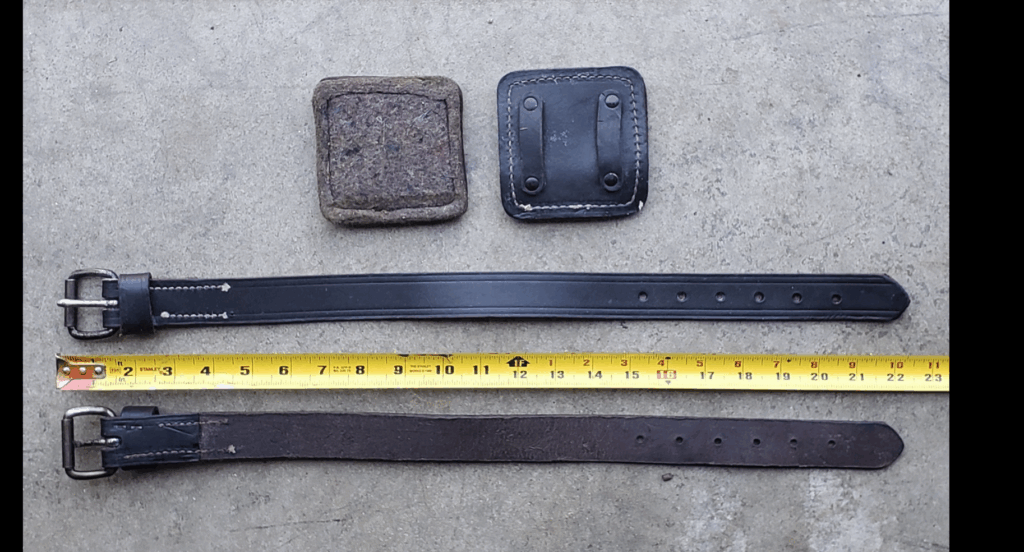
Note that the straps around the LC-5 climbers are made of leather and go through a square pad, which secures them to the upper calf and prevents chaffing. One side of the pad is leather, and the other side is the kind of cloth used to insulate the interior of canteen covers. This cloth is SAE F3, which is still in use today.

Lineman’s Climbers LC-5

Below are some images showing the straps

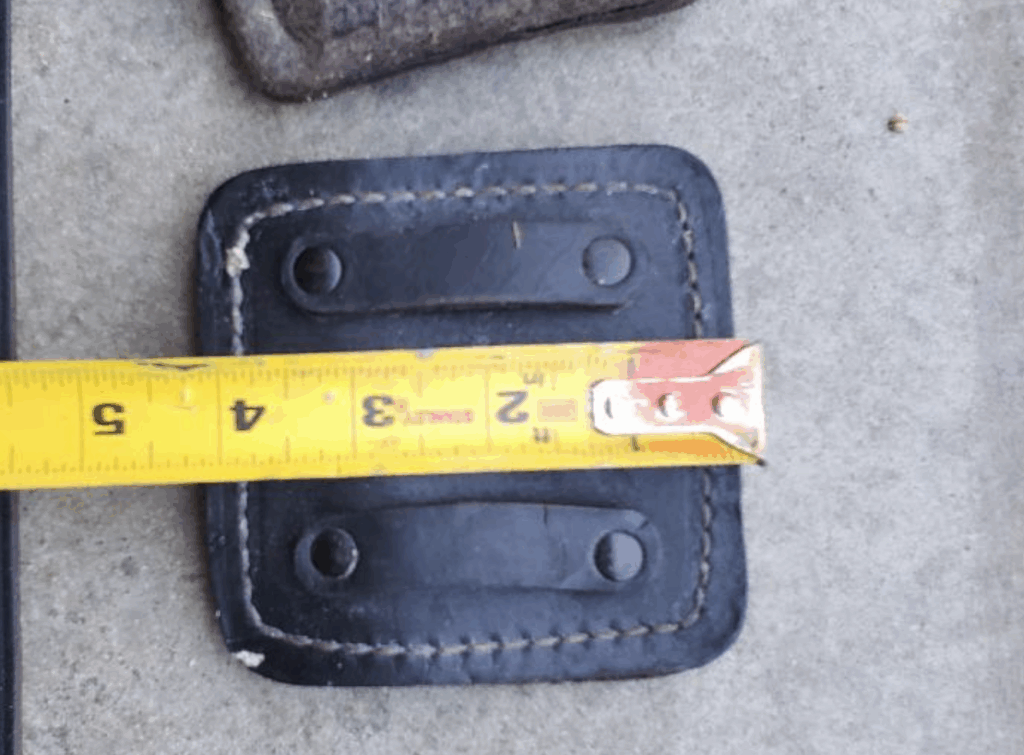
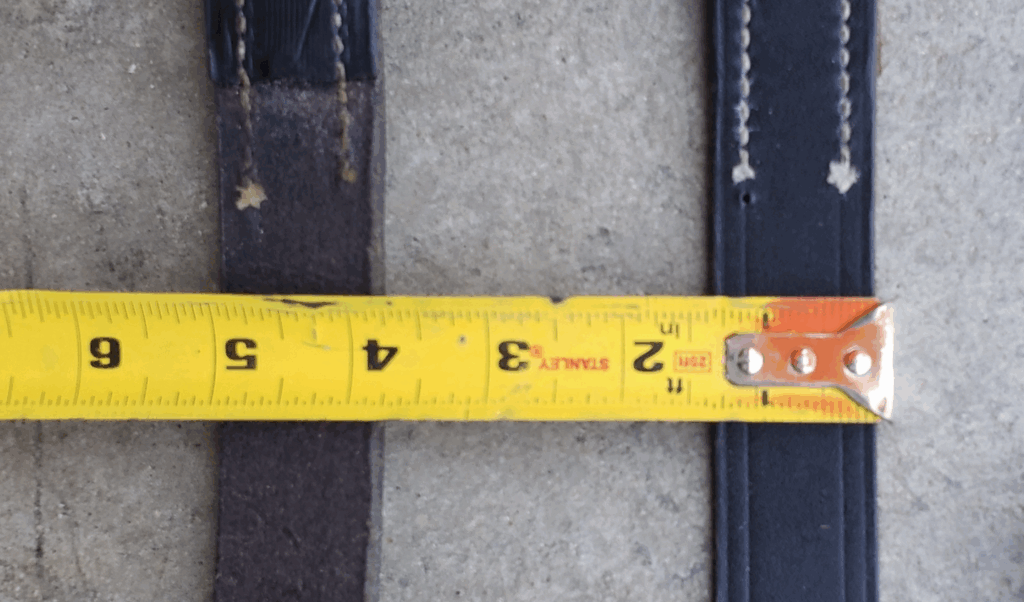
The images below show the measurements of the leg strap, leg strap loop, and calf pad. Images are taken from a New Old Stock (NOS) unit. The calf pad is about 4inches in width and length. The calf pad loops on the back are about .5 inches long. Calf leg strap is about 1.25inches wide. The calf strap loop is about an inch wide. The calf leg strap is about 22inches long.
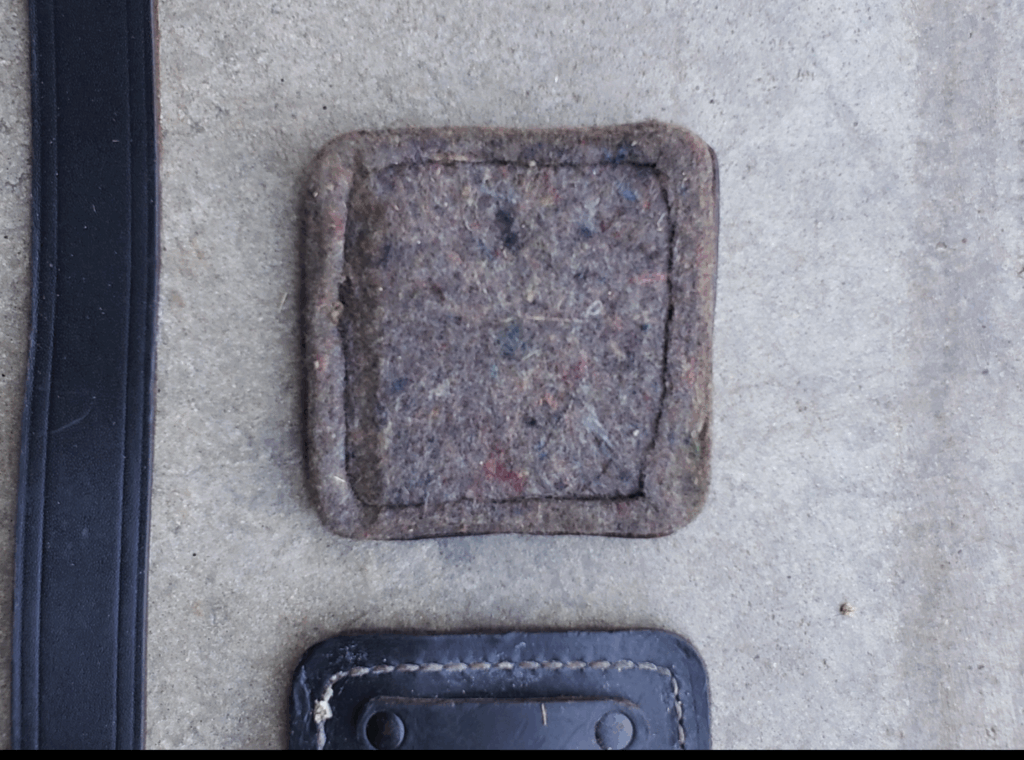
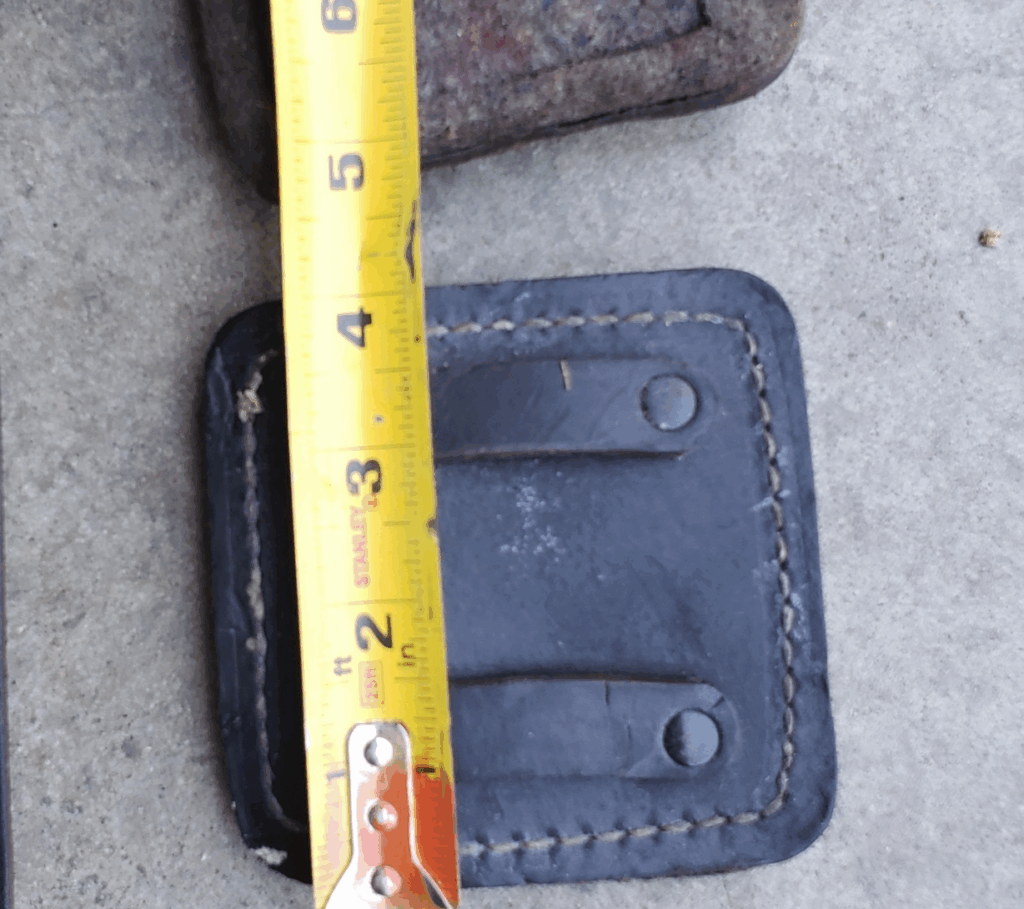
The document below shows how to measure your leg and calf to be fitted for the pole climber size.

One thing to keep in mind when looking at the LC-5 Climbers is that there are two types. One for pole climbing and one for tree climbing. Each crew had a set of tree climbers, which appear to be just some kind of commercial tree spikes. These tree spikes appear to have no designated catalog number. You can tell they are tree spikes because the gaff is much longer for digging into the meat of the tree.

LC-24 Twisting Plier, also called a Clamp: Used to crimp, twist, and splice wire.
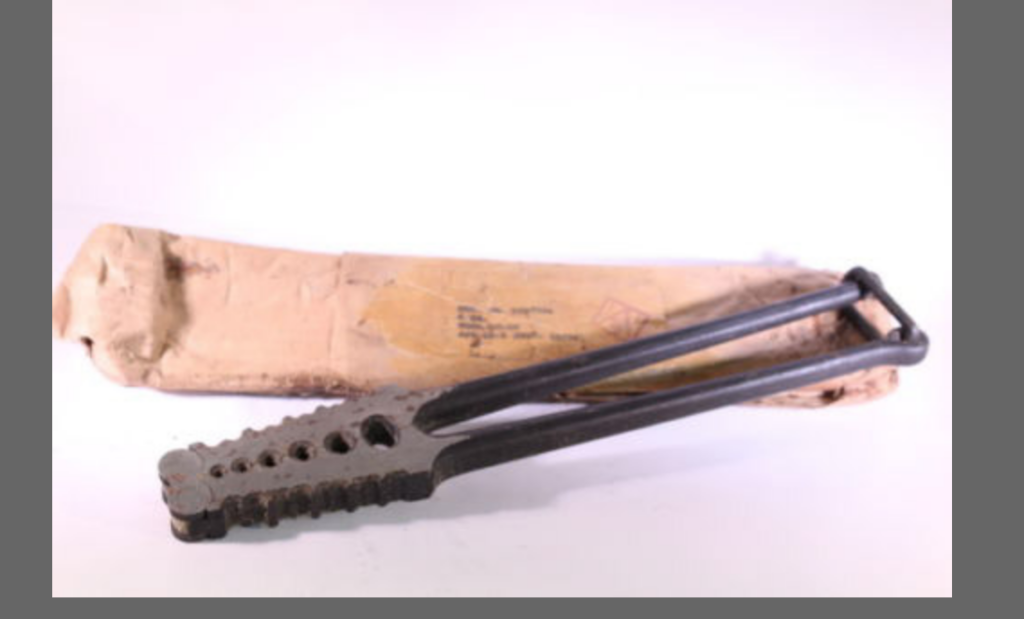
TL 107 Pliers, 8″: 8in in length, straight nose, steel.
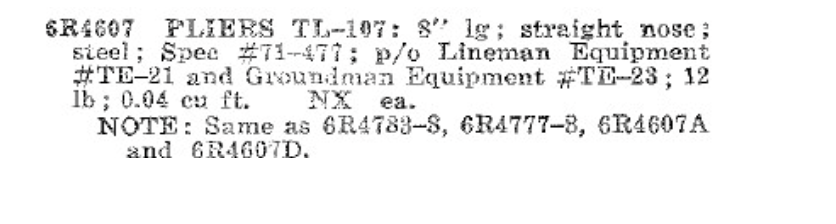
Sig5, Class 6, 6R

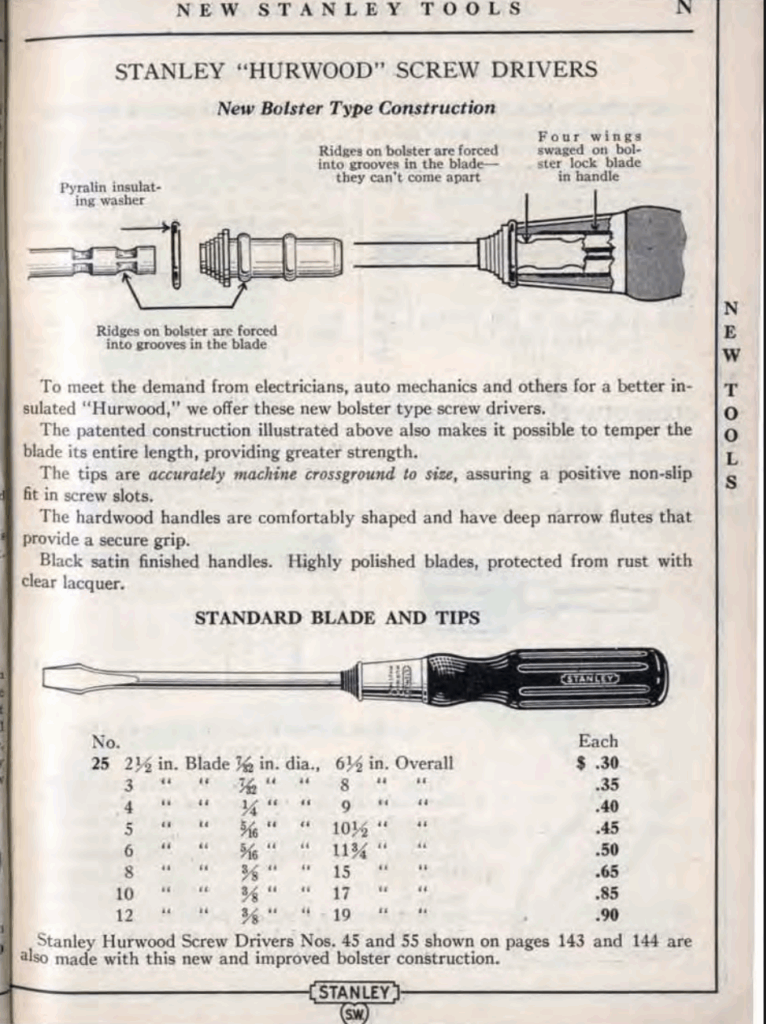
TL-106 Screwdriver: The screwdriver is similar to the Stanley 1934 # 25 driver. It had a 10-inch blade with a 3/8ths tip and 17in overall length. In 1934, it cost .85 cents.

Note that some screwdrivers might say “Forval” on the handle. This appears to be a French-made screwdriver. It’s unclear if this is a post-WW2 production or if the US Govt contracted with French companies after D-Day to produce these, which would make them “wartime dated”.

Now the specs say “or equal,” and there were other tool companies, such as Irwin, making tools during World War II. The IRWIN 800 seems like it would be a close equivalent. It is 14inches overall, the blade is 10 inches, and the blade tip seems to be close to 3/8ths (though depending on how you eye it might be 1/4th)

Additional images of the TL-106 Screwdriver can be found on Worthpoint here and here.

Sig5, Class 6, 6R

LC-25-A Lineman Wrench: The LC-25-A Wrench was used to secure cross beams to telephone poles. It differs from the LC-25 wrench. See the “load out” images towards the bottom for the differences in appearance.
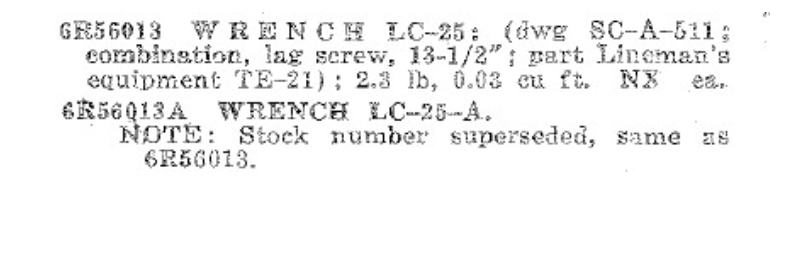
Sig5, Class 6, 6R

LC-29 Gloves, Rubber: This was not part of TE-21 but something they likely kept on hand. Black in color. Likely worn under the leather gloves for working with exposed lines, as rubber is an electrical insulator. It came in three different sizes, I believe.
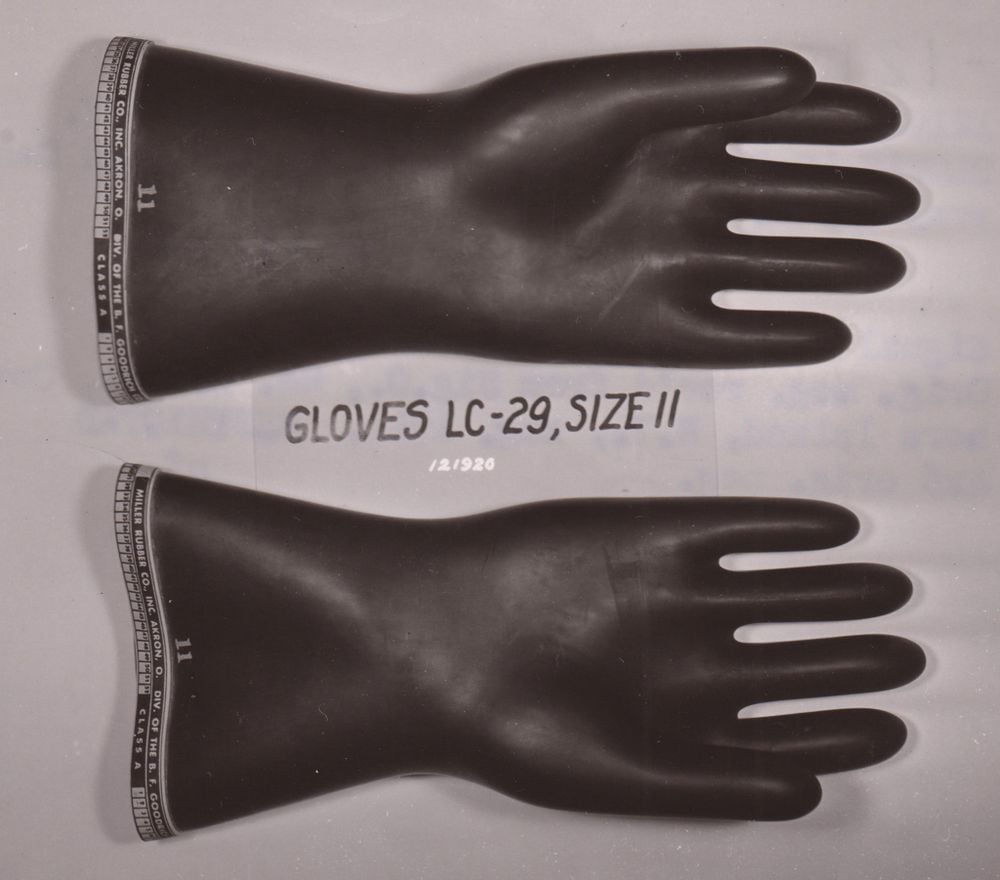
LC-29 Gloves, Leather: It’s unclear to me if the gloves below are World War II vintage, but I suspect the gloves looked similar

TL-144 Gaff Gauge: Used to measure the spikes on the climbers. This was not part of TE-21 but something they likely kept on hand. It may have come in a few different designs as shown below. However, neither design shows any kind of cut in the base/short reference line area.

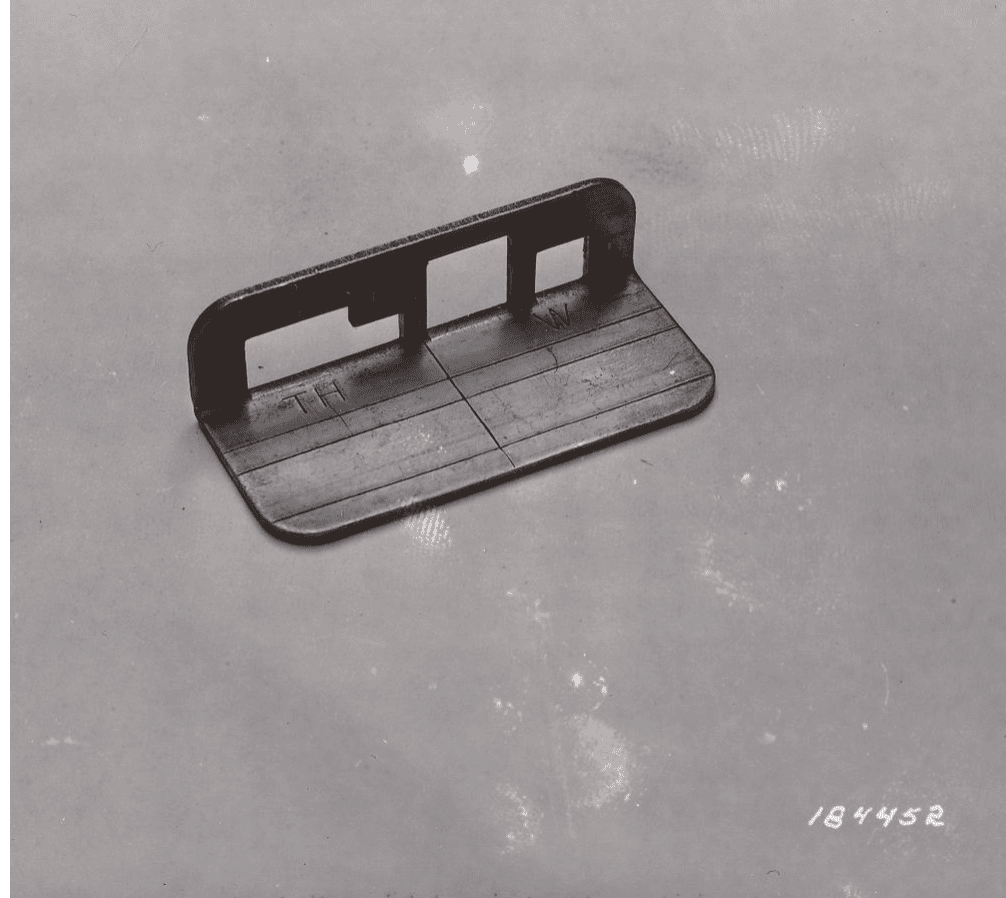
From FM 24-5 Signal Communication Oct 1942, pg. 208. The word “gage” is likely a misspelling.

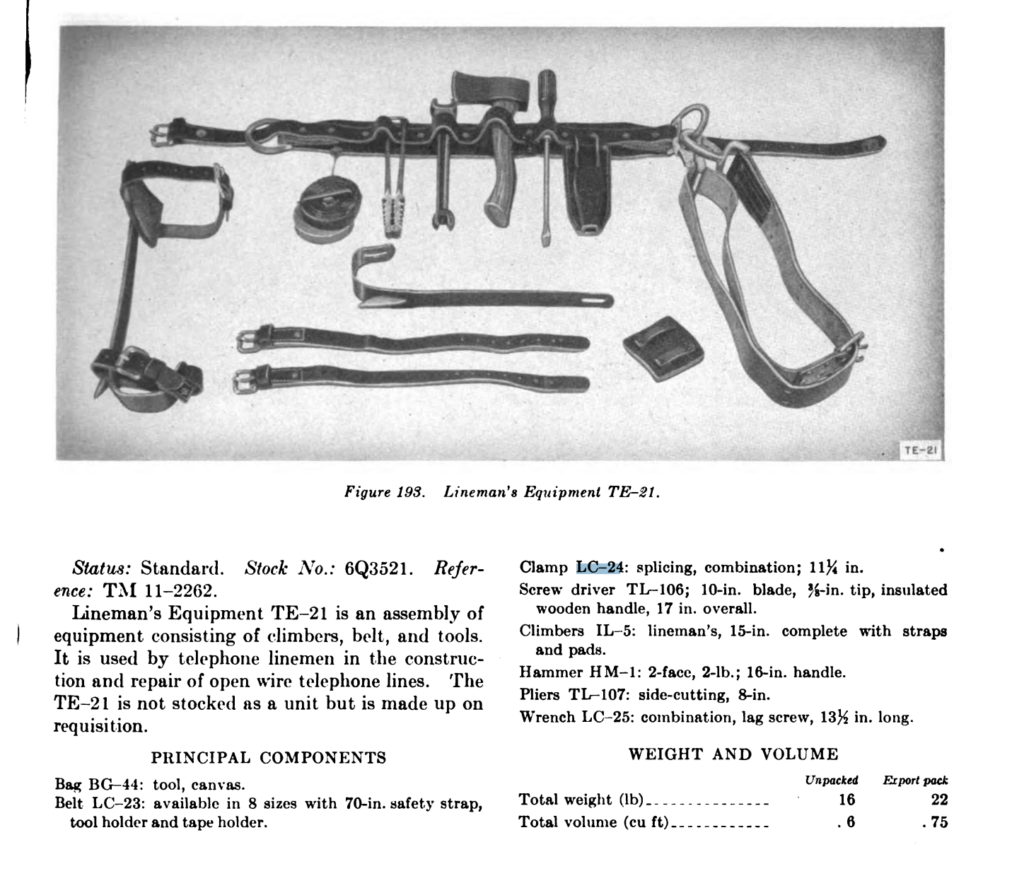
Lineman’s equipment TE-21: When laid out looked like this. I suspect some of this stuff was traded off between the guy on the pole and the guy on the ground. Also, the image might be a post-war one, as the Hammer, HM-1, isn’t listed. Instead, a TL-39 Hammer is listed.

Via RadioNerds; A display “load-out” type image
From TM 11-487 Oct 1944, pg 144. Shows the equipment for TE 21, TE 23, and TE 27a. I suspect that many of the tools were interchangeable on the job site.
Linemans Equipment TE-21
Post War Lineman’s Equipment TE-21 March 1951 via TM 11-487B; A display load out type image
A display “load-out” type image. This is probably a later image because the LC-25-A Lineman Wrench appears
Lineman’s Equipment TE-21 “load out” type image. This is an earlier one because it shows the LC-25 Lineman Wrench.

Groundman’s Equipment:

LC-23 belt w/o strap [late ’44 date]:

LC-10 Gloves, Leather:

HM-1 Hammer, 2lb: This is a double-faced engineer’s hammer with a 16-inch handle and a weight of 2 pounds.
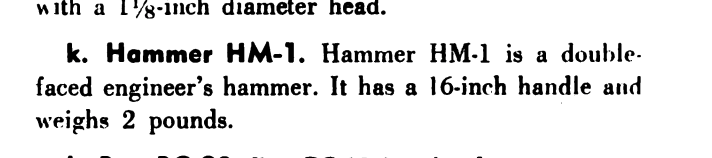
Now, according to the May 1947 TM 11-372 field manual, the HM-1 hammer is also called a Lineman’s Hammer and is 2.5 lbs and 15 inches in overall length. I guess that some “bean counter” must have mis-measured it, and it’s the HM-1. There’s also a TL-39 Hammer, which is the Claw Hammer. Though I’m unsure why they used the TL “Tool” nomenclature rather than the HM “Hammer” one to describe this hammer.

Groundman’s Equipment TE-23: When laid out, it looked like the following:

Groundman’s Equipment TE-23 March 1951 via TM 11-487B

Other items:

2 DR-4 reels [no -A suffix]:

2 DR-8 handheld reel rigs [no -A suffix]:

1 Bag, BG-44:

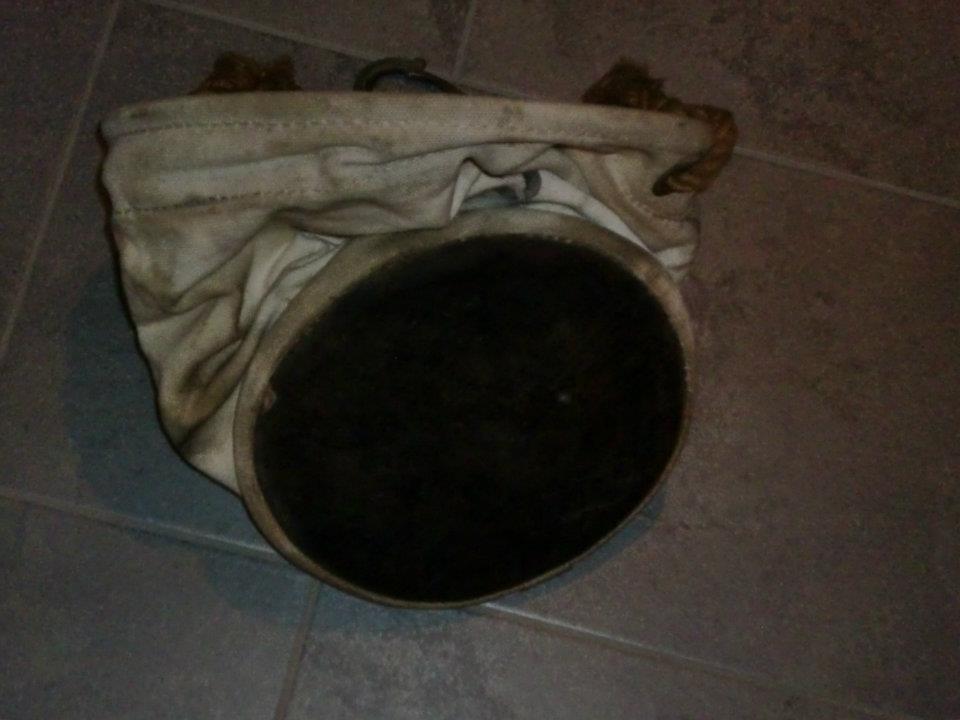
2 LC-57 Buckets, Canvas: A white canvas bucket for, likely, hauling tools around and up poles.
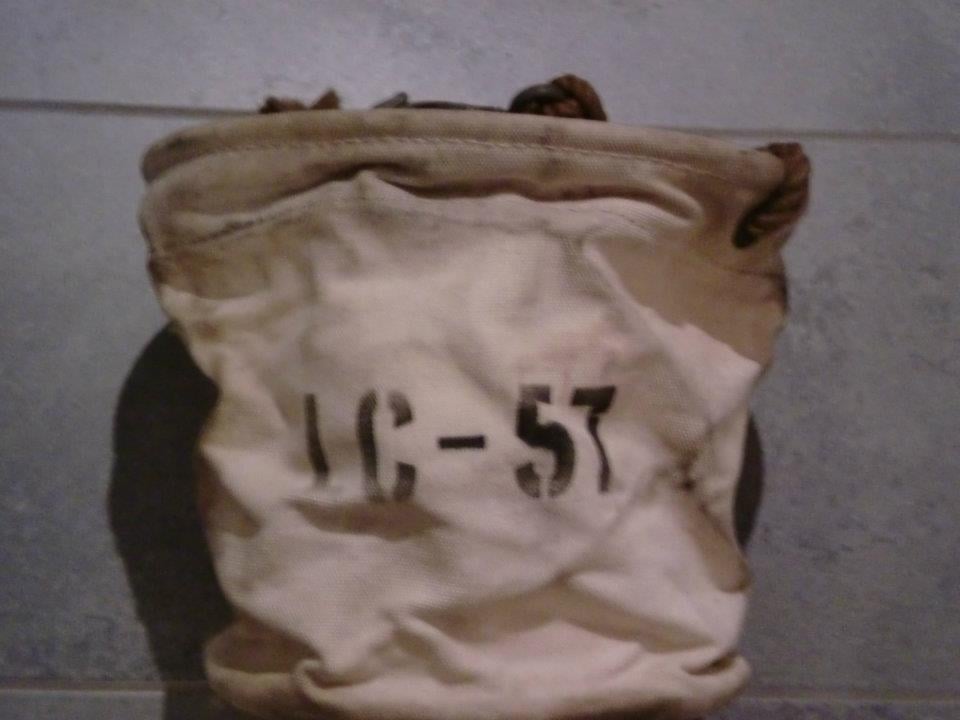
According to the TM 11-372 Telephone Cable Splicing Manual from May 1947, the LC-47 circular tool bag bucket is made of unbleached cotton duck cloth with an oak tanned leather bottom. 12 inches at the top, 8 inches at the bottom, and either 12, 16, or 20 inches in depth. It had rope handles fitted into a metal ring. Now, the fact that the bucket came in different depths presupposes that there are different model variants of the LC-57.

Describing materials and sizes of the LC-57 Bag Bucket
An example of a probable commercial LC-57 bucket

LC-25-A Lineman Wrench Wrapper

The LC-A wrench looked different when compared to the A version.

The LC-25-A Wrench was used to secure cross beams to telephone poles. I purchased mine off of eBay for 30 dollars in March 2025, shipped. It came in new, unopened condition. It was wrapped in two brown paperish wrappers with a paper tag attached to it.

The first tag was an inspection wrapper dated 3/1960. The second tag was the initial packing tag. It was dated 11/1951.

Now, to my knowledge, the wrench didn’t change between WW2 and the Korean War. I don’t have the wrappers, but the 11/1951 wrapper is 6in long and 2in wide. The 3/1960 is 7in long and 2in wide. You can download a pdf here if you want to try and recreate it.

Tool Set TE-16 and Tool Set TE-56

Below is the list of tools and equipment contained in both sets. They come from the TM 11-372 Telephone Cable Splicing Manual from May 1947. While post World War II, it seems the equipment for the sets wouldn’t have varied by much, if at all.

Posted on

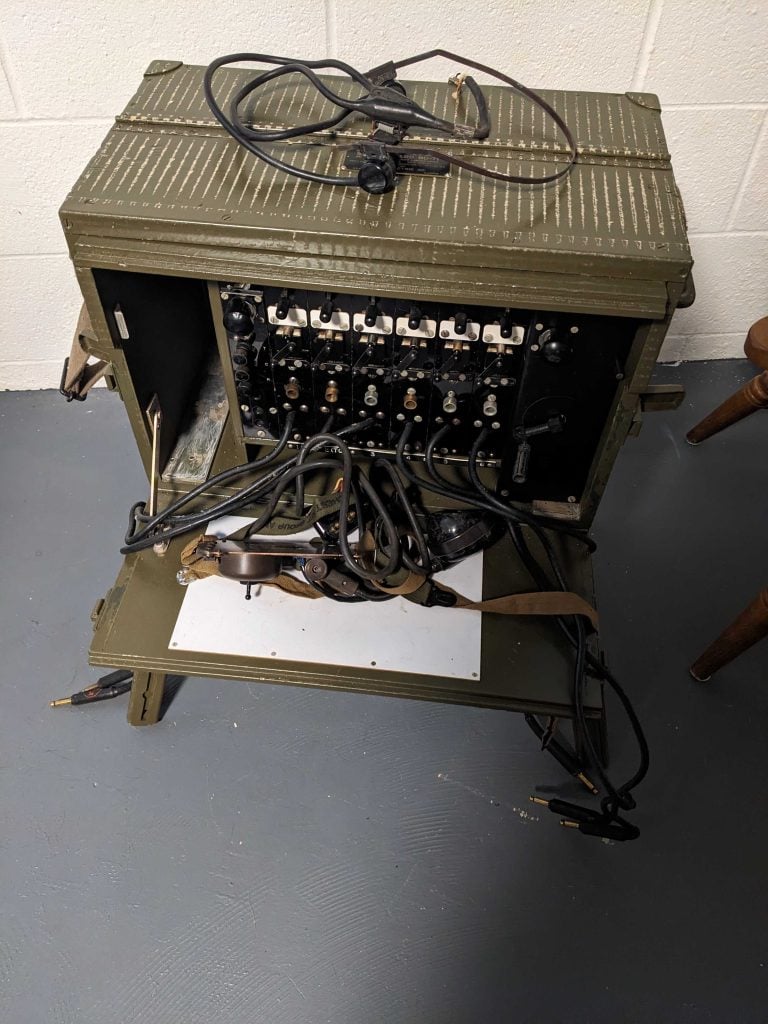
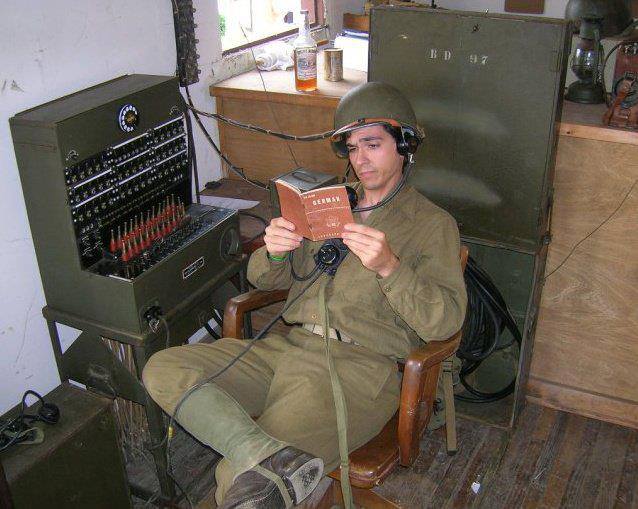
French Repacked BD-71 Switchboard

Advanced Guard Militaria offered a French repacked switchboard for $250 dollars, shipped. When I saw that I pounced on it as it was a good price and I wanted to rebuy the BD-71 switchboard I once had. I bought that one for $80 dollars at an auction in 2011.

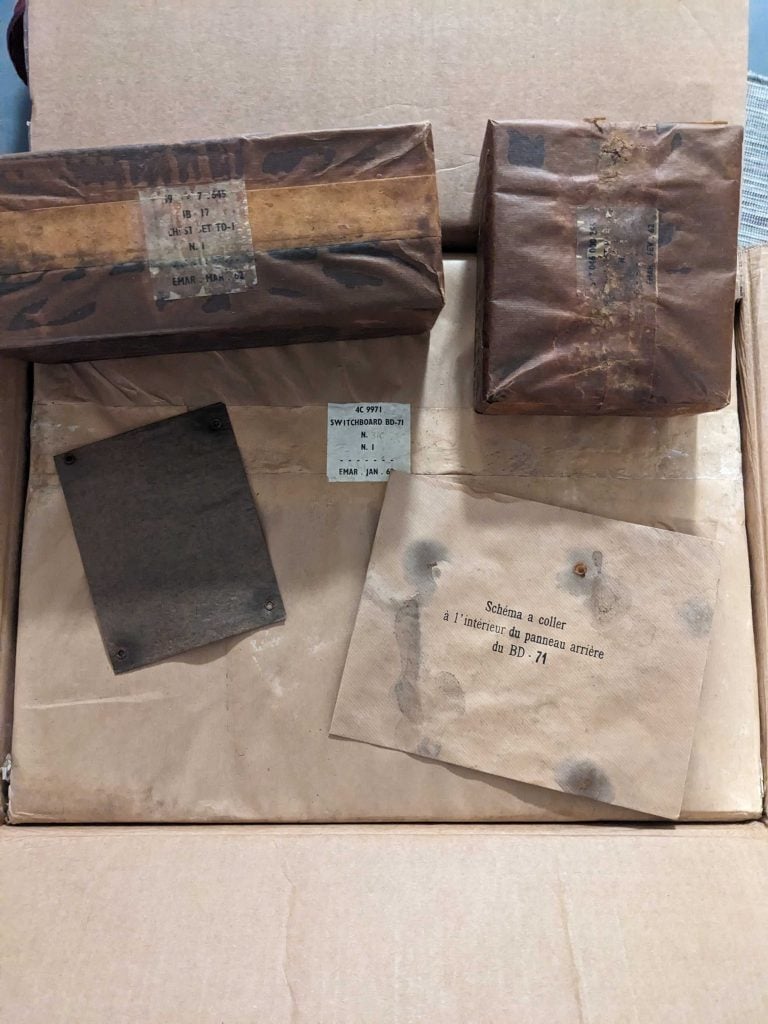
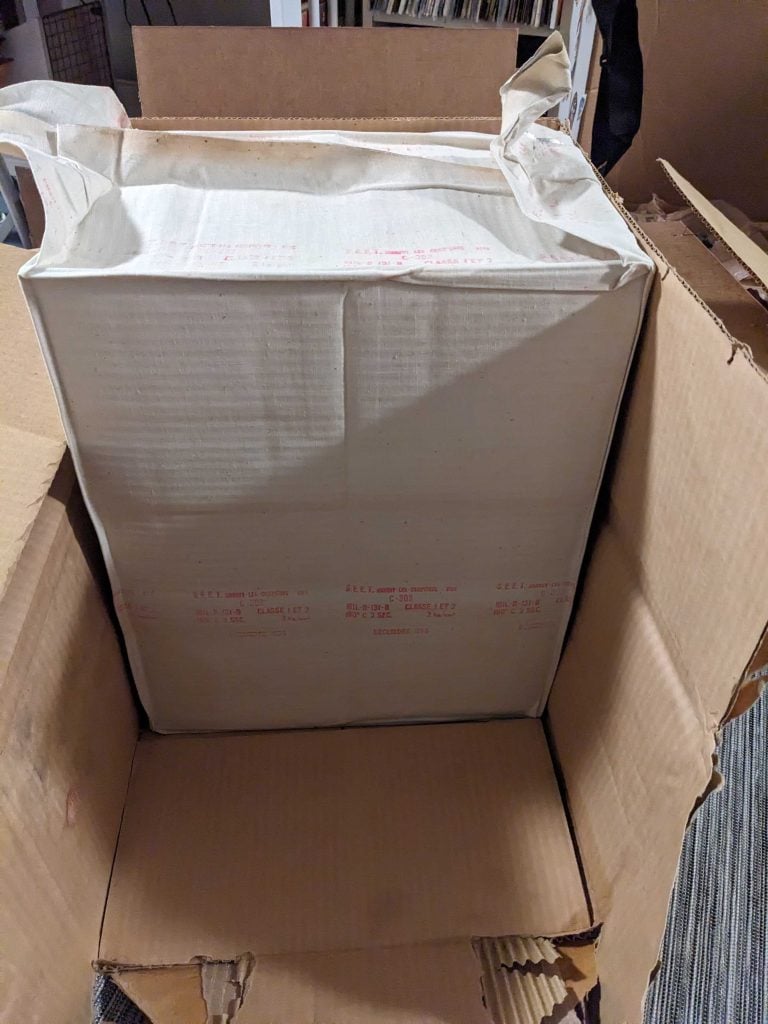
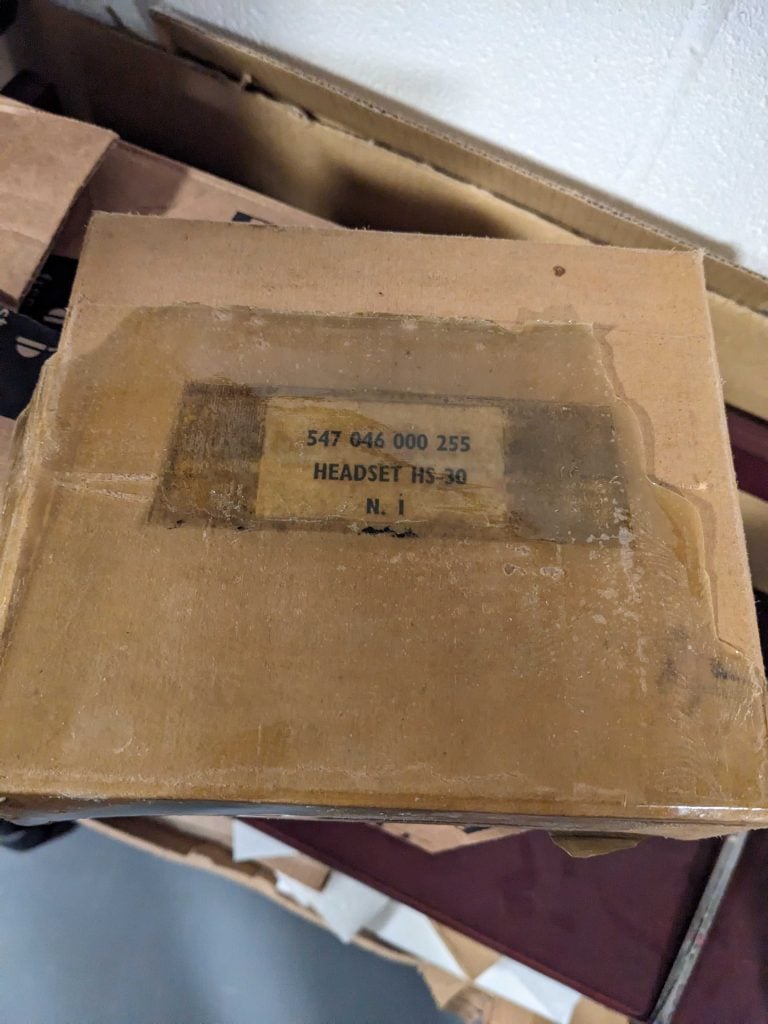
The switchboard came in a large box and a smaller box contained the accessories.

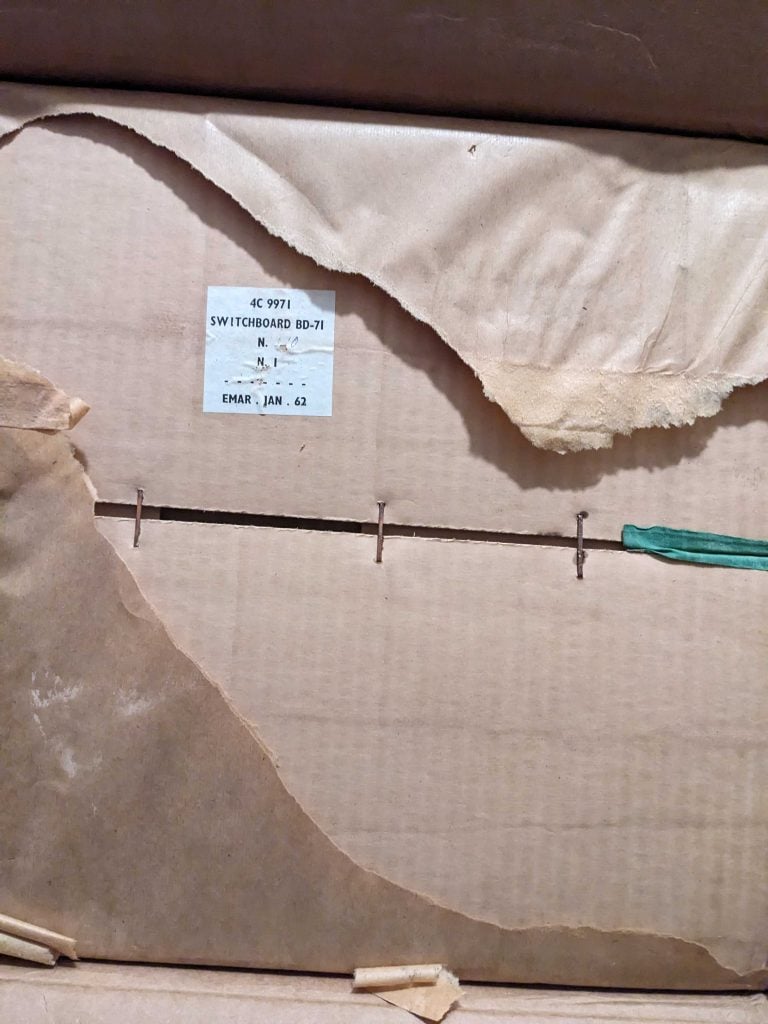
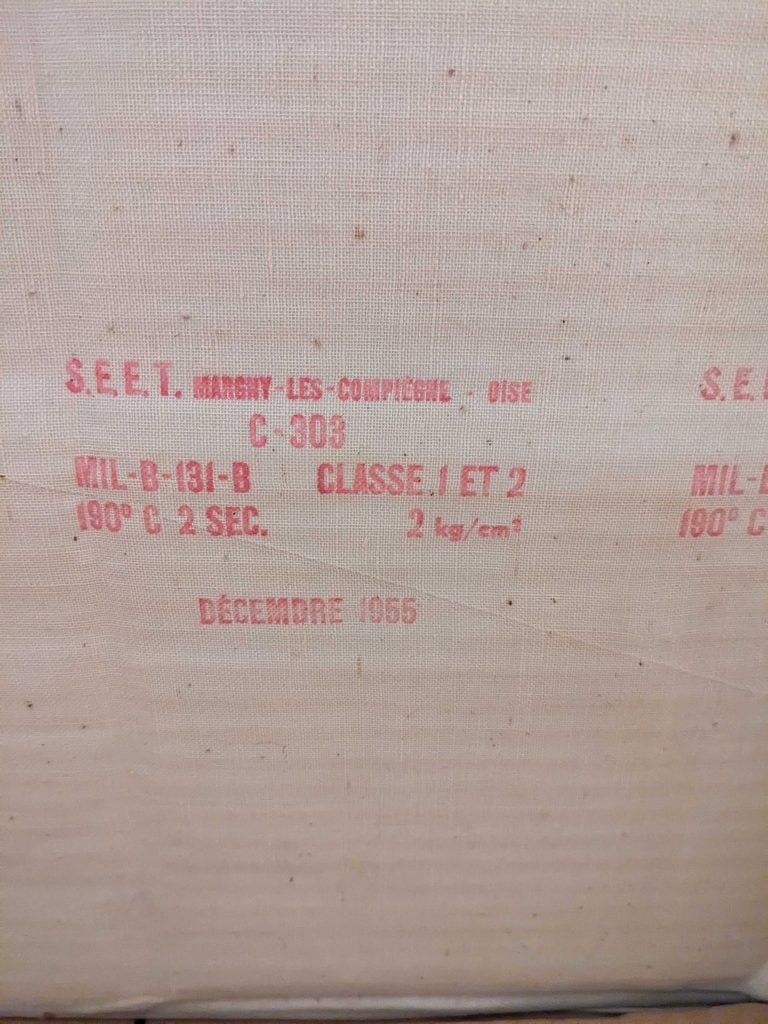
Unpacking the switchboard was like peeling back an onion. First I had to peel back some paper coverings and open the box.

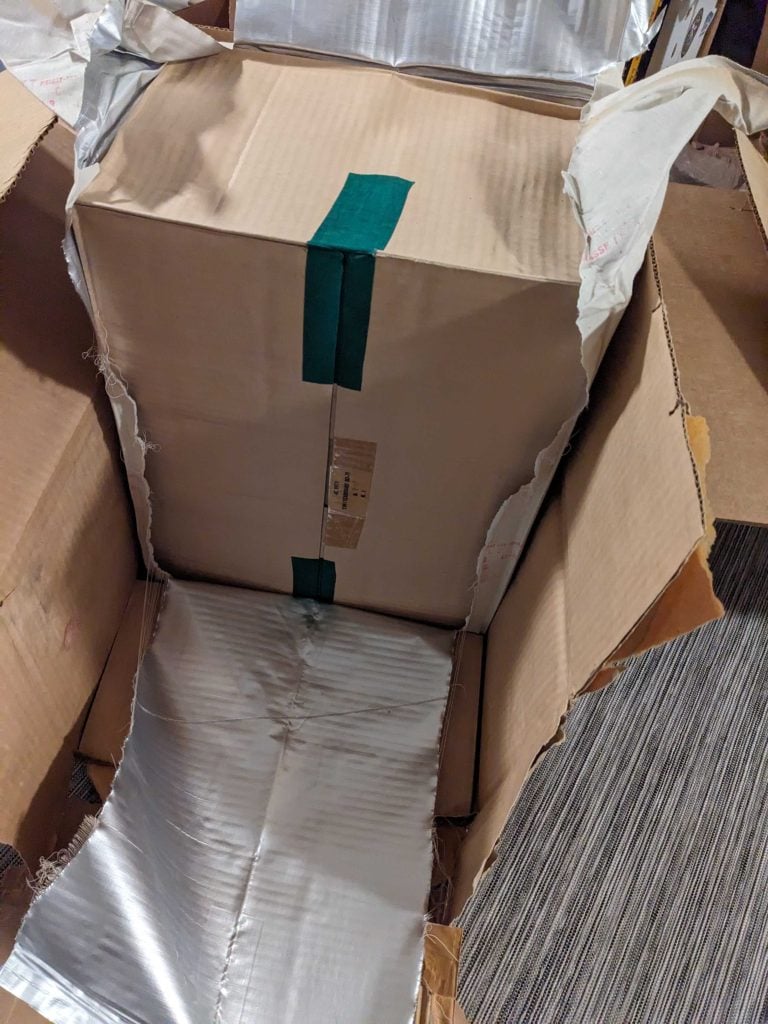
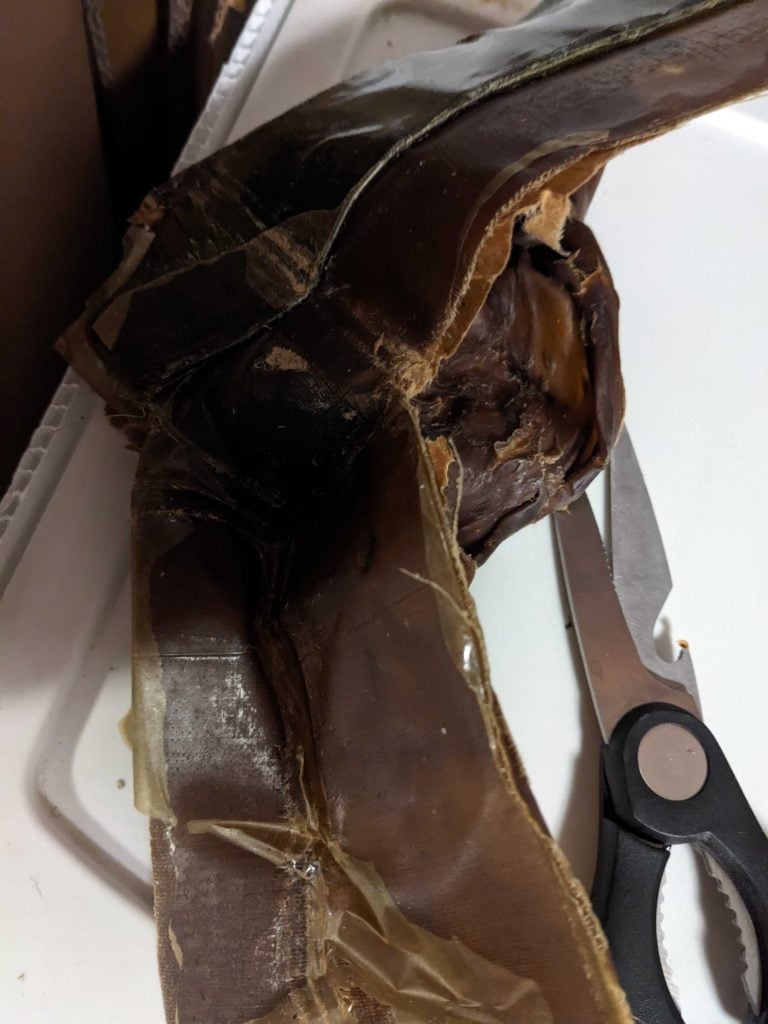
Next, I discovered some kind of canvas, metallic-backed waterproof bag. When I opened it up, I probably should have done it outside to be safe as the bag appeared to be vacuum sealed, and yet when I opened it, I heard gasses escaping.

Who knows what kind of gas might have been pumped into the bag prior to sealing? At any rate, I got a lung full of 1968 French air.

When I opened it up, there was another box!

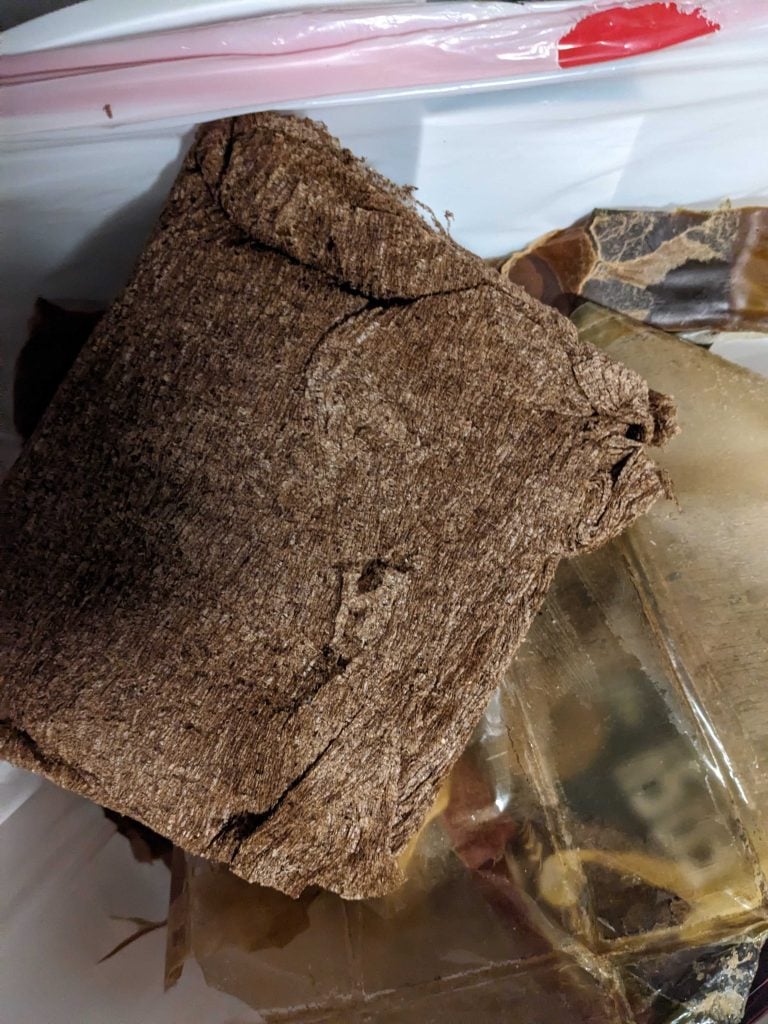
When I opened the box, the switchboard finally came into view. It was packed tightly up against cardboard (which left packing lines on the unit). It also contained this weird brown cloth-like packing material (if anyone knows what that is let me know!) –

The accessories were all in waxy and gummy waterproofed cardboard boxes. I had to use scissors to cut it open.

The results look great! I really like the switchboard, the white/tan cardboard lines not so. If anyone had an idea on how to remove them without damaging the wood let me know!

When I began to open up the switchboard, there were documents and manuals. There was a French inventory list, a French wire and circuit test, a wiring diagram, and a field manual, TM 1-330.

The wiring diagram can be downloaded as a pdf here and is 7in x 9in. The material isn’t quite computer print paper, but not cardstock. I’d say if you could find a lightweight cardstock, that’s probably the best, or just printing it off on white computer paper would also work. The diagram would be glued or taped (unsure which) to the inside access panel in the back of the switchboard.

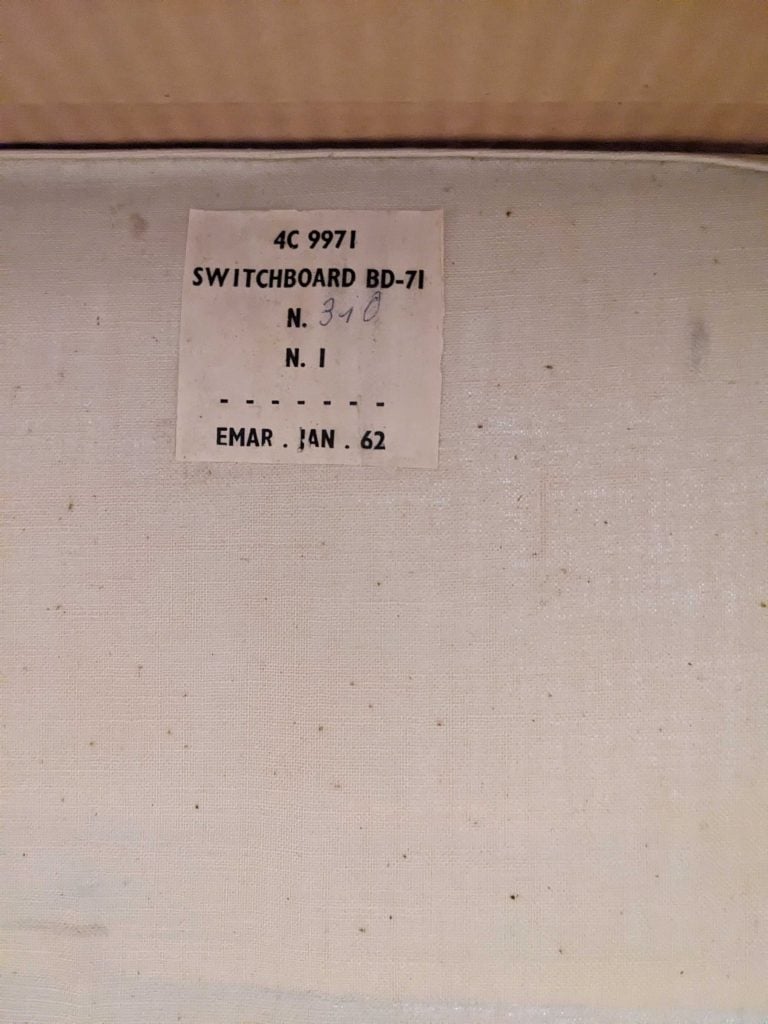
Now to make the switchboard more historically accurate to WW2, I bought a data plate and swapped it out. I kept the old French one and just added it to my bar as kitsch.

Posted on

WW2 Signal Corps and Communication Paperwork

Below is a collection of Signal Corps-related paperwork for use in WW2 Reenacting.

Radio

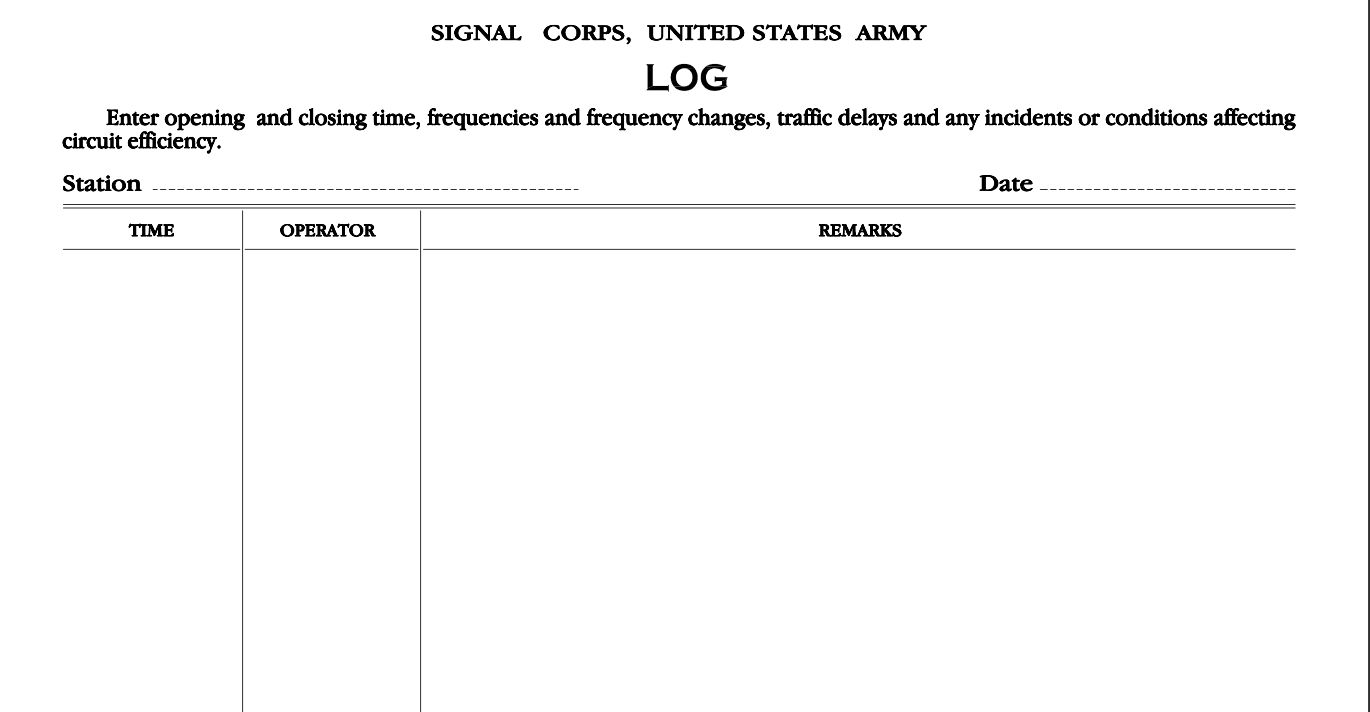
Templetone Model BP2-A5 Log Card – The Templetone Model BP-2A5 seemed to be some kind of morale radio for the troops. The log card would be placed under the front-cover so it would show when the cover was opened. Not sure why a morale radio would need a station log card?

Print in medium-weight beige cardstock. Print on both sides of the media and cut at crop marks to produce one Station Log card.

For a good history of the radio see: Templetone Model BP2-A5 “Morale Radio”.

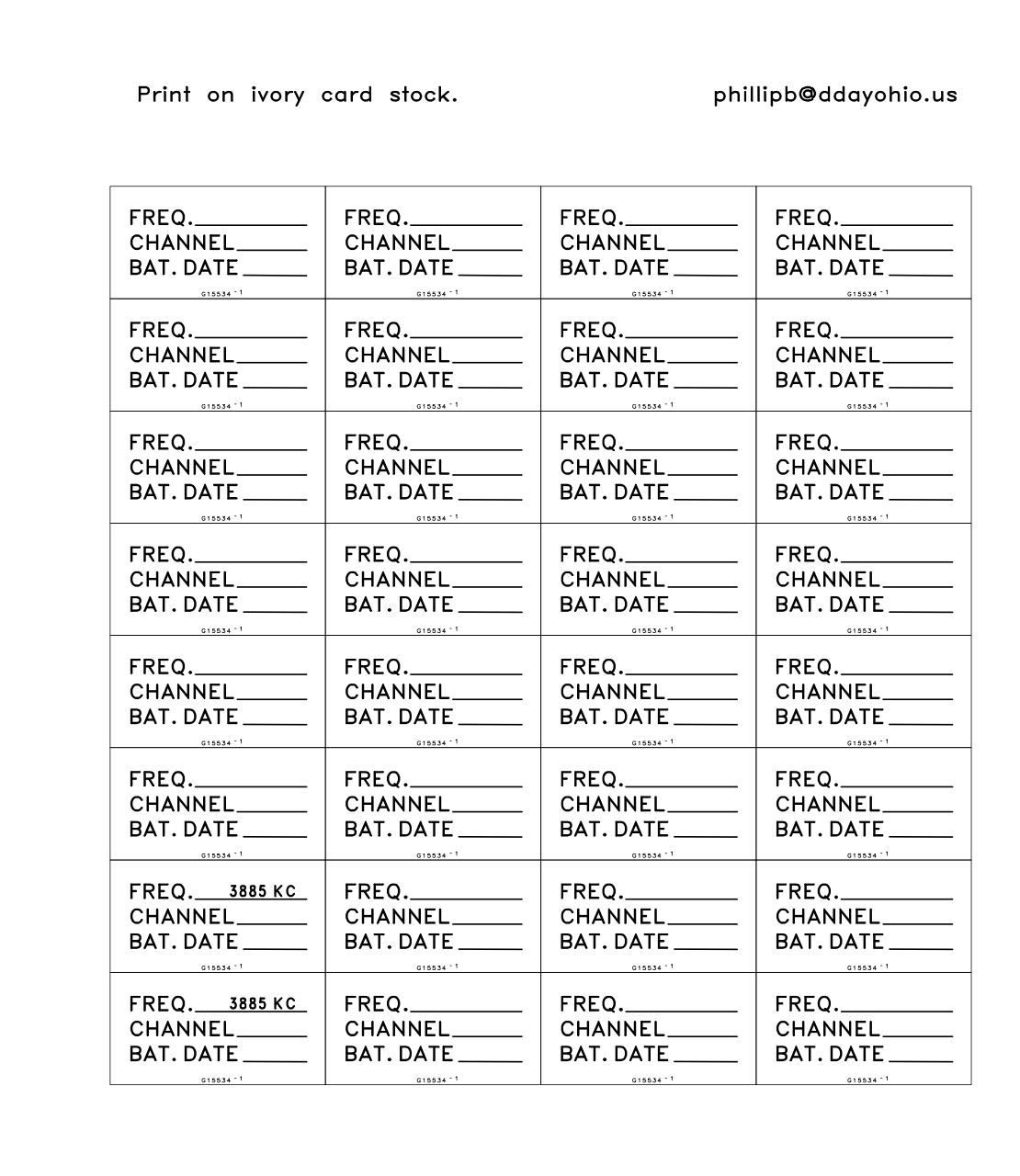
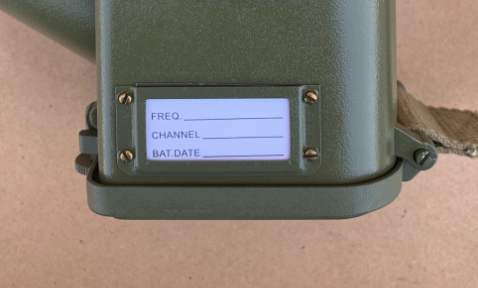
BC-611 Frequency Card – This is the card that would go into the small window of the BC-611/SCR-546 radio

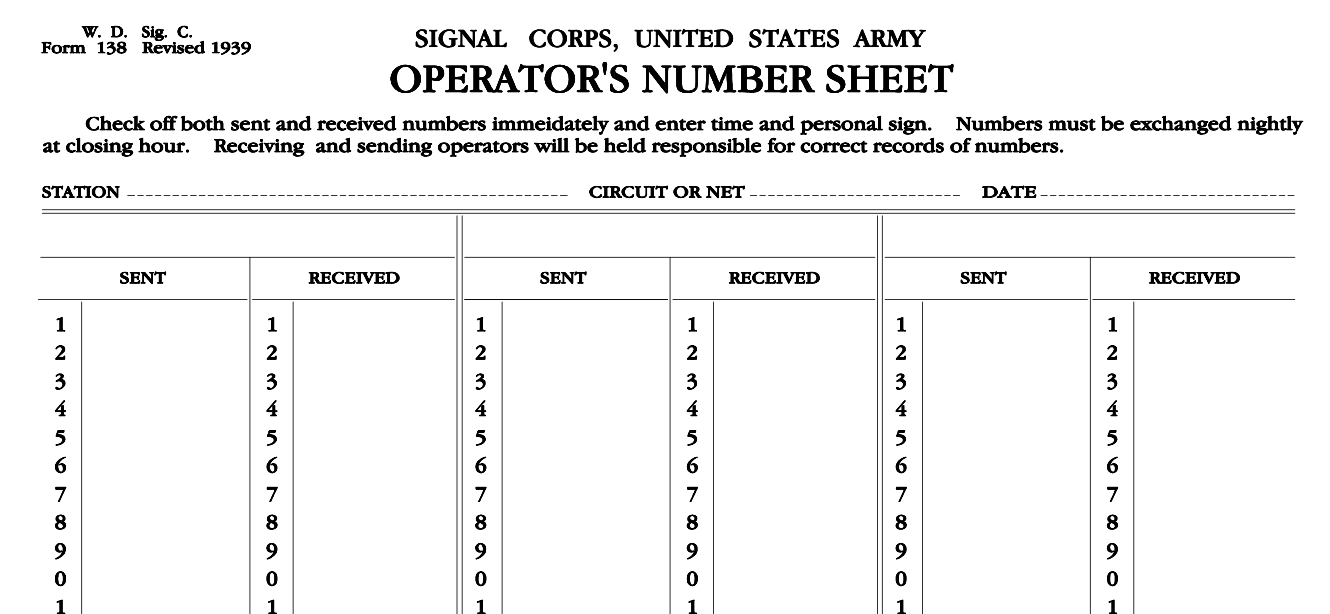
Form 138 Operators Number Sheet Front and Back | Print front-to-back pages on natural or ivory paper and stack+trim to the same size. Run a few beads of rubber cement along the top edge to have a tear-away stack.

I’m not sure what this form was exactly used for.

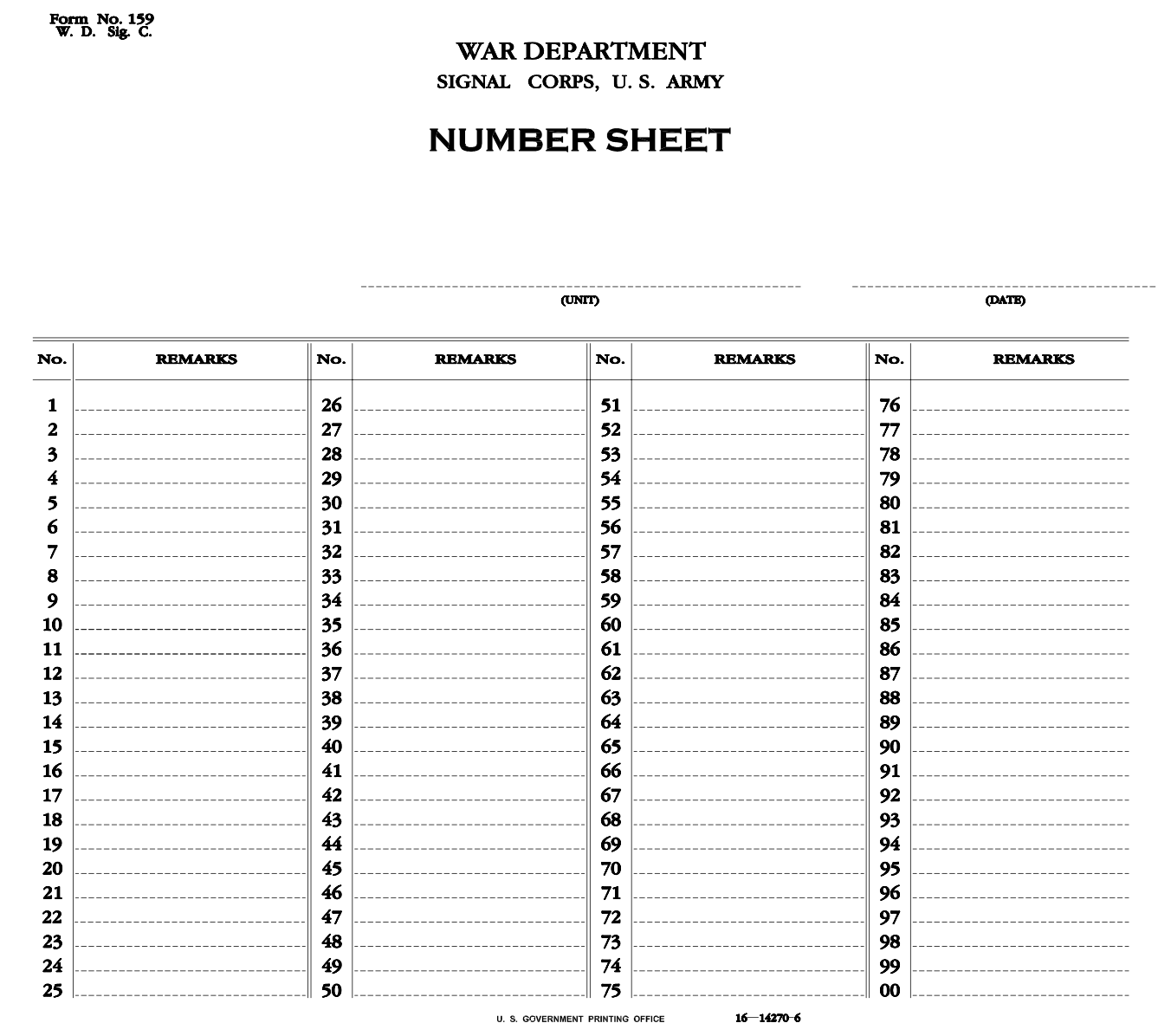
Form 159 – Number Sheet | Print pages on natural or ivory paper and stack+trim to the same size. Run a few beads of rubber cement along the top edge to have a tear-away stack.

I’m unsure what this was exactly used for.

Telephone

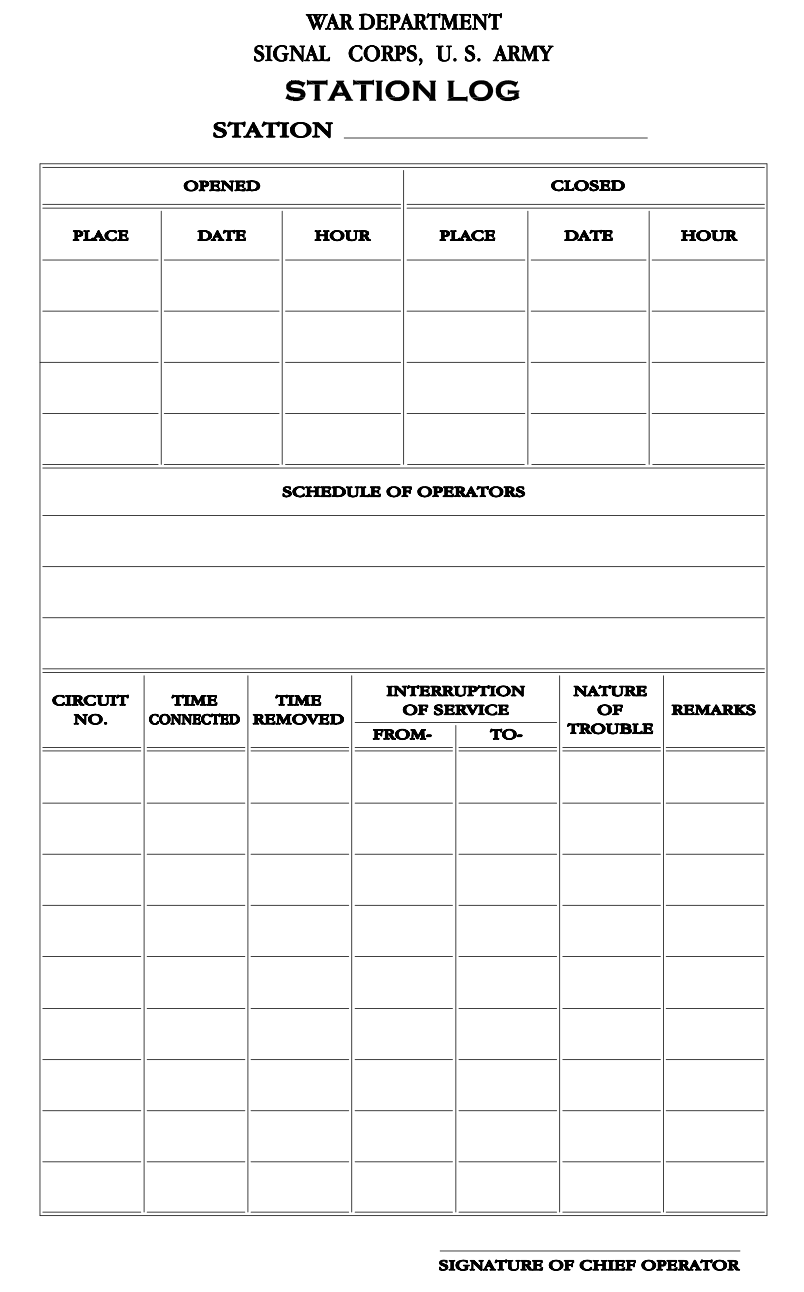
Signal Corps Station Log – Signal Corps paperwork to record traffic at what appears to be a telephone station. Form number unknown.

Print pages on natural or ivory paper and stack+trim to the same size. Run a few beads of rubber cement along the top edge to have a tear-away stack.

Other

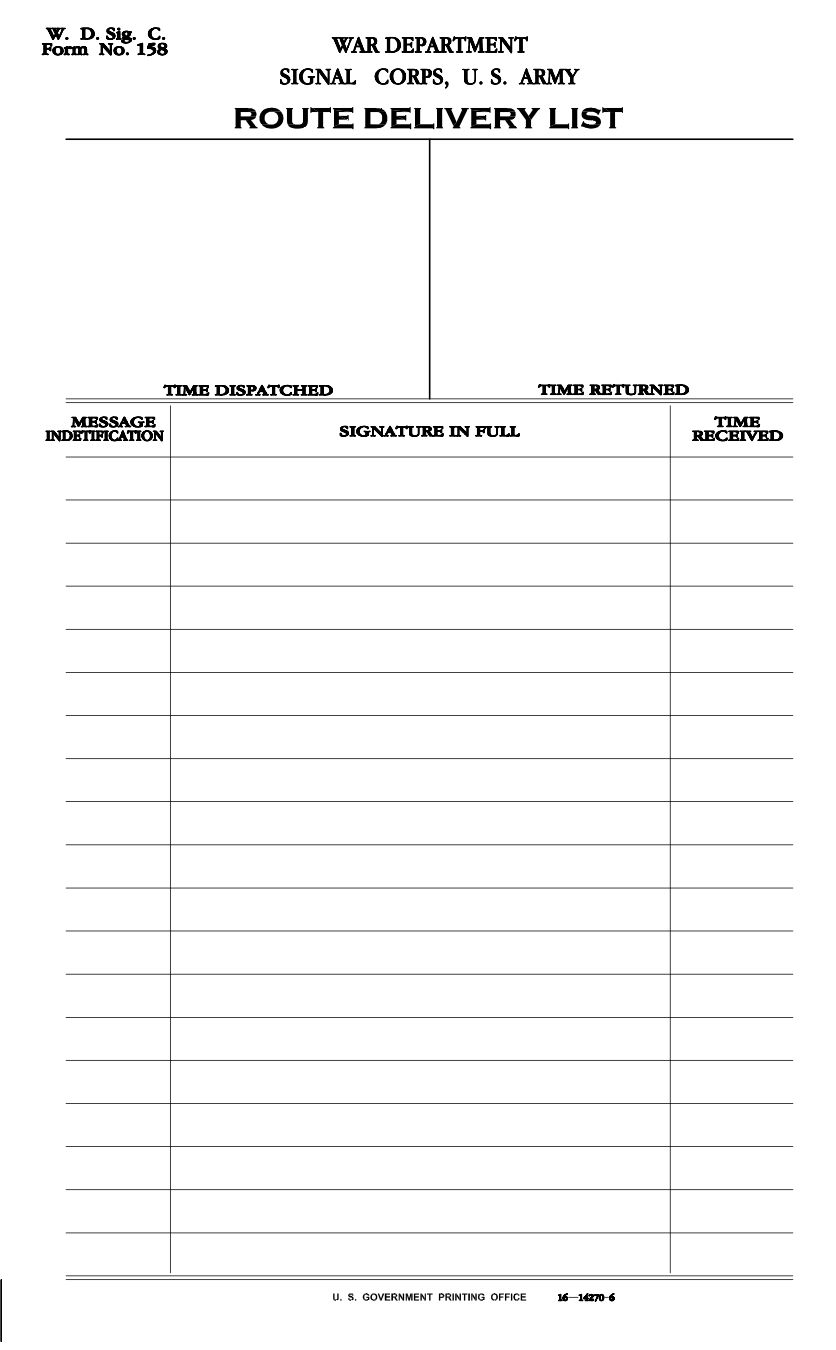
Form 158 – Route Delivery List – Signal Corps form for delivering messages. Print 25 pages on natural or ivory paper and stack+trim to the same size. Run a few beads of rubber cement along the top edge. You’ll have a tear-away pad of 50 sheets.

A “route delivery” seems to connect more points.

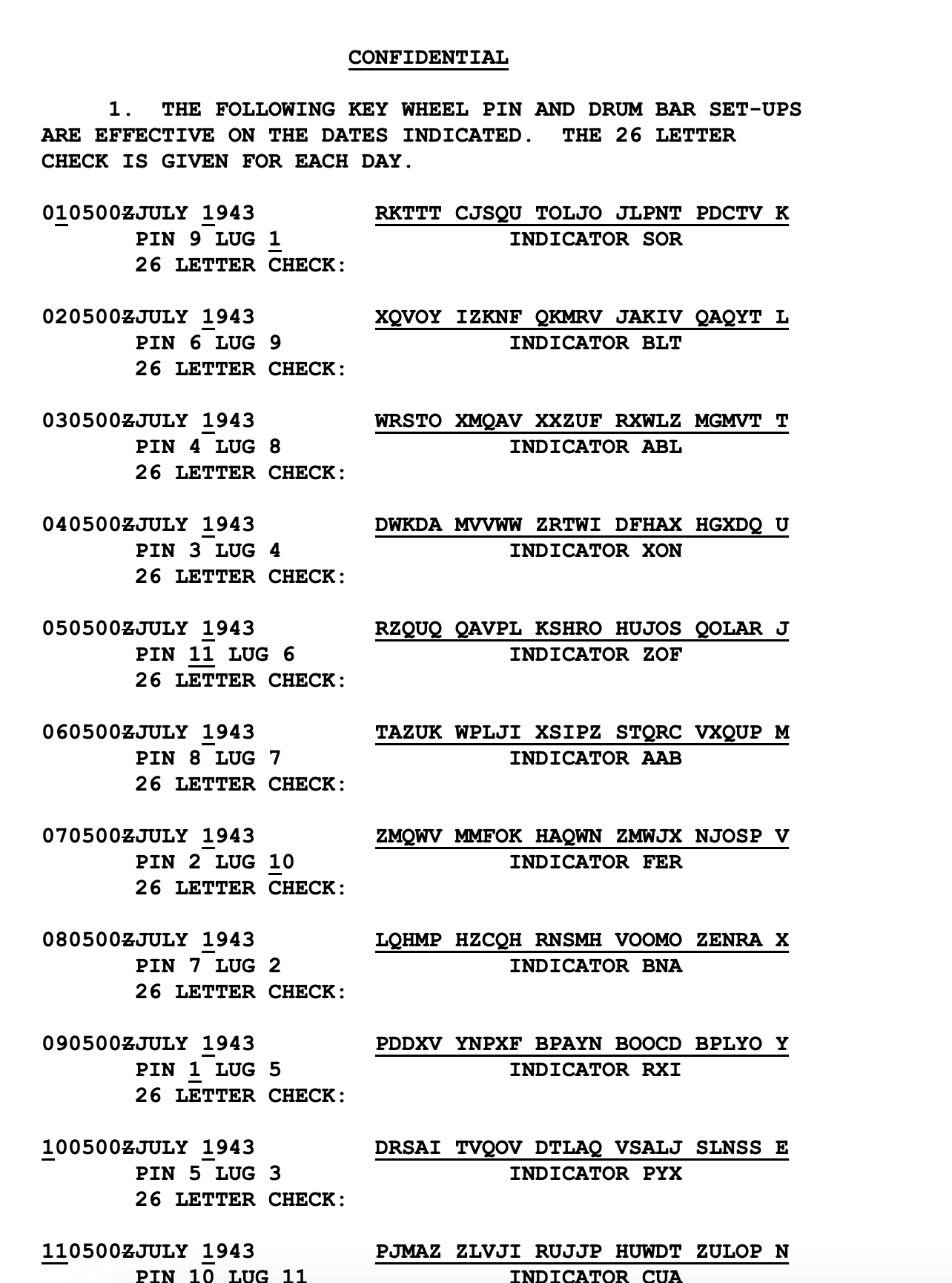
M-209 Sheets: For use with the M-209 cipher.

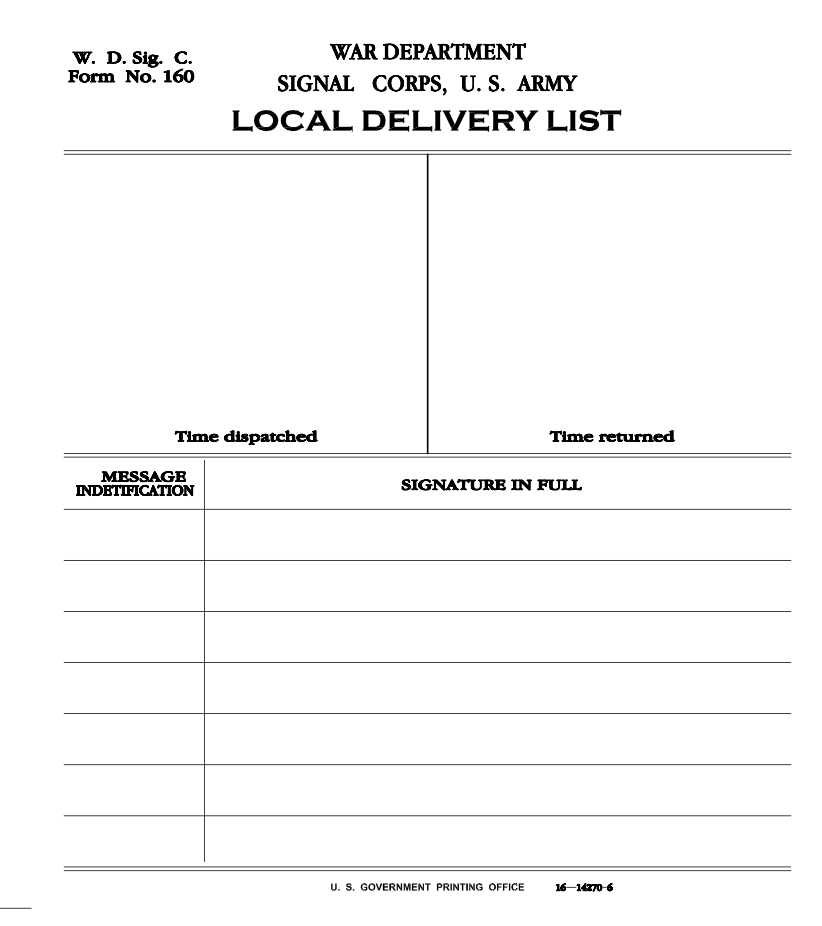
Form 160 Local Delivery List – Signal Corps form for delivering messages. Print 25 pages on natural or ivory paper and stack+trim to the same size. Run a few beads of rubber cement along the top edge. You’ll have a tear-away pad of 50 sheets.

A “local delivery” seems to connect fewer points.

Message Book M210a Front and Inside – A printable pdf file for the M201a message book. This book would be used in a message center. It would be unlikely to appear in a map case. You can download the front+back here and the insides here.

Print on regular paper and then trimmed to size. The book has overall dimensions of approximately 6-1/8″W x 4-1/4″H x 1/2″ thick. Inside the book are 25 each triplicate message forms for regular use, three each duplicate forms for carrier pigeon use, and 25 sheets of tracing paper. The back cover has an extension that can be placed under the topmost form, so that it can be filled out without marking the carbon-copies of the following forms. The book also includes instructions for its use and a list of authorized abbreviations.

For best results, print on 8-1/2″ x 11″ US letter-sized paper with no scaling. Finished forms should be 4.75in wide by 4.25in tall.

When cutting it out, save 1/4 inch of space on the left-hand side. That way the staples don’t go through the message part.

I’m not sure if anyone is reproducing these, but if they are, I’ll add a link. Note that this only includes a single blank message form and not the carbon copies or map overlay.

Now there’s also an M 210-B message book, which looks like it came out in late 1944. This is according to the Signal Corps Technical Information Letter Nov 1944 No 36. The major differences are some measurement tools on the front cover, the removal of the pigeon forms, and map overlays. This was all done to help speed up the message processing, as it was found that soldiers experienced difficulty removing the copies in the M210a book.

There’s also an M-105-A message book. I’m not sure what the difference is. If I find out I’ll write about it.

Signal Corps Technical Information Letters

Signal Corps Technical Information Letter No 18 – May 1943. Outlines new training methods, procedures, and equipment. One interesting story is how local police captured an illegal pinball den and donated the machines to Ft. Monmouth to be used as needed.

Signal Corps Technical Information Letter No 36 – Nov 1944. Outlines new training methods, procedures, and equipment. Discusses the fungi and moistureproofing techniques (which is some kind of lacquer spray), as well as the Silica Gel, used to pack equipment, and an anti-radio jamming exercise, among other interesting and nuanced signal corps minutia.

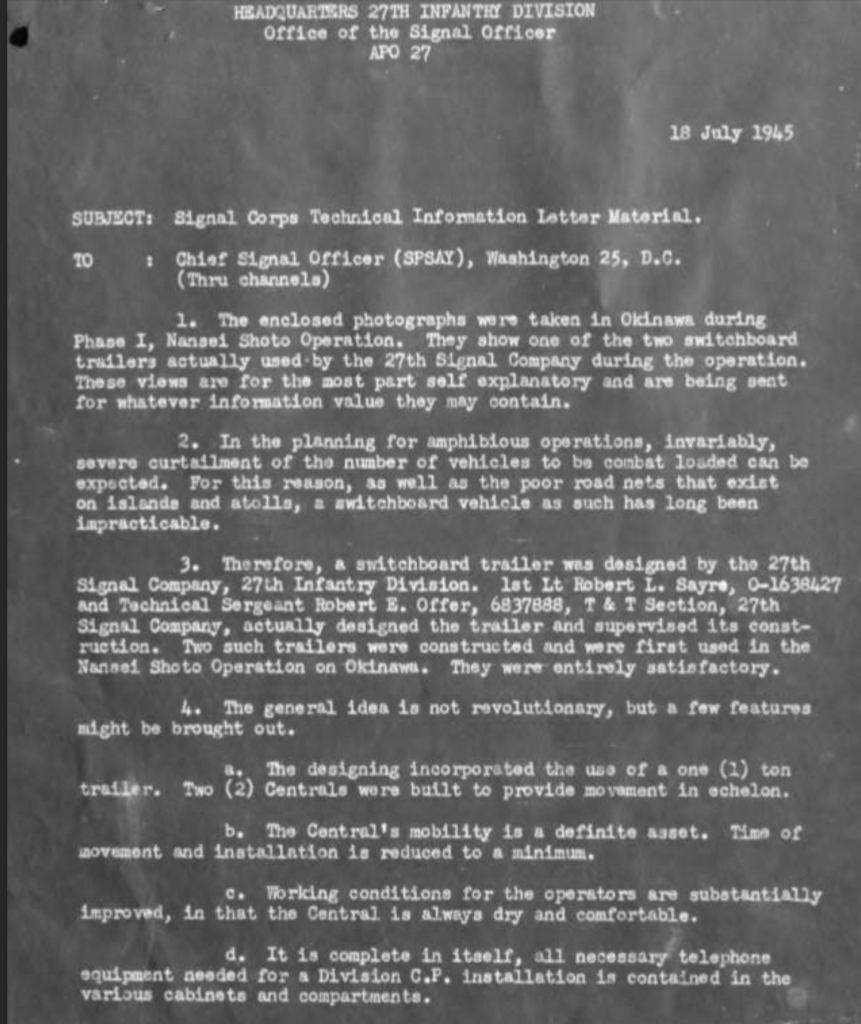
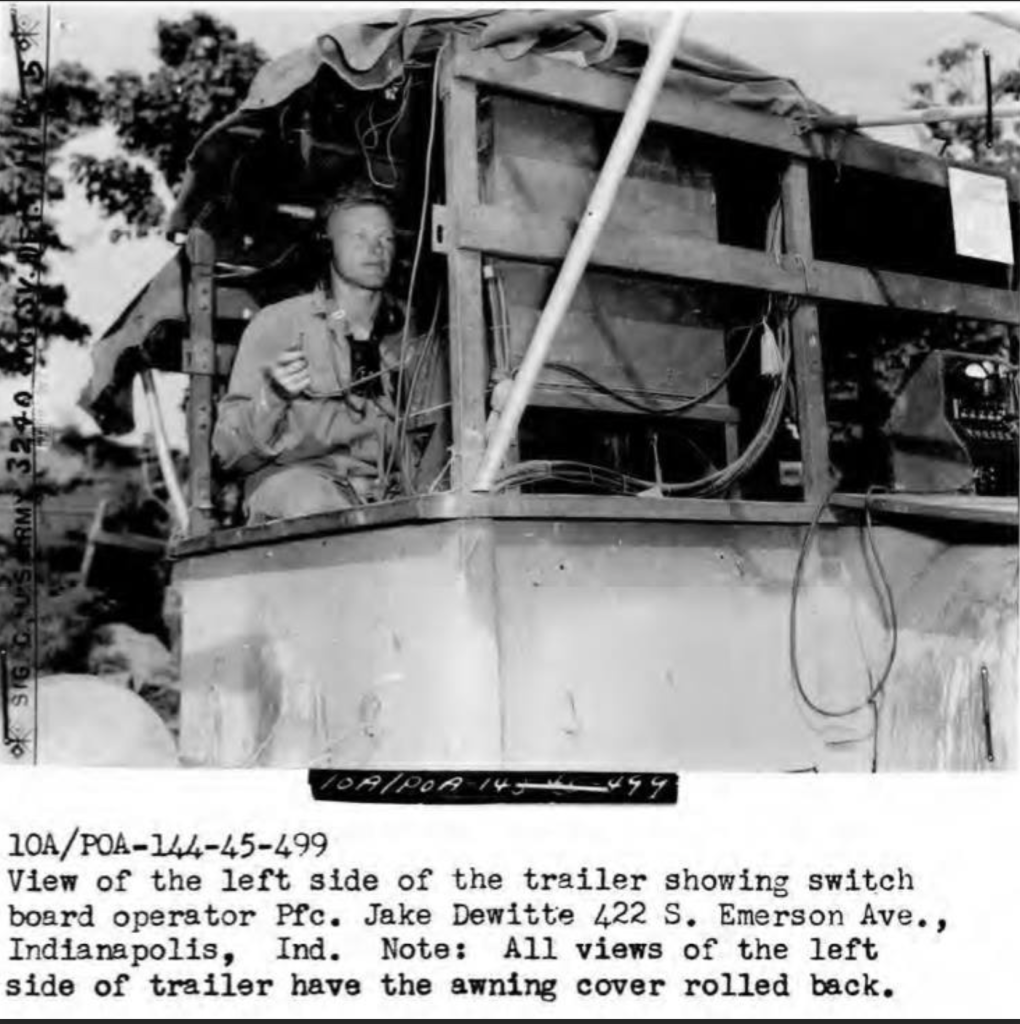
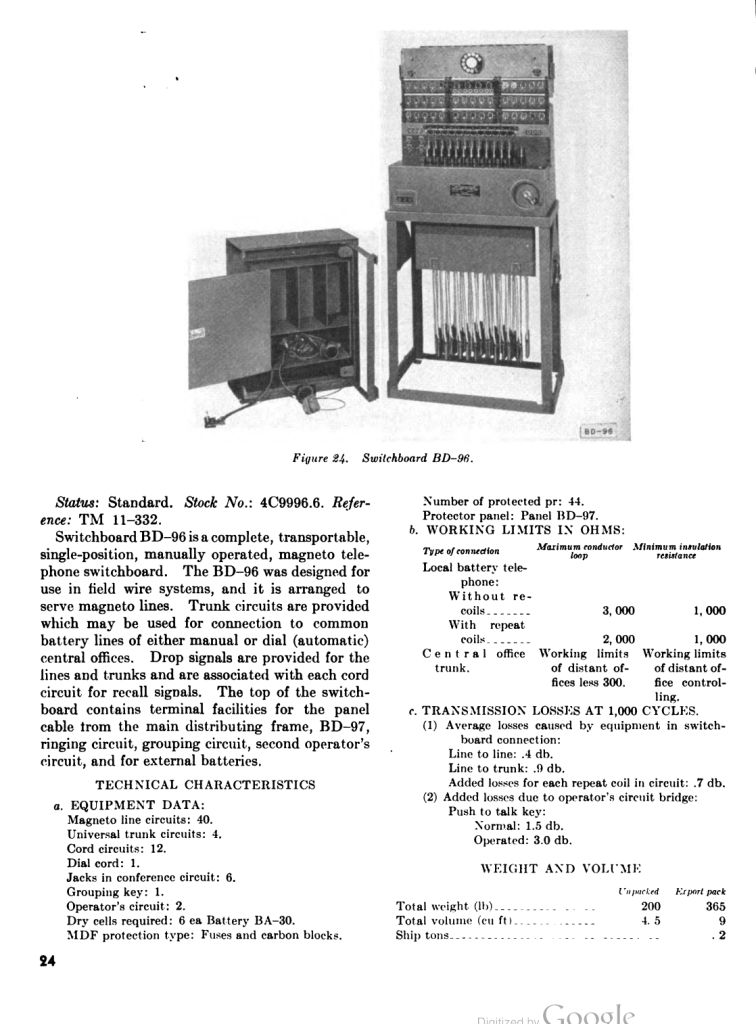
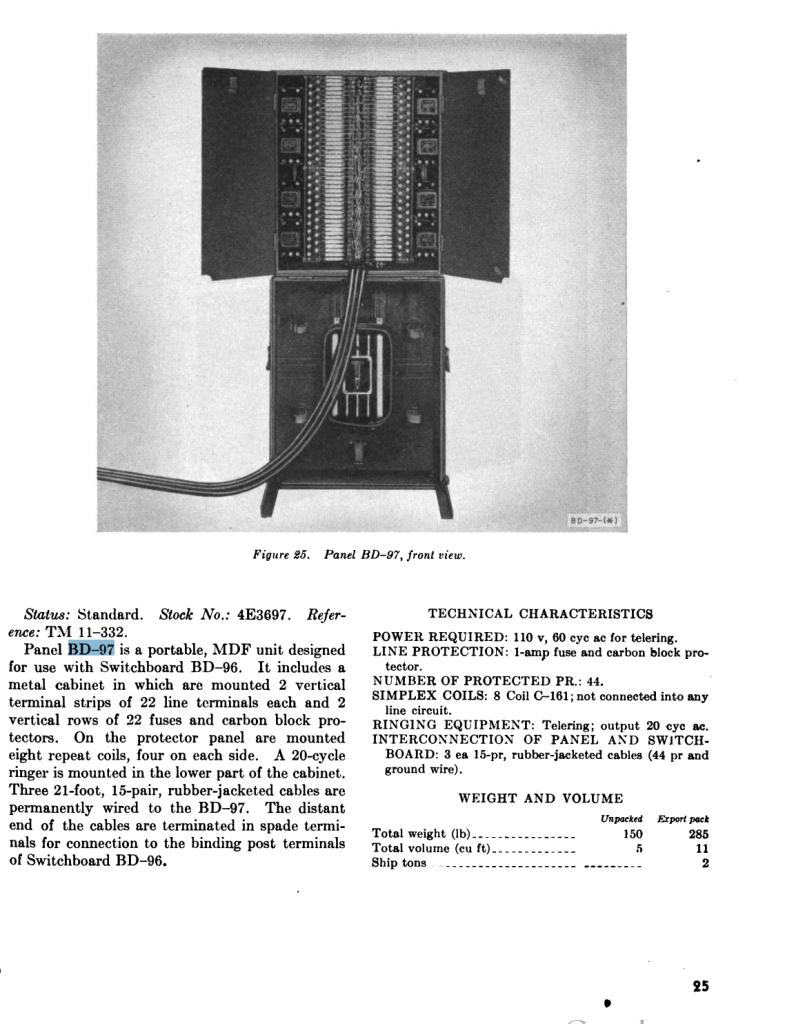
27th Signal Company Switchboard Trailers – During the Phase 1 Nansei Shoto Operation on Okinawa, the 27th Signal Company of the 27th Infantry Division created a special trailer to house a BD-96 switchboard and it’s BD-97 panel, test sets, EE8 field phones and other incidentals required to operate a BD-97 switchboard in a combat operation. The BD-96 is used to run up to 40 lines into it.

The trailer was used to be as mobile as possible during the operation. Being mounted in a trailer makes it so.

This type of configuration may have been used at the Battalion or, more probably, at the regimental level.

BD-96 and BD-97 images come from: TM 11-487B Directory of Signal Corps Equipments: Wire Communication Equipment.

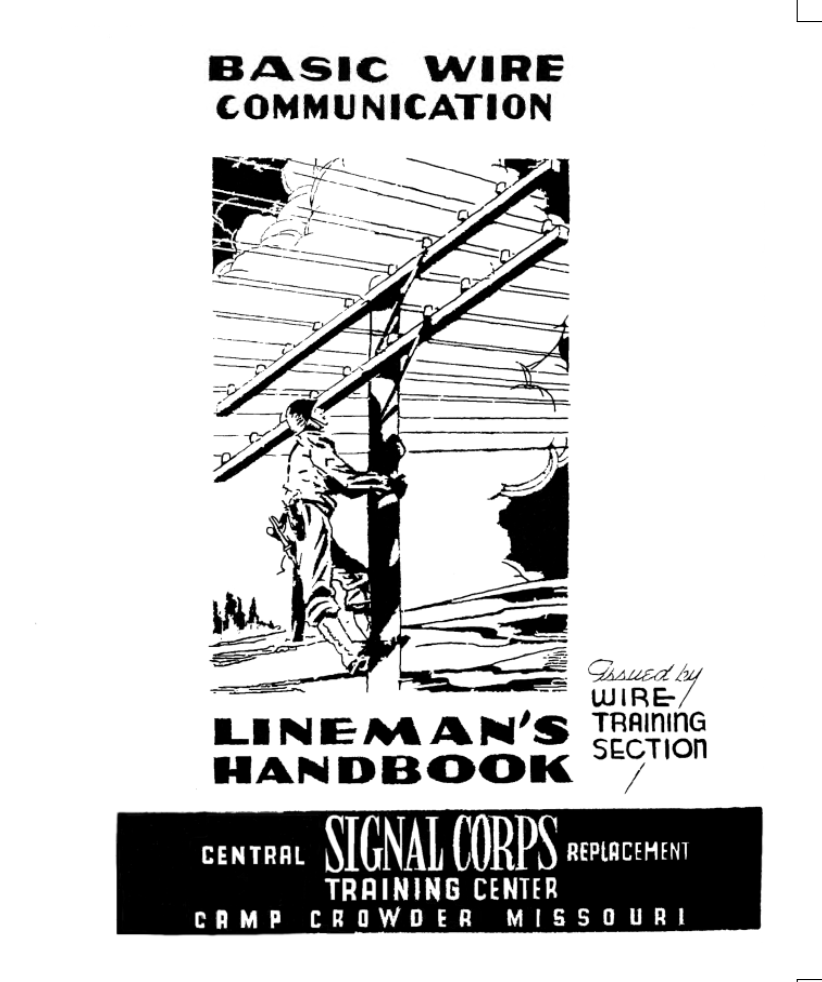
Basic Wire Communication: Lineman’s Handbook: Wire Training Section Central Signals Replacement Training Center, Camp Crowder Missouri – This is a printable booklet and gives a very quick review of wire splicing, terminology, and organization

TM-184a Terminal Board Fabrication – This is a pdf that shows the schematics of how to fabricate the TM-184a terminal board. It is used as a terminating or test point in tactical field wire systems.

TM-184 T1 and T2 replace this. You can view the instructional manual for them here.

TM-184a T1 and T2 hold 7 pairs of wires. TM-84 holds 5 pairs of wires.

Posted on

WW2 Reenacting Reports and Unit Histories

This page will describe and link to reports by different units as well as various unit histories.

After-Action Reports

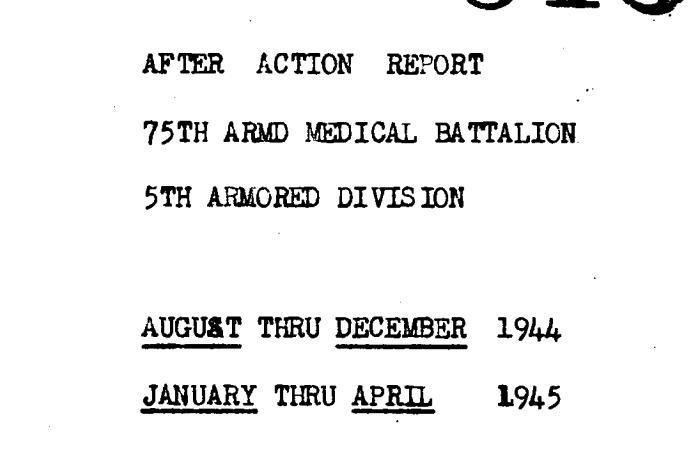
After Action Report for 75th Armored Medical Battalion of 5th Armored Division – Discusses actions related to the medical battalion. Also, a good example of how to write an after-action report and what it looks like.

It covers August 1944 to May 1945 and includes A, B, and C companies. Mostly a mention of movements, events, losses, and personal changes.

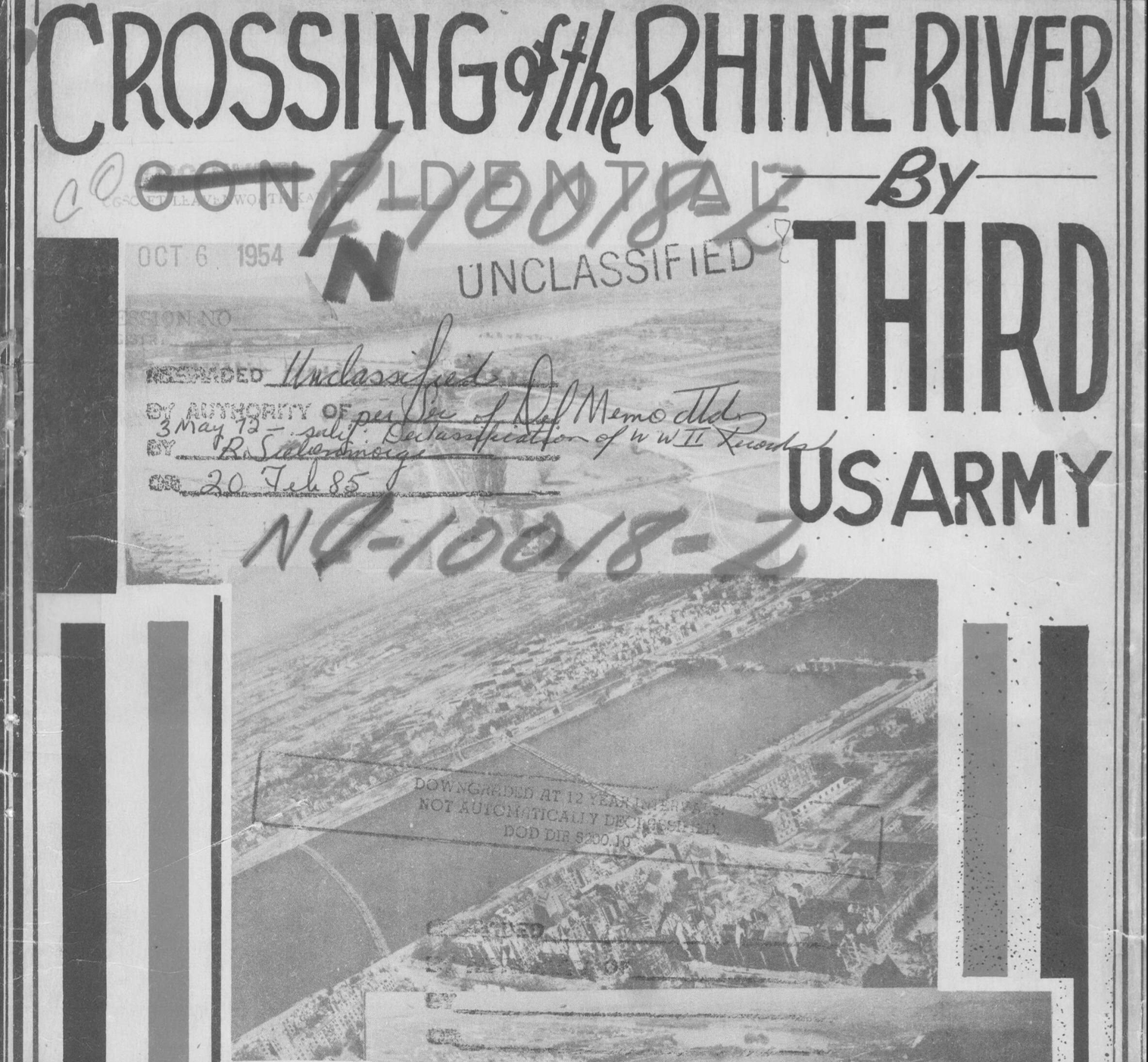
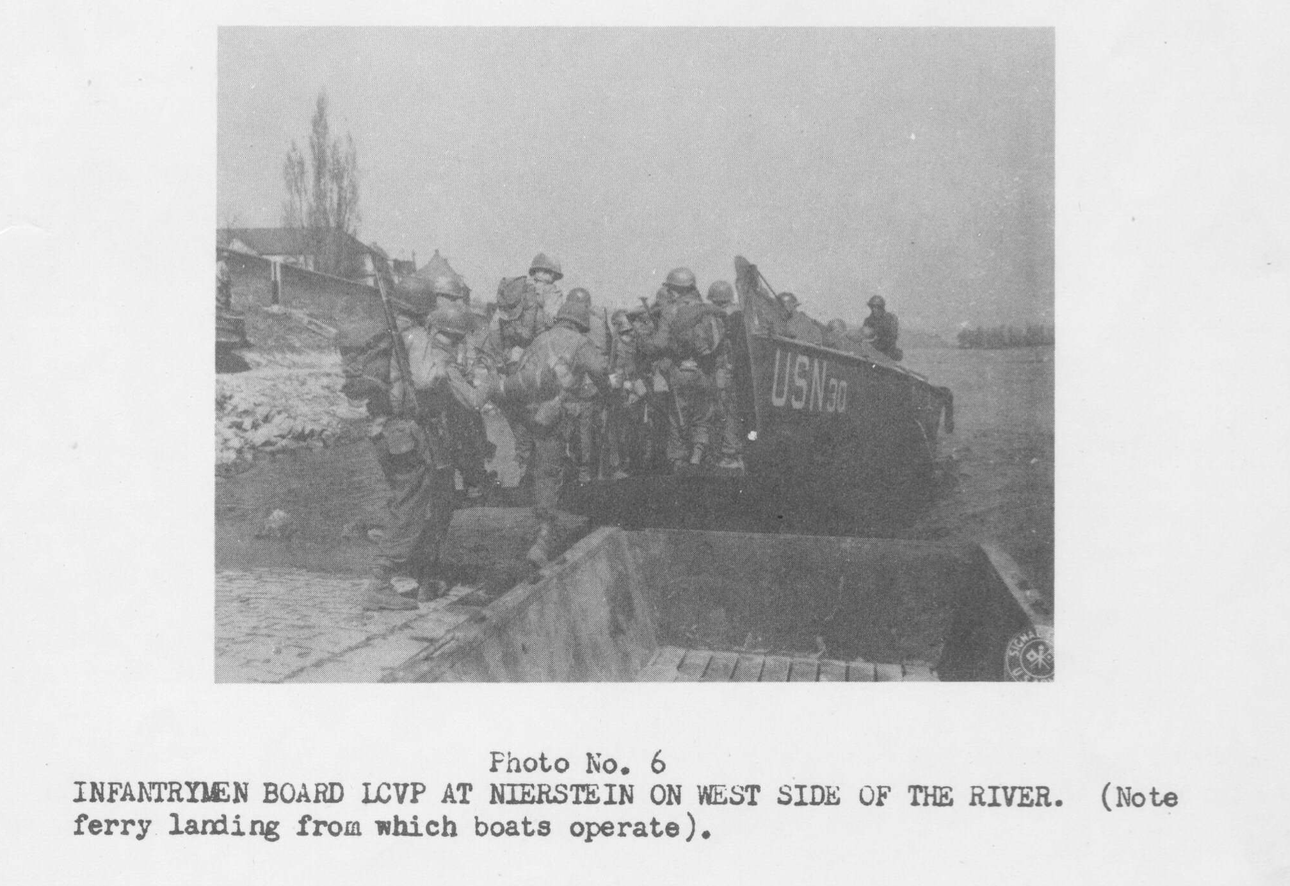
Crossing the Rhine River by the Third Army – Documents the landings at the Rhine River. Storm boats and assault boats were used at the start, and then several hours later, LCVPs were brought up. Includes images.

The 60mm Mortar Team in the Assault Section – This isn’t a field manual per se, but some kind of restricted handout. To build a 60mm mortar, see: How to Build a 60mm for WW2 Reenacting. For the firing tables, see: WW2 Reenacting Ordinance and Firearm Printables

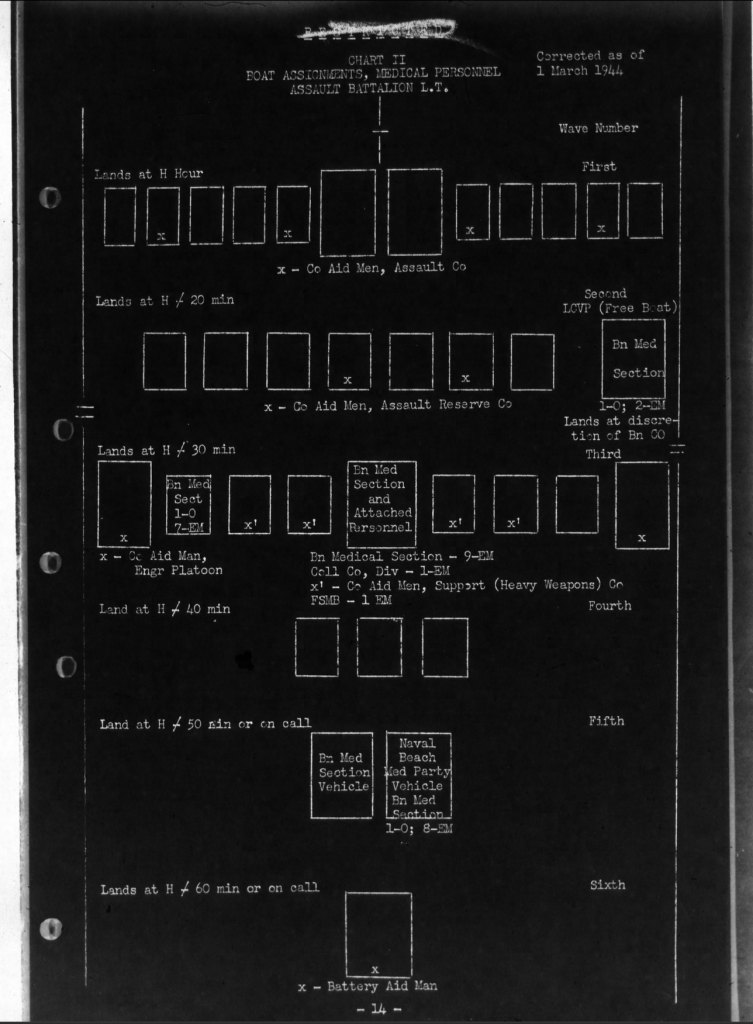
Medical Support of Landing Operations: Assault Training Center March 1944 – A PDF link to my Google Drive. Discusses how to conduct medical triage and operations during a landing. Mentions a few case studies as well as what equipment should be included when, where, and whom.

One interesting thing is that it goes into detail about how operations change as the beachhead is expanded. Essentially, the wounded are pooled and treated during the initial 30 minutes. After an hour, a battalion aid station is created. After 3 hours, additional battalion aid stations are created as the beachhead expands forward, close to the front. You also get a primary collection point for all wounded. 12 hours, you get vehicles such as jeeps and ambulances. After about 4 days, you get evacuation hospitals.

Communications in Assault Operation – Nov 1943 from the US Assault Training Center ETOUSA. Outlines what teams have what kinds of equipment, where they are positioned, and what net they operate on. Essentially, how to have an integrated communication network across visual (ie, flags), wire, and radio between infantry, tanks, field artillery, naval gunships, and aircraft.

Report no. 63 observations of Signal Corps activities, Cherbourg Peninsula, France from June 6th 1944 to July 6th 1944 – A fascinating document that outlines issues faced by the units during the campaign. Includes an example division radio net. Essentially, an after-action report for signal units. The following Signal Units were assessed –

Infantry Division Signal Company
1st Signal Company
2nd Signal Company
4th Signal Company
9th Signal Company
29th Signal Company
90th Signal Company
Armored Division Signal Company
142nd Armored Signal Company
Airborne Division Signal Company
82nd Airborne Signal Company
101st Airborne Signal Company

Joint Assault Signal Companies
Engineer Brigade Group Signal Company
286th Joint Assault Signal Company
293rd Joint Assault Signal Company
294th Joint Assault Signal Company

Signal Service Company
3251 Signal Service Company
3252 Signal Service Company

Corps Signal Battalion Signal Battalion
50th Signal Battalion
56th Signal Battalion

Signal Construction Battalion
29th Signal Construction

Signal Sections
1st Army
V Corps
VII Corps
VIII Corps
XIX Corps

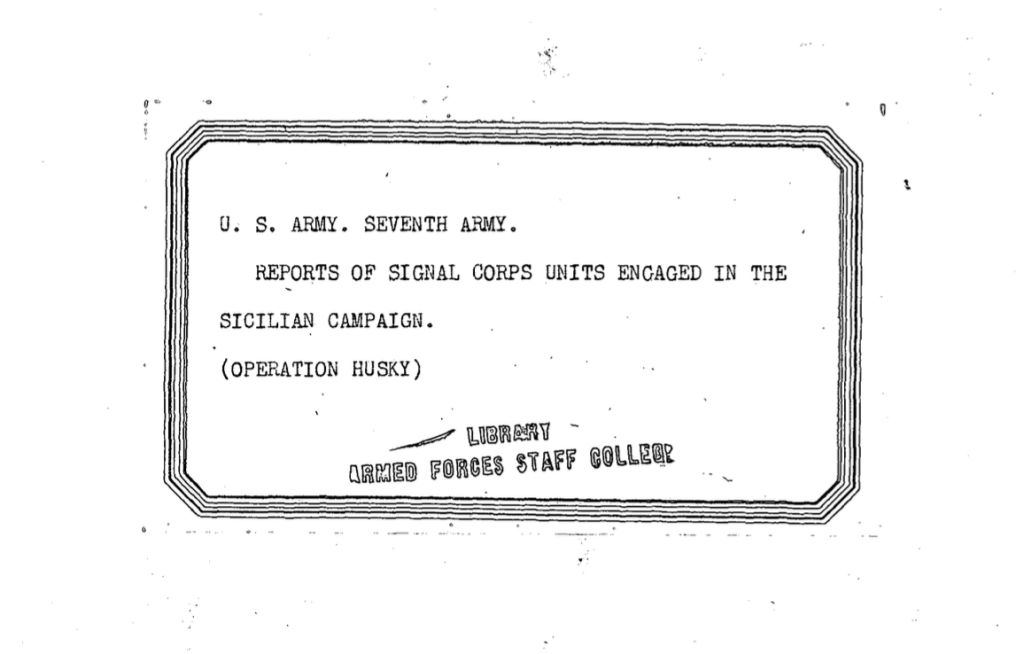
7th Army Signal Corps Report of the Lessons Learned in the 1943 Operation Husky – Husky is the invasion of Sicily, and the document outlines issues and suggestions for improvement in Signal Corps units of the 7th Army.

It’s noted that the SCR-536 was to be used at the company level, either communicating across companies or communicating down to lower echelon units like platoon or section or squad.

Operational Conduct of the 9th Infantry Division Southern Tunisia March to May 1943 | A fascinating review of the 9th Infantry Division in North Africa. A little “slice of operational life”. The analysis at the end is worth reading. At one point, they had to put the band and other service troops to work as litter bearers. Also, they had up to 22 and 32-mile wire circuits laid out, and switchboard tubes were blowing due to the heat. Interestingly, they had attached to them the Corps Franc d’Afrique, consisting of
(a) 3 Infantry Battalions
(b) 1 Marine Battalion
(c) 4 Tabours of Goums

Communication Activities Okinawa June 28th to June 30th, 1945 – A discussion of different issues faced by Signal Corps units during the Okinawa operations.

One big issue was supply. The units responsible for loading up the ships with supplies simply were not able to assemble all the tonnage required by the Signal Corps units in the time frame needed. So items that were supposed to be on a ship scheduled to land during the 7th echelon instead landed in the 12th. Indeed, telephone poles didn’t appear until 60 days later. Fortunately, units were able to improvise and press into service different pieces of equipment (such as substituting different gauge wire) along with reusing captured enemy and civilian wire/equipment.

History of Signal Corps photography in the Luzon operations April 1945 – A great narrative of taking motion and still pictures during the campaign.

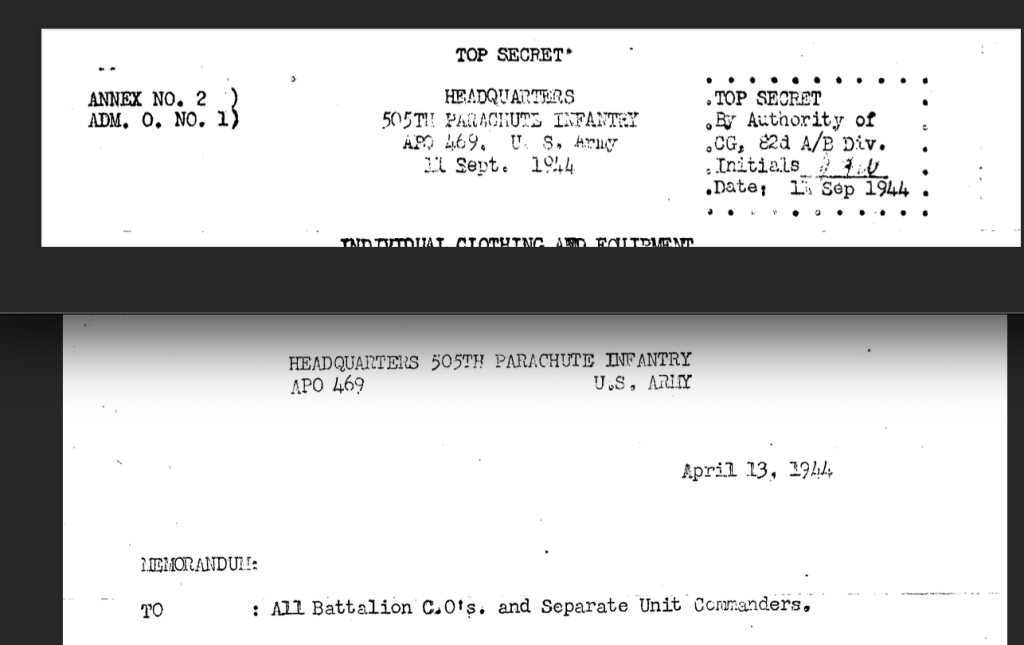
505th Parachute Infantry, 82nd Airborne Division Memorandum and Top Secret – Two documents, one from April 1944 about zeroing in M1 Garands. Another from Sept 11th, 1944, regarding infantry equipment and uniform to wear and what to put in barracks bags in preparation for Operation Market Garden.

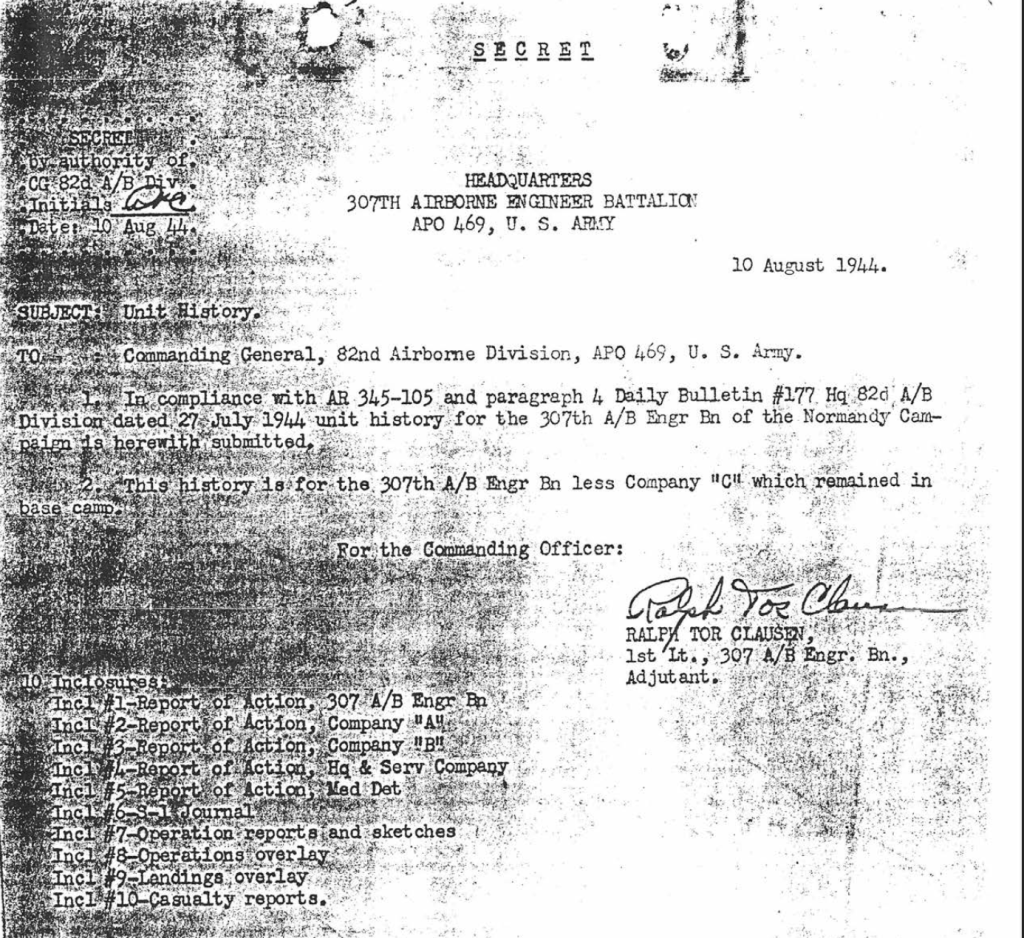
307th Airborne Engineer Battalion US Army – The 307th was part of the 82nd Airborne. The PDF covers the time frame from roughly 6 June 1944 to 17th Sept 1944.

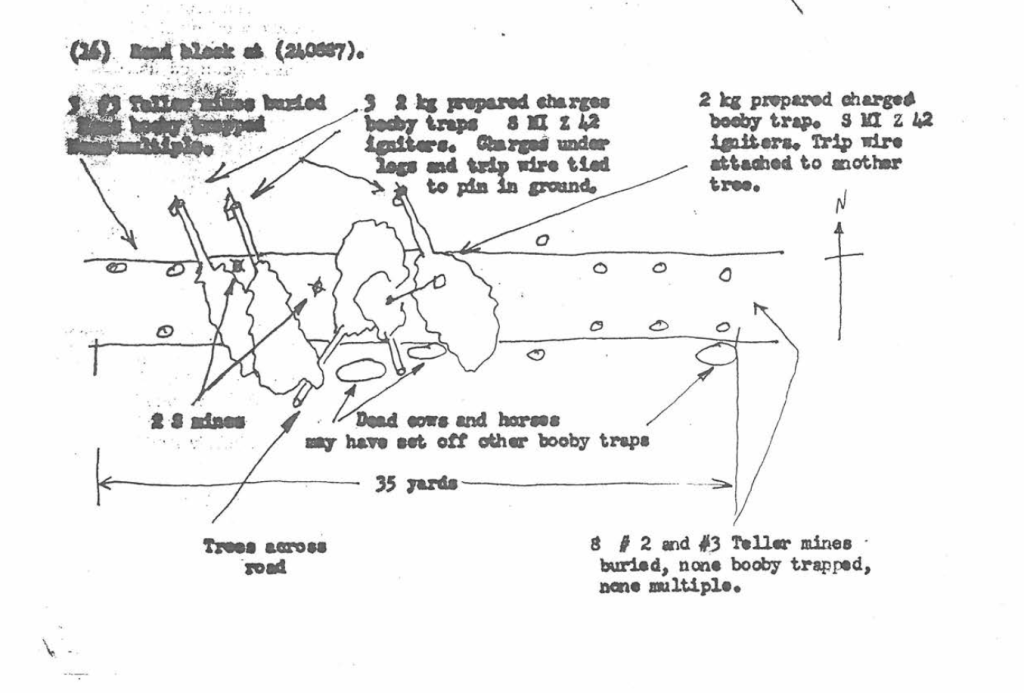
What I find neat about it is the hand-drawn diagrams that show the landing areas for the battalion, as well as an outline of how the Germans blocked roads with Teller Mines and booby traps. The S-1 Journal of events that happen throughout various days is a neat read, too.

The document also reports on the 307th Medical Company, however, more information about this unit can be found at the link.

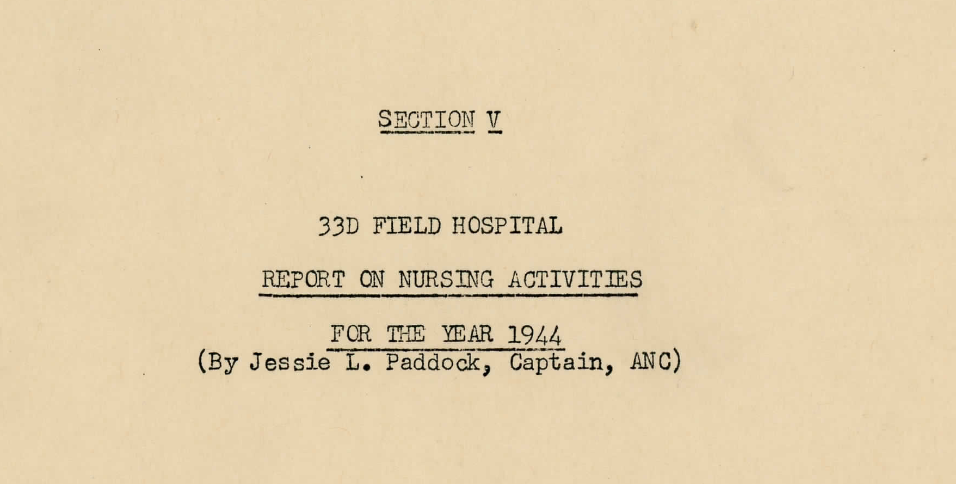
33rd Field Hospital Nursing Report 1944 – Describes the events of the 33rd Field Hospital, which landed at Anzio and was part of the bombing raid on the 95th Evacuation Hospital (the 33rd was across the street from it) on Feb 9th that killed 20 and wounded over 50.

Describes a few humorous incidents, such as Unit C thinking of a Collecting Company (which would be tasked with moving wounded from the front lines to the battalion aid station) for a Clearing Company (who would be tasked with triage of wounded, deciding which kinds of hospitals they go to, and moving them there). They ended up quite near the front line before doing a turnaround!

Signal Supply Repair and Maintenance in the ETO Study Number 112 – A report on signal supply repair and maintenance along with recommendations.

Signal Corps personnel, training, and command and admin structure study number 112 – A report on the training and administrative structure, along with recommendations.

Signal Corps Operations in the ETO Study Number 111 – Discusses issues with wire, radio, facilities, railway, pipeline, and the Press. The Signal Center (ie a larger “message center”), Photography, and Frequency allocation, and provides recommendations.

One interesting note is that regarding men using switchboards,”…a truth long recognized by commercial telephone companies again became evident; that men do not have the finger dexterity nor are they temperamentally adapted for efficient operation of large switchboards. As female operators from the Women’s Army Corps became available, they took over the switchboard operation…”

Psychological Warfare in the European Theater of Operations Study 131 – 1945 | A review of psychological operations in Europe. Discuss gathering intelligence and distributing it. Makes mention of problems and issues related to using radio, ariel leaflets, artillery leaflets, and speakers to spread propaganda to induce the enemy to surrender.

One interesting note is a section on mounting a loudspeaker external to a tank.

Operational Study 6 – Combat Replacement Factors Nov.1945 – A series of charts that tries to model the replacement factor for various pieces of organizational equipment between June 1944 to June 1945 in the ETO per 1,000 men per 30 days.

For example, the M1943 field jacket had close to a 20% loss rate and the M1926 utensils had a 10% loss rate.

Military Intelligence No 19 Japanese Infantry Weapons Dec 1943 – Outlines with images of the different types of weapons available to the Japanese infantry.

Hitler Jugend – SHAEF Handbook – 1944 | Outlines the history, structure, organization, and uniform of the Hitler Youth organizations. As well as commanders and the location of camps and schools.

Hitler Youth drew from all parts of Germany’s conquered areas and was divided into different branches such as Hitler Youth Army, SS, Marines, Navy, AirForce. They also had a cavalry group but it looks like it was disbanded before the start of WW2.

Also included are the opposition groups such as Edelweiss.

Major Teletype Networks in Europe Jan 1945 – Includes a directory, station names, and call signs. Teletype is the name of the corporation that produced machines that produced specialized communication devices like Teleprinters. These are printers that can send and receive signals and then print out a message.

These “Teleprinters” are the classic news printer sound of “fast clacking metal keys” you may hear in the background of some news reports.

The US Army created a network of these machines in Europe to help with communication.

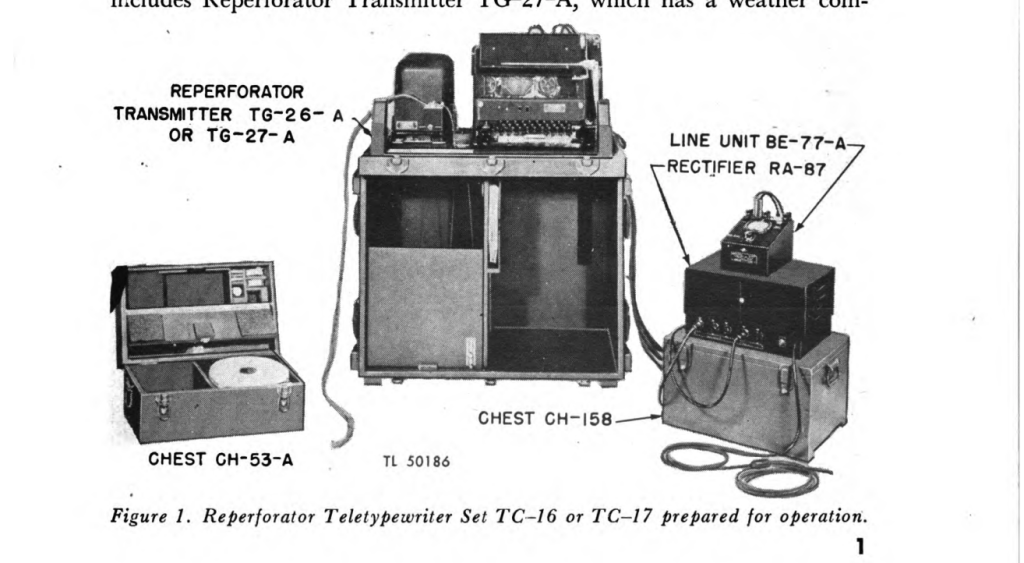
One common model was the Teletypewriter Set TC-16 or 17 as identified in TM 11-2201.

Fort Cronkhite Barracks and Mess Hall Historic Furnishings Report National Parks Service Golden Gate Recreation Area 2005 – A fascinating report created by the Parks Service that analyzes all the items a soldier would have used in a WW2 era Barracks and Mess Hall. From furniture to cooking tools to uniforms. Even includes schematics to build a barracks

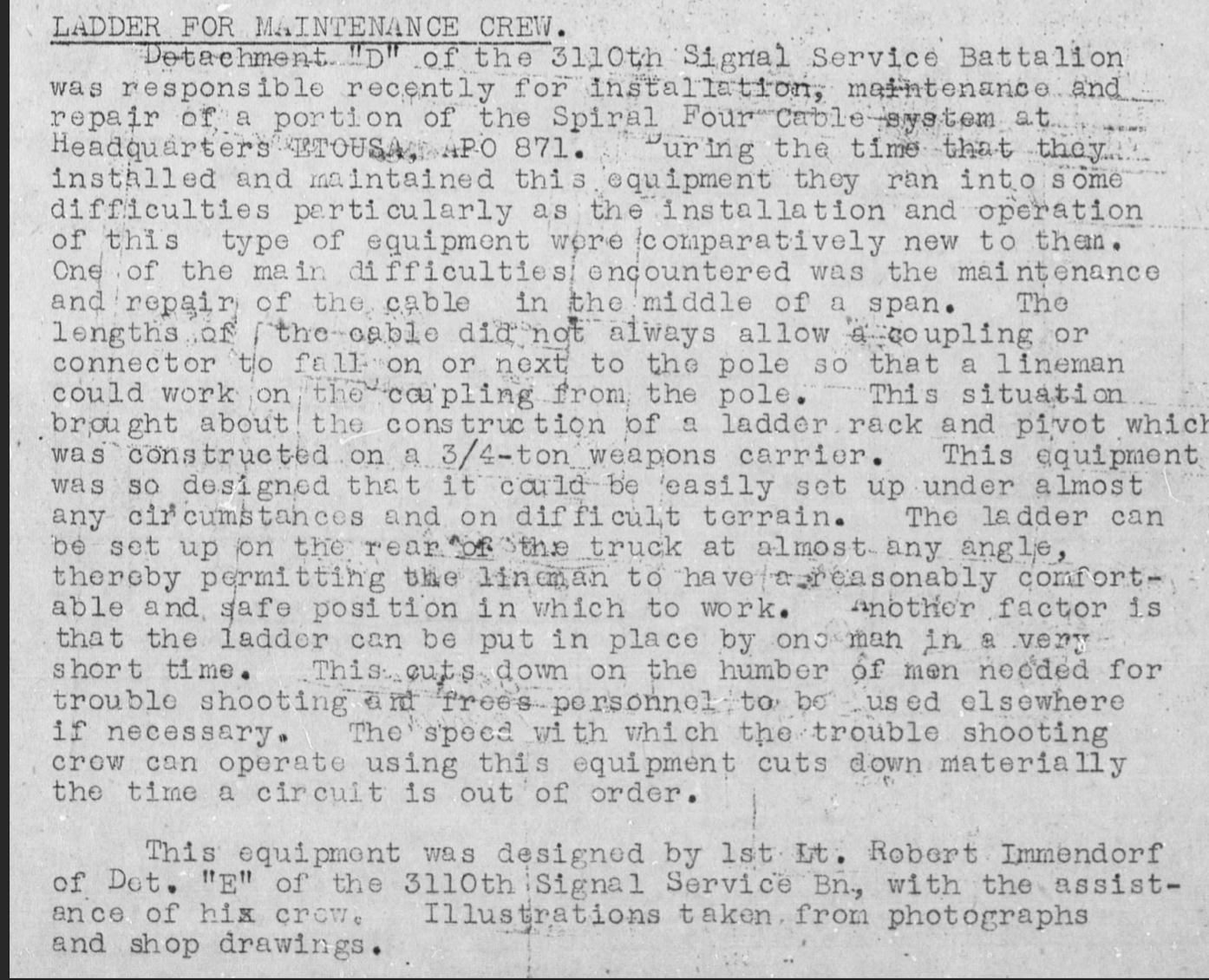
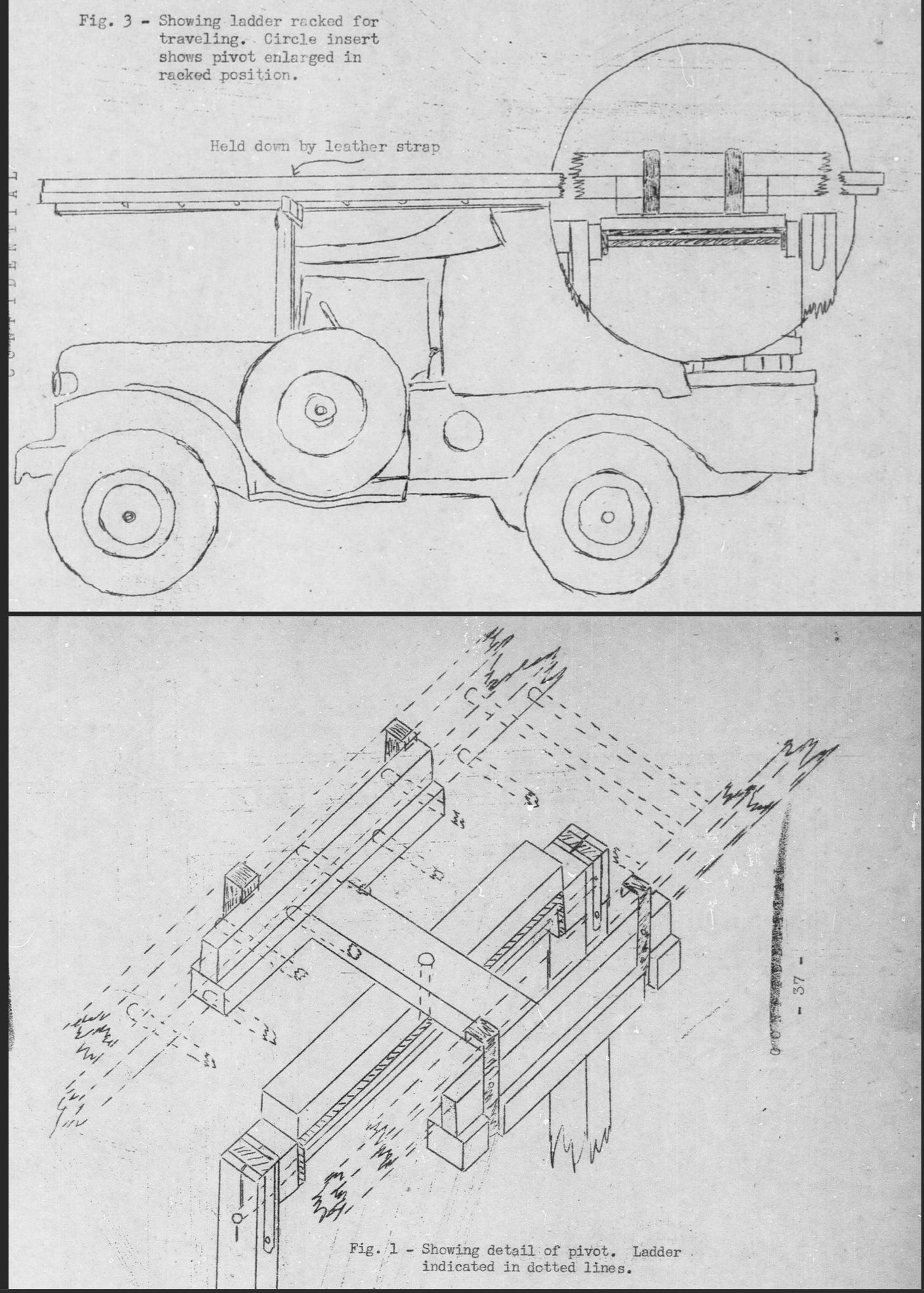
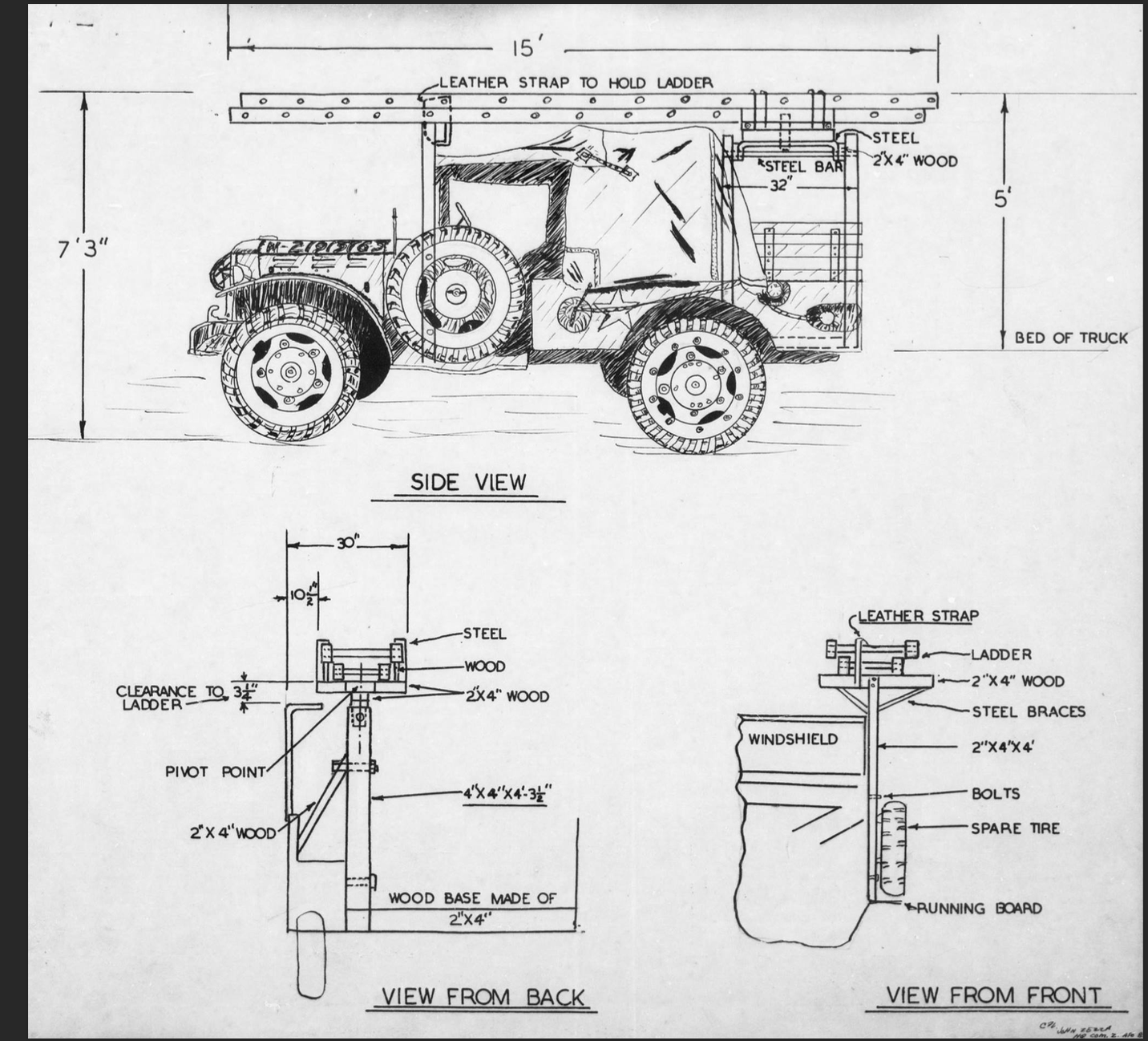
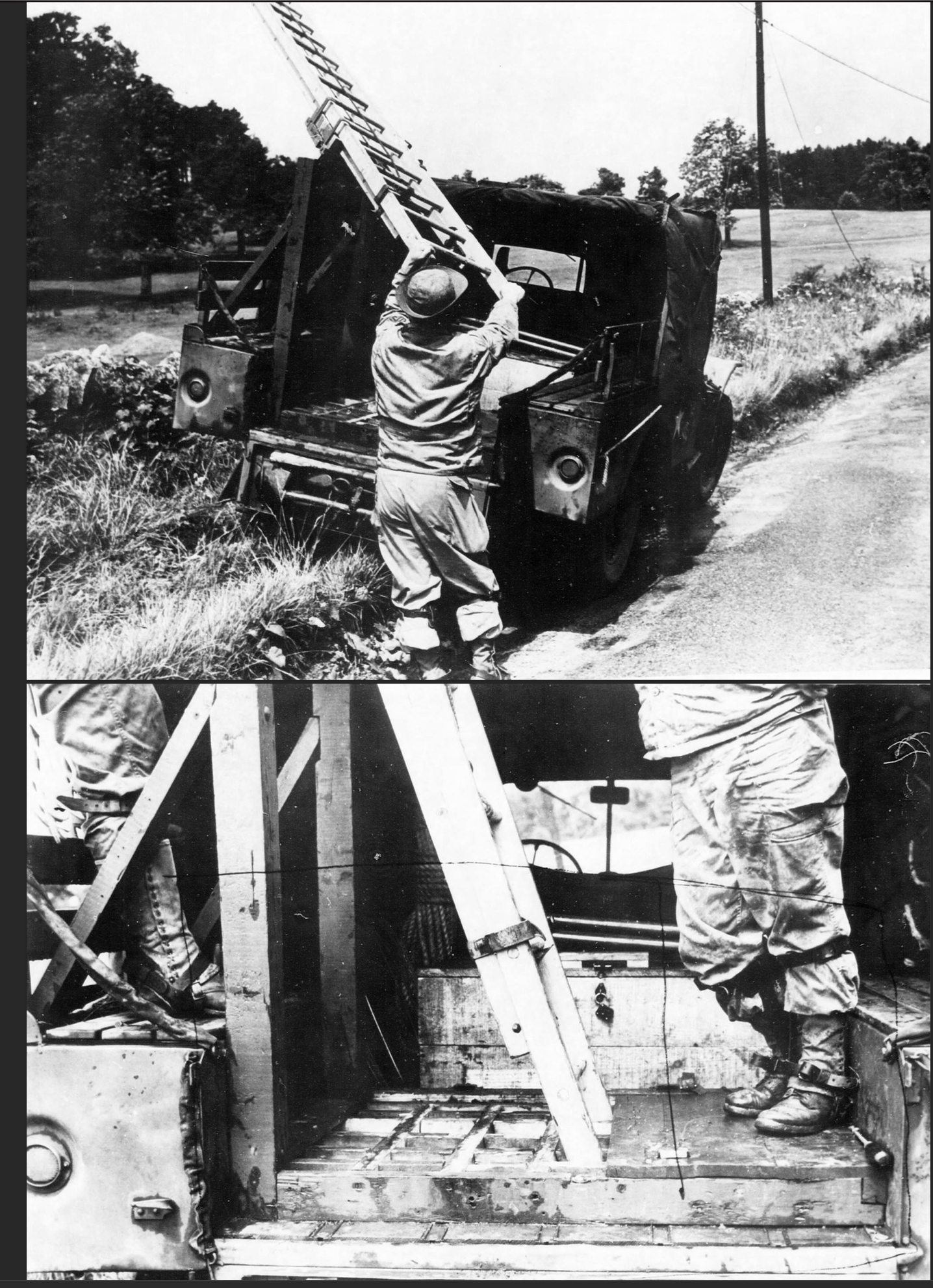
Ladder Pivot Modification to Dodge WC – Detachment D of the 3110th Signal Service Battalion came up with a ladder pivot mechanism that allowed them to work on issues in the middle of cables strung across telephone poles. The ladder gets inserted into the pivot and is affixed to the floor of the Dodge WC bed. Allowing safe and efficient operation for this type of repair.

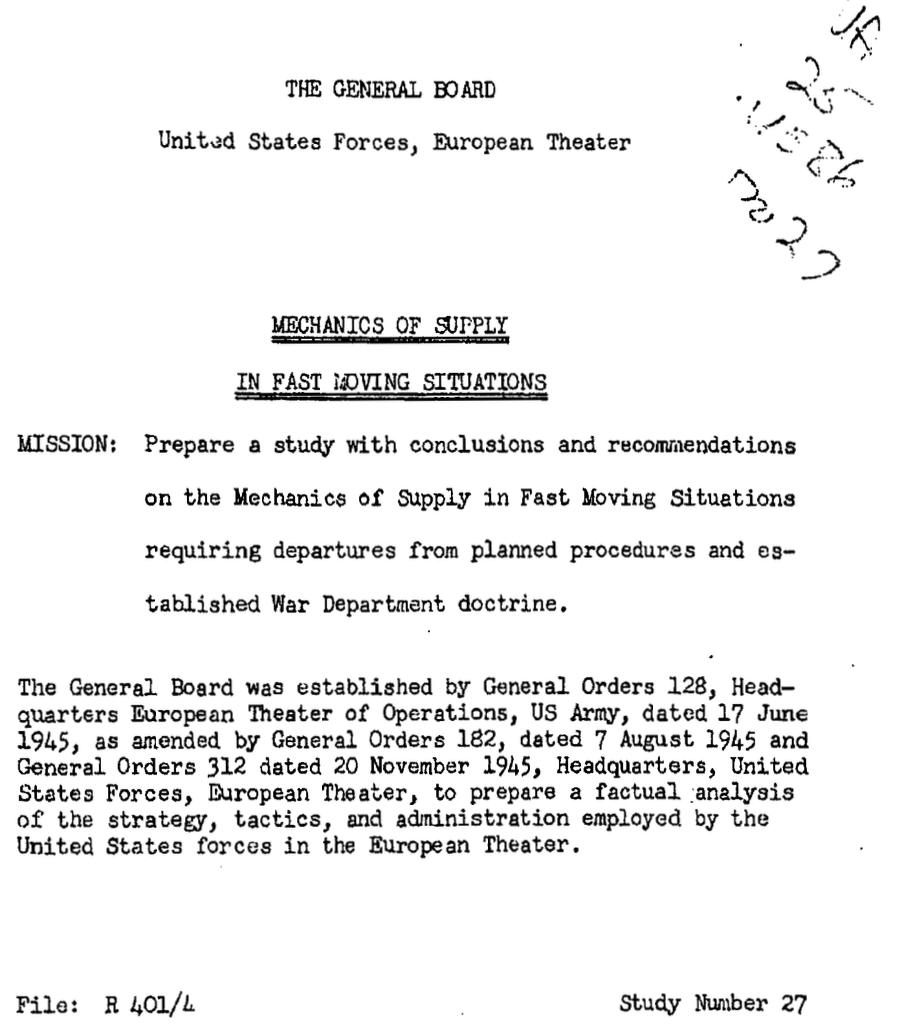
The Mechanics of Supply in Fast Moving Situations No 27 – Date unknown. An analysis of supplying units on the move

Unit History

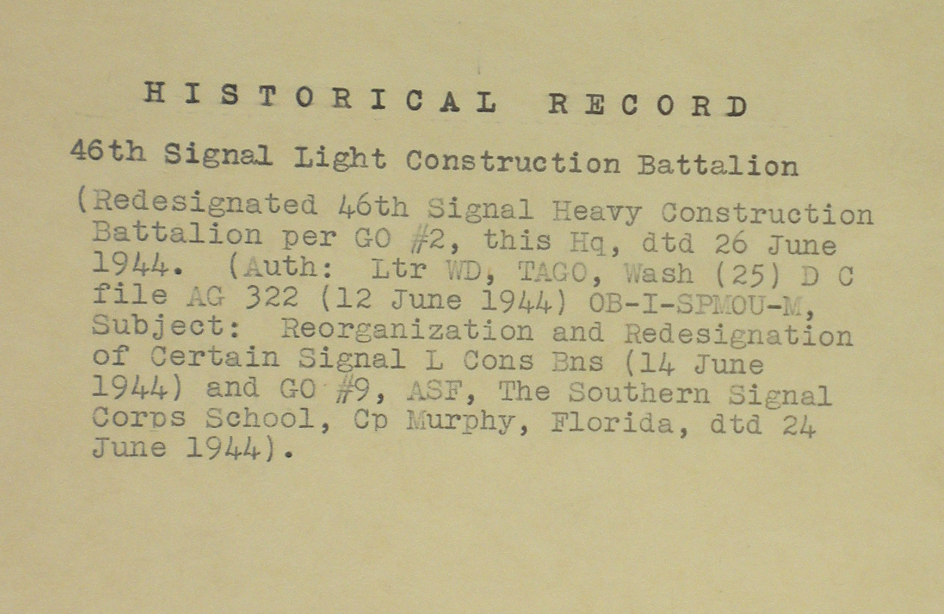
Brief History of the 46th Heavy Construction Battalion – Includes a brief narrative of the unit training then going to Germany and then headed to Japan for Occupation Duty.

Includes day-to-day events stateside during its training. Mostly involves transfers of personnel to other units or schools.

For a detailed and in depth review of the unit see WWII 46th Signal Battalion.

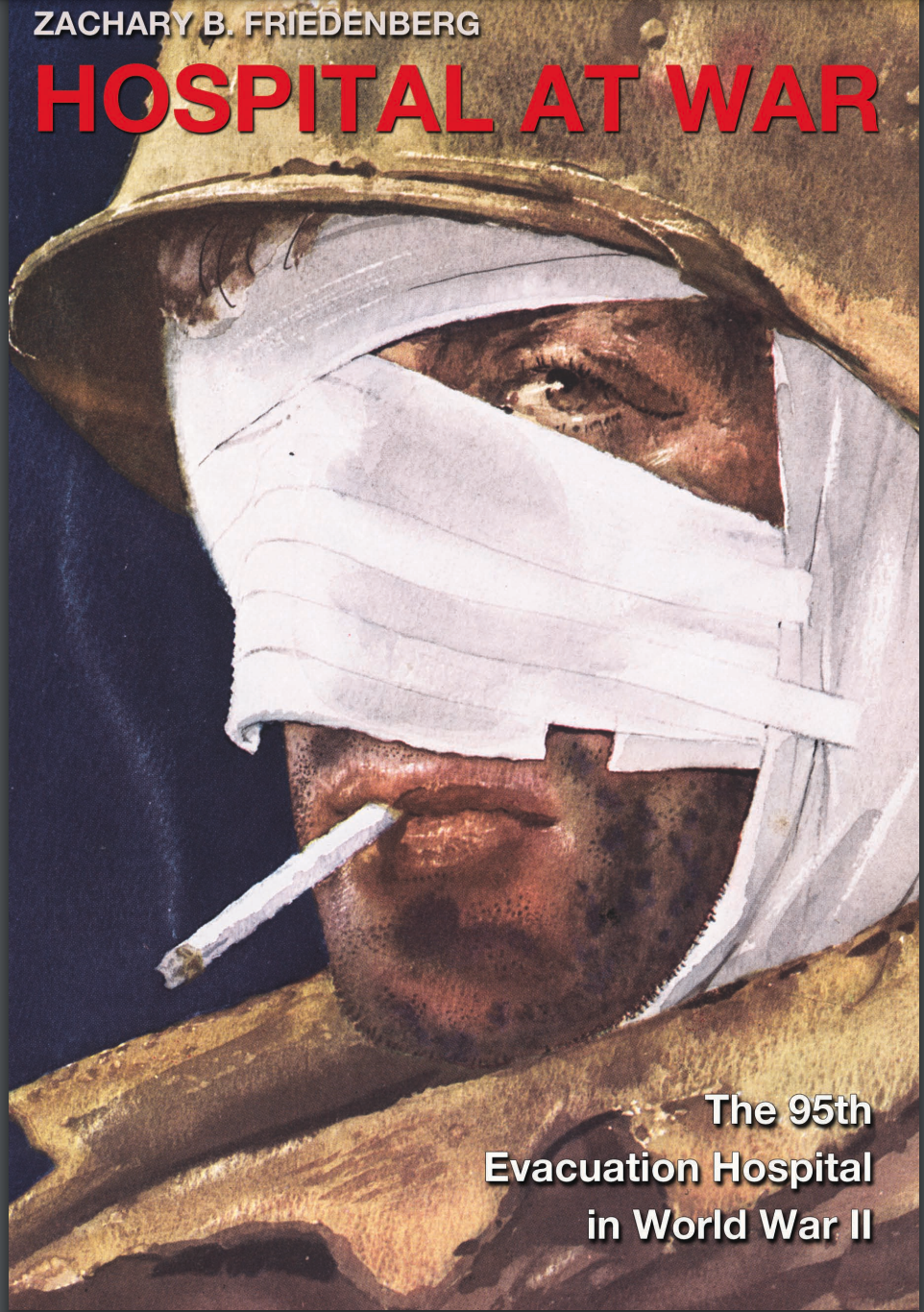
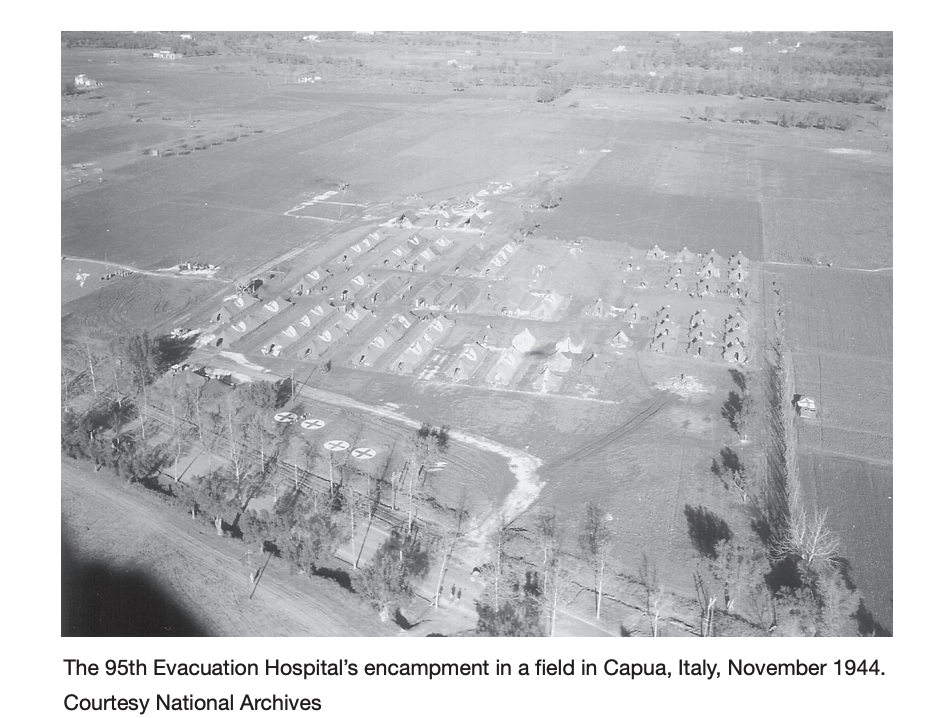
Hospital At War The 95h Evacuation Hospital in World War II by Zachary Friedenberg 2004 – Zachary Friedenberg was a Captain in the unit and wrote the unit’s memoirs in 2004. The unit was in North Africa, in Anzio, and part of the Invasion of Southern France.

At Anzio, it was subjected to an enemy bombing raid that wounded over 50 and killed 20 including patients, doctors, and nurses.

Also included is an article called “‘Don’t Worry About Me’: The World War II Experience of Adeline Simonson, Nurse Anesthetist with the 95th Evacuation Hospital” which is about one nurse’s experience with the unit. This was published in the AANA Journal, Oct 2016, Vol. 84, No.5, ppg. 309-315. The authors are Carolyn Nicholson BSEd, CRNA, Susanne Hillman Ph.D, and Sukumar P. Desai, Ph.D.

You can learn more about the unit at the med-depot’s 95th Evacuation Hospital page.

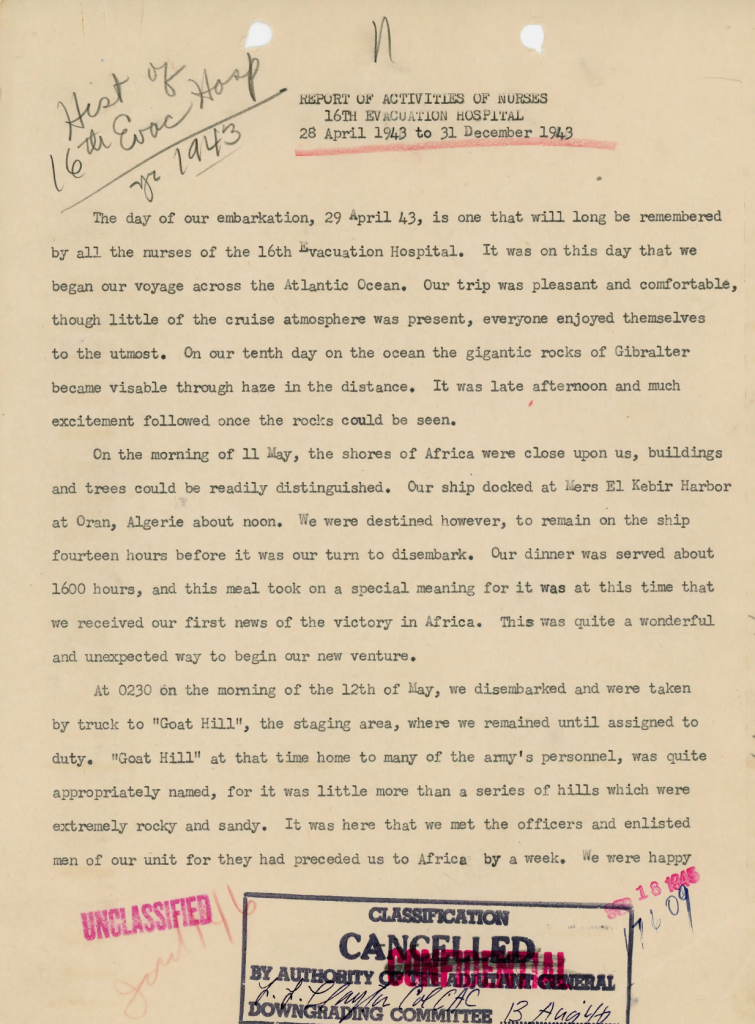
Nursing Report 16th Evacuation Hospital April to Dec 1943 – Describes crossing the Atlantic to North Africa and then heading to Italy on the HMHS Newfoundland which was hit by a bomb and sunk. Eventually, they arrived and set up hospital services.

Overseas and then Over The Top Able Company and the 2nd Rangers Battalion by PFC M Prince – A narrative of events from when the 2nd Rangers landed in England for training to D-day, to the day Hitler surrendered.

The D-day landing narrative is a pretty good read of what it must have been like.

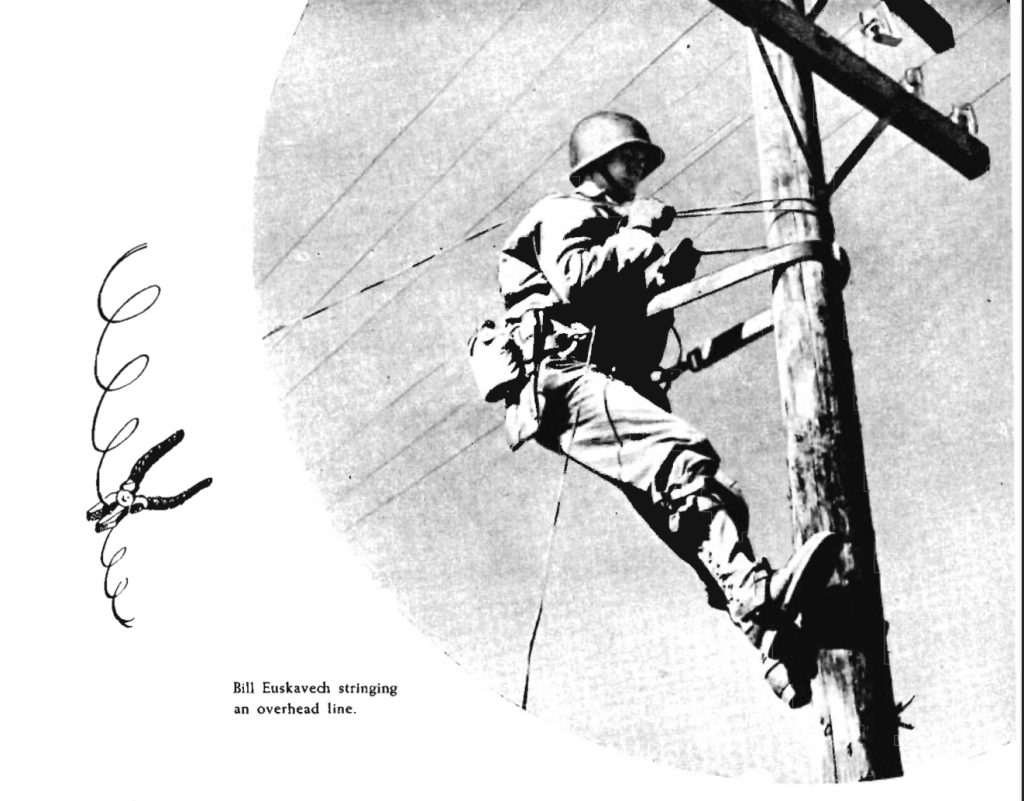
33 Months with the 100th Signal Company of the 100th Infantry Division 1945 – A Narrative of the Signal Company’s involvement. Discusses Construction and how each crew was assigned specific regiments to connect the wire to along with having to repair and replace wire as it was cut or damaged. As well as the Radio section, the “T&T” or telegraph and teletype section, the message center section, the administration section (where presumably the mail clerk worked), the Signal Operations Instructions (SOI) section (which does training and checking of signal installations), Signal Supply section, Repair and Maintenance section, the Motor Pool (responsible for vehicle management and maintenance), the Mess section (responsible for feeding) and the Medical section.

Includes descriptions of training at Fort Jackson and sports and physical fitness testing.

Also makes mention of Tech 5th Chauncey N. Maggiacomo being asked to improve the Reel Unit RL-26, which he did. The old way required lots of manual labor to reel in the wire ensuring it didn’t snag. The new method instead of reeling it in from the back (like a winch) picked the wire up and fed it over a boom on the front of the truck.

Unit Citation and Campaign Participation Credit Register – Pamphlet 672-1. A complete list of what units participated in what actions and what unit citations they got.

Signal Corps Lineage and HERALDIC data and history – Information about heraldic and lineage of different signal corp units. Shows the unit pin. By Rebecca Robbins Raines from the Center of Military History.

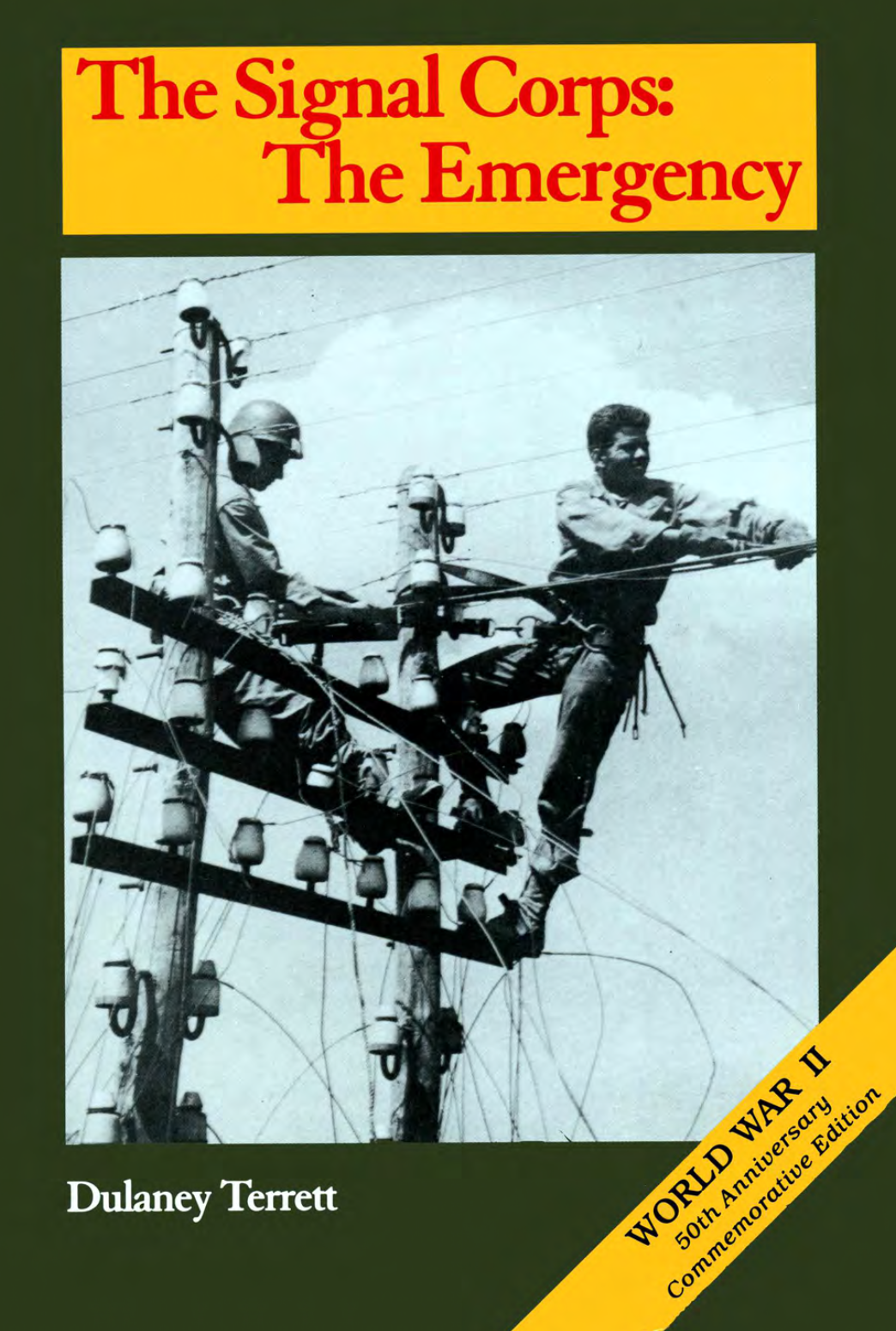
Signal Corps: The Emergency – History of the Signal Corps up till Pearl Harbor. By Dulaney Terrett from The Center of Military History

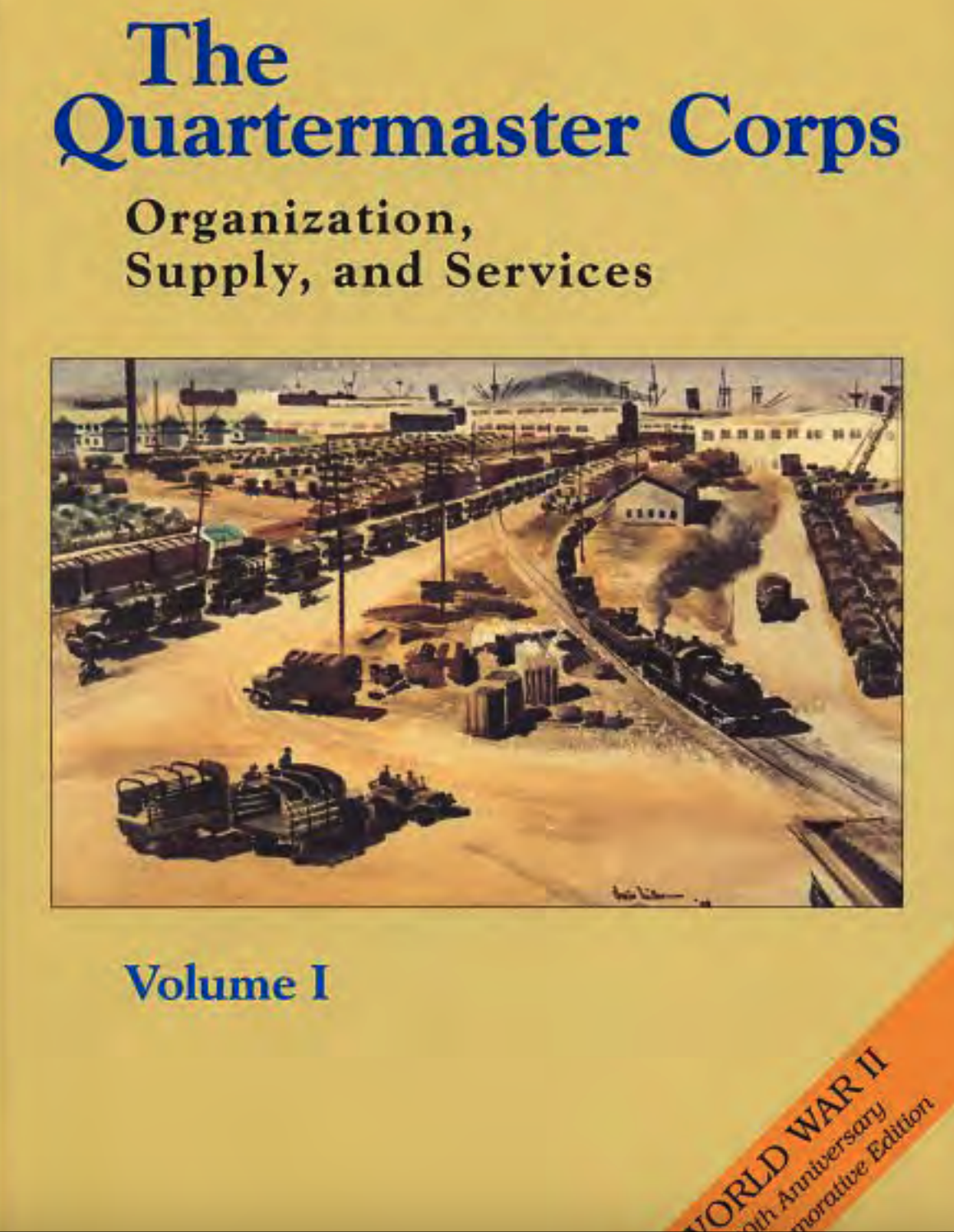
The Quartermaster Corps: Organization, Supply, and Services Vol I – On the 50th anniversary of the end WW2, the Center of Military History republished various publications that were originally published in 1953.

These are a historical narrative and go into detail on the account of the Corps’ actions. Mostly from a high-level overview. I’ll add more as I find them. If you’re interested in the Quartermaster supply catalogs you can find them here.

Transportation Corps WW2 Overseas – History of the Transporation Corps.

Home Away From Home: The Story of the USO – The history of the USO organization. Published in 1946

United States Army Medical Department: Medical Supply in WW2, 1968 – You can download the full report from my Google Drive. It’s a great review of all aspects of supplying the medical department in different areas of operations.

For example, regarding camouflage bandages in the Pacific. We started manufacturing them in Sept 1943 as white bandages attracted snipers. By Nov 1943 13 million dyed bandages were
delivered. They came in an adhesive compress, 2-inch, 4-inch gauze bandages, compressed
bandages, small and large first aid dressings, first aid packets and triangular bandages. They were supplied either in field brown or in OD No. 7. (page 65)

See Spectacles and Glasses in WW2 for an analysis.

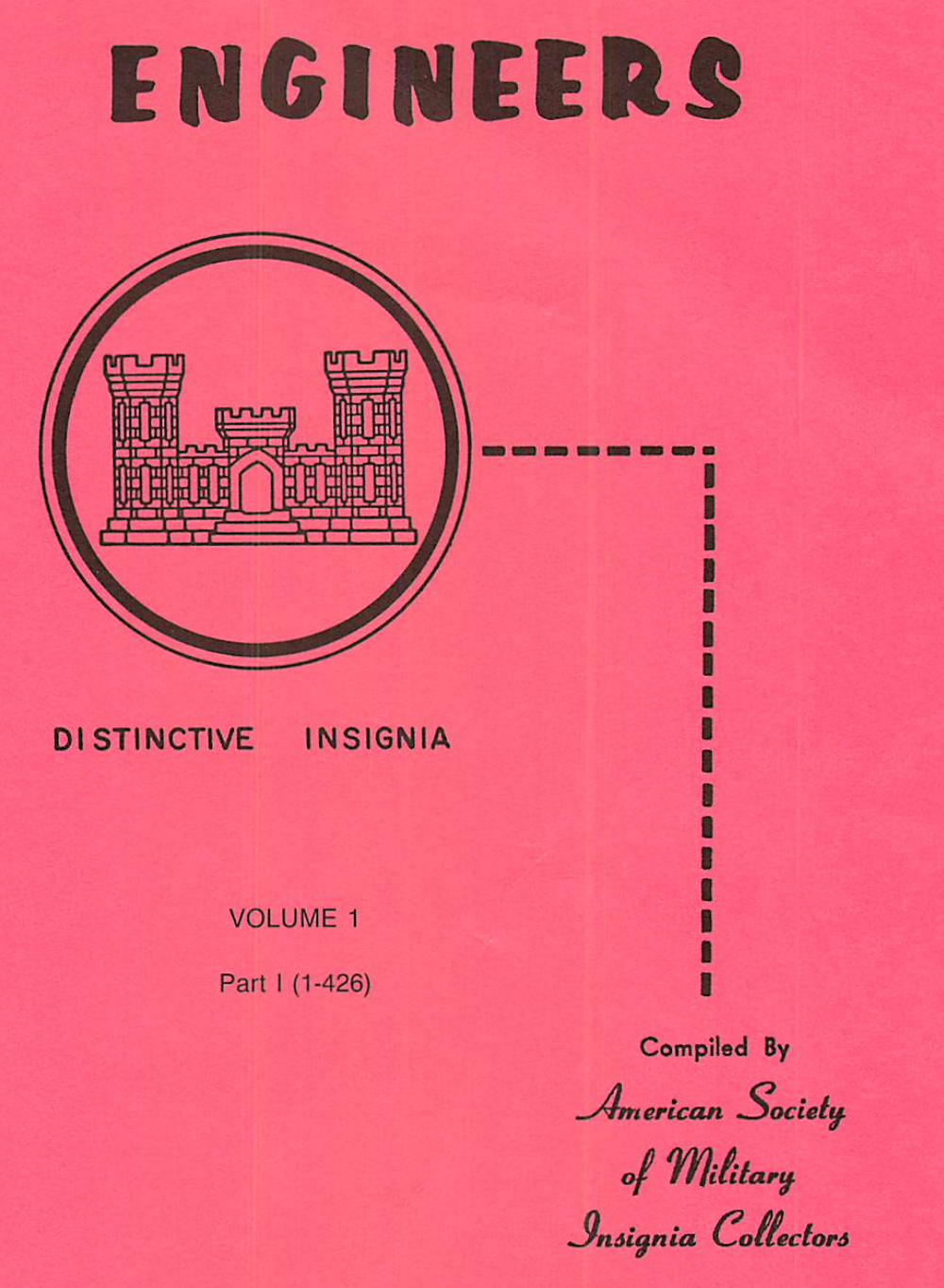
Engineer Distinctive Insignia Vol 1 Part 1 1-426 by American Society of Military Insignia Collectors Dec 1996 – A detailed description of the different kinds of engineer insignia

The Home Front

The American Home Front: A Review by Tim O’Neill– A cultural review of the home front before the war and during. Includes political life, The Depression, travel, towns and cities, amusement, people, and trivia. I’m unsure of the credentials of Tom, but it seems to be a good intro primer. See also: Who were you before the war, which helps set up a persona.

Posted on

WW2 Reenacting Table of Organization and Equipment

A green army table showing some paperwork with a listing of equipment

Below are some Tables of organization and Equipment that outline the personnel, equipment, and organization of various types of units. For reenacting purposes, it’s doubtful you’ll ever have this all (and it’s doubtful in WW2 the units in question ever did), but it’s a general guideline on what to aim for.

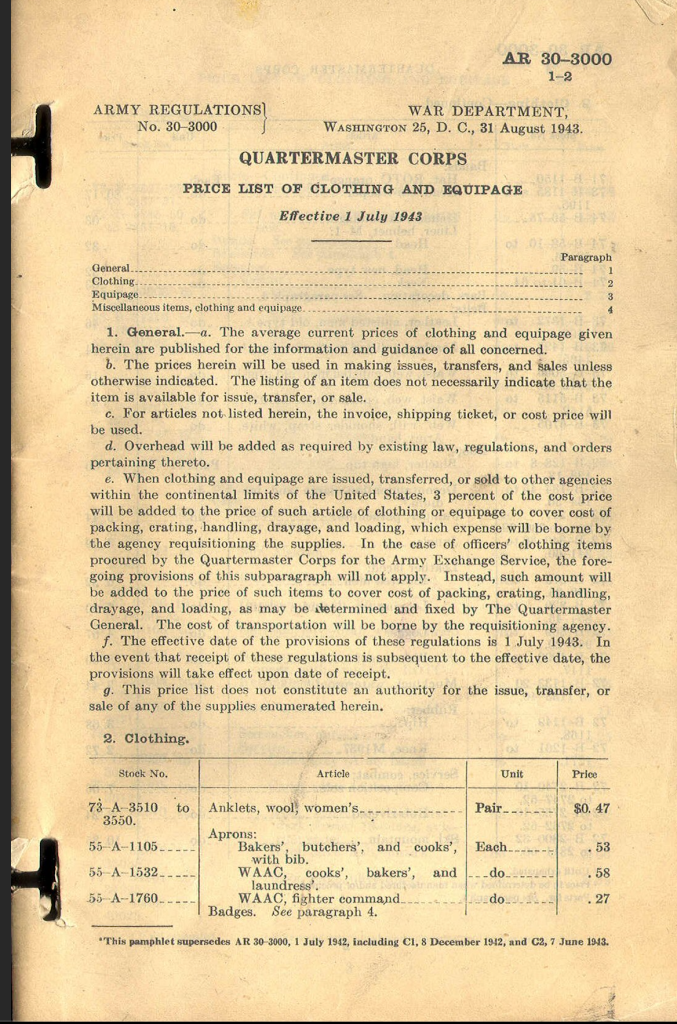
Army Regulations AR 30-3000 Price List of Clothing and Equipage July 1943 – This is a price list of all the clothing available. Zip file.

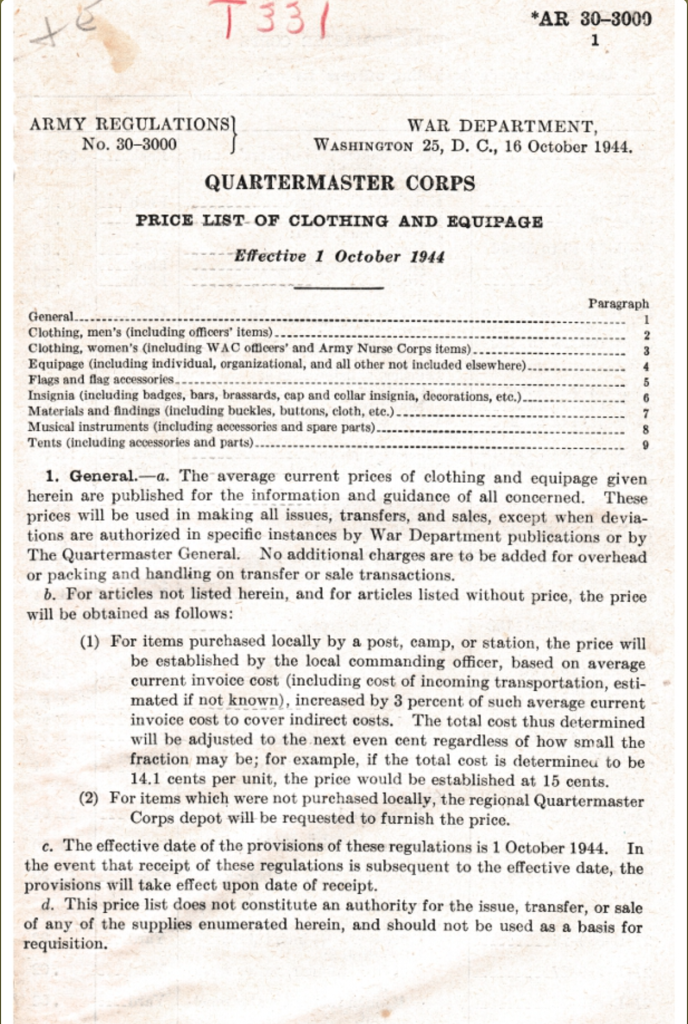
The Oct 1944 version of AR-30-3000 is also available as a link to US WW2 Uniforms.

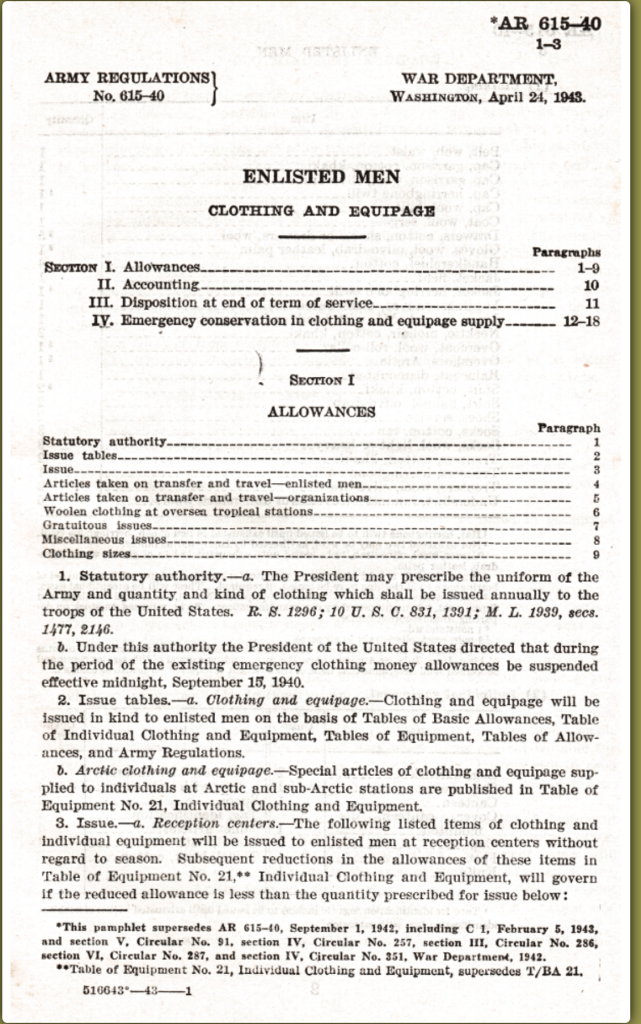
Army Regulations AR 615-40 Enlisted Men Clothing and Equipage Allowances April 1943 – Link to US WW2 Uniforms that lets you scroll through the regulation.

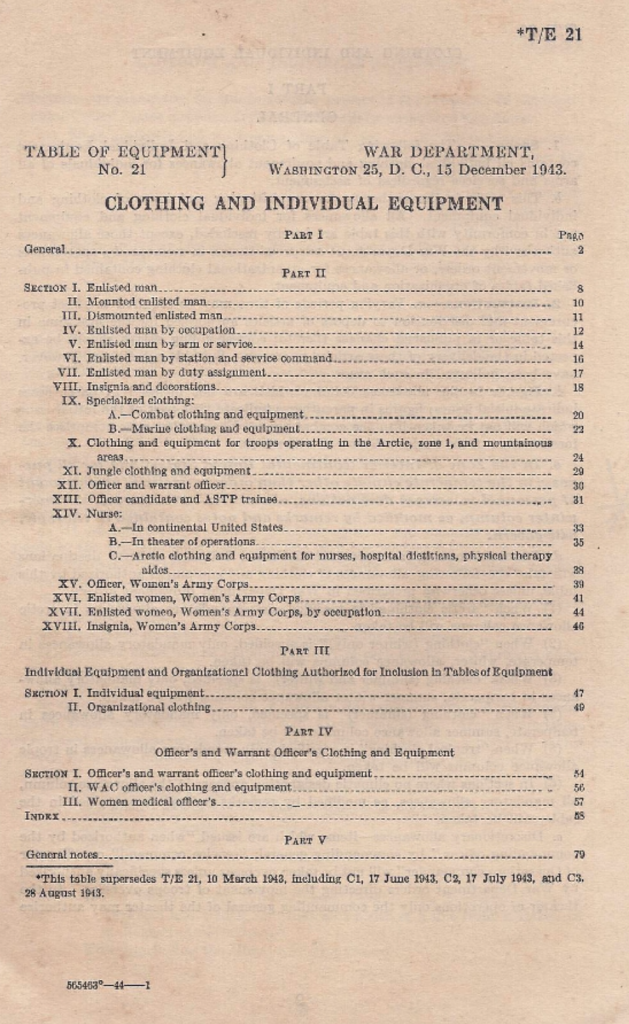
US Army Table of Equipment No 21 Dated 15 December 1943 – Link to US WW2 Uniforms that lets you scroll through the regulation.

Infantry

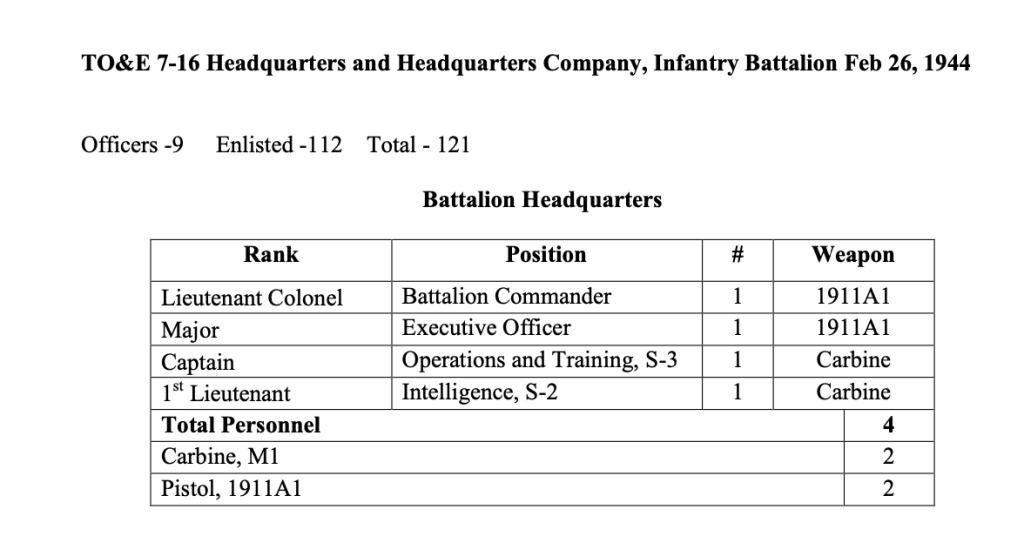
TO&E 7-16 Headquarters and Headquarters Company Infantry Battalion Feb 26 1944 – A table of organization and equipment for a Battalion. Outlines who has what equipment in what part of the battalion and how much. Looks to be a clean-up copy of original source material.

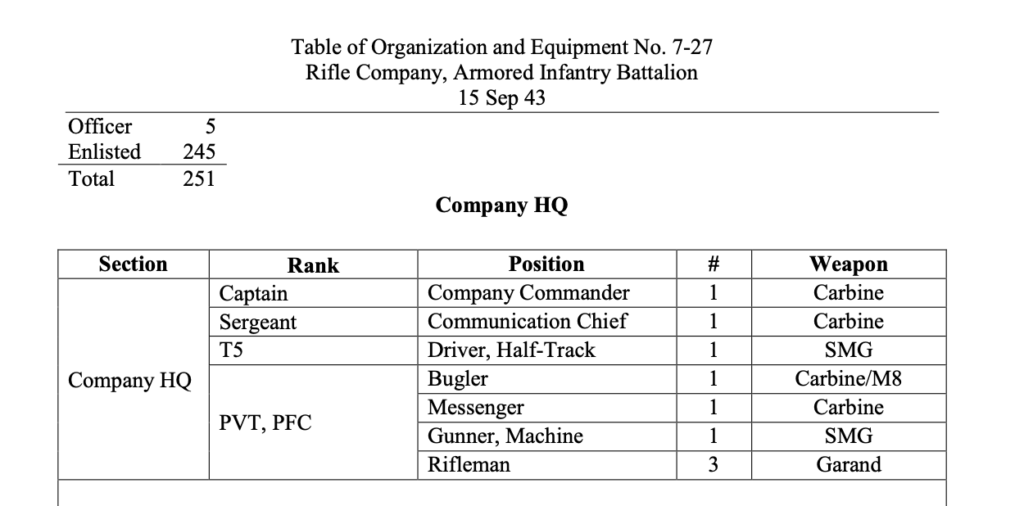
TO&E 7-17 Infantry Rifle Company Feb 26th 1944 – A table of organization and equipment for a rifle company. Outlines who has what equipment in what part of the battalion and how much. To download the original source, use this link
Infantry Parachute

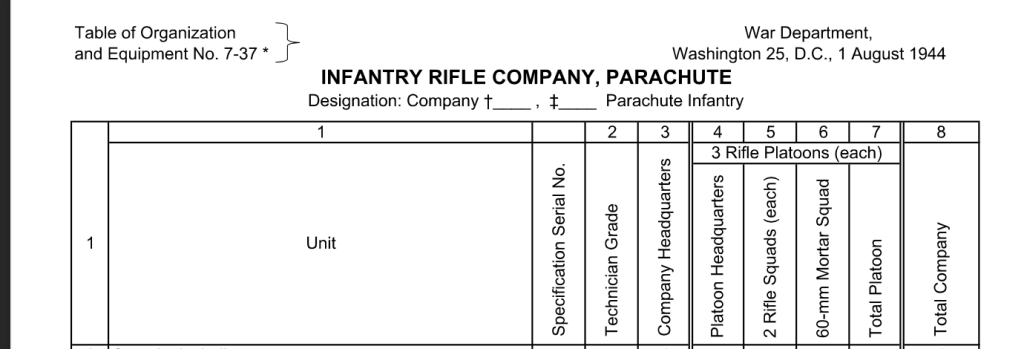
TO&E 7-37 Infantry Rifle Company Parachute – Aug 1st, 1944. A Table of Organization and Equipment for what a rifle company should have in terms of manpower and items. This replaces the 7-37 from Feb 1942.

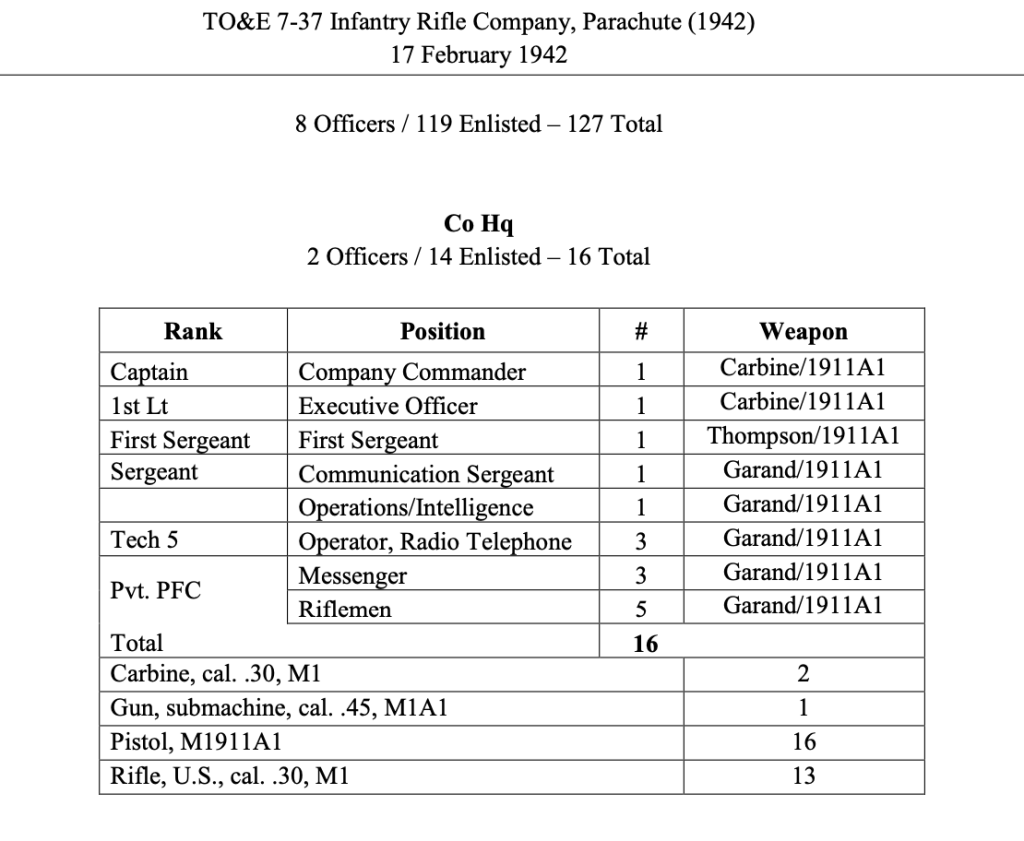
TO&E 7-37 Infantry Rifle Company Parachute -17 Feb 1942. A Table of Organization and Equipment for what a rifle company should have in terms of manpower and items. This is a cleaned-up copy of the source material.

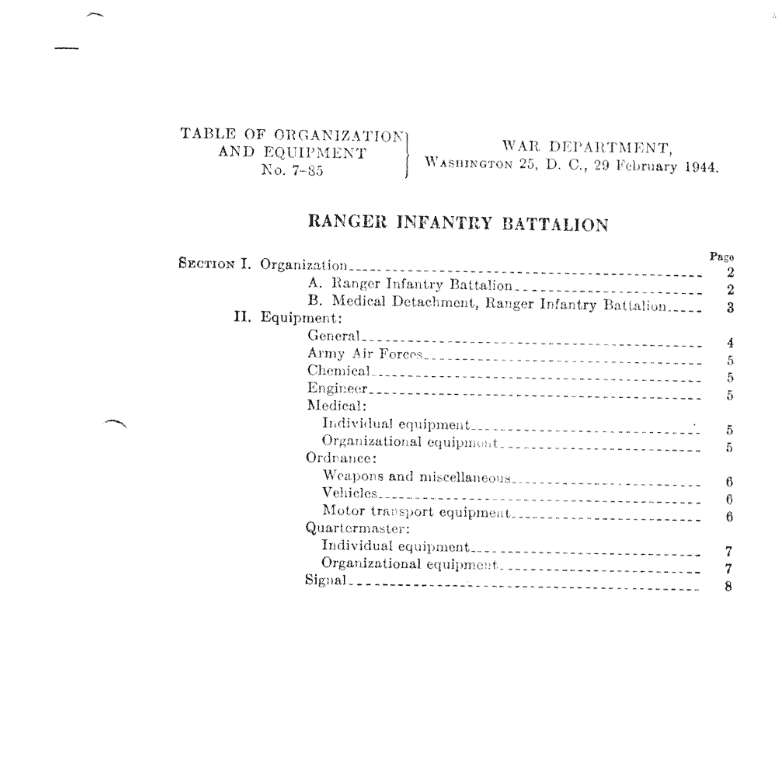
TO&E 7-85 Ranger Infantry Battalion Feb 1944 – Lists out personnel and equipment for the Ranger Battalion.

Engineers

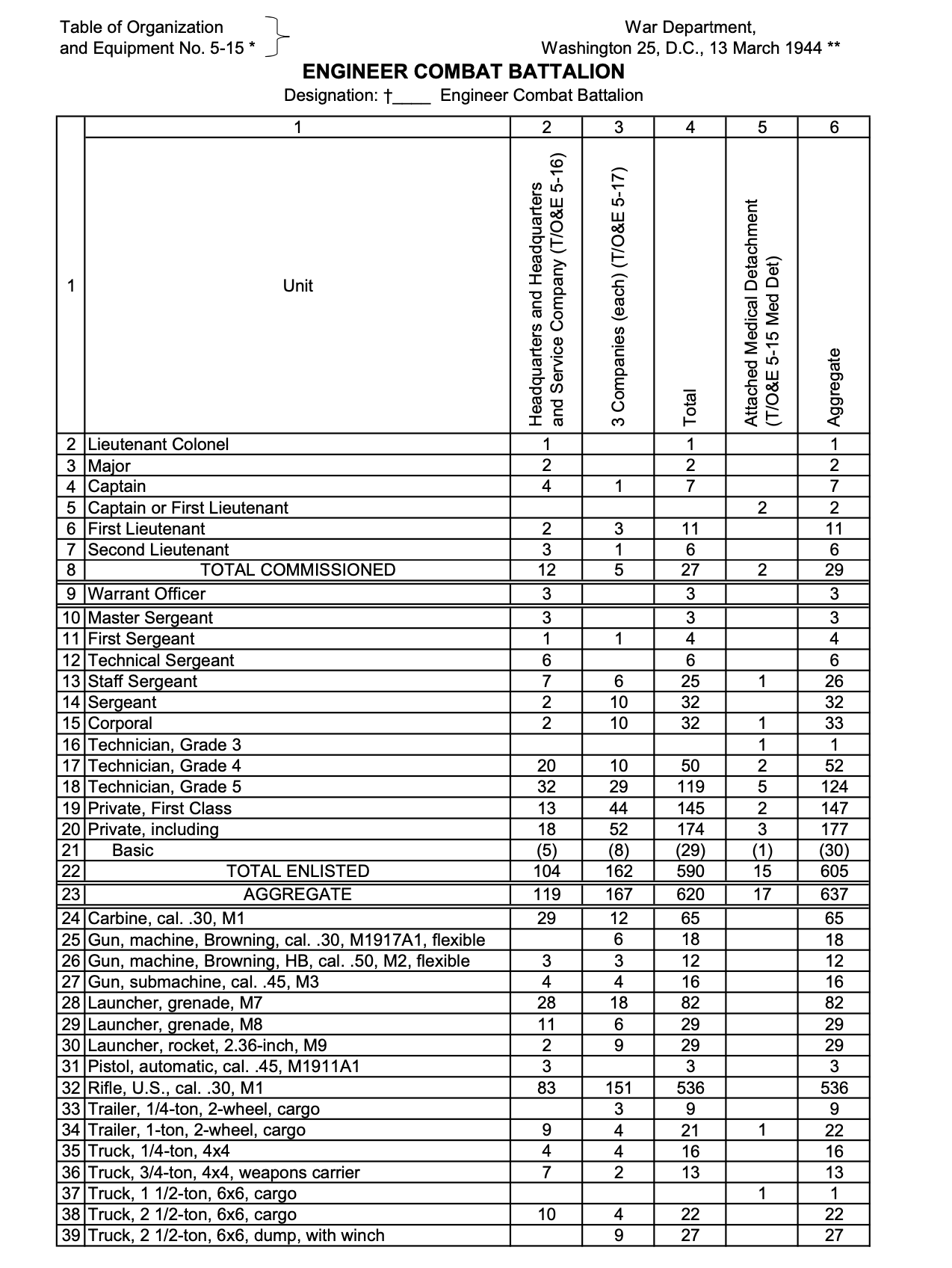
TO&E 5-15 Engineer Combat Battalion March 13th, 1944 | This is a cleaned-up copy of the equipment and personnel the battalion had.

Military Police

TO&E 19-55 MP Battalion 1945 – A Table of Organization and Equipment for what a Military Police Battalion should have in terms of manpower and items.

Signal Corps Units Table of Equipment and Organization

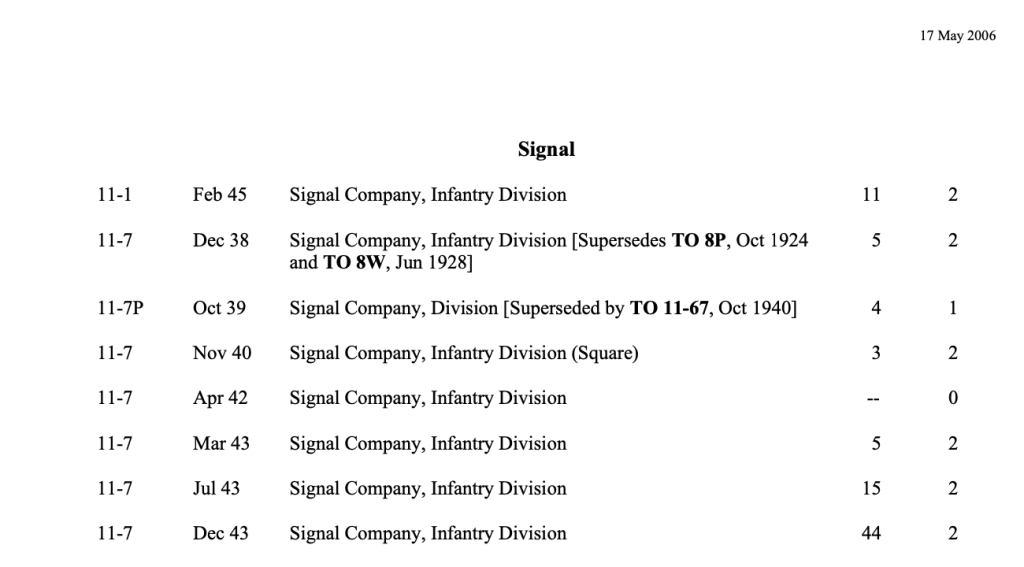
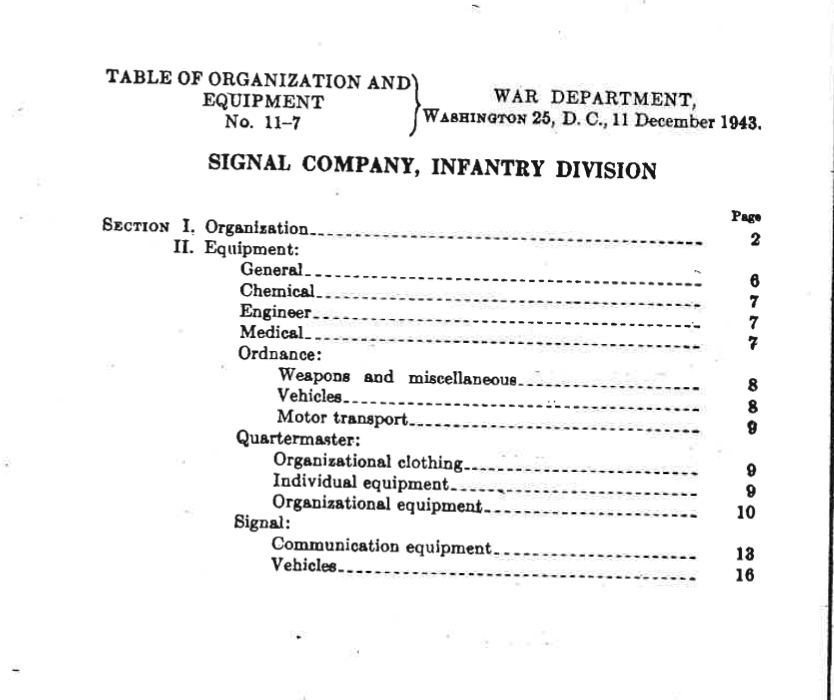
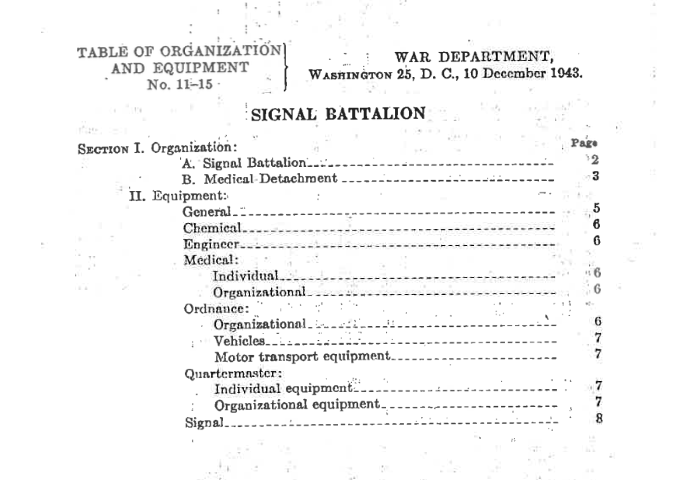
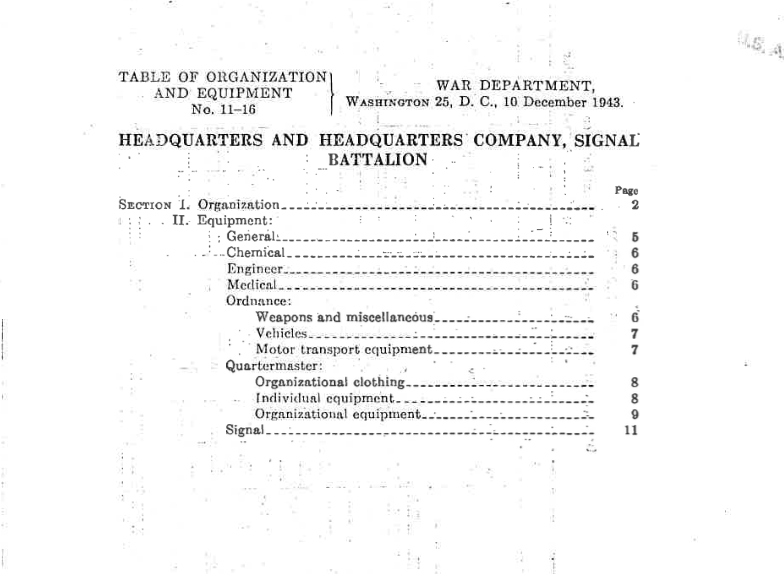
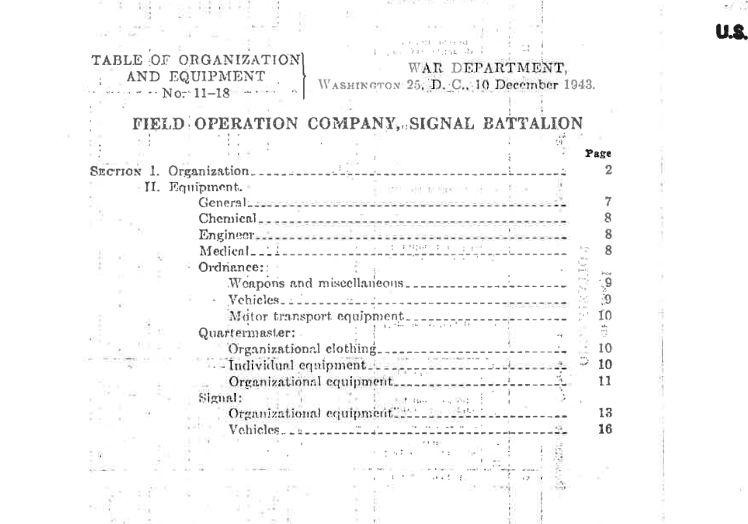
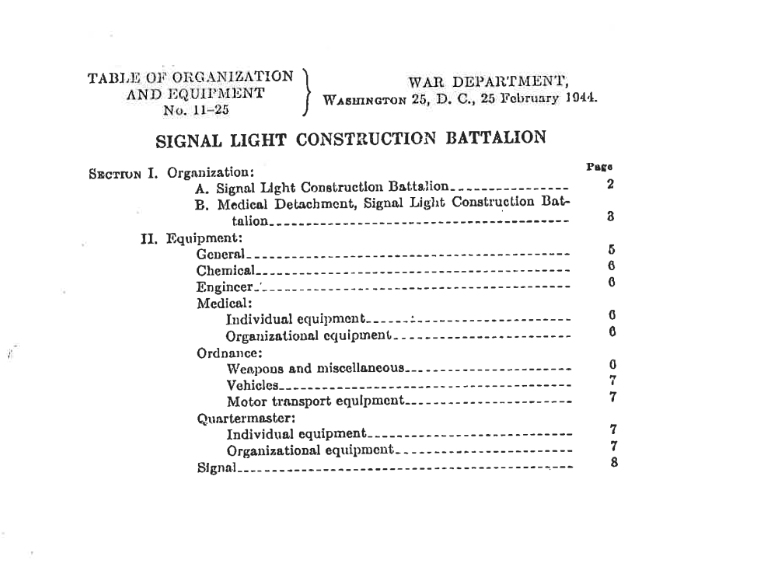
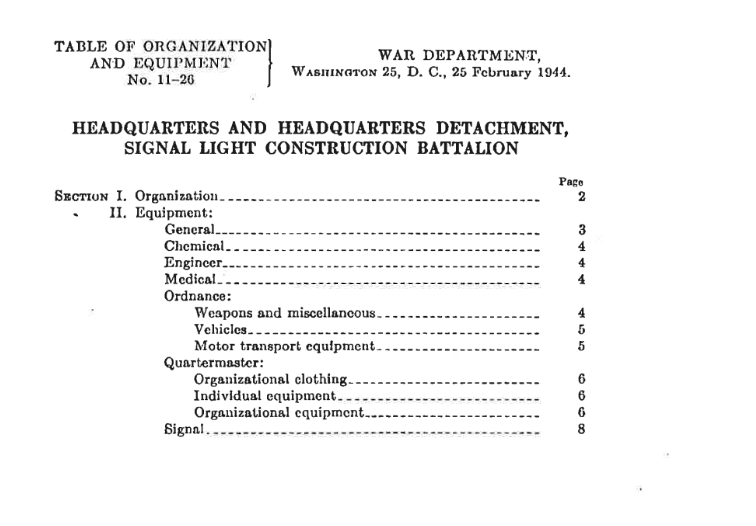
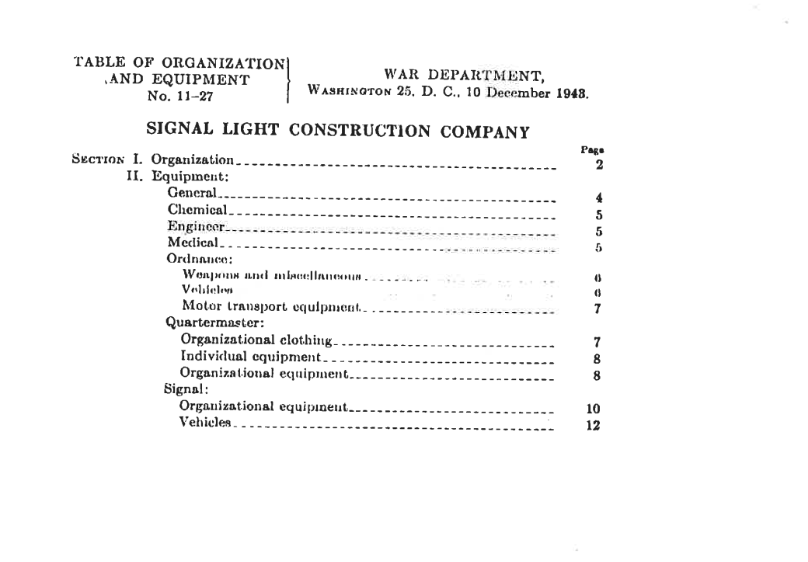
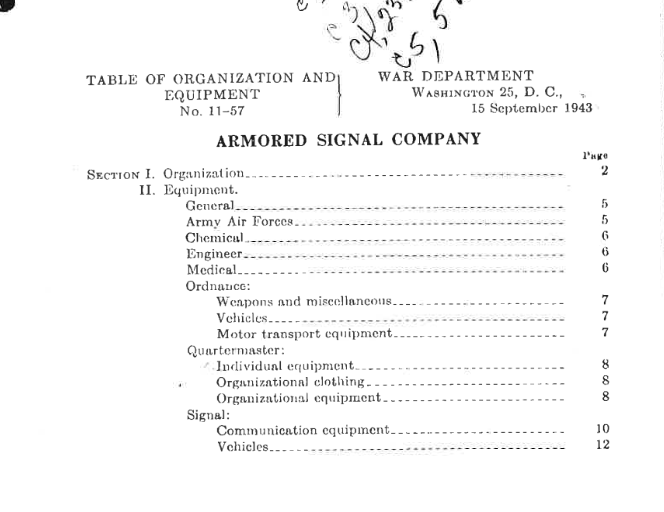
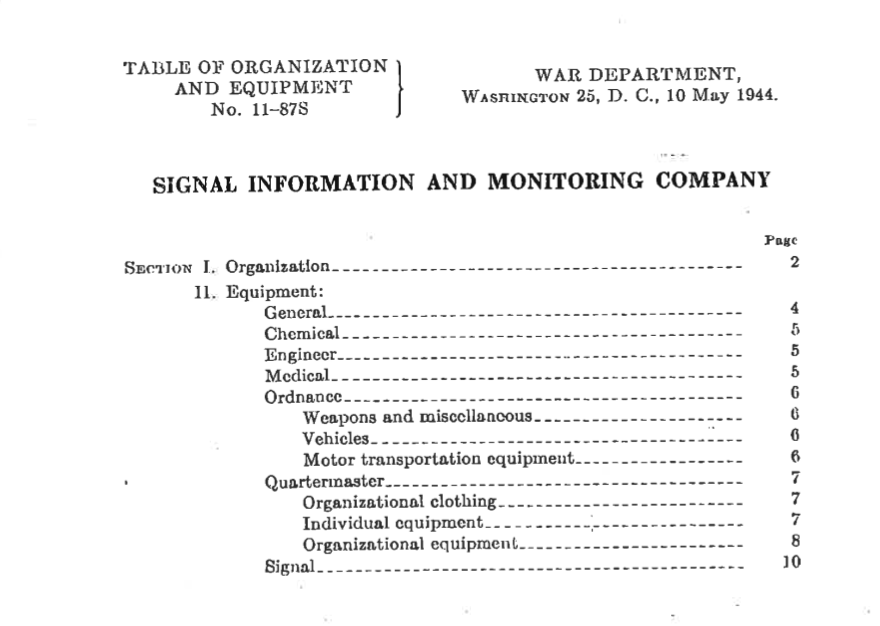
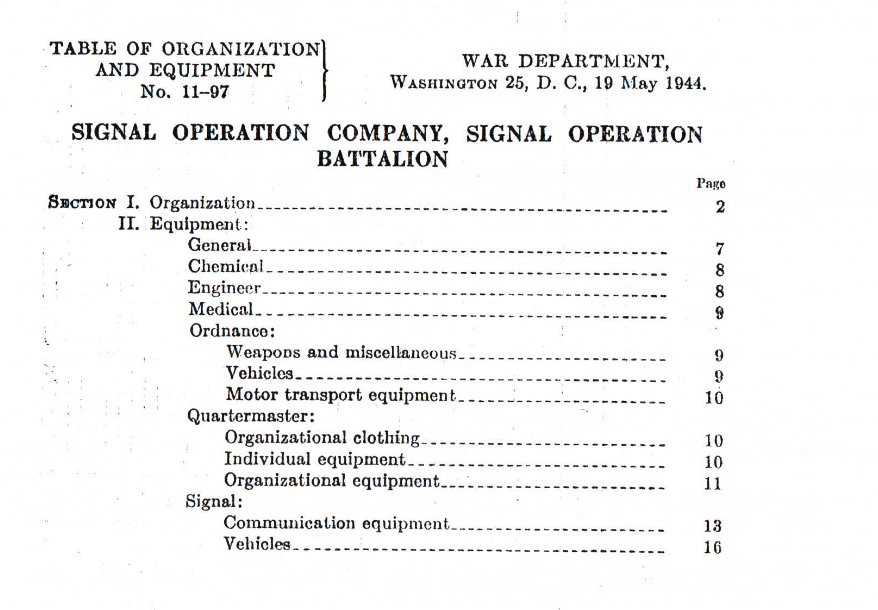
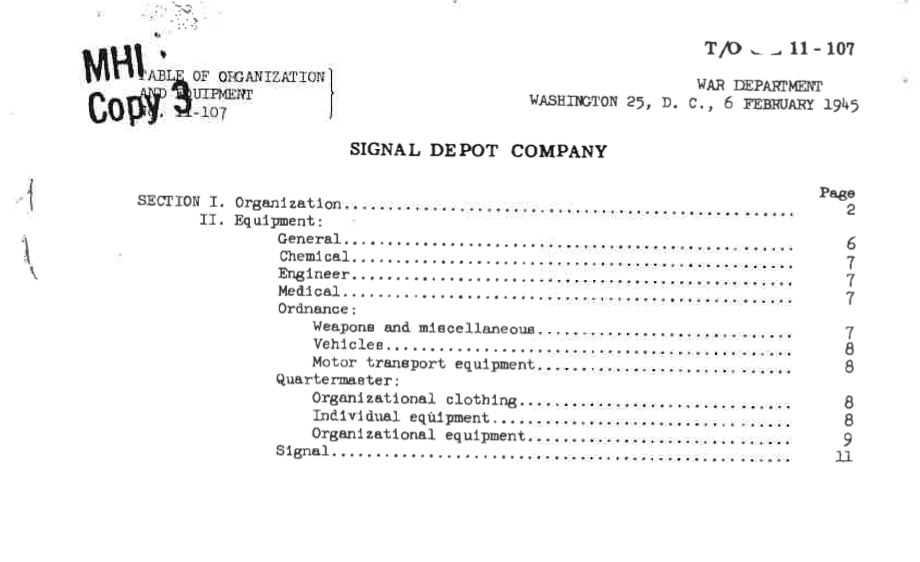
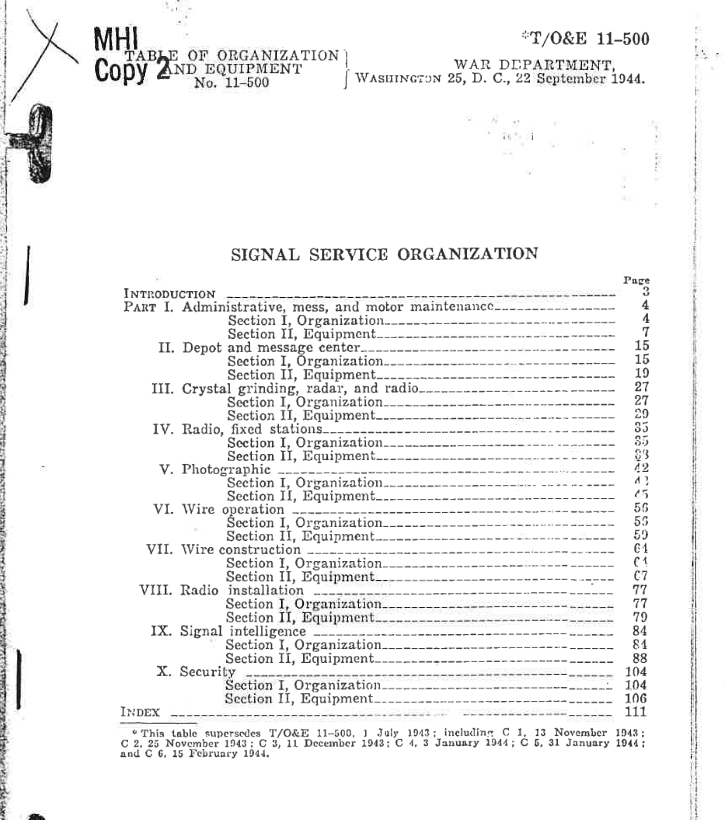
List of TOEs for Signal Corps Units – A list of all the TOE guides for signal corps units. Missing the following:

11-1027 Signal Detachment, Headquarters Ship
11-1050 Film Library Organization
11-1095 Army Signal Battalion, Special
11-1096 Headquarters and Headquarters Company, Army Signal Battalion, Special
11-1097 Wire Operation Company, Army Signal Battalion, Special
11-1098 Signal Construction Company, Army Signal Battalion, Special

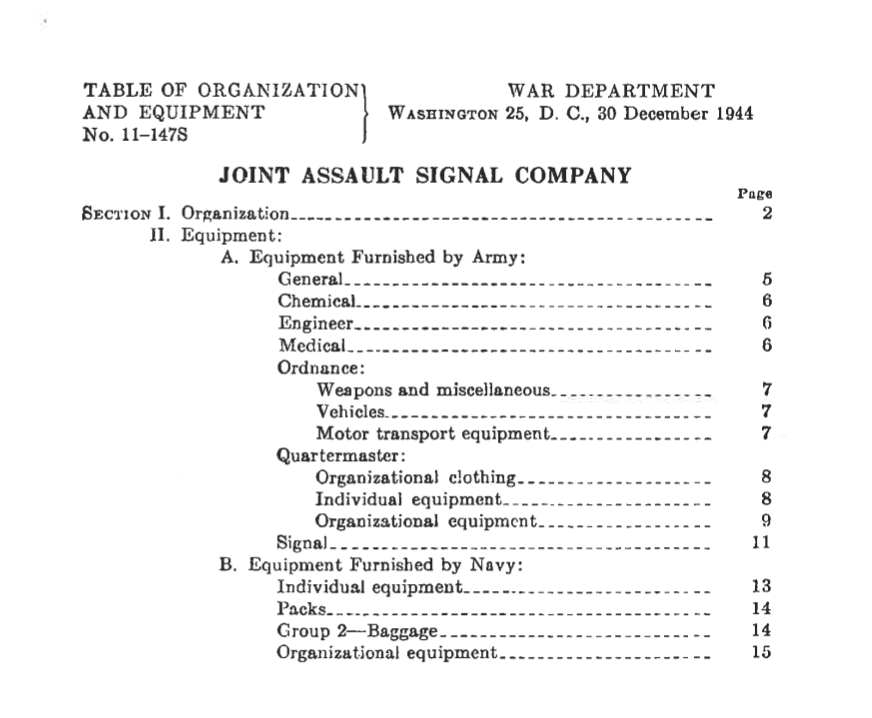
TOE 11-147S Joint Assault Signal Company 12-30-1944 – For an after-action report of the 593rd Joint Assault Signal Company which landed at Leyte Island on Oct 20th 1944 as part of the 96th Infantry Division read: 593rd Joint Assault Signal Company. It goes into detail about the problems it faced as well as the nitty-gritty of how the company was supposed to operate.

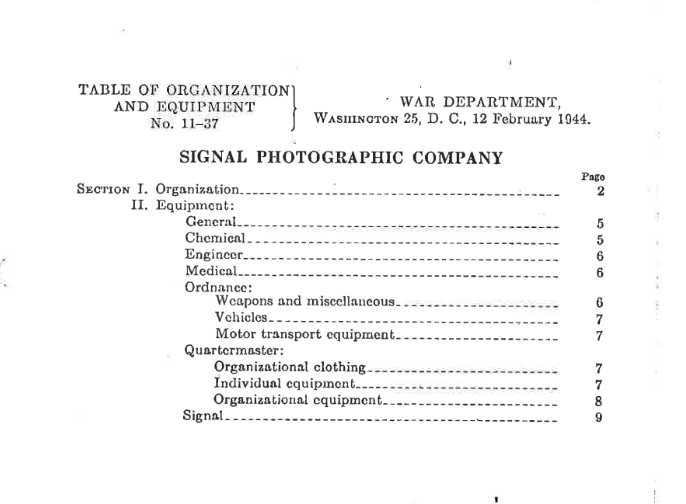
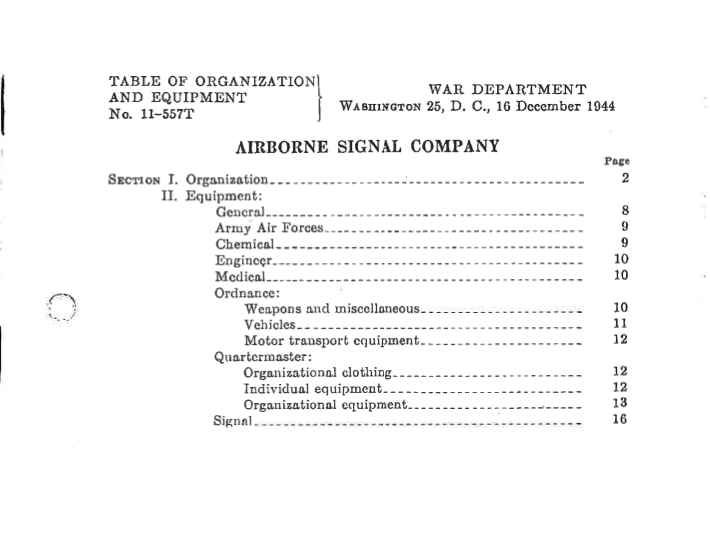
TOE 11-557T Airborne Signal Company Dec 16th 1944 with changes

For the signal items related to an Airborne Division see: Principal Items of Signal Equipment, Airborne Division. This is just section 3 of the TO&E. I don’t have the full one.

Posted on

WW2 Reenacting Supply and Equipment Catalogs

This lists supply catalogs. Supply catalogs are books filled with descriptions and nomenclature of various items used by different branches.

Signal Corps and Radio and Telephone

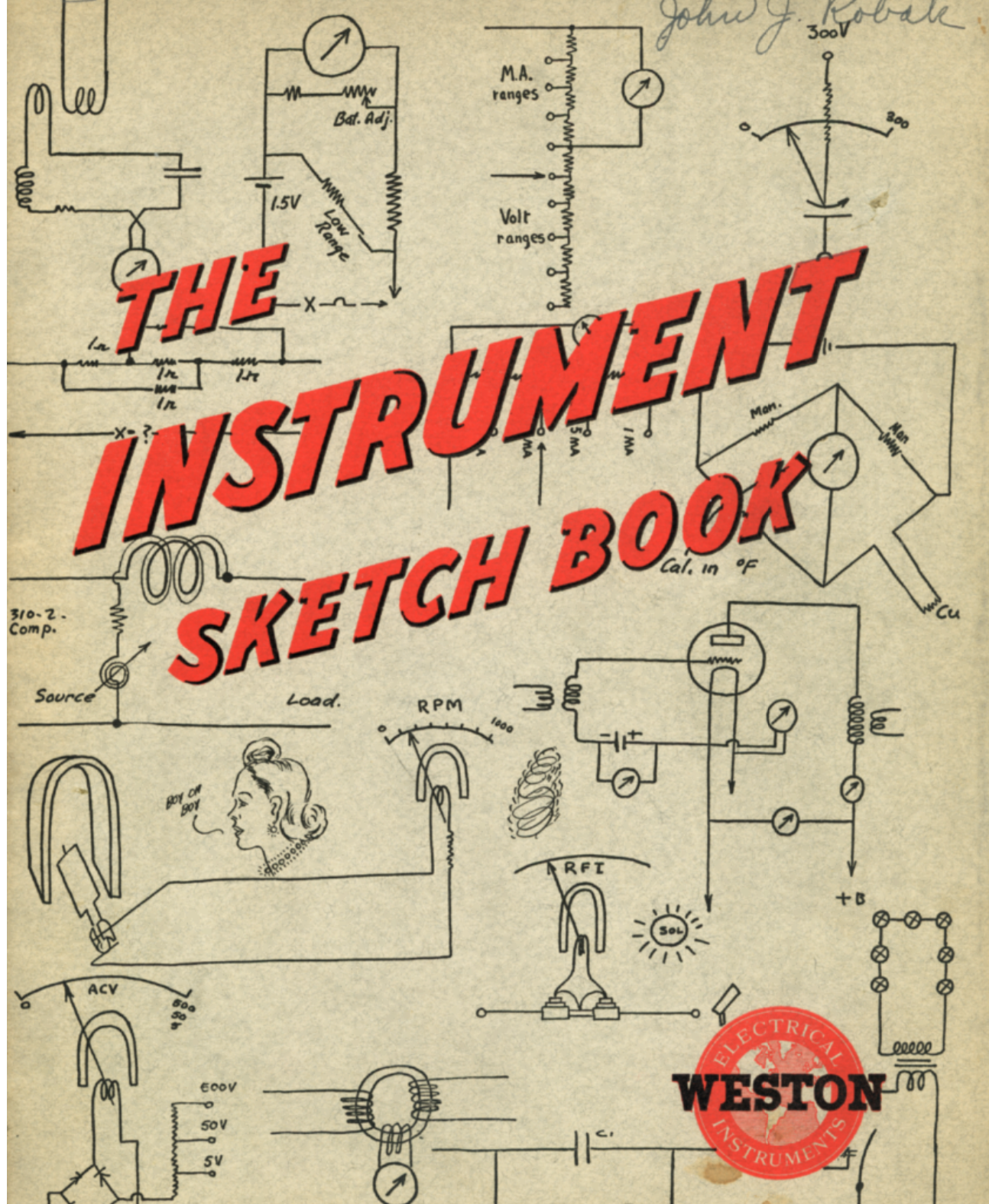
The instrument sketch book Weston Electrical Instruments 1941 – A sales book showing various products. Some of these civilian models may have ended up in Signal Corps hands. Also nice to have a reference guide in case you come across an obscure electrical item that you’re not sure about.

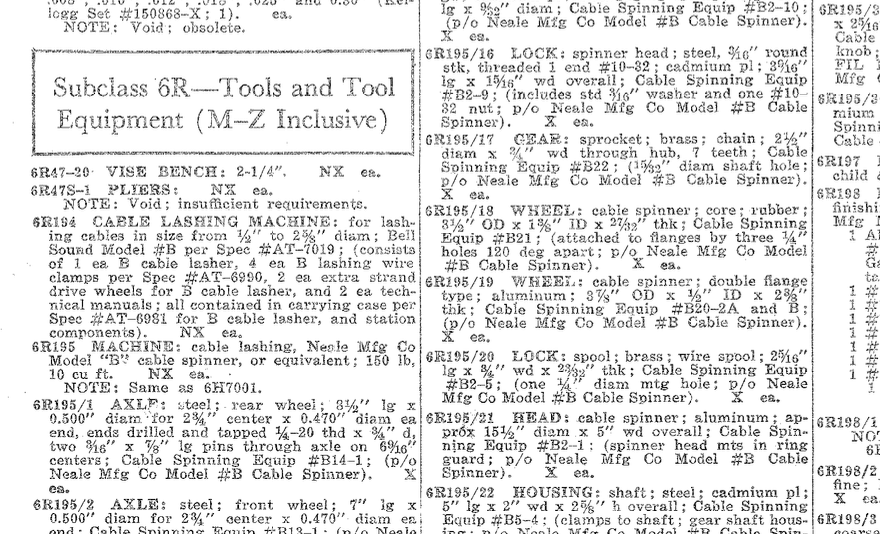
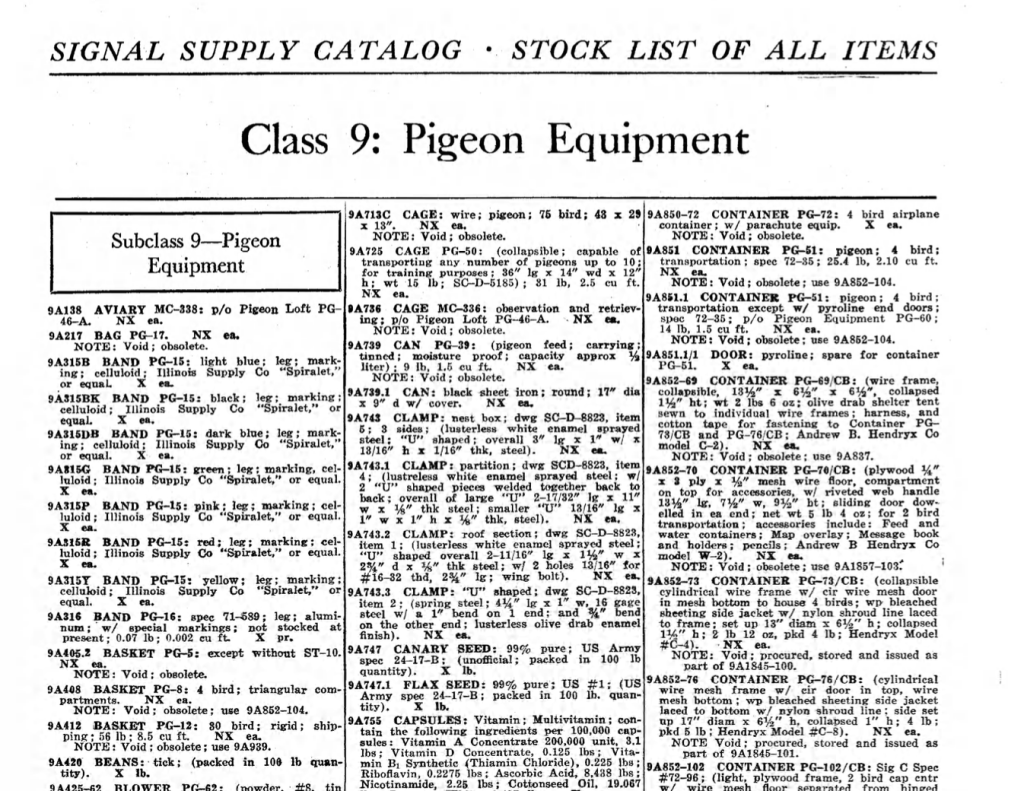
Signal Supply Catalog 1945- SubClass 6r M-Z Tools, Pigeons Class 9, Meteorological Class 7 – A partial listing of the whole Signal Corps Supply Catalog. Consisting of the total stock numbers and nomenclature of all items available to the Signal Corps.

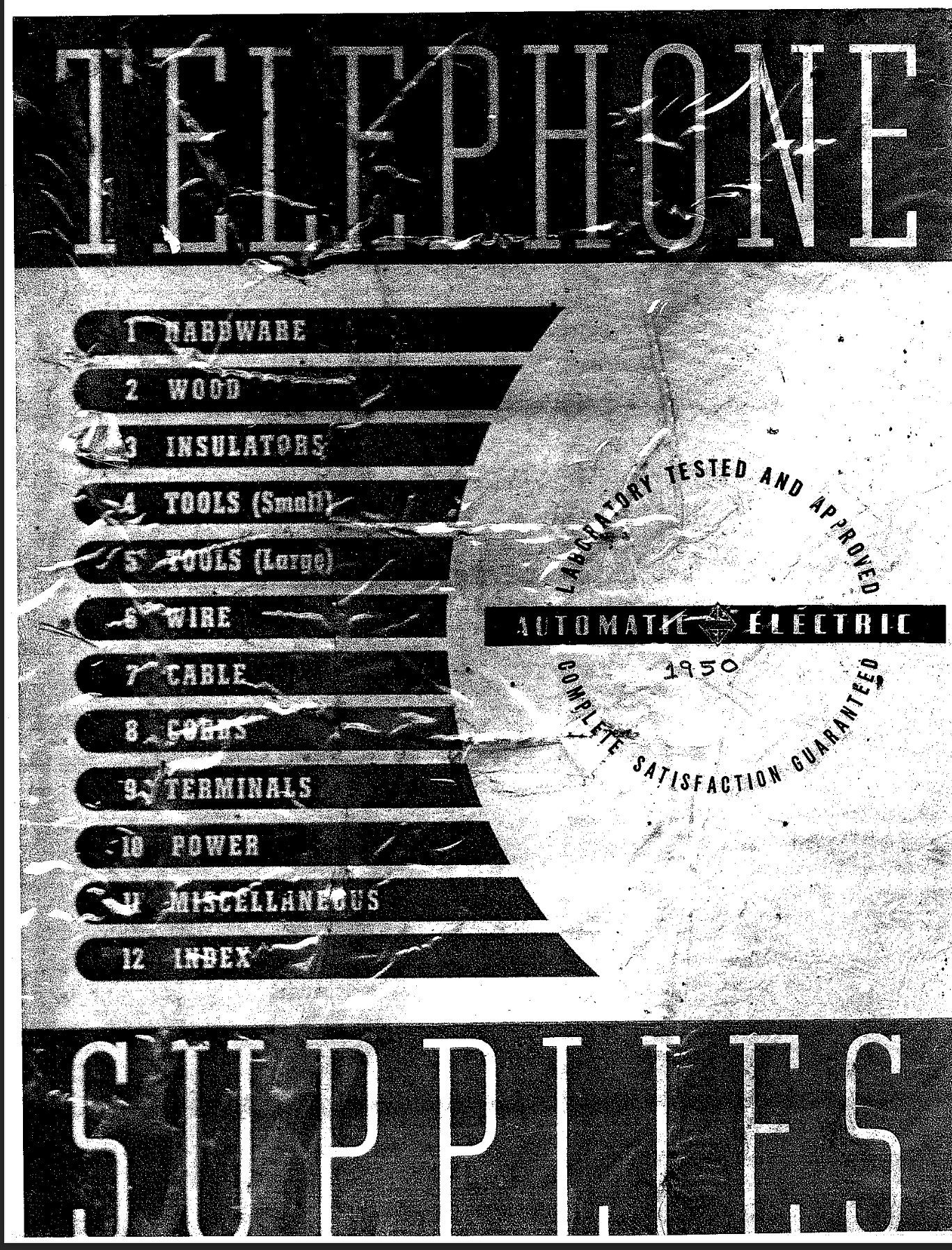
Automatic Electric Telephone Supplies 1950 –Part One and Part Two. A product sales book showing telephone supplies available in 1950. Good for cross-referencing items. Includes hardware, wood, insulators, tools, wire, cable, cords, terminals, power, and miscellaneous items.

Medical Department

Combat Medics of WWII An Exhibit of the National D-Day Memorial, Bedford, VA – Good, quick outline of combat medics from all nations both Allied and Axis.

Medical Supply Catalog Med1 to Med3 March 1944 – This is the medical department’s complete catalog of available products. It lists items available, the associated stock number, as well as the price. It also includes pictures of some of the times. It’s a beefy PDF file that you download from my Google Drive. The Med-dept.com contains a wealth of information that goes into more detail on some of the items in the catalog, such as individual first aid packs.

Medical Department Supply Catalog 1942 – This is the medical department’s complete catalog of available products. It lists items available, the associated stock number, as well as the price. It’s a beefy PDF file that you download from my Google Drive. The Med-dept.com contains a wealth of information that goes into more detail on some of the items in the catalog, such as individual first aid packs.

Medical Department Supply Catalog June 1st, 1943 – A list of items available for the medical department, including costs and supply class. Also includes a section on organizational equipment, medical department assemblages and component parts, and the cost of medical department blank forms.

Identifying and Dating Medical Equipment in use by the US Army in WW2 – By Poppy Mercier Somme Poppies Repros Updated August 2025. Explains how to date medical equipment.

Quartermaster Corps

Quartermaster Corps Manual QMC 14-2: Use and Care of Office Equipment and Supplies – Dated Feb 1945. Written in response to the drastic reduction of office supplies, and describes how to use and care for office supplies to make them last longer. Contains nuggets of information like “use both sides of the paper” and “to re-use file folders, flip them inside out”. Also mentions reusing rubber bands as rubber was a wartime ration good. It also has a good section on how to care for typewriters, which, if you don’t know where to begin, is a good place to start! Print on ivory regular paper, 8.5″ x 11″

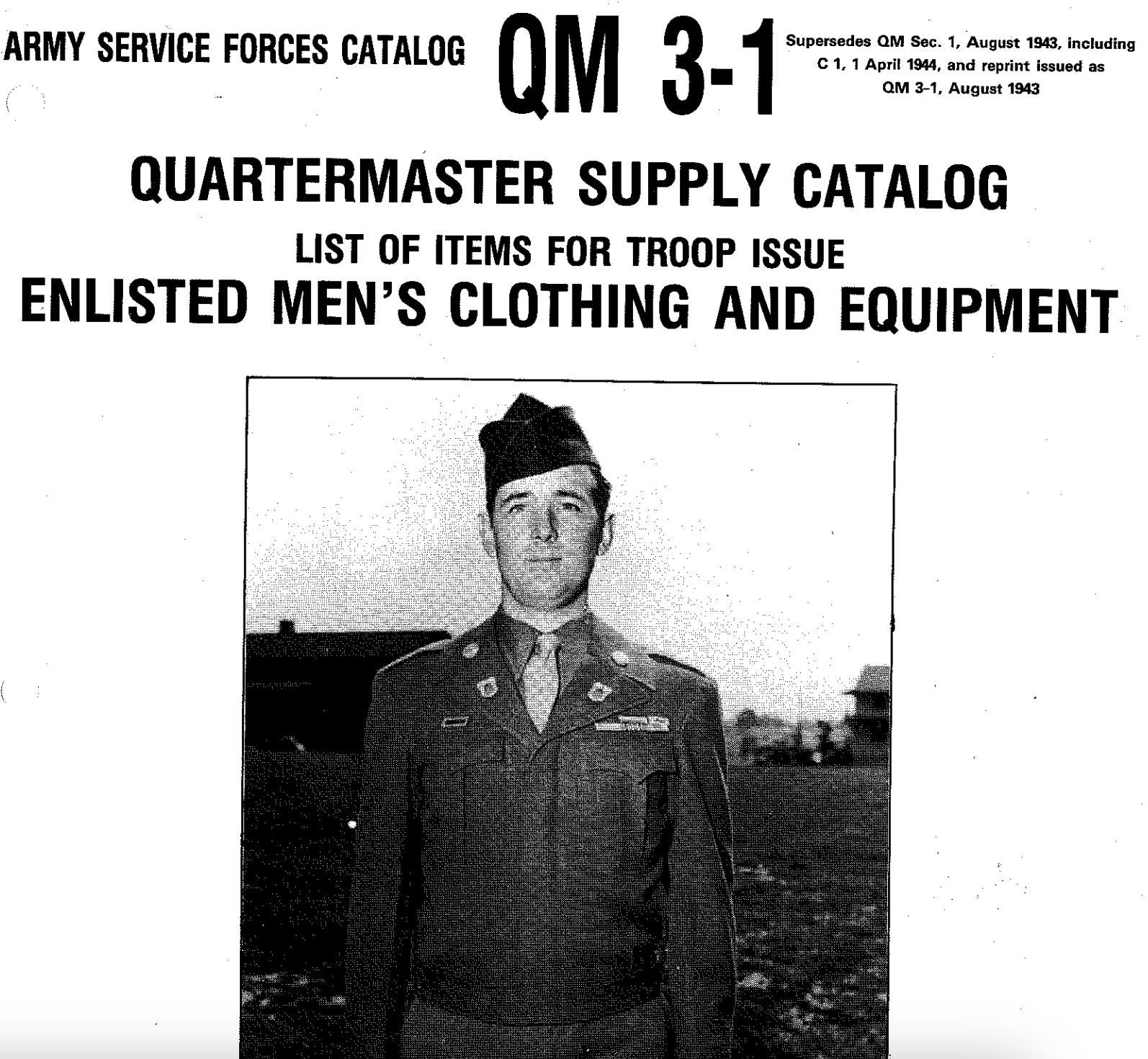
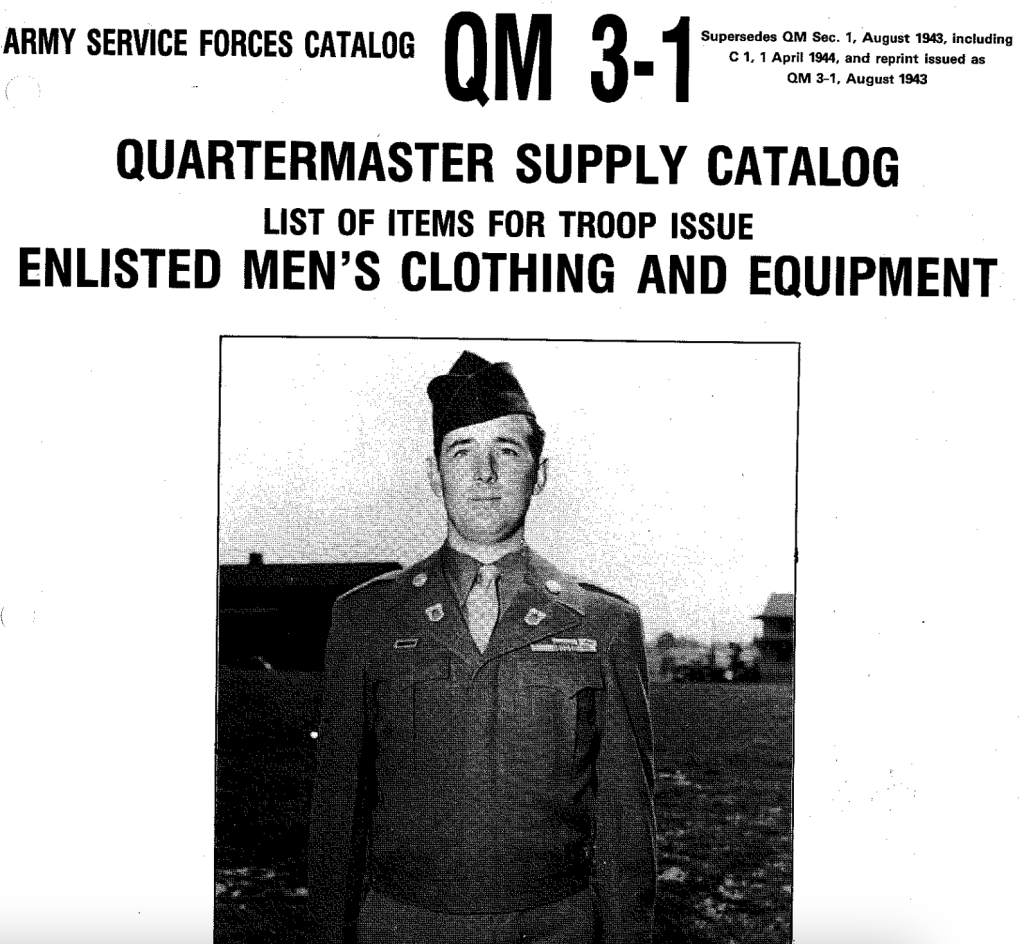
Quartermaster Supply Catalog QM 3-1 1946: List of Items for Troop Issue Enlisted Men’s Clothing and Equipment. This catalog was made in May 1946. Lists out all the things available to troops at the end of WW2. Supercedes QM1.

For the June 1943 version, see QM 3-1.

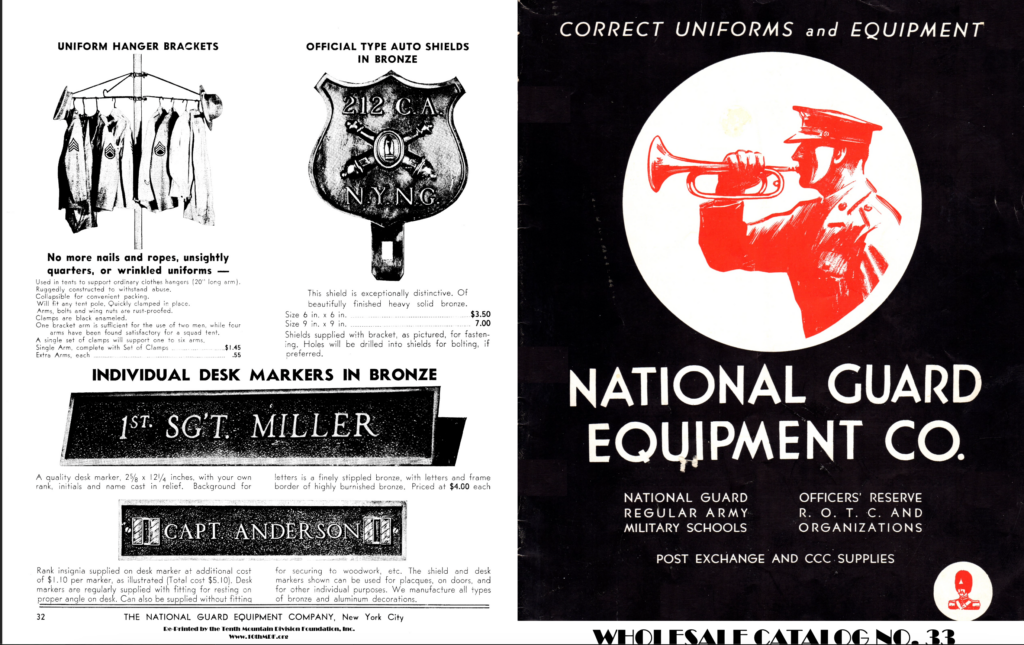
Officers’ Equipment Catalog 1938 No 33 – Lists items available for officers. Somewhat dated for WW2, but stuff would have been around.

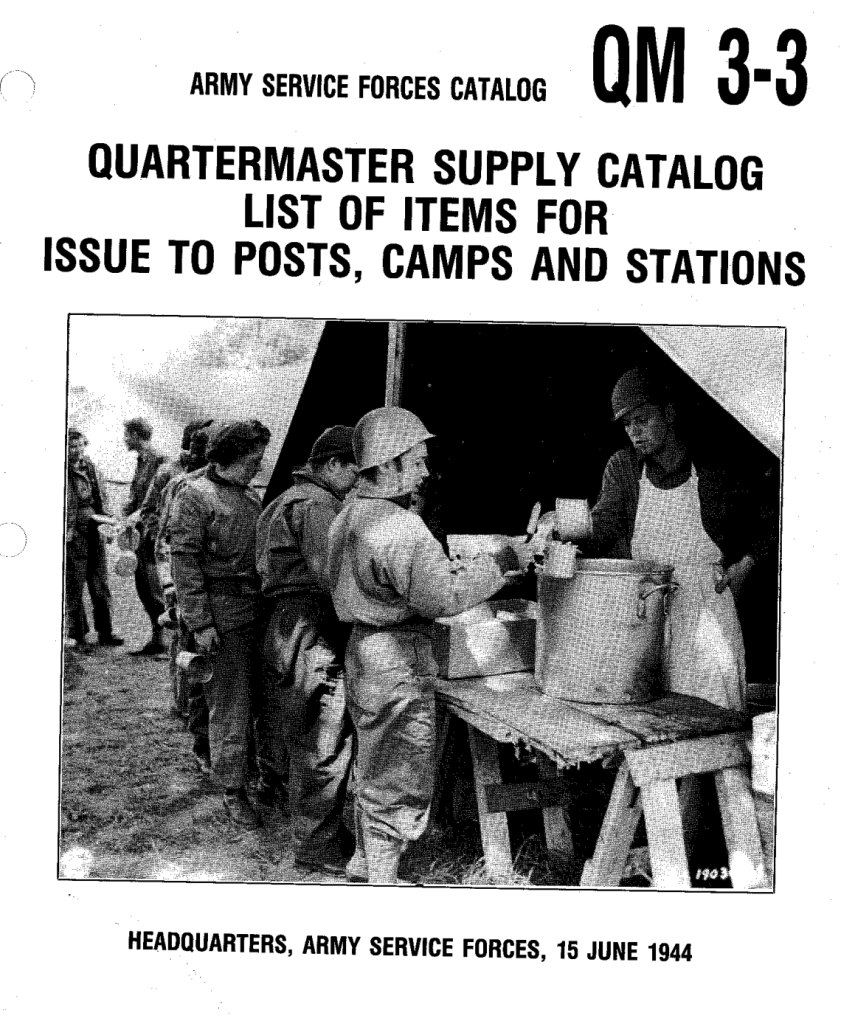
Quartermaster Supply for Posts, Camps, and Stations QM3-3. Lists items that would be available for issue to static places like camps and posts, etc. Published on June 15th, 1944.

Quartermaster Supply Catalog for Enlisted Men QM 1. Lists items for issue to enlisted men at the start of WW2. Published in 1943.

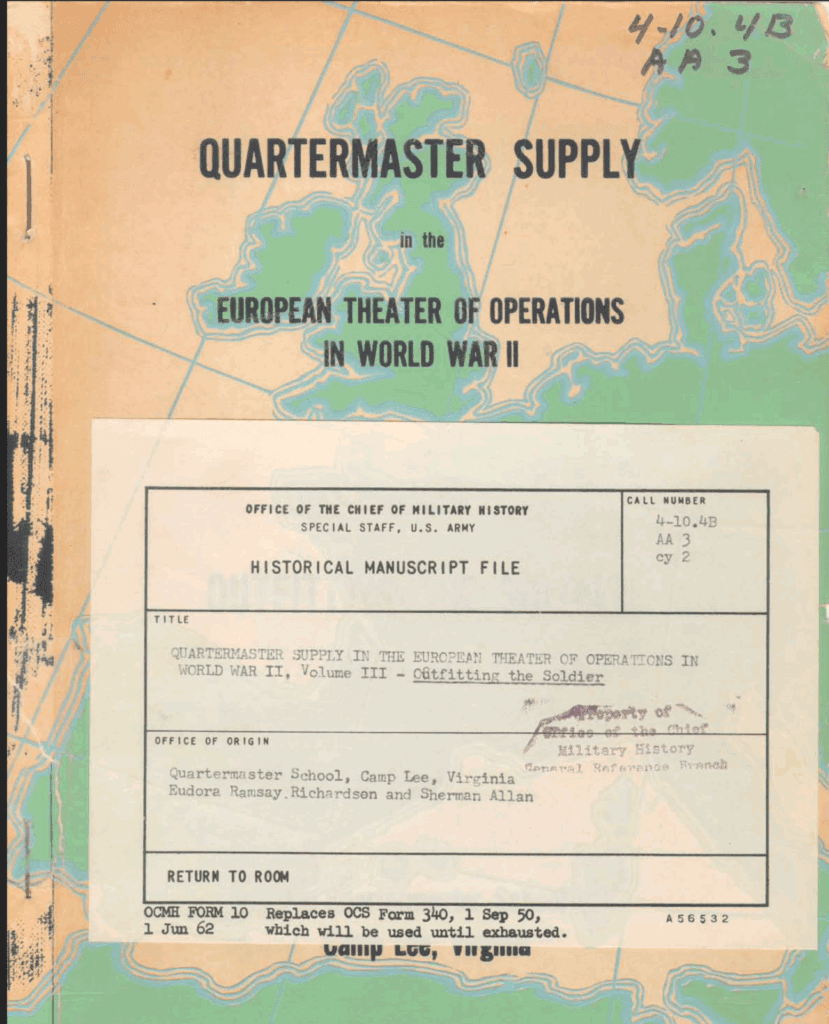
Quartermaster Supply in the European Theater of Operations Vol. III. Published at the Quartermaster School at Camp Lee, VA in 1948. It includes the following chapters:

  • Chapter 1 – Invasion Plans (p. 1)
  • Chapter 2 – Methods of Supply (p. 9)
  • Chapter 3 – Procurement (p. 22)
  • Chapter 4 – Storage and Distribution (p. 40)
  • Chapter 5 – The ETO Field Jacket (p. 58)
  • Chapter 6 – Protective Clothing (p. 66)
  • Chapter 7 – Winter Clothing (p. 75)
  • Chapter 8 – Outfitting the Woman Soldier (p. 90)
  • Appendix I – Proposal for T/E 21 Clothing and Equipment Accompanying Troops Overseas (p. 98)
  • Appendix II – Equipment of Troops, December 1943 (p. 100)
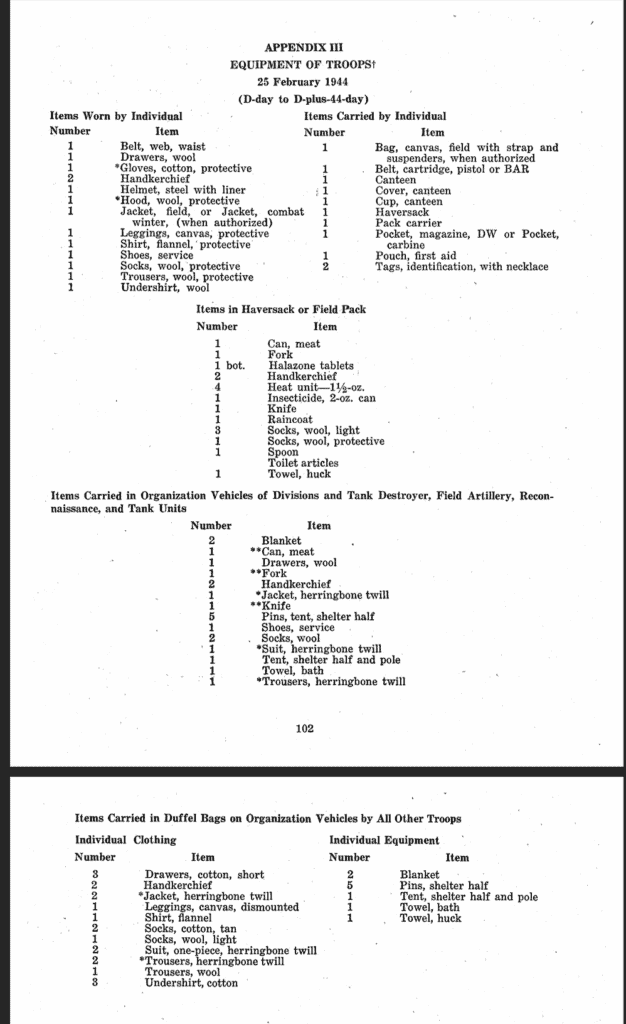
  • Appendix III – Equipment of Troops, 25 February 1944 (p. 102)
  • Appendix IV-A – Class II Beach Maintenance Sets (p. 104)
  • Appendix IV-B – Follow-Up Maintenance Sets (p. 107)
  • Appendix IV-C – Items to Be Stocked for Maintenance Sets (p. 110)
  • Appendix V – Class II Reserve Stocks for Marshaling Areas, 30 March 1944 (p. 114)
  • Appendix VI – Allowances of Clothing and Equipment for Troops Engaged in the Continental Operation, 30 April 1944 (p. 115)
  • Appendix VII – Items to Be Bulk Shipped, 11 May 1943 (p. 120)
  • Appendix VIII – Hospital Stocks, April 1944 (p. 119)
  • Appendix IX – Flow of Clothing and Individual Equipment, 2 February 1945 (p. 121)
  • Appendix X-A – Controlled Items, 10 October 1944 (p. 122)
  • Appendix X-B – Items Controlled by OCQM, April 1945 (p. 123)
  • Appendix XI – Replenishment Requisition and Shipment Flow, 19 March 1945 (p. 124)
  • Appendix XII – Report of Individual Equipment Procured from British Sources, 1943–1944 (p. 125)
  • Appendix XIII – Draft of French Government’s Procedure Establishing General Terms for the Manufacture of Military Clothing, 19 November 1944 (p. 126)
  • Appendix XIV – Raw Materials Import Plan, 18 December 1944 (p. 128)
  • Appendix XV – Comparison of Commodities Required and Procured from Continental Production, February–September 1945 (p. 130)
  • Appendix XVI – Depot Mission in United Kingdom (p. 131)
  • Appendix XVII – Comparison of Clothing and Individual Equipment Requirements and Assets for First Period of a Continental Operation (p. 132)
  • Appendix XVIII – Individual Clothing and Equipment Requirements, Brittany Base Section, 8 September 1944 (p. 133)
  • Appendix XIX – Normal Flow of Class II Supplies (p. 135)
  • Appendix XX-A – Normal Flow of Class II Supplies for United States Forces (p. 136)
  • Appendix XX-B – Normal Flow of Class II Supplies for POW (p. 138)
  • Appendix XXI – Summary of Class II Depot Missions (p. 137)
  • Appendix XXII – Model Stock Clothing, 1 August 1943 (p. 140)
  • Appendix XXIII – Model Stock Clothing, 20 January 1945 (p. 142)
  • Appendix XXIV – Supplemental Size Tariffs for Shoes, Service Type III, 7 November 1944 (p. 154)
  • Appendix XXV – Shoepac Size Tariffs, 1 November 1945 (p. 155)
  • Appendix XXVI – Status of Protective Clothing, 9 February 1944 (p. 156)
  • Appendix XXVII – Status of Items of Clothing and Individual Equipment in Short Supply in the United Kingdom, 15 July 1944 (p. 157)
  • Appendix XXVIII – Items of Winter Clothing Recommended by the Office of the Quartermaster General, November 1943 (p. 158)
  • Appendix XXIX – Clothing and Equipment Recommended for Climatic Conditions Similar to Winter in Northern France and Germany (p. 159)
  • Appendix XXX – Winter Clothing for Special Conditions, 15 August 1944 (p. 160)
  • Appendix XXXI – Winter Clothing for Special Conditions, 9 September 1944 (p. 161)
  • Appendix XXXII – Movement of Winter Clothing to Armies, 20 September 1944 (p. 162)
  • Appendix XXXIII – The Winterizing Program, October 1944 (p. 163)
  • Appendix XXXIV – Additional Winter Clothing Requirements, 2 October 1944 (p. 164)
  • Appendix XXXV – Winter Clothing in ETO Waters, 20 November 1944 – 1 January 1945 (p. 165)
  • Appendix XXXVI – Special Cold Weather Clothing, 3 January 1945 (p. 166)
  • Appendix XXXVII – Total Issues as of 17 February 1945 (p. 167)
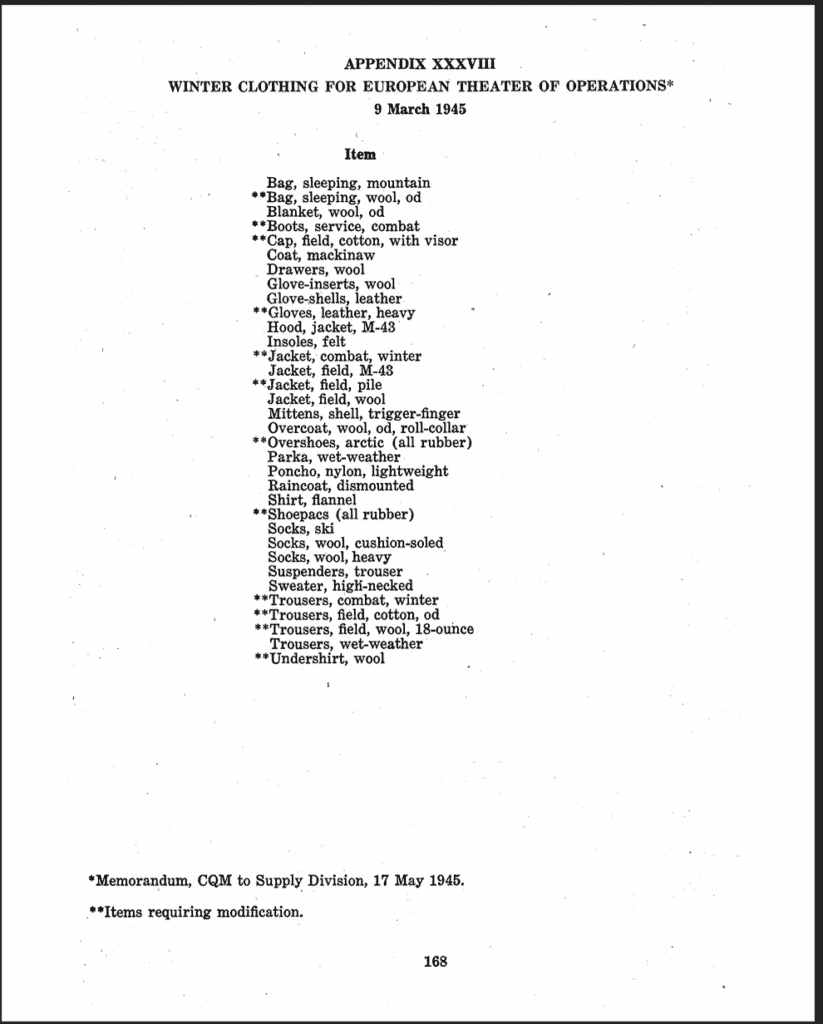
  • Appendix XXXVIII – Winter Clothing for European Theater of Operations, 9 March 1945 (p. 168)
  • Appendix XXXIX – Requirements for Local Procurement of Clothing and Individual Equipment for Enlisted Women (p. 169)
  • Appendix XL – 1945 Raw Materials Import Plan: Knit Goods for Enlisted Women (p. 170)
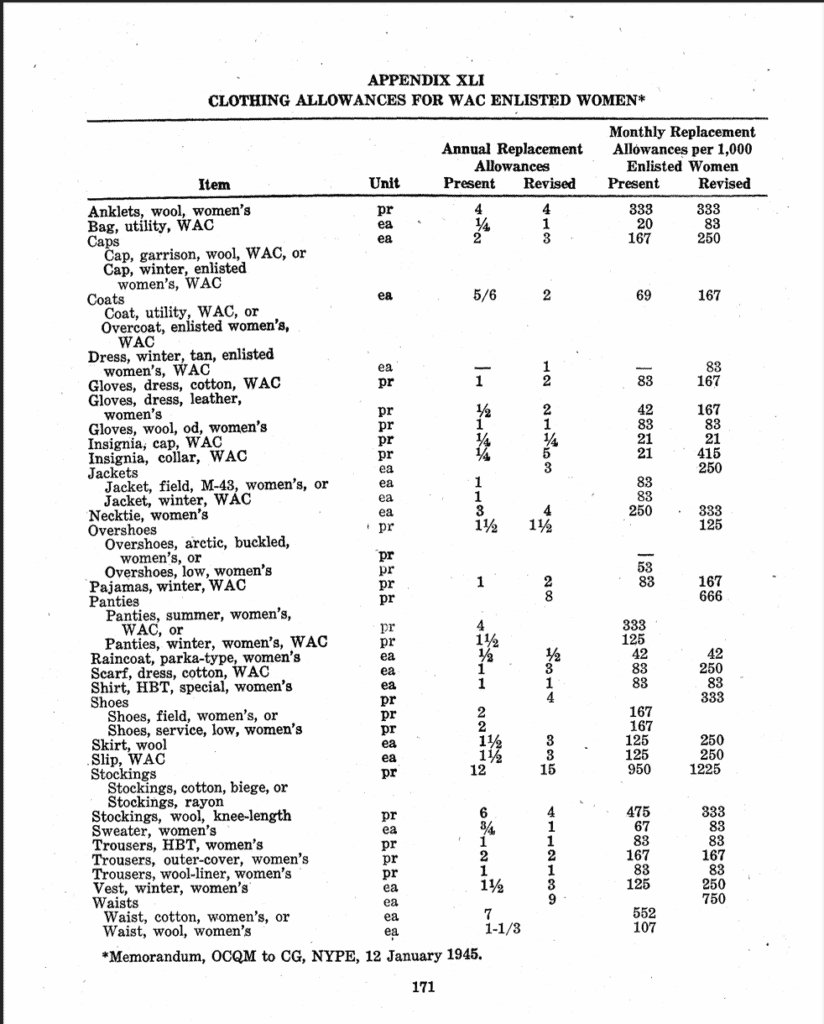
  • Appendix XLI – Clothing Allowances for WAC Enlisted Women

Army Air Forces Equipment Catalogs

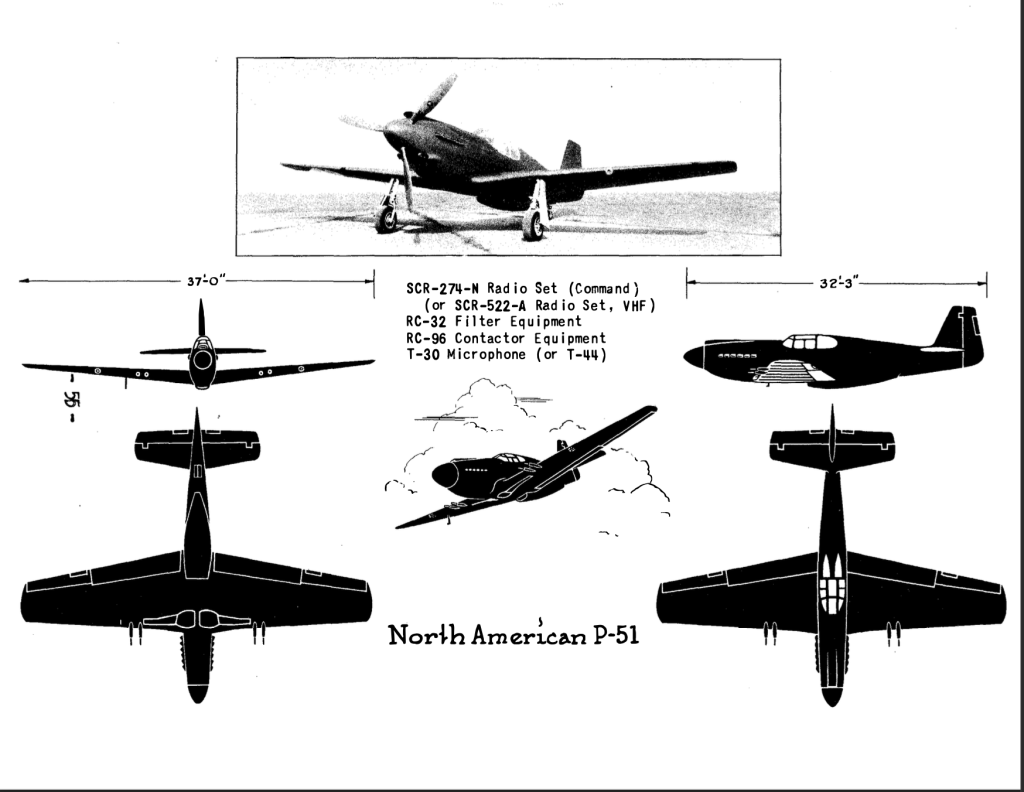
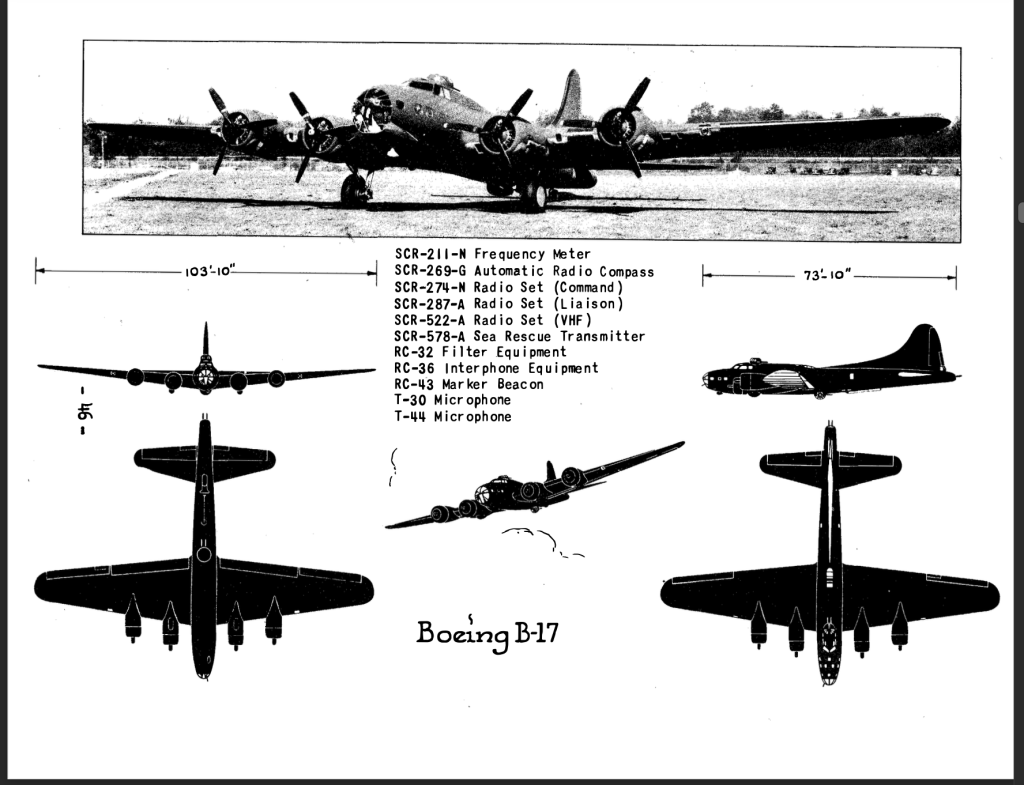
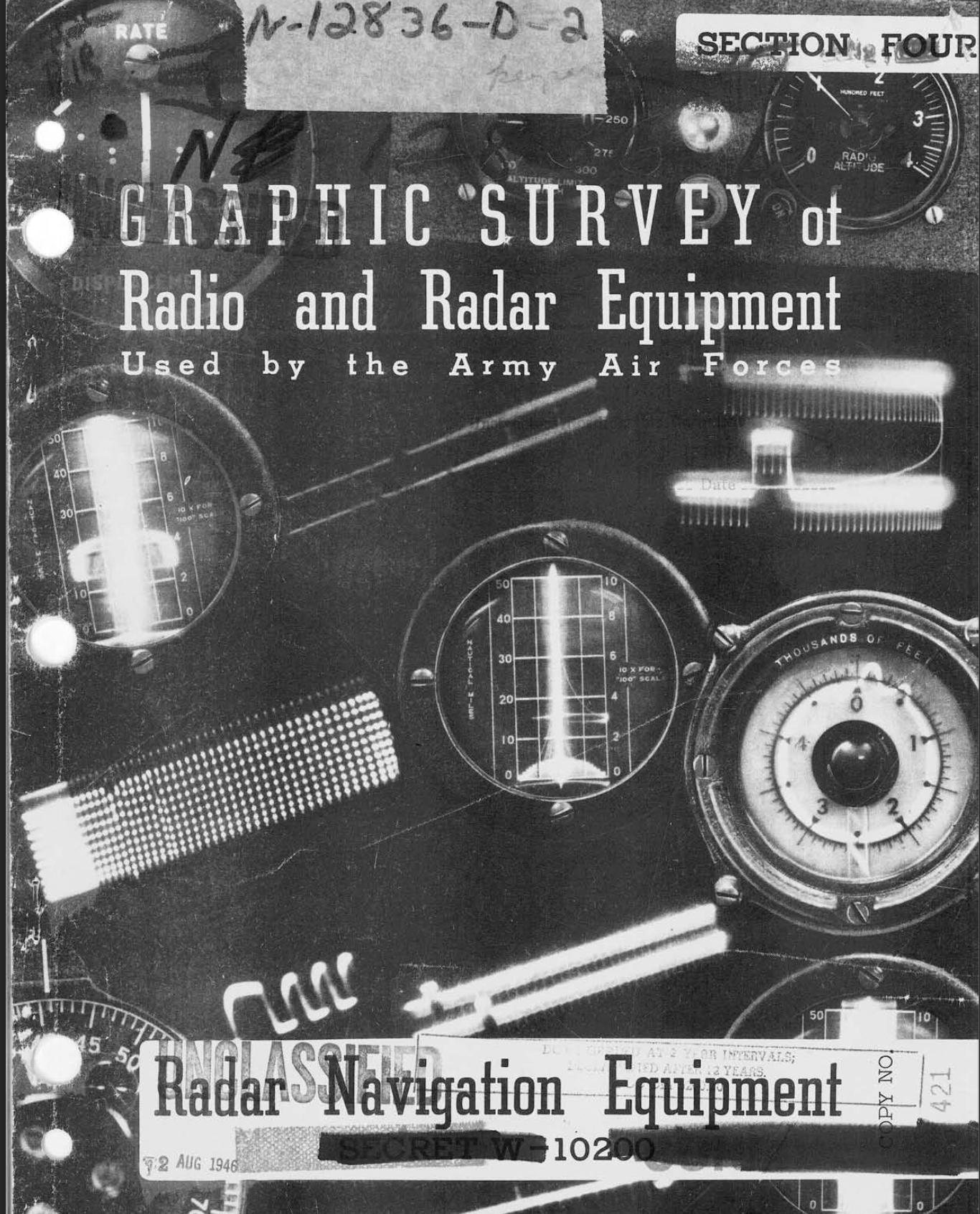
Airborne Radio Equipment Handbook 1943 – A listing of which planes had what radios and where they were on the plane.

Women’s Uniform Guide

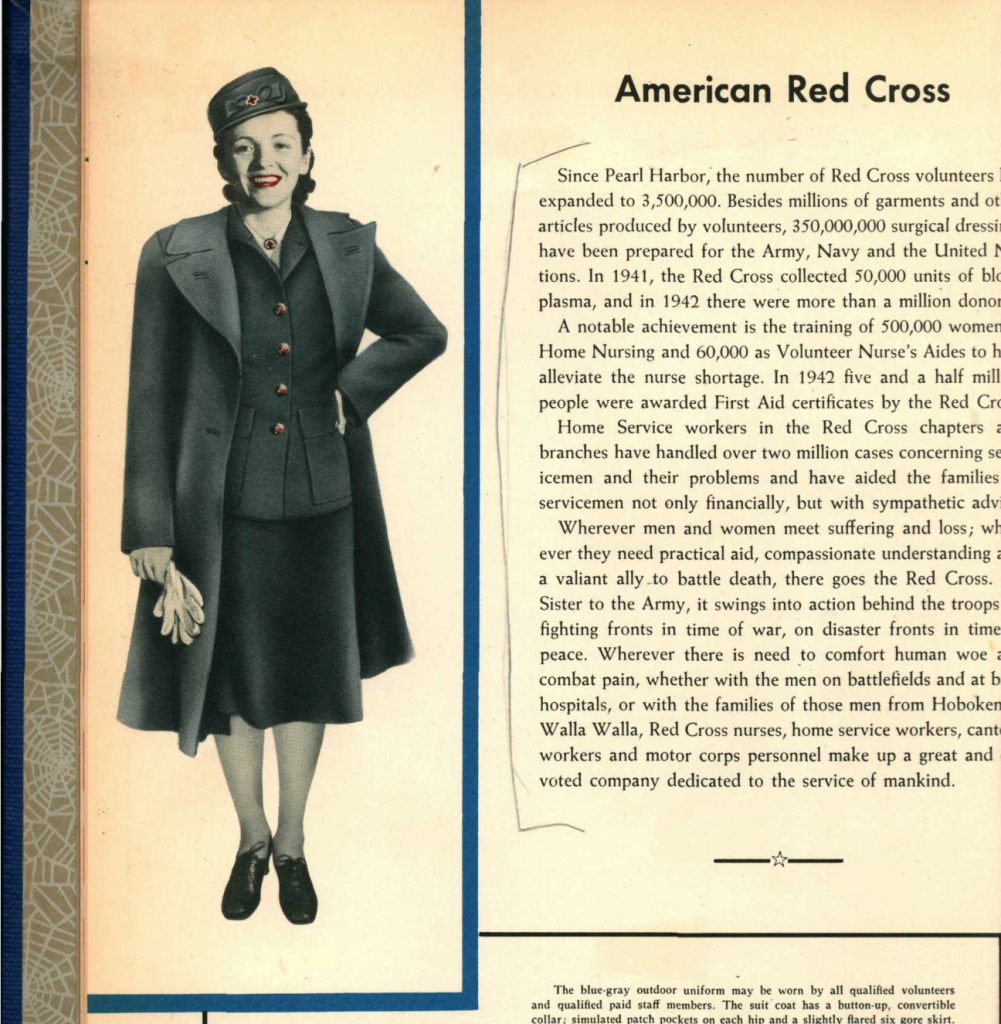
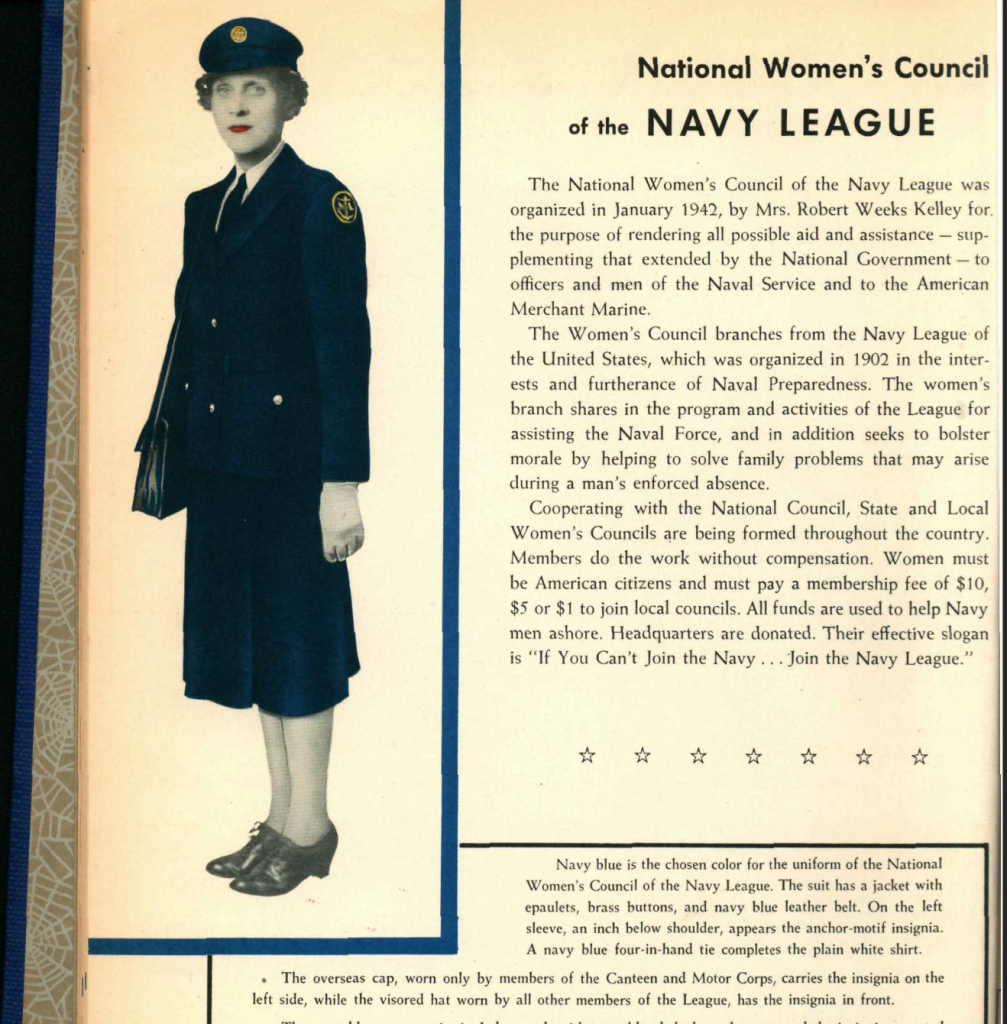
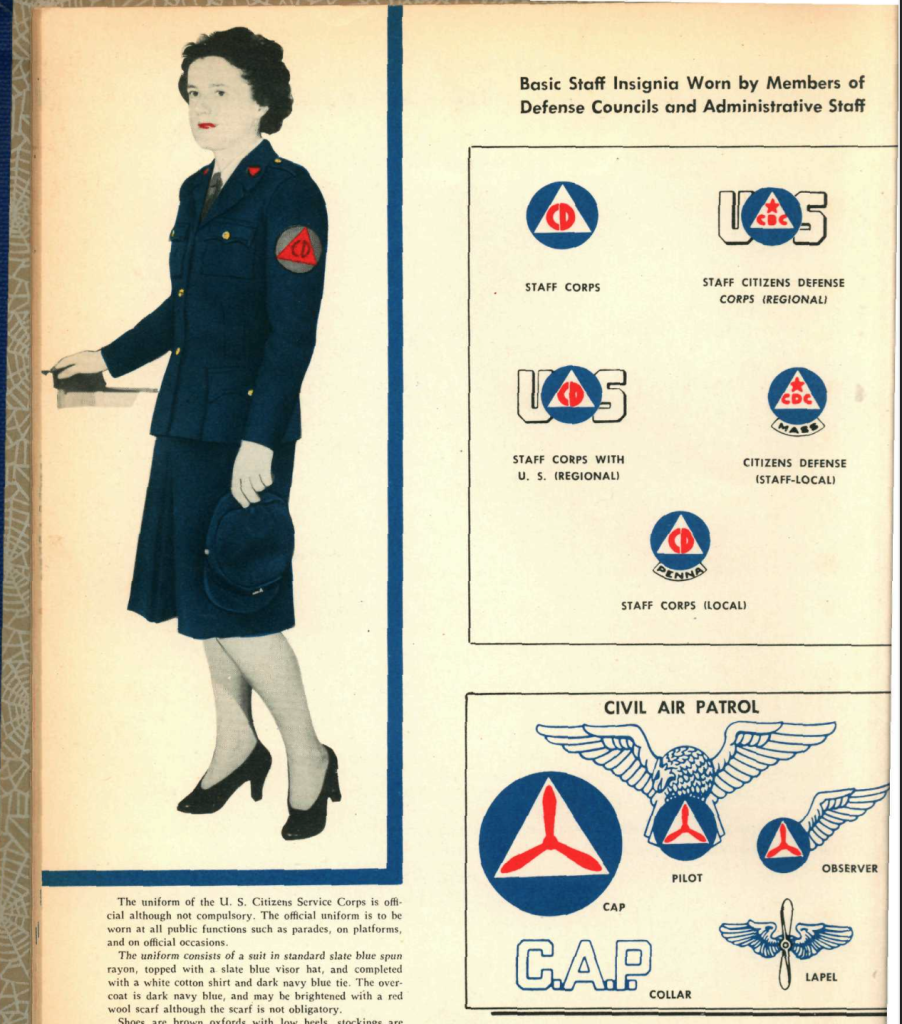
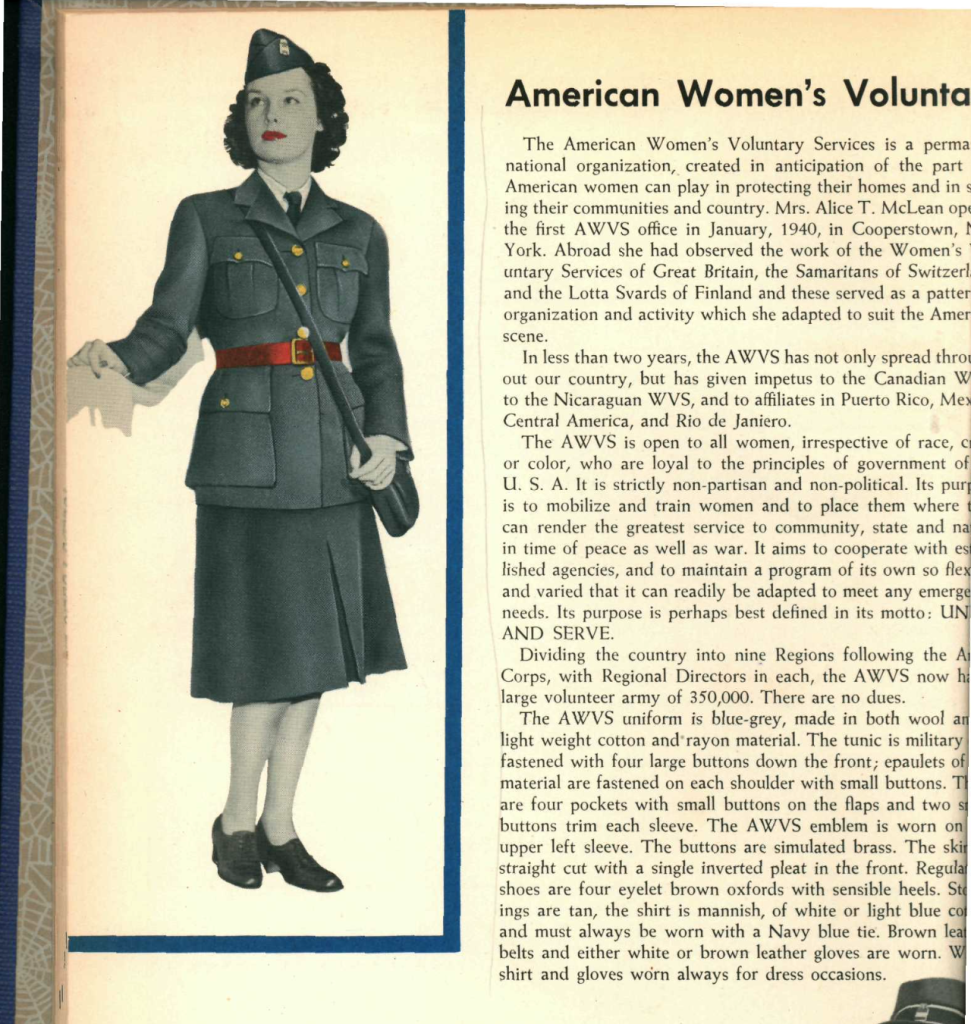
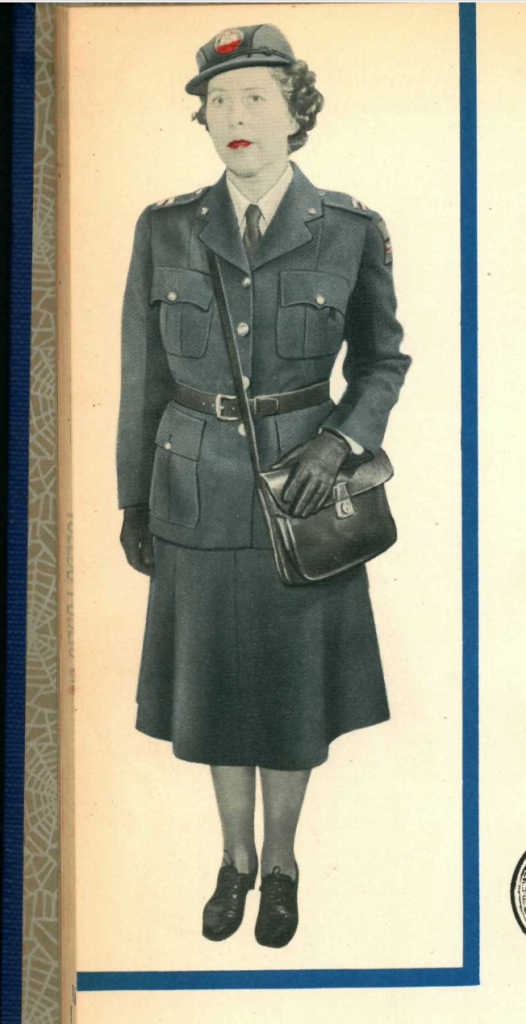
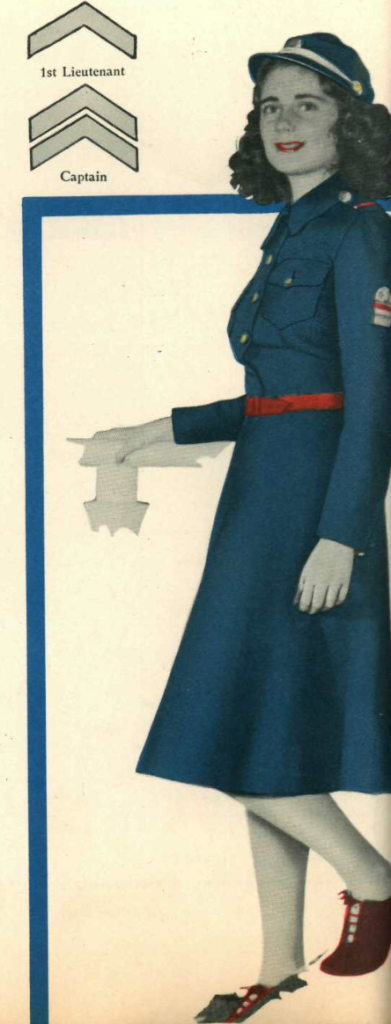
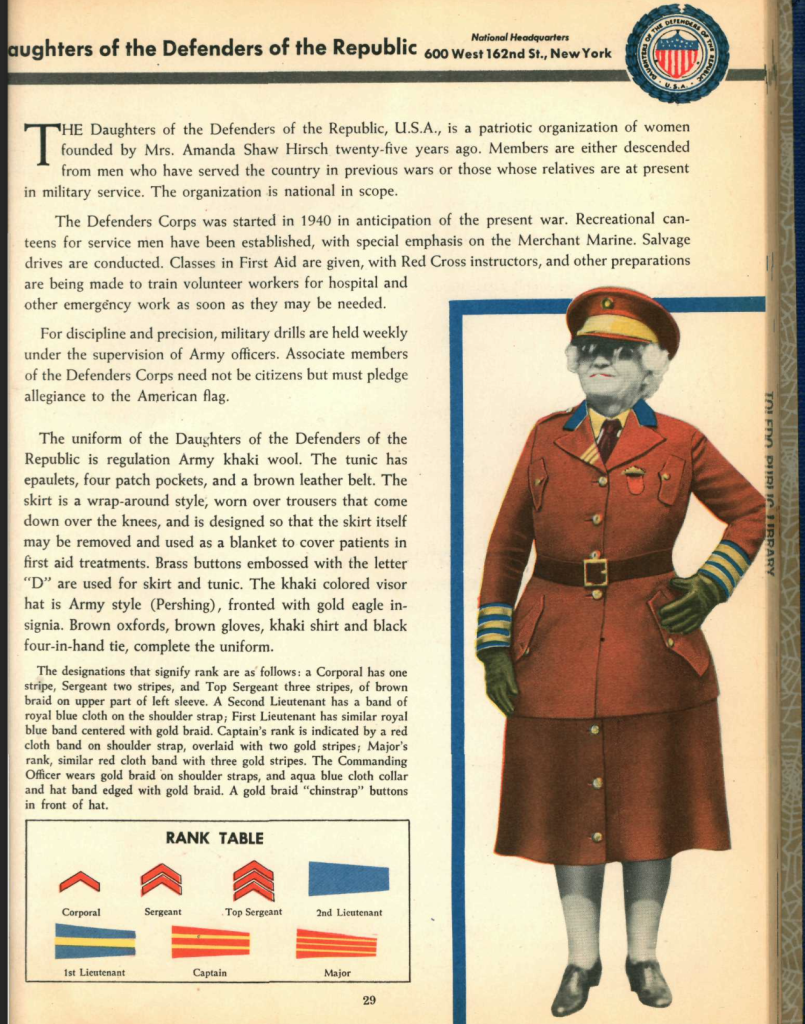
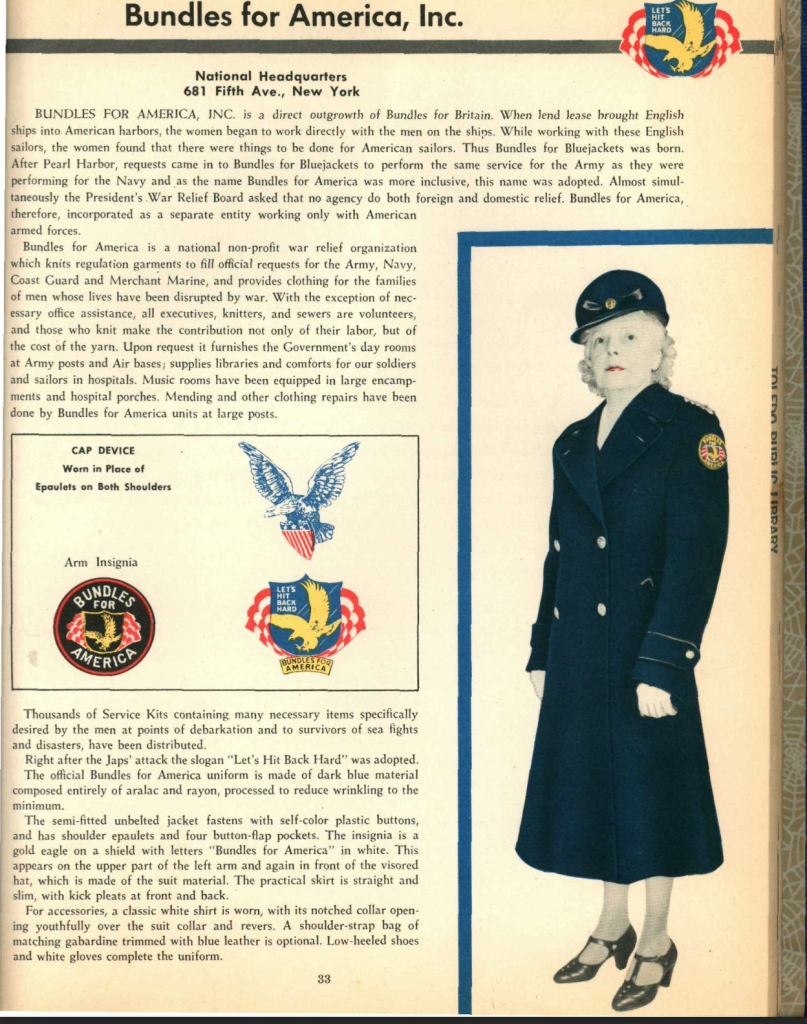
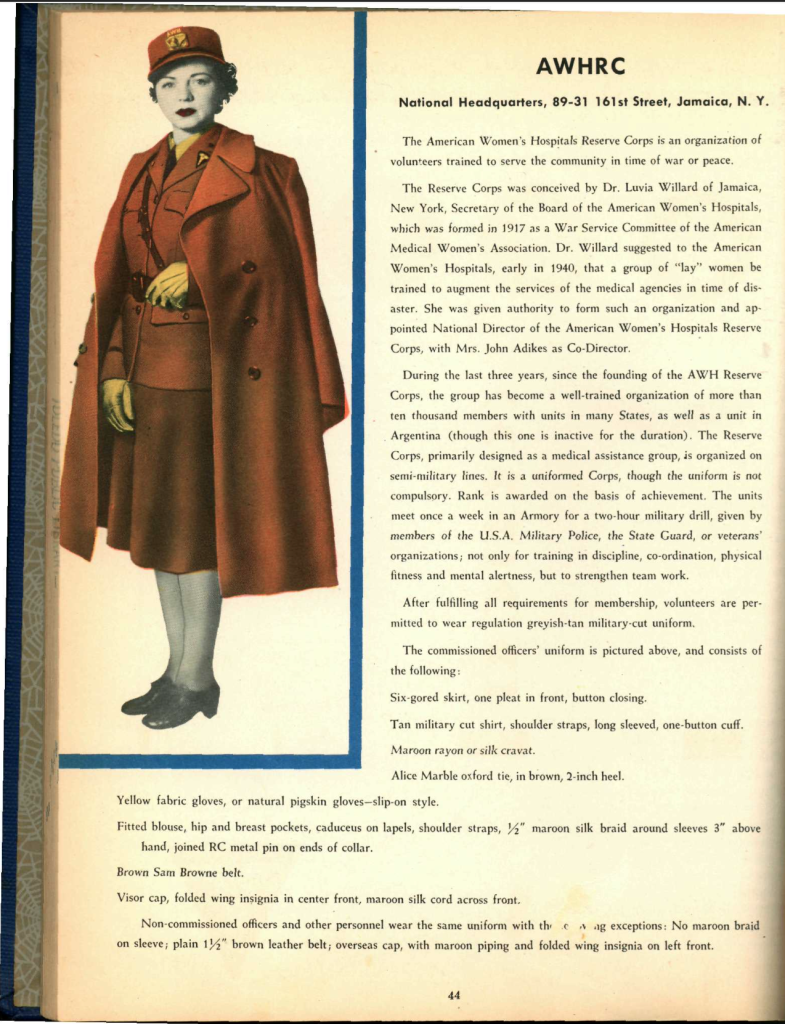
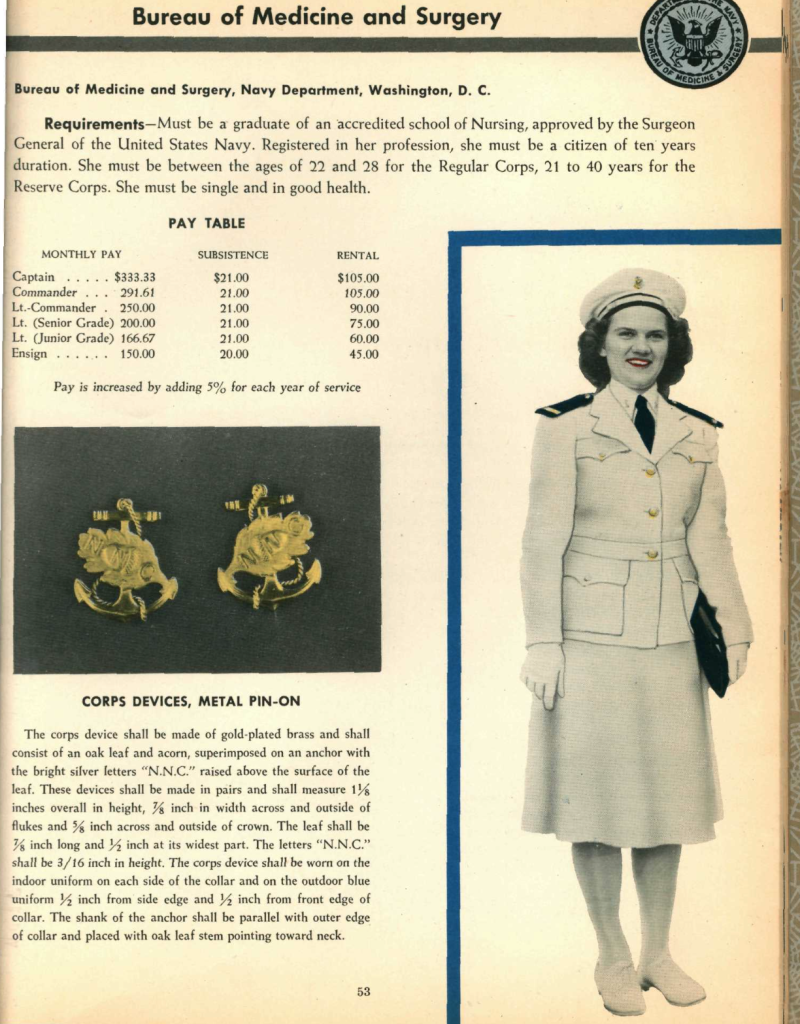
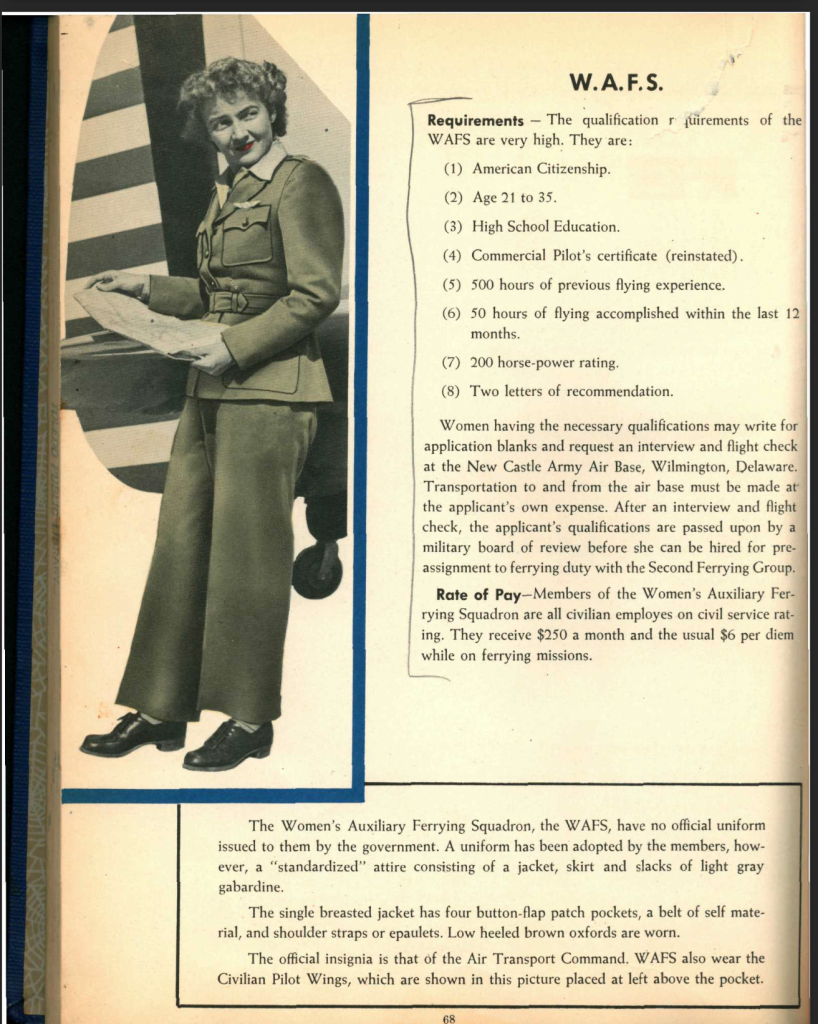
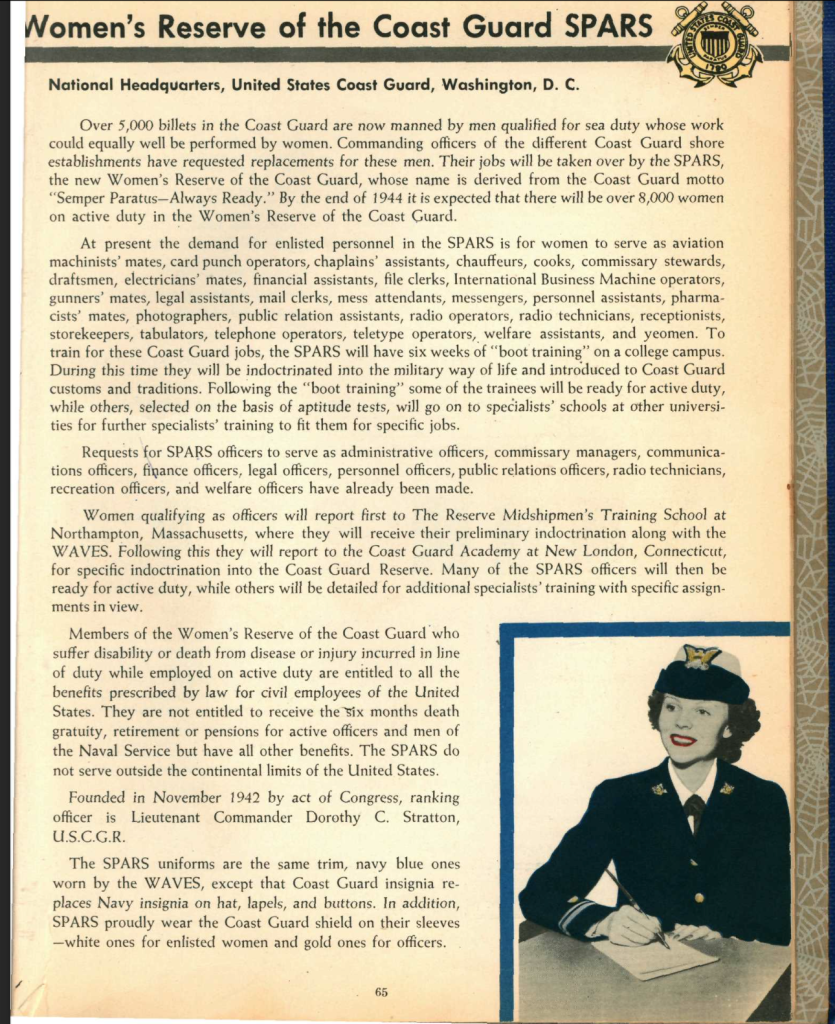
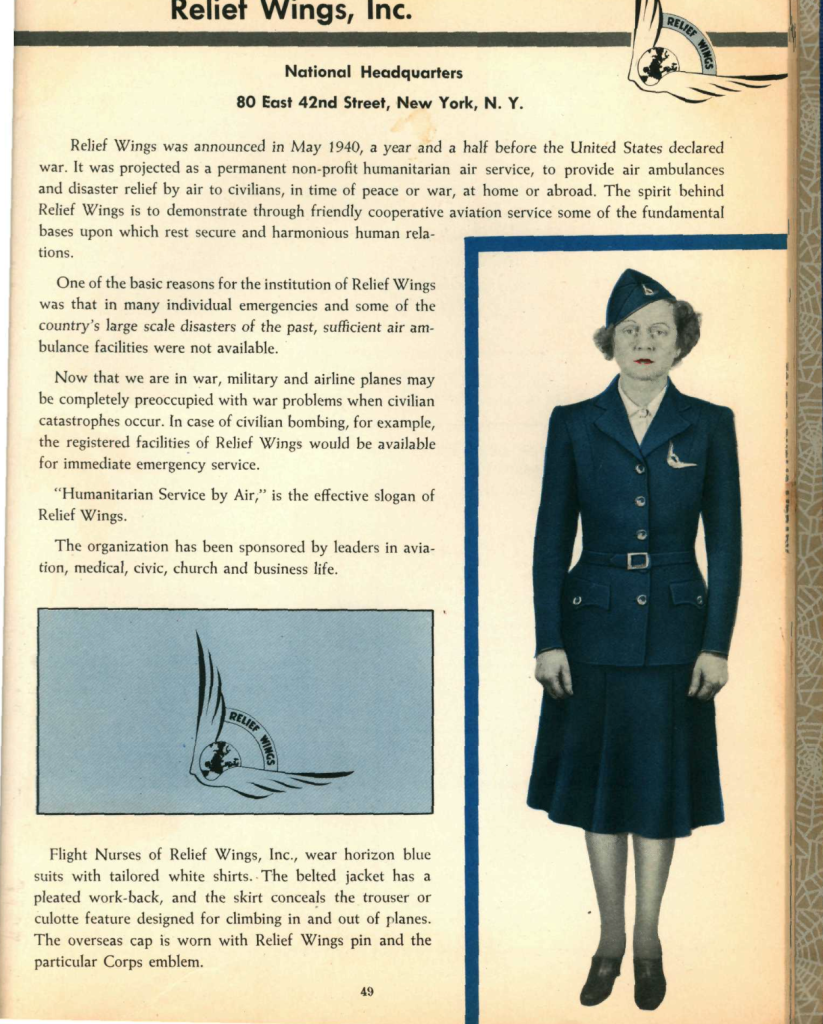
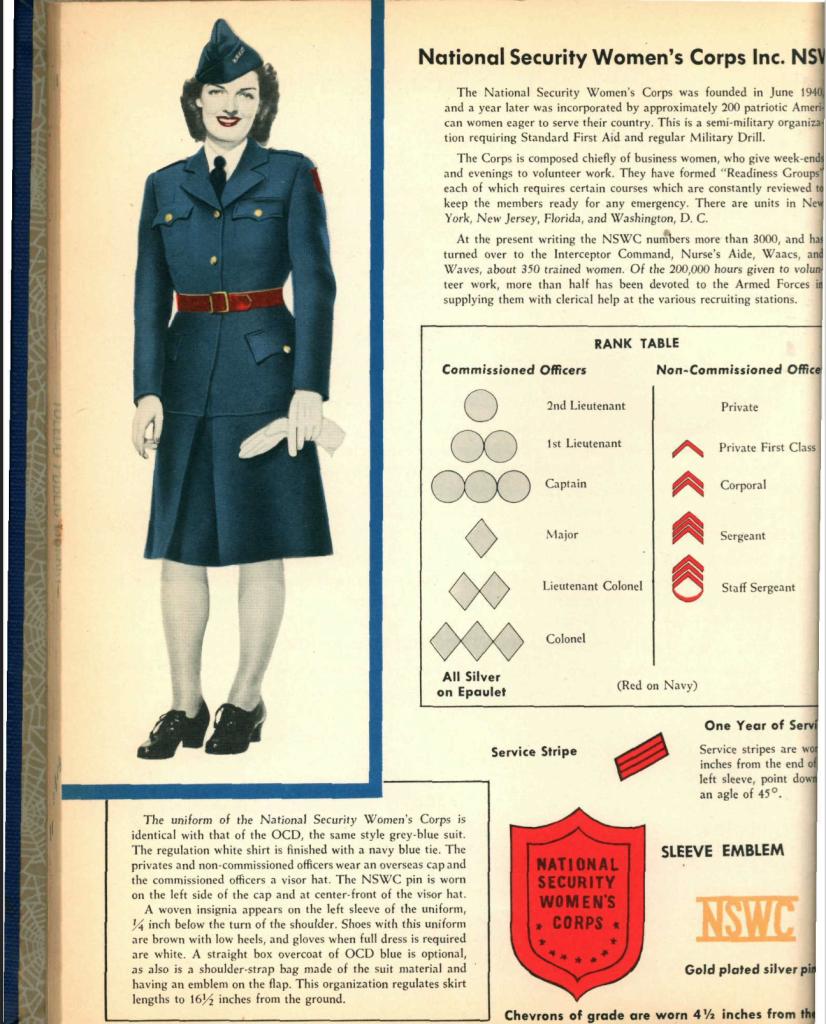
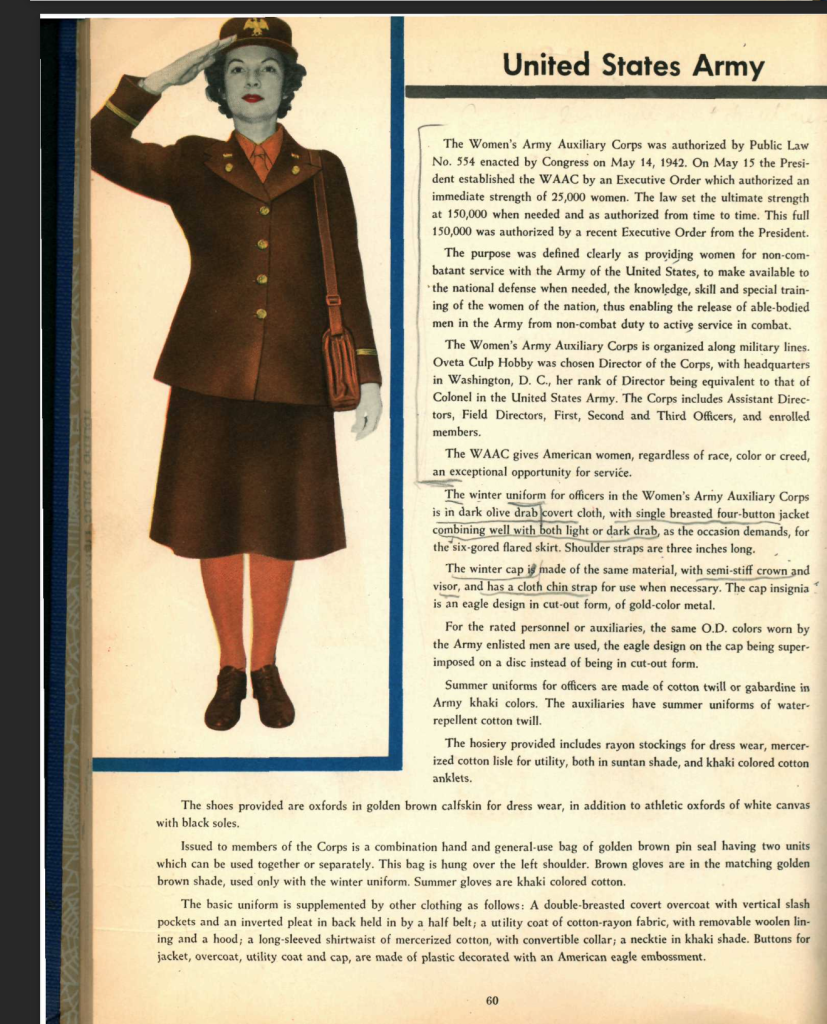
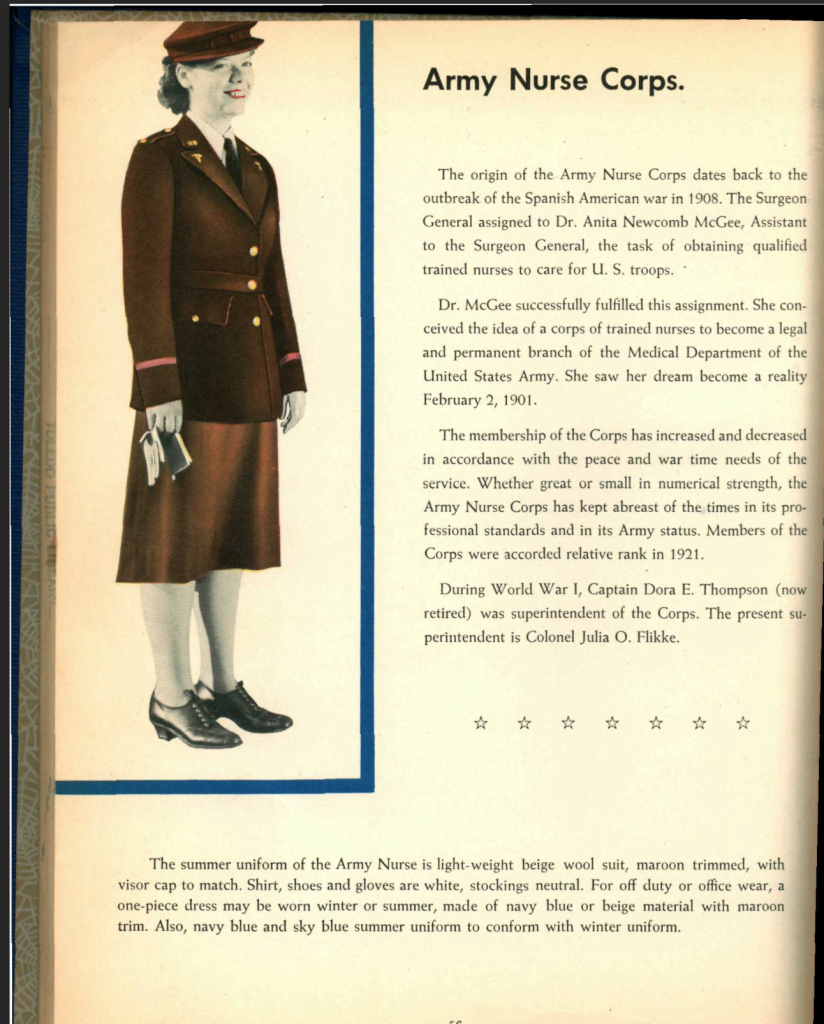
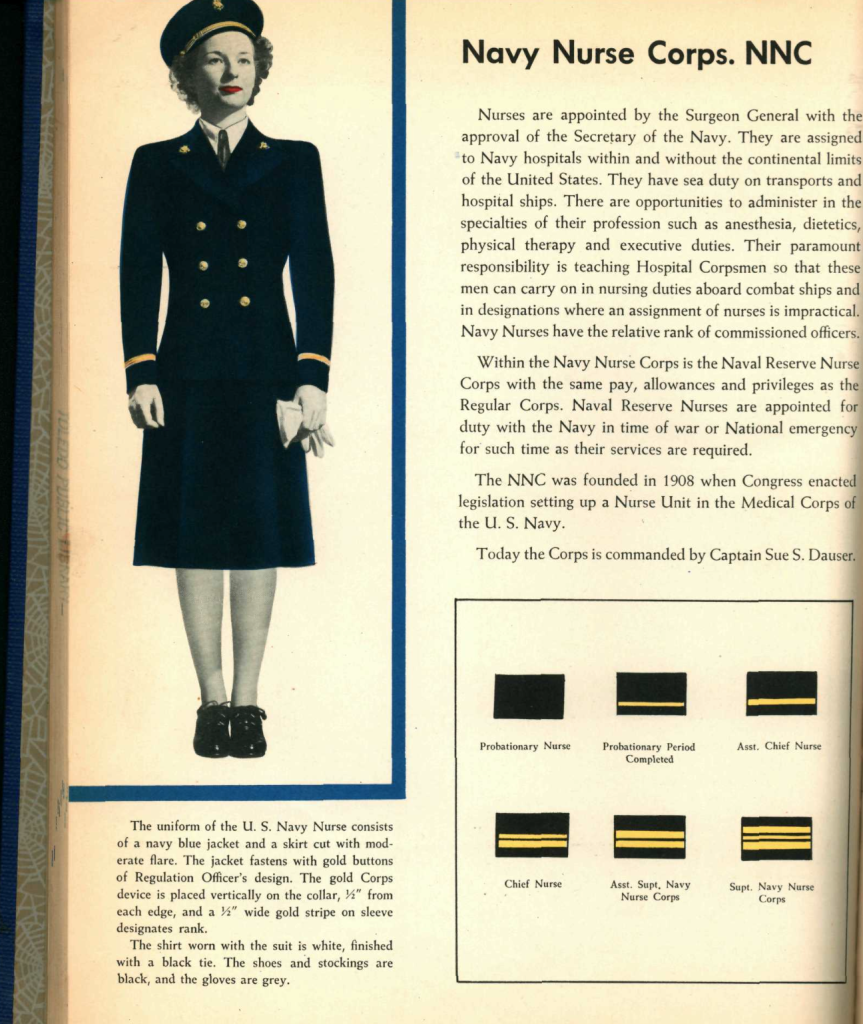
American Women in Uniform 1943 by Mary Steele Ross – A quick overview of different uniformed Women’s organizations, their uniforms, pay, and rank.

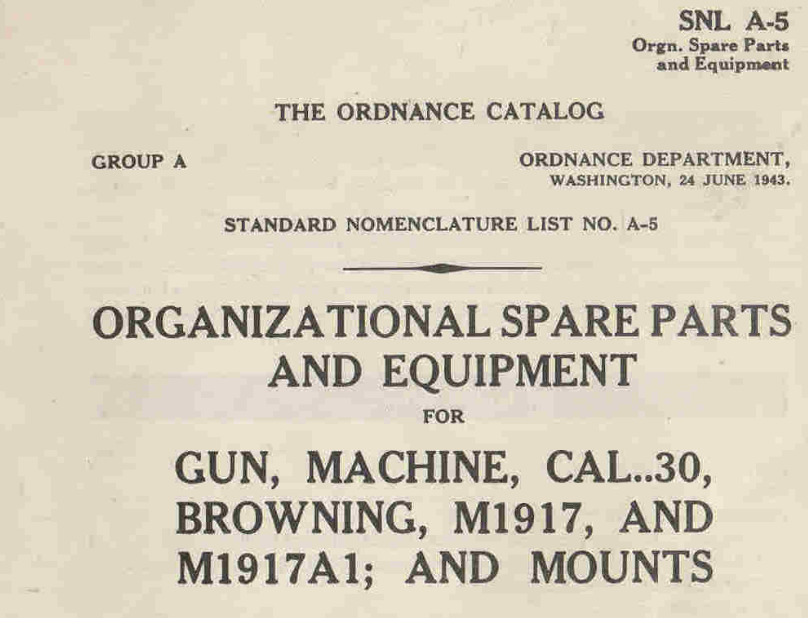
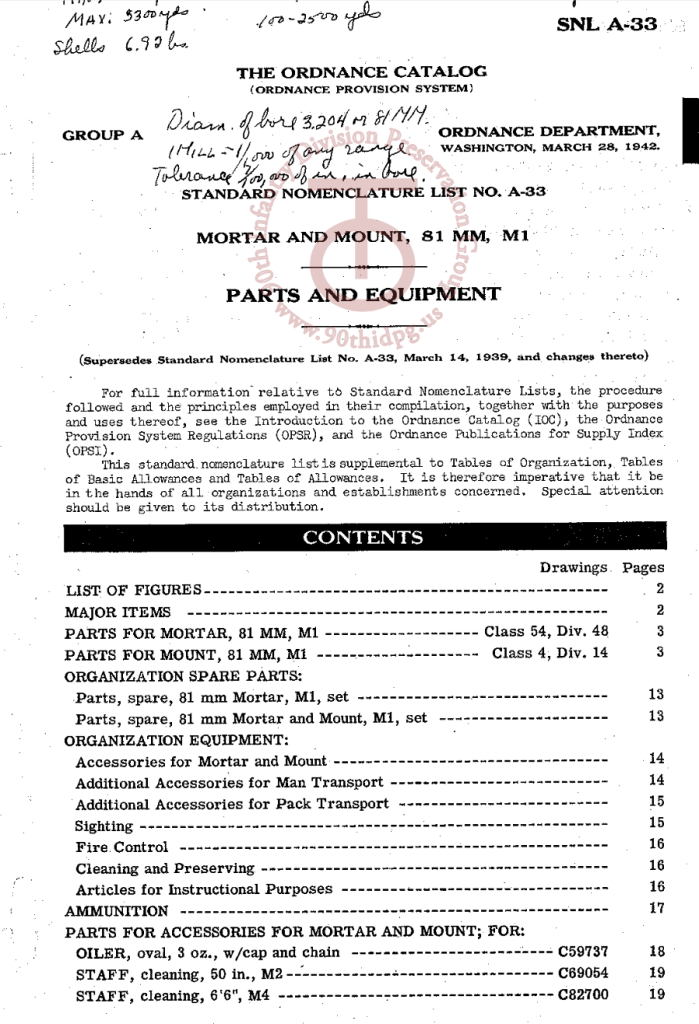
Ordnance Catalogs

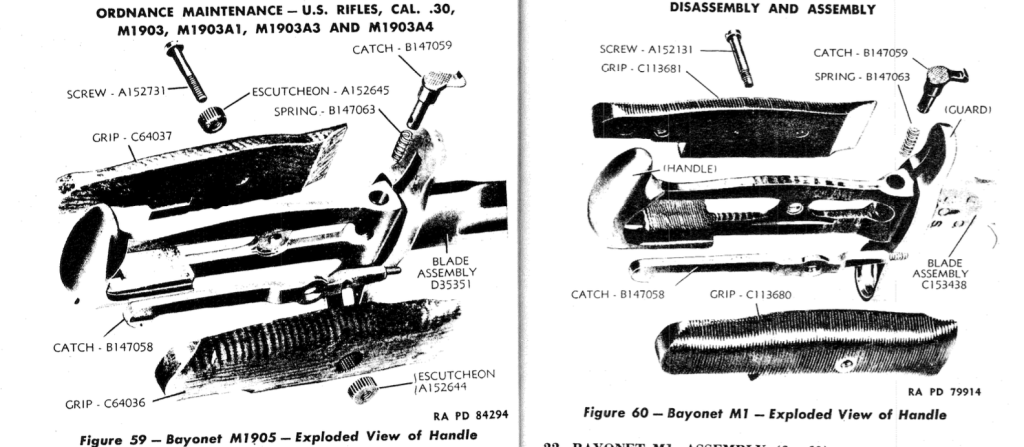
Ordnance Catalog Standard Nomenclature List B3 for M1903, M1903A1, M1903A3, and M1903A4 Sniper Rifles May 1944 – Outlines parts for the M1903 rifle as well as the slings and bayonets.

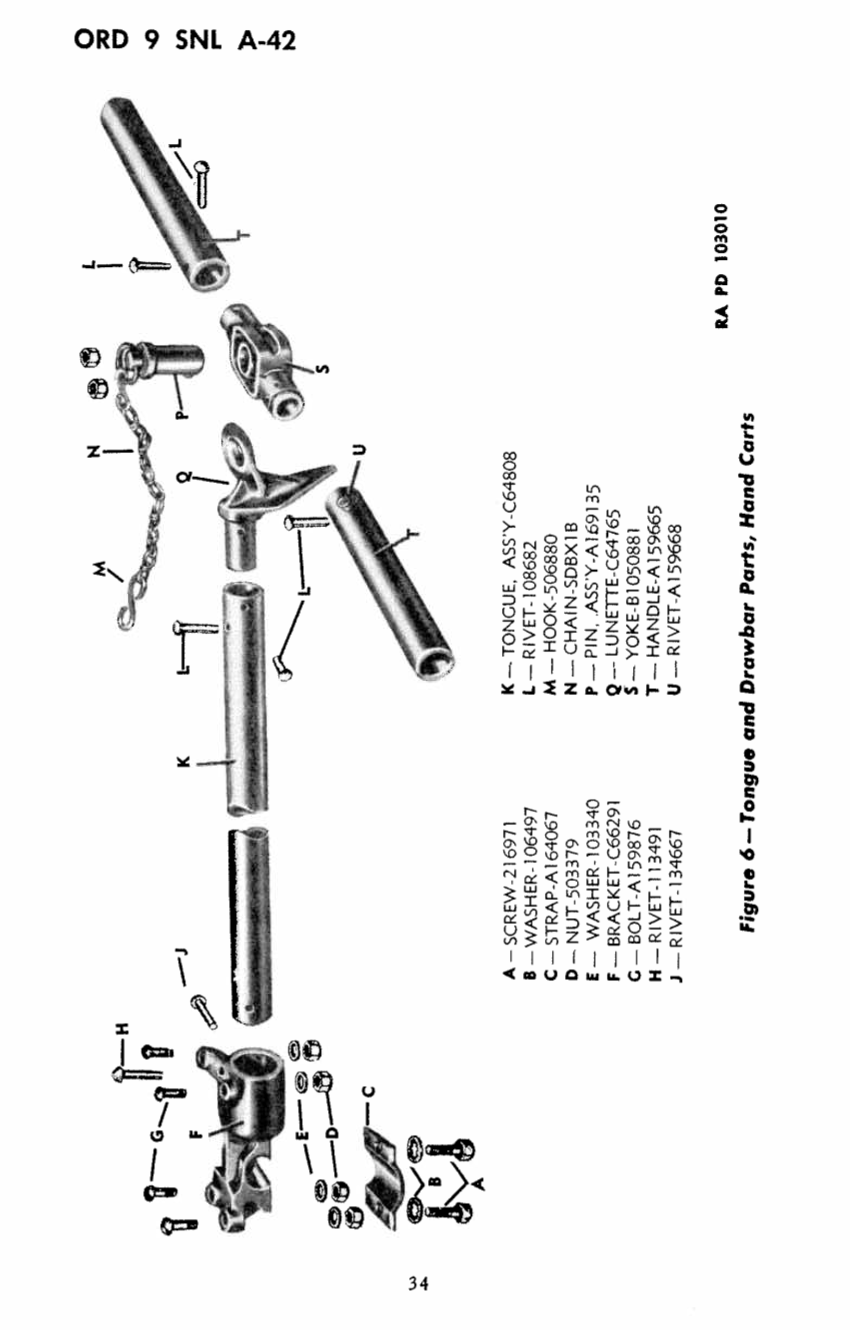
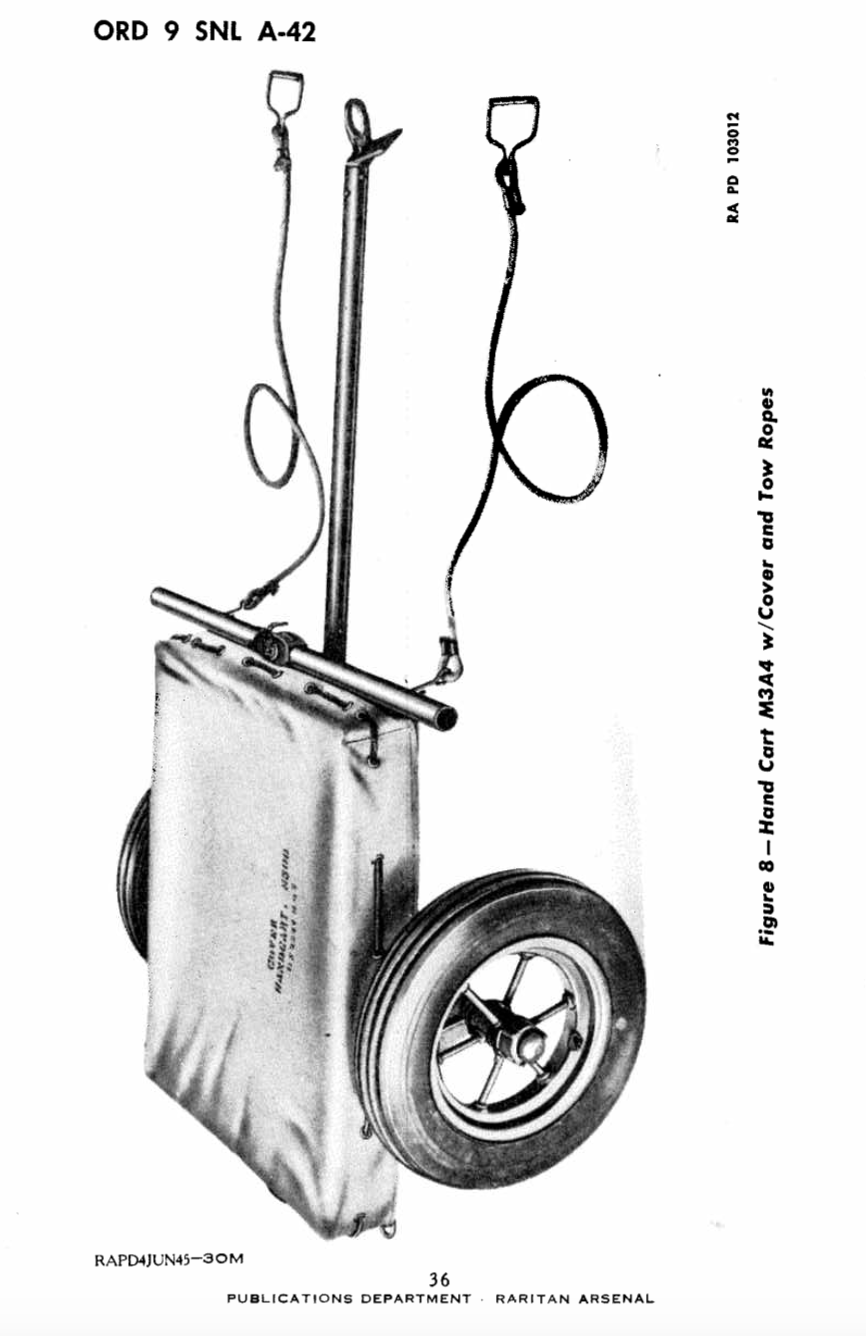
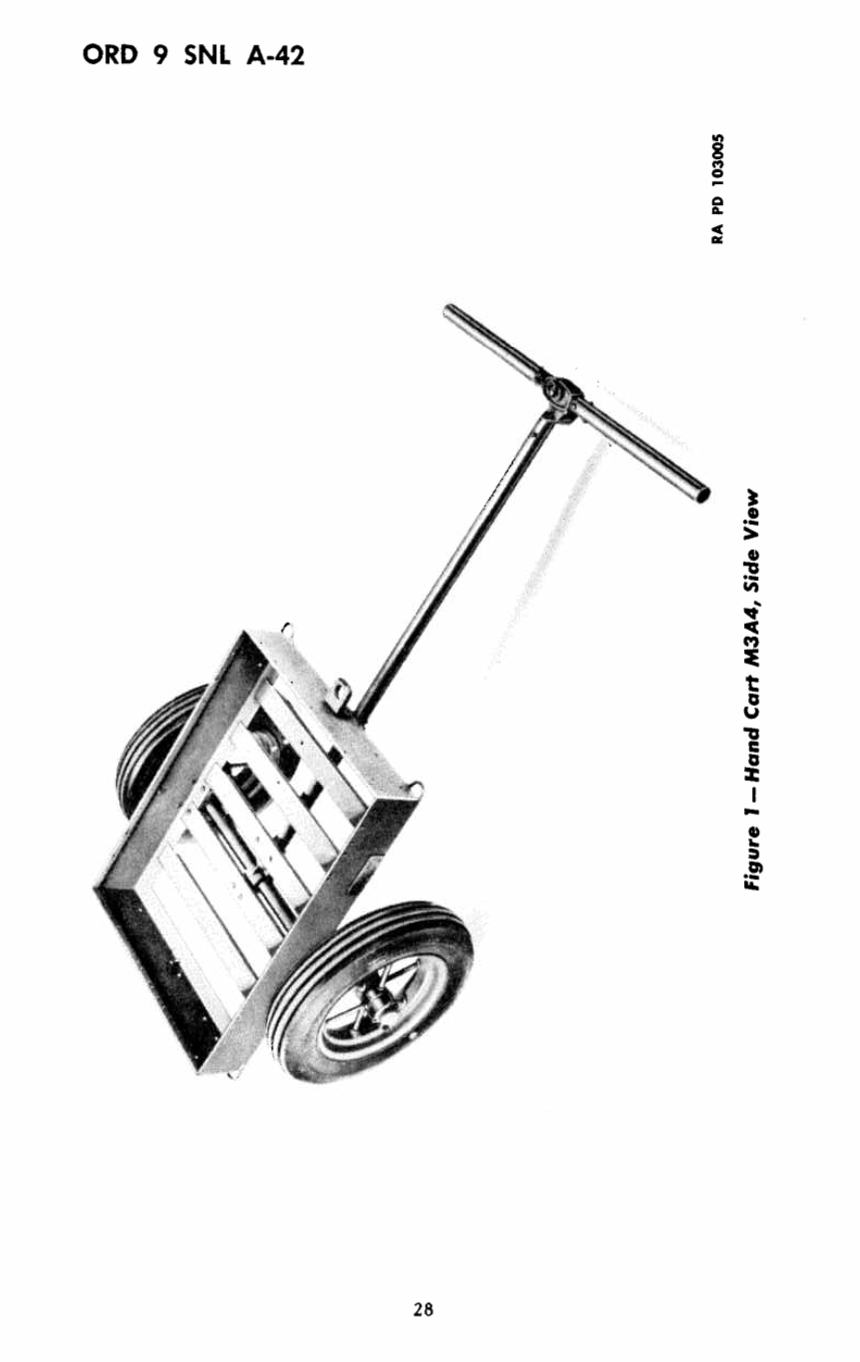
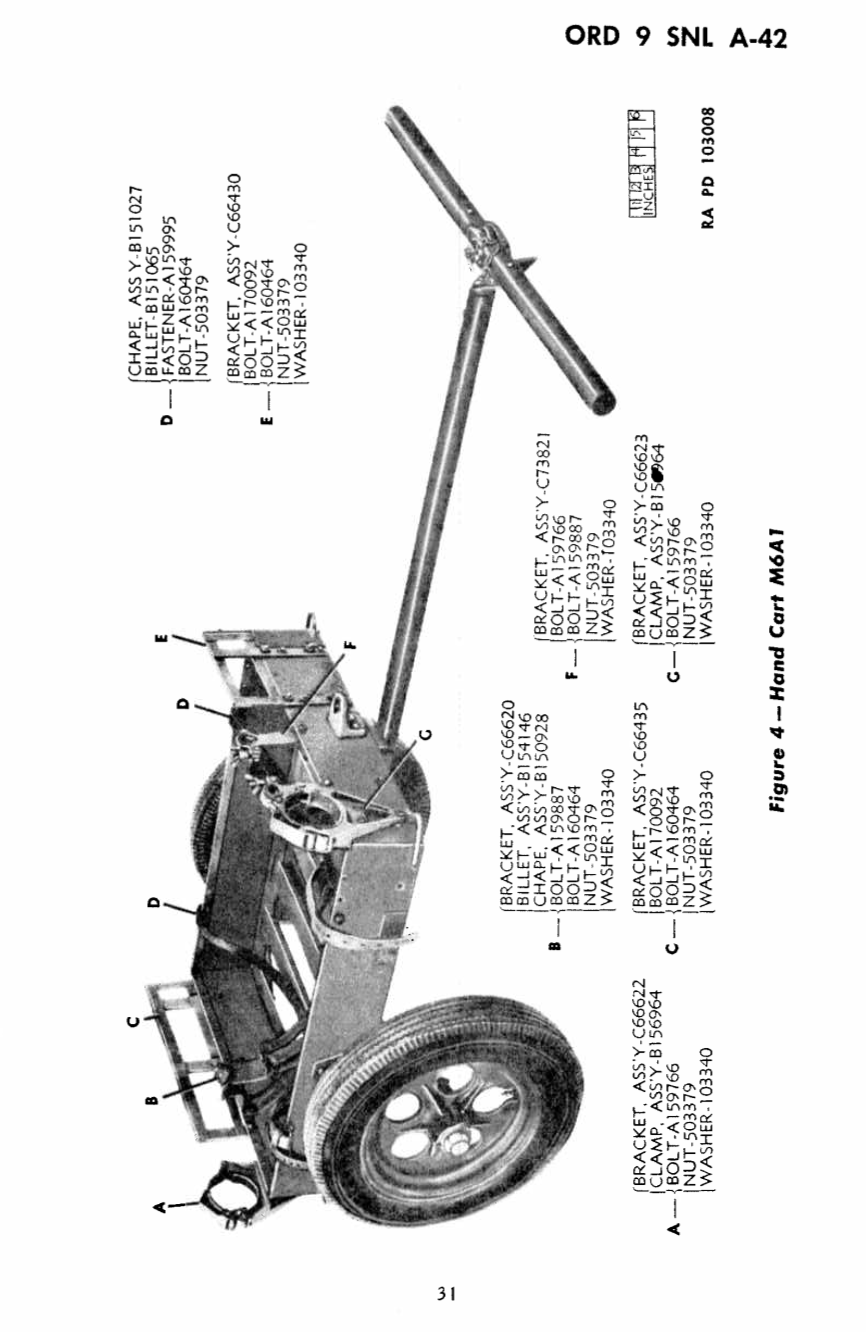
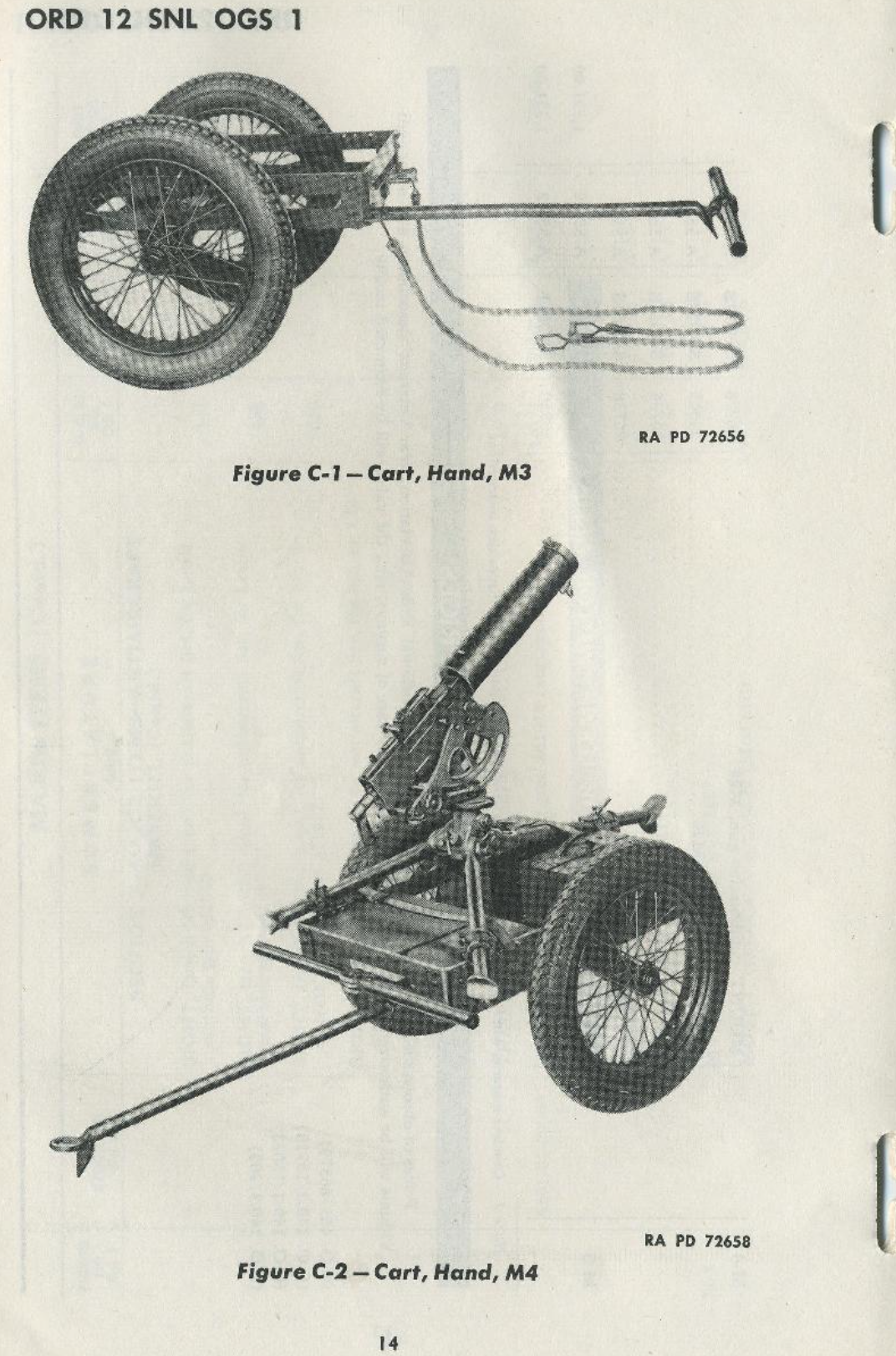
Ordnance Catalog Standard Nomenclature List A-42 for Hand Carts M3A4 M4A1 and M6A1 June 1945 | Outlines the parts and equipment for the M3A1, M4A1, and M6A1 hand carts.

For an additional detailed review, see M3A4 Hand Cart on the Liberator Website.

Ordnance Catalog Obsolete General Supplies of Group A July 1945 – Lists various equipment classified as obsolete, including hand carts.