Developed and Developing Countries
Developed and Developing Countries:
Use the links below:
Note that you may need to search for the country.
To search for countries go to Edit–>Search
Population Growth Rate
European Union and United States
European Union and United States Comparison
http://europa.eu/about-eu/basic-information/symbols/index_en.htm
https://www.cia.gov/library/publications/the-world-factbook/geos/ee.html
For information about the US See:
https://www.cia.gov/library/publications/the-world-factbook/geos/us.html
Troubleshooting Twitter Cards
Armed Forces Edition Books

Armed Forces Edition Books: A Reenactor’s Perspective and Analysis
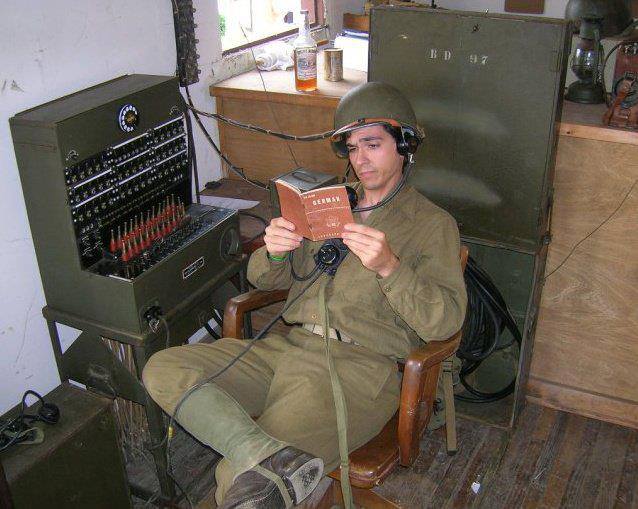
One of things I like to do at reenactments is read. Once, after digging a slit trench with a fellow reenactor, I dug out a book I had on 1940s science from my pack and began to read it. We soon broke out into a wonderful discussion on the merits of of what-was-then 1940s science and technology. Fortunately, the Germans attacked way down at the other end of the line.
For the bibliophile reenactor there was not many options in terms of reading material.
You can use period printed books such as Purple Heart Valley, Guadalcanal Diary, or any other WW2 era book. However, you run the risk of damaging these books. Indeed, the paper they are made with is of a lighter material (due to a War Production Board ruling in 1944) and more prone to tearing.

Original magazines such as Yank or Saturday Evening Post are also an option. Again, same problem. These were printed on cheap and non-durable newsprint. Therefore, they are not designed to last and taking them out in the field is asking for trouble though soldiers at the time did use it for a variety of shall-we-say “hygiene solutions”. Reenactors have access to more modern cleanliness solutions.

For the soldier who had access to travel material or likes to sing there are city guides and army song books. Again same problem. All original, all cheaply printed, all designed not to last.
|
|
|
Alternatively, you could brush up on your language skills. Though you run into the same problem. Cheap books, not durable, and very limited copies produced compared to others.

Top-Left to bottom-right-
Chinese, Japanese, Italian, Persian, French, German
Finally, one could read your copy of FM 21-100 for the dozenths time. Though, this manual was printed by the millions and there enough copies around that you might actually be able to take this into the field, destroy it, and be able to find another one cheaply.

However, there are some reenactors who do want to take out original copies to trash in the mud, dirt, and rain. Indeed, some individuals have reproduced newspapers and magazines but those are very costly to print especially in small numbers.
When I attend a reenactment I bring a copy of of FM 21-100 and some “trashed” magazines. These are magazines that have covers ripped off, pages missing, and are in a general state of disrepair. In other words, perfect for getting destroyed. I rationalize the possibility of destroying these artifacts of history as:
“They made millions of these magazines and enough are still around that preserving a WW2 magazine with a defect makes no sense when others can still be bought cheaply and in much better condition”

Currently, there exists an option to buy inexpensive Armed Forces Edition/Armed Services Edition reproduction books to take out in the field. Much has been written about the history of these “pocket-sized books”(see links below) so I won’t dive too much into the history of the books.
—NPR Story: By the Books: The Pocket-Size Editions that Kept Soldiers Reading
—Book: When Books Went to War: The Stories that Helped Us Win World War II
—Atlantic Monthly Article: Publishers Gave Away 122,951,031 Books During World War II
—The Art of Manliness has a historical review of the books
—Wikipedia has an article dedicated to it
—From the Library of Congress Books in Action: The Armed Services Edition
—Virginia University Special Collections Exhibit: Books go to War
—Listing of Armed Forces Edition Book Titles
—Listing of Armed Forces Edition Book Authors
—Related Publications of Interest including collectors guides
—Saturday Evening Post, June 1945: “What the GI Reads”

The current option that blends an economical advantage with historical accuracy are the books produced by The Legacy Project. The Legacy project is a non-profit that seeks to distribute stylized-Armed Forces Edition books to soldiers stationed overseas. Obtaining the books can be a bit tricky. I would suggest three places:
Amazon
Ebay
Shop Goodwill
I was able to find my copy: Man in the Arena on Amazon. The books prices can range anywhere between 8-14 dollars (without shipping). Compared to trashing a mint condition original book the price is worth it. The book looks like this:

Legacy Project Armed Services Edition Book: Man in the Arena

Legacy Project Armed Services Edition Book: Man in the Arena

Legacy Project Armed Services Edition Book: Man in the Arena
Similarities between Original Armed Forces Edition and Legacy Project’s Armed Forces Edition
1. Hip-sized style still the same
2. Cheap pulp paper
3. Back of the book is similar
4. Similar in a side-by-side comparison
Note: The War Time Production Board limited the the margin of books to conserve materials and space. Books produced by the Legacy product do not need to adhere to such rulings and hence there books are longer and thinner.
|
|
|
|
Differences between Original Armed Forces Edition Books and Legacy Project’s Books
Note: The reason, I would guess, has more to do with modern printing costs and technology.
1. The Legacy Project Armed Forces edition books have a glossy cover. The original ones do not.
2. The size of the Legacy Project’s books are not 100% accurate when compared to originals.
3. Included in the Legacy Project’s books are facets of modern publishing such as Web address, modern printing dates, and modern addresses.
4. Originals had staples that kept the binding together. Staples were along the binding and either included the the books cover in the staple punch OR skipped the cover and started at the first interior page. The books cover would then be glued. The Legacy Project’s books lack the staple and it appears that the binding is glue only.
5. Original books included on the first interior page an outline of the books title in dotted, solid, or double-solid line.
6. Original books have a listing of other Armed Forces Editions on the back interior page.
7. Original books have an Armed Forces Edition statement on the back of the front cover.
As a reenactor I value historical accuracy but realize that we are not living in the past and must strike a balance between what is practical and what is ideal. The Legacy Project’s Armed Forces Editions look very good close-up and are within the unofficial reenactor rule of 3-feet. Though there are some things that can be done to help “de-farb” the book. More on that later.
Lesson Plan World History II SOL 9ac

Lesson Plans World History II SOL:Lesson Plan World History II SOL 9ac Industrial Revolution Causes and Outcomes
Standard WH II:
Objectives
Lesson Plans
Introduction: A Bell-ringer activity
Notes: Students copy-down and discuss teacher generated notes
Activities: Students complete various in class activities to support learning including video analysis, maps, charts, diagrams, graphic organizers, worksheets, text-book questions, group discussion, KWL Charts etc.
Assessment: Informal, Formal, Exit-Questions, Teacher Questioning. Quizzes, Tests, Projects
Essential Knowledge
Industrial Revolution
• Originated in England because of its natural resources
(e.g., coal, iron ore) and the invention and improvement of
the steam engine
• Spread to Europe and the United States
• Role of cotton textile, iron, and steel industries
• Relationship to the British Enclosure Movement
• Rise of the factory system and demise of cottage industries
• Rising economic powers that wanted to control raw materials and markets throughout the world
Technological advances that produced the Industrial Revolution
• Spinning jenny: James Hargreaves
• Steam engine: James Watt
• Cotton gin: Eli Whitney
• Process for making steel: Henry Bessemer
Advancements in science and medicine
• Development of smallpox vaccination: Edward Jenner
• Discovery of bacteria: Louis Pasteur
Impacts of the Industrial Revolution on industrialized countries
• Population increase
• Increased standards of living for many but not all
• Improved transportation
• Urbanization
• Environmental pollution
• Increased education
• Dissatisfaction of working class with working conditions
• Growth of the middle class
SOL 9c
The nature of work in the factory system
• Family-based cottage industries displaced by the factory system
• Harsh working conditions with men competing with women and children for wages
• Child labor that kept costs of production low and profits high
• Owners of mines and factories who exercised considerable control over the lives of their laborers
Impact of the Industrial Revolution on slavery
• The cotton gin increased demand for slave labor on American plantations.
• The United States and Britain outlawed the slave trade and then slavery.
Social effects of the Industrial Revolution
• Women and children entering the workplace as cheap labor
• Introduction of reforms to end child labor
• Expansion of education
• Women’s increased demands for suffrage The rise of labor unions
• Encouraged worker-organized strikes to demand increased wages and improved
working conditions
• Lobbied for laws to improve the lives of workers, including women and children
• Wanted workers’ rights and collective bargaining between labor and management
Activities That Support Lesson Plans
Industrial Revolution Teacher Viewing Guide
Inventor Biographies: Short biographies for use with chart below. I normally have students give a brief presentation on their assigned inventor
Inventor Biography Chart Analysis:Students complete the chart based off of the presentations
Child Workers :Excerpts on Child Workers
Children in Factories Source Readings : Source readings on children working in factories
Industrial Revolution in Political Cartoons Analysis :Political Cartoons of the Industrial Revolution
Hard Times Charles Dickens :Reading analysis excerpt from Charles Dickens’ book Hard Times.
Life During the Industrial Revolution Teacher Video Guide :Video Teacher Guide for use with video below
Industrial Revolution Impacts and Results Homework : Homework assignment from textbook on outcomes of IR
Life in Industrial Revolution Video Quiz : Short video for video below
Pride and Prejudice Analysis: Analysis excerpts of Pride and Prejudice
United Learning Video: Life During the Industrial Revolution World History SOL 9a
Back to World History II Virginia SOL Page
[counterize type=”keywords”]
[counterize type=”hits”]
Lesson Plans World History II SOL 8d

Lesson Plans World History II SOL 8d: German Unification
Standard WH II: The student will demonstrate knowledge of political and philosophical developments in Europe during the nineteenth century by
Objectives; explaining events related to the unification of Germany and the role of Bismarck.
Lesson Plans
Introduction: A Bell-ringer activity
Notes: Students copy-down and discuss teacher generated notes
Activities: Students complete various in class activities to support learning including video analysis, maps, charts, diagrams, graphic organizers, worksheets, text-book questions, group discussion, KWL Charts etc.
Assessment: Informal, Formal, Exit-Questions, Teacher Questioning. Quizzes, Tests, Projects
Essential Knowledge:
Unification of Germany
• Otto von Bismarck led Prussia in the unification of Germany through war
and by appealing to nationalist feelings.
• Bismarck’s actions were seen as an example of Realpolitik, which justifies all means to achieve and hold power.
• The Franco-Prussian War led to the creation of the German state.
Activities That Support Lesson Plans
Bismarck: Opposing Historical Views: Handout that presents two views on Bismarck.
German Unification Maps: The map activity I use in class may be purchased from the TPT History Fanatics Store.
Blood and Iron Video:
Back to World History II Virginia SOL Page
Lesson Plans World History II SOL 8c
Lesson Plans World History II SOL 8c: Italian Unification
Standard WH II: The student will demonstrate knowledge of political and philosophical developments in Europe during the nineteenth century by:
Objectives: explaining events related to the unification of Italy and the role of Italian nationalists
Lesson Plans
Introduction: A Bell-ringer activity
Notes: Students copy-down and discuss teacher generated notes
Activities: Students complete various in class activities to support learning including video analysis, maps, charts, diagrams, graphic organizers, worksheets, text-book questions, group discussion, KWL Charts etc.
Assessment: Informal, Formal, Exit-Questions, Teacher Questioning. Quizzes, Tests, Projects
Essential Knowledge:
Unification of Italy
• Count Cavour unified Northern Italy.
• Giuseppe Garibaldi joined southern Italy to northern Italy.
• The Papal States (including Rome) became the last to join Italy.
Activities That Support Lesson Plans
Premium Lesson Plan: Garibaldi Nationalism Speech: A worksheet where students analyze a speech. Includes teacher answers.
Unification of Italy A Play :Simulation of Italian Unification in a theatrical/play format.
Lesson Plans World History II SOL 8b

Lesson Plans World History II SOL 8b: Revolutions of 1848
Standard WH II:The student will demonstrate knowledge of political and philosophical developments in Europe during the nineteenth century by
Objectives
b) describing unsuccessful revolutions on the continent and political reform in the United Kingdom
Lesson Plans
Introduction: A Bell-ringer activity
Notes: Students copy-down and discuss teacher generated notes
Activities: Students complete various in class activities to support learning including video analysis, maps, charts, diagrams, graphic organizers, worksheets, text-book questions, group discussion, KWL Charts etc.
Assessment: Informal, Formal, Exit-Questions, Teacher Questioning. Quizzes, Tests, Projects
Essential Knowledge:
-National pride, economic competition, and democratic ideals stimulated the growth of nationalism.
-The terms of the Congress of Vienna led to widespread discontent in Europe, especially in Italy and the German
states. Unsuccessful revolutions of 1848 increased nationalistic tensions.
-In contrast to continental Europe, the United Kingdom expanded political rights through legislative means and
made slavery illegal in the British Empire.
Activities That Support Lesson Plans
Premium Lesson Plans: 1848 Revolutions and UK Reform Short and Long activities: Includes two different activities. A long chart analysis in which students examine the causes of nine different revolutions and a short except activity where students compare six different revolutions. Students then answer four questions. Includes teacher answers. If using the long activity you may wish to divide students up and allow students to present their answers to the class OR make it a learning station-style activity where students rotate to different stations.
Les Miserables Reading : brief excerpt from the book Les Miserables
Back to World History II Virginia SOL Page
Lesson Plans World History II SOL 7abcd

Lesson Plans World History II SOL 7abcd: Latin-American Revolutionaries and the Monroe Doctrine
Standard WH II: The student will demonstrate knowledge of the Latin American revolutions of the nineteenth century by
Objectives:
a) describing the colonial system as it existed by 1800.
b) identifying the impact of the American and French Revolutions on Latin America.
c) explaining the contributions of Toussaint L’Ouverture and Simón Bolivar.
d) assessing the impact of the Monroe Doctrine.
Lesson Plans
Introduction: A Bell-ringer activity
Notes: Students copy-down and discuss teacher generated notes
Activities: Students complete various in class activities to support learning including video analysis, maps, charts, diagrams, graphic organizers, worksheets, text-book questions, group discussion, KWL Charts etc.
Assessment: Informal, Formal, Exit-Questions, Teacher Questioning. Quizzes, Tests, Projects
Essential Knowledge:
SOL 7a
Characteristics of the colonial system
• Colonial governments mirrored the home governments.
• Catholicism had a strong influence on the development of the colonies.
• A major element of the economy was the mining of precious metals for export.
• Major cities were established as outposts of colonial authority.
– Havana – Mexico City – Lima – São Paulo – Buenos Aires
Rigid class structure
• Viceroys / colonial officers
• Creoles
• Mestizos
SOL 7b:
Influence of the American and French Revolutions on Latin America
• Slaves in Haiti rebelled, abolished slavery, and won independence.
• Father Miguel Hidalgo started the Mexican independence movement.
• French, Spanish, and Portuguese colonies gained independence.
Selected countries that gained independence during the 1800s
• Mexico • Haiti • Colombia • Venezuela • Brazil
SOL 7c
Contributions of Toussaint L’Ouverture
• Former slave who led Haitian rebellion against French
• Defeated the armies of three foreign powers: Spain, France, and Britain
Contributions of Simón Bolivar
• Native resident who led revolutionary efforts
• Liberated the northern areas of Latin America
SOL 7d
Impact of the Monroe Doctrine
• The Monroe Doctrine was issued by President James Monroe in 1823.
• Latin American nations were acknowledged to be independent.
• The United States would regard as a threat to its own peace and safety any attempt by European powers to impose their system on any independent state in the Western Hemisphere.
Activities That Support Lesson Plans
Father Hidalgo Reading: Primary Source Reading
Toussaint LOuverture Biography: A handout with a brief bio
Short Biographies: For use with chart below
Biography Analysis Chart: Biography Chart
Latin American Independence Map with Cities: Map activity
Latin-American textbook and Primary Source readings: Activity where students read textbook sections on independence leaders and complete chart. Students also read an excerpt from Bolivar’s Address to the Congress of Venezuela (Angosture) in 1819. Students also address questions from the video below.
Note: For a copy of his famous address see here:
http://homepages.udayton.edu/~santamjc/angosturatxt.html
PBS put out a fantastic video on Toussaint in 2009 (also seen on YouTube below): Egalite for All-Toussaint Louverture and the Haitian Revolution.
This is the viewing guide I use for the video: Viewing Guide Egalite For All.