Posted on 1 Comment

Silvertone Records

Silvertone 1916

Silvertone Record Label (1916-1950) by Sears

Silvertone records would replace the Oxford line of records in 1916. These early Silvertone records had an orange background and were produced and pressed by Columbia Records. In 1917, Silvertone changed the label background to purple with block lettering. However, one year later, in 1918 Sears would discontinue the Silvertone line. Though, it would re-emerge in 1919 with a new silver and blue label. These labels were produced and pressed by Federal Records. After a fire at the plant, Sears would create a new tan label in the early/mid-1920s and used many suppliers including Columbia, Starr, Brunswick, Emerson, and Pathe. These tan labels contain rare anonymous recordings.

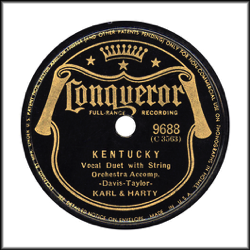
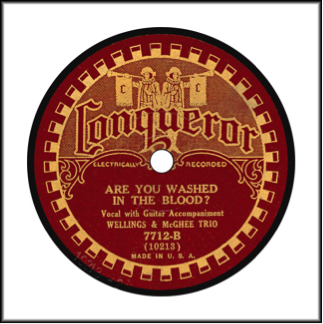
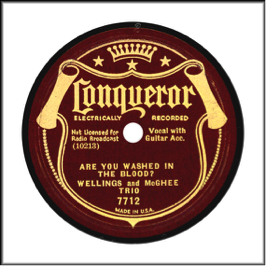
Silvertone would be discontinued again in mid-1928. Sears would eventually replace the Silvertone label with a Supertone label (produced and pressed by Starr Piano Company) in the 1930s. Silvertone would re-emerge as a label for Sears in 1940 and be discontinued one year later, in 1941. The 1940-1941 Silvertone was produced and pressed by Columbia Record Corporation. Silvertone would come back one last time in 1950. These were red Vinylite pressings produced, this time, by Mercury Records. Sears would go on to produce the Challenge budget record label from 1926-to 1930 and a more expensive line called Conqueror from 1928-to 1942.

Most of the records made for Sears were duplicate recordings, reprints of existing catalog numbers, or anonymous recordings. Some of the records produced for Sears under the Silvertone label were alternate recordings. These are especially rare and valuable.

Music Genres: Band, Waltz, Orchestra, Band, Jazz, Blues.

Pre-1941 Labels: Orange, purple, tan, or blue in color. Silvertone in block or scripted lettering. An image of a piper with a two-person audience or just the piper appeared on pre-1920 labels.

Silvertone 1916
Silvertone 1916. Orange background. Made by Columbia Records.

While not on the Silvertone label: When the Lusitania Went Down, 1915 of which the lyrics can be seen at that link.

Silvertone Record Label Late 1917
Silvertone Record Label late 1917. Purple with gold lettering.  Made by Columbia Records
Silvertone mid 1920s
Silvertone’s blue and scripted lettering label. Produced by Federal from 1918/1919-1924
Silvertone mid 1920s
Silvertone’s Tan Label. Made in 1923 or 1924. Made by a variety of different manufacturers.

World War II Label: Scripted lettering and blue background with the piper image replaced with an SR (Sears and Roebuck) logo at the top.

Silvertone1940-1941
Silvertone 1940-1941. Brought back by Sears. Mainly produced by Columbia.

Post World War II Label: Scripted blue lettering on a white background.

Silvertone Post-WW2 1950
Silvertone Post-WW2 1950. Produced by Mercury for Sears on red vinyl.

As an example of what the post-WW2 Silvertone sounds like: Stardust by Glenn Osser in 1950.

Numbers from start to 1945: #200-25000.

Sources:

http://www.mainspringpress.com/sears-labels.html

Rust, Brian. The American Record Label Book. Arlington House Publishers, NY. 1978.

Sutton, Nauck. American Record Labels and Companies: An Encyclopedia (1891-1943). Mainspring Press, CO.2000.
Posted on 1 Comment

Oxford Record Label

1906 El Capitan March. 7in. disc. Probably made by Columbia

Oxford Record Label (1906-1916)

The Oxford Record Label was a Sears label that came after Sears’ discontinuation of their Harvard Label. They are single-sided and can be found as either a 7in. disc or a 10in. disc.  At the start, Sears used Leeds and Catlin from 1906-1908 to produce the record, switched to Columbia from 1908-1909, then to Victor (using their Zon-o-phone masters) between 1909-1911, and then back to Columbia between 1911-1916. Indeed, Columbia continued to produce for Sears under the Oxford label a 7in. disc while Victor produced a 10in. disc. Recordings are mostly anonymous For an excellent review of the Oxford label see the sources below.

Music Genres: Waltz, Black or “Coon” music, Orchestra, Marches, Operettas.

Pre World War II Label: Purple with Oxford in a scripted style.

1906 El Capitan March. 7in. disc. Probably made by Columbia
1906 El Capitan March by Soussa. 7in. disc. Probably made by Columbia.
1908 Negro Laughing Song. Probably made by Victor using Zonophone masters.
1908 Negro Laughing Song by George W. Johnson. Probably made by Victor using Zonophone masters.

While not an Oxford Label it is an example of the Negro Laughing Song by George W. Johnson who was the first African-American to sing on a record.

Leg of Mutton Oxford Record label 36773
Leg of Mutton Le Gigot. 12in. Oxford Record Label #36773. Probably made by Columbia in the early 1910s.

 Leg of Mutton Le Gigot, 1913.

Numbers to 1945: Columbia will switch to a new label called Silvertone in 1915/1916.

1-1000 (by Columbia, Zonophone)1000-2000 (by Columbia, Zonophone)
3000 – 5000 (by Columbia)        5000 (by Zonophone)

Sources:
http://www.mainspringpress.com/sears-labels.html

Posted on 1 Comment

Harvard Record Labels

Harvard Record Labels (1905-1907)

Harvard Records was a 78 record label sold exclusively by Sears. Columbia Records originally produced the record. The catalog numbers were similar to Columbia master catalogs. The Harvard Record Label used anonymous recordings. The records came in either 7in. or 10in. sizes.

Music Genres: Waltz, Patriotic, Orchestra, Comedic, Folk Songs, Black or “Coon” songs. (The Harvard Record label and Sears sold music that exemplified the time. Such musical lyrics that stereotyped dialects would be unacceptable today)

Pre-1941 Label: Plan label with blue lettering.

Harvard Disc Record. Courtesy of http://www.78rpm.net.nz

Uncle Josh was the pseudonym for Cal Stewart, a vaudeville actor that made the transition into sound. He is known for comedic narratives. While not on a Harvard Disc the recording below is indicative of Cal’s comedic style.

Another example of the early Harvard Disc Record label.

I Never Trouble Trouble until Trouble Troubles Me
I Never Trouble Trouble Until Trouble Troubles Me by Baritone and Tenor Duet

Not on a Harvard Record label but it demonstrates what the duet sounded like. You can note the same catalog number as the Harvard disc above. This was due to the fact that Harvard pulled from the master catalog of Columbia. Indeed, it appears the Peerless Disc Record did as well.


The Harvard Record label went through a label re-design in late 1906 or early 1907. This new design featured a collegiate pennant and lettering in orange.

World War Two Label: None. The label did not exist

Sources:

http://www.mainspringpress.com/sears-labels.html

Posted on

Montgomery Ward Records

Montgomery Ward Records (1933-1941)

Sold through Montgomery Ward’s catalog. Contracted pressing of records and licensing to Decca, RCA, Columbia, Victor, Bluebird, and others. These records could be found in their stores or in their catalogs.

Music Genres: Country, Pop, Blues, Western, Mexican, Swing.

1933-1941: Record Label

Record Label: Pre-WW2. Black or dark blue coloring always with gold. Note the design of semi-circles.
Montgomery Ward Record Label: Pre-WW2. Black or dark blue coloring always with gold. Note the design of semi-circles.
Produced in 1934
Montgomery Ward Record:  Produced in 1934

Cartwright Brothers on Montgomery Ward.

1941-1945s Label: None

Post-WW2 Label: None

Numbers from start to 1945: 1000-10173

Notes: 6000 is their light classical series.

Sources:

Catalog Listing: http://www.78discography.com/

Rust, Brian. The American Record Label Book. Arlington House Publishers, NY. 1978.

Sutton, Nauck. American Record Labels and Companies: An Encyclopedia (1891-1943).Mainspring Press, CO.2000.

Music Genres: Country, Pop, Blues, Western, Mexican, Swing

Posted on

Lesson Plans World History II SOL 10c

Lesson Plans World History II SOL 10c: Russian Revolution

Standard WH II: The student will demonstrate knowledge of the worldwide impact of World War I.

Objectives:  Citing causes and consequences of the Russian Revolution.

Lesson Plans:
Introduction: A Bell-ringer activity
Notes: Students copy-down and discuss teacher generated notes
Activities: Students complete various in class activities to support learning including video analysis, maps, charts, diagrams, graphic organizers, worksheets, text-book questions, group discussion, KWL Charts etc.
Assessment: Informal, Formal, Exit-Questions, Teacher Questioning. Quizzes, Tests, Projects

Essential Knowledge:
Causes of 1917 revolutions
• Defeat in war with Japan in 1905
• Landless peasantry
• Incompetence of Tsar Nicholas II
• Military defeats and high casualties in World War I
Rise of communism
• Bolshevik Revolution and civil war
• Vladimir Lenin’s New Economic Policy
• Joseph Stalin, Lenin’s successor

Activities That Support Lesson Plans

Premium Lesson Plan: Russian Revolution Activity Sheet:  Worksheet containing different activities, cartoon analysis and primary source analysis.
Russian Revolution Unit
: Complete Unit Lesson Plan on Russian Revolution
Russian Rev and InterWar Period and Totalitarian Govt: Complete Unit Lesson plan covering Russian Revolution up to start of World War II.
Russian Revolution Mixer: Role-playing activity where students research a role from the textbook and share answers with fellow students.
Russian Civil War: Analysis of the Russian Civil War
Russia Revolution Cause and Effect: Cause and Effect Analysis
New Economic Policy (NEP): Analysis of Lenin’s New Economic Policy
Fall of the Russian Monarchs Video Questions: Viewing Questions for use with video below.


Back to World History II Lesson Plans Virginia SOL Page

[counterize type=”keywords”]

[counterize type=”hits”]


Posted on

Lesson Plans World History II SOL 9de

Lesson Plans World History II SOL 9de: Imperialism and the Scramble for Africa, Asia, and India

Standard WH II: The student will demonstrate knowledge of the effects of the Industrial Revolution during the nineteenth century.

Objectives: Explaining the rise of industrial economies and their link to imperialism and nationalism;
Assessing the impact of European economic and military power on Asia and Africa, with emphasis on the competition for resources and the responses of colonized peoples.

Lesson Plans
Introduction: A Bell-ringer activity
Notes: Students copy-down and discuss teacher generated notes
Activities: Students complete various in class activities to support learning including video analysis, maps, charts, diagrams, graphic organizers, worksheets, text-book questions, group discussion, KWL Charts etc.
Assessment: Informal, Formal, Exit-Questions, Teacher Questioning. Quizzes, Tests, Projects

Essential Knowledge:

Nationalism motivated European nations to compete for colonial possessions. European economic, military, and political power forced colonized countries to trade on European terms. Industrially produced goods flooded colonial markets and displaced their traditional industries. Colonized peoples resisted European domination and responded in diverse ways to Western influences.
Forms of imperialism
• Colonies
• Protectorates
• Spheres of influence
Imperialism in Africa and Asia
• European domination
• European conflicts carried to the colonies
• Christian missionary efforts
• Spheres of influence in China
• Suez Canal
• East India Company’s domination of Indian states
• America’s opening of Japan to trade
Responses of colonized peoples
• Armed conflicts (e.g., events leading to the Boxer Rebellion in China)
• Rise of nationalism (e.g., first Indian nationalist party founded in the mid-1800s)

Activities That Support Lesson Plans

Zulu Dawn Handouts Imperialism: Viewing Guide for film titled Zulu Dawn (1979).
Africa and Asia Imperialism Responses Chart: Chart that compares and contrasts different responses of colonized peoples. For use with Virginia World History II textbook.
Scramble for Africa Instructions  and Boardgame: Instructions and Game Board on the Scramble for Africa following the Berlin Conference.
Scramble for Africa Debrief Questions : Questions for students to answer after playing the Scramble for Africa boardgame.
Imperialism Lesson Plan: Document Analysis of Imperialism
Imperialism Lesson Plan Document Questions: Questions that go with Document Analysis of Imperialism.
Imperialism in Africa DBQ Imperialism Document Analysis: Document Based Questions (DBQ) Lesson plan and analysis of Imperialism
Crash Course World History Imperialism: Viewing questions with Crash Course World History: Imperialism video.

Zulu War : Questions from video on the Anglo-Zulu War of 1879.

Back to World History II Lesson Plan Page SOL Virginia

Posted on

Lesson Plans World History II SOL 9b

Lesson Plans World History II SOL 9b Capitalism and Communism

Standard WH II: The student will demonstrate knowledge of the effects of the Industrial Revolution during the nineteenth century

Objectives: Explaining the emergence of capitalism as a dominant economic pattern, and the subsequent development of socialism and communism.

Lesson Plans:
Introduction: A Bell-ringer activity
Notes: Students copy-down and discuss teacher generated notes
Activities: Students complete various in class activities to support learning including video analysis, maps, charts, diagrams, graphic organizers, worksheets, text-book questions, group discussion, KWL Charts etc.
Assessment: Informal, Formal, Exit-Questions, Teacher Questioning. Quizzes, Tests, Projects

Essential Knowledge:
Capitalism
• Adam Smith’s The Wealth of Nations
• Role of market competition and entrepreneurial abilities
• Impact on standard of living and the growth of the middle class
• Dissatisfaction with poor working conditions and the unequal distribution of wealth in society
Socialism and communism
• Karl Marx’s The Communist Manifesto (written with Friedrich Engels) and Das Kapital
• Response to the injustices of capitalism
• Importance to communists of redistribution of wealth

Activities That Support Lesson Plans

Communist Manifesto Complete : Analysis of the Communist Manifesto
Das Kapital Reading : Analysis of Das Kapital
Penny Game Capitalism and Communism: Zip file containing complete lesson on comparing capitalism and communism through the use pennies and the game of rock, paper, scissors.

 Back to World History II Lesson Plans Page

[counterize type=”keywords”]

[counterize type=”hits”]


Posted on

Lesson Plans World History II SOL 10a

Lesson Plans World History II SOL 10a: World War One

Standard WH II: The student will demonstrate knowledge of the worldwide impact of World War I.

Objectives: Explaining economic causes, political causes, and major events and identifying major leaders of the war, with emphasis on Woodrow Wilson and Kaiser Wilhelm II.

Lesson Plans
Introduction: A Bell-ringer activity
Notes: Students copy-down and discuss teacher generated notes
Activities: Students complete various in class activities to support learning including video analysis, maps, charts, diagrams, graphic organizers, worksheets, text-book questions, group discussion, KWL Charts etc.
Assessment: Informal, Formal, Exit-Questions, Teacher Questioning. Quizzes, Tests, Projects

Essential Knowledge:
Causes of World War I
• Alliances that divided Europe into competing camps
• Nationalistic feelings
• Diplomatic failures
• Imperialism
• Competition over colonies
• Militarism
Major events
• Assassination of Austria’s Archduke Ferdinand
• United States enters the war
• Russia leaves the war
Major leaders
• Woodrow Wilson
• Kaiser Wilhelm II

Activities That Support Lesson Plans

All Quiet on the Western Front : Viewing Guide for All Quiet on the Western Front (1930 version)
All Quiet Western Front Literature Lesson Plan : Accompanying literature plan
WW1 Weapons: Analysis of World War One Weapons
WW1 Soldier: Analysis of Soldier Life in World War One
WW1 Causes : Analysis of World War One Causes
Causes of World War 1: Analysis of World War One Causes
WWI Trench Warfare Simulation : Classroom Simulation for World War One
World War One Journal Project Entries: Journaling Writing Assignment on being a WW1 Soldier
Trench Warfare: Analysis of Trench Warfare fighting
Trenchrats: Analysis of Trench Rats and soldier hardship in World War One
Trenchfoot : Analysis of Trench Foot and soldier hardship in World War One
Bodylice :Analysis of Body Lice and soldier hardship in World War One
Somme : Analysis of the Battle of the Somme
Trench Warfare and Battle of Somme Analysis: Combined analysis of Trench Warfare and Battle of the Somme
Lions led by donkeys: Analysis of Sir Douglas Haig and the concept of Attrition

WW1 and Aftermath Questions: Powerpoint for use with WW1 and Aftermath Video.
Note: Questions are only available for the first 15-minutes of video.

All Quiet on the Western Front

For a copy of All Quiet on the Western Front (1929) Film, you can find it at Archive.org

Note: The above activities are best used with the Virginia Prentice Hall World History: The Modern Era textbook.

Back to World History II Lesson Plans Virginia SOL Page