Below is a selection of Technical Field Manuals. For a fuller list, you can find about 1,000 of them between 1940-1945 on the Archive.org website. So if you don’t see one there, try looking there.
Phrase Books
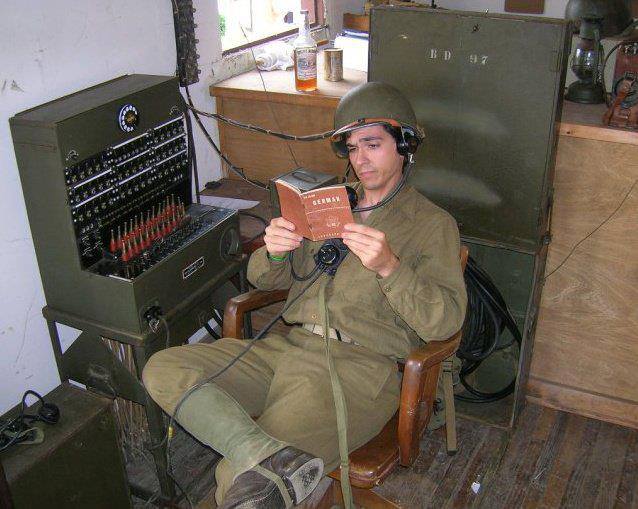
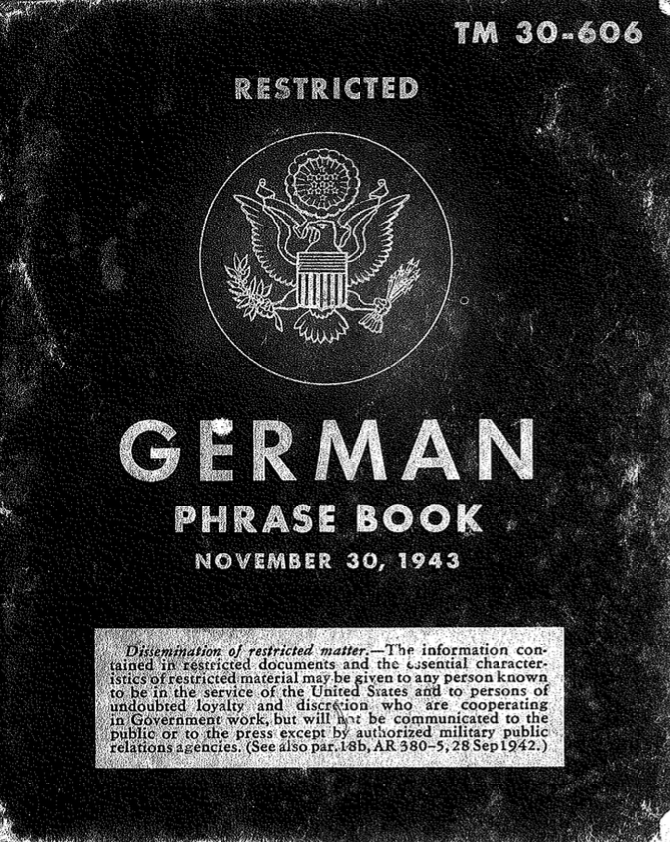
TM 30-606 German Phrase Book Nov 1943 – How to speak German.
TM 30-341 Japanese Language Guide June 1943 – Reproduction guide on how to speak Japanese


TM 30-302 French spoken language June 1943 – How to speak French.
Technical Bulletin
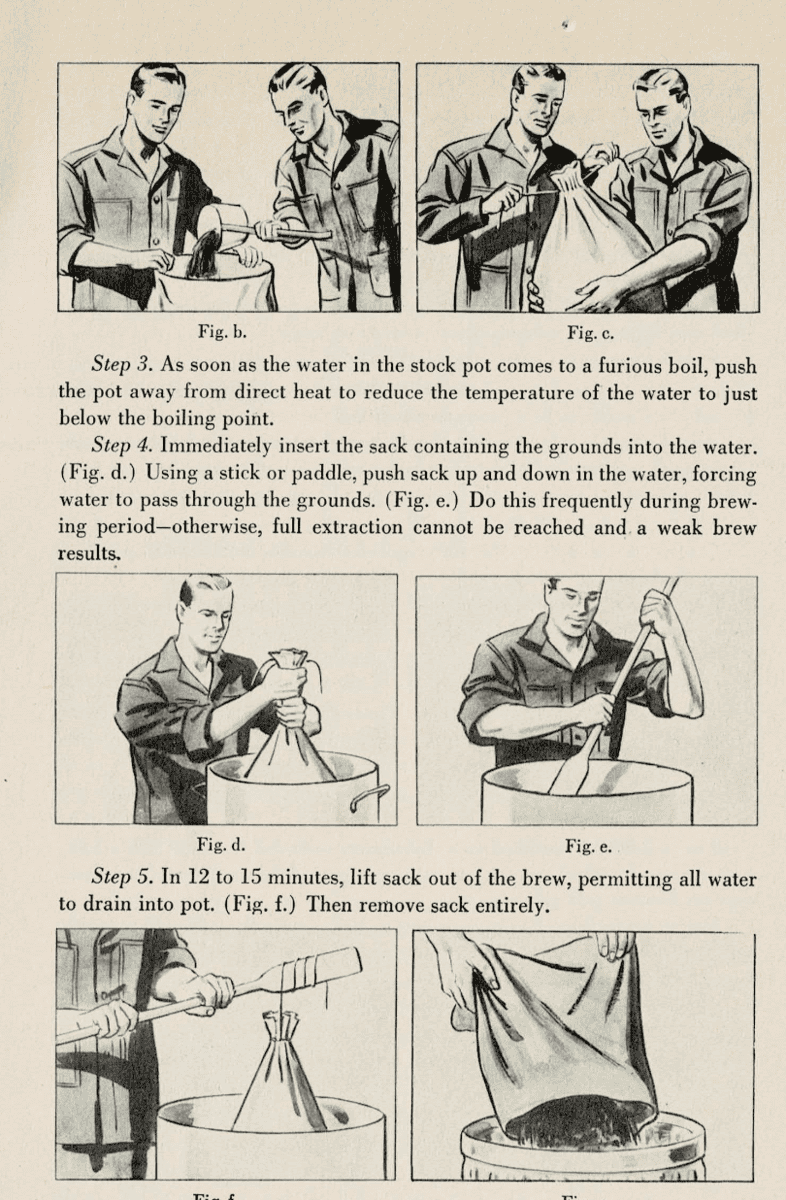
TB 10-405-1 Coffee Brewing, March 1944 – This is a technical bulletin that outlines additional and supplementary instructions on how to make coffee. For a general outline, refer to TM 10-405, the Army Cook.
The bulletin outlines how to brew coffee in an open kettle, a single urn, a double urn, and urns attached to boilers. It also explains how to make Iced Coffee.

Other
Automotive
Ordnance
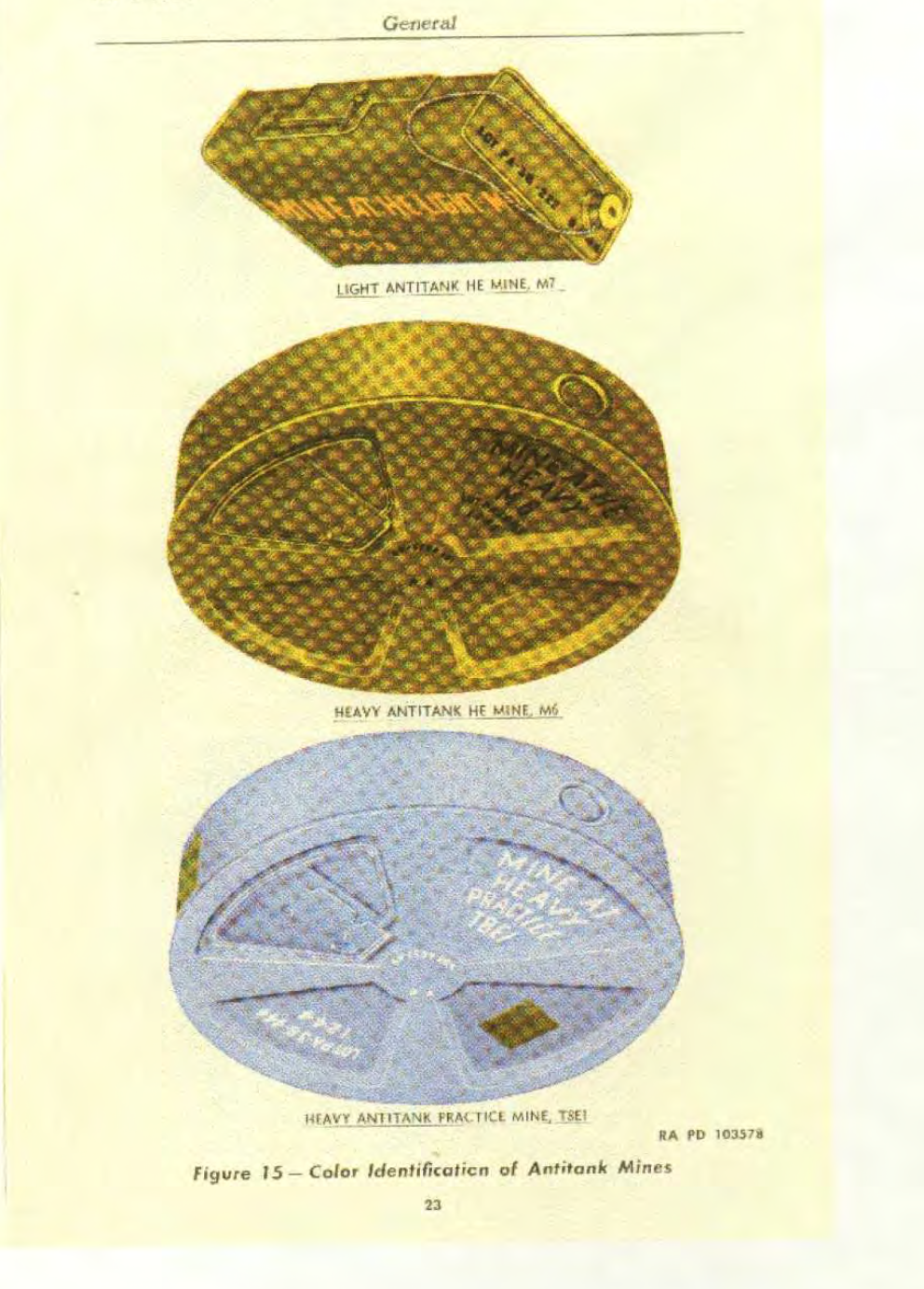
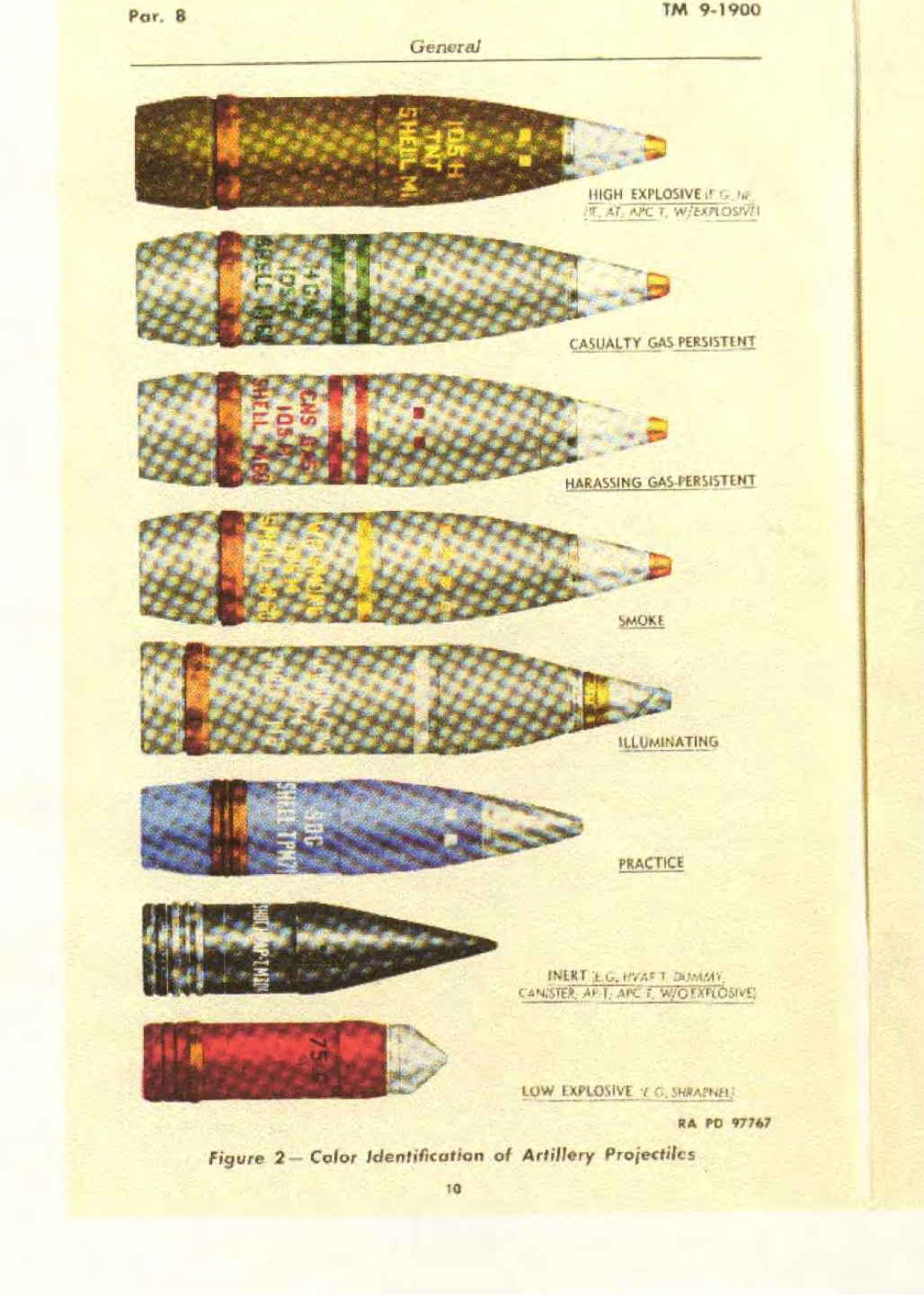
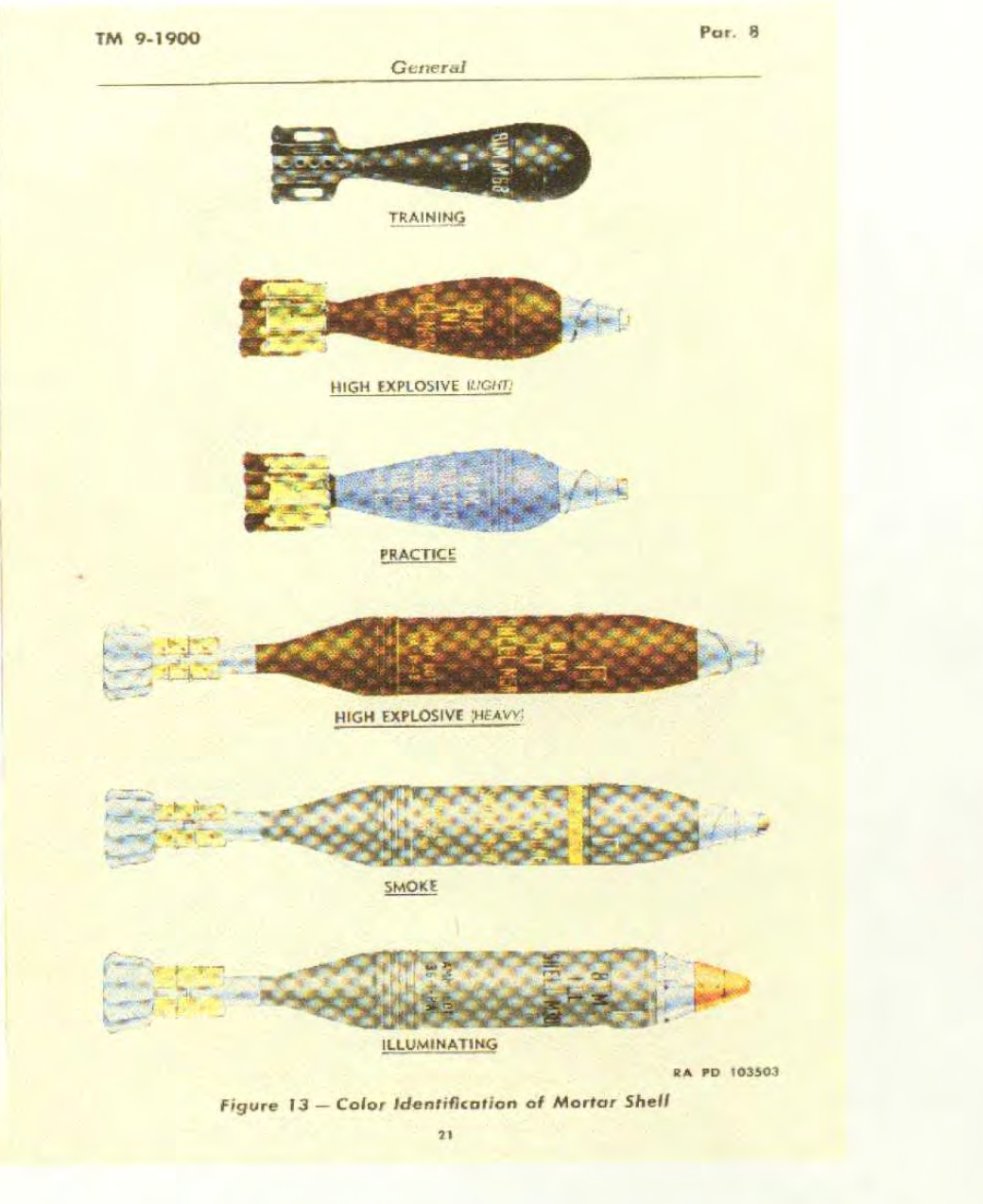
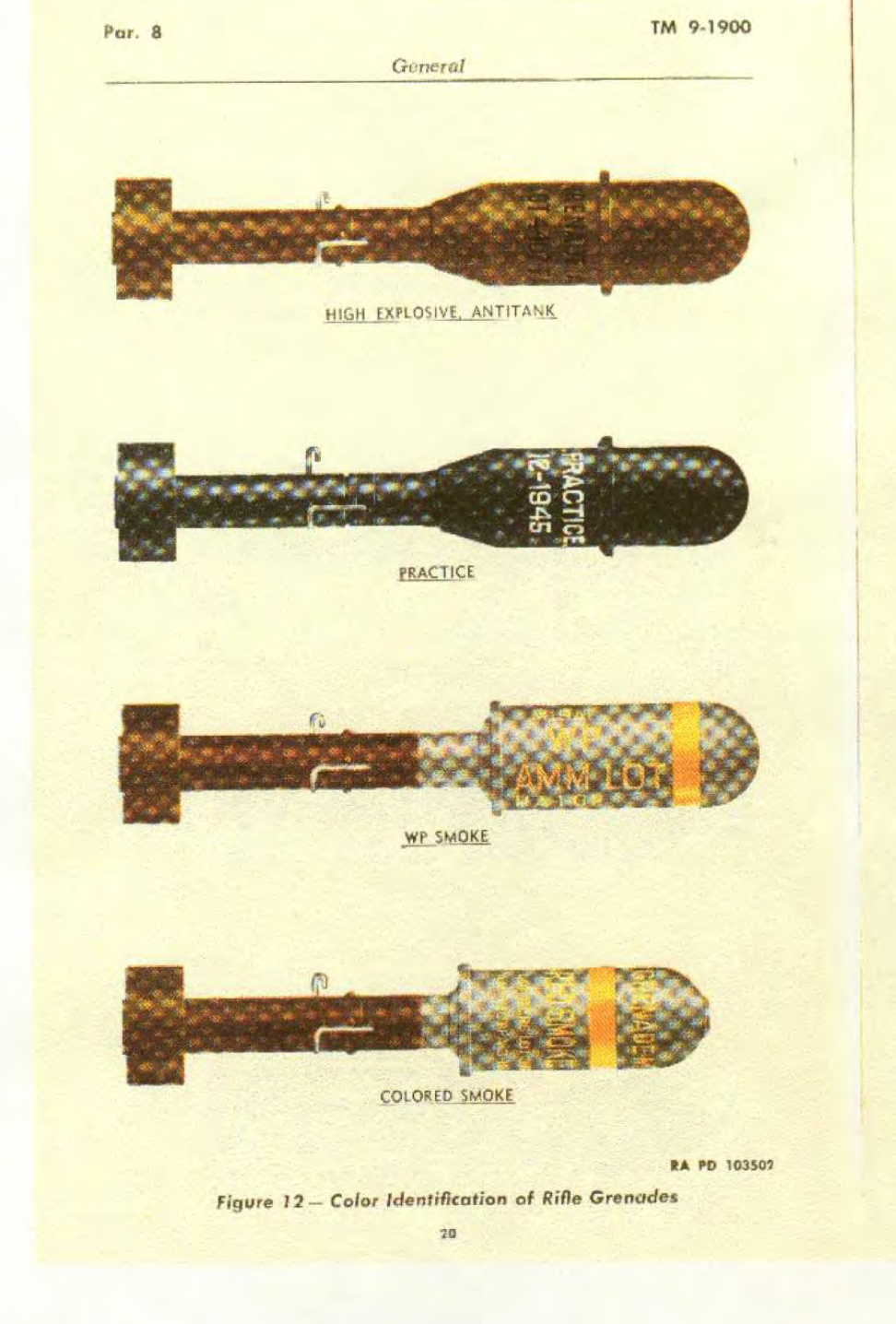
TM 9-1900 Ammunition General June 1945 – Describes handling, procedures, types, boxes, and packing of different kinds of bombs, artillery, shells, mortars, mines, grenades, rockets, rifle grenades, and magazine storage buildings.
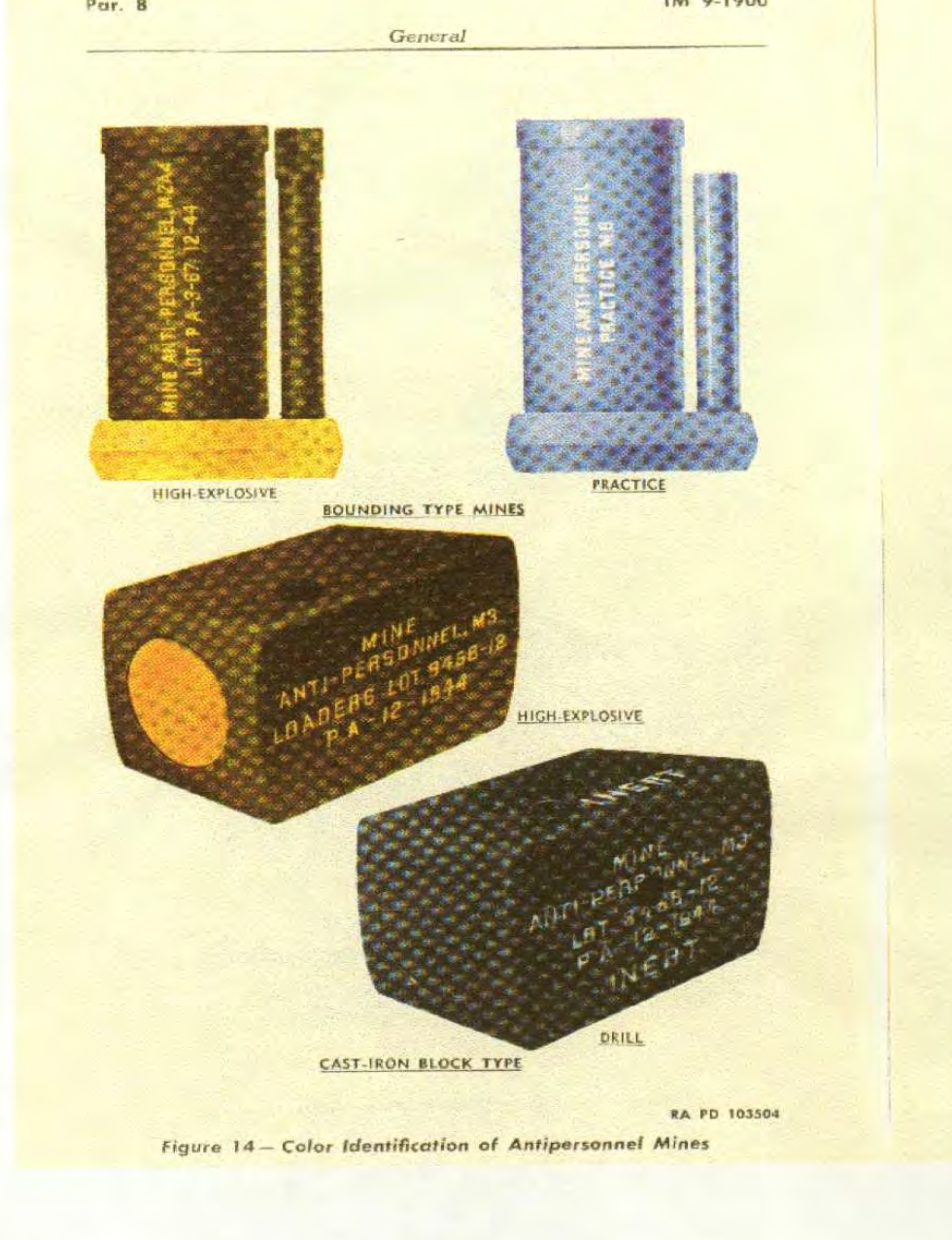

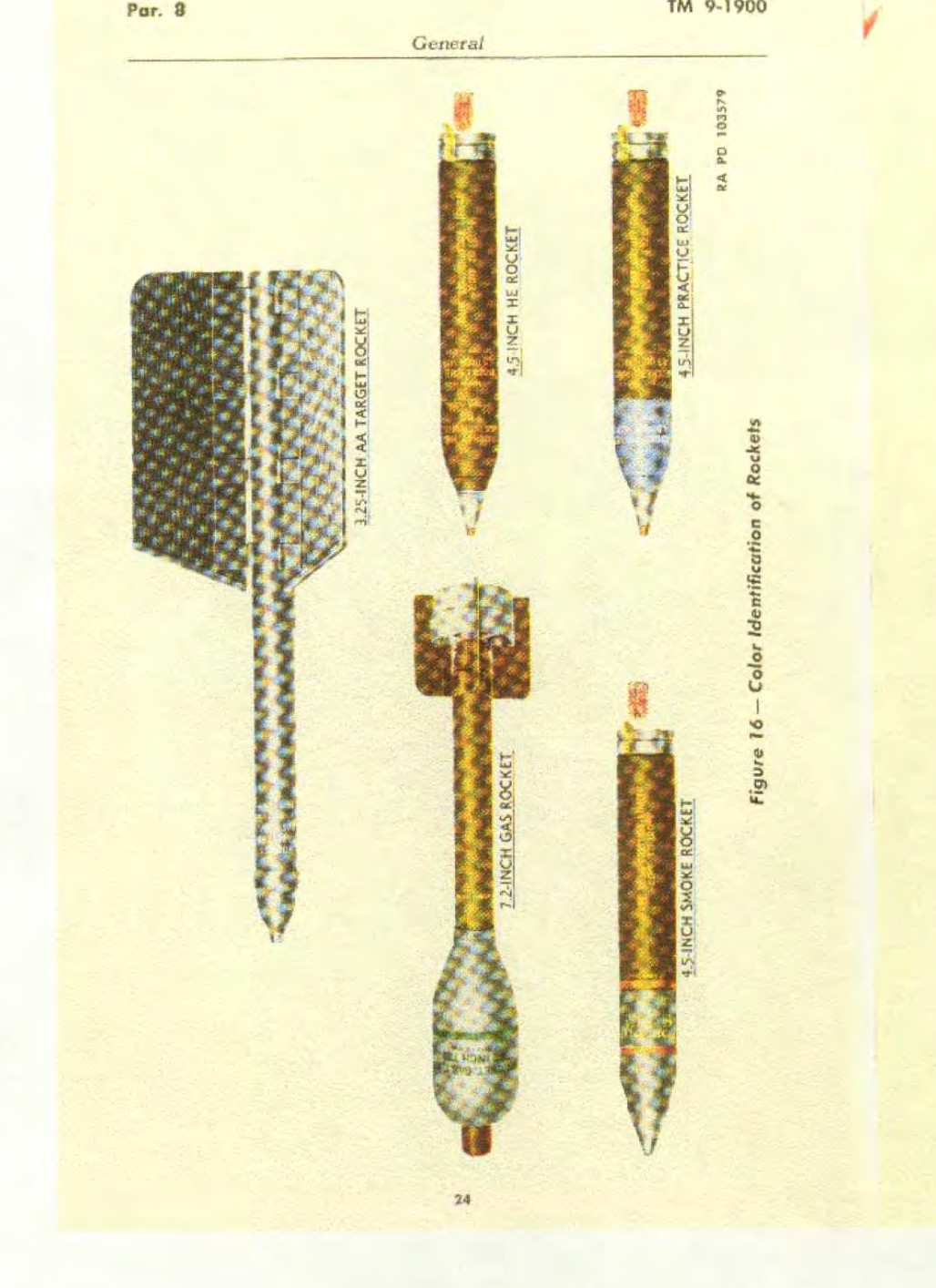

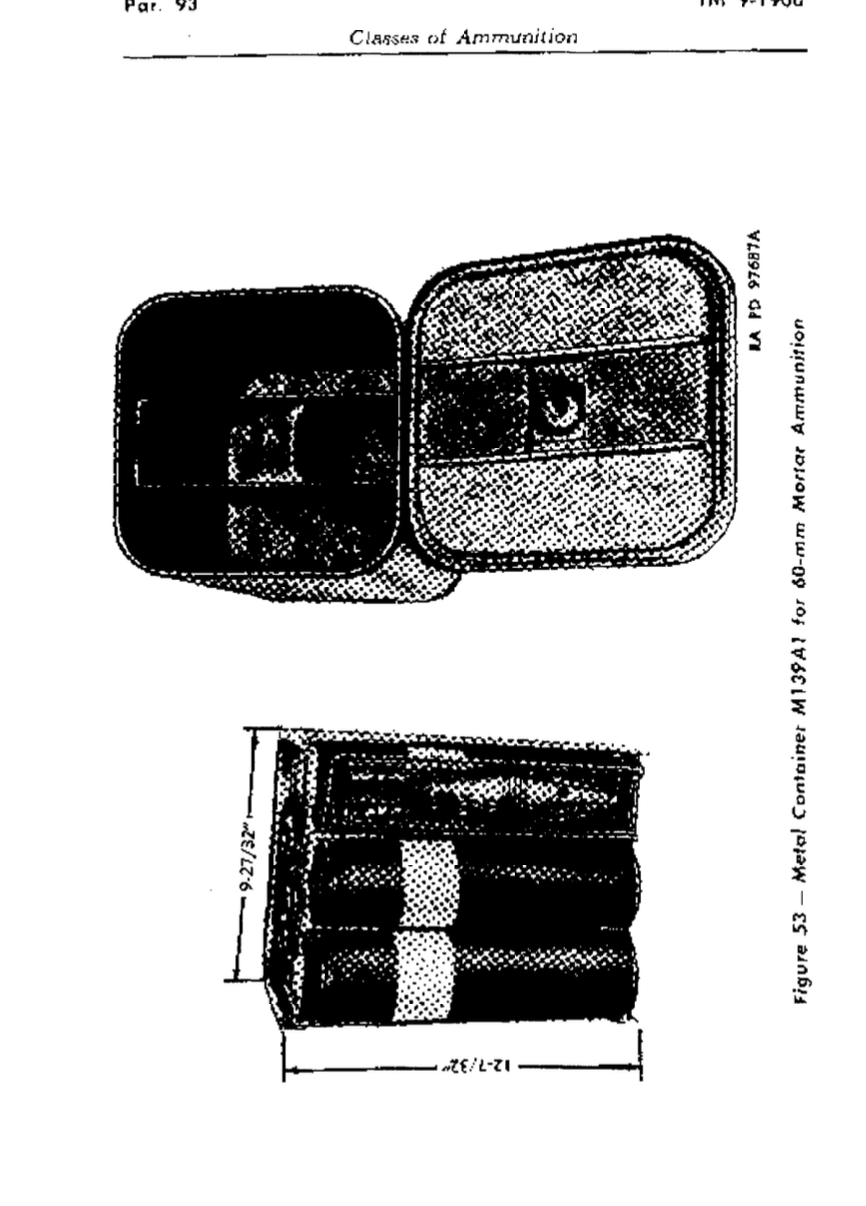
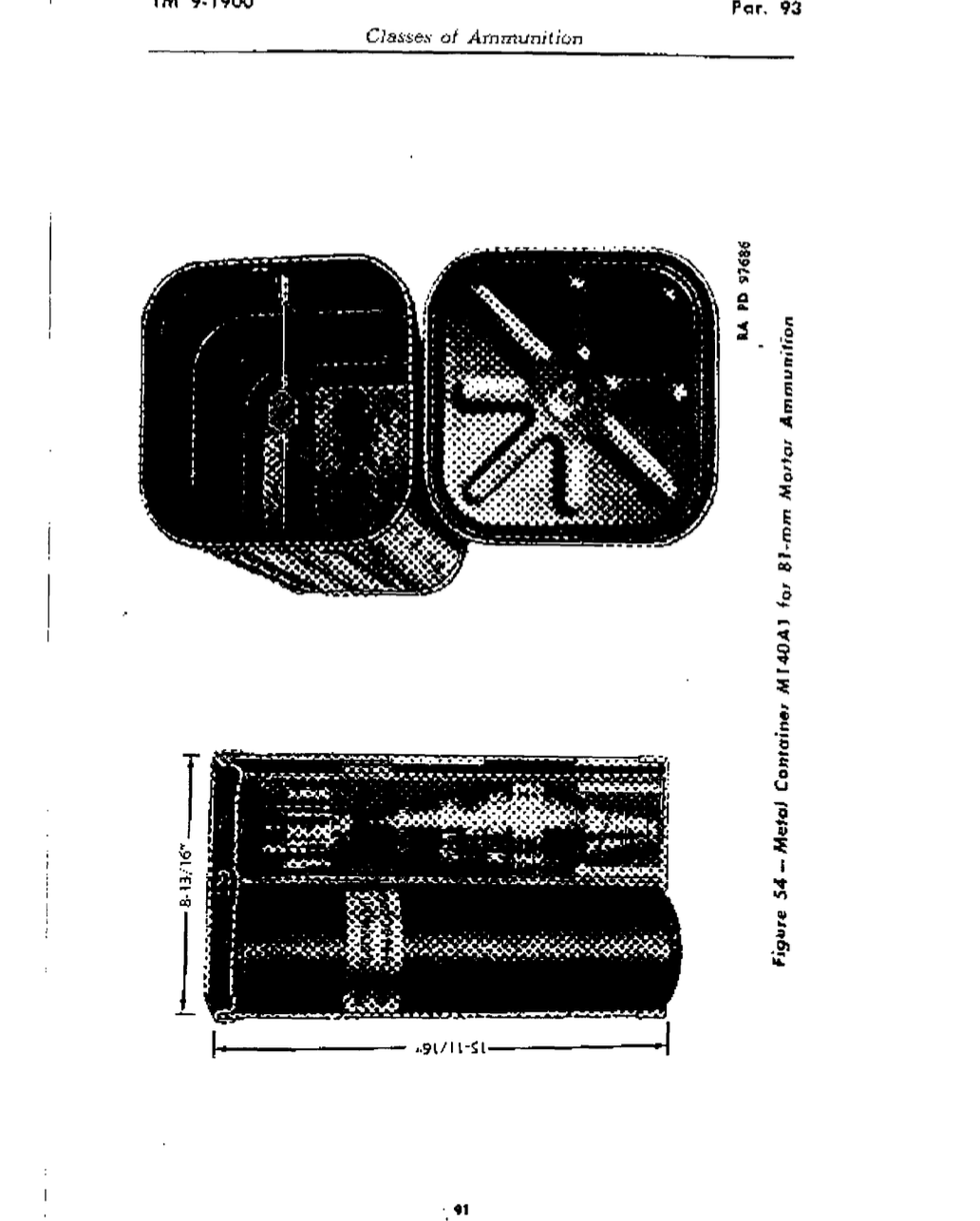
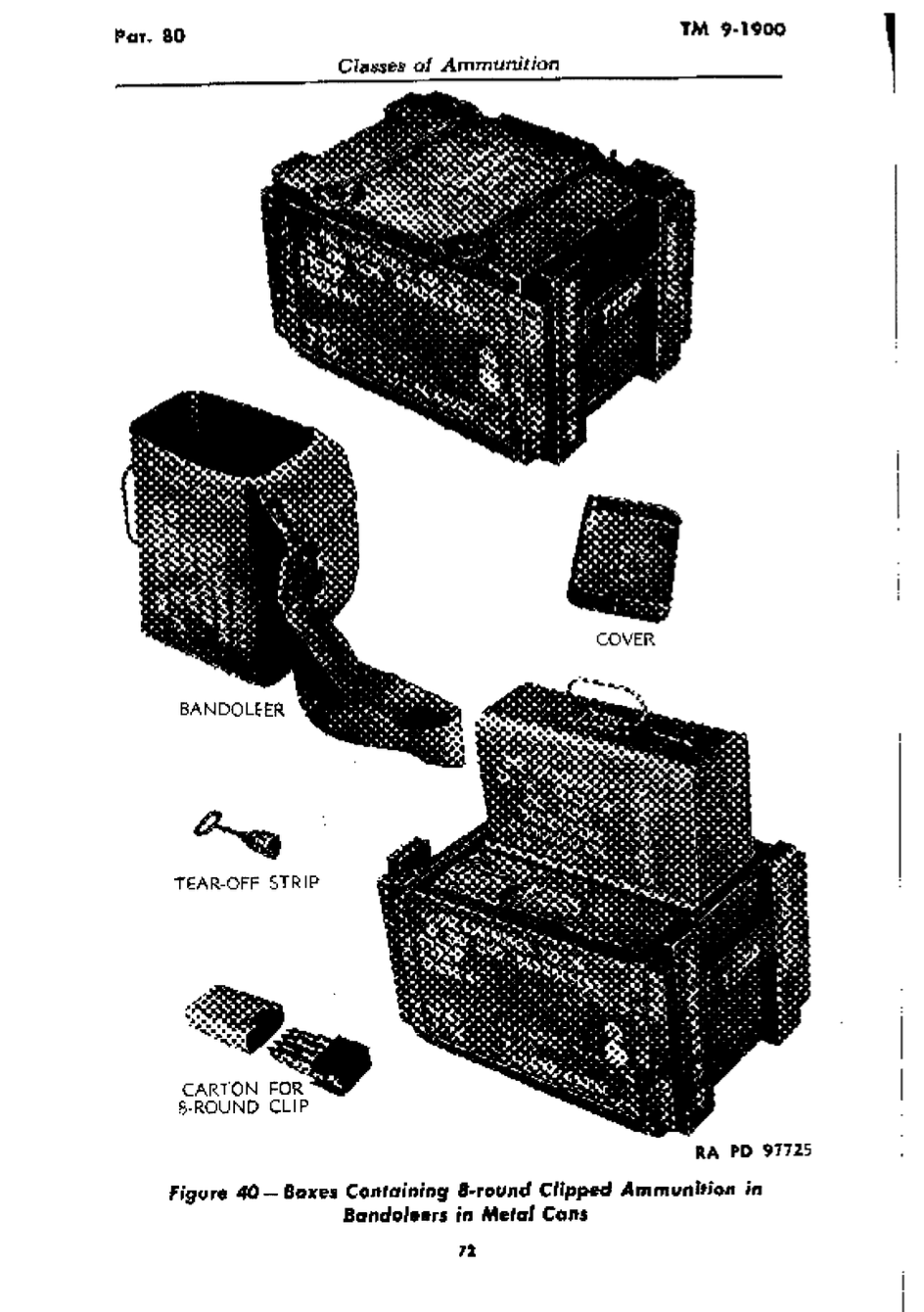
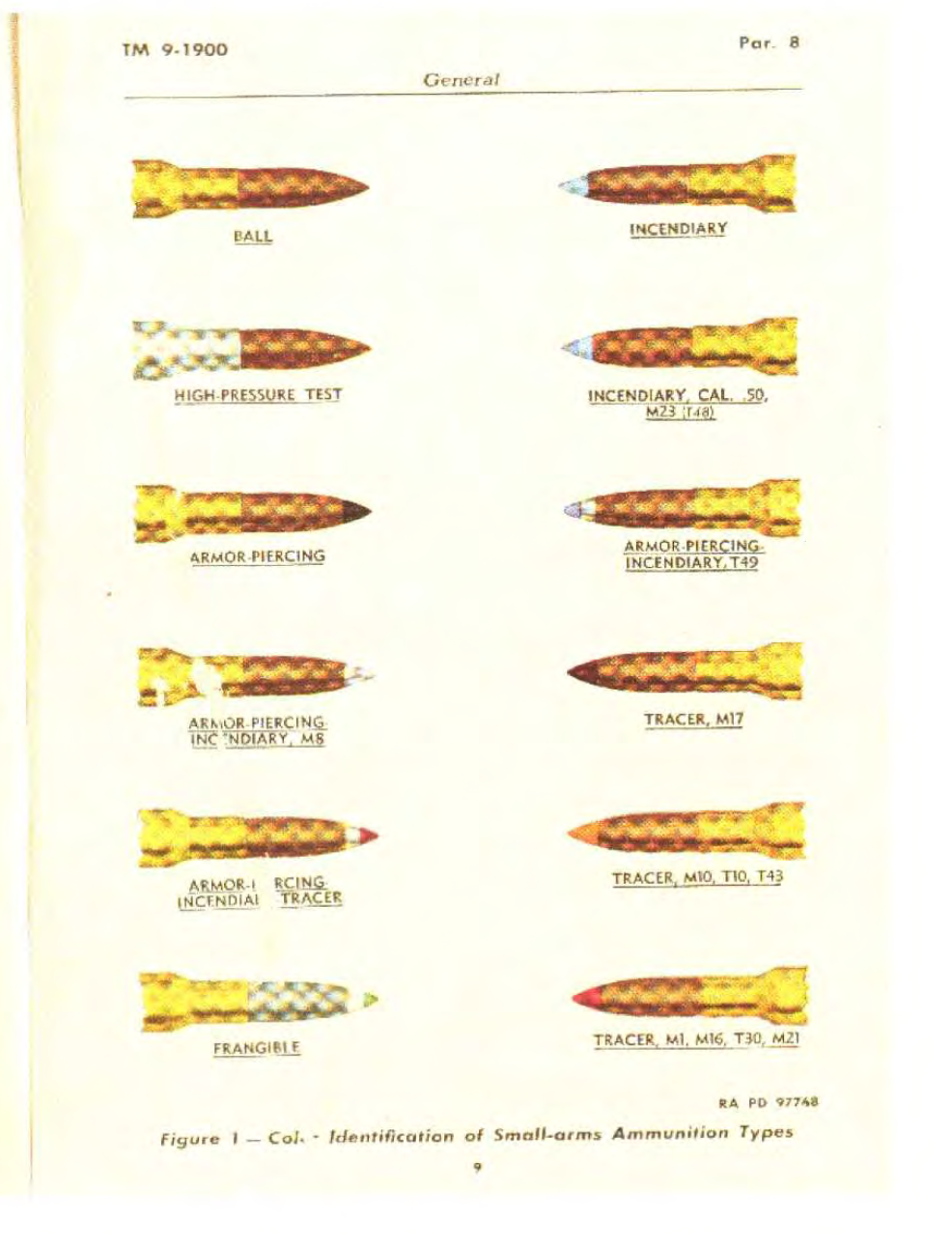
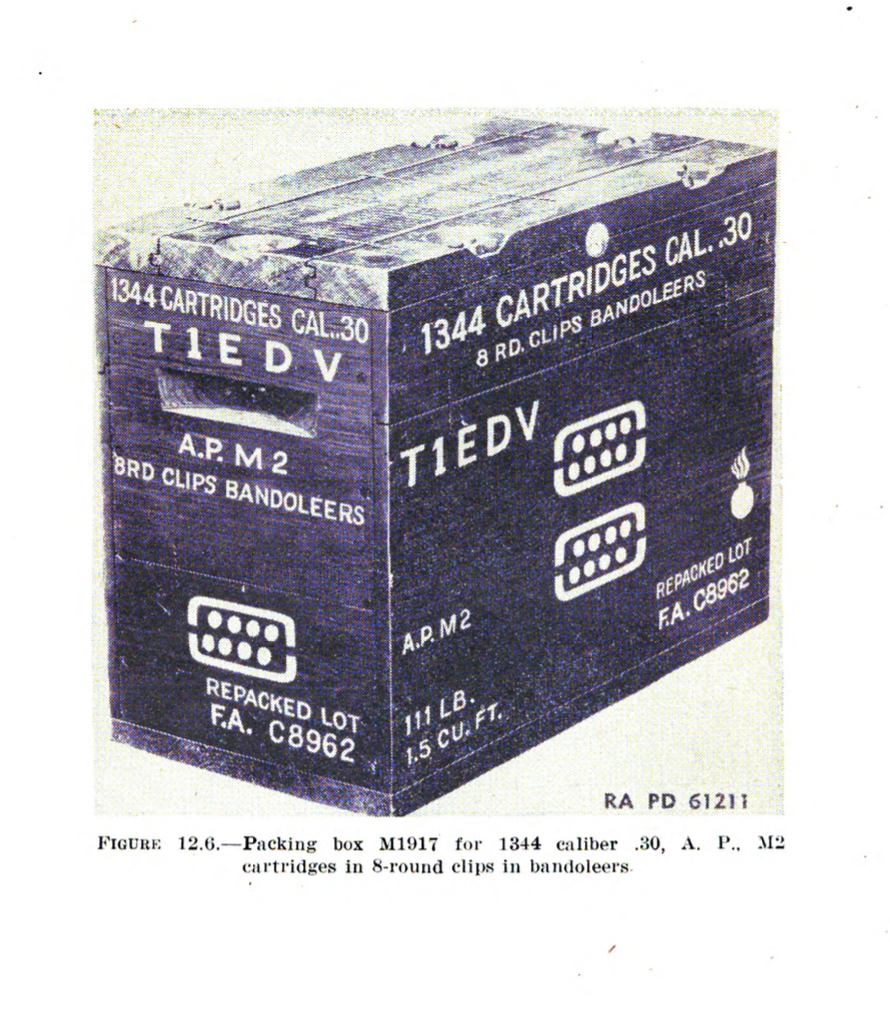
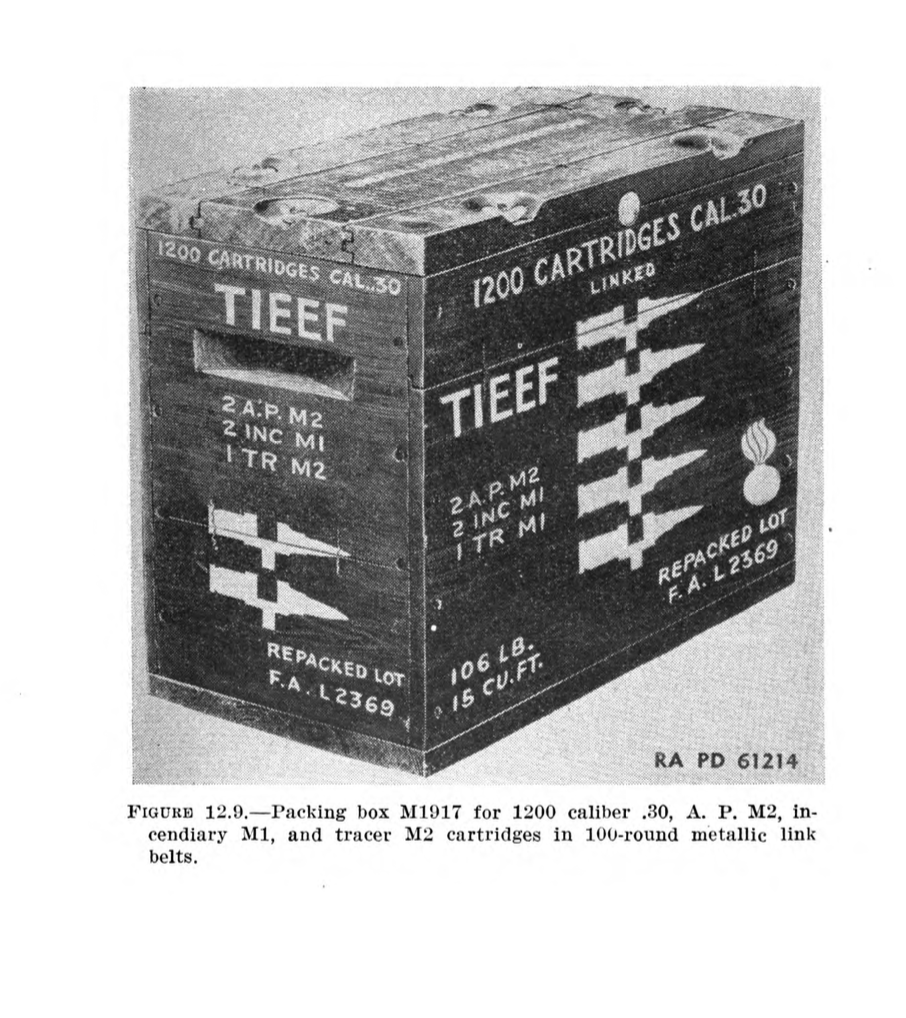
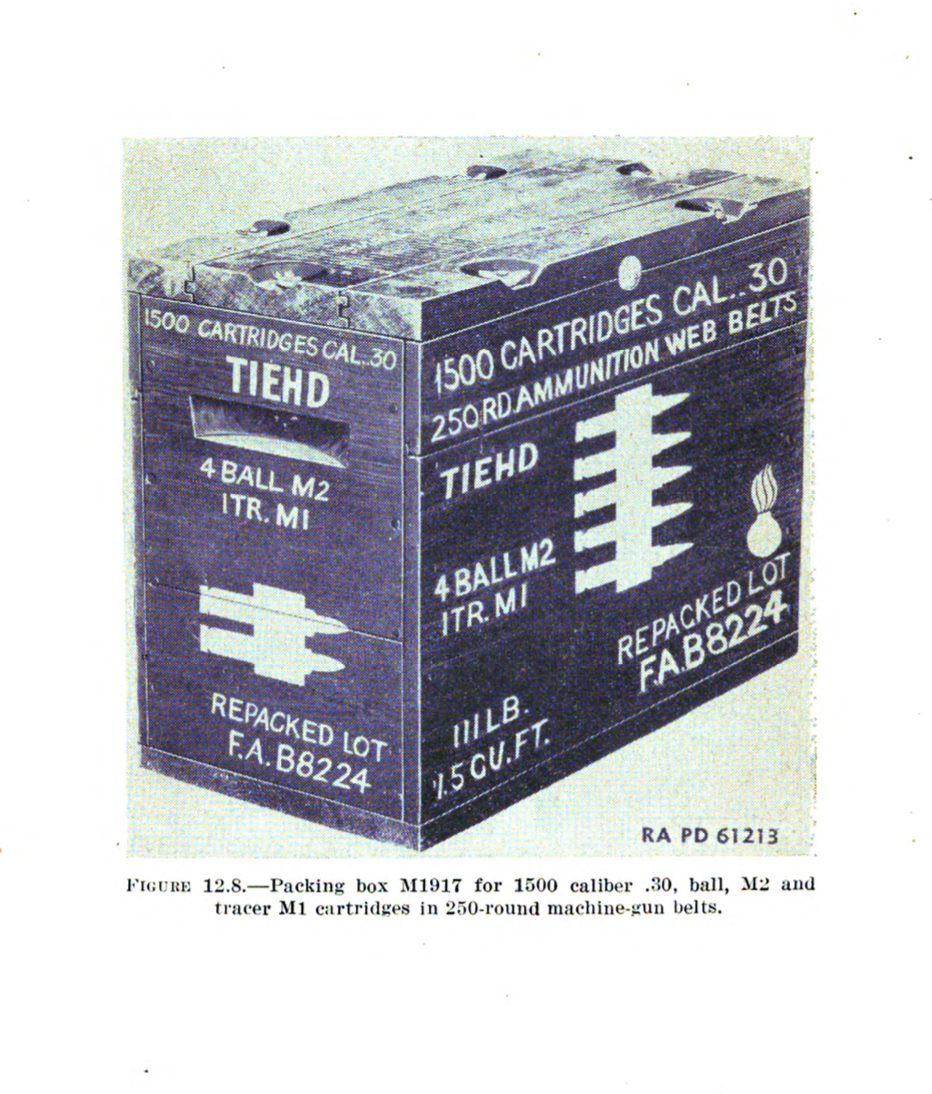
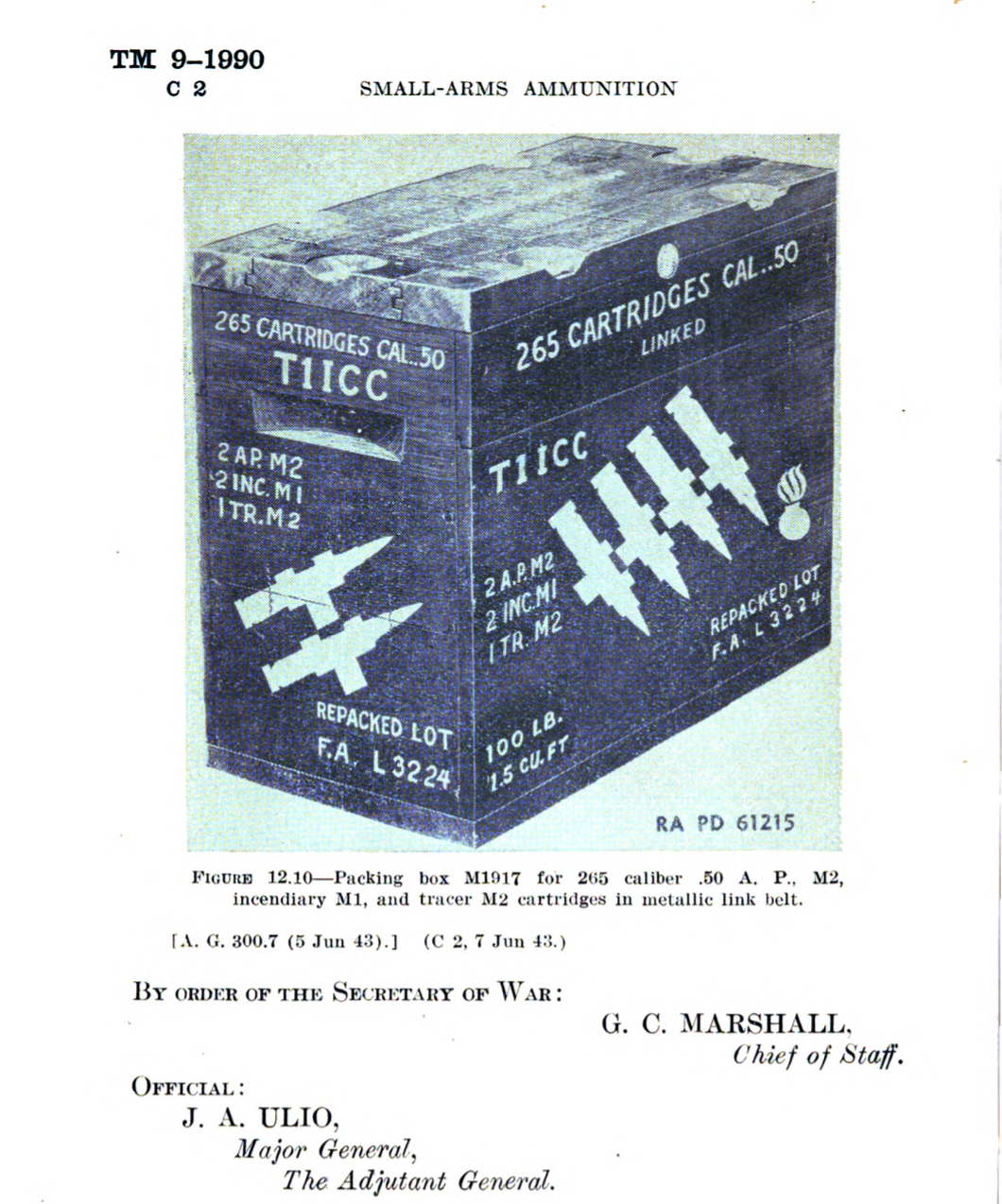
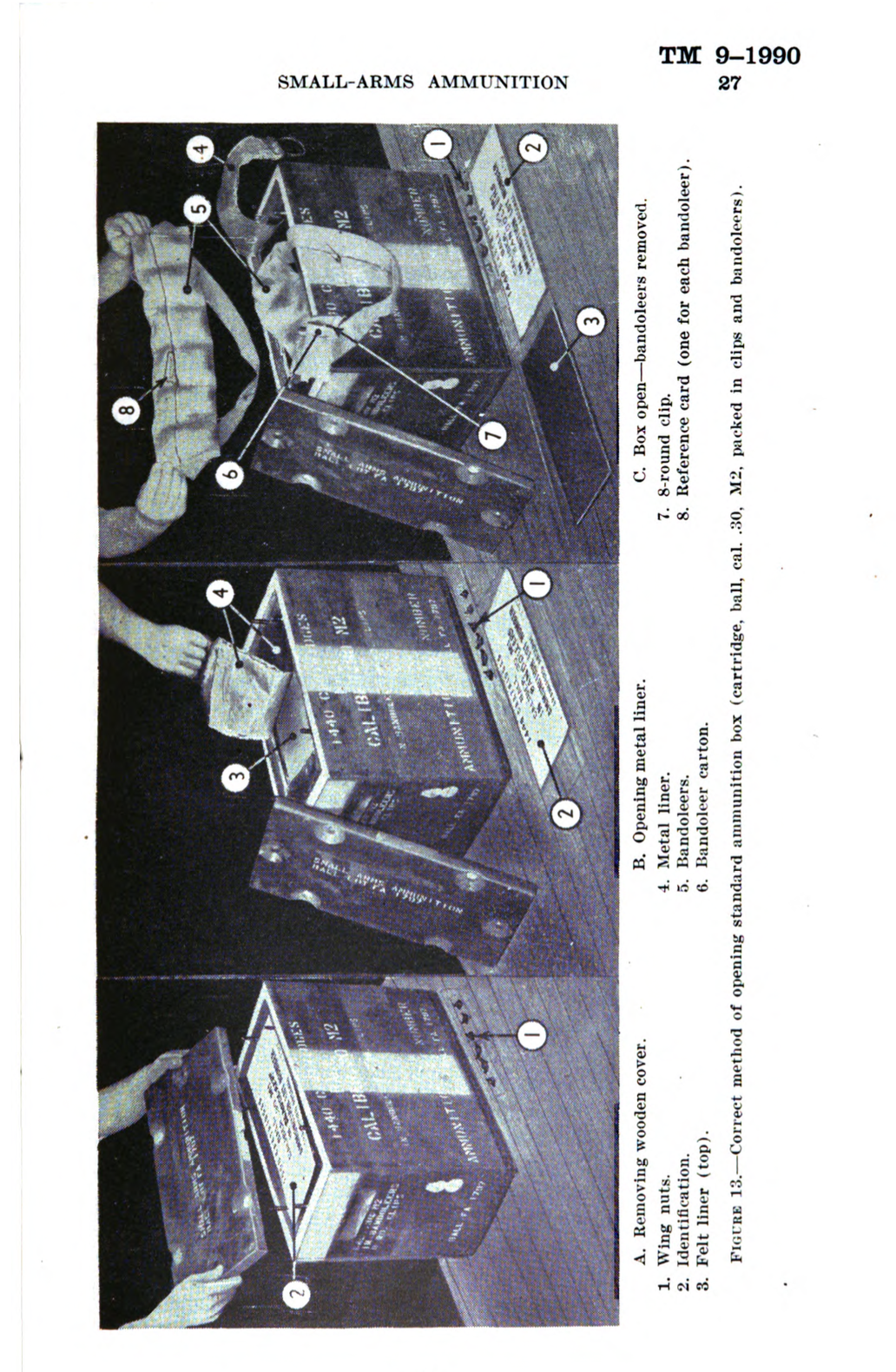
TM 9-1990 Small Arms Ammunition May 1942 – Includes the May 1943 revisions. Describes handling, procedures, types, boxes, and packing of different kinds of small arms ammo.

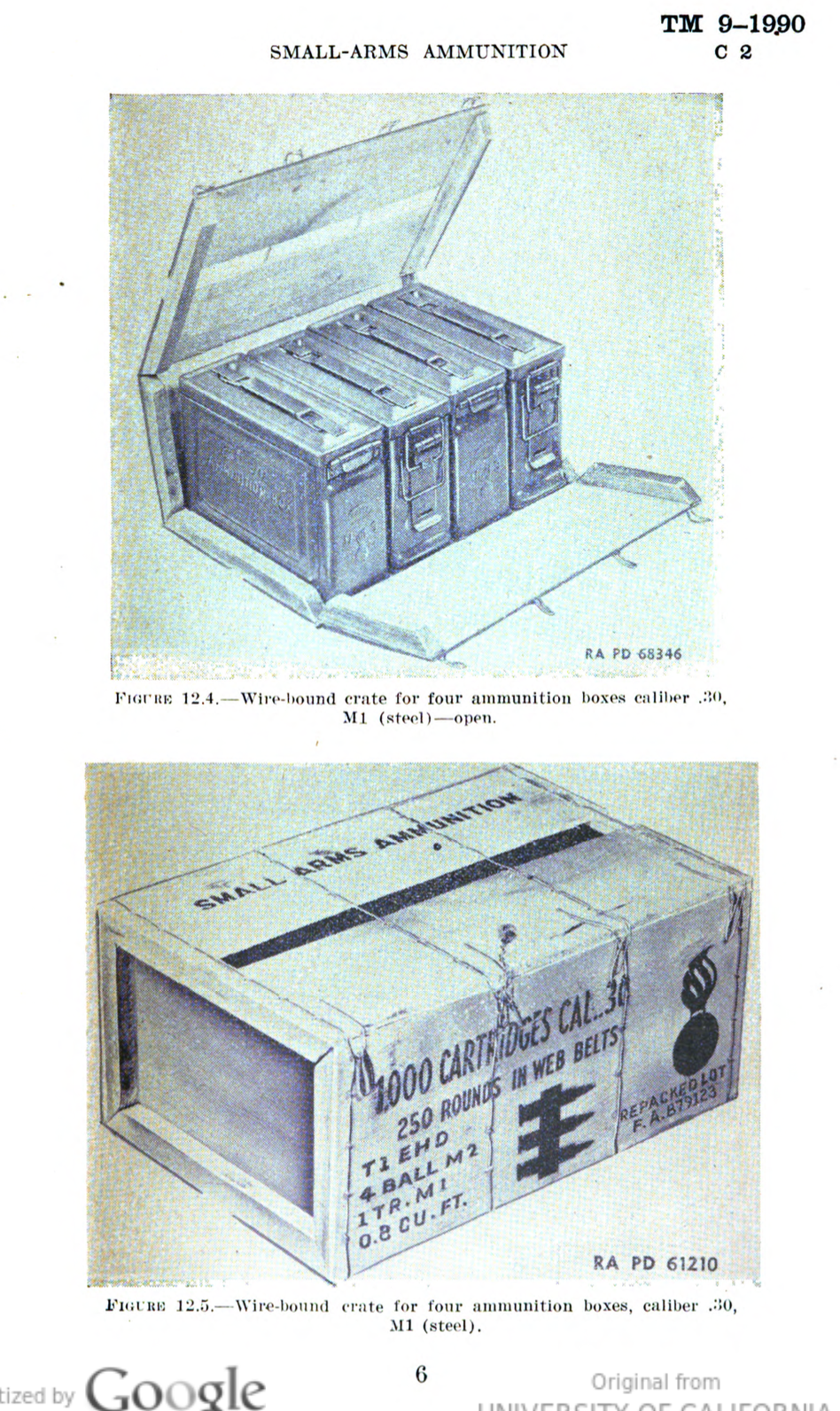
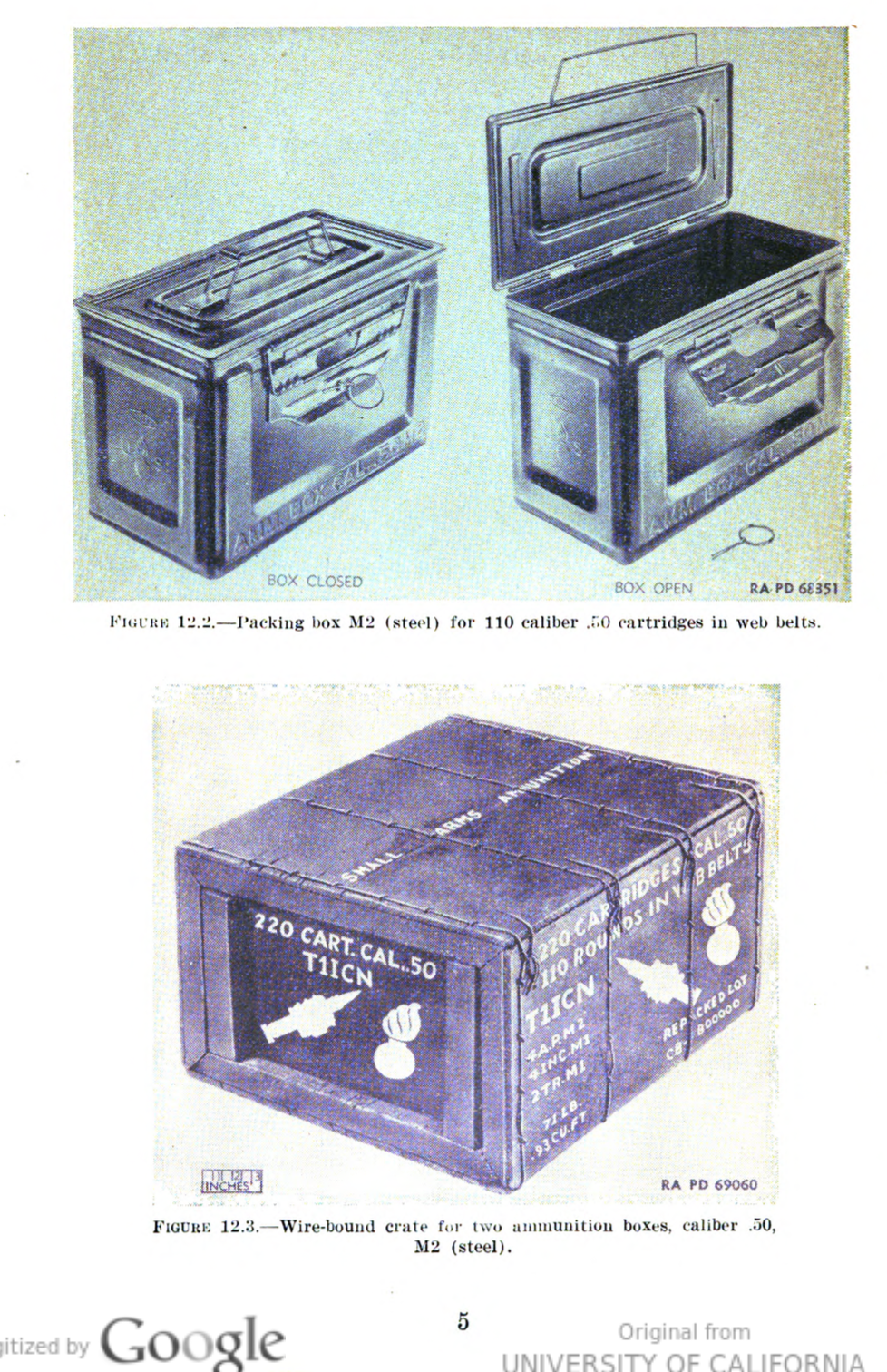
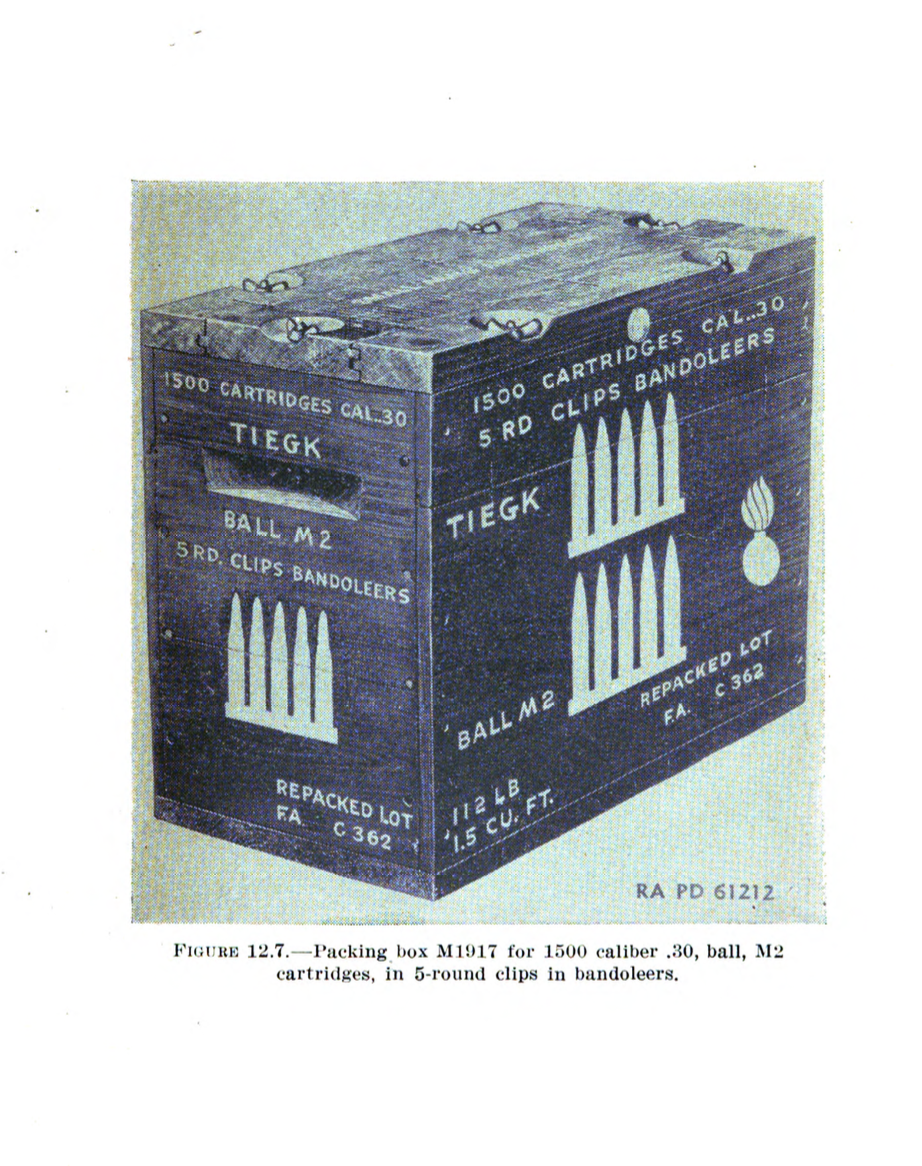
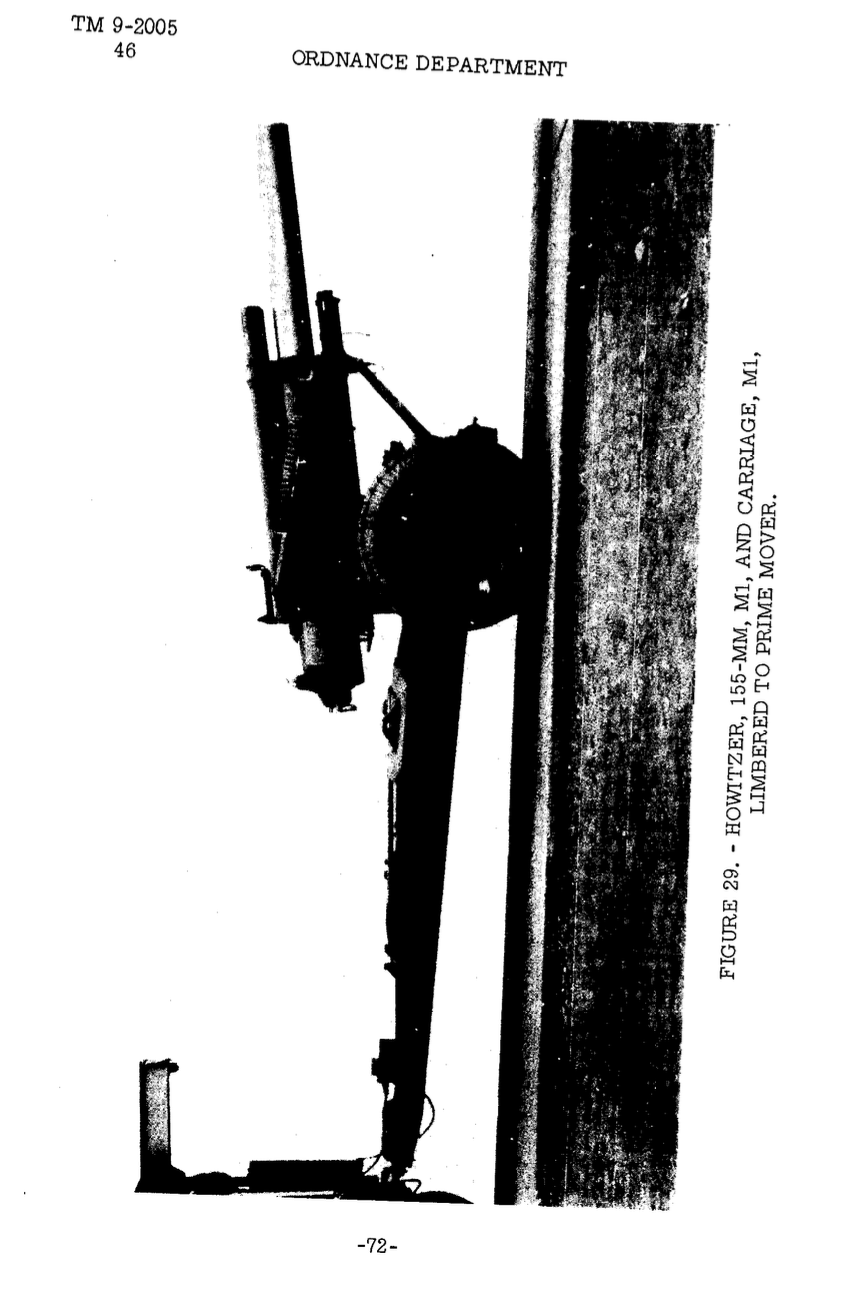
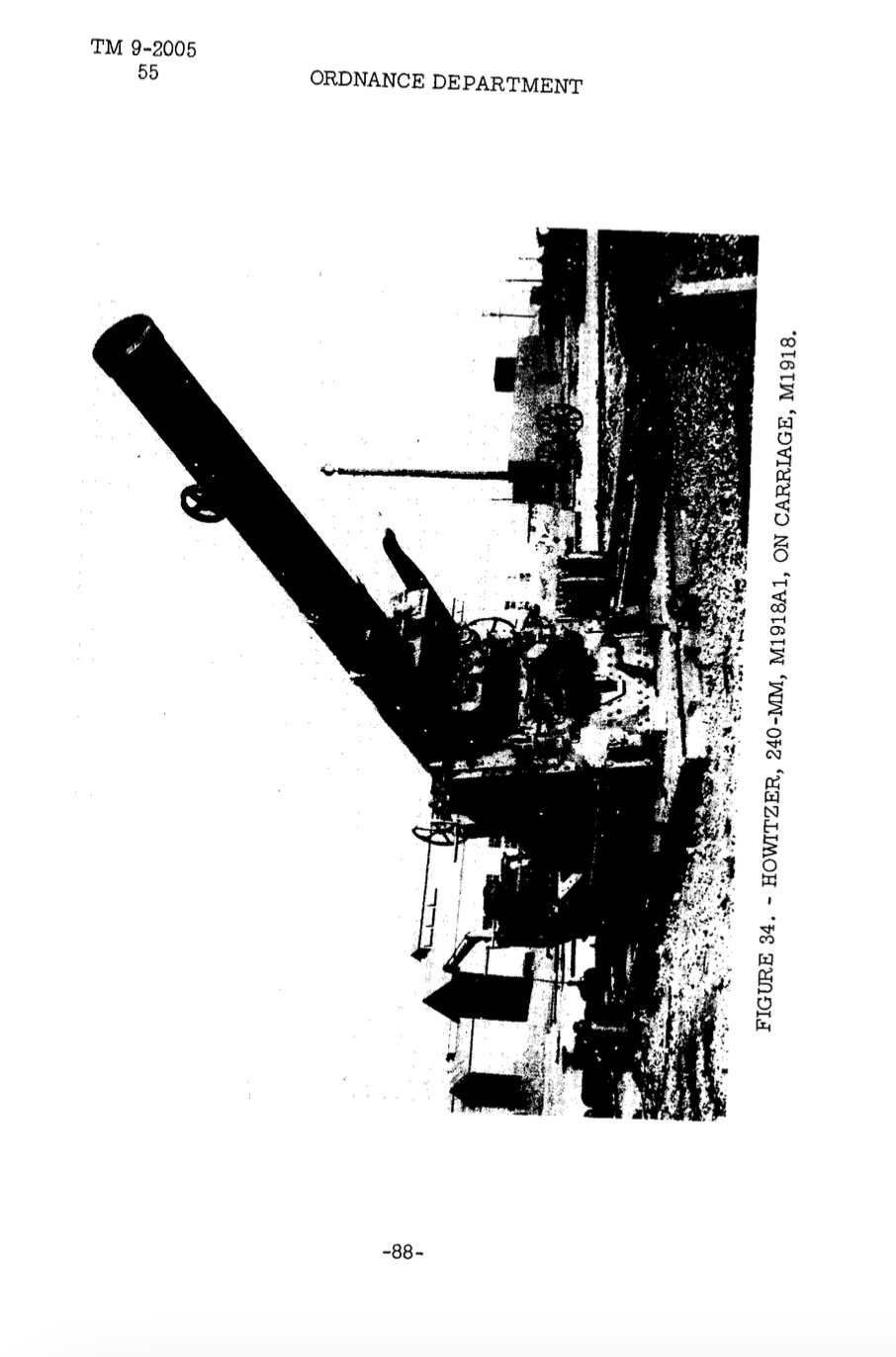
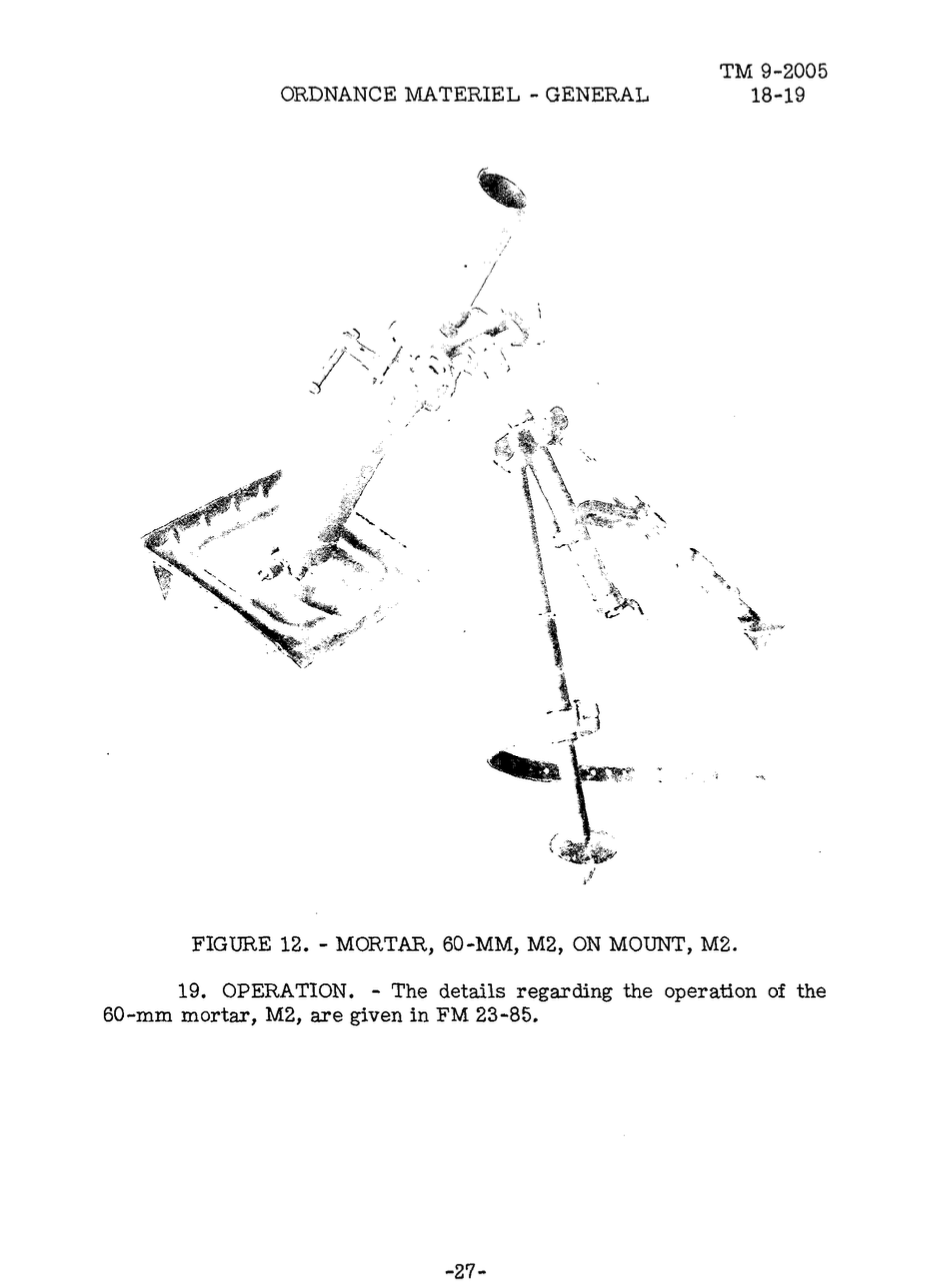
TM 9-2005 Vol 3 Ordnance Material General Dec 1942 | Describes various pieces of ordnance available to the US Army.
Cooking
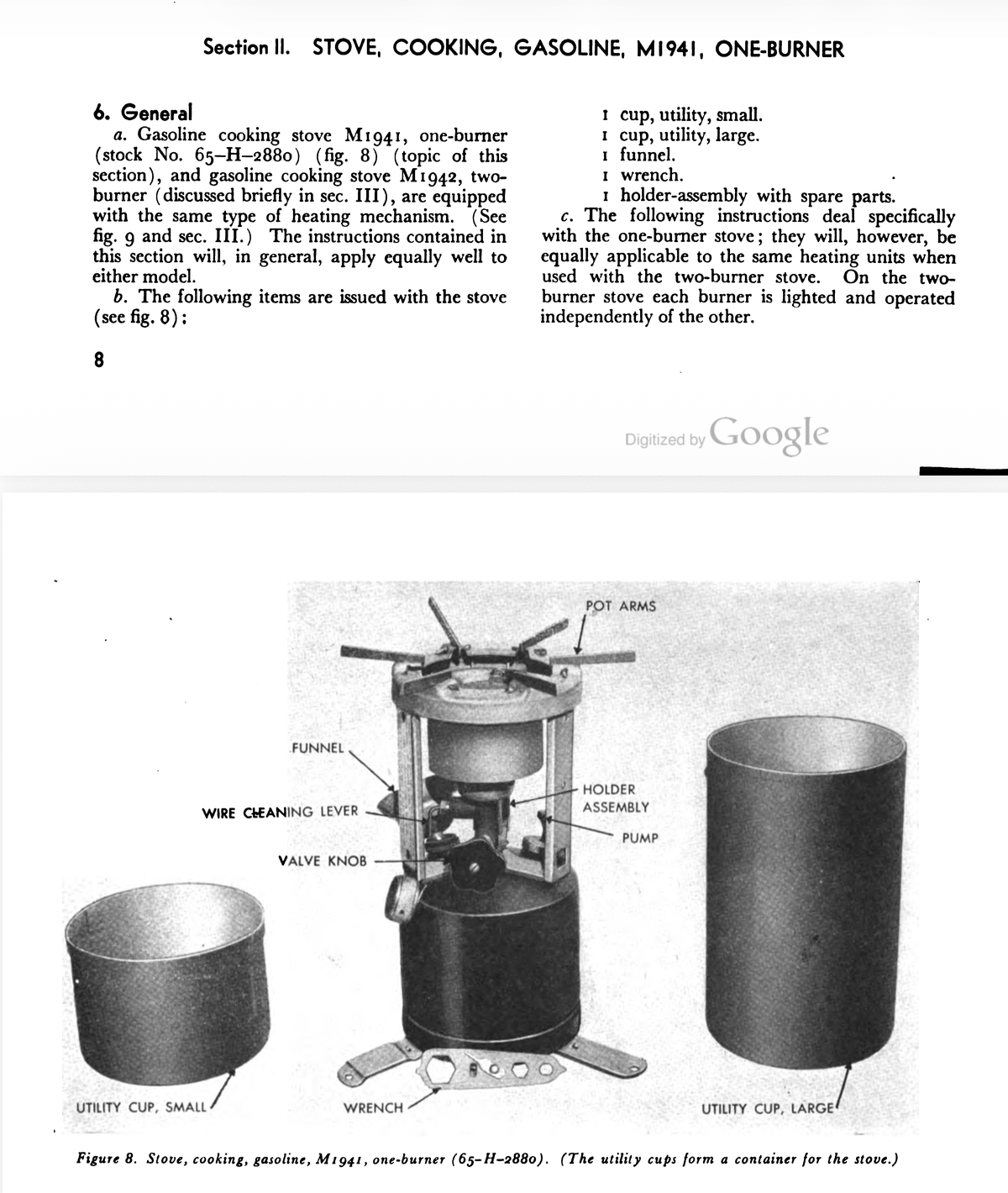
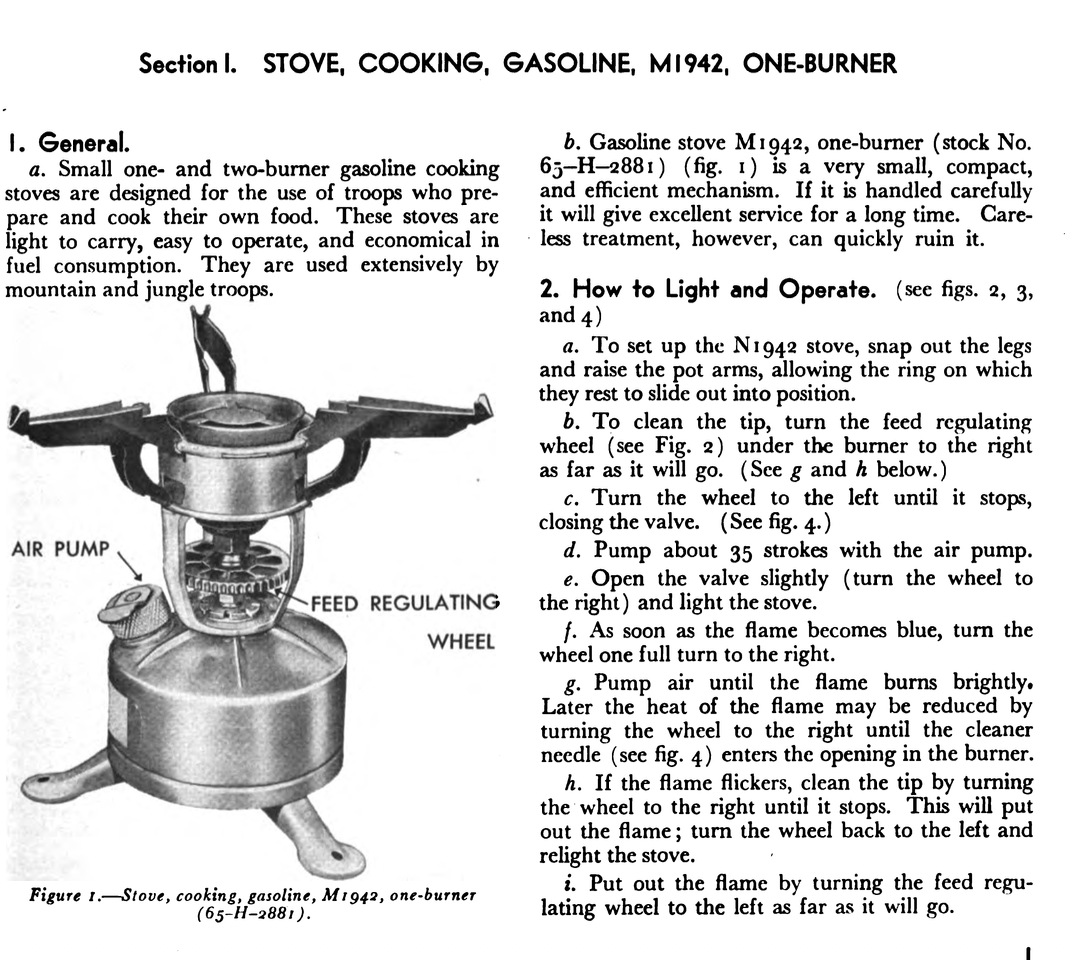
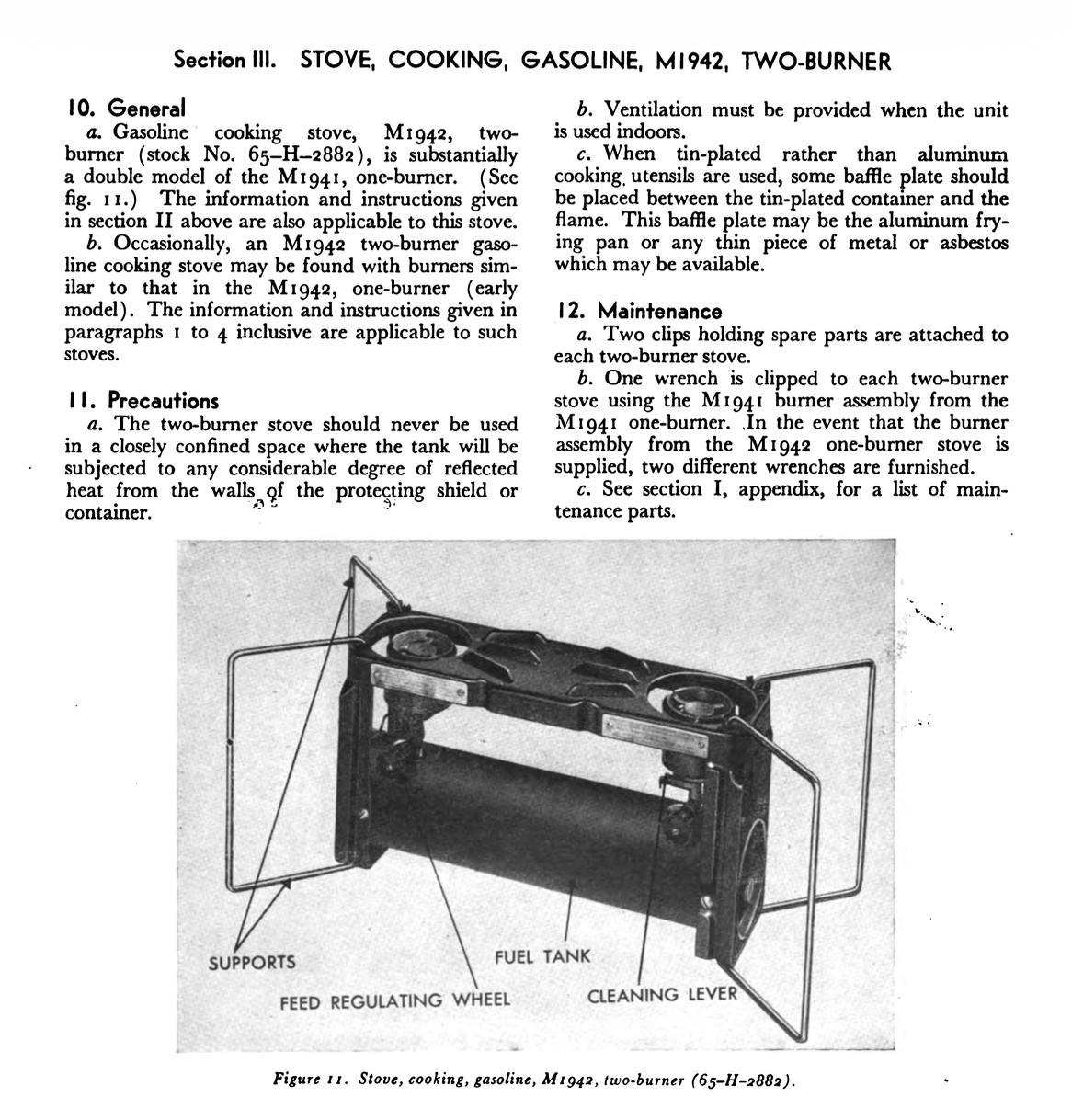
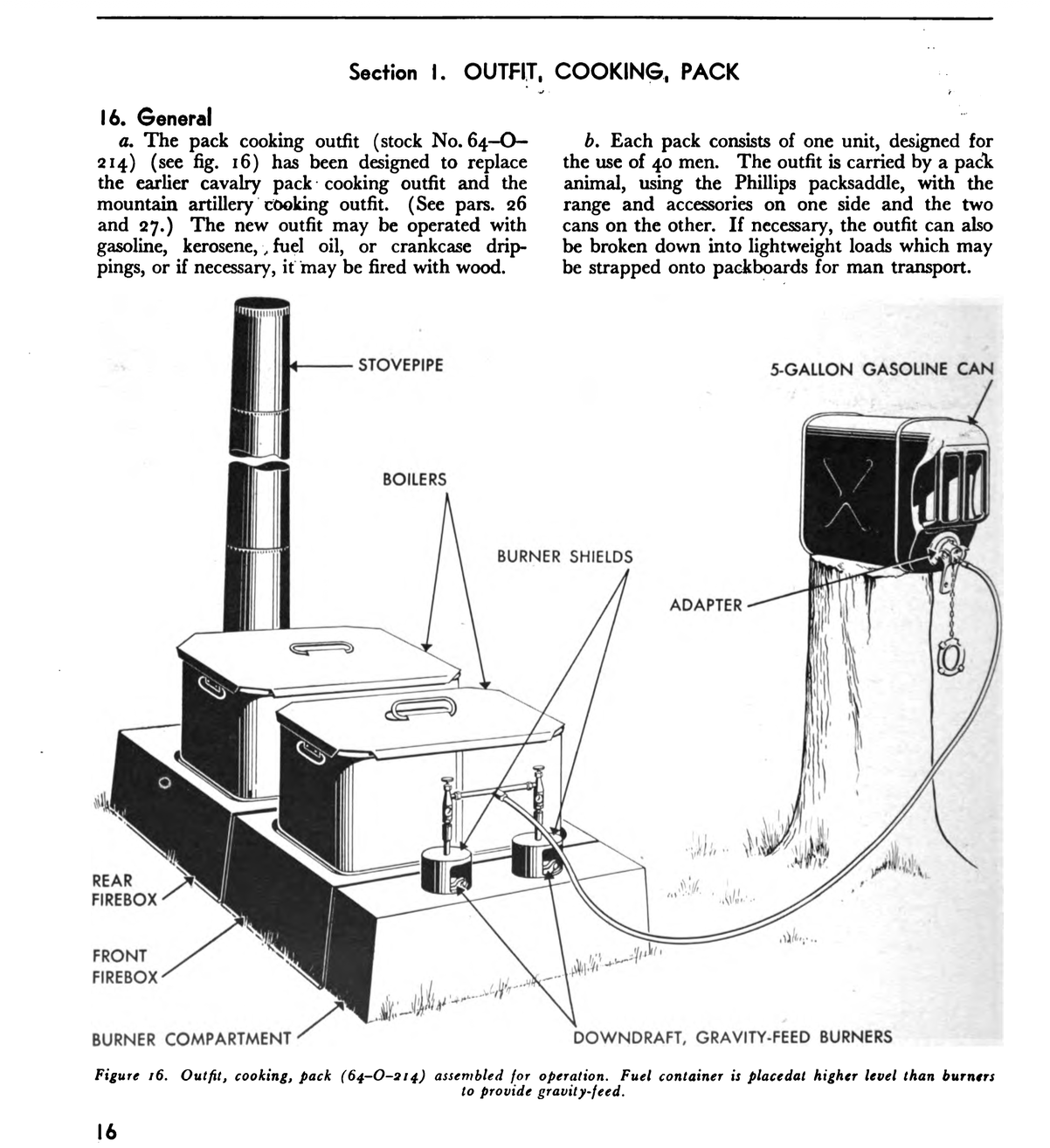
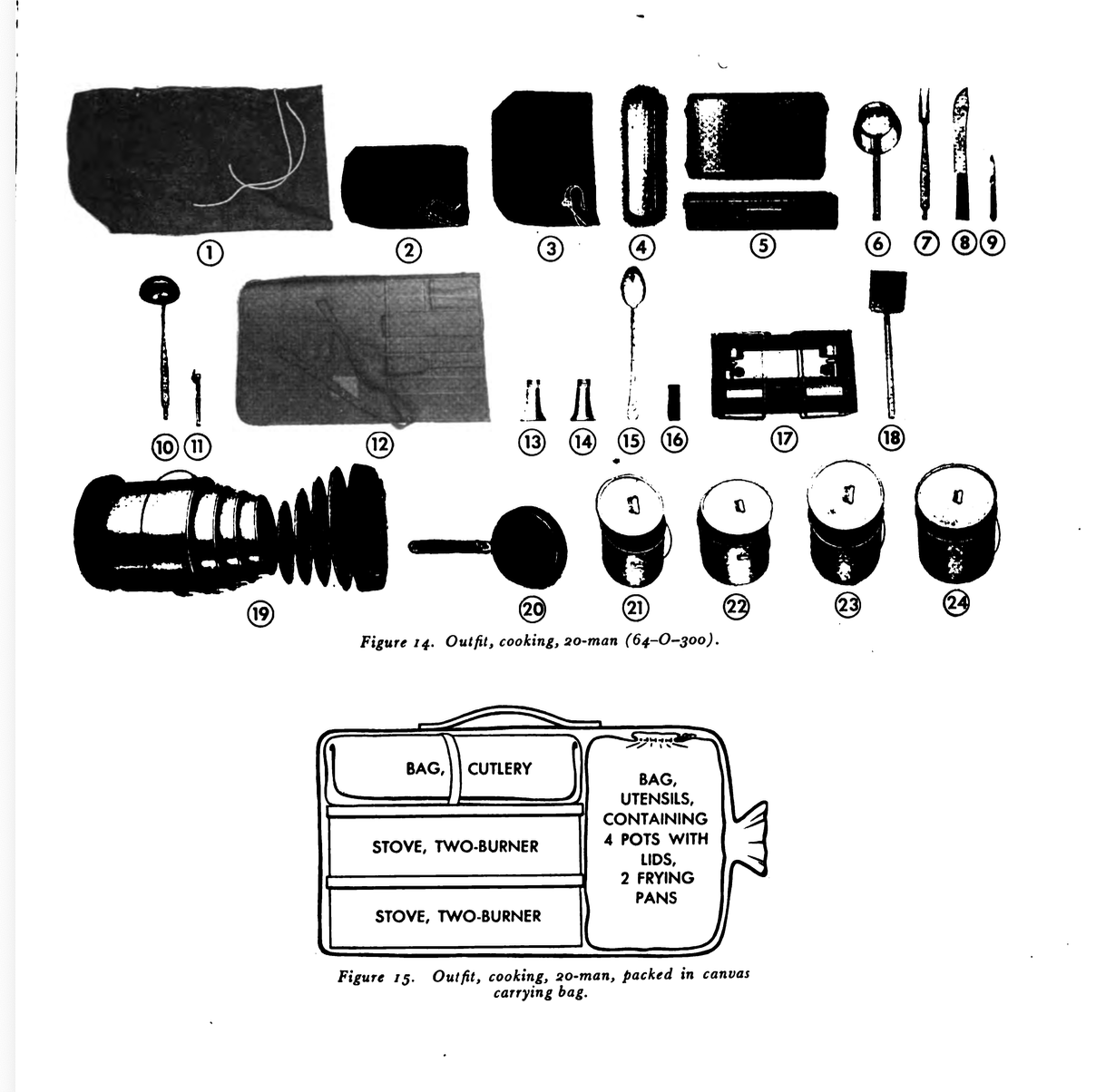
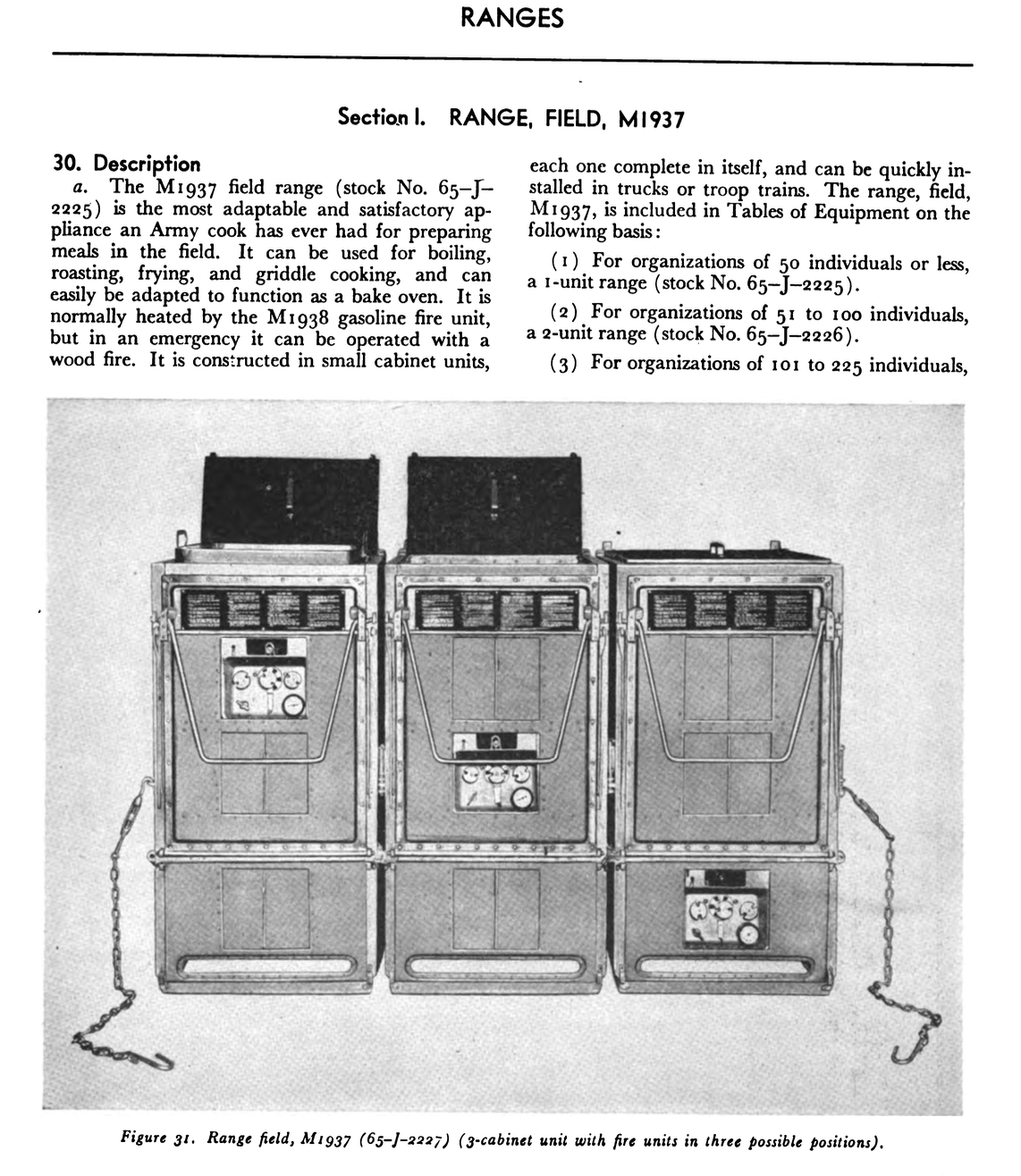
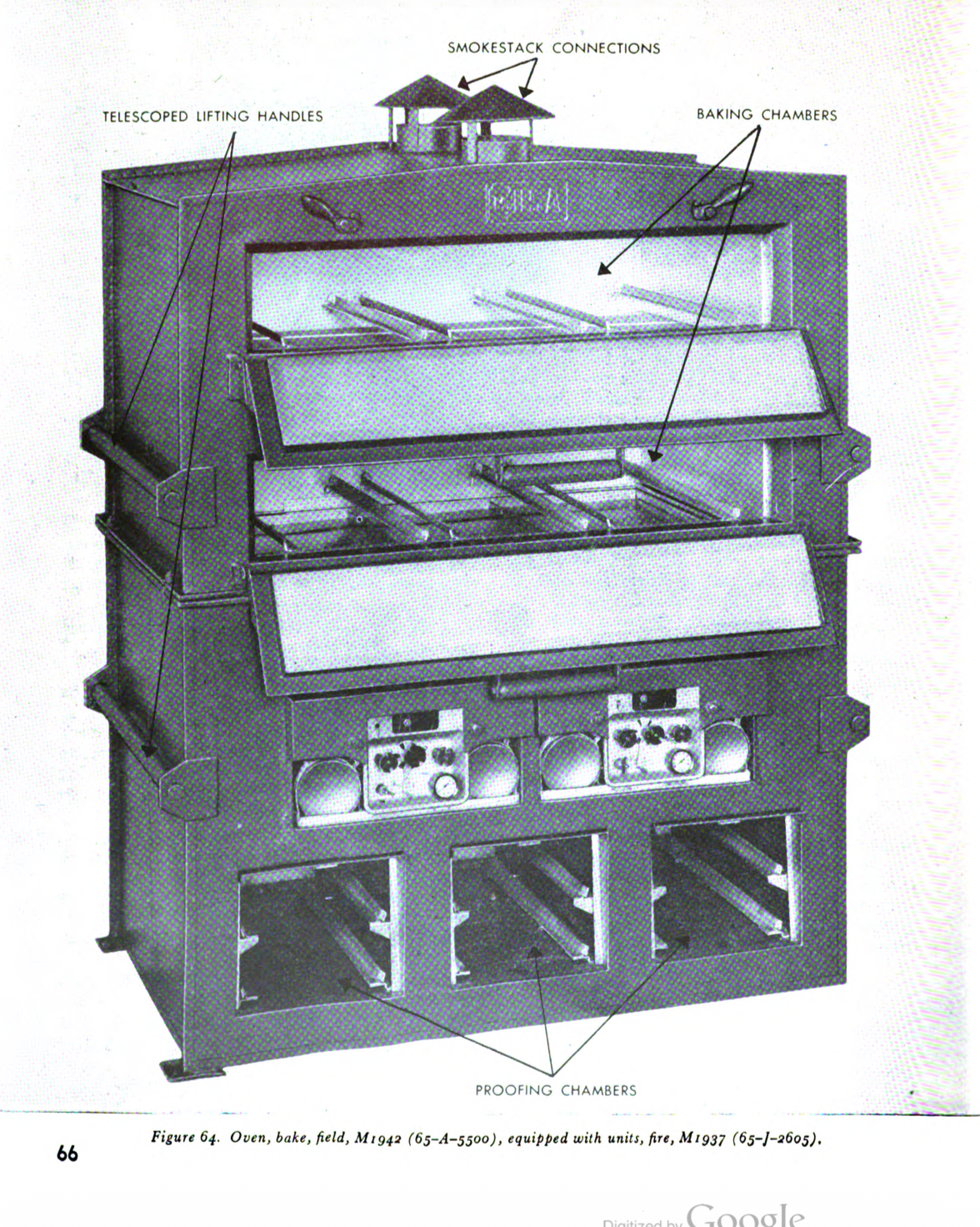
TM 10-400 Stoves, Ranges, Ovens, and Cooking Outfits Nov 1944. | Covers it all, including accessories and burners.
CHAPTER 1. INDIVIDUAL AND SMALL UNIT STOVES AND COOKING OUTFITS
- Section I. Stove, Cooking, Gasoline, M1942, One-Burner
- Section II. Stove, Cooking, Gasoline, M1941, One-Burner
- Section III. Stove, Cooking, Gasoline, M1942, Two-Burner
- Section IV. Outfits, Cooking, Using Gasoline Stoves,
- One- and Two-Burner
CHAPTER 2. COOKING OUTFITS AND STOVE EXPEDIENTS
- Section I. Outfit, Cooking, Pack
- Section II. Outfit, Cooking, Small Detachment
- Section III. Outfits, Cooking, Wood-Burning,
- and Stove Expedients
CHAPTER 3. RANGES
- Section I. Range, Field, M1937
- Section II. Range, Army Field, No. 1
- Section III. Range, Army Field, No. 2
CHAPTER 4. OVENS
- Section I. Oven, Bake, Field, M1942
- Section II. Oven, Bake, Army Field, No. 1
- Section III. Improvised Ovens
CHAPTER 5. STOVE, TENT, M1941, COMPLETE
CHAPTER 6. DEMOLITION OF EQUIPMENT
APPENDIX. LIST OF PARTS
Section I.
All Maintenance Parts for Stoves, Cooking, Gasoline
Section II.
Parts for Mechanical Maintenance of Outfit, Cooking, Pack
(Stock No. 64-0-241)
Section III.
Parts for Mechanical Maintenance of Outfit, Cooking,
Small Detachment (Stock No. 64-0-270)
Section IV.
Initial Issues of Component Parts, Equipment, Accessories,
Utensils, and Spare Parts for Range, Field, M1937
Section V.
Replacement Parts for Range, Field, M1937
Section VI.
Parts for Mechanical Maintenance of Range, Field, M1937
(Stock No. 65-J-2225); Heater, Water, Range, Field, M1937
(Stock No. 65-J-1912); Heater, Immersion Type for Corrugated
Can (Stock No. 65-1911-50); Conversion Set No. 2 (Simplified)
for Unit, Fire, M1937 (Stock No. 65-J-2377)
Section VII.
Range, Army Field, No. 1, Complete with Equipment;
Stock No. 65-B-1090; Range Only, 65-B-1095
Section VIII.
Range, Army Field, No. 2, Complete with Equipment;
Stock No. 65-C-1065; Range Only, 65-C-1070
Section IX.
Components and Accessories for Outfit, Baking,
Field, M1942, Stock No. 65-A-5000
Section X.
Parts for Mechanical Maintenance of Outfit, Baking,
Field, M1942 (Stock No. 65-A-5000), Consisting of Two
Ovens, Bake, Field, M1942 (Stock No. 65-A-5500)
with Equipment and Accessories
Section XI.
Parts for Mechanical Maintenance of Burner, Pot Type,
Oven, Bake, Field, M1942 (Stock No. 65-A-5040)
Section XII.
Oven, Bake, Army Field, No. 1; Complete with Component
Parts, Equipment, Accessories, and Spare Parts,
Stock No. 65-A-1235 (Oven Only, Stock No. 65-A-1240)
Section XIII.
Parts for Mechanical Maintenance of Burner, Oil,
Stove, Tent, M1941 (Stock No. 65-N-1375)
Pigeons
TM 11-410 The Homing Pigeon Jan 1945 – A technical manual for using Homing Pigeons.
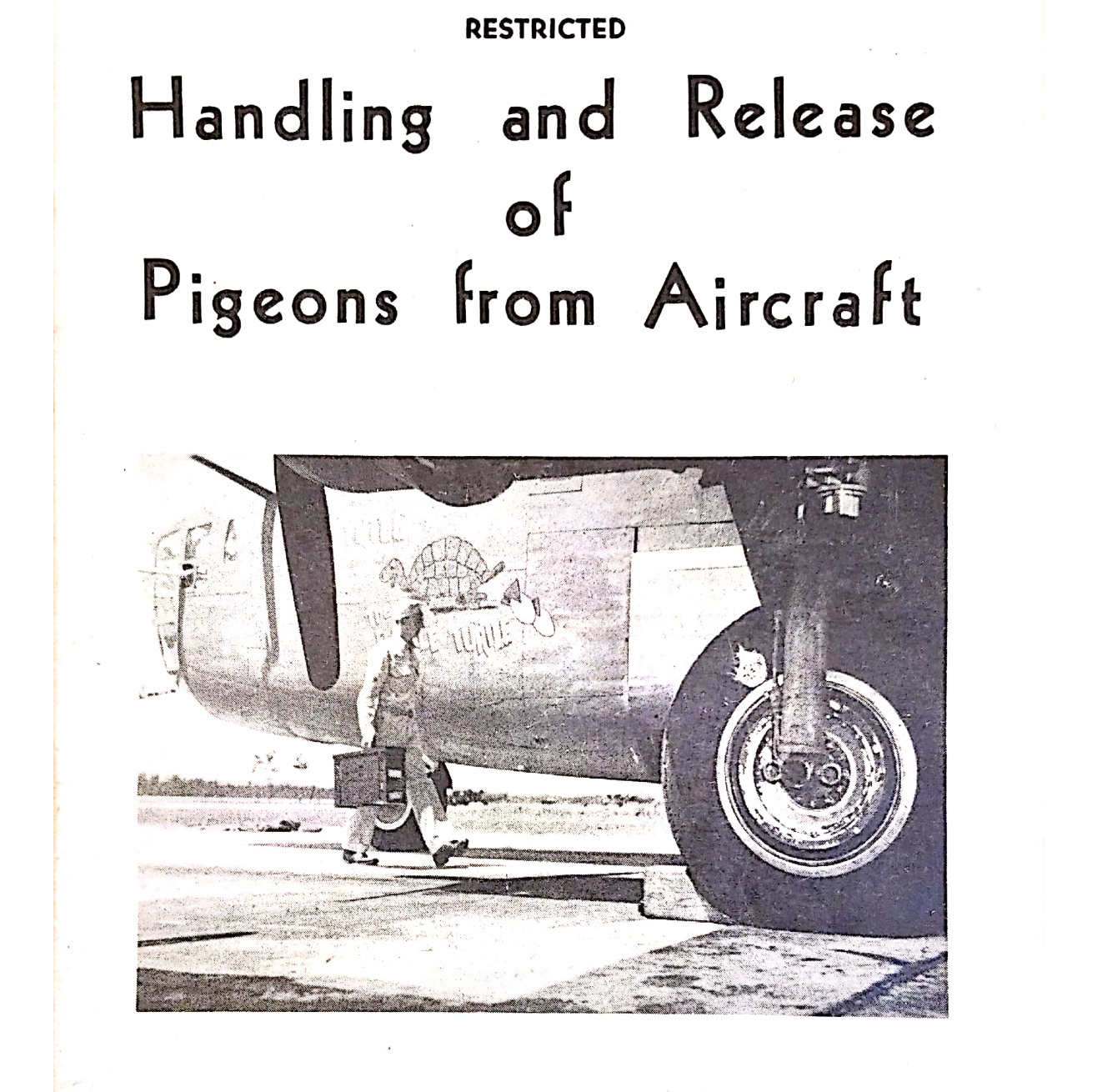
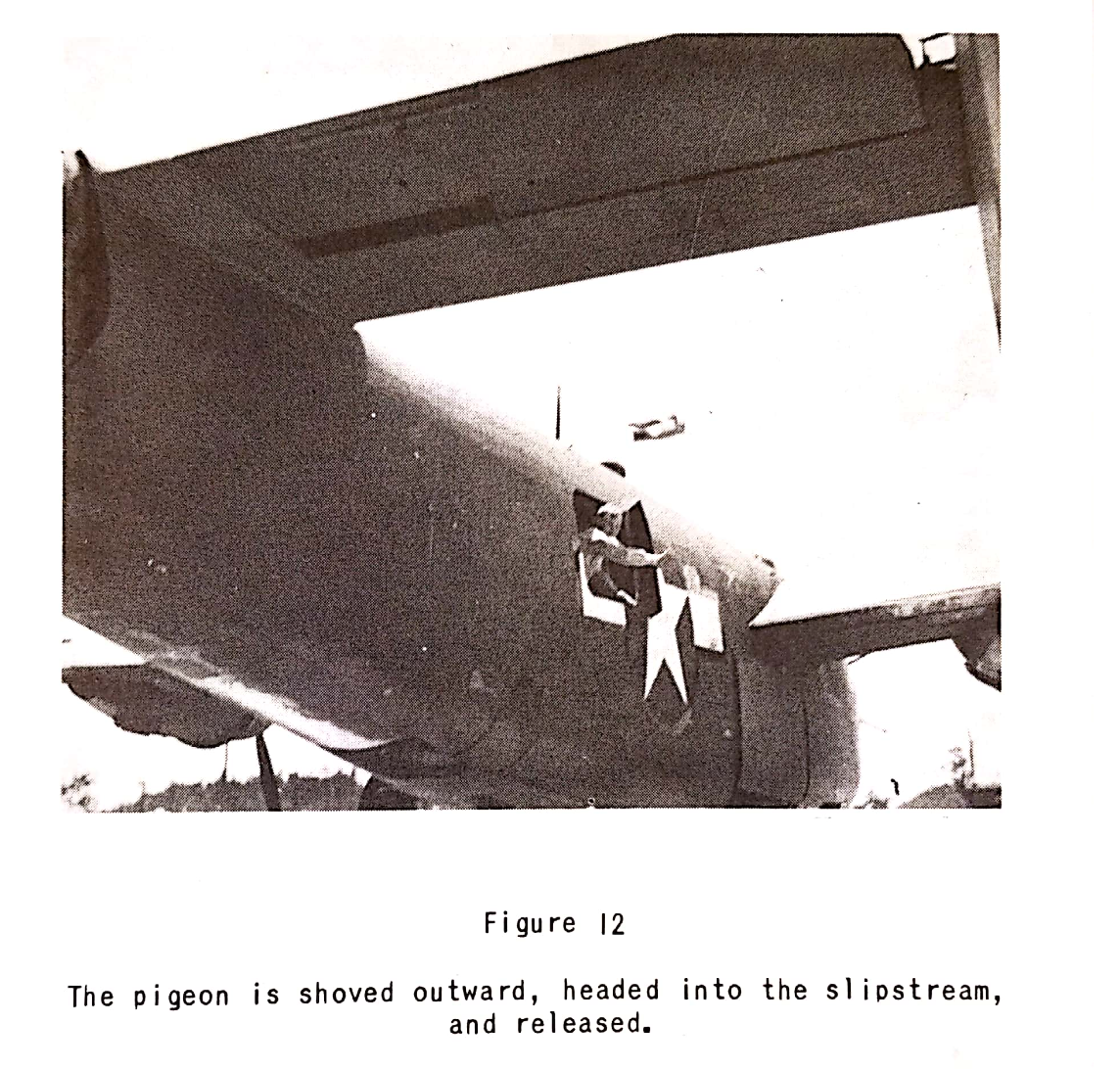
Pigeons can also be released from aircraft: See The Handling and Release of Pigeons from Aircraft.
Some Pigeons were raised from existing Signal Corps Pigeon stock, while others were donated, as this article indicates: Tuna Clubs Pigeons Enlist in the Army New Jersey Feb 1943.
For a history of Pigeons in WW1, see: Feathers of Honor.

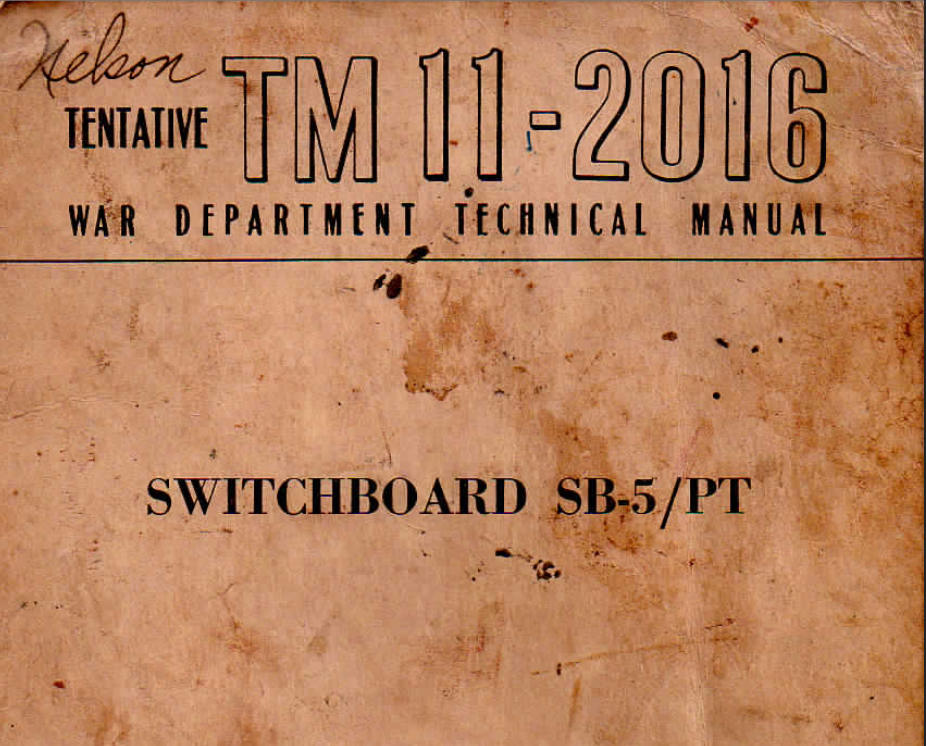
TM 11-2016 Switchboard SB-5/PT April 1944 – A lightweight 6-drop switchboard.
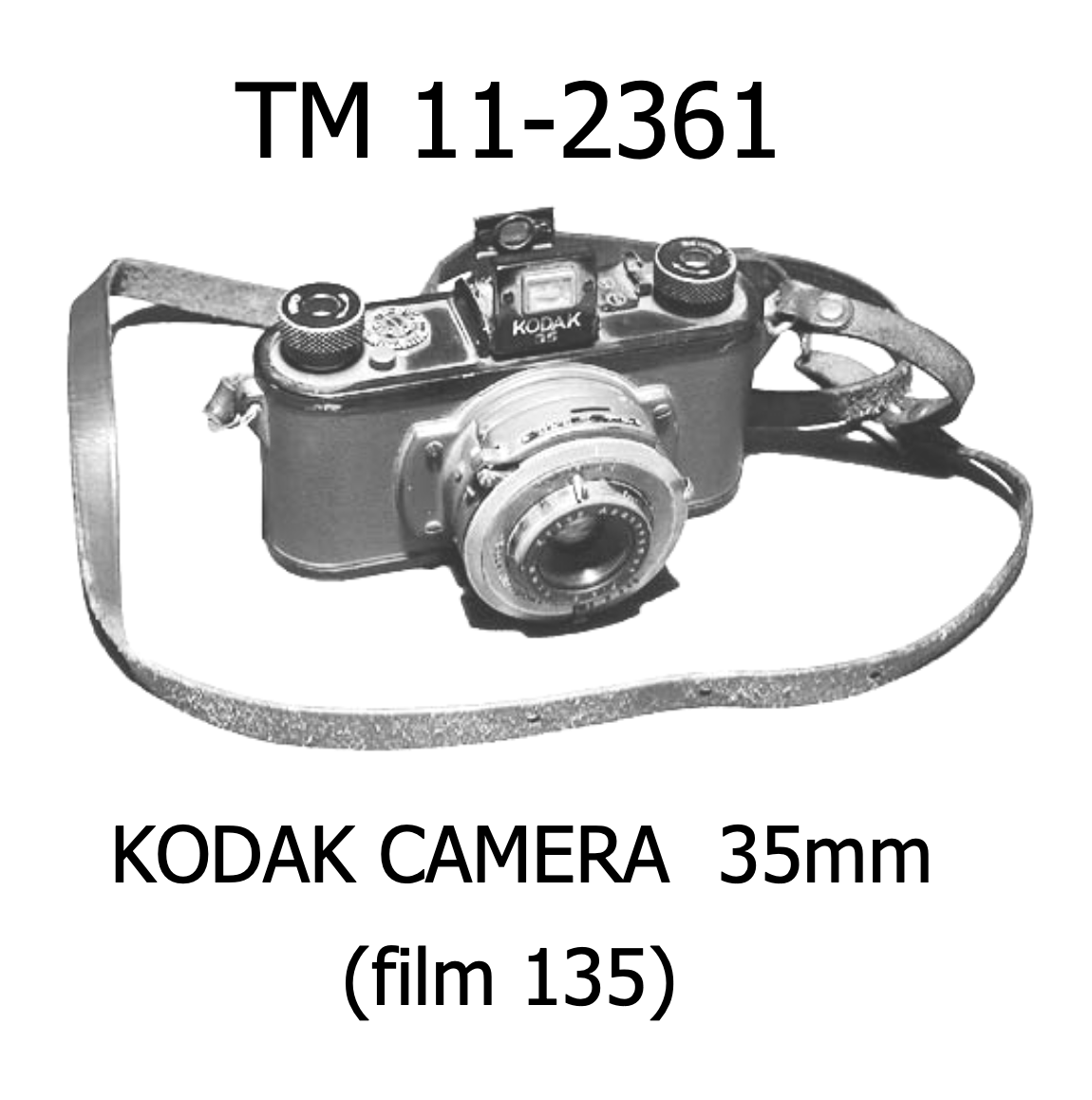
TM 11-2361 Camera PH-324 Kodak 35mm Camera – Outlines how to use the camera. More information on other cameras in WW2 see: Cameras for the World War II Reenactor
Cooking
TM 10-405 The Army Cook: 1941. This pamphlet supersedes TM210-152, December 31, 1935.
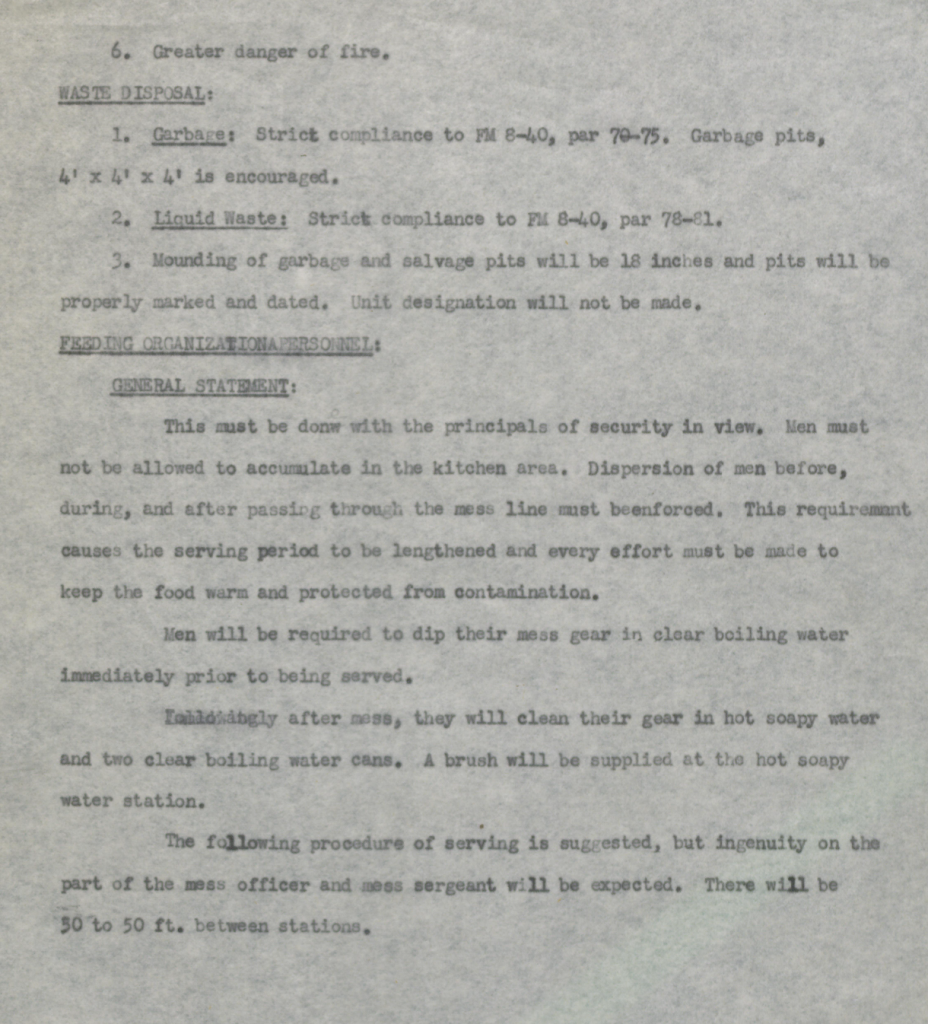
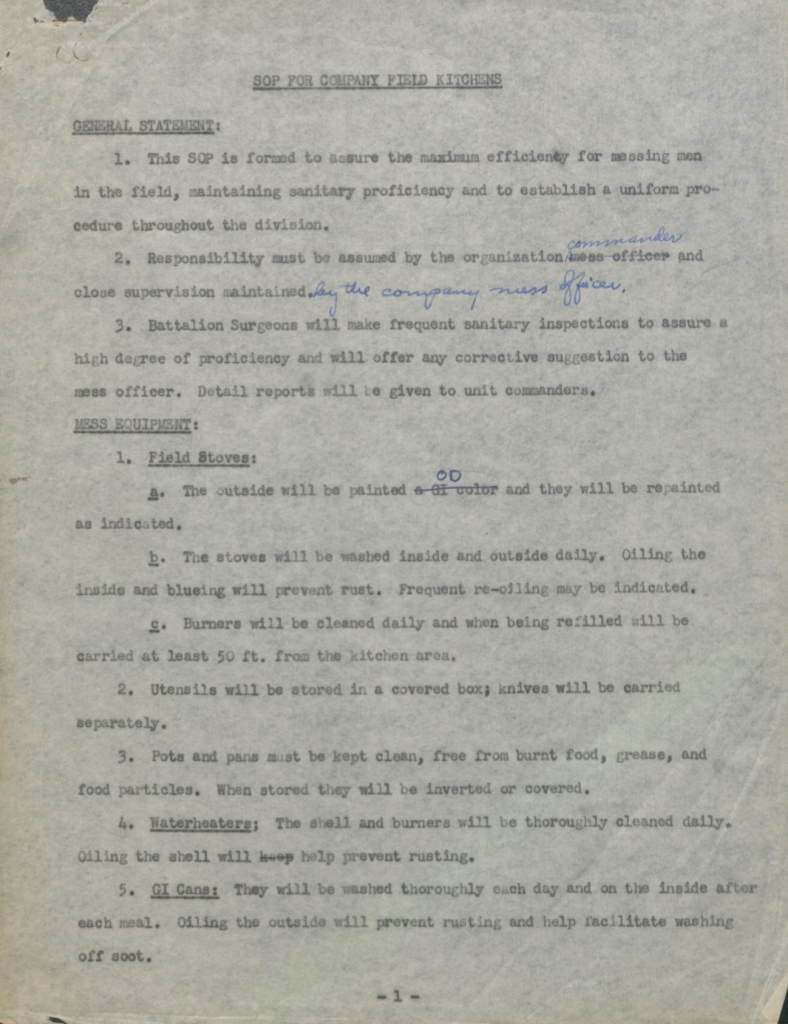
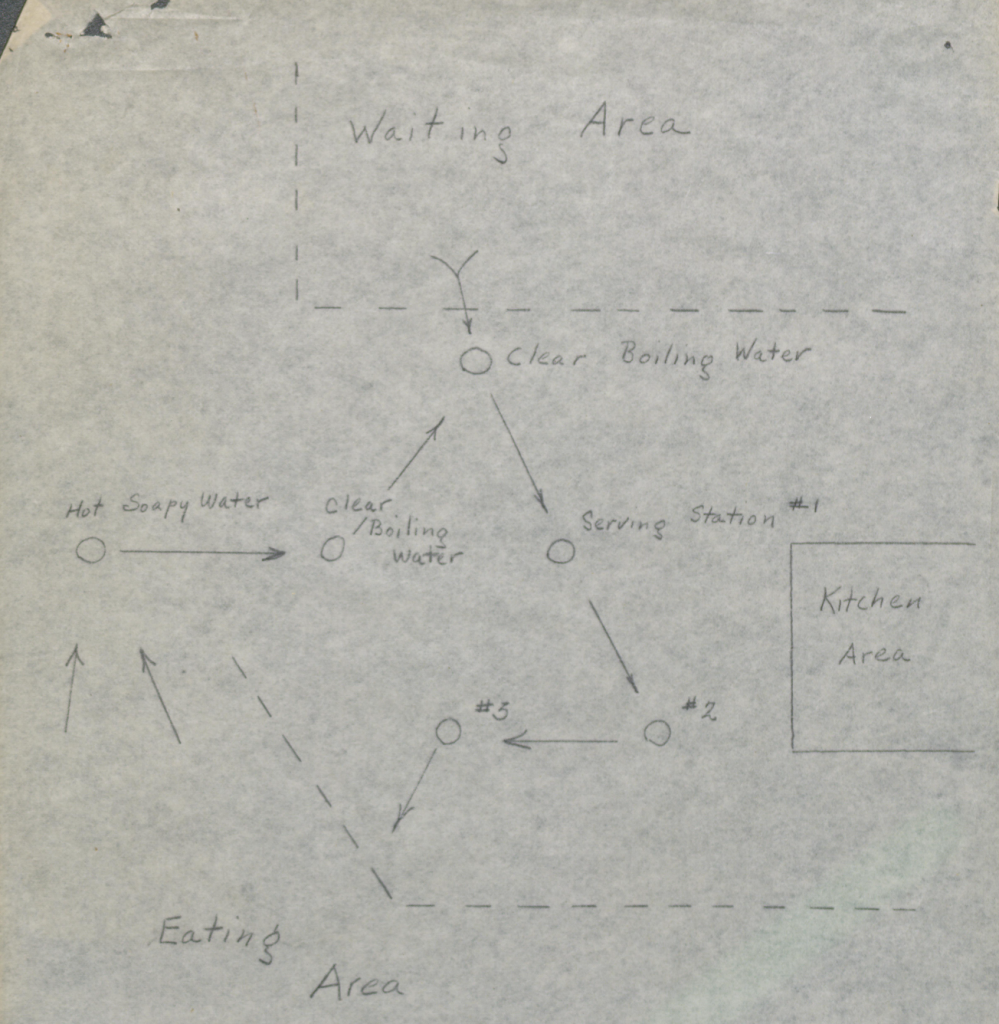
While not a part of the manual, I included a 4-page document on the Procedure (SOP) for Company Field Kitchens. Date unknown. It’s essentially a “Cliff Notes” version of how to set up a field kitchen.
One interesting note is that the Mess Sgt was to carry into the field –
- Food Handler Certification
- FM 8-40, Field Sanitation Manual
- Master Menu Book
- Army Cook Book, probably TM 10-405 The Army Cook.

Feldkochbuch fur Warme Lander | 1940 | 1941 | 1942 – German Army field cookbook. Note that cookbooks may contain Swastikas and other potentially offensive material. The website author publishes them for purely historical and educational reasons and thinks these ideas belong exactly where they are, the dustbin of history.
Manual of Military Cooking and Dietary 1933 London – British Army cookbook. Note that the book may contain references to imperialism or empire-building. The website author publishes them for purely historical and educational reasons and thinks these ideas should remain in the trash can of history. People have a right to self-determination.
Religious
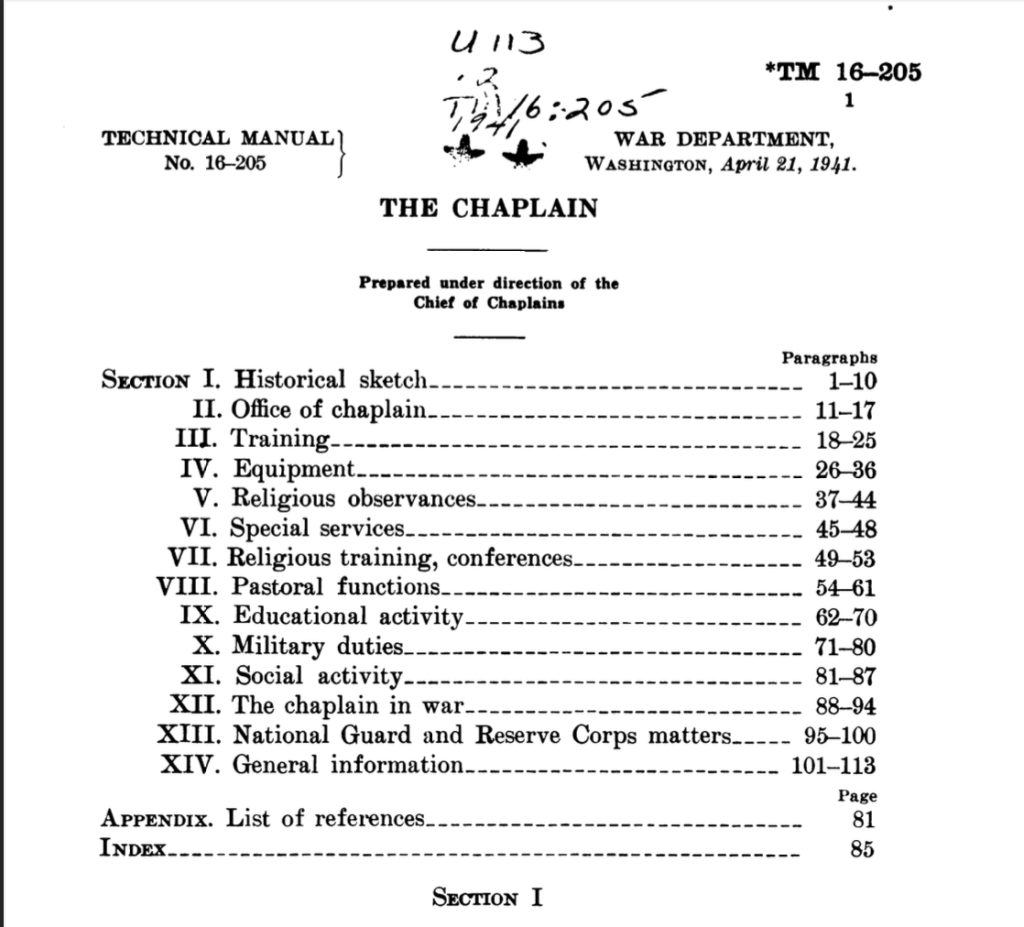
TM 16-205 The Chaplain 1941 | Discusses how to perform chaplain services and duties.
For a history of the chaplain technical manual, refer to: THE OPERATIONAL, SOCIAL, AND RELIGIOUS INFLUENCES UPON THE ARMY CHAPLAIN FIELD MANUAL, 1926-1952 by Robert Nay.
Administrative
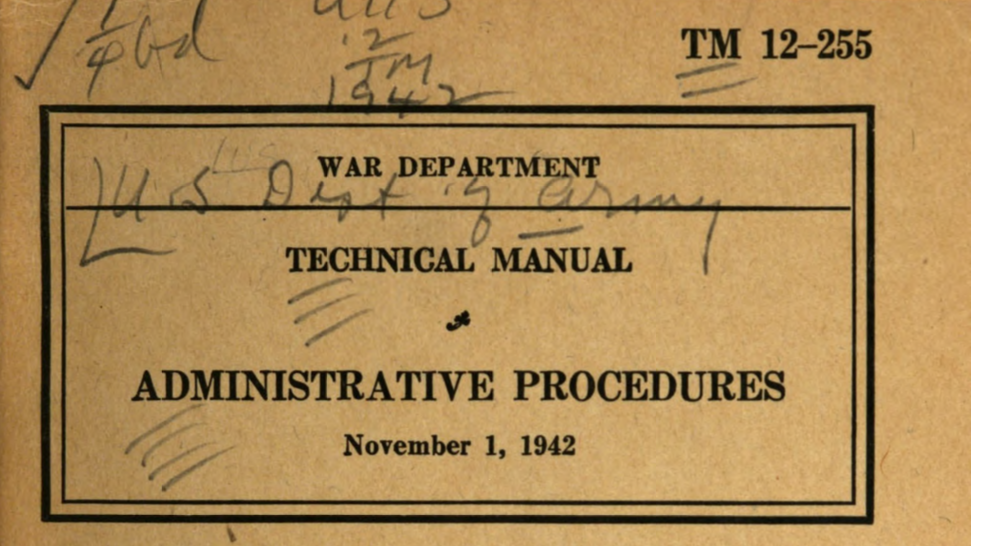
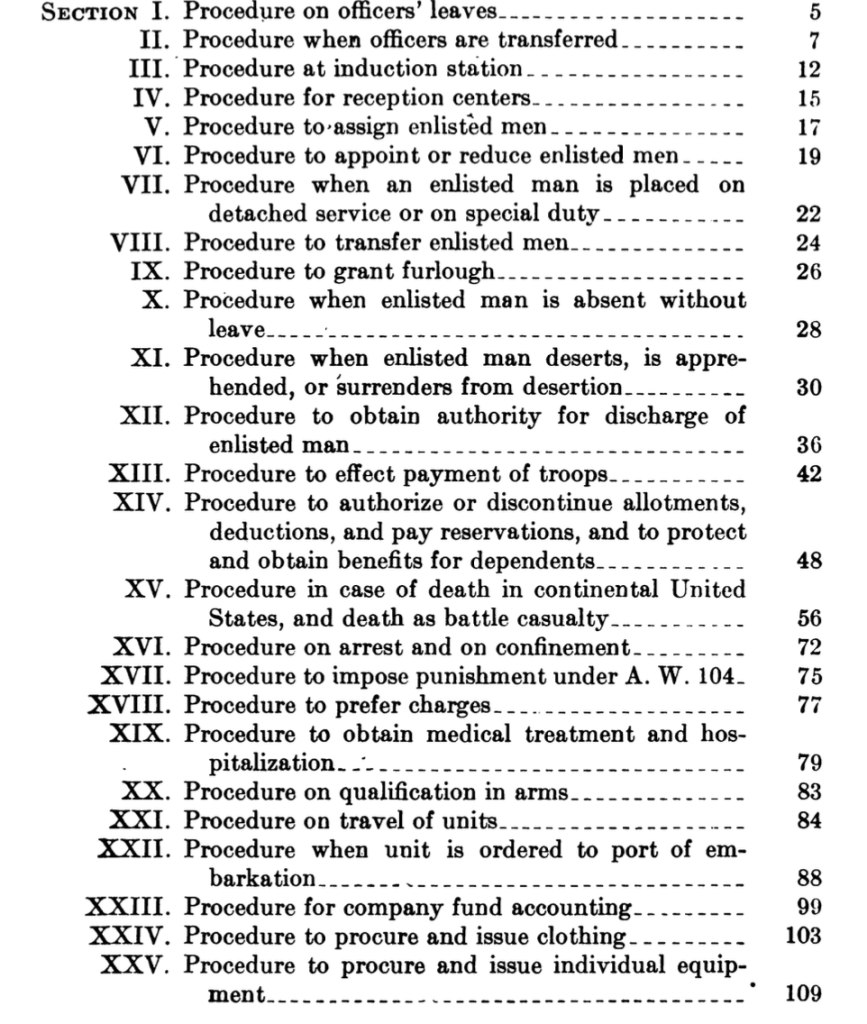
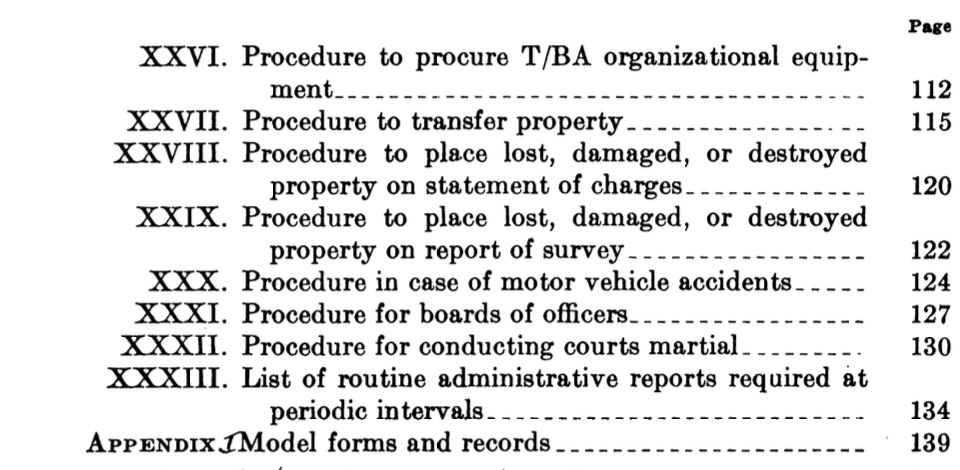
TM 12-255: Administrative Procedures Nov 1st 1942. Outlines various procedures to deal with different kinds of issues like transfers, leaves, induction, reception, detachment, discharge, pay, death, arrest, punishment, medical treatment, accounting, issuing of clothing and equipment, procurement, property transfer, lost or damaged property, vehicle accidents, courts-martial and many more! For some notes and problems on administrating a front-line infantry regiment, see this report on the 318th Infantry Regiment by Capt Louis Pickering dated Sept 2nd 1944.
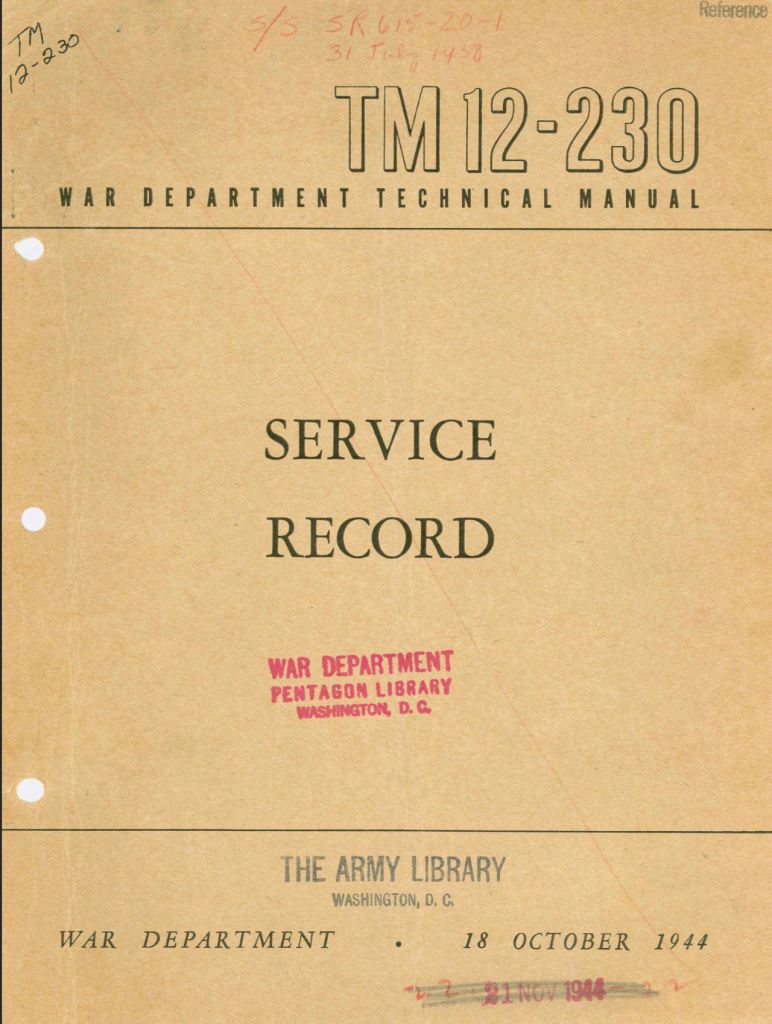
TM 12-230 Service Record – Oct 18th, 1944. Outlines how to fill out the service record. A supplement to AR 345-125.
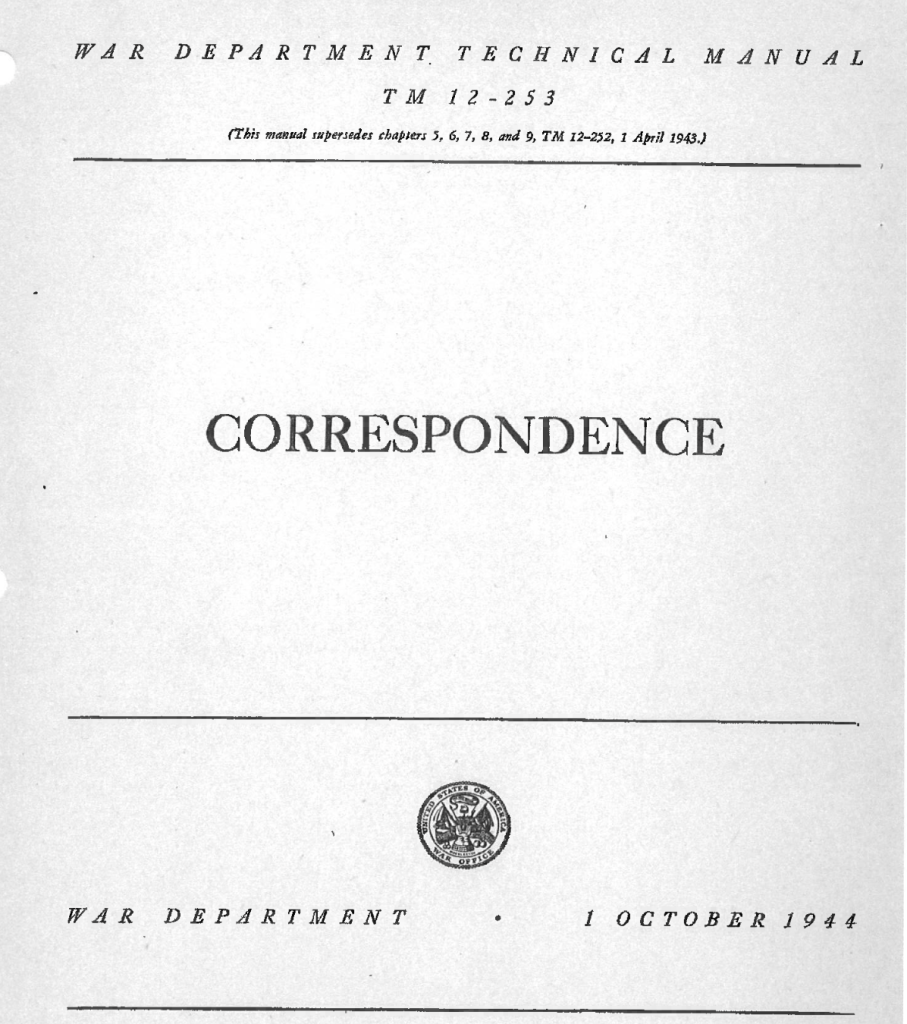
TM 12-253-CORRESPONDENCE – Oct 1st 1944. Explains how to write and fold letters in accordance with the preferred military style. Includes a style and grammar guide and numerous examples.
Signal Corps
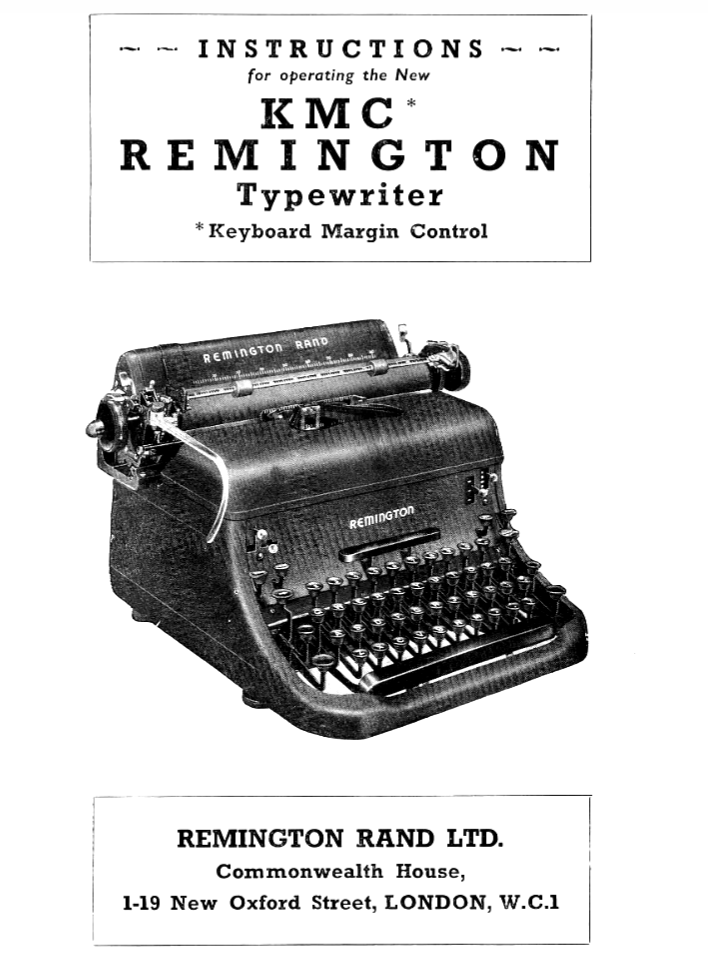
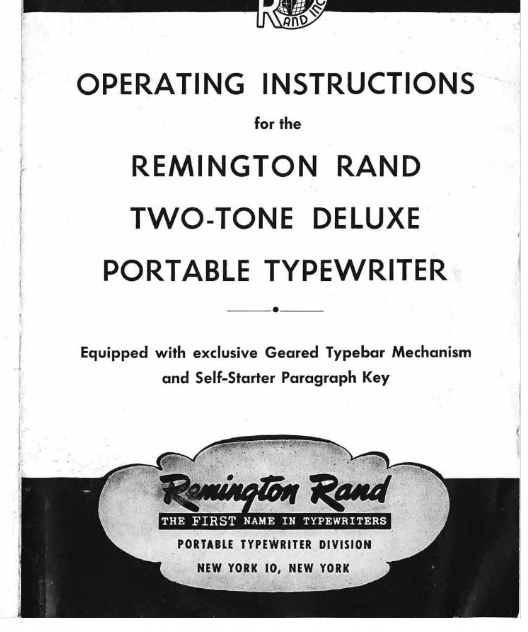
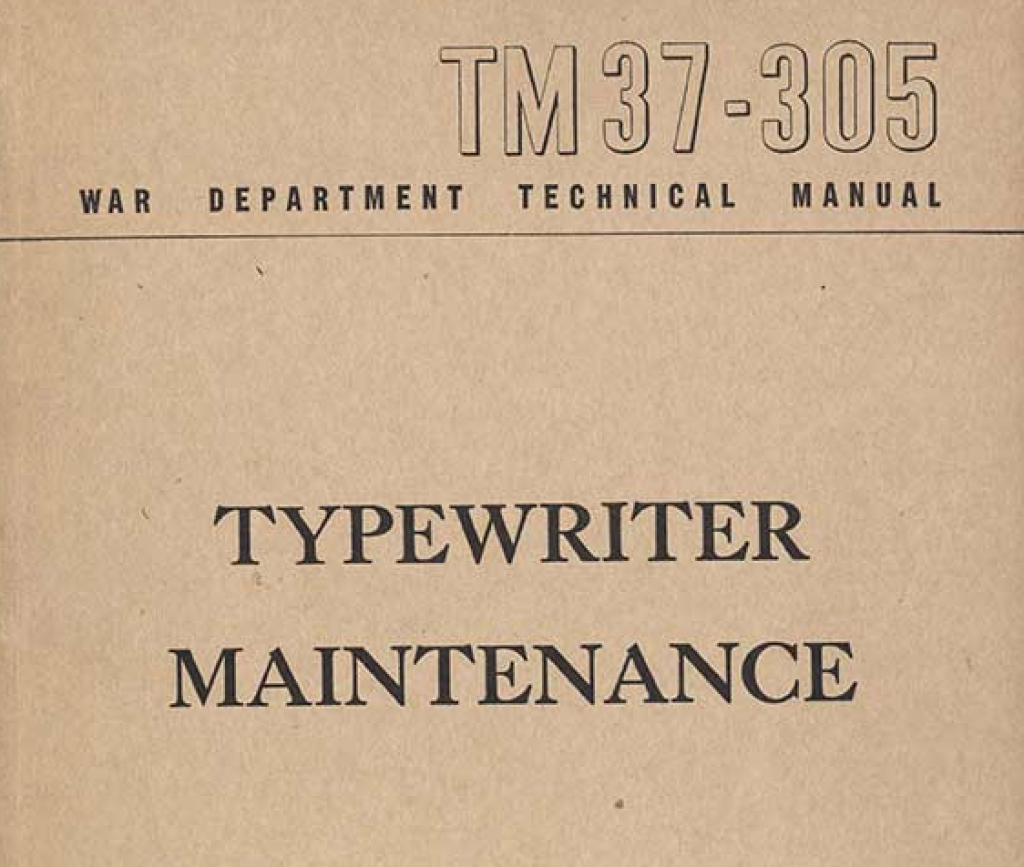
TM 37-305 Typewriter Maintenance Nov 1944 – A zip file that contains images of the manual as well as an HTML document with the text.
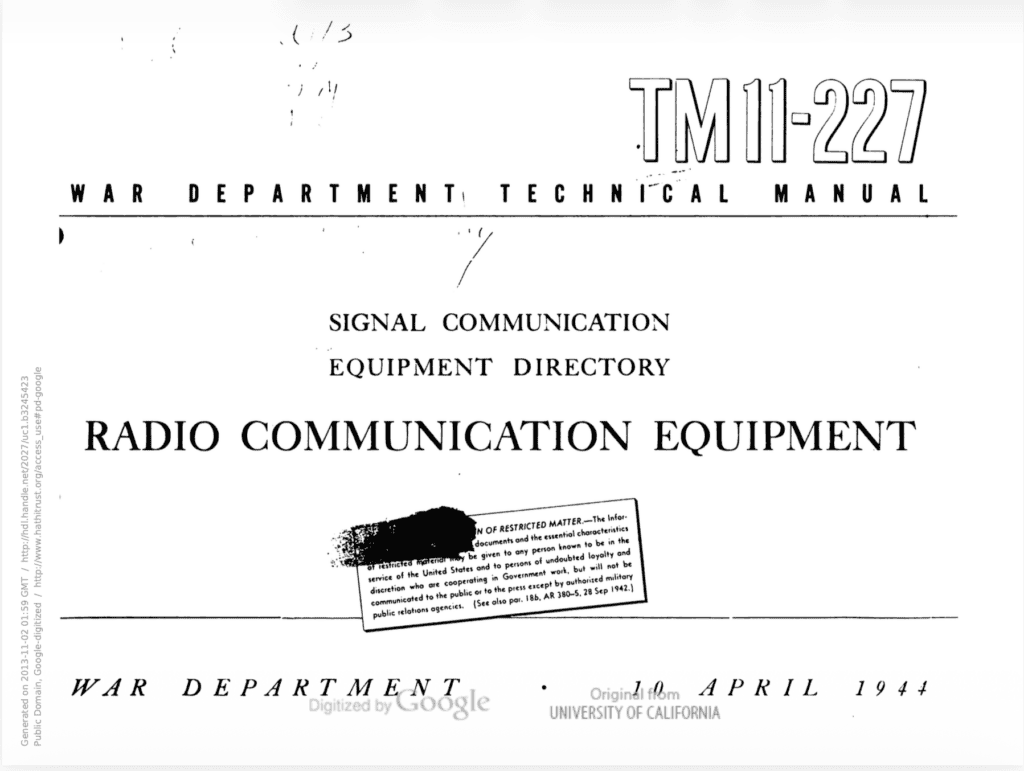
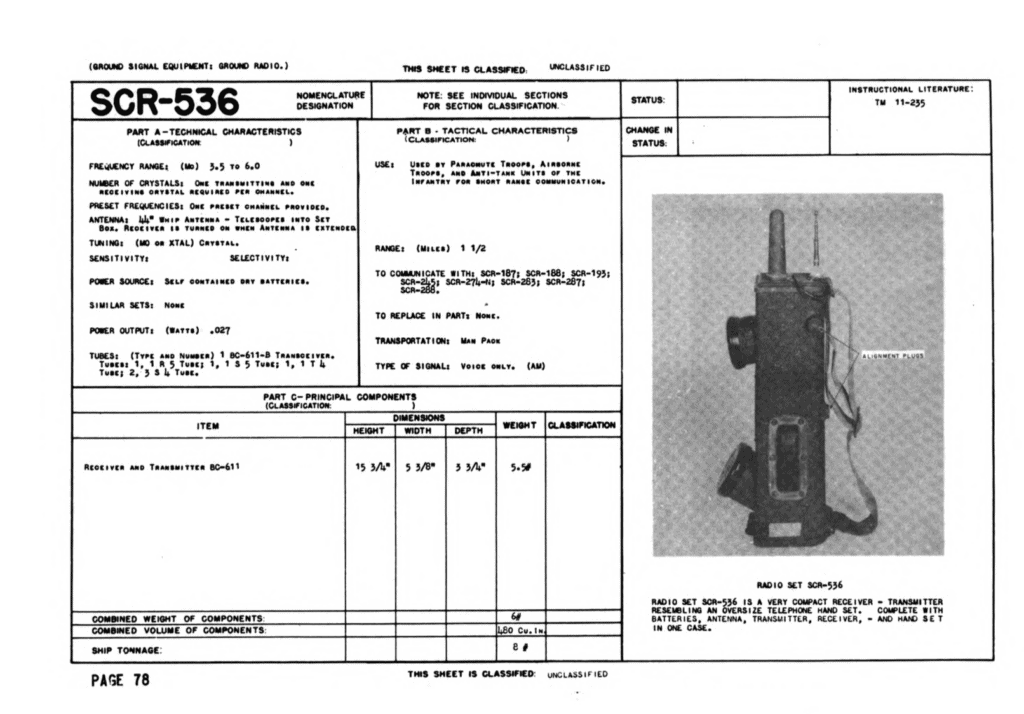
TM 11-227 Signal Communication Equipment Directory Radio Communication Equipment April 1944 – A listing of available radio equipment available to the Army, including SCR-300, SCR-536, mine sweeping units, etc. Anything that uses a radio device for communicating is listed.
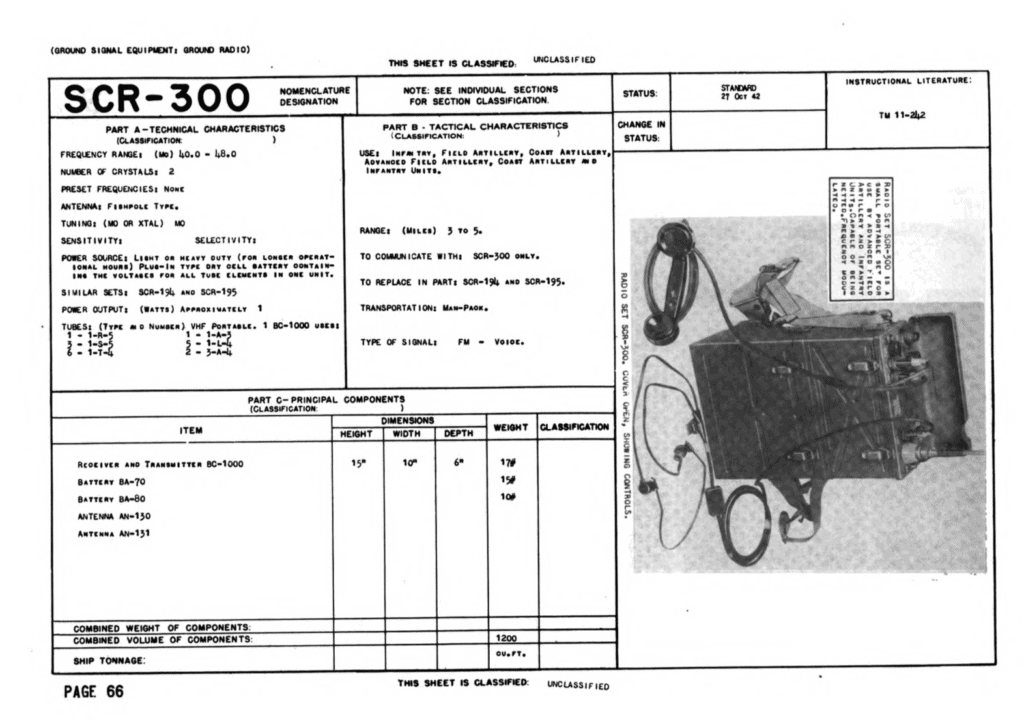
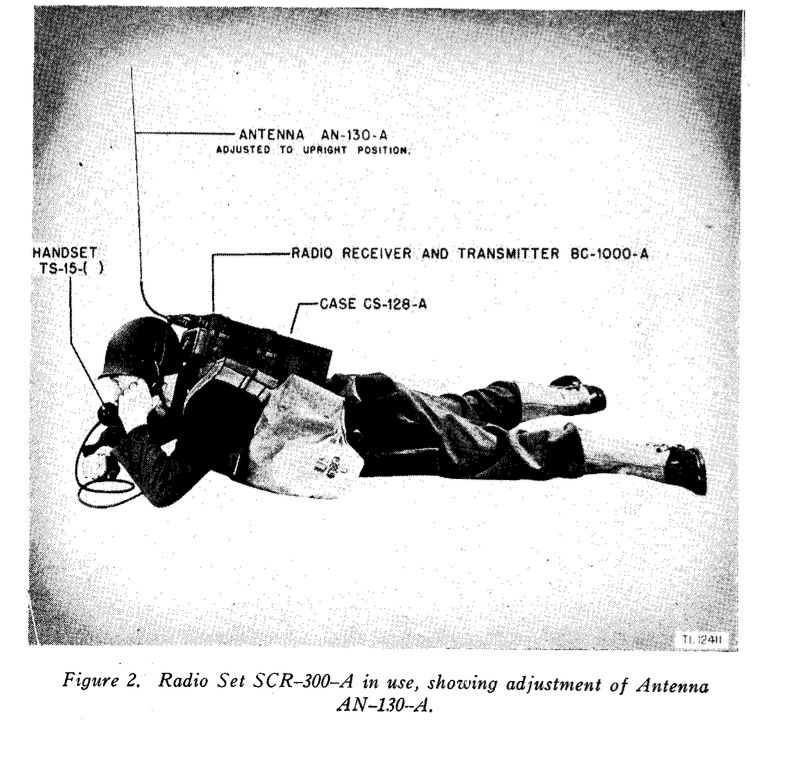
TM 11-242 Radio Set SCR-300a Feb 1945 – The manual for the SCR-300 radio set. This radio set could not speak to the SCR-536 / BC-611 radio set.
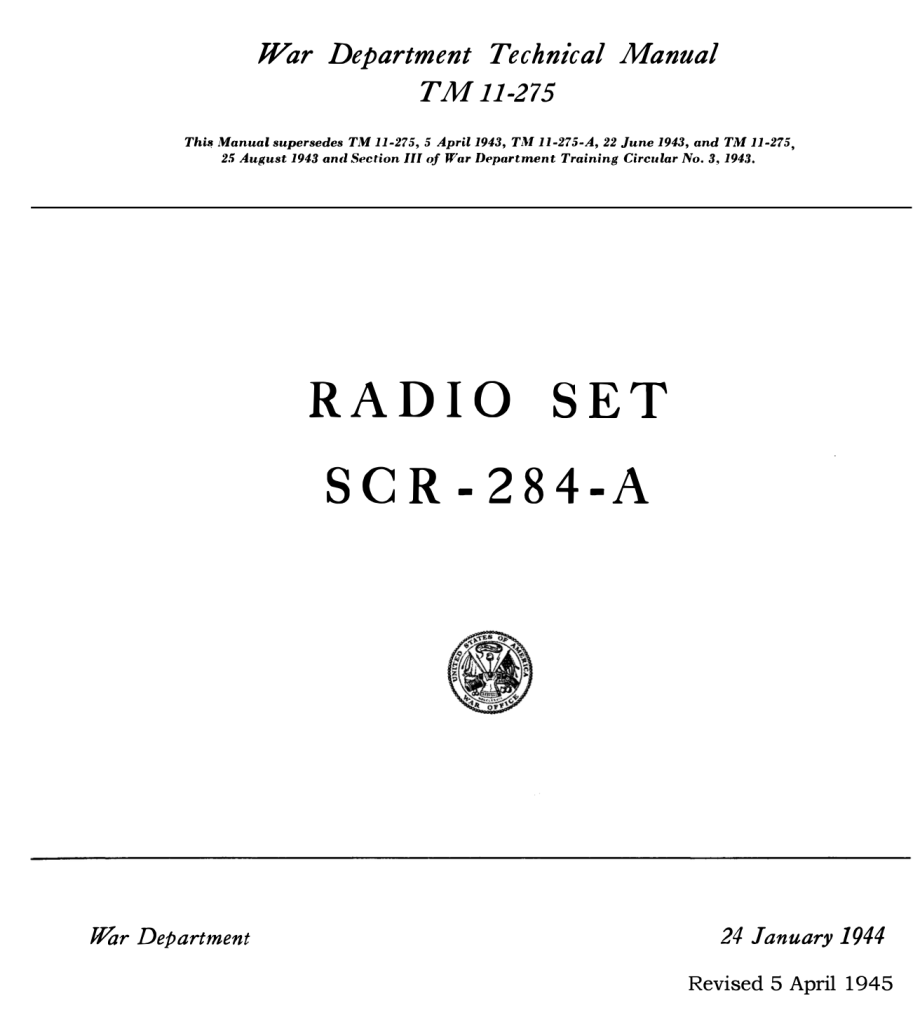
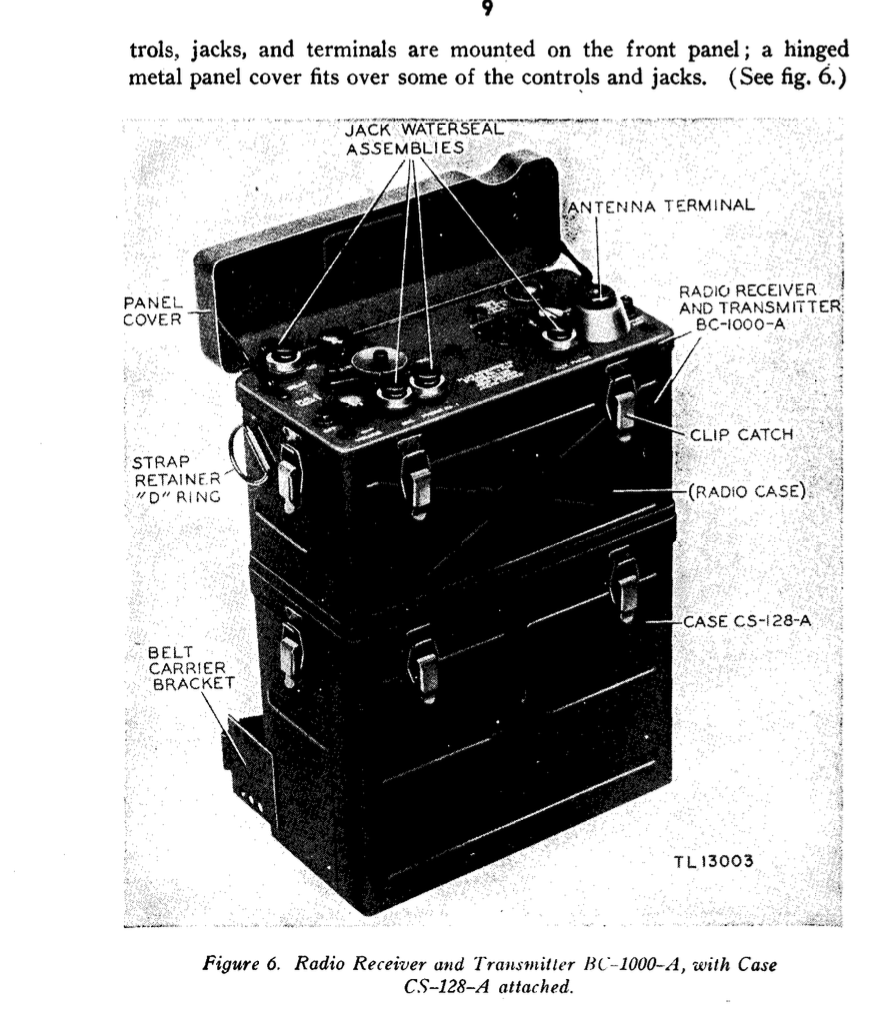
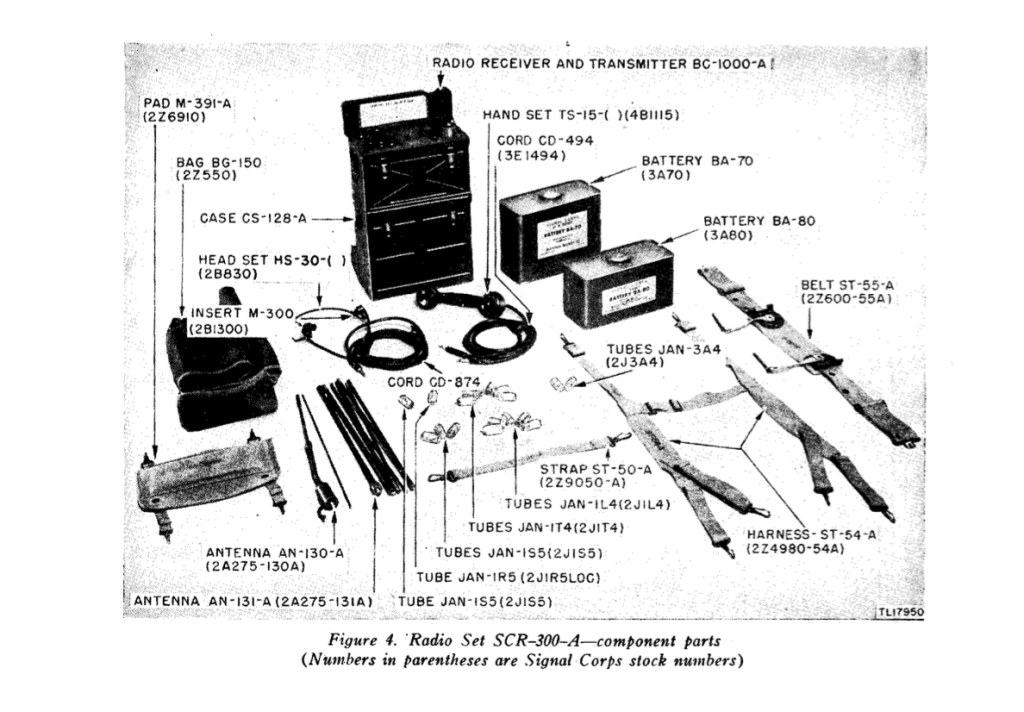
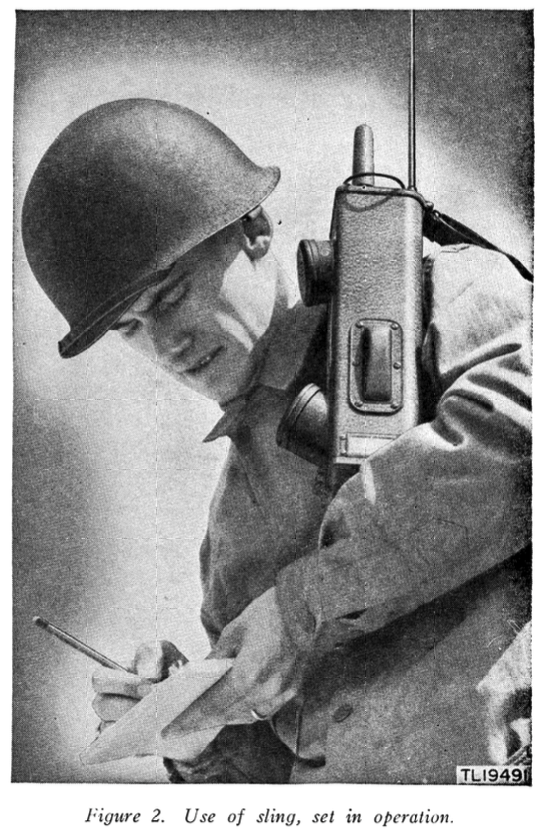
TM 11-235 Radio Sets SCR-536a through f May 1945 – The famous “Handy-talkie”. This unit could not work with the BC-611/SCR-300 radio units. There are only minor differences in circuits and components among the variants. The exception is SCR-536g which provides jacks at the bottom for a headphone/mic unit (which starts to make it similar to the Korean war era PRC-6).
Interestingly, for bad weather, it recommends covering the unit with the small protective arms covers placed over rifles (ie those green waterproof bags).
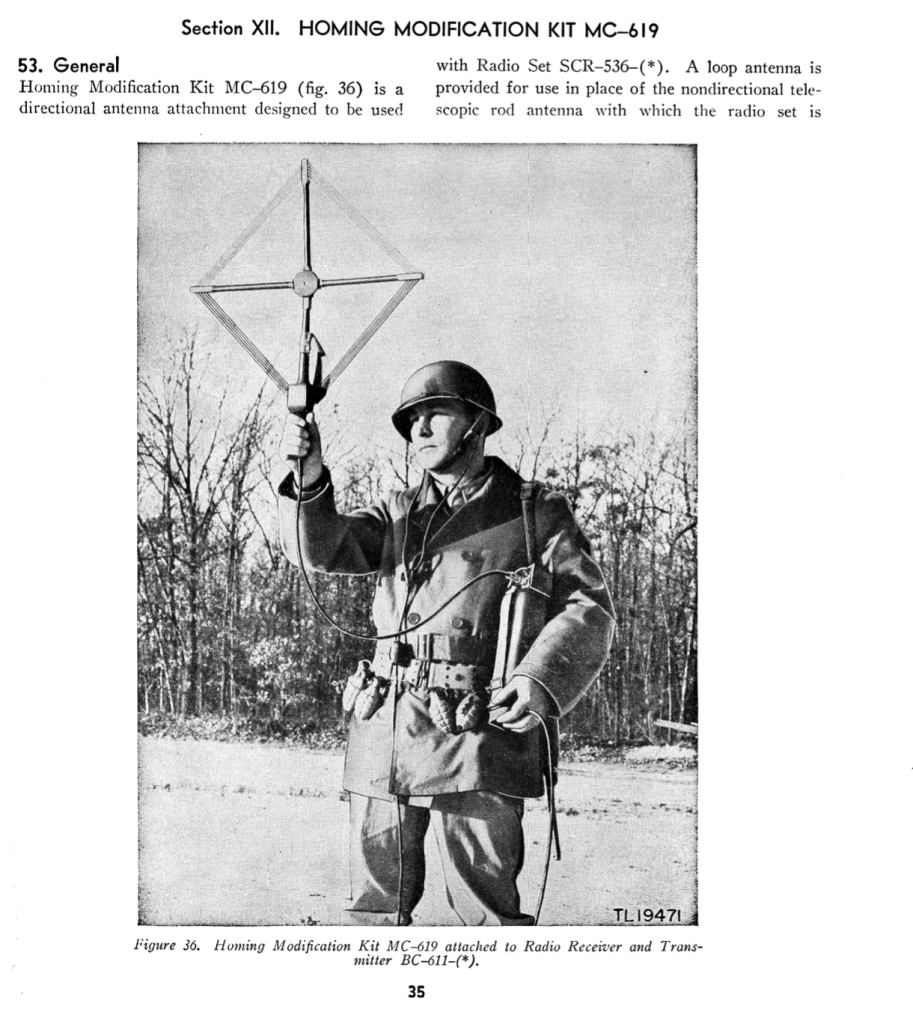
The unit also has the Homing Modification Kit MC-619 accessory unit. This helps to home in on a transmission and find it.

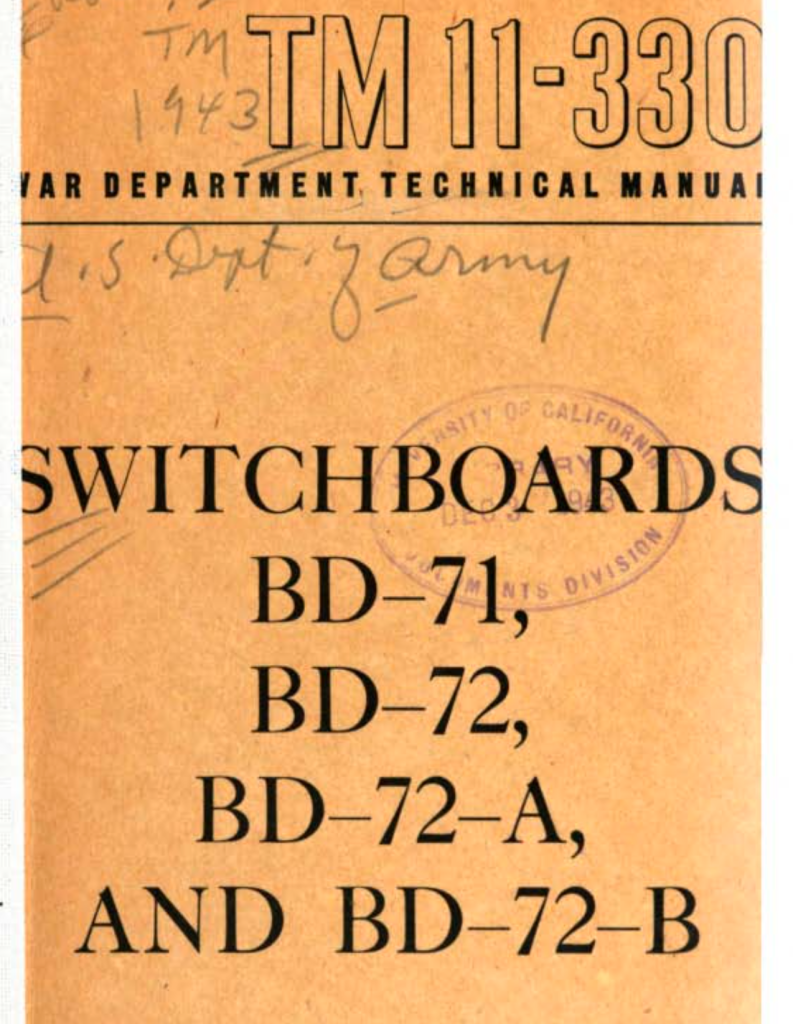
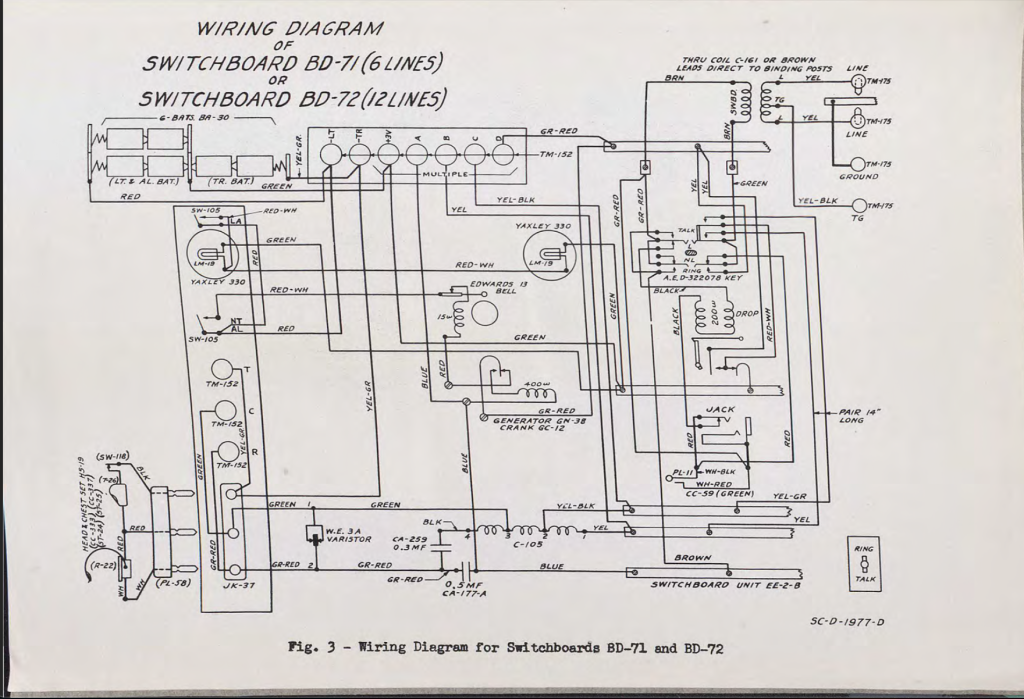
TM 11-330 Switchboards BD-71 and BD-72: Oct 29th 1943. The maintenance, management, care, and use guide for the BD-71 and BD-72 switchboards and associated equipment. BD-71 is the 6-line switchboard, and BD-72 is the 12-line. The manual makes reference that among BD-72, BD-72a, and BD-72b only minor differences exist among them. If someone knows what they are, let me know!
There is also an older manual: BD-71 and BD-72 Switchboards Instructions from 1937, which is a preliminary issue, but I’ve included it here for historical reasons.
For more on the fungal treatment of Signal Corps equipment, see: Signal Corps Technical Information Letter Nov 1944 No 36
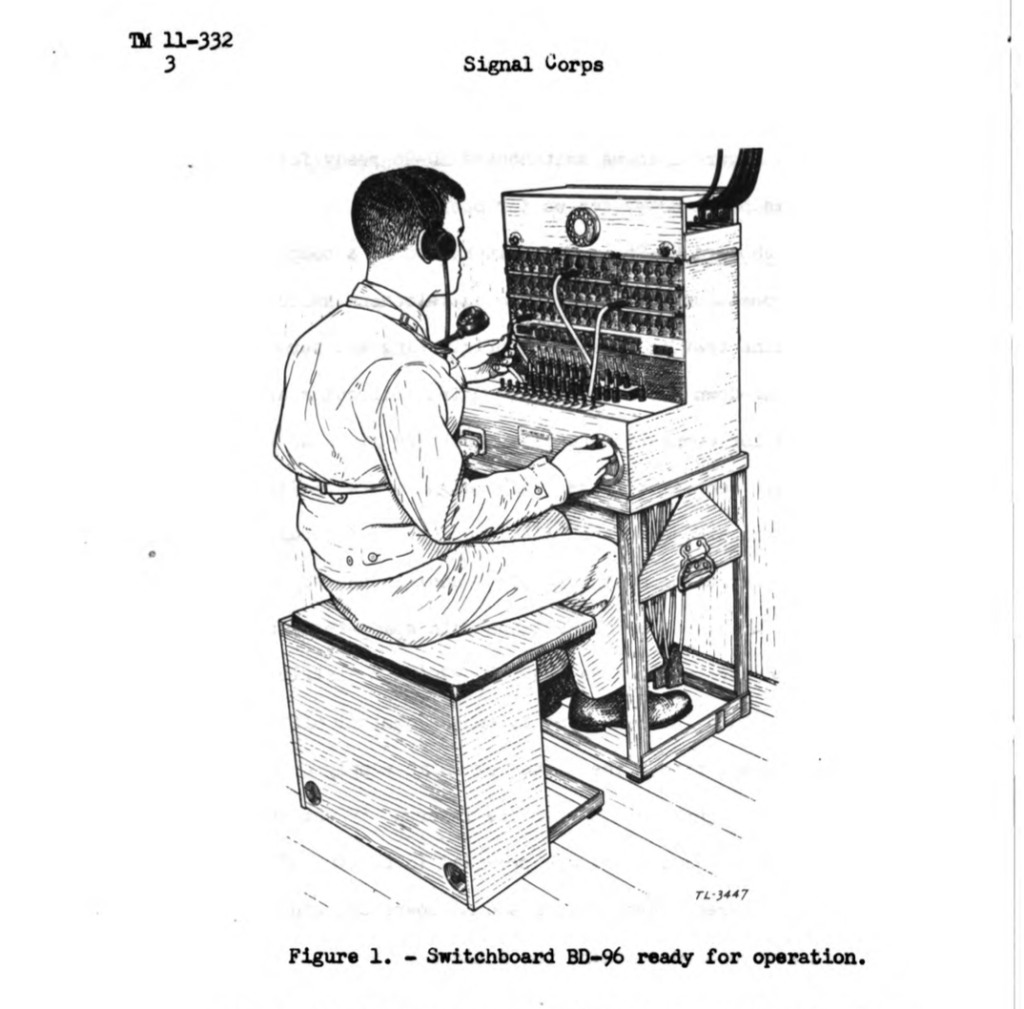
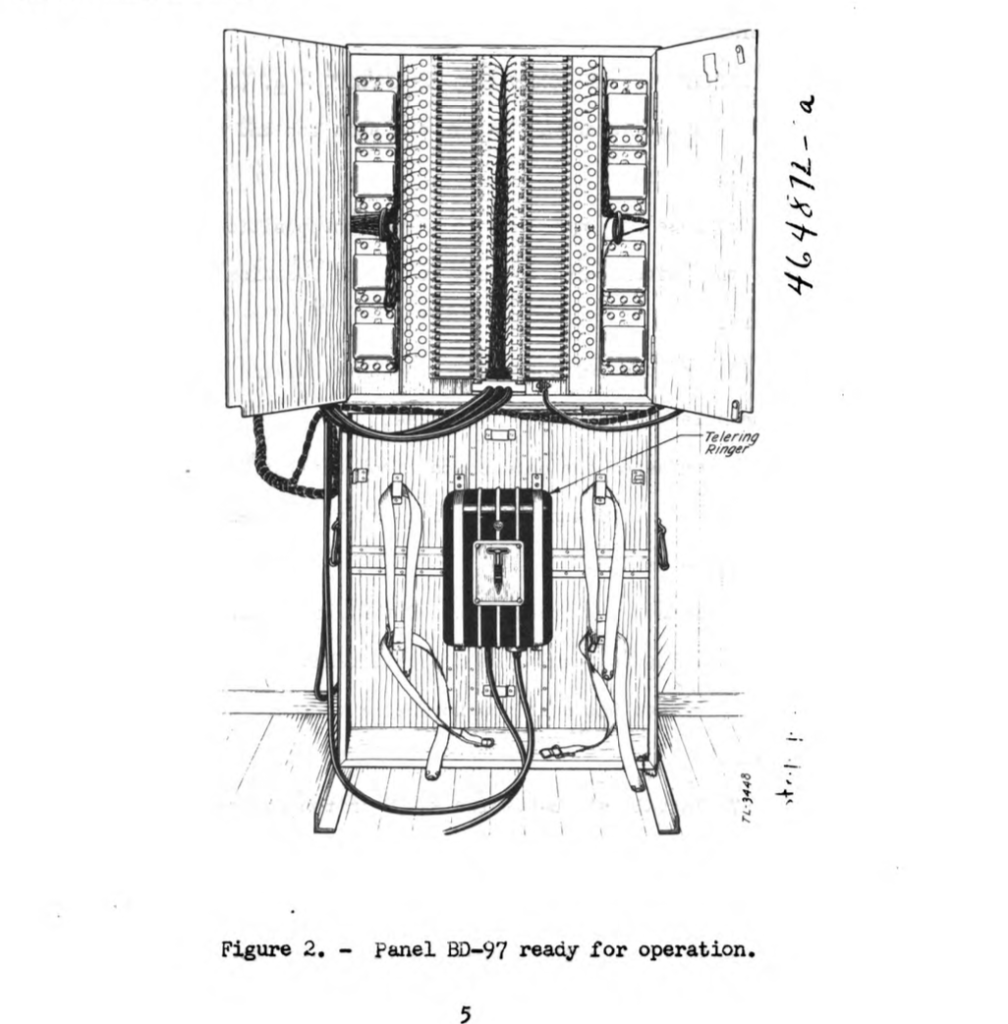
TM 11-332 Telephone Central Office Set TC-4 June 1942 – This set consists of two units: the Panel BD-97 and the SB 96.
TM 11-333 Telephones EE8ab MAR 1945 | Describes usage, maintenance, and troubleshooting of the EE8 field phones.
TM 11-351 Telegraph Sets TG-5 TG-5-A and TG-5-B June 1945 | Describes operating instructions, maintenance, repair, and usage.
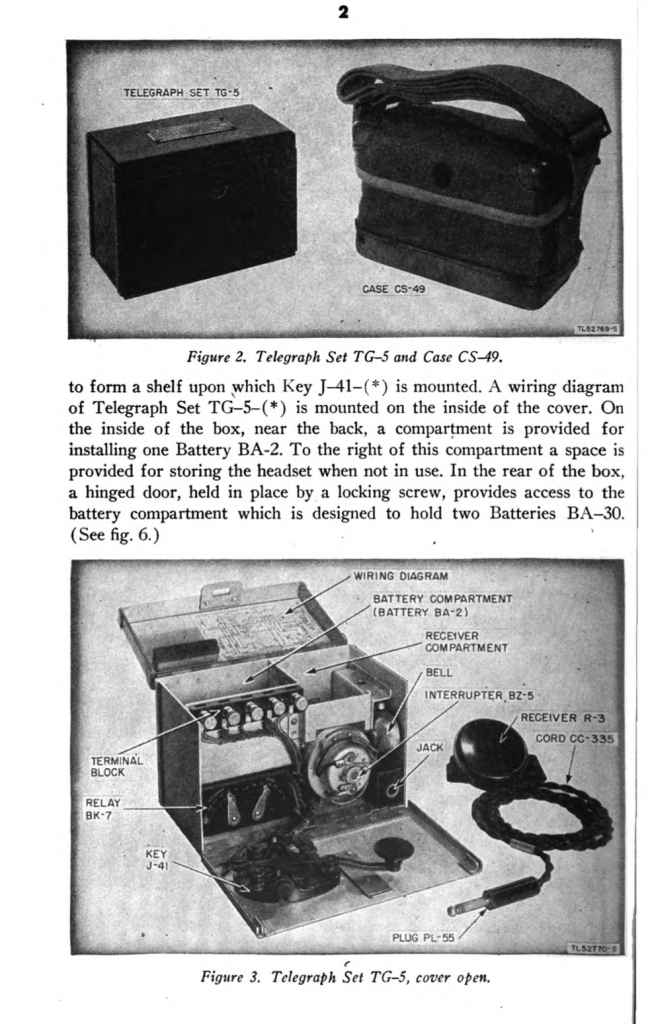
Telegraph Set TG-5-(*) is a portable, open- circuit, field set designed for telegraph communication over short lines. The set may be used on ground return circuits obtained by simplexing a telephone circuit, or on other ground return or metallic circuits. The range of the equipment will vary with the type of line wire used, the condition of the wire, whether the wire is wet or dry, and whether the wire is on the ground or in the air. The telegraph set will operate satisfactorily over field wire circuits of any length likely to be encountered within divisions or subordinate units, provided the lines are well constructed.
NOMENCLATURE. Telegraph Sets TG-5, TG-5-A, and TG-5-B are referred to in this manual as Telegraph Set TG-5-(). Such nomenclature refers to any one or all of the above three models. Similarly, Relay refers to Relays BK-7, BK-7-A, and BK-7-B; Case CS-49-() refers to Cases CS-49 and CS-49-A; Key J-41-() refers to Keys J-41 and J-41-A; Interrupter BZ-7-C) refers to Interrupters BZ-7-A, BZ-7-C, BZ-7-J, and BZ-7-N; and Interrupter BZ-5-(*) refers to Interrupters BZ-5 and BZ-5-G.
The differences between the units are changes in some of the internal parts. TG-5-B is the more powerful unit as it can handle greater resistance on the line (up to 72k ohms).
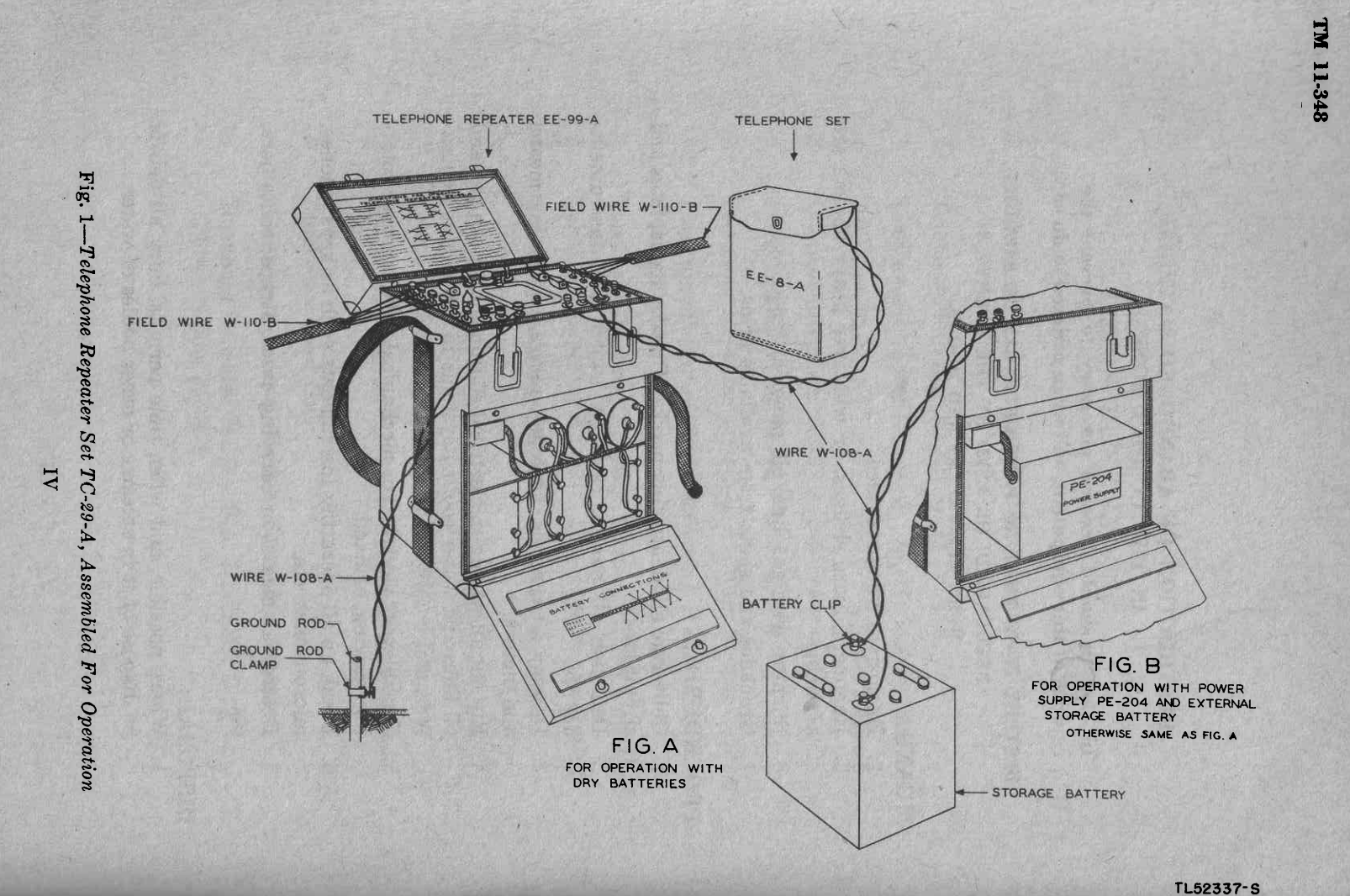
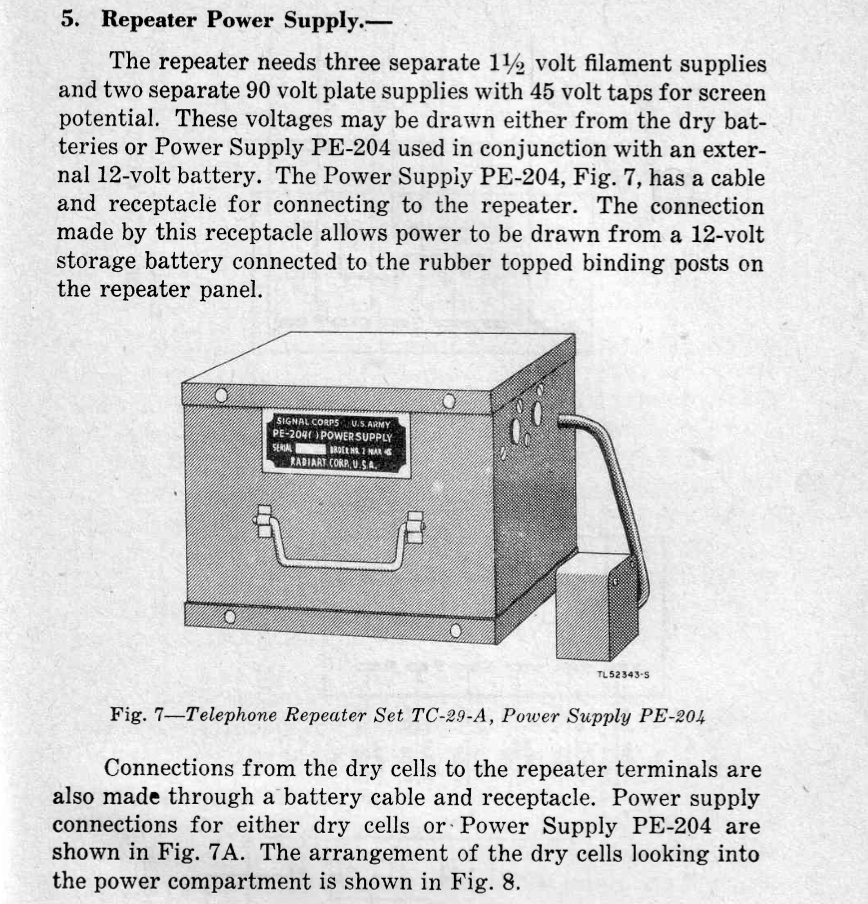
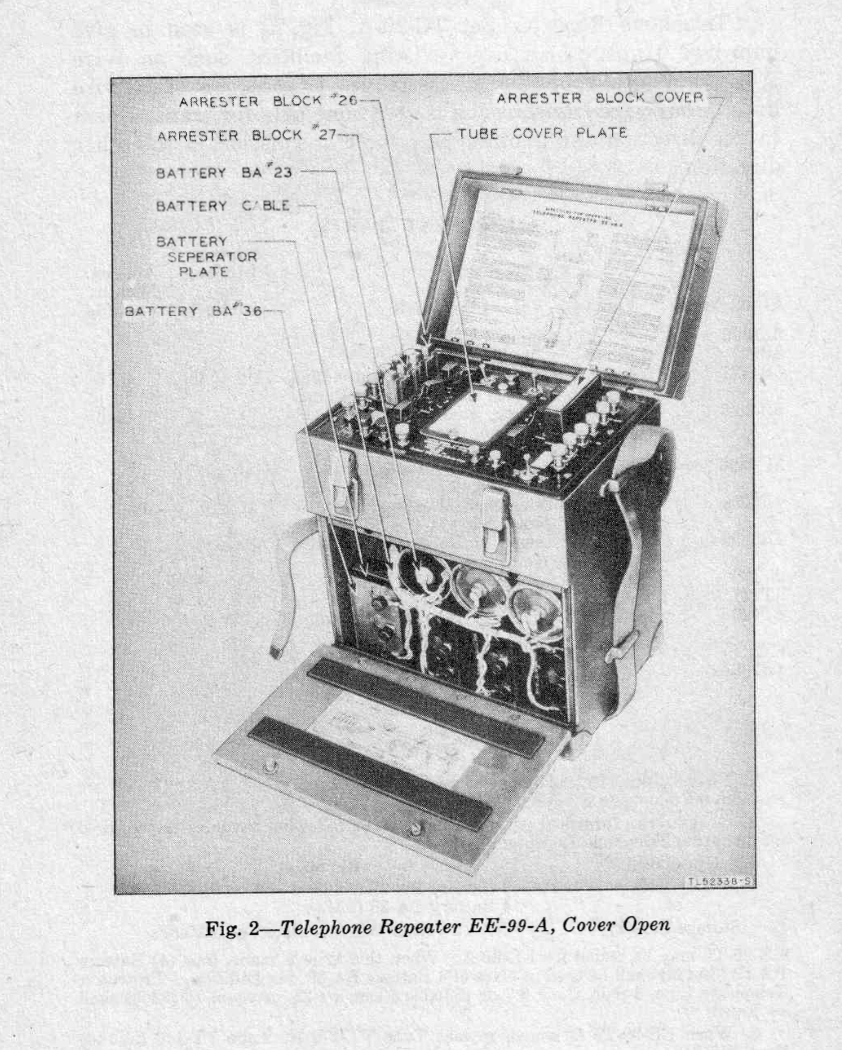
TM 11-348 Telephone Repeater TC-29-A April 1943 – This helps improve transmission over wire (W-110b) or cable (CC-358) or open lines. It’s not a unit per se but a bunch of different items like Power Supply PE-204, EE8s, and EE99a that when combined make this repeater unit.
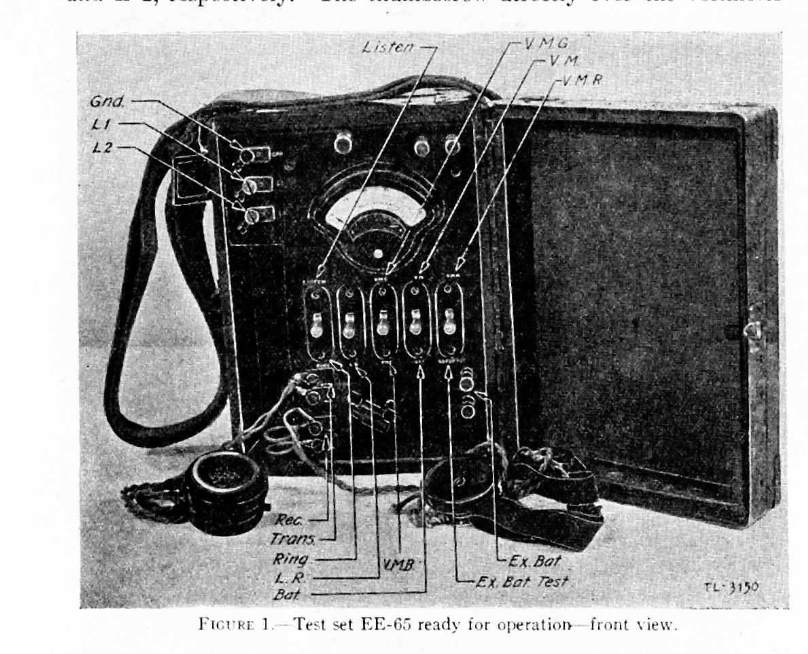
TM 11-361 Test Sets EE65 and EE65a through EE65e Feb 1943 –
There are minor differences in the several models of this set. All voltmeters are of 50,000 ohms resistance except on the test set EE-65, the voltmeter of which has a resistance of 3.000 ohms. The test set EE-65-B has a larger voltmeter and correspondingly deeper case cover. The test set EF-65 is equipped with a separate transmitter, a separate receiver, and a separate ground rod which are carried in the case; none of these items is a part of the other test sets. The key arrangement on test sets EE-65 and EE-65-A and -B is identical.
The test sets EE-65-C, -D, and E- are identical; they differ from the test set EE-65-A principally in having a sixth key and some differences in their key connections.
There is an EE65g that is made out of steel not aluminum, uses a different generator (GN-38b), updated wiring diagram, and panel to accommodate the new aluminum box.
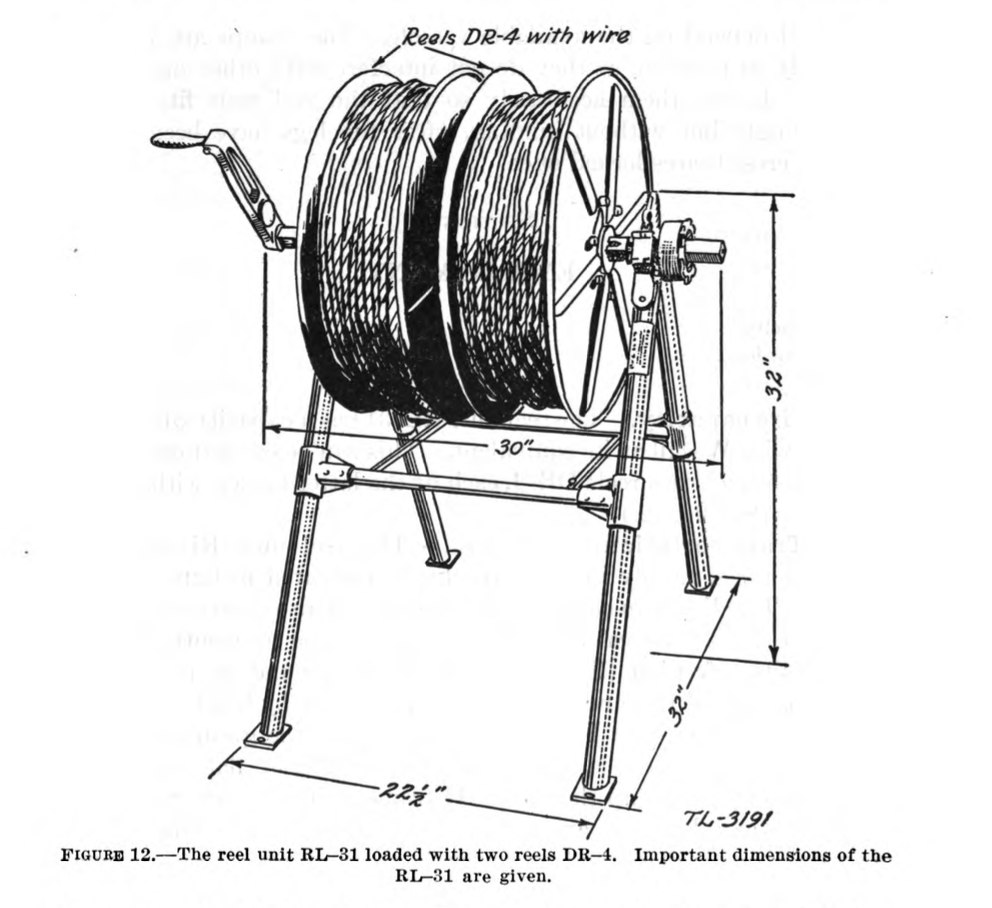
TM 11-362 Reel Unit RL-31 July 1941 – This is for a reel unit to hold the larger DR4 wire drums and describes how to use and install it (such as on vehicles).
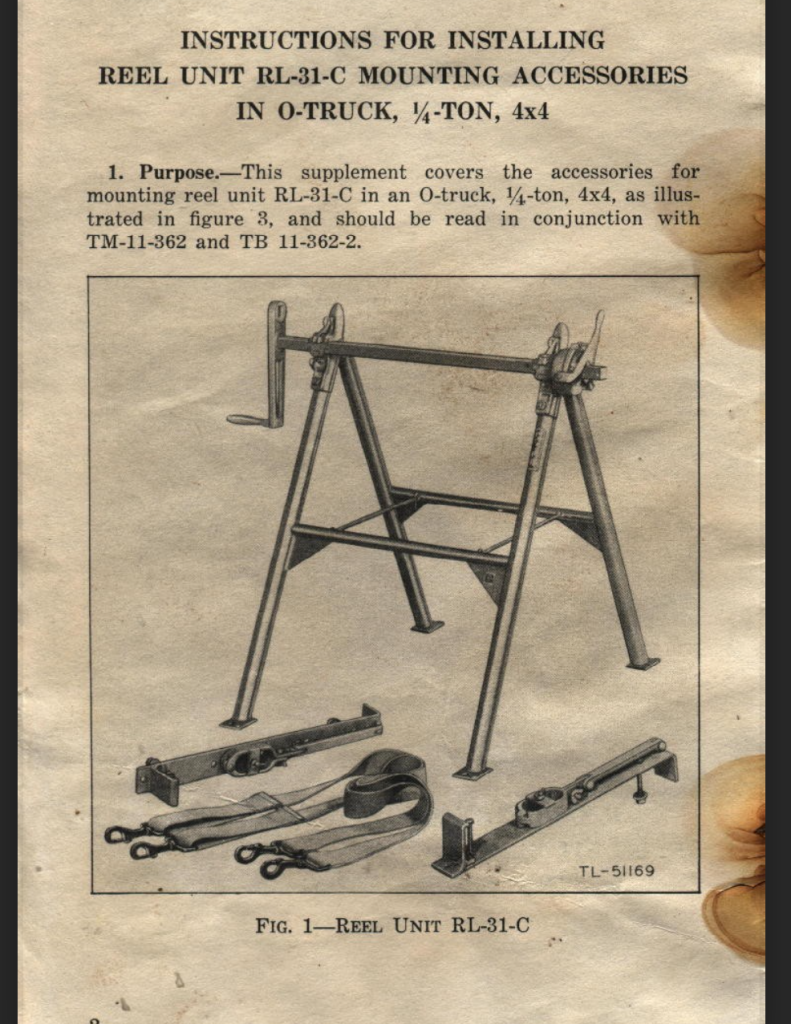
There’s also TM 11-362 Supplement for Reel Unit RL-31 June 1944 which is just instructions on how to install the new RL-31c unit on a truck. The RL-31c looks to be the RL-31 unit with a few different mounting brackets.
TM 11-349 Maintenance Equipment ME-22 Aug 1943: Contains instructions and an inventory list of all the items needed to fix field phones as part of a 3rd Echelon Maintenance.

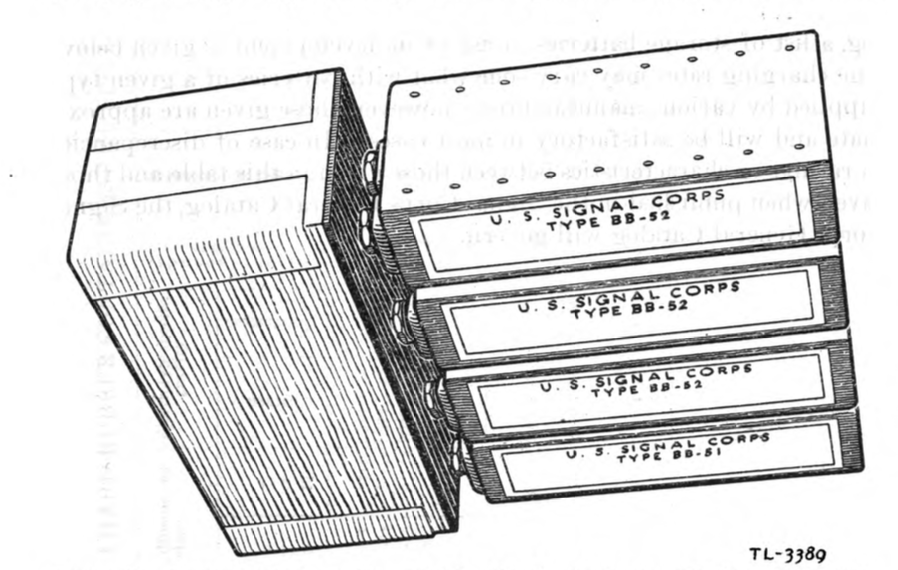
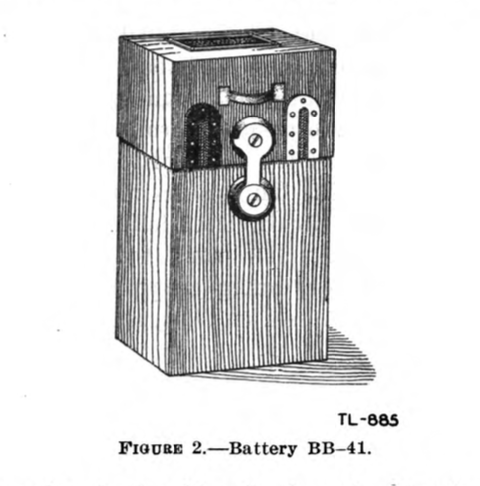
TM 11-430 Storage Batteries for Signal Communication Except Those Pertaining to Aircraft Jan 1942 – Discusses how to store batteries safely including BB-52, BB-41 and BB-51.



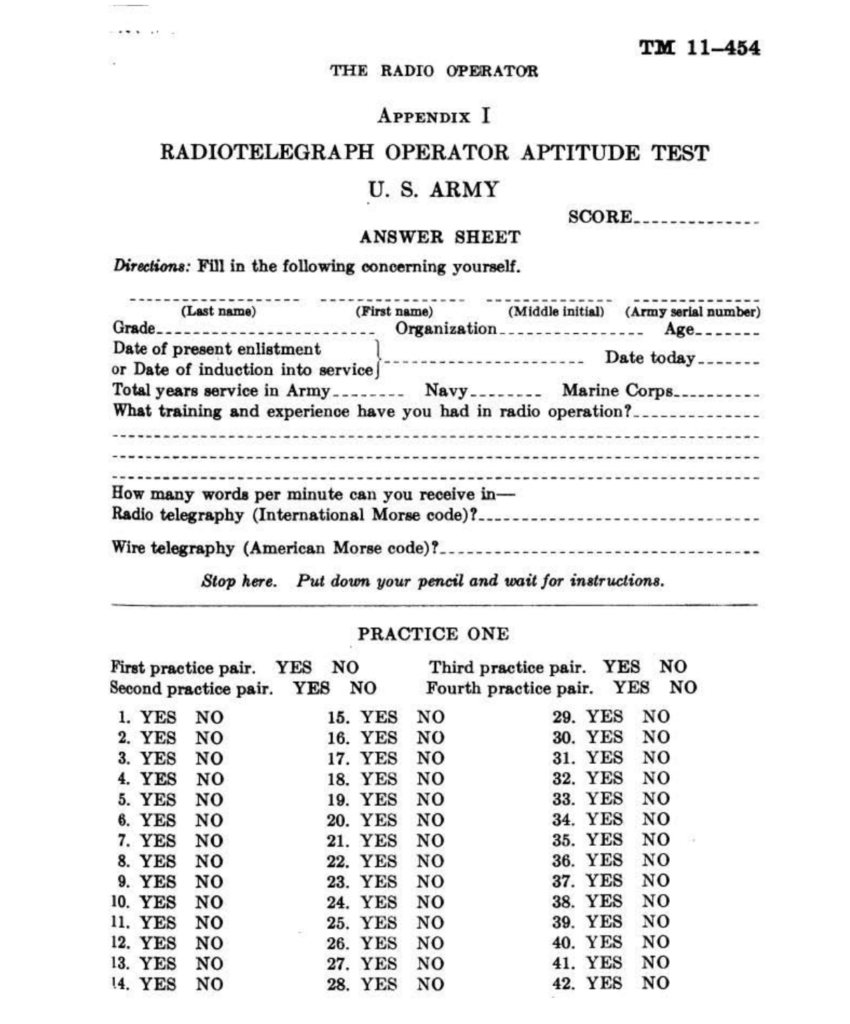
TM 11-454 The Radio Operator April 1942 – Discusses how to use the radio.
TM 11-487 Electrical communication systems equipment Oct 1944 – Discusses electrical communication equipment and includes details, descriptions, remarks, and pictures. For use in planning complete communication systems. Links to Google Drive.
TM 11-487B Wire Communication Equipment March 1951 – a post-war document that still mentions a lot about WW2-era communication equipment.
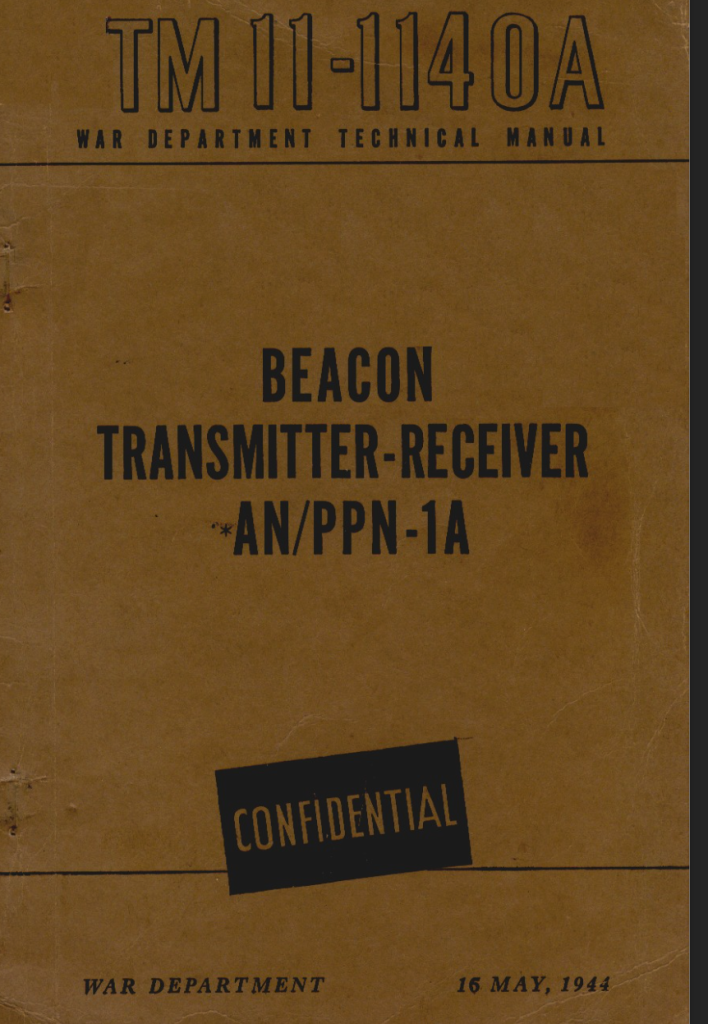
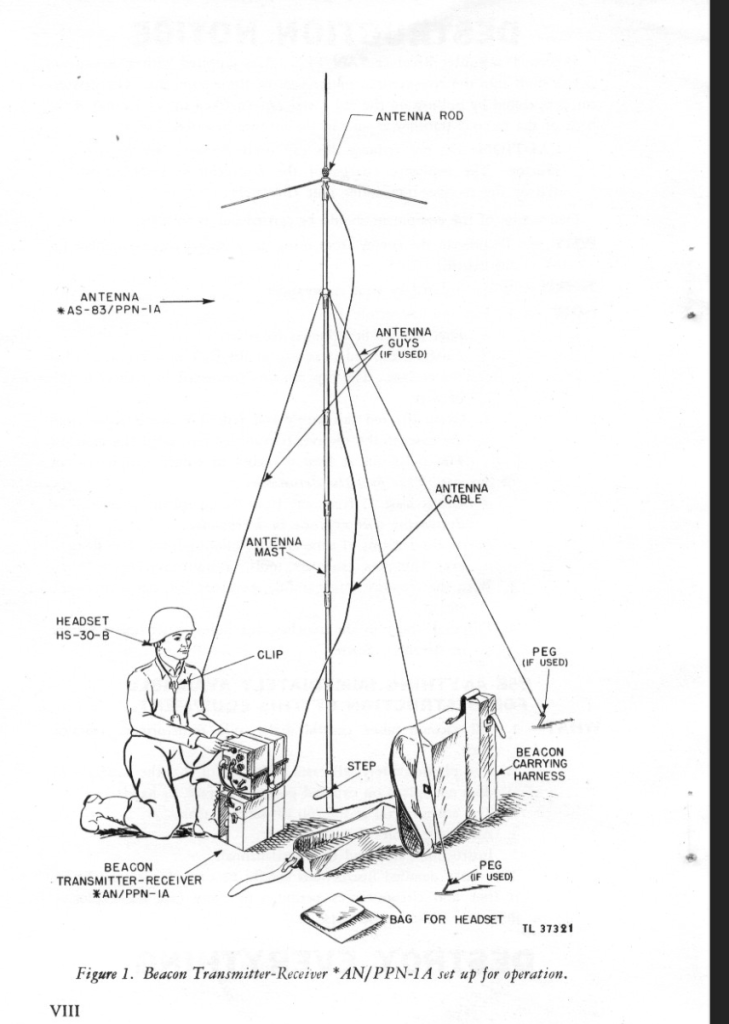
TM 11-1140A Beacon Transmitter-Receiver AN/PPN-1a May 1944 | This was a transmitter used to help mark landing zones by Pathfinder units. For a discussion of Pathfinders and their communication equipment see: 507/82-A/B Pathfinders Operation – June 6 1944 (Normandy).
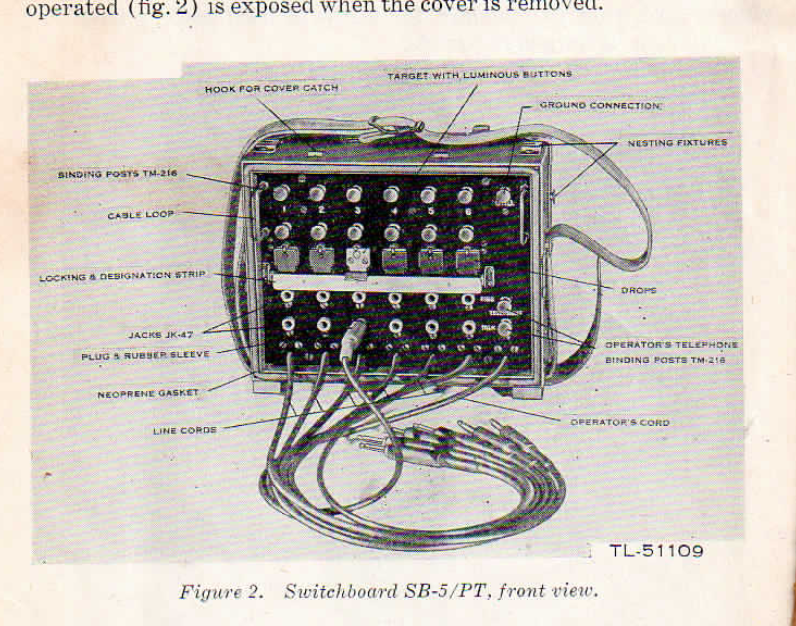
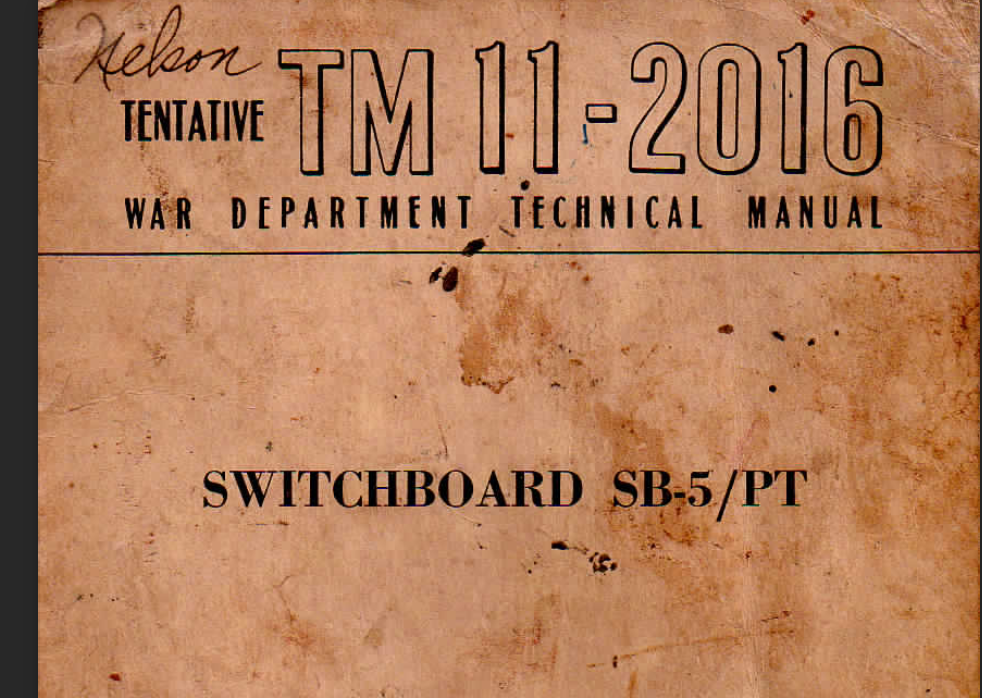
TM 11-2016 Switchboard SB-5/PT April 1944 – Switchboard SB-5/PT is a 6-line, portable, magneto-telephone switchboard for use primarily in field wire systems. It weighs only 12 pounds and for that reason is especially valuable for jungle and mountain operations. This switchboard is similar to the BD-9 and BD-11 in that it has an operator’s cord in addition to the line and trunk circuit cords, it has no talk-listen or ring keys, and it has no operator’s telephone. A Telephone EE-8 may be used as the operator’s telephone, and the magneto of this telephone will be used for ringing. The operator’s cord is terminated in a red plug to distinguish it from the line and trunk cords, which have black plugs. Switchboard SB-5/PT differs from the BD-9 and BD-11 in that each line and trunk circuit includes both a ring jack and a talk jack, instead of one common jack. SB-5/PT isn’t meant to replace BD-71 or BD-72.
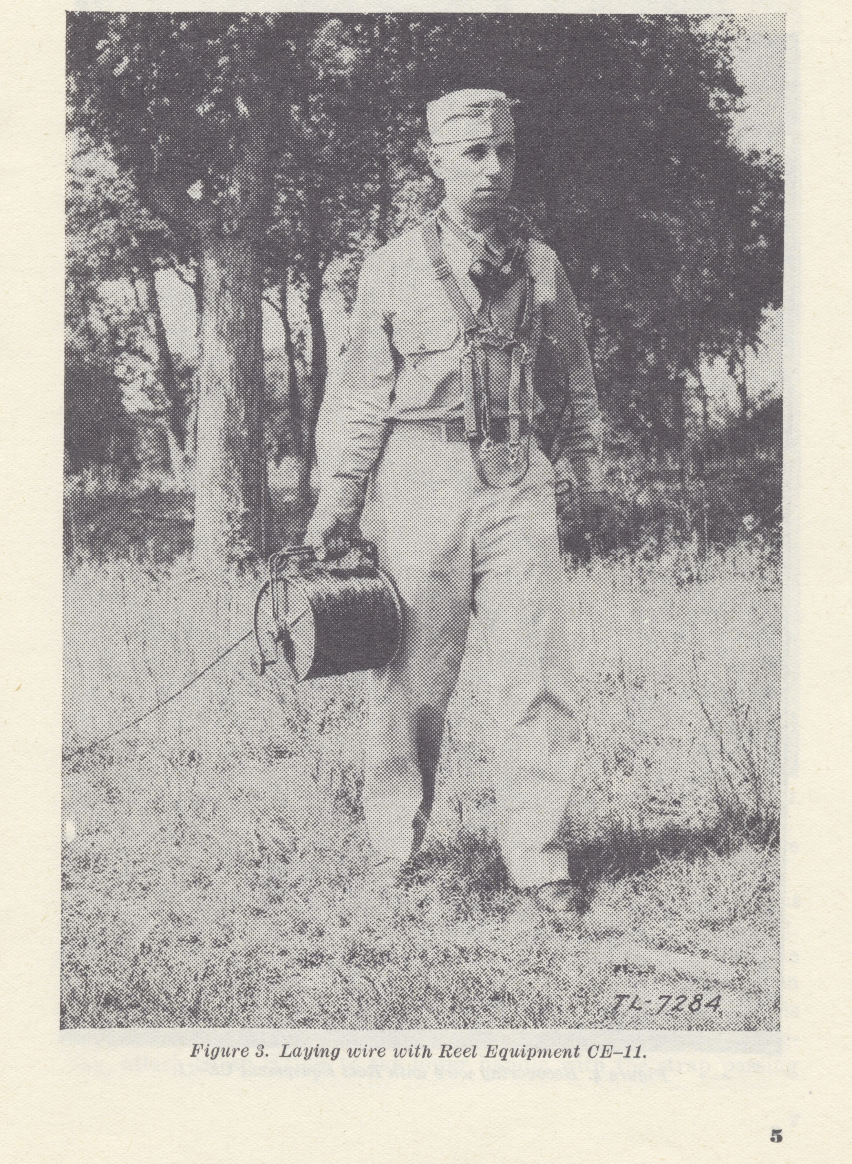
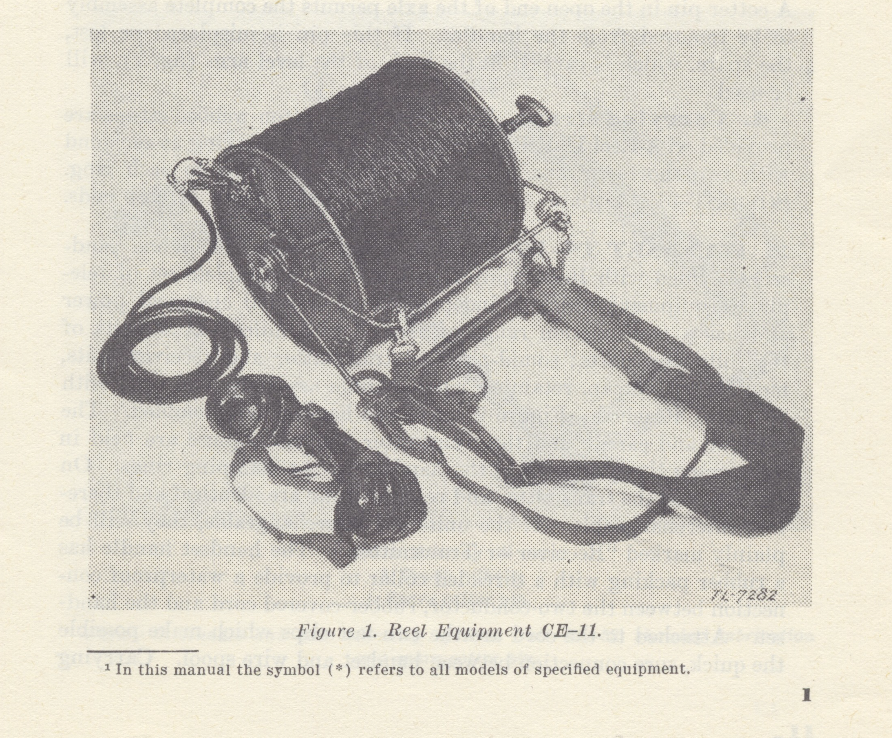
TM 11-2250 Reel Equipment CE-11 Jan 1944 – The equipment designed to hold the smaller DR8 1/4 of a mile wire.
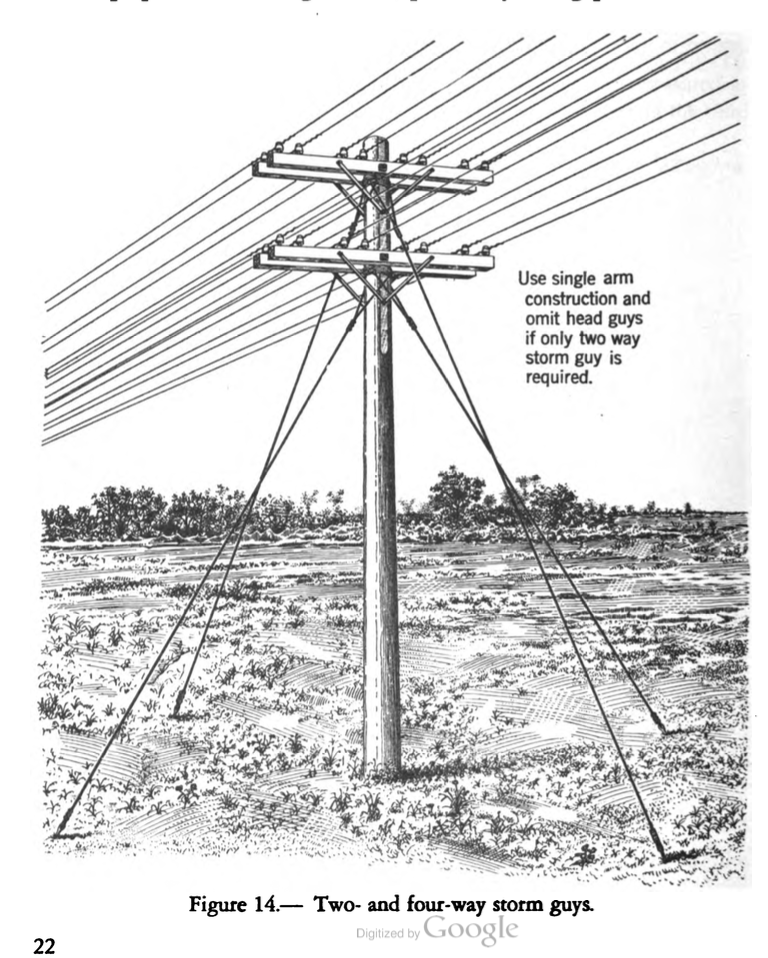
TM 11 2253 Open wire construction fixed plant March 1944 – This is a tentative manual (but probably doesn’t change much from the actual one). It discusses all aspects of installing telephone poles.
TM 11-2614 Assembling and Erecting 30 Foot Gin Pole Type Trylon Ladder Towers Sept 1944 | TM 11-2615 Foundation Steel Pedestal Base for 73’7 Guyed Radio Tower | TM 11-2616 Antenna Equipment RC-63 Oct 1944 | TM 11-2617 Antenna Kit for Rhombic Transmitting Antenna Drawing ES-E-368-D March 1945 – Four different technical manuals that explain how to assemble a radio tower.

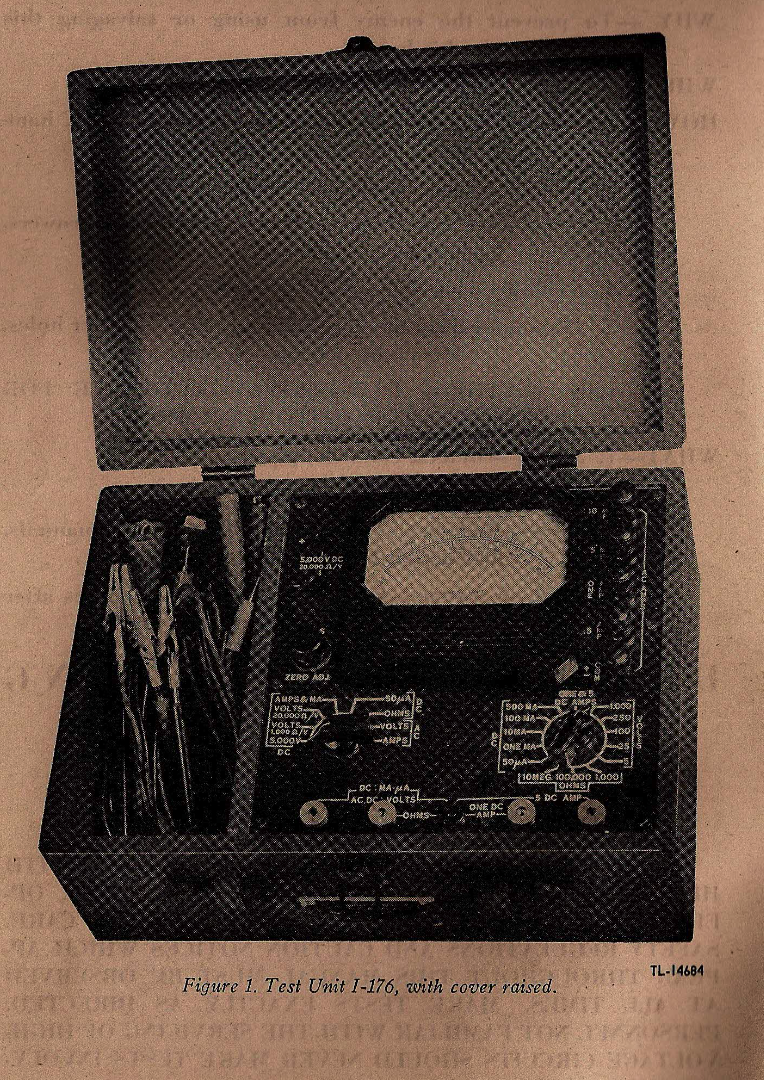
TM 11-2626 Test Unit I-176 July 1944 – Test Unit I-176 is an instrument designed to measure resistance, alternating current (ac), direct current (dc), and voltage over a wide range of values.
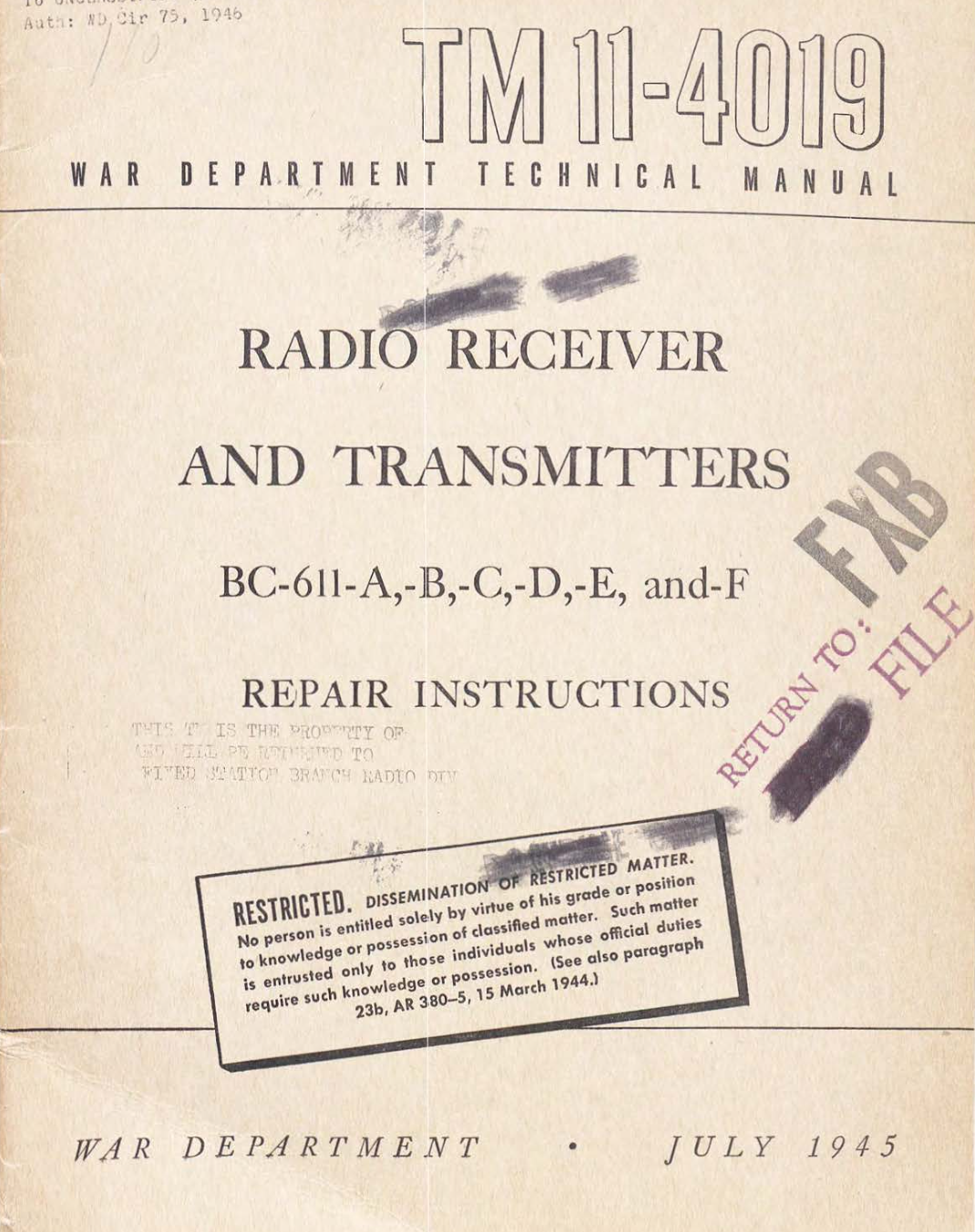
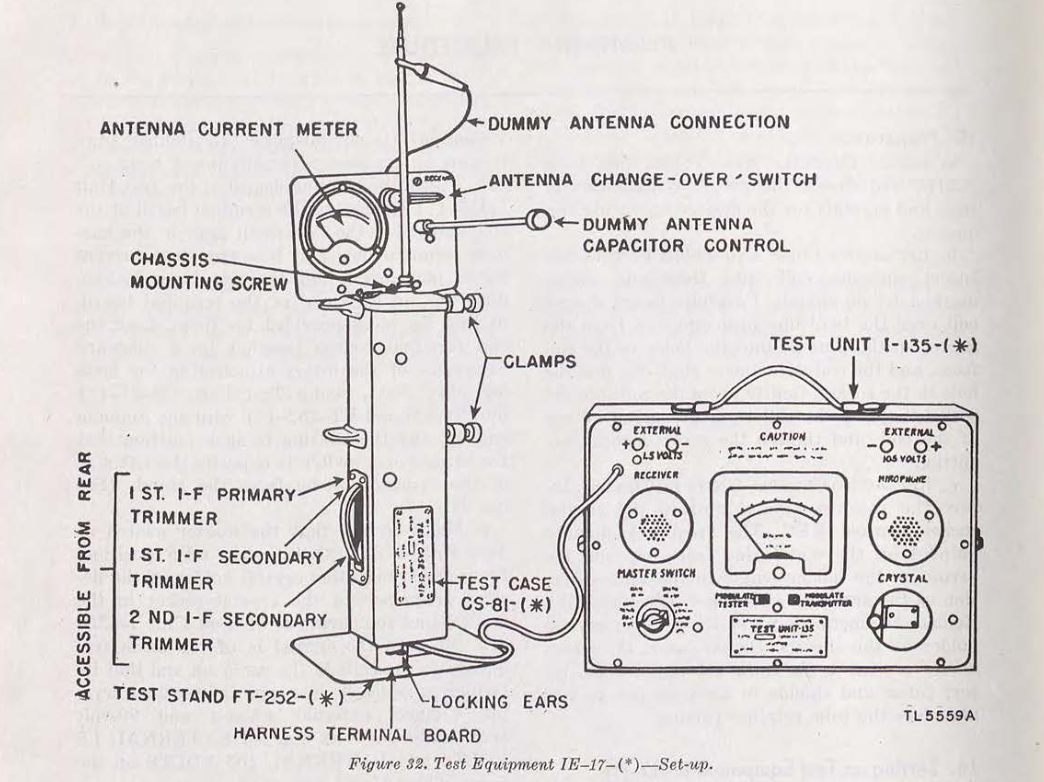
TM-11-4019 Radio Receiver and Transmitters Repair Instructions: BC-611-A, -B, -C, -D, -E, -and F Aug 1945 -Describes the differences between and how to repair various BC-611 (SCR-536) “walkie talkie” radios.
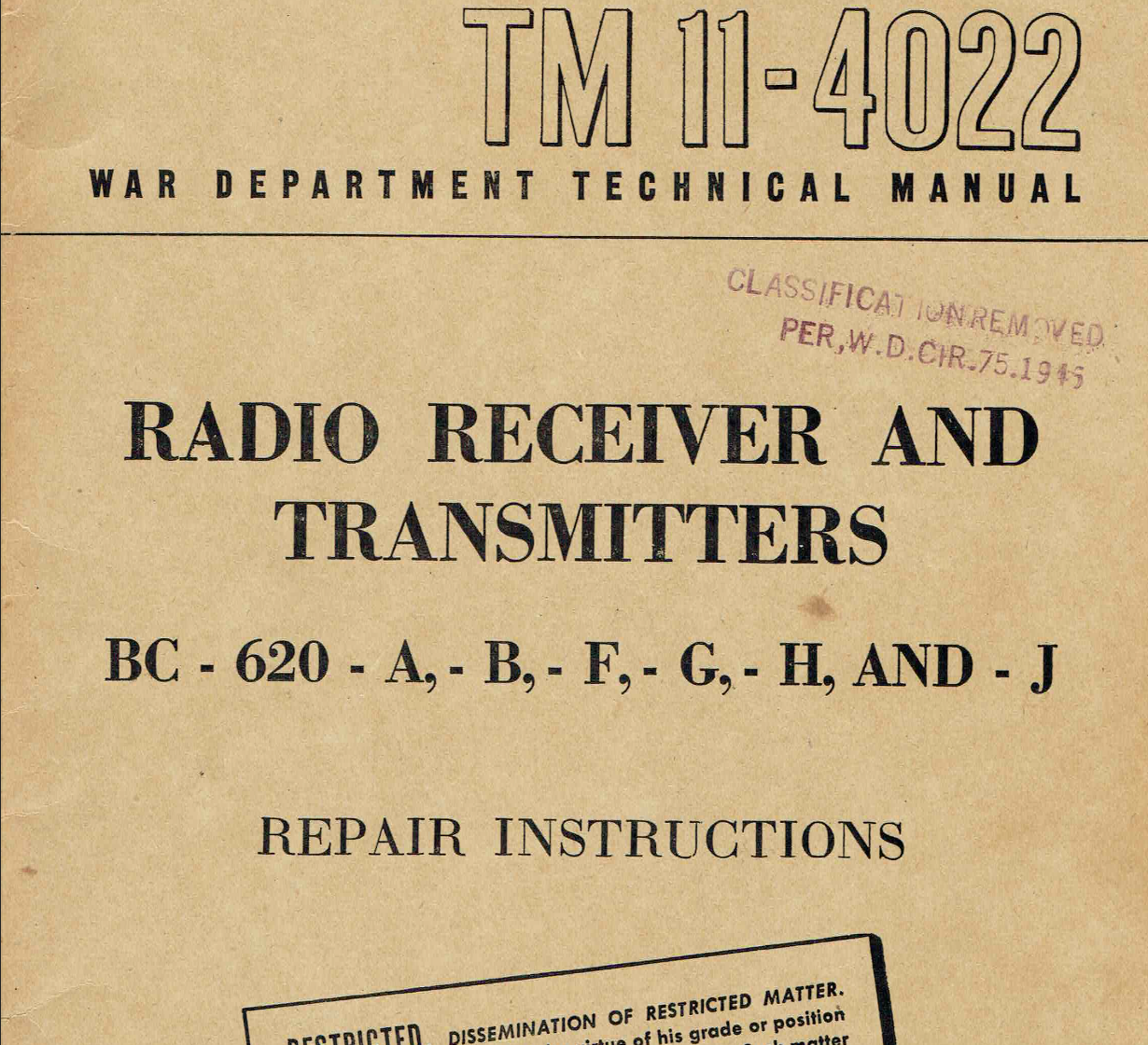
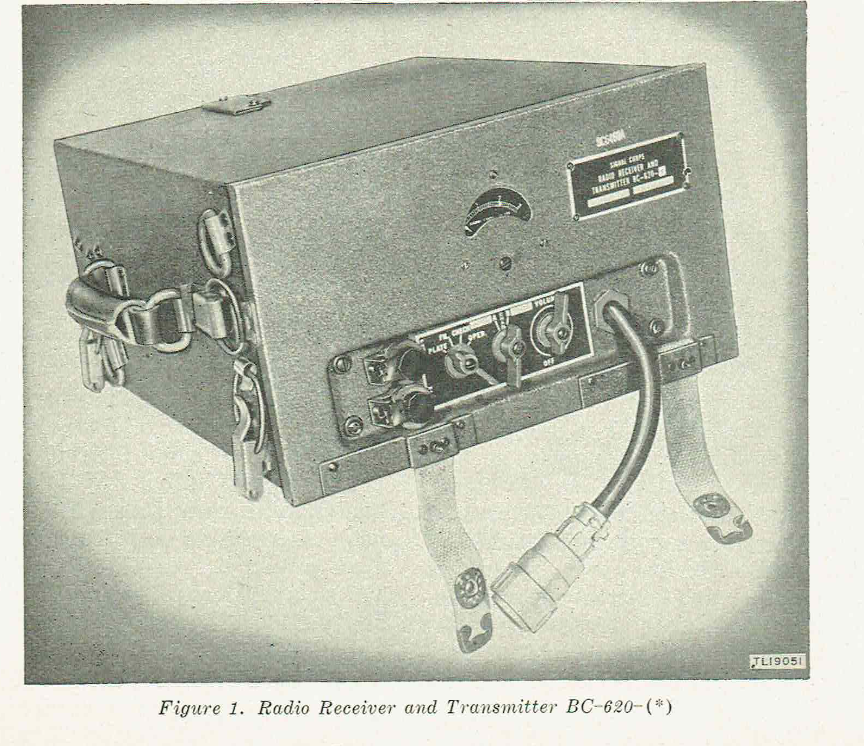
TM 11-4022 Radio Receivers and Transmitters BC-620abfghj June 1945 – This is a short-range (5miles) two-way radio device. The differences among the variants are that some output transformers have been changed to provide extra impedance to accommodate a 250ohm load as well as a 4,000ohm load.
Some models such as A, B, and H are modified in production to incorporate the Adapter
M-394, to permit the use of the meter and the
receiver amplifier tube of the set for alignment
procedure. All other models of Radio Receiver
and Transmitter BC-620-(*) are equipped with
Adapter M-394 by the manufacturer.
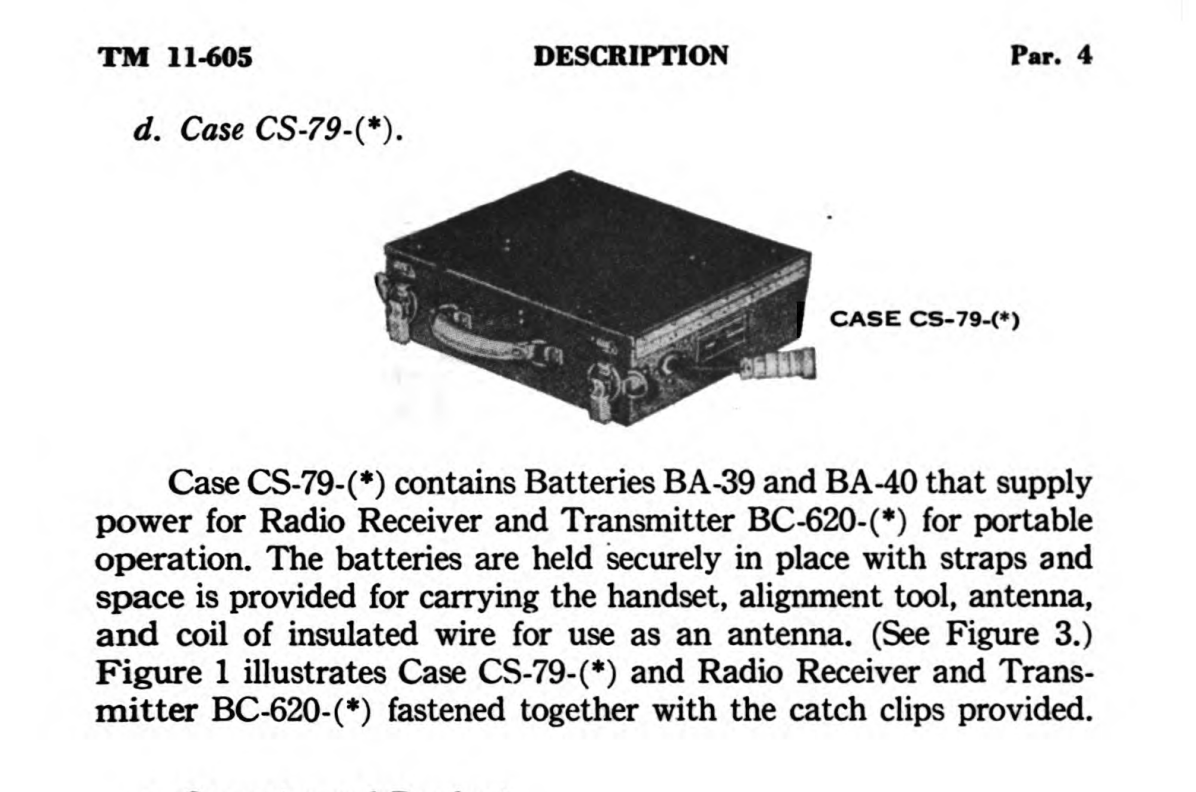
The unit is powered by Plate Supply Unit PE-97 if used in vehicles or BA-39 or BA-40 batteries if not. For the batteries, they need to be used in CS-79 and then connected to the unit. See: TM 11-605 SCR-509 AND SCR-510 NOV 1943 for more information.
Signal Corps: Cross reference table of maintenance, tool and test equipment, and test sets. – A handy chart that explains what test/maintenance equipment is to be used with certain kinds of radio equipment. Not an Army publication but some kind of clean-up version. For example, the SCR-300s need the EE-65 test set and several ME sets.
TM 21-205 Special Service Officer May 1942 | Explains duties of the Special Service Officer.
See FM 28-105 Special Service Company Jan 1944 for the duties of the company.

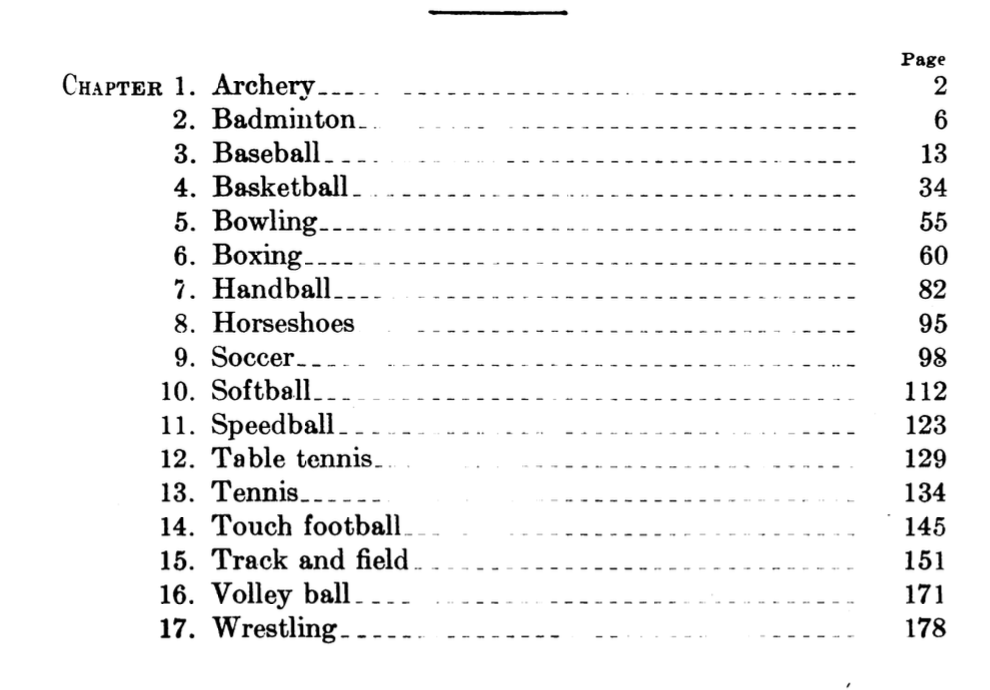
TM 21-220 Sports and Games May 1942 | Explains how to play various games like:
- Archery
- Badminton
- Baseball
- Basketball
- Bowling
- Boxing
- Handball
- Horseshoes
- Soccer
- Softball
- Speedball
- Table Tennis
- Tennis
- Touch Football
- Track and Field
- Volley Ball
- Wrestling
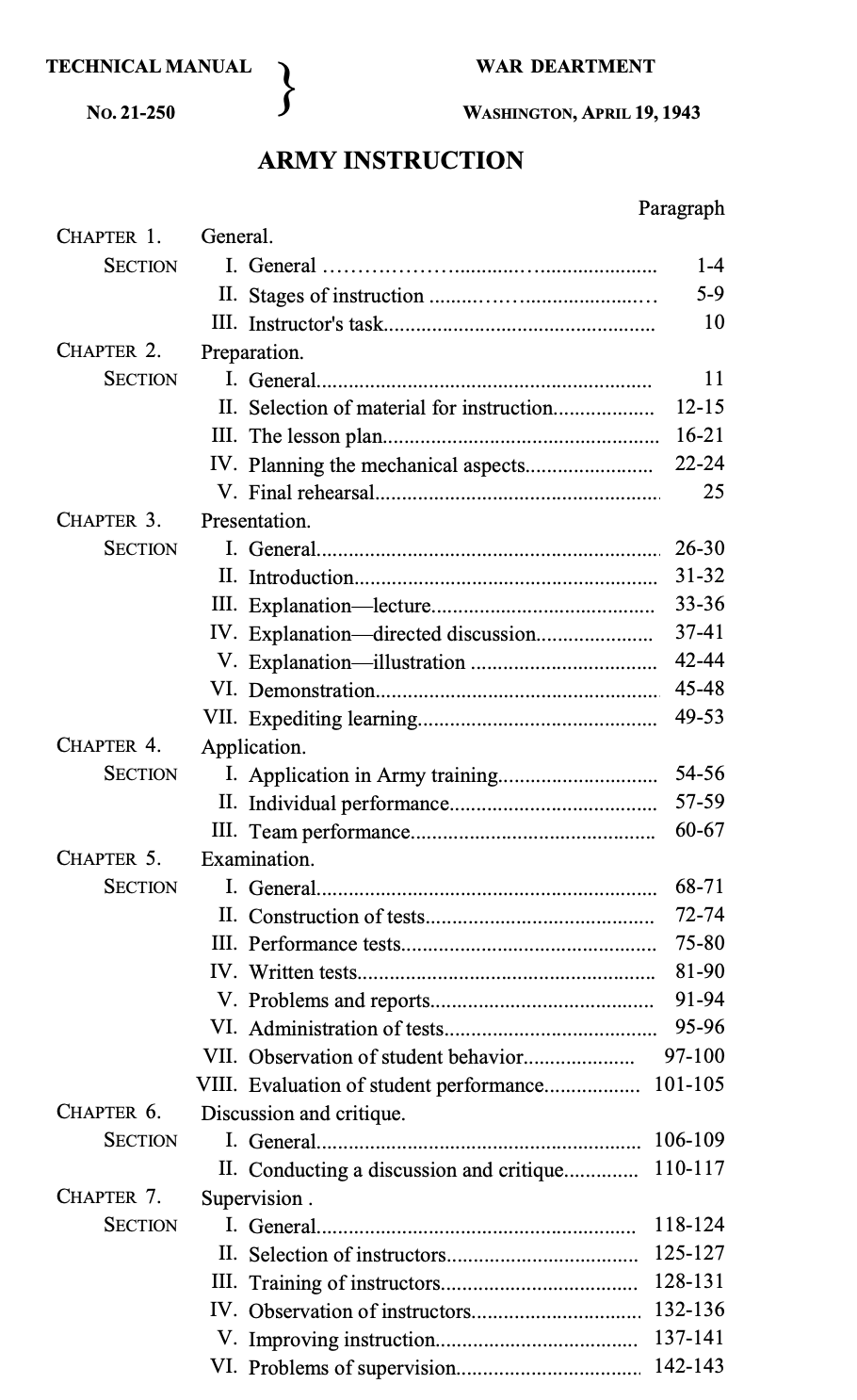
TM 21-250 Army Instruction April 1943 | Explains how to train recruits and draftees.