12 Years a Slave Video Lesson Plans and Worksheets
While I never had an opportunity to test out 12 Years a Slave Video Lesson Plans and Worksheets I would have liked to have shown the film either at the end of the year or as part a discussion on slavery (either as part of a World History or US course).
If copies of the book may be found it may be worth it to have students read a chapter out of the book. This guide includes questions for each chapter along with enrichment activities (both for the book and the film)12 Years A Slave Reading Questions
I would often use John Stossel Lesson Plans and Worksheets in my government class as he highlights different aspects of government and highlights what the role of the government in society and economy should or should not be. These came as videos on a DVD but now can be found in YouTube or his site below.
While I never had an opportunity to conduct a unit of Archeology Lesson Plans or a stimulated dig, I did have some notes and worksheets related to it. I figured this would be a 3-5 day unit.
Day 1: Archeology Lesson Plans
Discussion of what Archeology is and isnt
Why it is important
What skills or knowledge is needed
Learn about scientific method/forming hypothesis and how it may apply to Archeology
Maybe have students do a reading on a famous archeologist (or provide short snippets/bios from famous ones). Probably want to select a diverse group (male, female, minority, etc). Then discuss and share it.
Possible career research to being an Archeologist?
Day 2: Archeology Lesson Plans
Discussion of techniques (probably pick 5 techniques that are the most common)
What to do/What not to do
Maybe a video showing the techniques
Students then practice techniques
Students then critique each other
Day 3: Archeology Lesson Plans
Prep 5-10 different archeology topics: Mayans, Aztec, Roman, Greek, Indian, China, 1800s, 1900s, Egyptian, Viking, etc. Pick a variety of topics and have students research the life of a commoner and rich person.
Students should focus on
Food, clothing, physical objects, religious symbols, etc,
Students should complete some sort of chart that gives facts/info on different aspects of a common/rich persons life in each of the above topics
You may need to prep this on the internet and have students visit a website to learn more about daily life
Day 4:Archeology Lesson Plans
Continue research
Day 5-6:Archeology Lesson Plans
Simulated Dig
Depending how you want to organize students may select a box or students may be randomly assigned a box.
Students then use the techniques they learned about to analyze a shoebox and dig it.
Students complete a recording sheet where they describe what they found, where they found, the number of the object, and the measurements of the object.
There are several ways to present the dig. You could do the shoebox and put sand and objects in it. You could buy large tots or bins and fill it with sand and then put objects in it to make it a larger area. You could dig into the school yard property and place items. Obviously, if you have more classes it will take much longer to prep all the “digs”.
You would obviously need to purchase items related to the different topics/cultures. Items that students could find in a dig such as bones, skulls, jewelry, clothing etc. may be purchased cheap around halloween/dollar store. Shoe boxes can be gotten from a shoe store (ask the manager), trowels, measuring tape (probably a fabric one) and other digging items may be purchased from Lowes/Home Depot, the dollar store, Goodwill etc.
Day 7-8: Archeology Lesson Plans
Students create a report on what they found and their hypothesis of the culture/kind of person.
Students present findings
Teacher shares answers
Day 9-10: Archeology Lesson Plans
Students watch a hollywood film and compare and contrast real-life Archeology to how it is portrayed on the screen. Students complete a worksheet on the film and then compare and contrast.
Here is an outline of some sources that I found to be helpful in sketching out my Archeology Lesson Plan idea.
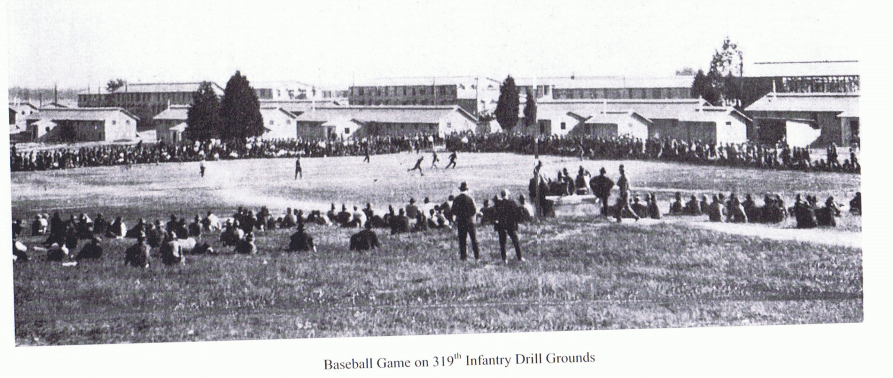
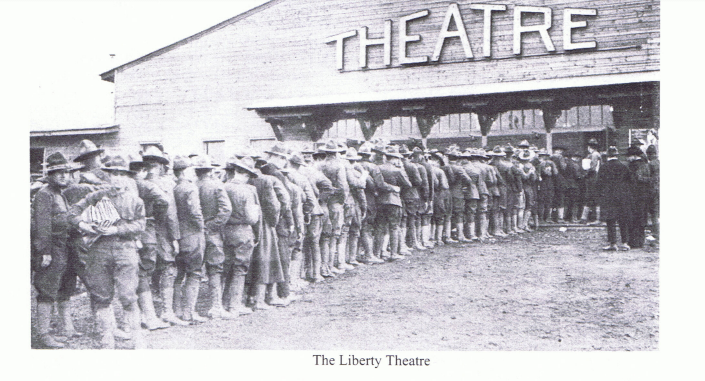
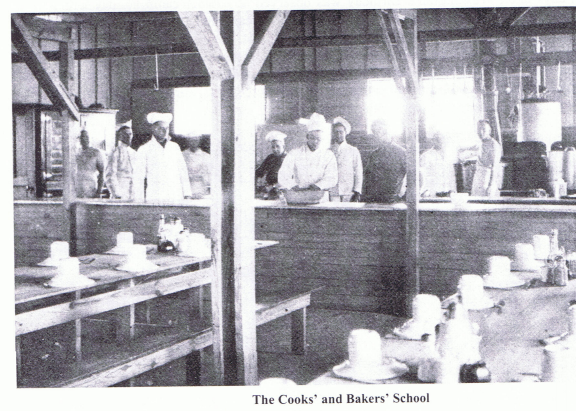
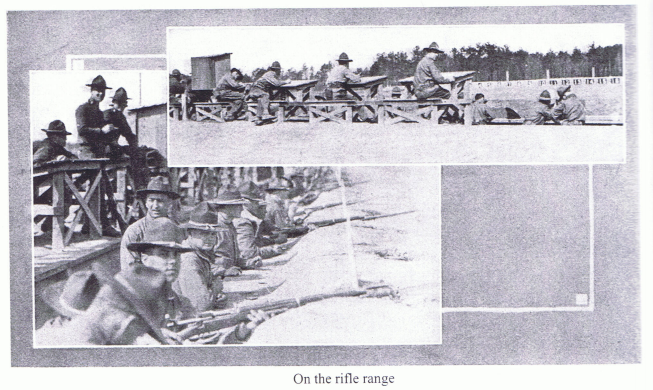
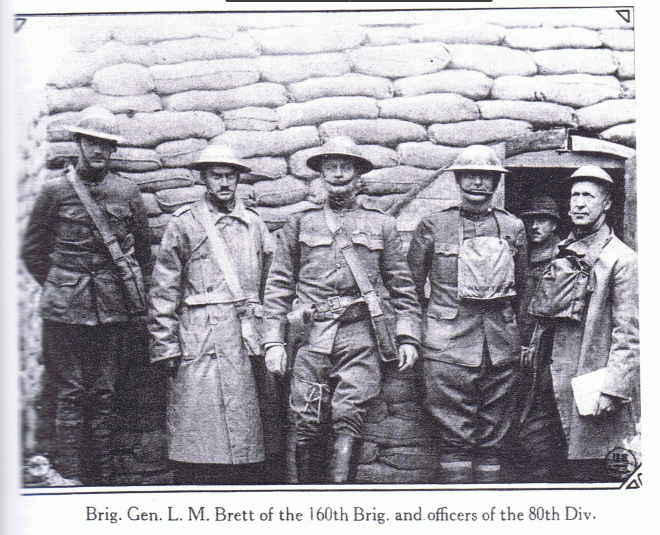
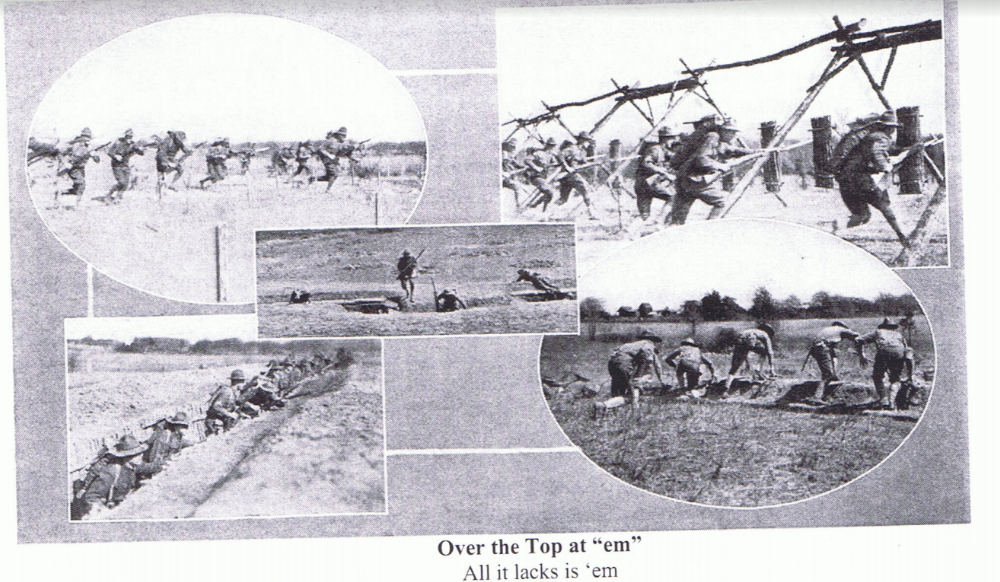
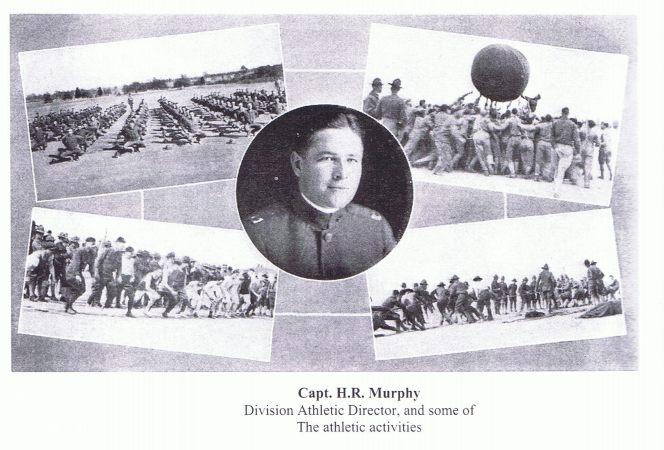
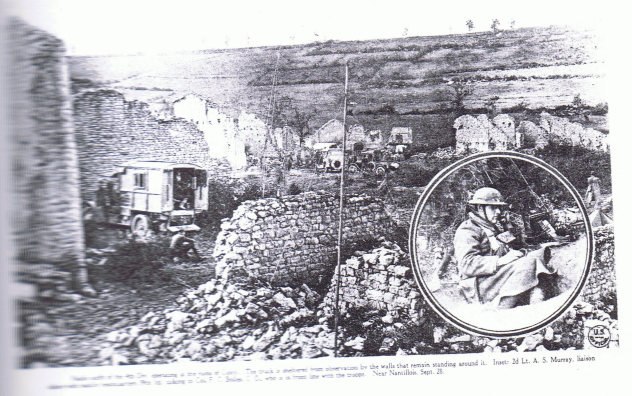
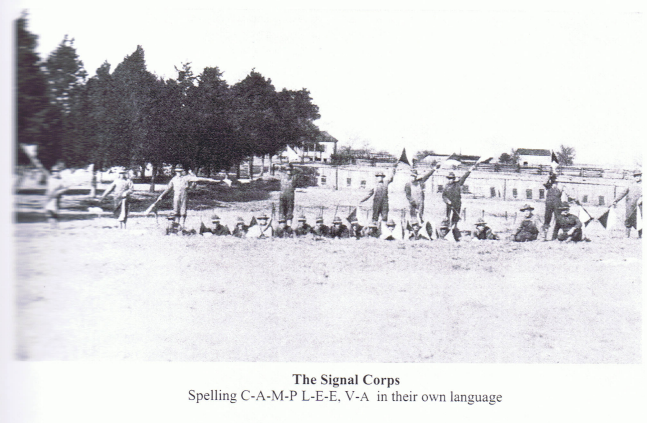
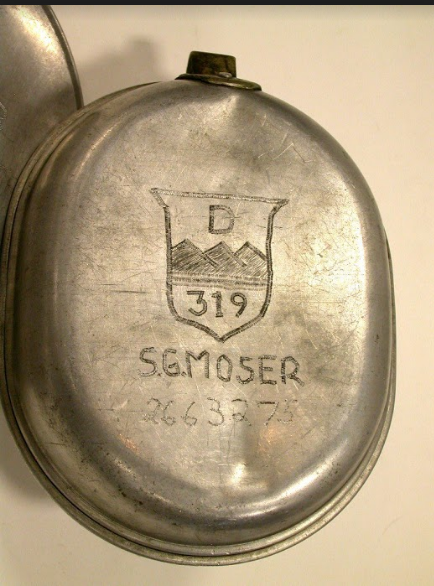
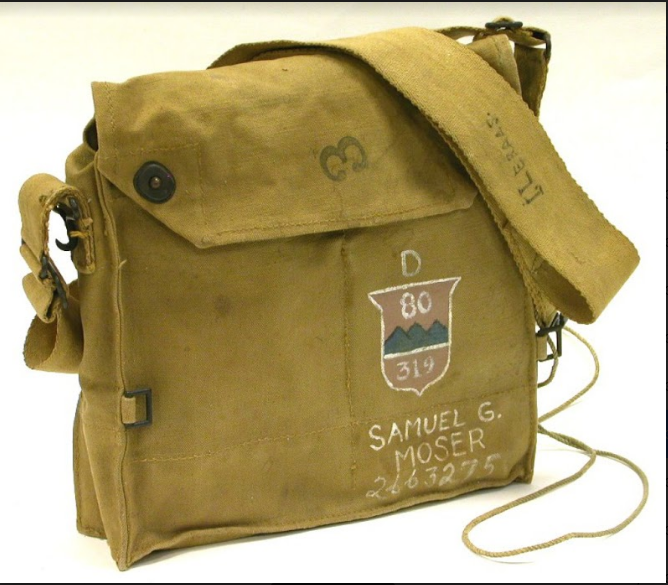
History of the 80th Division, AEF in World War One
Complied by Russell L. Stultz, division historian
Edited by: Lee S Anthony, Ph. D. Commander
Jamont Communications 2004
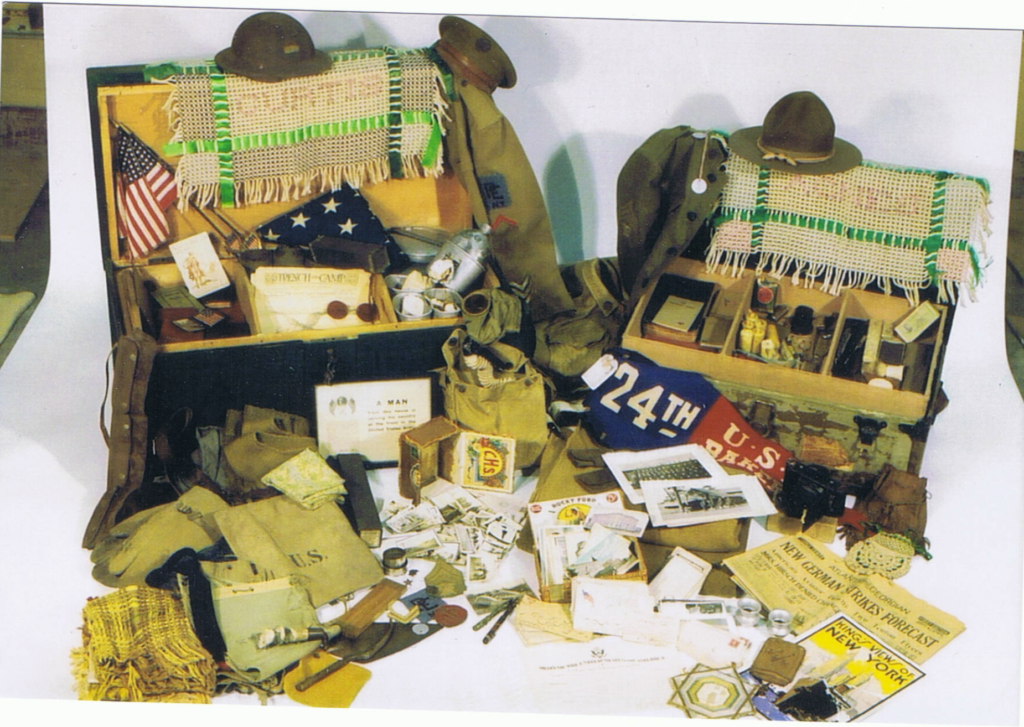
While not related to the 80th AEF in World War I, a member of our unit had a grandfather who was in the Dixie Division and kept all his equipment (pdf here)-
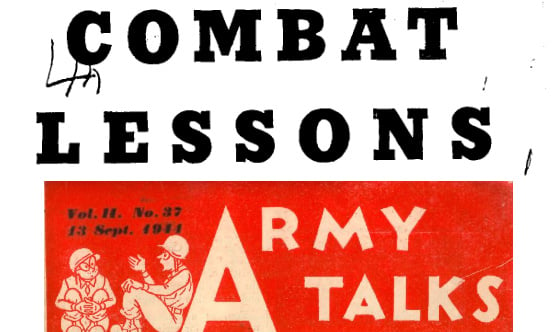
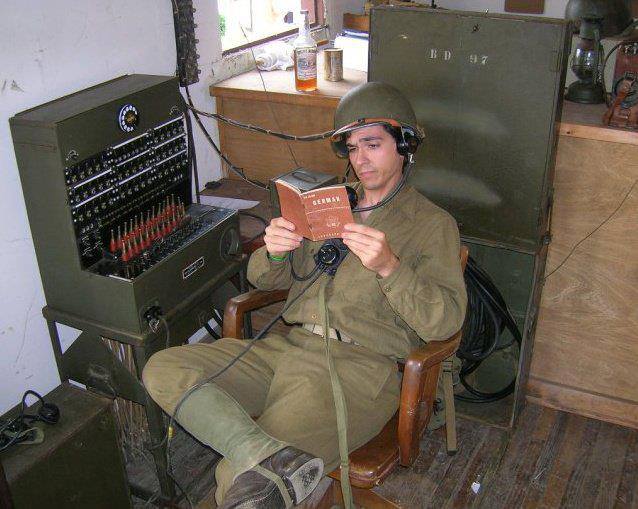
Army Talks was a series of short works published for GIs in the European theater of World War II “to help them become better-informed men and women and therefore better soldiers.” These were sized 8in wide by 10in high.
Army Talks began publication in 1943 and continued through the end of the war in Europe. Issues were usually published on a weekly or biweekly basis, and each had its own title and topic. The pamphlets contained articles, combat tips, proclamations, maps, drawings, cartoons, news, updates, and other general information.
Some links download from this site, while other links go to my Dropbox account. If Dropbox gives you errors or cannot connect, please try clearing your browser’s cache and cookies and disabling any third-party plugins (such as AdBlocker or Privacy Badger), as they may interfere with the ability of Dropbox to render the PDFs. Special thanks to the 90th ID for making some of these available.
If you would like to purchase copies, you can do so through Wartime Press. It looks like you get a digital copy as a PDF. I’m not sure if the copies are exact reproductions. If they are, it would be very neat to see them in the field.
If you want all the Army Talks Volumes, you can download the zip file via my Google Drive here.
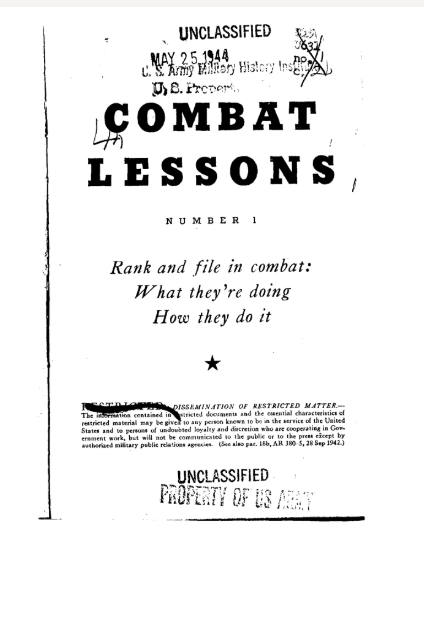
The Rank and file in combat, what they are doing, how they are doing it. The suggestions in Combat Lessons are drawn from the experience of the World War II American Soldiers in both Europe and the Pacific.
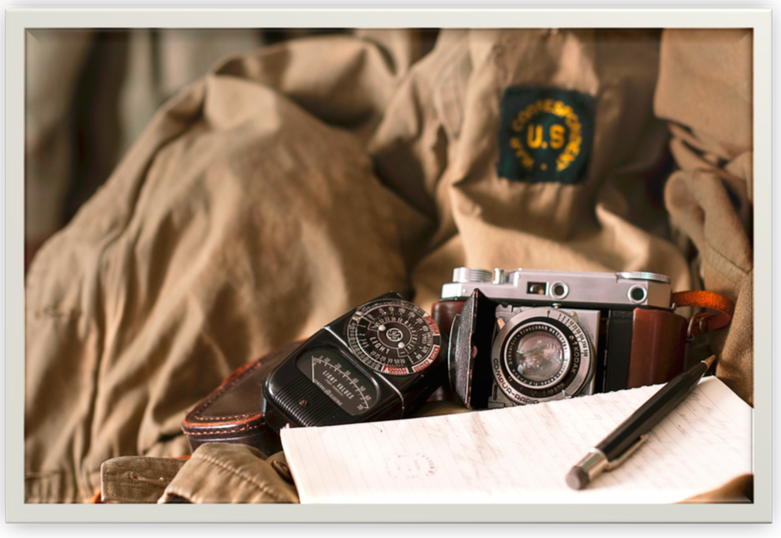
This article was written by a friend of mine, Corey Hodgson, and reprinted as permitted. If you have any specific questions, you may contact him: chodgson1945@gmail.com, with the subject line “GI camera guide”. You may also download a copy of this article in PDF format here.
The following guide is an attempt to inform WWII reenactors, portraying a typical US soldier in Europe. While the guide can be used for those portraying infantry and Marines in various other parts of the global conflict, be sure to research what cameras would be available to a soldier (for example, a Leica or other German-made cameras would be next to impossible to obtain for a Marine on Tarawa).
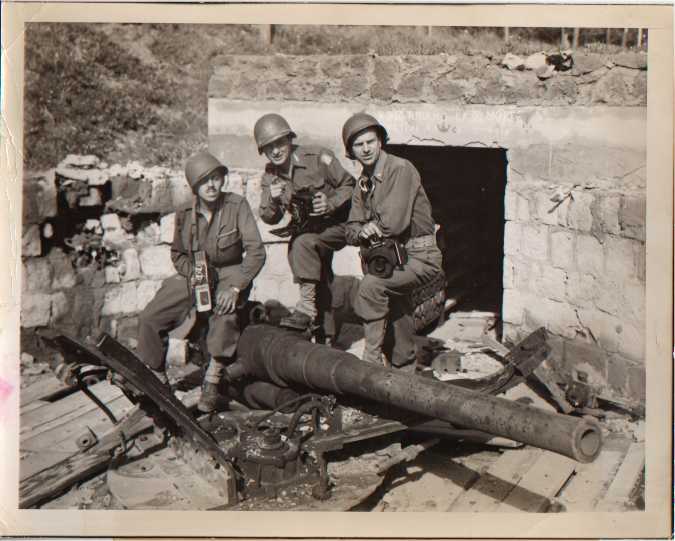
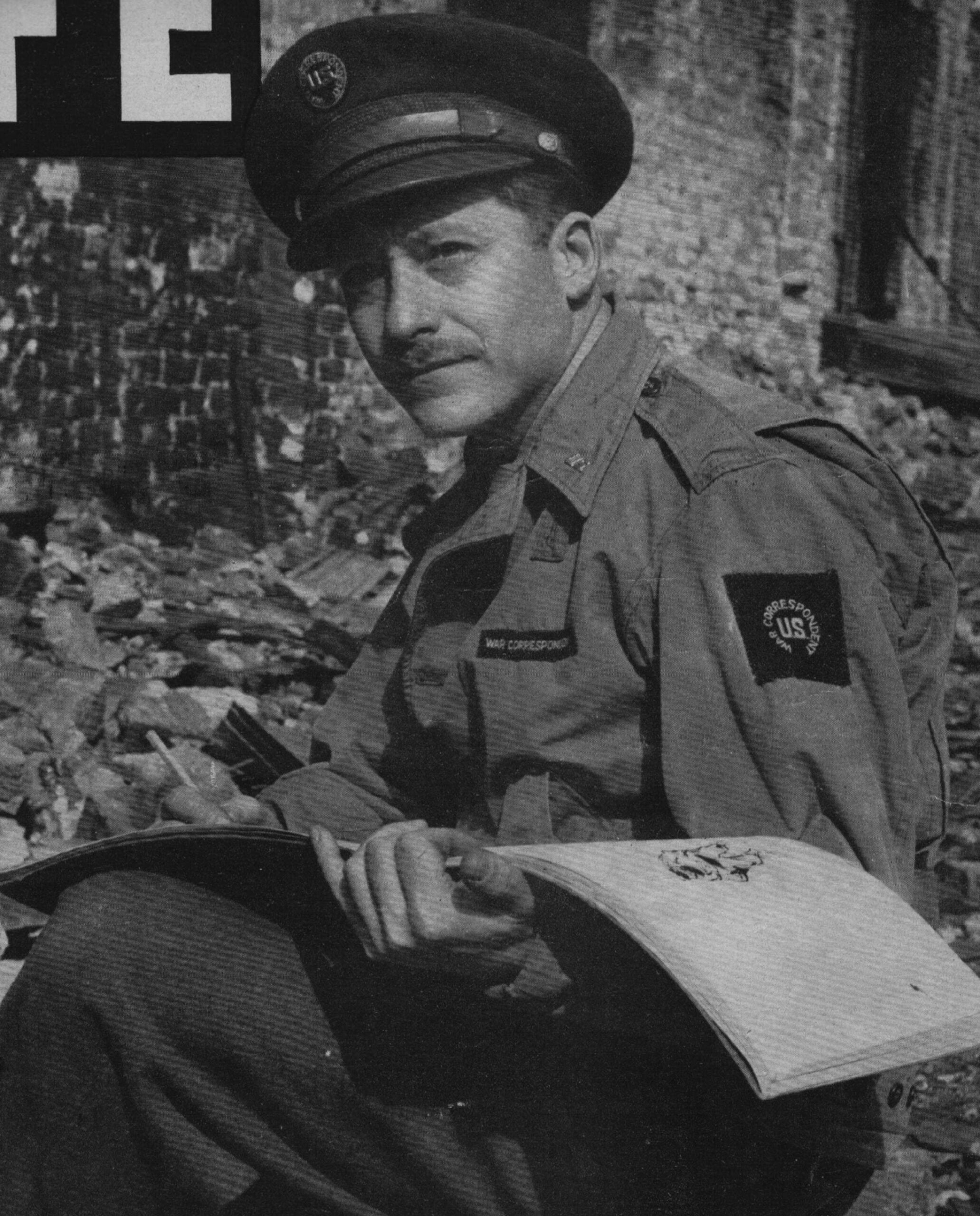
This guide is not meant to be a guide for those wishing to portray a War Correspondent or a member of the United States Signal Corps. While some did choose to use 35mm and 120mm cameras (Like Robert Capa, who chose to use Leica, Contax, and Rollei-branded cameras throughout his time in the Mediterranean and European Theater of Operations), the primary choice for the Signal Corps was the trusted Graflex Anniversary Speed Graphic (this was standard equipment), with its massive 4×5 negative.
Signal Corps Photographic Units used wide-angle lenses and 10in. telephoto lenses on Speed Graphics. This helped to take the correct images. See: History of Signal Corps photography in the Luzon operations, April 1945, pg. 29.
There was also the Combat Camera PH-501/PF produced by Simmons, which Signal Corps Photographic units used to a limited extent. Only about 250 were made before the war ended. See TM 11-2364, Dec 1944.
One ended up on Corregidor and “…proved superior for that type of operation because of its lightness and the protection of its working parts. Disadvantages of it reported by the cameramen were inadaptability for filters (he taped on a Graphic filter on the second day of the operation), bad paralax on closeups, and the difficulty of getting used to the log ride of the shutter release, a plunger that appears to lave exposed when i;; [not sure what’s said here] has only opened the interior blind. Most photographers disliked the combat camera, chiefly because the negative is only 2 × 3¾ instead of 4 x 5. ” See: History of Signal Corps photography in the Luzon operations, April 1945, pg. 29.
There are also video cameras, such as the Model Q Eyemo, which was quite heavy and sometimes converted to Model Ks via aluminum parts made by Ordinance. Photographers also liked the Compact Turret Eyemo as a second chance since it was lighter. These were used by Signal Corps Photographic Units and wouldn’t have been available to regular infantrymen.
Please research your specific impression before purchasing any cameras, as you can easily spend a great deal on something you cannot (or rather should not) use.
Cameras we obtained in three major ways: Gifted to the soldier, purchased by the soldier, and stolen by the soldier.
Rollei
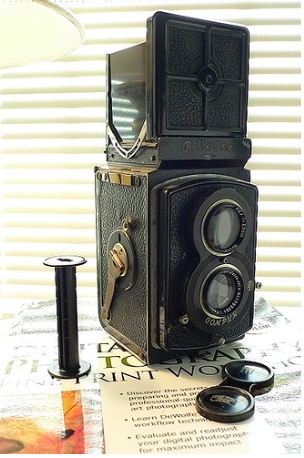
A twin lens reflex is a camera that has two lenses, stacked one above the other, that allows the user to focus using the top one and expose a 6x6cm negative on 120mm film. The Rollei has, and still is, a rather expensive camera. The build quality is above average, being created for professionals, most lasting longer than the original owners themselves. Robert Capa was known to use a Rolleiflex “Old Standard” (made before 1939) during his WWII travels.
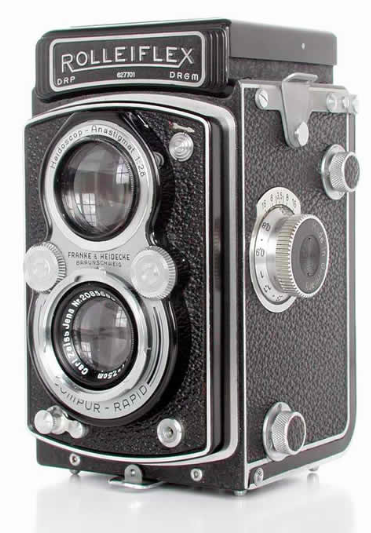
Appropriate for use would be the Rolleiflex Original, Standard, New Standard, Baby 4×4 (all pre-war models made from 1931-1943), Automat Model 1, and Automat Model 2. Also appropriate would be the cheaper entry-level Rolleicord, any models manufactured between 1933 and 1949 (The Models Ia Type 3 and IIc were both manufactured through the war and continued for a few years after the war).
A word of warning, though, the average GI attempted to reduce weight as often as possible, and a Rollei TLR is not the smallest or lightest camera available. Therefore, I highly recommend that you avoid taking this camera in the field, instead using it as a “pre-invasion” camp camera. These cameras would have also been very expensive, costing far more than the average GI could afford.
A cheaper alternative would be the Ciroflex Model A, manufactured in Detroit, Michigan prior to the war and then in Delaware, Ohio, during the war. Only the Model A was made during the war. Also available would be the Primarflex I made in Germany prior to the war.
Original (New and Old Standard made between 1932-1941) Rolleiflex cameras look like this:
Rolleiflex Camera
While Rolleiflex Automats (Models 1 and 2 made between 1937 – 1945) look like this:
Rolleiflex Automats
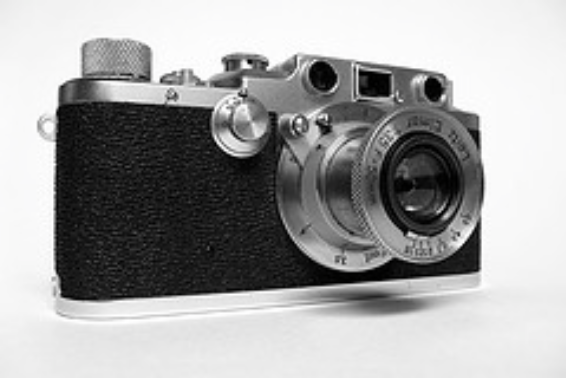
Leica
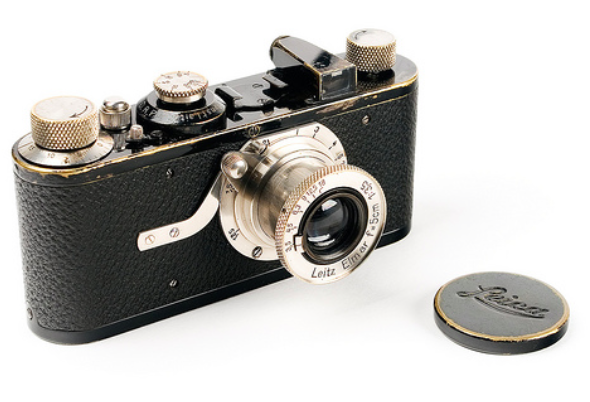
Just as it is today, the Leica brand was one that was known worldwide for quality and an enormous price tag. There are two types of Leica cameras to look at: With a Rangefinder and without a Rangefinder.
Unlike today’s cameras, which allow you to see what you shoot before you shoot it, a rangefinder shows the photographer only what will be in focus. A rangefinder splits the image, and when the photographer makes the two images overlap perfectly (creating one image on the item you wish to focus on), the focus is set, and the picture can be taken. Without a rangefinder, the photographer has to either know or guess the distance between the camera and the subject.
Leica cameras load from the bottom, and I would highly suggest you do independent reading on cutting and loading film for any Leica or Leica copy (the Soviet made Zorki and FED cameras), as the film leader must be cut to load film into vintage Leicas.
Acceptable models for use are Leica I, Ic, IIc, IIIa, IIIb, and IIIc. Avoid all gold versions, or ones marked with Luftwaffe markings (and other Nazi markings on the top). 9 out of 10 times, these cameras are going to be fakes, and while they might be mechanically sound, they usually aren’t due to them being bastardized Soviet copies (A Soviet Copy of a German camera, made to look like a German camera).
Leica cameras are relatively expensive, and again, the average GI would not have ordinary access to any of the cameras – unless they stole them or found them.
Soviet models that would be acceptable for just playing around with include any of the FED 1’s (not the 2, 3, 4, or 5!) and the Zorki 1 and 2.
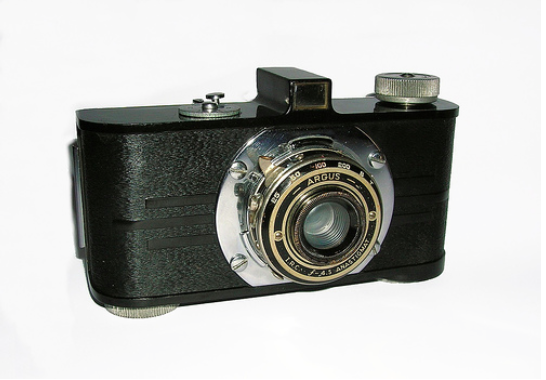
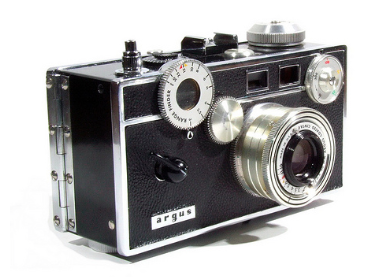
Made in Ann Arbor, Michigan, the Argus A and Argus C3 popularized the 35mm format in the United States. These cameras were relatively inexpensive for consumers to purchase and were very common. The cameras take 35mm film, are built like bricks (the C3 was, and still is, affectionately named “The Brick”), and are very durable. These would be more common amongst the average Joe. For more information on the Argus: http://camerapedia.wikia.com/wiki/Argus
Typical Argus A:
Argus A
Typical Argus C3:
Argus C3
Kodak
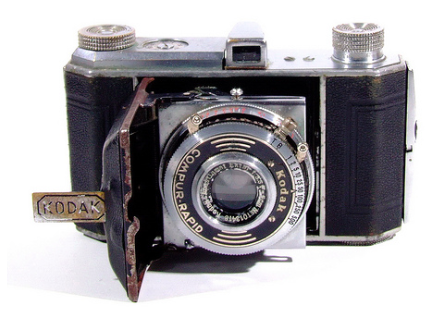
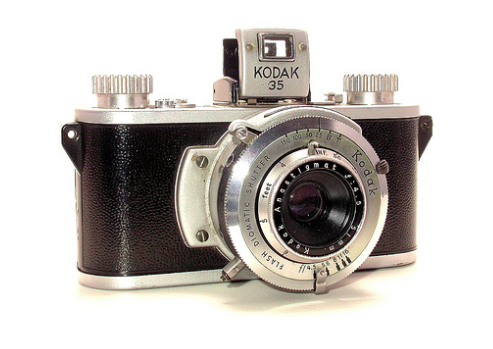
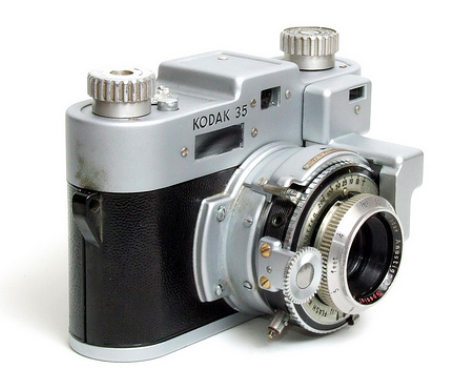
Kodak produced many inexpensive cameras, made to encourage everyone to enjoy photography (and purchase the film that Kodak produced). Cameras were manufactured in two primary locations: The Rochester, New York factory, and the Kodak AG factory in Stuttgart, Germany.
Acceptable Models: Kodak 35, Kodak 35 RF (not very common due to the $48 USD pricetag – $700 USD in 2007), PH 324 (Very rare and not suggested because of that. Due to the US government’s contract with Kodak, the PH 324 cameras were collected and bulldozed as to not flood the commercial market), Retina I (Types 117, 118, 119, 126, 141, 143, 148, 149, 167), and Retina II (Types 122 and 142). Refer to TM-2361 for the manual on PH-324.
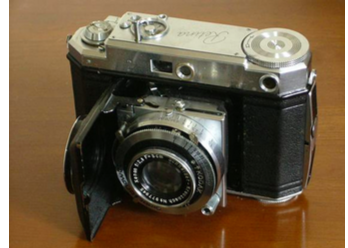
Retina cameras were made by Kodak AG in Germany, and after 1941, production ceased for the remainder of the Second World War.
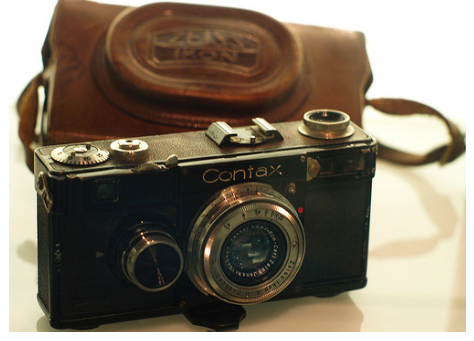
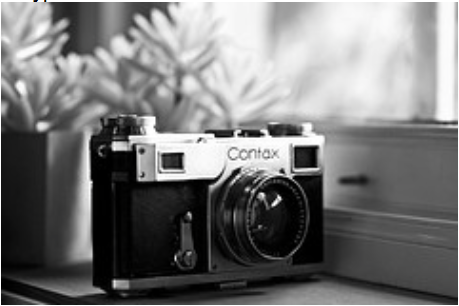
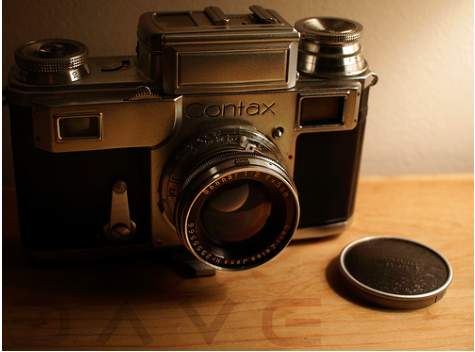
On the success of Leica, another German company (Zeiss Ikon) created the Contax I to compete with Leica. These high-end models were known for their wonderful focusing abilities, a removable back for loading film, a quick and reliable brass shutter, and a new bayonet mount lens system (as opposed to Leica’s screw mount lens system).
There are three acceptable models for the time period: The Contax I, II, and III. The III has a selenium light meter on the top to calculate exposures with. While this feature was revolutionary at the camera’s creation in 1936, today, this feature is at best, barely accurate. It is best to use a different form of metering for your exposures, as over time, the selenium cells have grown to be less accurate than at their creation. After the war, Contax began production in West Germany of the Contax IIa and IIIa. These cameras are also acceptable for use as they are hard to distinguish from the pre-war models (the rangefinder window is smaller, but these cameras are still recommended over the Soviet Copies).
These cameras would not be common amongst the average GI, instead being common in the hands of professional photojournalists like Robert Capa.
There are Soviet copies of the Contax II & III, as the Soviets had taken the machinery from the factory and brought it back home as war spoils – in fact, the Soviets brought back not only the machinery used to make the Contax cameras, but they brought back ALL the parts that remained. This resulted in the first batch of Kiev II cameras having the Contax logo on the inside, with the Soviet KIEV printed on the front. Models that are suggested are the Kiev II and the Kiev III.
The Kiev 4 features a different appearance, and it is generally not suggested that you purchase one for reenacting. The author has used the Kiev II in reenacting previously, and while the camera performed well, the KIEV print on the front stood out rather well. Soviet copies should be avoided if you are looking for a 100% authentic impression.
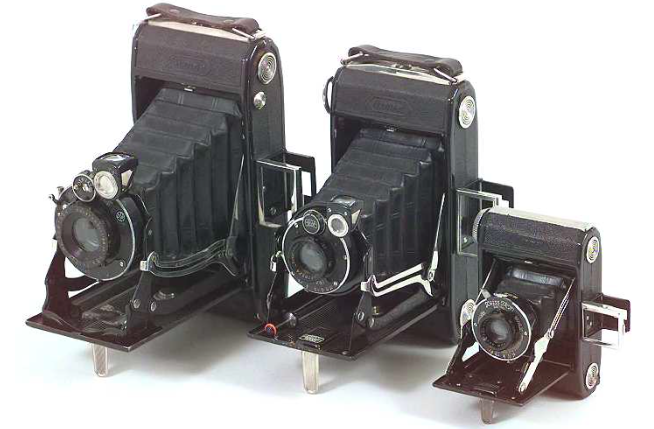
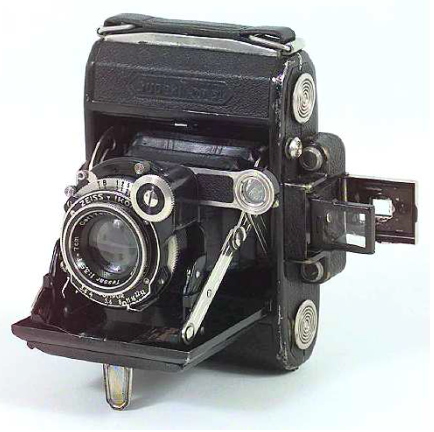
In Germany, the two major producers of optics and camera equipment were Zeiss and Leica. Zeiss Ikon was the product of four major German camera companies in 1926. Known for innovation, quality, and for their excellent medium format cameras, Zeiss Ikon cameras were fairly common – in the author’s view, they were along the lines of Kodak in America.
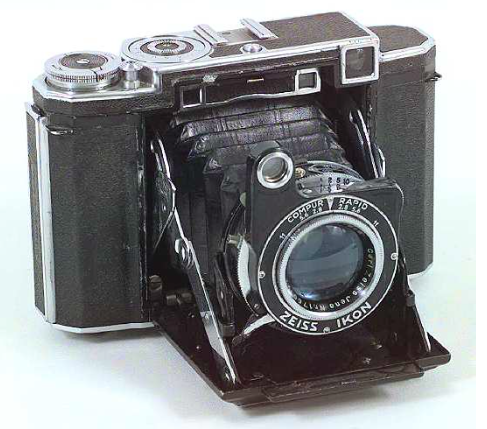
Zeiss Ikon produced many 120mm folders, including the Nettar, Ikonta, and Super Ikonta (an Ikonta folder with a coupled rangefinder). Acceptable models for the use by reenactors include the Nettel, Super Nettel I & II, Nettax, Nettar (510, 510/2, 515, 515/2, and 515/16), Ikonta (A, B, and C models that begin with 520 or 521), and Super Ikonta (A, B, and C). For specific information on the many models, please do research on Camerapedia or on Pacific Rim Camera.
For a description of War Photographers’ Battle Experiences on the Road to Rome, see Life, June 24, 1944, War Photographers. They interview Frank Scherschel, David Scherman, Robert Capa, Ralph Morse, Robert Landry, Carl Mydans, and Will Lang.
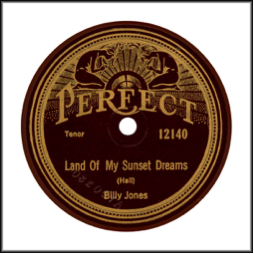
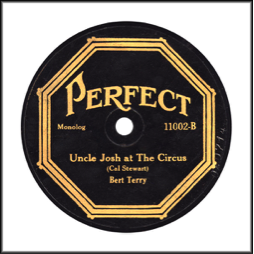
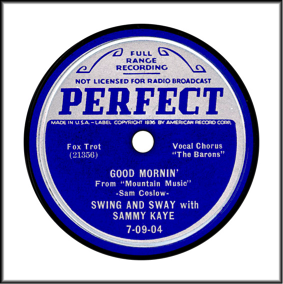
A budget brand of the Pathe-Actuelle Label. The Perfect Record Label operated under the Pathe-Actuelle controlled Perfect Record Company. Early Perfect labels were black for popular music or maroon for classical. These early labels used an octagonal border. By 1923, the label design changed to two nude sun-worshippers. Red shellac pressings were introduced in late 1924 but discontinued in 1931 in favor of black shellac. Perfect created a series called Perfect Star Series for higher-end talent. After being bought by the American Record Company (ARC) in 1929 the label remained the same until a re-design in 1937 to an undistinguished blue-and-silver label without a pictorial trademark. Perfect would be discontinued by ARC in April 1938.
Music Genres: Pop, Orchestra, Classical, Band, Blues
Pre-1941 Label:
Perfect Record Label: 1922-1923. Notice the octagonal border.
Perfect Record Label. Early
Uncle Josh (Cal Stewart) was a monologuist known for telling humorous stories with a unique laugh. I’ve included a link to the audio of Uncle Josh at the Circus below. It is on a Columbia record.
http://www.youtube.com/watch?v=1GvmVTtZy6g
Perfect Record Label: 1923-1937. The record may be black, blue, green, or red shellac with nude sun-worshippers.
Notes: The Race record series was called Perfect 100s. It was started in July 1926. These were duplicates of Pathe’s race series (#7500). Rosa Henderson and Mary Staffard would feature prominently on the Perfect race-record series. Another race artist include Big Bill Broonzy (operating under the pseudonym of Sammy Sampson). Big Bill would also have a side project with Tommy Dorsey, called The Famous Hokum Boys.