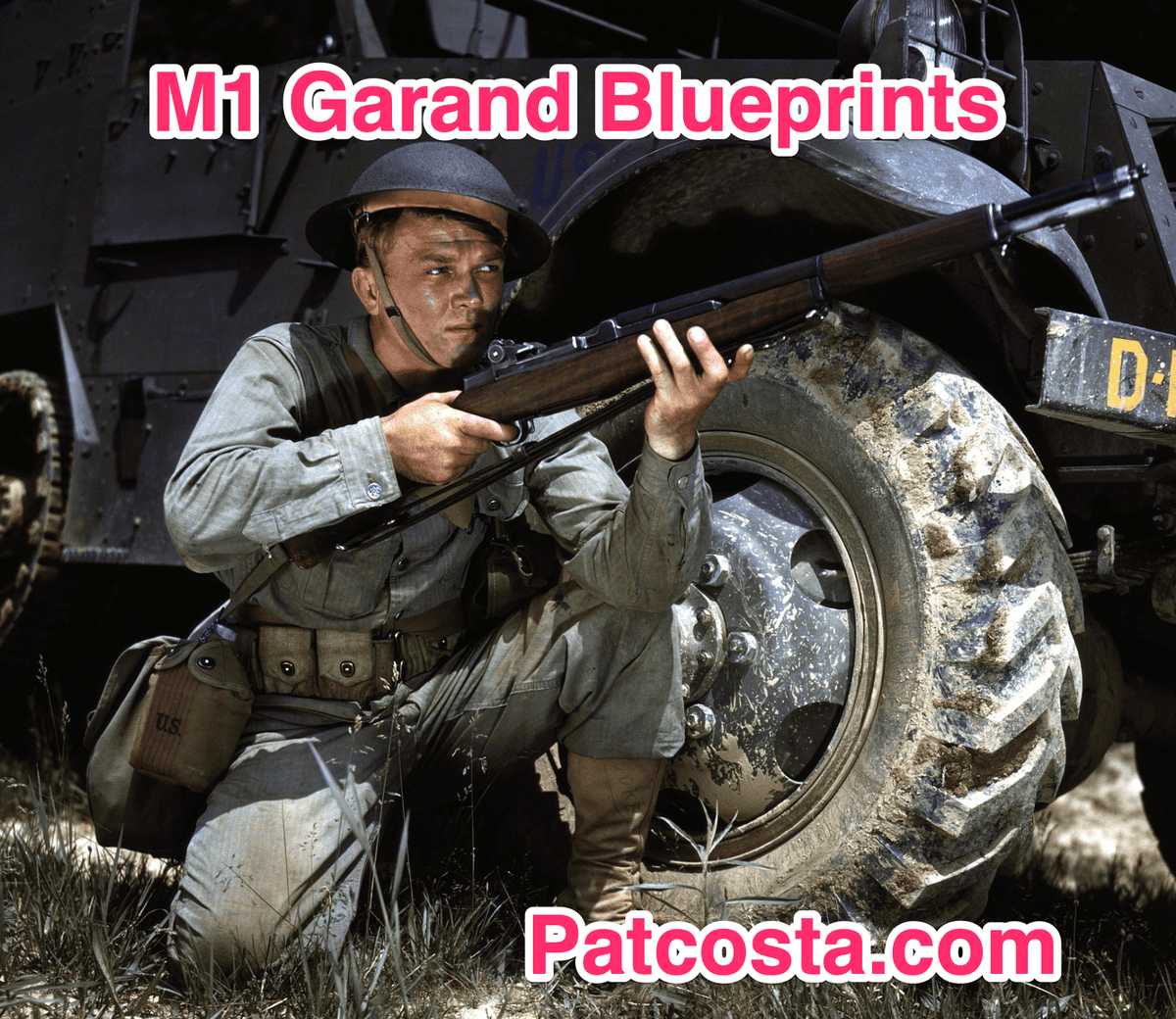
Below are some pdfs which show the blueprints of the M1 Garand Rifle
Below are some pdfs which show the blueprints of the M1 Garand Rifle
Every once and a while I come up with a poem or find some poems I want to share. This page will serve as a repository of them.
This is a poem that I came up with as I was taking some Farsi classes away from my wife for a Summer at the University of Maryland.
Folding Doors are not Mismatched
Same wood. Same paint. Same design.
Made together, for each other.
Strong. Solid.
Folding doors, apart during the day, yet always near.
They see the world that separates them.
Evening settles and they are reunited.
Doors of equal.
Strong. Solid.
Folding Doors are not Mismatched
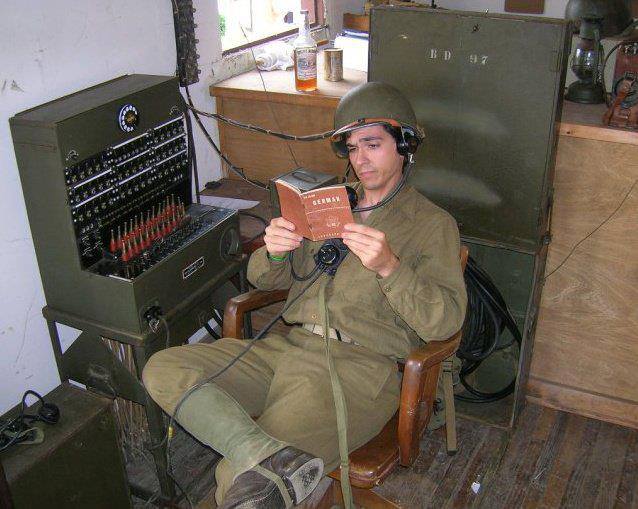
The signal depot company was responsible for maintaining, repairing, and managing the signal corps equipment for a division. I’m not sure what division the 557th Signal Company was a part of. However, it seemed likely it was sent to the Pacific for a very brief amount of time.
Technical Sgt T/5 Bernard Stein composed this poem at the end of WW2. Reproduced below –
27 August 1945
A history (rough but right) of the 557th Signal Depot co., written for the boys by one of the boys.
0R APROPOETRY
By T/5 Bernard Stein.
On the first of April, year forty-four, There was born a group in tho Signal Corps.
The 557th was its name,
To run a depot, was to be its game.
A little, tough man by the name of Knight Was the officer chosen to show it the light.
He bellowed and blustered, but gave the group “sock”, Then, one fine day, he was replaced by Block.
This new Captain , who had come to the fore , Didn’t appear to know the whole score.
But the men he chose were an excellent lot; For this you’ll see later, a Majority he got.
It was in Camp Maxey, in that great Texas land, That this fine groups made its first stand.
They soldiered and studied and practised and sweat, TIll an “Excellent”, in ITP, they did get.
In that camp, they moved quite a bit, Till, It seemed, they’d cleaned every part of it. On 2 December, they did finally go
To Fort Sam Houston, near San Antonio.
There they worked in the depot; They lived very well; of their many good deals, the boys still do tell. Some even married, and their brides are there yet, While many still write to the gals, they there met.
None will forget the “Twin Palms”, cross the way,
It was “Don’t Fence Me In” and “Rum and Coke” every day. Each day at the depot,
they worked “racking up”
At night, the boys took off and tried “shacking up”
Then the Captain and some boys went off to schools, While the rest of Repair dept. [not sure if this is right]. displaying its tools. The boys then returned, a little bit sager,
But the Captain, Oh Glory, returned as a Major.
On 27 March, Fort Sam they did leave;
There was nary a man who did not grieve.
Their first impression of their new camp, Bowie, caused the boys, to cry aloud, “Phooie”.
Soon out in the field, the boys had to go
and those three weeks of bivouac moved, Oh, so slow. But again the men showed, what fine men they be, Because they got an “Excellent” on the UTP.
Soon after, the Major, at a formation one day, Stunned the boys when they heard them say,
“Now that the officers have seen you through-” That was a statement most untrue.
But the men laughed it off and got ready
then, For POE at a camp. named Stoneman.
On the 7th of June they hit the rail
lnto sunny Cal. they blazed a trail.
There they were greeted with shots in the arm.
So that many diseases could do them no harm.
But “short arm”inspections was what kept the boys stoppin, Till they believed that was our “secret weapon”.
Censorship came and the letters grew colder,
For you can’t emote, who they’re at your shoulder.
The censor, bescissored, roads what you write,
But the warm thoughts of home were there day and night.
Came the 15th of June, they marched to the pier,
The boys sounded merry, but some must have felt fear. The boat “Catalina”, took them to Frisco that day,
Then they boarded the “Mormacwren” and were on the way.
To remain at home it was now too late,
For they’d already passed under the Golden Gate.
But the lament of the “lame” still rose hopefully, “They’ll never pass me through POE”.
So off they sailed on the big blue sea Further and further from the land of liberty. The ship was
crowded and holds were hot, For 53 days they were a miserable lot.
If permission is granted to add chronology, Here are the stops they made at sea.
Pearl Harbor June 21
Eniwotok June 30
Ulithi July 5
Loyto July 9
Manila Bay July 15
On the 19th of July, an LCM came portside;
The men scrambled in for a short but rough ride.
They landed, then drove thru tho badly wrecked town, And in a depot, in tents, settled down.
For a while it looked like the unit would split,
As grabs were made for different part of it .
Meanwhile, the men, who they could, went out sight seeing , And even found bones of Japs who’d failed fleeing.
Then an assignment came through for them,
On 30 July they railed from Base X to M.
From AP0 75 to 70 they went
To perform the mission for which they were sent.
The duties they got were certainly clear,
For hadn’t they trained for more than a year? But alas, to work the Major couldn’t
for he was ordered to stay as just the C.O.
But just as the boys , their jobs began tending , The war most suddenly came to an ending.
Now the boys once more want to roam,
But this time, please God, let it be home
ANY QUESTIONS??
Sergeant, dear Sergeant, great trouble besets me,
To travail at last I must yield.
Make your statement of cost, for I fear I have lost
My strap, carrying, bag, canvas, field.
Some dastard in o.d. has sabotaged me;
My just ire cannot be concealed.
He has taken to flight in the dead of the night
With my strap, carrying, bag, canvas, field.
I would rather be taken a prisoner at Makin
Or be flayed ’til my life’s blod congealed,
Or go months without shoes than surrender or lose
My strap, carrying, bag, canvas, field.
Wherever we’d go, in the rain, sleet, or snow,
And in exhaustion I staggered and reeled,
Cross my shoulder ’twould ride, with the bag at my side—
My strap, carrying, bag, canvas, field.
Heavy burdens I’ve carried, but never have tarried
And my weariness was never revealed.
Oh, I’ll never forget my bag, canvas, musette
And my strap, carrying, bag, canvas, field.
Now the bounties of Fate cannot expiate
My sorrow, for someone has stealed—
And my blood it does curdle—my GI web girdle,
That strap, carrying, bag, canvas, field.
Make your Statement of Charges, I’ll pay out the largesse,
My Sergeant, for I am well-heeled.
But in anguish I sigh with a tear in my eye
—For my strap, carrying, bag, canvas, field.
In the Army’s Standard Nomenclature Lists, equipment and materiel were itemized for accounting and record-keeping. The item designations, usually descriptively detailed, often came up with perplexing names.
There are several instruments that are important in Iranian culture. Some instruments originated from inside Iran while the origins of other instruments are not known. Three important instruments that have contributed to Iran’s rich musical history and culture are the daf, the tar, and the santur. These instruments are used mainly to play classical Persian music as they do not lend themselves easily to integration with western styles of composition.
The daf is a musical instrument that looks like an oversized tambourine. It is held in the right hand and played with both hands by tapping the sides and the head to create sounds. Some daf’s have metal rings while others do not. The daf’s exact origin date is not known but it was created in Iran. The original word for daf was dap. That term along with pictures can be found in paintings, poems, and reliefs of pre-Islamic Iran. The daf’s role was mostly religious and spiritual rather than musical. This is evidenced by the Sufi’s having borrowed the daf and incorporating it into their religious ceremonies.
Another important instrument is the tar. The tar is shaped like a lute but with a double-body and may have three to six strings. The tar is considered the “sultan of instruments” and the creation of the tar was probably influenced by the Persian Empire. However, the present form of the tar was developed in the 19th century by the expert tar maker, Hovanes Abkarian who is considered the father of the modern Persian Tar. One use of the tar over the years has been in music therapy. It was written in the book “Gabusname” by Keykavus Ziyari that the use the tar held healing properties. Some etymologists suggest the English “guitar” has its origins in the Iranian word “tar.”
The final instrument is the santur. The santur originated in Iran and was spread to other regions via the Persian Empire, Arab Empire, and the Silk Road. The santur is an instrument that has wires bridged across plywood. The santur may have many strings. The Persian version has 72. The wires are strung with a pair of hammer sticks called the Mezrab. Some santurs have movable bridges which can continuously change the pitch of a note by several steps.
Learn more about Persian with some of my Farsi Resources here.
Iran is home to a wide variety of professional sports and parlor games. Some sports and games are domestic having originated from inside Iran. Other sports and games are imports, having originated from outside Iran. Several games that Iranians invented at one time or another were an Olympic sport.
The game of Polo (Chogan) has its origins in Iran. Polo was carried by nomads who traveled and settled in Iran. Polo as a sport has been documented in the epic poem Shahnameh. Polo in fact was so popular that it was an olympic sport between 1900-1039. While Polo has been known to the people of Iran, it has mostly a sport reserved for the elite and royalty. This probably explains why following the 1979 revolution Polo declined in popularity. It was expensive and seen as a sign of the Shah. Although, it appears that in recent years interest in the sport has increased.
Another popular sport in Iran is wrestling. While Iran probably cannot claim to have invented wrestling it has contributed greatly to the free-style form of wrestling. A primary difference between the Greco-Roman style of wrestling and the free-style form is that the former prohibits the use of the legs while the latter allows it. In this manner, Iran is considered a leader in training wrestlers for the free-form style of wrestling.
Commitment to be a wrestler in Iran is as much a life-style choice as it is a training regime. In particular, wrestlers are encouraged to adhere to certain Islamic principles like loyalty, faith, and courage and to follow the Varzesh-e-Pahalvani, which is the spot training path. In doing so, wrestlers attend a Zurkhaneh where they are trained in the sport. Wrestlers train with unique objects like wooden clubs and will often recite excerpts from the Shahnameh while they train. Free-form wrestling has been an Olympic Sport since 1904. Iran has won 32 medals in free-form wrestling.
Besides being the originator of several professional sports, Iran can lay claim to inventing backgammon, or Takhteh Nard. The game was supposedly invented in Iran around the 6th century. However, excavations at the “Burnt-City” on the southern border between India and Iran have found a game similar to backgammon that has been dated to around 3000 BC.
Finally, two modern “import” sports that enjoy immense popularity are football and basketball. Iran has a national basketball team which placed 11th in the World at the 2008 Bejing Olympics. Iranian basketball is an upcoming sport as several amateur-ranked and professional players from around the world (including from the US) have honed their skills playing basketball in Iran either prior to going professional or during the off-season.
Iran also has a national football team. The national football team is ranked 4th in Asia and 45th overall according to current FIFA rankings. Iran has both female and male national soccer teams. Unfortunately, the national women’s team was recently banned from the London Olympics on account of the FIFA’s regulations against headscarfs.
Learn more about Persian with some of my Farsi Resources here.
Persian desserts can be divided into several categories and sub-categories. There are drinkable and non-drinkable desserts. There are wet and dry desserts. Finally, there are frozen and non-frozen desserts.
The drinkable desserts may be served with a meal or bought at local kiosks. One popular kind is doogh, which is a combination of carbonated water, yogurt, and mint. This drink is so popular that in 2007, Iran produced 14,400,000 tons of it. Doogh is not something new, as it has been around since ancient Persia. In fact, a newspaper article from 1886 described it as, “a capital thirst quencher in hot weather.”
(Personally, I think it tastes awful)
Other drinks are frozen, such as Sharbat (though originally an Arabic word, it is where English gets both “Sherbert” and “Syrup”), Havij Bastani (a carrot ice-cream float), and other fruit-juice drinks. Sharbats are very old and have been described in texts dating from the 12th century.
Some additional frozen desserts are Bastani-e Za’farani and Faludeh. Bastani-e Za’farani is ice cream flavored with rosewater and saffron. Faludeh is a sorbet made with cornstarch, rosewater, and ground pistachios. The Faludeh from Shiraz is especially well-known.
The non-drinkable and non-frozen desserts can be divided into two categories: wet and dry. Wet desserts are those that draw inspiration from French desserts. For example, some Iranian desserts use heavy whole-milk cream and glazed-fruit toppings. You can also find plenty of Iranian desserts prepared in the French dessert style, such as tarts, éclairs, and cakes. Many desserts use common ingredients found in Iranian cuisine like rosewater, pistachios, and saffron.
The dry desserts are native to Iran, having developed their own preparation techniques without outside influence. These include cookies, deep-fried dough, and Noghl. Cookies can be made from chickpea flour or rice. Cookies may have raisins, walnuts, figs, or saffron as a filling. The final type of dessert may be a variety of nuts. One special kind is called Noghl, or sugar-coated almonds. These are traditionally served at weddings or with tea.
One dessert that seems to straddle the wet and dry categories is deep-fried dough. Deep-fried dough is usually soaked with sugar, honey, and cinnamon, though some can be served dry like a plain doughnut. The concept of deep-frying dough was brought to Iran by travelers either from Arabia or India.
Learn more about Persian with some of my Farsi Resources here.
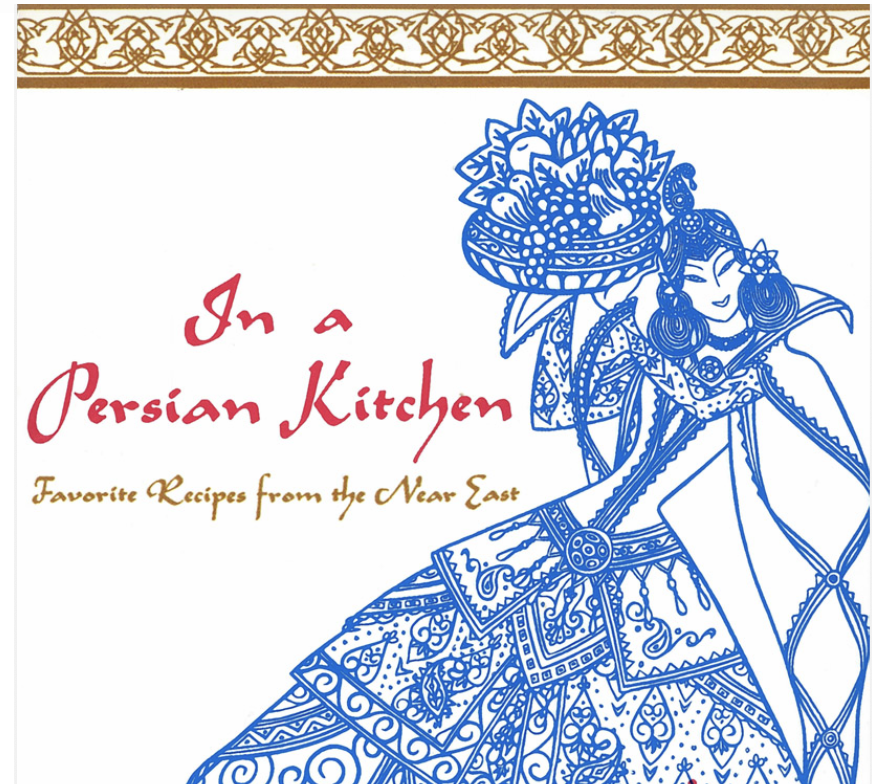
I also have a Persian book titled: In a Persian Kitchen by Maideh Mazda, first published in 1960, and it is full of great Persian recipes.
چاشنی لیمو Makes a lemon dressing for pasta
¼ cup of lemon juice
یک چهارم فنجان اب لیمو
¼ cup of olive oil
یک چهارم فنجان روغن زیتون
2 tablespoons of garlic powder
دو میز- قاشق ها پودر سیر
2 tablespoons of dry basil
دو میز- قاشق ها برگ ها خشک
Salt and pepper
نمک و فلفل
Dash of nutmeg
یک کم جوز
How to combine with Pasta
پاستا می پزد
چاشنی لیمو با پاستا در کاسه مخلو طکند

Learn more about Persian with some of my Farsi Resources here.
Animals: dog, cat, fish, bird, ‘animal’ (dog/cat/fish/bird = animal), snake, cow, pig, mouse, horse, elephant, tail, wing
Transport: train, plane, car, bicycle, bus, boat, tire, gasoline, (train) ticket
City/Countryside: city, house, street, airport, train station, bridge, hotel, farm, a crowd, court
Clothes: hat, dress, skirt, shirt, T-shirt, pants, shoes, pocket
Colors: red, green, blue (light/dark), yellow, green, brown, pink, orange, black, white, gray
People-related: son, daughter, mother, father, man, woman, brother, sister, family, grandfather, grandmother, husband, wife, king, queen, neighbor, boy, girl, religion, death, money
Beverages: coffee, tea, wine, beer, juice, water, milk
Food/Food Related: eggs, cheese, bread, soup, cake, chicken, pork, beef, apple, banana, orange, lemon, corn, rice, oil, seed, knife, spoon, fork, plate, cup, breakfast, lunch, dinner, sugar
Home: table, chair, clock, bed, lamp, window, door, bedroom, kitchen, bathroom, pencil, pen, photograph, soap, cell phone, computer, laptop, camera, television, book, key, paint
Body: head, face, hair, eye, mouth, nose, ear, tongue, back, finger, toe, leg, foot, heart, blood, brain, tooth, knee, sweat, disease, bone, beard, tear (drop)
Nature: sea, river, mountain, rain, snow, tree, sun, moon, forest, plant, wind, soil/earth, flower, valley, root, lake, star, grass, leaf, air, sand, beach, ocean, wave, morning, evening, night
Jobs: doctor, waiter, priest, police, firefighter
Materials, Measurements, Math: glass, metal, wood, stone, clay, meter, centimeter, kilogram, inch, pound, half, circle, square, silver, gold, diamond, copper
Misc: ball, game, price, gun, dream, left, right, straight, bag, box, barrel, map, a dot, poison, needle, consonant, vowel, light, yes, no
Seasons: Summer, Spring, Winter, Fall
Numbers: 1-22, 31, 32, 41, 42, 51, 52, 61, 62, 71, 72, 81, 82, 91, 92, 100, 101, 102, 110, 111, 1000, 1001, 10000, 100000, 1000000
Months: 1-12 (use a calendar and numbers)
Days of the week: 1-7 (use a calendar and numbers) (learning these leads into “Today/Yesterday/Tomorrow”)
Times: year, month, day, hour, minute, second (use a calendar and clock)
Cardinal Numbers: 1st, 2nd, 3rd, 4th, 5th
Verbs that are somewhat easy to picture:
to work, to play, to go, to walk, to run, to drive (careful with verbs of motion!), to follow, to think, to speak/say, to eat, to drink, to kill, to die, to smile, to laugh, to cry, to buy, to shoot(a gun), to jump, to smell, to see, to taste, to touch, to hear, to kiss, to burn, to melt, to dig, to explode, to sit, to stand, to love, to drive, to pass, to cut, to fight, to lie down, to dance, to sleep, to wake up, to sing, to count, to marry, to pray, to win, to lose, to mix/stir, to bend, to wash, to cook, to open, to close
Adjectives/Adverbs that are somewhat easy to picture:
long/short, tall/short, wide/narrow, big/small, slow/fast, hot/cold, new/old, good/bad, wet/dry, sick/healthy, loud/quiet, happy/sad, beautiful/ugly, deaf, nice/mean, rich/poor, thick/thin, expensive/cheap, flat/curved, male/female, tight/loose
This post includes a powerpoint that goes with Virginia SOL 13d, The Federal Reserve System. The powerpoint includes images, diagrams and charts.
Teachers wishing to use this will need to add in the vocabulary as it may have changed and any Quiz questions they want to add in the specific slides
Federal Reserve System PowerPoint
Video for use with questions.
80th Infantry Division drew men from VA, West VA, PA
Chinese Restaurants
DC in the 1890s first ones appear: https://ggwash.org/view/32254/then-now-the-only-chinese-restaurant-east-of-the-river
Pittsburgh, Early 1900s: http://old.post-gazette.com/lifestyle/20031209chinatown1209p1.asp
Philadelphia: http://www.ushistory.org/tour/chinatown.htm Restaurant NAME: Mei-Hsian Lou
Montana: http://mentalfloss.com/article/88648/delicious-history-nations-oldest-chinese-american-restaurant
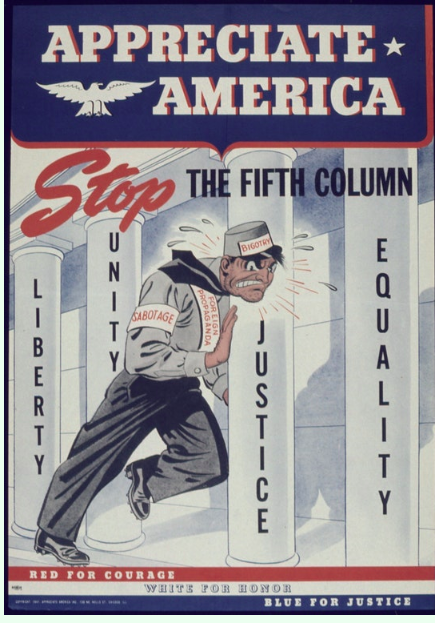
Below are some World War II Propaganda Posters that I like.