1. What does the number next to each of the notes above mean? 2. Follow the model above and write a new note. 3. Examine the code above and explain what you would need to do in order to play three notes. 4. Look at the above code and write the code needed to place the melody into a loop
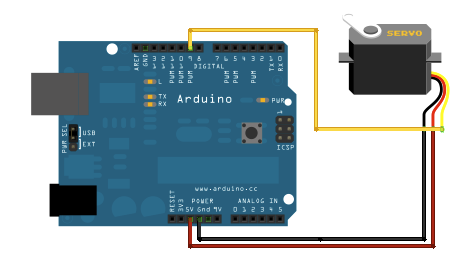
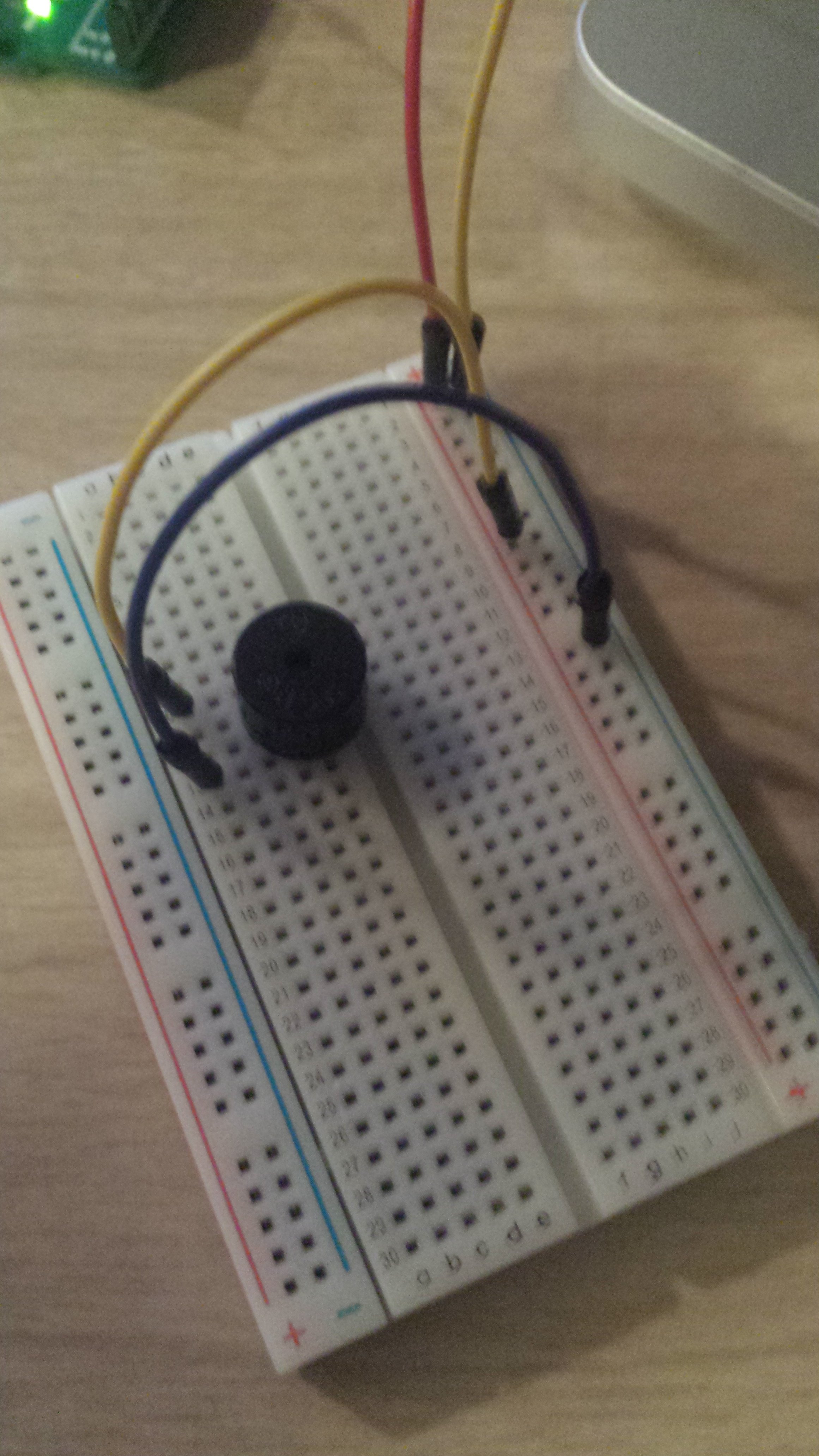
Connect the wires as shown to complete a circuit with the Piezo buzzer.
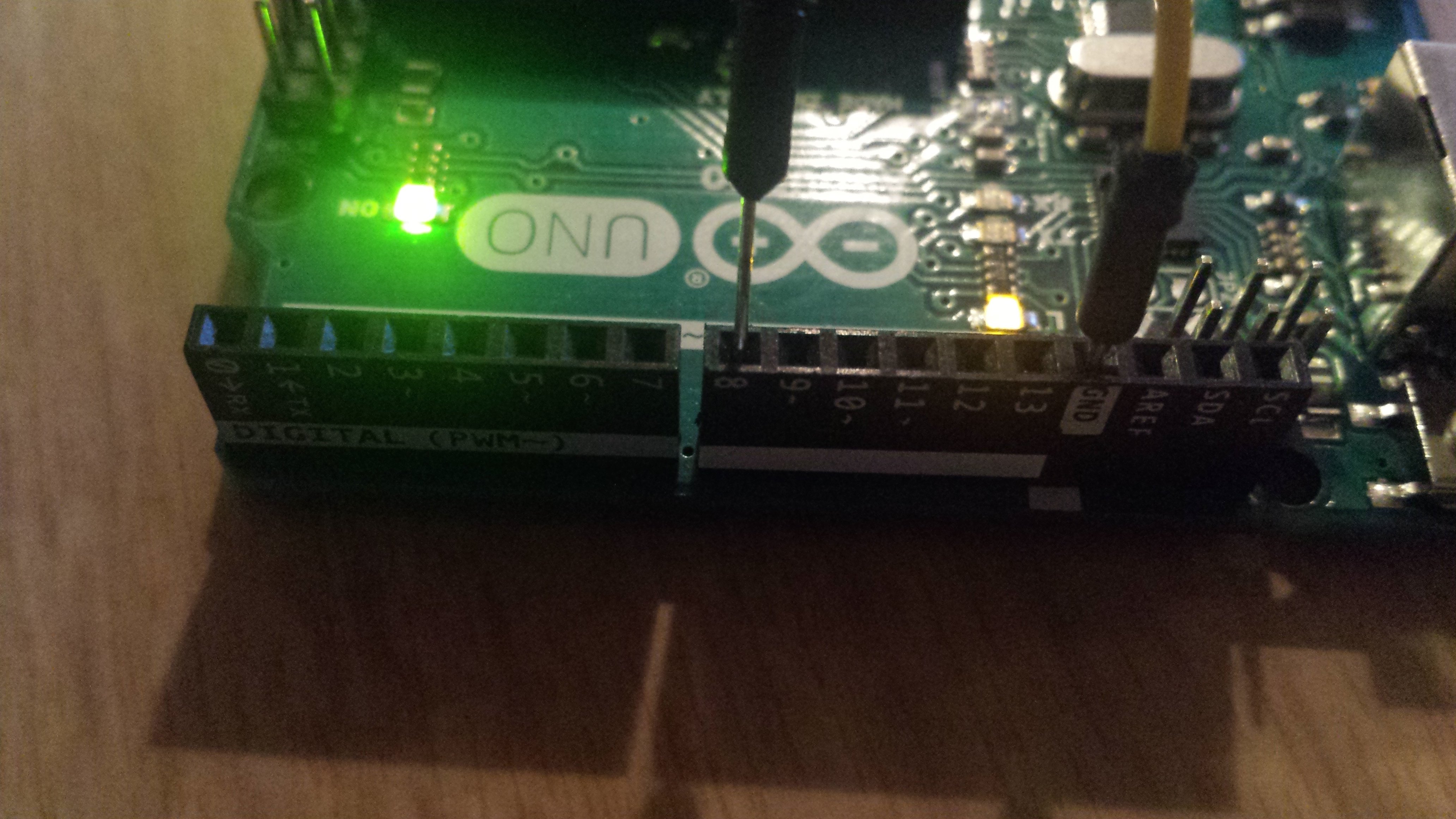
The negative wire should go to the digital ground pin while the positive wire should go to digital pin number 8 and positive should be in ground. If that does not work, place the positive wire in the 5v power pin.
To code the Piezo buzzer you will need to create a tab or file that your main Arduino code can access. You should call this new tab pitches.h
To create a new tab click on the arrow located all the way to the right and select New Tab.
Name this tab pitches.h and insert the new code. Use the code located here to cut and paste into a pitches.h tab
Figure out how to adjust the delay between each note.
Can you play a recognizable tune? (Note: delete everything in your pitches.h file and insert all the following code into the Arduino Main sketch). You do not need any resistors and make sure your positive wire is in pin 13 and your negative wire is in pin 3.
Visit the following and link and address the questions. Be sure to navigate to each page on the link.
Internet Safety Link
Questions:
1. Why do people believe they are safer online than they actually are?
2. Explain the following internet threats
A. Malware
B. Phishing
C. Virus
D. Clickjacking
E. Browser Hijacking
F. SPAM
G. Trojan Horse
3. What are three ways your internet privacy and safety can be violated?
4. Explain the following internet safety terms
A. Meme
B. Troll
C. Sockpuppet
D. Avatar
5. Google and Bing yourself using quotes. If information appears you do not like you can request Google or Bing to remove it.
You may need to have an account with Google or Microsoft in order to request a removal.
Note: If you identify any images or information contained in the search you do not like you can ask Google and Bing to remove them. Most search engines allow for that to happen BUT it may take several weeks before they are completely removed.
6 Ask yourself, how are your privacy settings on your social media sites: Facebook, Twitter, Snapchat etc? Are they open for anyone or just “Friends”?
Directions:
Visit the following web address and complete the questions. You just need the answers.
A. Arduino DigitalWrite Function
1. What is the name of the function?
2. What does it describe (ie: What does it do?)
3. How do you write it (ie: What is it’s Syntax?)
4. What is it’s parameters (ie: What information can you put inside of it?)
5. When would you use the function?
6. Create an example digitalwrite function
B. Arduino AnalogWrite Function
1. What is the name of the function?
2. What does it describe (ie: What does it do? HINT: Read the first two sentences)
3. How do you write it (ie: What is it’s Syntax?)
4. What is it’s parameters (ie: What information can you put inside of it?)
5. When would you use the function?
6. Create an example analogwrite function.
C. Arduino PinMode Function
1. What is the name of the function?
2. What does it describe (ie: What does it do?)
3. How do you write it (ie: What is it’s Syntax?)
4. What is it’s parameters (ie: What information can you put inside of it?)
5. When would you use the function?
6. Create an example pinMode function.
D. Arduino digitalRead Function
1. What is the name of the function?
2. What does it describe (ie: What does it do?)
3. How do you write it (ie: What is it’s Syntax?)
4. What is it’s parameters (ie: What information can you put inside of it?)
5. When would you use the function?
6. Create an example digitalRead function.
Use the word-bank to match the term to the correct description
LED
Transistor
DC Motor
Servo Motor
Resistor
1___________used to restrict electrical current
2__________type of motor that angles
3__________amplifies or boosts electrical power
4__________a type of light that takes 1.5 volts of power
5__________type of motor that spins
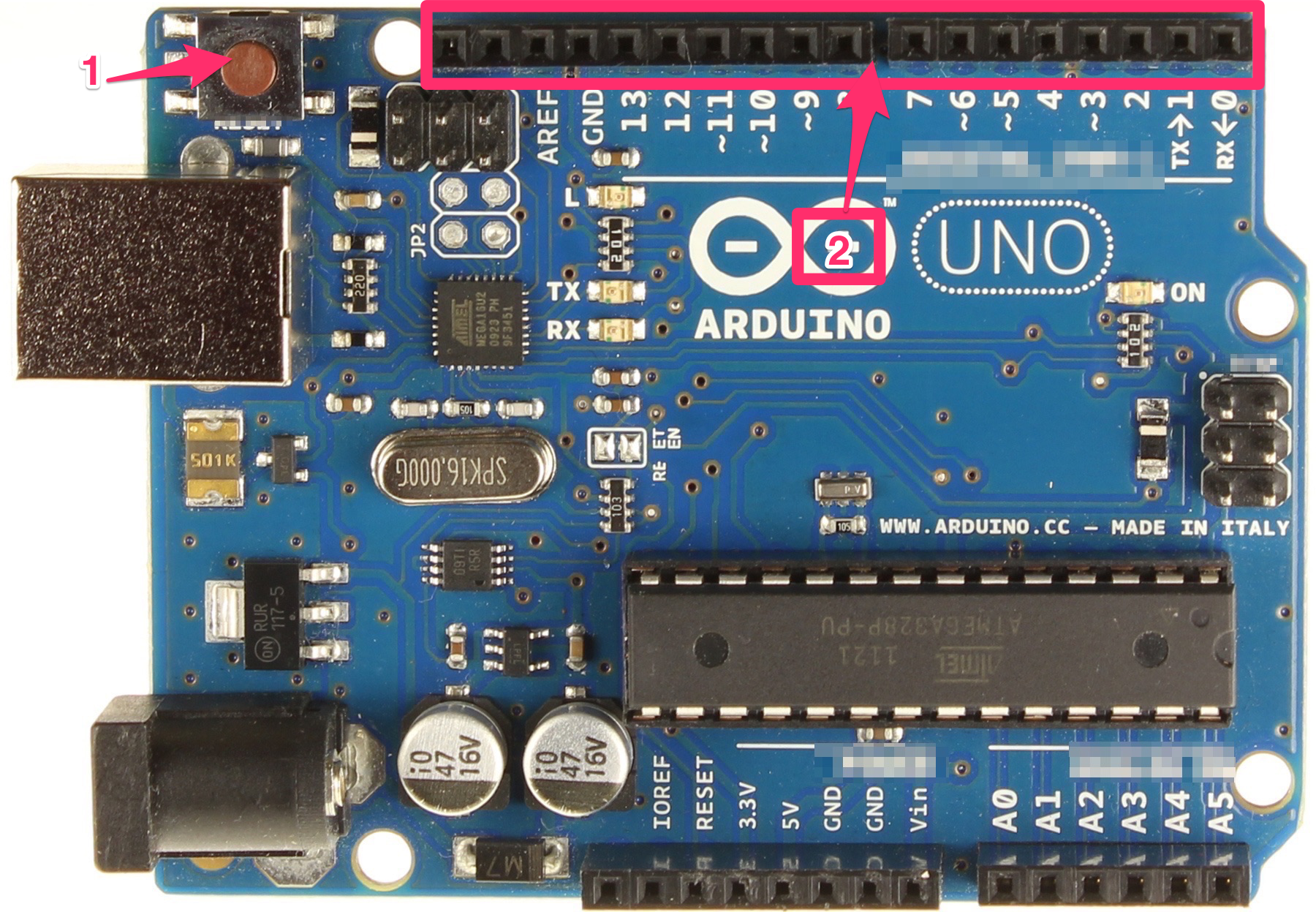
Examine the Arduino Board and match the number with the Arduino component. Use the word bank to help. Note: You will NOT use all the words in the word bank
Digital Pins
Power Pins
Voltage Regulator
Reset Button
6_________________________(answer for number 1 in picture)
7_________________________(answer for number 2 in picture)
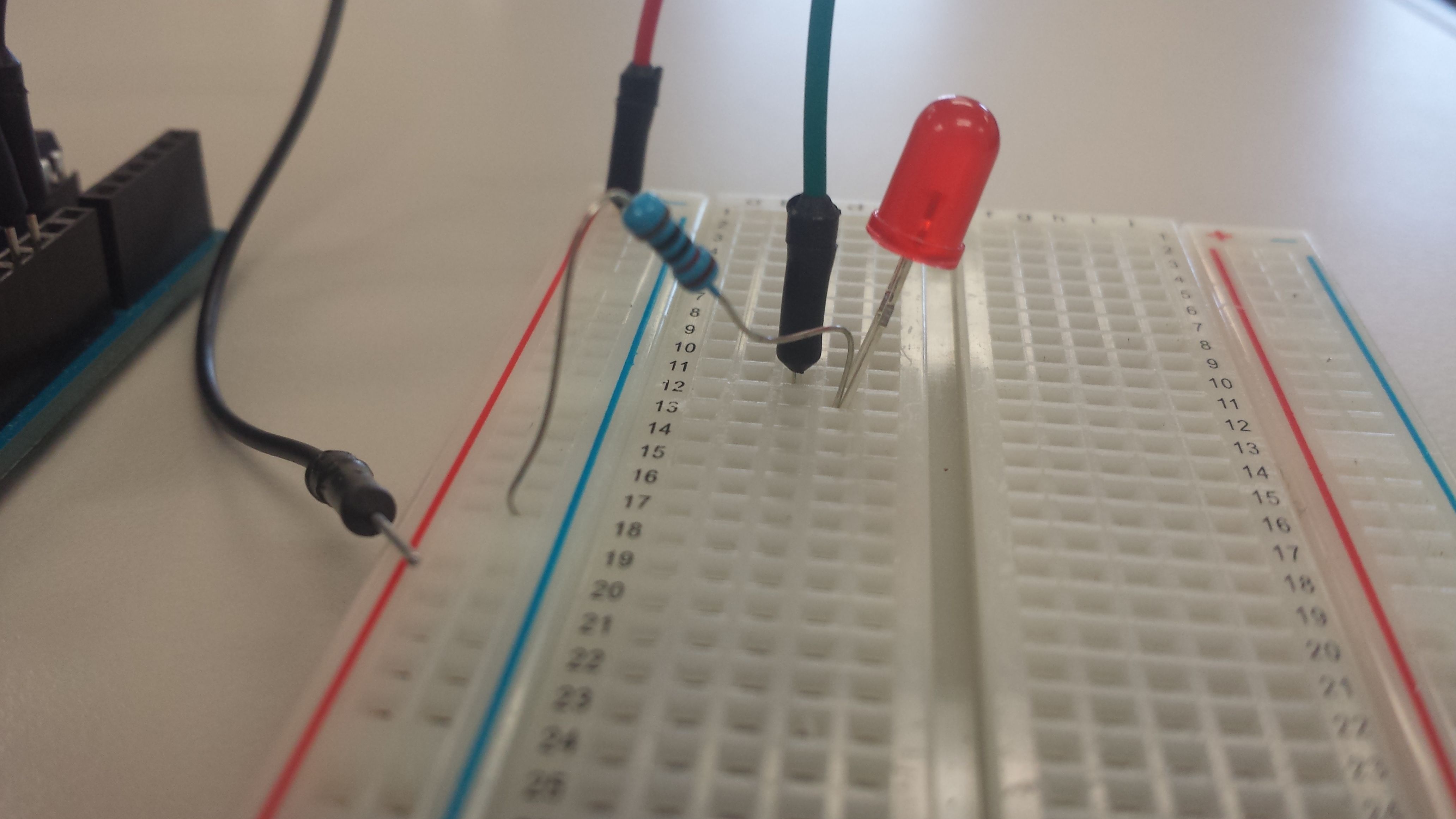
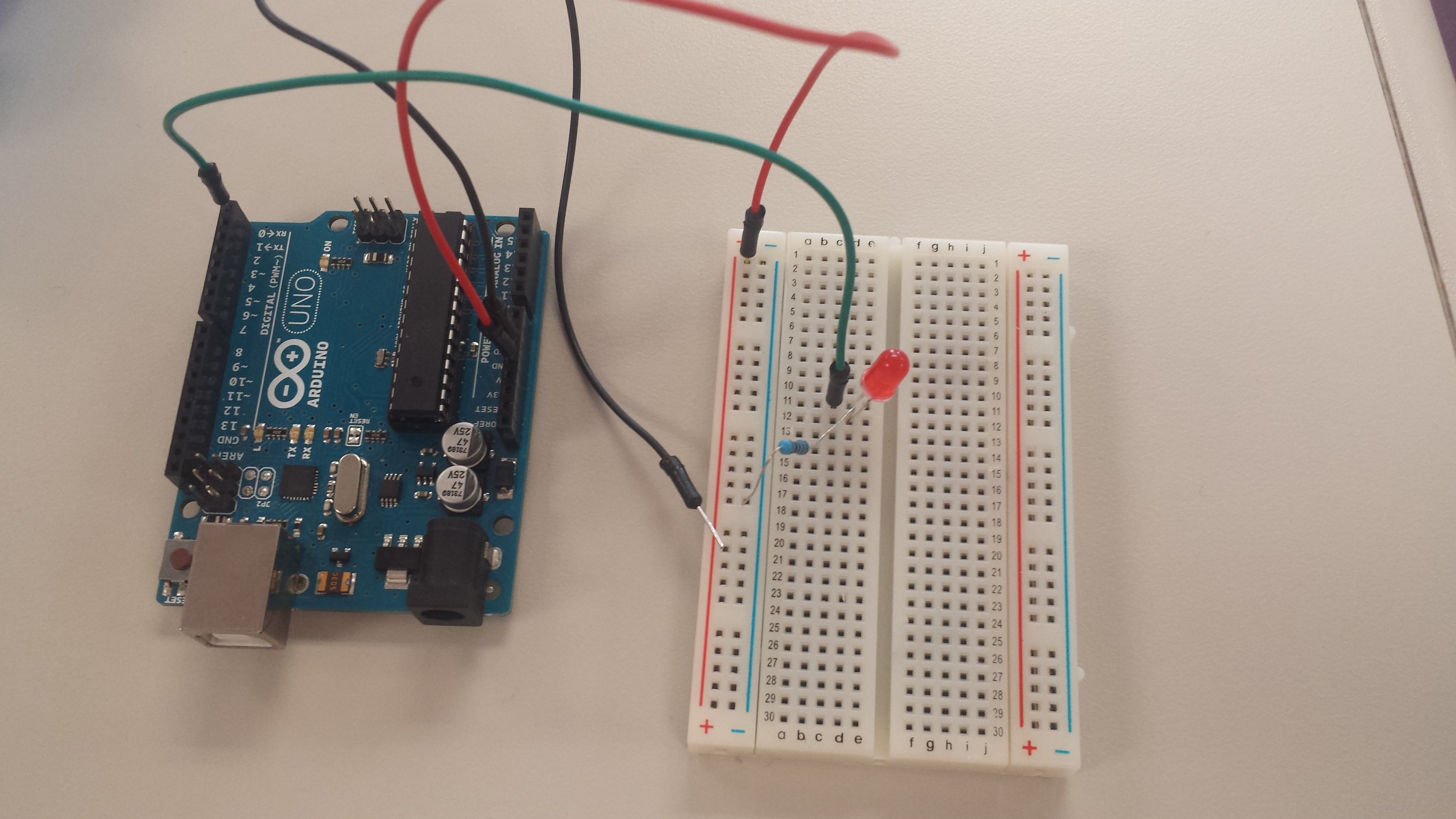
Arduino and Breadboard Practical Exercise: Look at the Arduino and Breadboard and answer the following questions. Note: The lack of power in the Arduino board does not constitute a correct answer.
Picture 1: Close-up
Picture 2: Far away
8 Identify one problem of this Breadboard set-up. Be specific as possible:
9 Identify another problem of this Breadboard set-up. Be specific as possible:
10 Explain what you would need to do to correct this Breadboard set-up. Be specific as possible.
This article was written by a friend of mine, Corey Hodgson, and reprinted as permitted. If you have any specific questions, you may contact him: chodgson1945@gmail.com, with the subject line “GI camera guide”. You may also download a copy of this article in PDF format here.
The following guide is an attempt to inform WWII reenactors, portraying a typical US soldier in Europe. While the guide can be used for those portraying infantry and Marines in various other parts of the global conflict, be sure to research what cameras would be available to a soldier (for example, a Leica or other German-made cameras would be next to impossible to obtain for a Marine on Tarawa).
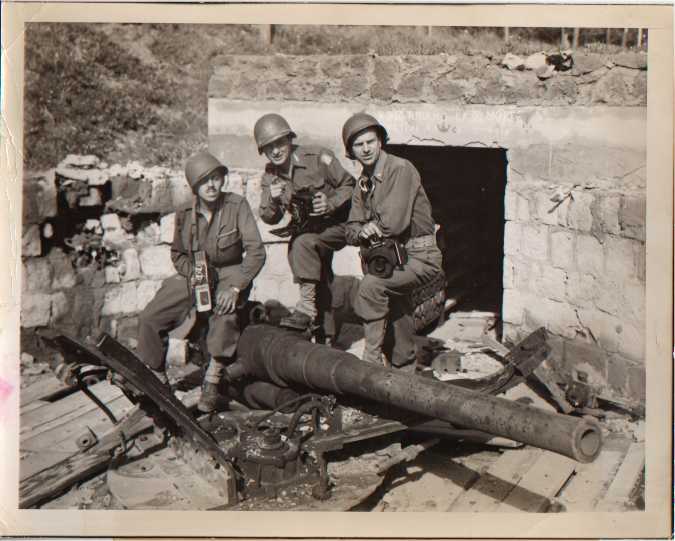
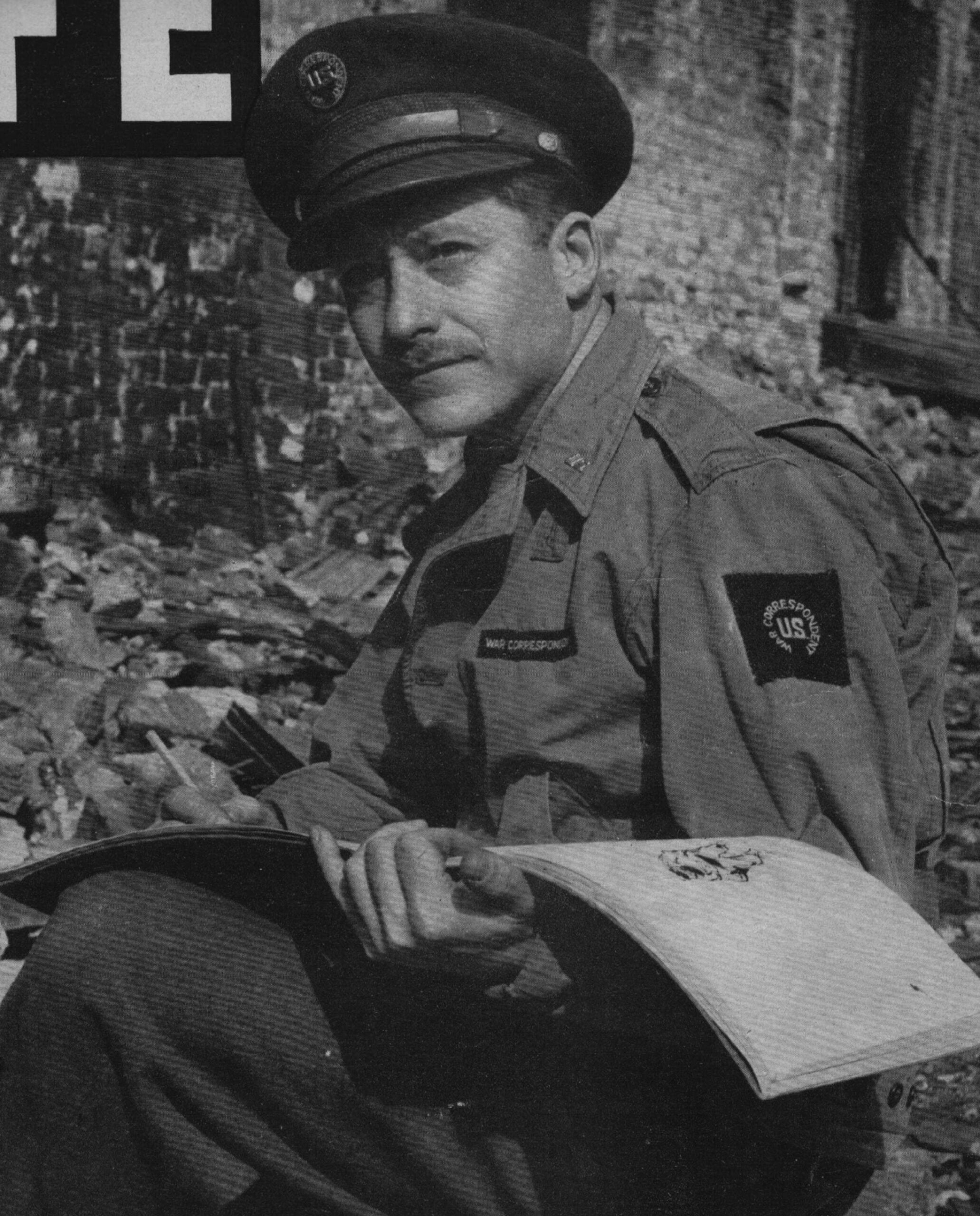
This guide is not meant to be a guide for those wishing to portray a War Correspondent or a member of the United States Signal Corps. While some did choose to use 35mm and 120mm cameras (Like Robert Capa, who chose to use Leica, Contax, and Rollei-branded cameras throughout his time in the Mediterranean and European Theater of Operations), the primary choice for the Signal Corps was the trusted Graflex Anniversary Speed Graphic (this was standard equipment), with its massive 4×5 negative.
Signal Corps Photographic Units used wide-angle lenses and 10in. telephoto lenses on Speed Graphics. This helped to take the correct images. See: History of Signal Corps photography in the Luzon operations, April 1945, pg. 29.
There was also the Combat Camera PH-501/PF produced by Simmons, which Signal Corps Photographic units used to a limited extent. Only about 250 were made before the war ended. See TM 11-2364, Dec 1944.
One ended up on Corregidor and “…proved superior for that type of operation because of its lightness and the protection of its working parts. Disadvantages of it reported by the cameramen were inadaptability for filters (he taped on a Graphic filter on the second day of the operation), bad paralax on closeups, and the difficulty of getting used to the log ride of the shutter release, a plunger that appears to lave exposed when i;; [not sure what’s said here] has only opened the interior blind. Most photographers disliked the combat camera, chiefly because the negative is only 2 × 3¾ instead of 4 x 5. ” See: History of Signal Corps photography in the Luzon operations, April 1945, pg. 29.
There are also video cameras, such as the Model Q Eyemo, which was quite heavy and sometimes converted to Model Ks via aluminum parts made by Ordinance. Photographers also liked the Compact Turret Eyemo as a second chance since it was lighter. These were used by Signal Corps Photographic Units and wouldn’t have been available to regular infantrymen.
Please research your specific impression before purchasing any cameras, as you can easily spend a great deal on something you cannot (or rather should not) use.
Cameras we obtained in three major ways: Gifted to the soldier, purchased by the soldier, and stolen by the soldier.
Rollei
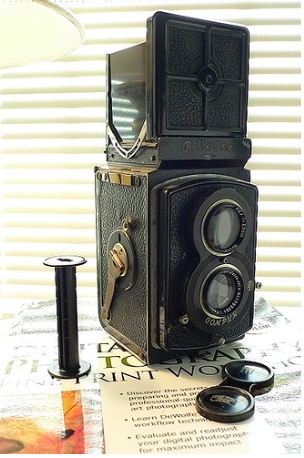
A twin lens reflex is a camera that has two lenses, stacked one above the other, that allows the user to focus using the top one and expose a 6x6cm negative on 120mm film. The Rollei has, and still is, a rather expensive camera. The build quality is above average, being created for professionals, most lasting longer than the original owners themselves. Robert Capa was known to use a Rolleiflex “Old Standard” (made before 1939) during his WWII travels.
Appropriate for use would be the Rolleiflex Original, Standard, New Standard, Baby 4×4 (all pre-war models made from 1931-1943), Automat Model 1, and Automat Model 2. Also appropriate would be the cheaper entry-level Rolleicord, any models manufactured between 1933 and 1949 (The Models Ia Type 3 and IIc were both manufactured through the war and continued for a few years after the war).
A word of warning, though, the average GI attempted to reduce weight as often as possible, and a Rollei TLR is not the smallest or lightest camera available. Therefore, I highly recommend that you avoid taking this camera in the field, instead using it as a “pre-invasion” camp camera. These cameras would have also been very expensive, costing far more than the average GI could afford.
A cheaper alternative would be the Ciroflex Model A, manufactured in Detroit, Michigan prior to the war and then in Delaware, Ohio, during the war. Only the Model A was made during the war. Also available would be the Primarflex I made in Germany prior to the war.
Original (New and Old Standard made between 1932-1941) Rolleiflex cameras look like this:
Rolleiflex Camera
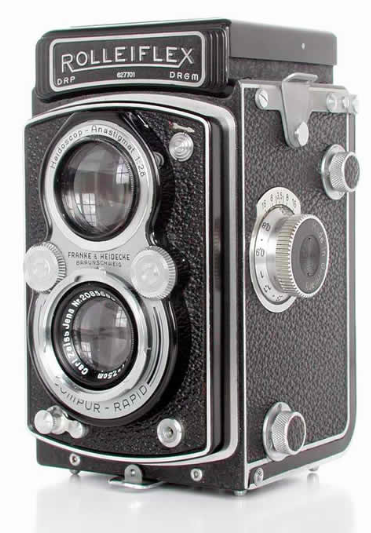
While Rolleiflex Automats (Models 1 and 2 made between 1937 – 1945) look like this:
Rolleiflex Automats
Leica
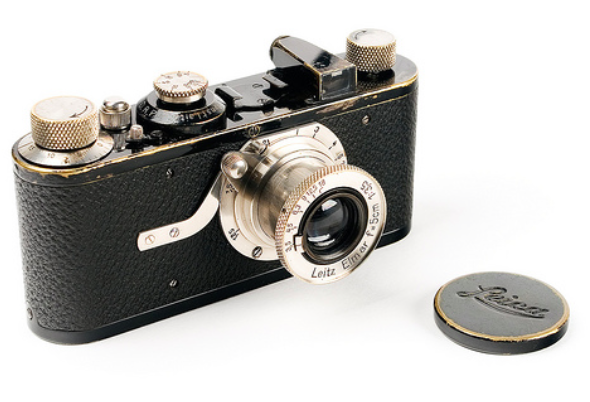
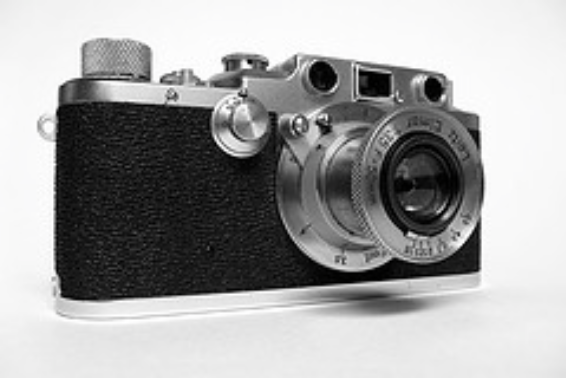
Just as it is today, the Leica brand was one that was known worldwide for quality and an enormous price tag. There are two types of Leica cameras to look at: With a Rangefinder and without a Rangefinder.
Unlike today’s cameras, which allow you to see what you shoot before you shoot it, a rangefinder shows the photographer only what will be in focus. A rangefinder splits the image, and when the photographer makes the two images overlap perfectly (creating one image on the item you wish to focus on), the focus is set, and the picture can be taken. Without a rangefinder, the photographer has to either know or guess the distance between the camera and the subject.
Leica cameras load from the bottom, and I would highly suggest you do independent reading on cutting and loading film for any Leica or Leica copy (the Soviet made Zorki and FED cameras), as the film leader must be cut to load film into vintage Leicas.
Acceptable models for use are Leica I, Ic, IIc, IIIa, IIIb, and IIIc. Avoid all gold versions, or ones marked with Luftwaffe markings (and other Nazi markings on the top). 9 out of 10 times, these cameras are going to be fakes, and while they might be mechanically sound, they usually aren’t due to them being bastardized Soviet copies (A Soviet Copy of a German camera, made to look like a German camera).
Leica cameras are relatively expensive, and again, the average GI would not have ordinary access to any of the cameras – unless they stole them or found them.
Soviet models that would be acceptable for just playing around with include any of the FED 1’s (not the 2, 3, 4, or 5!) and the Zorki 1 and 2.
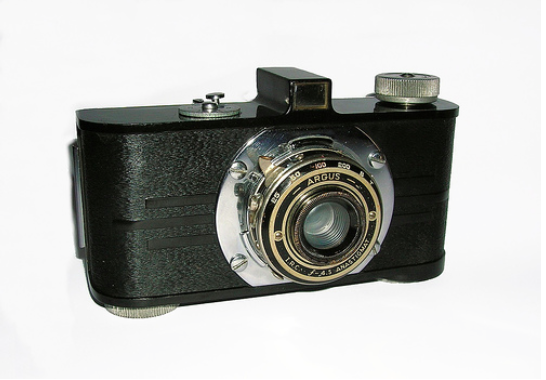
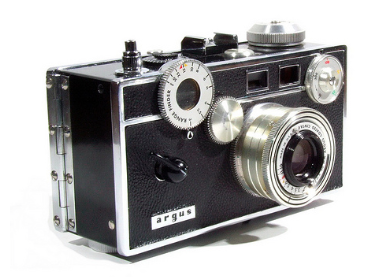
Made in Ann Arbor, Michigan, the Argus A and Argus C3 popularized the 35mm format in the United States. These cameras were relatively inexpensive for consumers to purchase and were very common. The cameras take 35mm film, are built like bricks (the C3 was, and still is, affectionately named “The Brick”), and are very durable. These would be more common amongst the average Joe. For more information on the Argus: http://camerapedia.wikia.com/wiki/Argus
Typical Argus A:
Argus A
Typical Argus C3:
Argus C3
Kodak
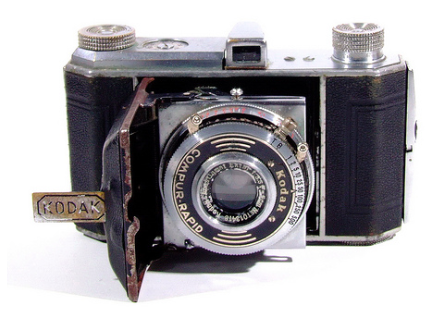
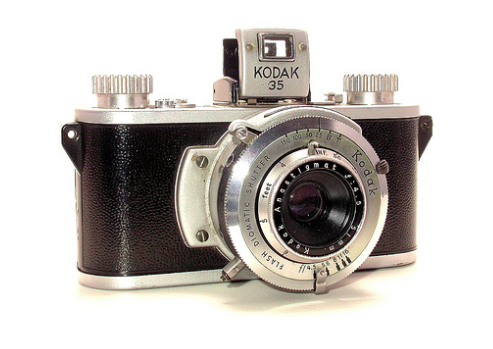
Kodak produced many inexpensive cameras, made to encourage everyone to enjoy photography (and purchase the film that Kodak produced). Cameras were manufactured in two primary locations: The Rochester, New York factory, and the Kodak AG factory in Stuttgart, Germany.
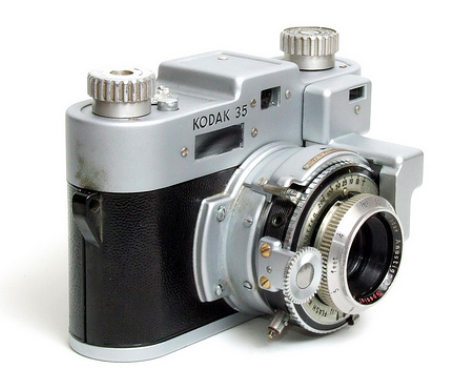
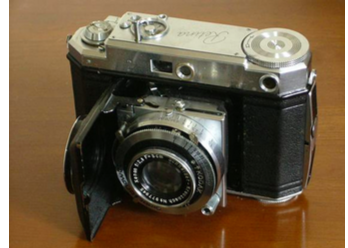
Acceptable Models: Kodak 35, Kodak 35 RF (not very common due to the $48 USD pricetag – $700 USD in 2007), PH 324 (Very rare and not suggested because of that. Due to the US government’s contract with Kodak, the PH 324 cameras were collected and bulldozed as to not flood the commercial market), Retina I (Types 117, 118, 119, 126, 141, 143, 148, 149, 167), and Retina II (Types 122 and 142). Refer to TM-2361 for the manual on PH-324.
Retina cameras were made by Kodak AG in Germany, and after 1941, production ceased for the remainder of the Second World War.
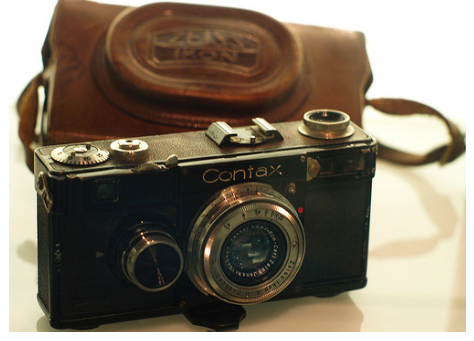
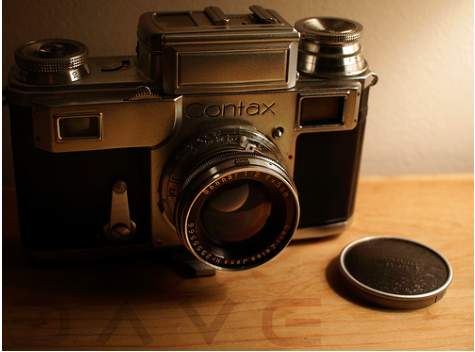
On the success of Leica, another German company (Zeiss Ikon) created the Contax I to compete with Leica. These high-end models were known for their wonderful focusing abilities, a removable back for loading film, a quick and reliable brass shutter, and a new bayonet mount lens system (as opposed to Leica’s screw mount lens system).
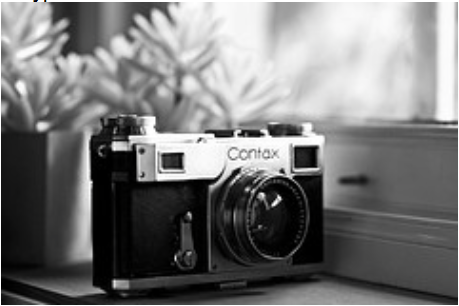
There are three acceptable models for the time period: The Contax I, II, and III. The III has a selenium light meter on the top to calculate exposures with. While this feature was revolutionary at the camera’s creation in 1936, today, this feature is at best, barely accurate. It is best to use a different form of metering for your exposures, as over time, the selenium cells have grown to be less accurate than at their creation. After the war, Contax began production in West Germany of the Contax IIa and IIIa. These cameras are also acceptable for use as they are hard to distinguish from the pre-war models (the rangefinder window is smaller, but these cameras are still recommended over the Soviet Copies).
These cameras would not be common amongst the average GI, instead being common in the hands of professional photojournalists like Robert Capa.
There are Soviet copies of the Contax II & III, as the Soviets had taken the machinery from the factory and brought it back home as war spoils – in fact, the Soviets brought back not only the machinery used to make the Contax cameras, but they brought back ALL the parts that remained. This resulted in the first batch of Kiev II cameras having the Contax logo on the inside, with the Soviet KIEV printed on the front. Models that are suggested are the Kiev II and the Kiev III.
The Kiev 4 features a different appearance, and it is generally not suggested that you purchase one for reenacting. The author has used the Kiev II in reenacting previously, and while the camera performed well, the KIEV print on the front stood out rather well. Soviet copies should be avoided if you are looking for a 100% authentic impression.
In Germany, the two major producers of optics and camera equipment were Zeiss and Leica. Zeiss Ikon was the product of four major German camera companies in 1926. Known for innovation, quality, and for their excellent medium format cameras, Zeiss Ikon cameras were fairly common – in the author’s view, they were along the lines of Kodak in America.
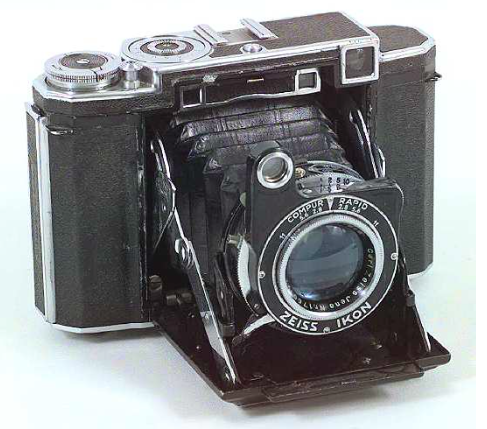
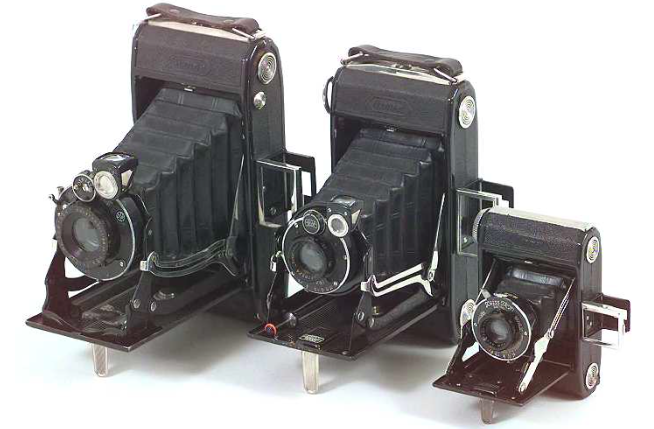
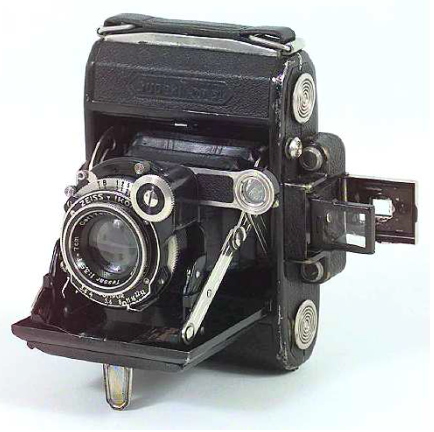
Zeiss Ikon produced many 120mm folders, including the Nettar, Ikonta, and Super Ikonta (an Ikonta folder with a coupled rangefinder). Acceptable models for the use by reenactors include the Nettel, Super Nettel I & II, Nettax, Nettar (510, 510/2, 515, 515/2, and 515/16), Ikonta (A, B, and C models that begin with 520 or 521), and Super Ikonta (A, B, and C). For specific information on the many models, please do research on Camerapedia or on Pacific Rim Camera.
For a description of War Photographers’ Battle Experiences on the Road to Rome, see Life, June 24, 1944, War Photographers. They interview Frank Scherschel, David Scherman, Robert Capa, Ralph Morse, Robert Landry, Carl Mydans, and Will Lang.
Student’s will research an animal, complete a writing assignment, and describe how humans have interacted with the animals. Upon completion of the assignment student’s will view Madagascar I, Madagascar II, and Madagascar III and answer questions Student’s read a brief outline of Madagascar and answer 10 questions. Students then complete some zoological questions regarding different animal species. For more World Geography Lesson Plans Click Here.
Madagascar Reading Students read an outline of the country of Madagascar and answer 10 questions. Students then complete some zoological questions prior to watching the film.
Madgascar Activity I Teacher Answers for the above activity. Note that this packet also contains additional activities.
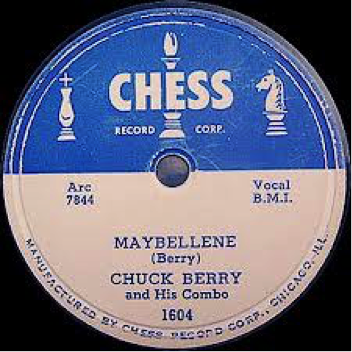
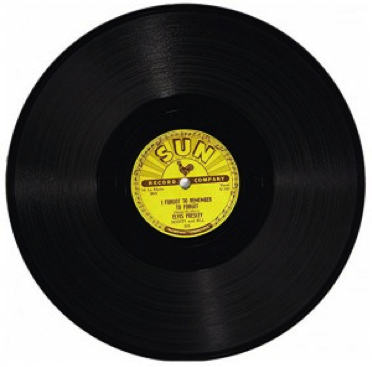
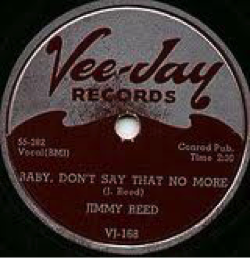
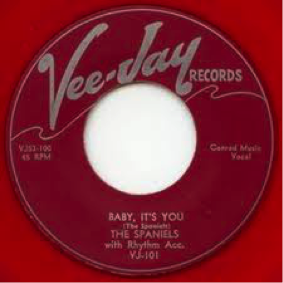
These are mentioned because while not appropriate for a WW2 setting these records are sometimes seen with other 78 records.
Sun, Chess, and Vee-Jay record companies all produced rock and roll music. Early rock and roll artists first appeared on a 78 record, post-World War 2. Shortly thereafter (the late 1940s/early 1950s), record companies made the switch from 78 in Shellac to the 45 formats in vinyl. Though, Britain continued to produce 78s until the early 1960s.