New post as part of the 78 Record Project Series
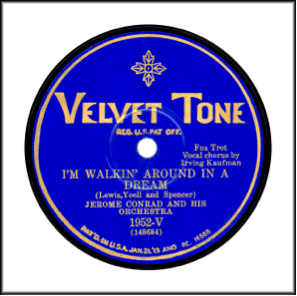
Originally founded by Edward Lewis in England. Decca came to the US in 1934. The first US Decca label was a Sunburst design but that design disappeared in 1937. The sunburst design was replaced by a Decca in block lettering. The pre—WW2 Decca in block-lettering can be found in mainly blue and red.
Continue reading Decca RecordsTask: Find TWO current events and relate them to geography.
One must be related to the physical aspect of geography (such as (weather, climate, landforms, earthquakes, hurricanes, volcanoes etc.) and one must be related to the human aspect of geography (such as population, ethnic groups, culture, human conflicts, international organizations, human cooperation, disputed areas, push+pull factors, migration, Human-Environmental Interaction etc.)
Directions: For each aspect summarize the article (in 2-3 sentences) and describe/explain the connection to the physical or human aspect of geography (in 2-3 sentences). Include a Works Cited Page that gives the title of the article, the author or organization that published it, the date it was published, and the link to it.
EXAMPLE:
This article is about ethnic conflict in the country of South Sudan. The conflict is between two South Sudanese tribes: The Dinka and the Nuer. This article is an example of human geography because it focuses on ethnic conflicts. Ethnic conflicts often are a result of tensions between two different human groups. Additionally, the United Nations has peacekeepers inside South Sudan attempting to stop violence.
Works Cited:
Title: Sudan: Conflict has promoted Ethnic Tensions, says Official
Author: Sudan Tribune
Date: Sept 24th, 2014
Link: http://allafrica.com/stories/201409291670.html
Resources to use for current event:
Introduction
Otto K. E. Heinemann founded the General Phonograph Corporation (GPC) in 1916. GPC’s first record label was Okeh (named after the founder’s initials) in 1918. One story suggests that the Indian Head logo was selected because like the name “Okeh” it was accessible to everyone, even Indians. Another one comes from the following account published in The Talking Machine World in May, 1918, describes: “Otto Heineman, president of the Otto Heineman Phonograph Supply Co., New York, announced this week that the company is now ready to place on the market the Heineman record, which will be known as the “OKeH” record. This name is derived from the original Indian spelling of the term colloquially known as O.K., standing for ‘all right.’ “
The General Phonograph Corporation was sold to Columbia Phonograph Company in 1926. Columbia Phonograph Company produced the Okeh label in many different colors (black, blue, red, and maroon) The Columbia Phonograph Company was then sold to American Records Corporation (ARC) in 1934. ARC dropped the Okeh label but when Columbia Broadcasting System (CBS) bought ARC in 1938 it brought back the Okeh label and added the CBS “Note and Mic” logo to the Okeh label.
Continue reading Okeh Records
TASK: Analyze Chernobyl by completing the following:
Examine any ONE conflict and analyze in a 3-5 sentences the reasons for the conflict (HINT: Think about economic, social, political, cultural, geographic, historical, religious, or ethnic reasons)
Conflicts
Syria (Golan Heights) and Israel
Western-Sahara and Morocco
China and Taiwan
India and Pakistan
Indonesia
Canada (Quebec)
Sudan
Balkan Peninsula (the break-up of Yugoslavia at the end of the Cold War)
Cyprus (Greece side and Turkish Side)
Choose any ONE International Cooperative Organizations and explain in 3-5 sentences how the organization fosters cooperation and agreement among member nations AND provide an example of it doing so.
NATO (North-American Treaty Organization)
EU (European Union)
OPEC (Oil Producing and Exporting Countries)
NAFTA (North American Free Trade Agreement)
OAS (Organization of American States)
League of Arab States
ASEAN (Association of South East Asian Nations)
AU (African Union)
United Nations
Red Cross/Red Crescent
Victory Discs or V-Discs
Introduction:
V-Discs are a 12in., double-sided, 78 Records that contained popular songs of the day. They were distributed for free/played to soldiers serving in World War II. The sides of the record were labeled as an A-side and a B-side. Each side contained one song that was about 6 minutes. The extra two inches (as compared to 10in. for a regular 78) allow for more grooves to be cut in the record, thus increasing playing time.
The term 78 to describe the record refers to the 78 revolutions per minute it makes around a record player. Prior to the late 1940s, all 78 records were made from shellac and then dyed a particular color (black being the most prominent but also red and green were popular). However, World War II would have a dramatic effect on the 78 records production.
Continue reading 78 Records Production
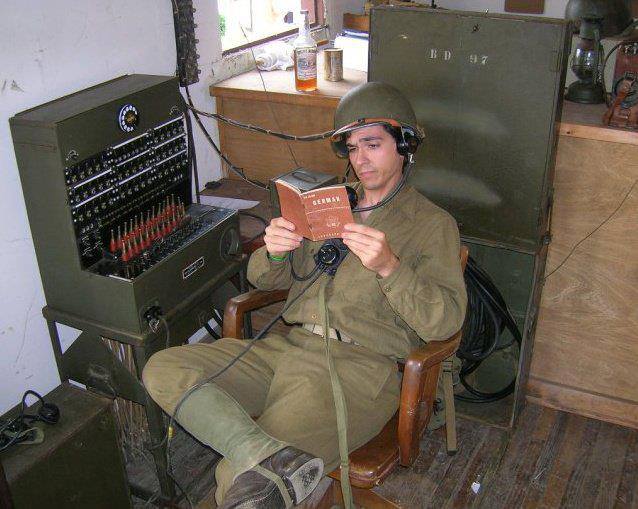
Unlike today, voting for the World War Two servicemen was not such a straightforward affair. That isn’t to say voting for modern American Servicemen and Women isn’t easy, only that things have objectively improved since WWII. Soldiers attempting to vote encountered numerous obstacles to make absentee voting difficult or non-existent. It took a series of changes, each building incrementally, to loosen up the restrictions in time for the armed forces to vote in the Presidential election of 1944. One of the biggest changes was the political shift of the Republicans to allow (or at least not inhibit the Democrats) a federal presence in what is to be considered an area of states’ rights.
Continue reading Voting in World War IIInternet Search Questionnaire 3abc
World Geography SOL 3abc and SOL 6 Human Migration Powerpoint
Map Activity: Use the Blank Political Map to Complete the Regions Location Instructions
3abc Regions Location Map Blank Political Map
3abc Regions Location Map Instructions
Map Questions to complete when done: Use your notes, textbook OR map to answer:
For More Lesson Plans Click Here To Go To The Main World Geography Lesson Plan Page