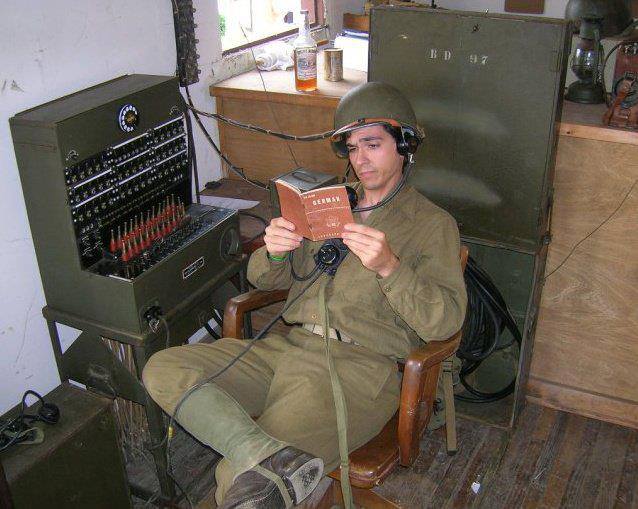
This page will provide links and information on reproducing certain equipment and field items for the WW2 reenactor.
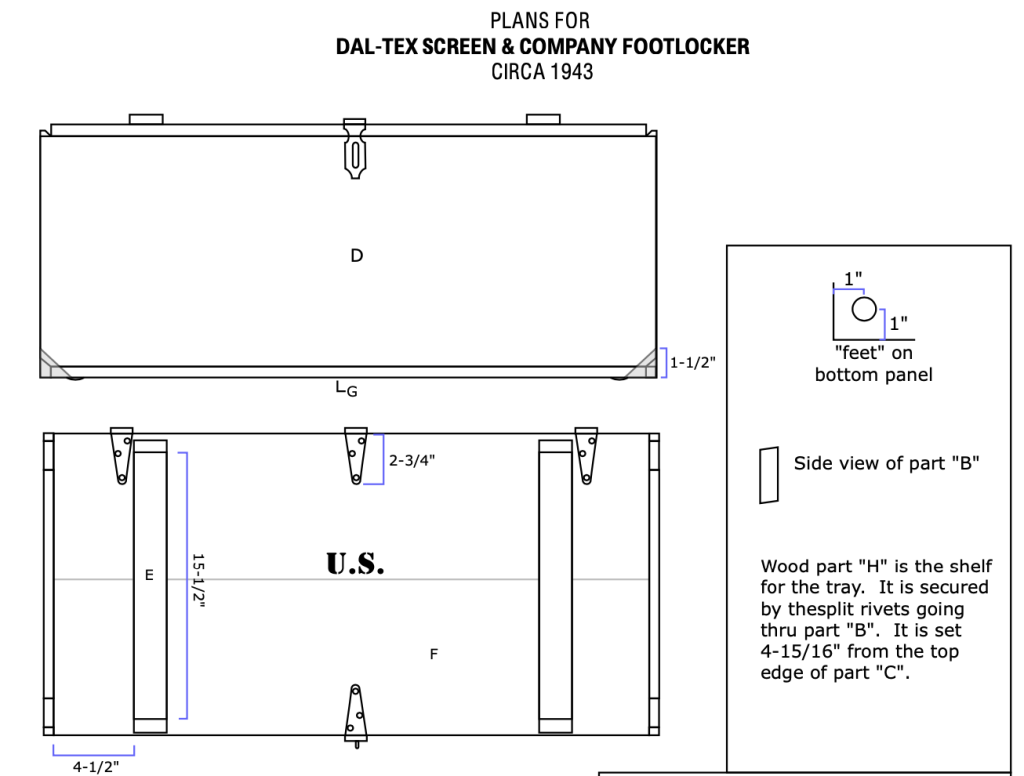
WW2 Era Footlockers 1943 – A schematic on how to reproduce the wooden WW2 era footlocker for enlisted men. I would highly recommend, before attempting to remake it, viewing the two different studies on it here (a .doc file) and here (a .pdf file). This will help get an idea of some of their slight differences.
Foot Locker, Box, Class II with Tray Enlisted Man 1950 – Post WW2 Footlocker design.

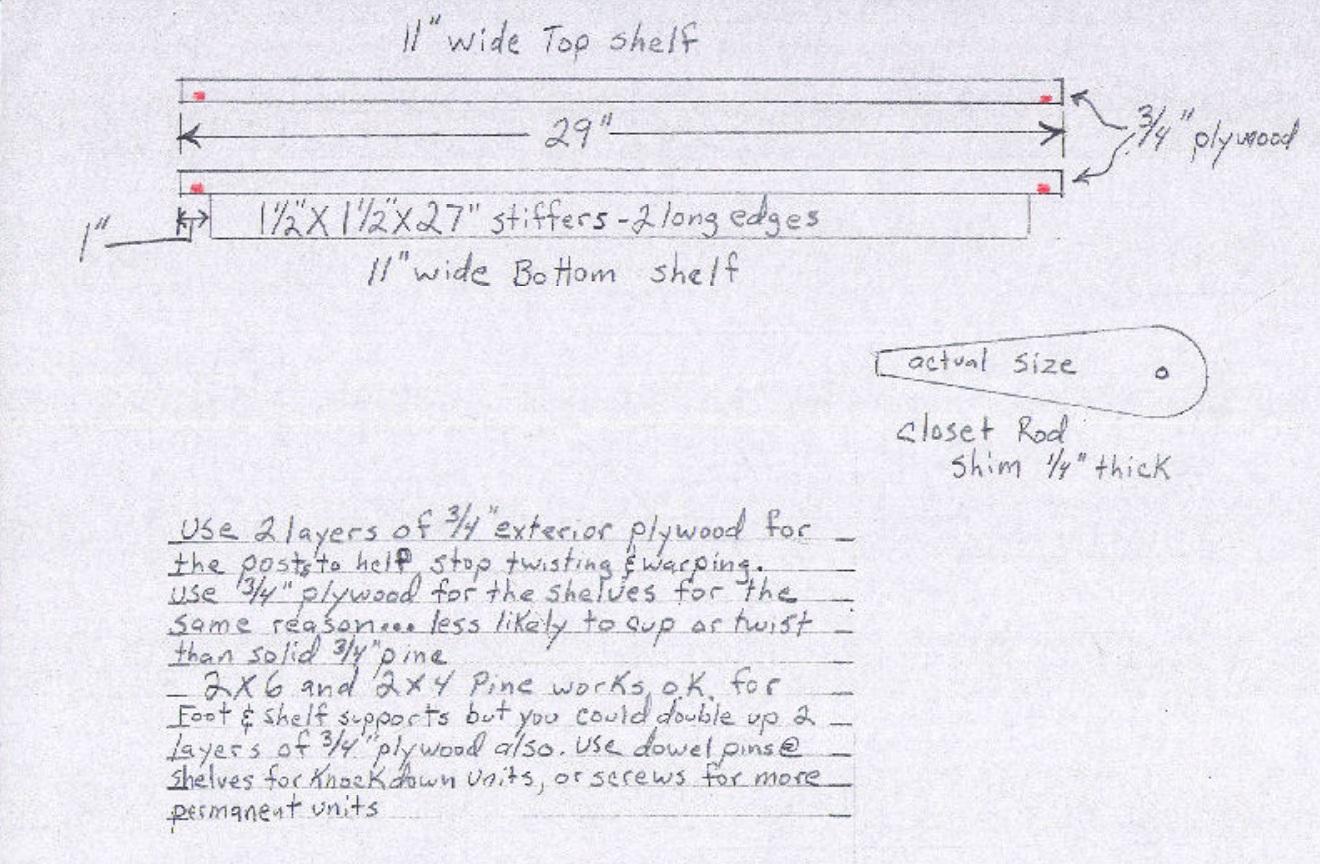
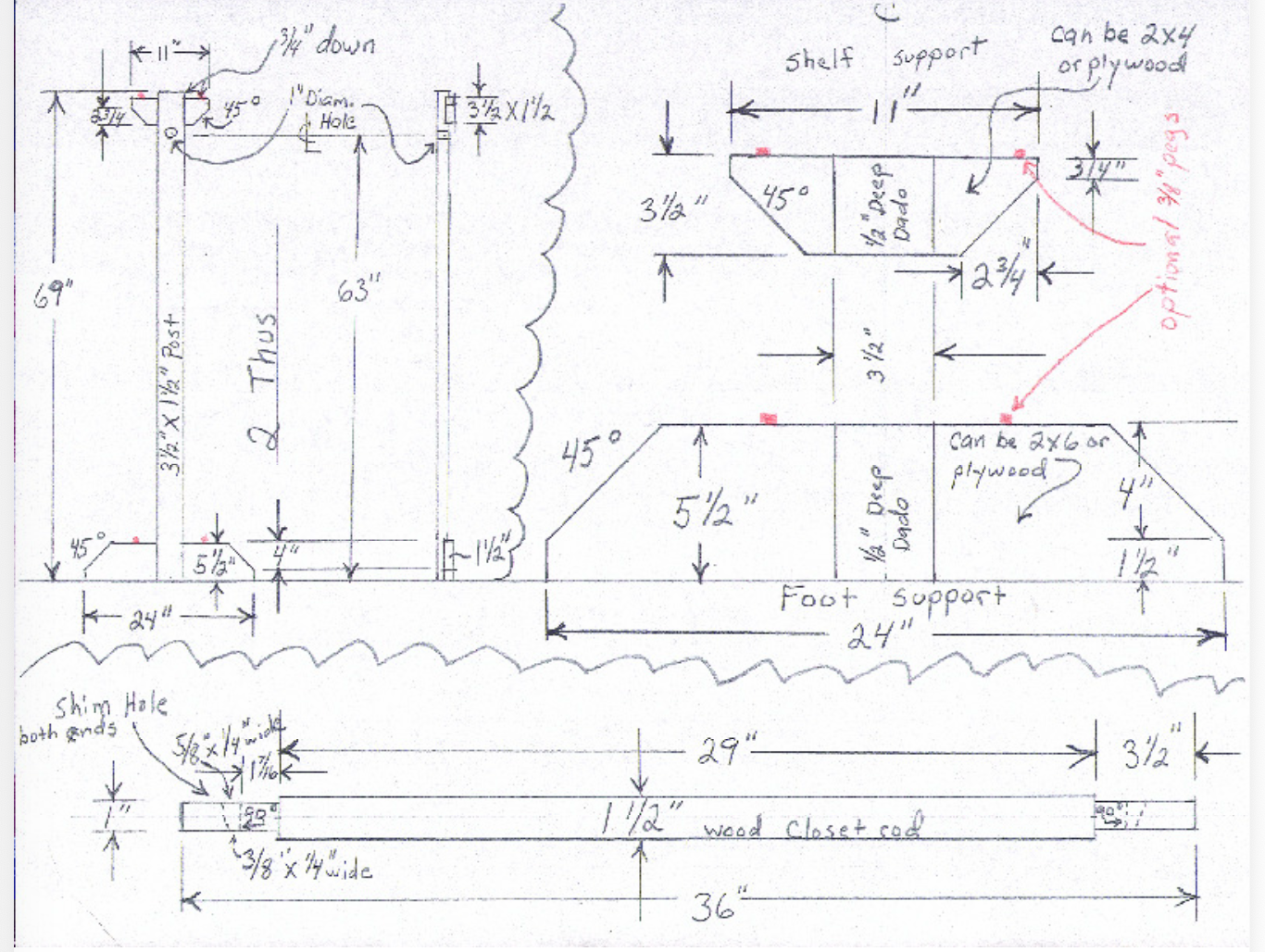
Reenactor Portable Wardrobe – This is a fantasy item made by a reenactor to better store uniforms at events.
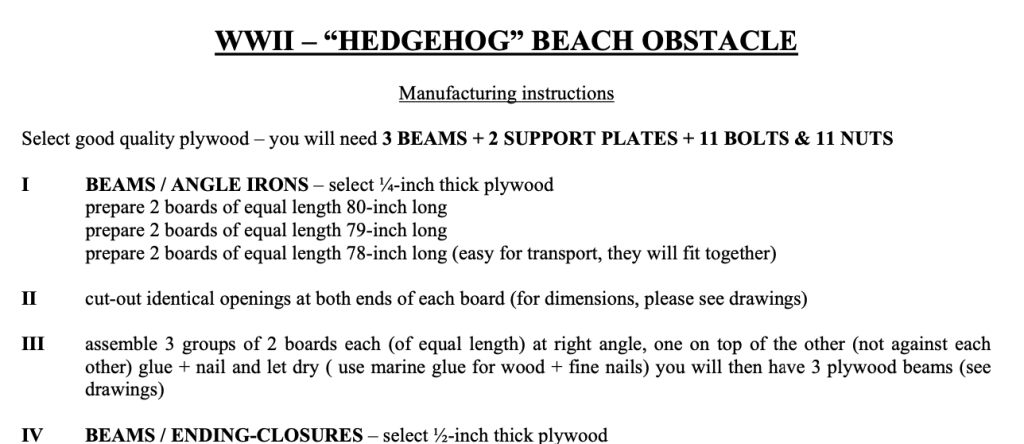
WW2 Hedgehog Beach Obstacle – An outline of how to create and assemble the beach obstacle. This is the kind of obstacle seen at the Normandy Landings.
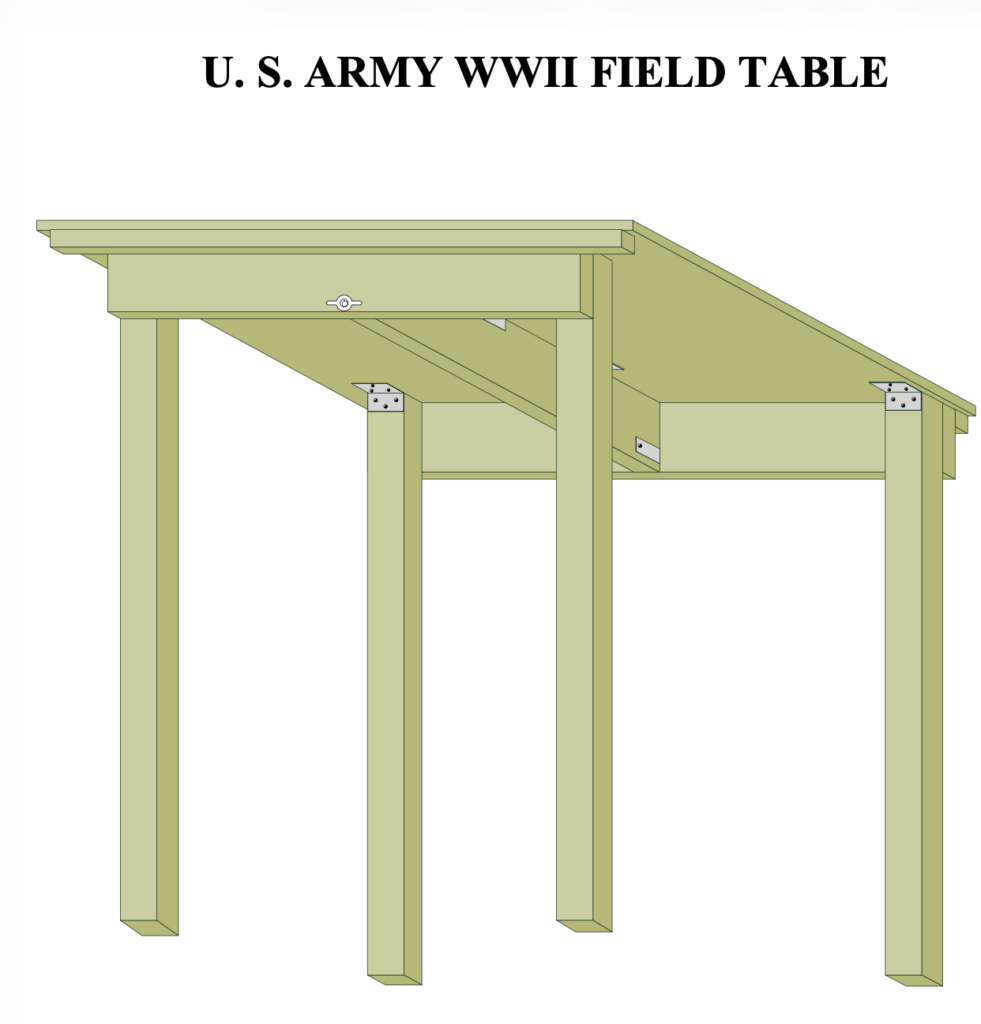
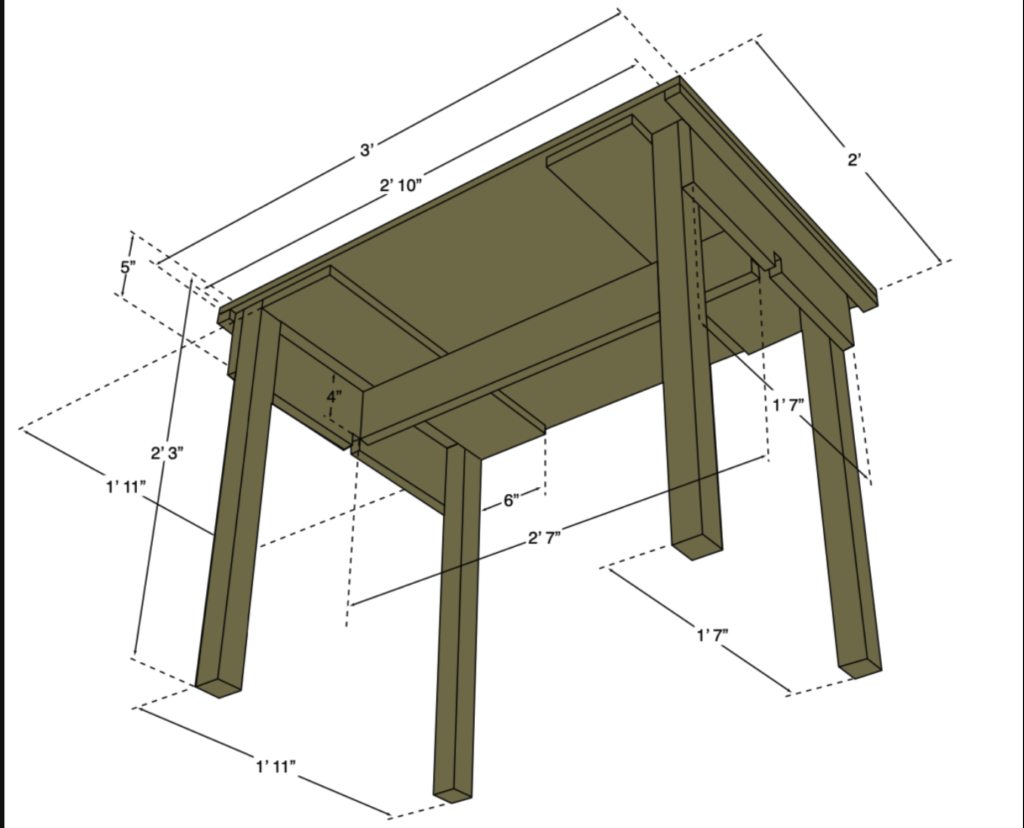
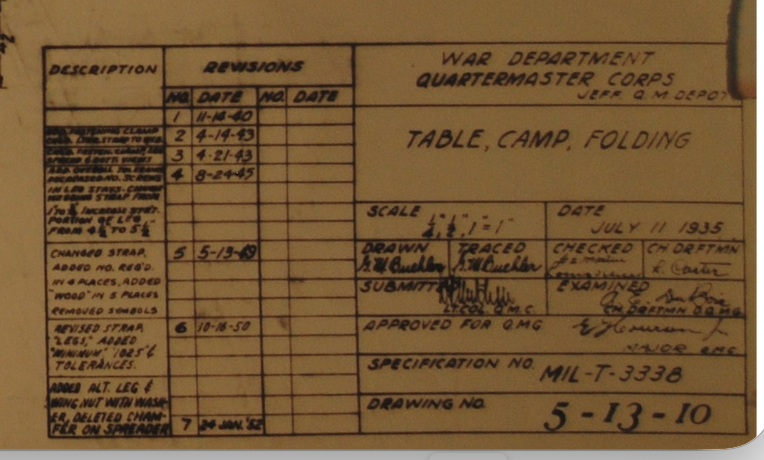
M1943 Field Table – This is the folding field table typically seen at field encampments. It contains the original 1935 blueprint drawing, as well as detailed plans and a parts list to build it.
A Frame Weapons Rack – It’s unclear if this was a WW2 item or a reenactor item used to help store weapons in a “period adjacent manner” for the unit while at an event


Signal Corps
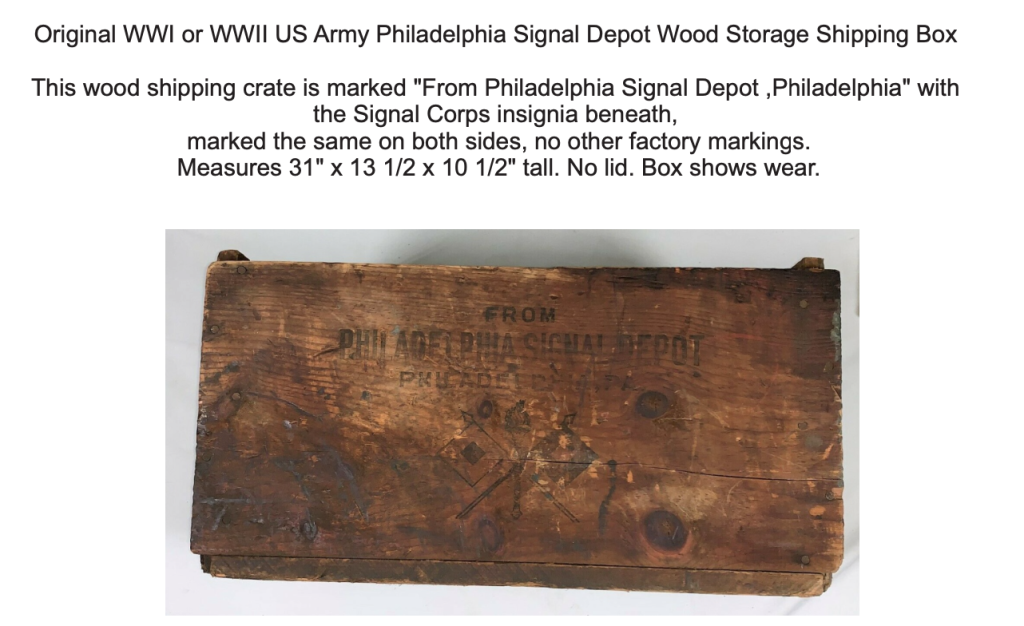
Signal Corps Wood Shipping Box – A PDF with a few notes on how to potentially reproduce a wooden shipping crate. Says “From Philadelphia Signal Depot, Philadelphia” with Signal Corps logo. The wood in use is likely pine (as you can see the pine knots in the images). The Lid would have been flush with 5-6 nails each along the left and right sides (if looking at the box from above) and maybe 3 along the top and bottom (if looking at it from above). These nails would have been cheap “penny nails”.
Field Equipment
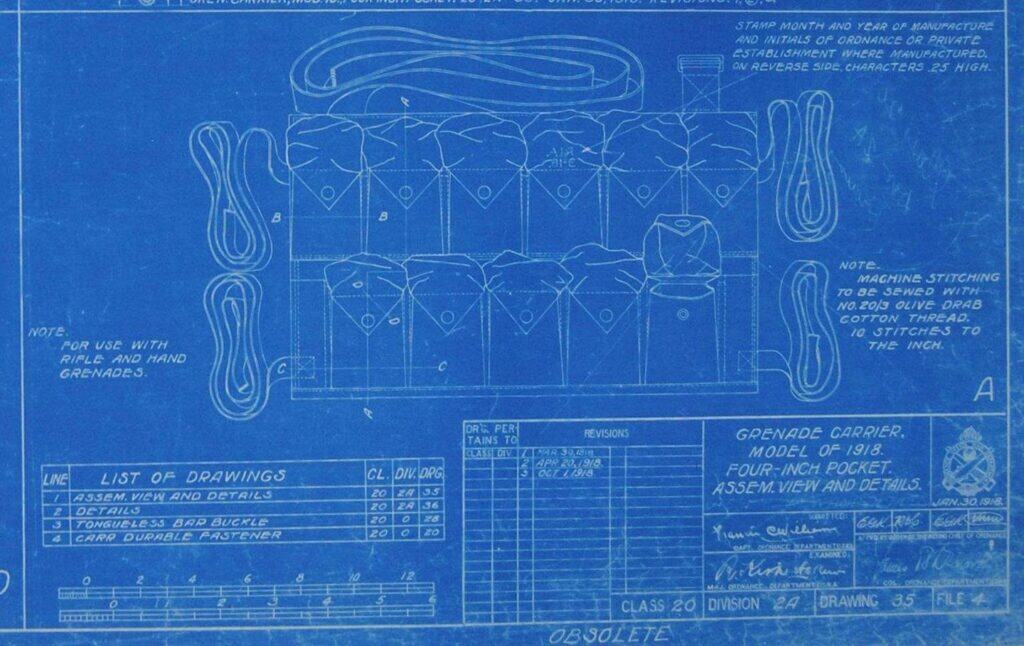
M1918 Grenade Carrier 4in pocket Blueprint – A blueprint design to carry grenades. Dated Jan 30th 1918. These came overseas late into the war, supposedly for the Spring 1919 offensive, which never occurred because of the armistice. There also existed a 6-inch model and a grenade bucket. Photographic evidence of these in use overseas by Americans during World War I doesn’t seem to exist. US Militaria Forum discusses it here. There’s additional discussion about whether the USMC used this in WW2.
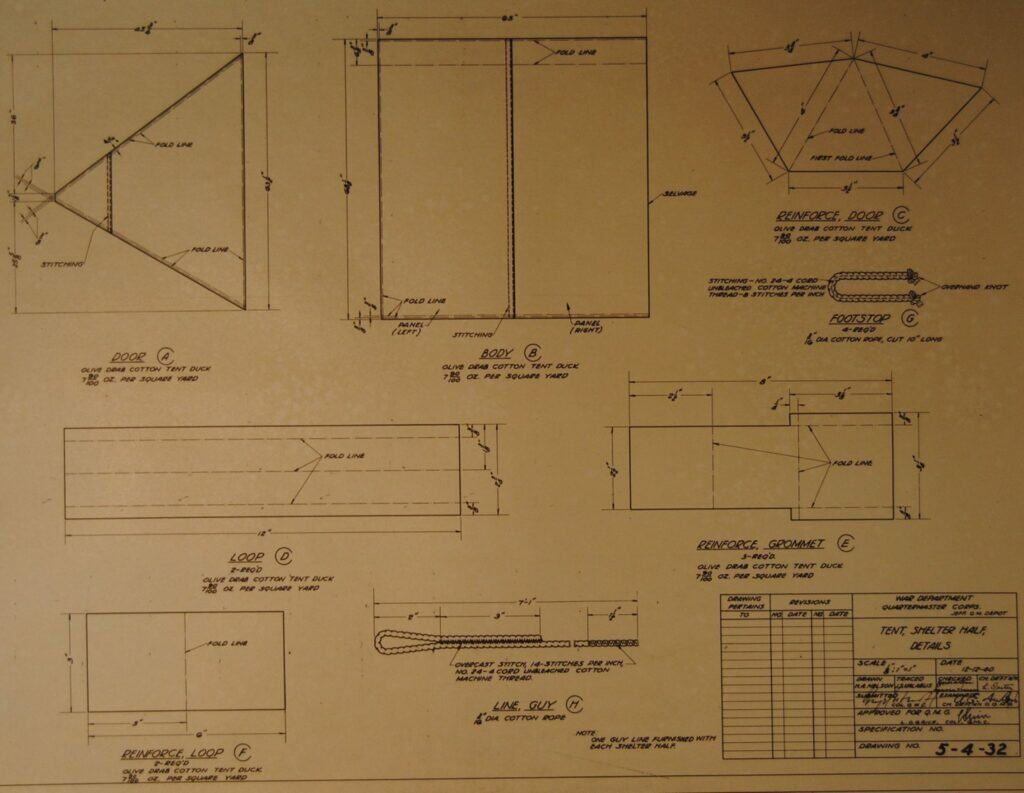
Shelter Half Tent First Model Blueprint – Dated Dec 12th 1940. This is the model that has one end open and the other end closed with flaps. Eventually, a model would be released in 1943 that had both ends closed with flaps.
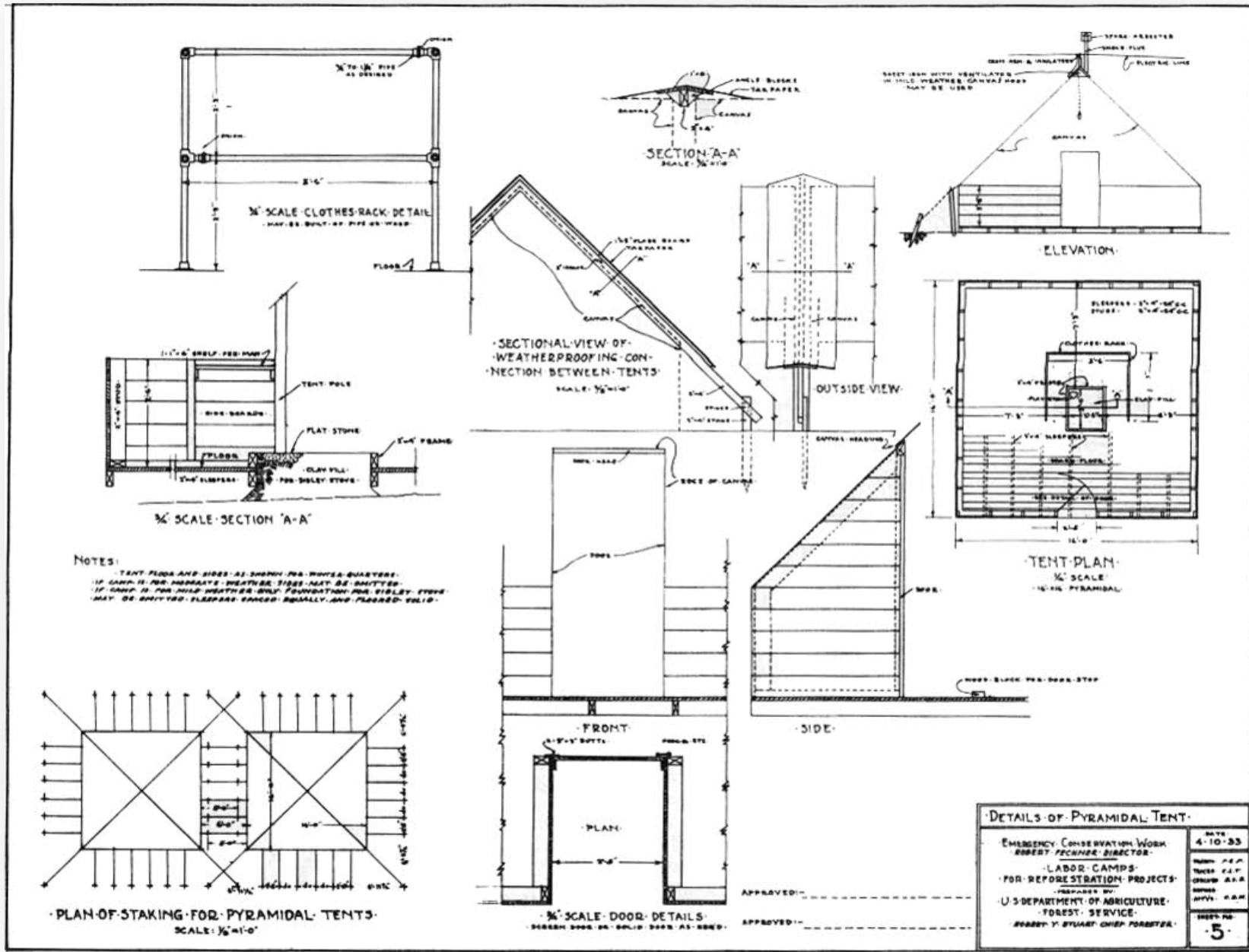
Pyramidal tent wood frame – blueprint
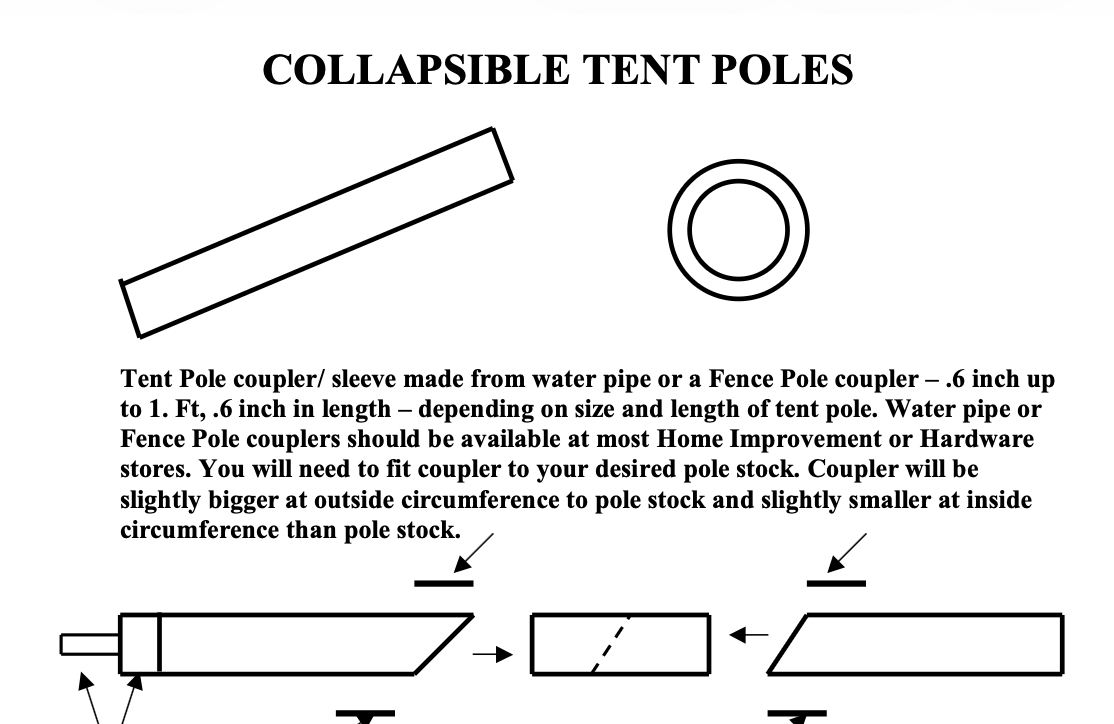
Collapsible Tent Poles – I don’t think these were a thing in WW2 but needed to collapsible tent ridge poles to fit into a car.
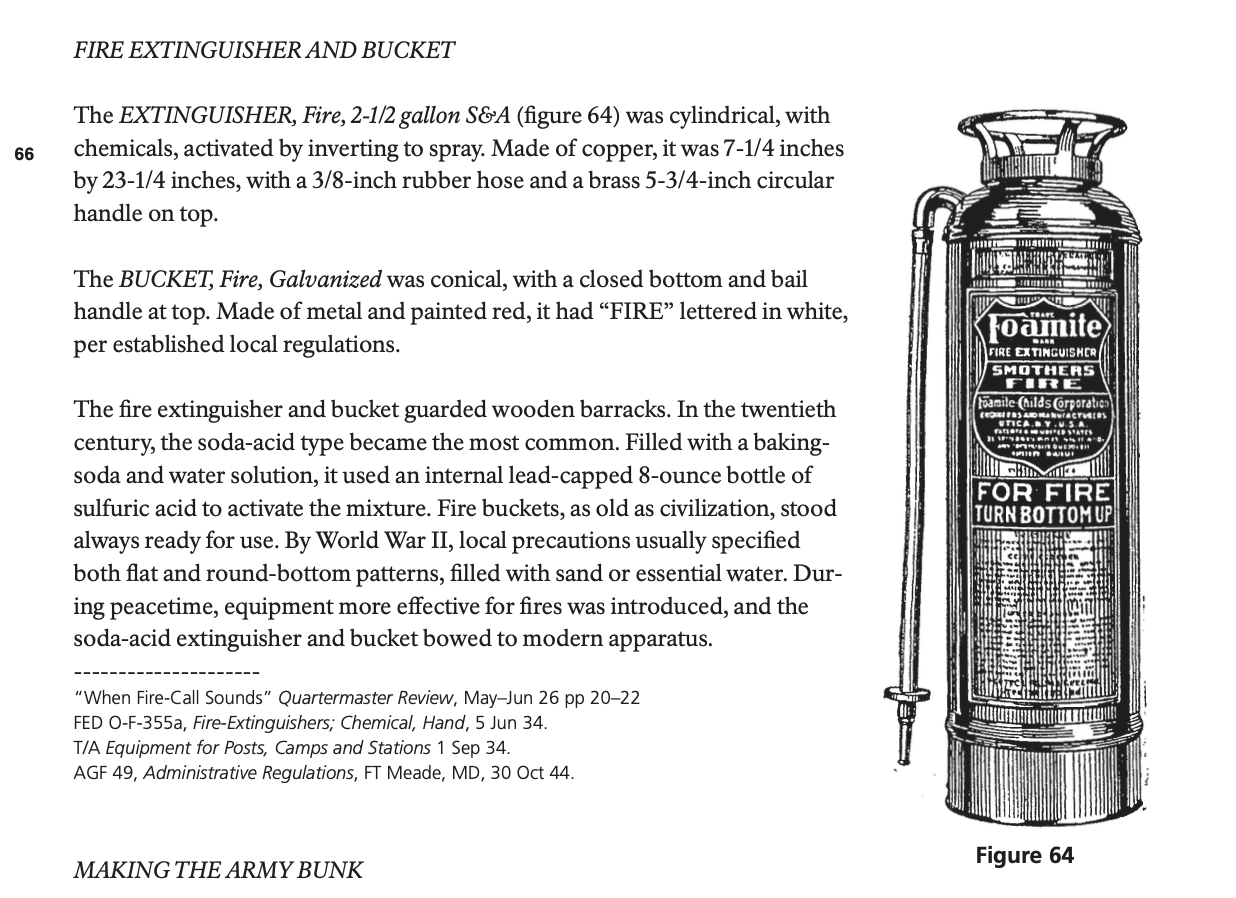
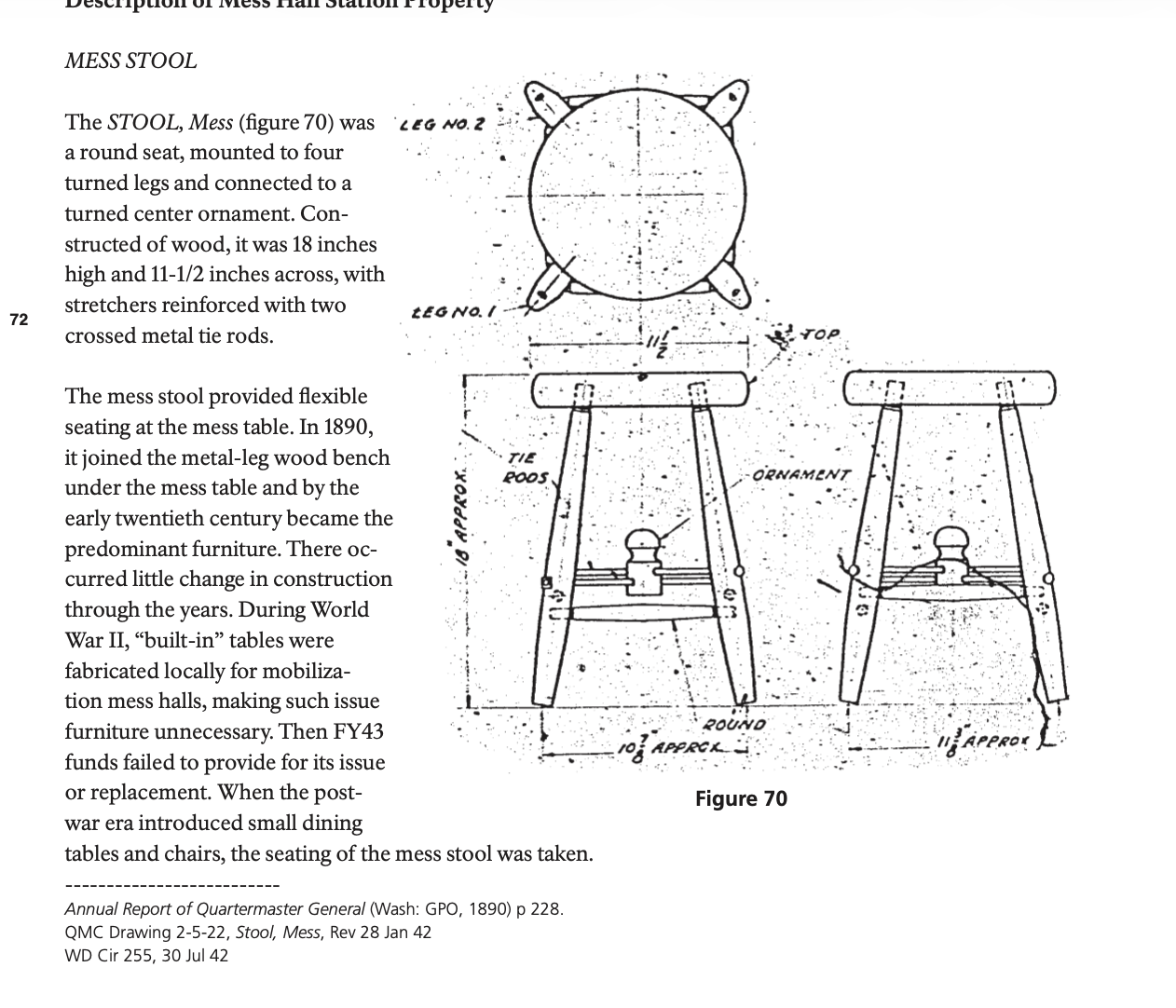
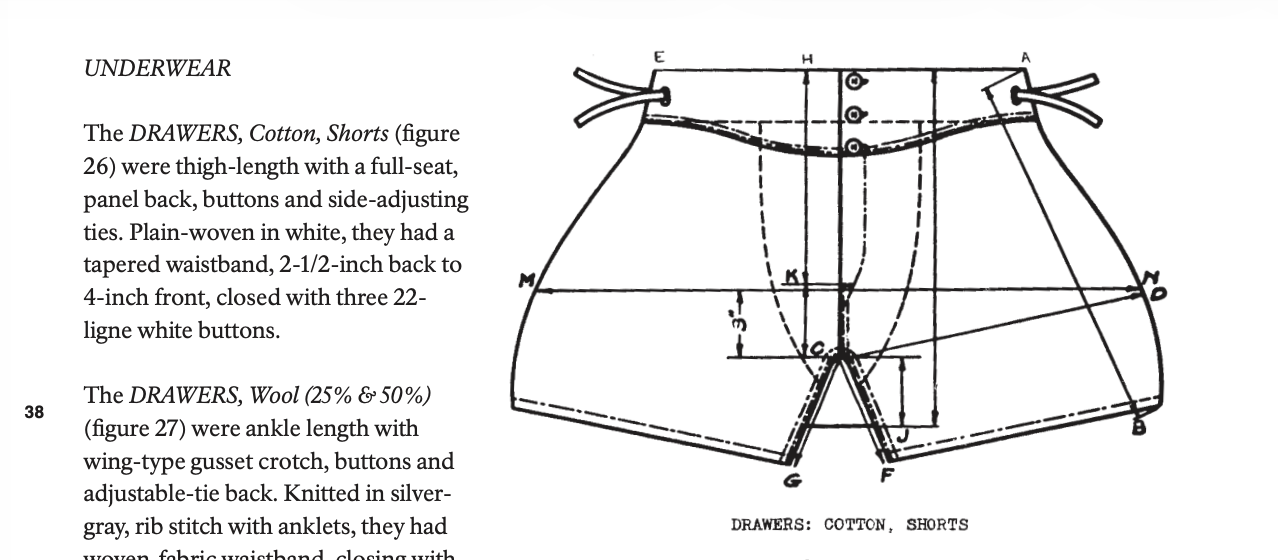
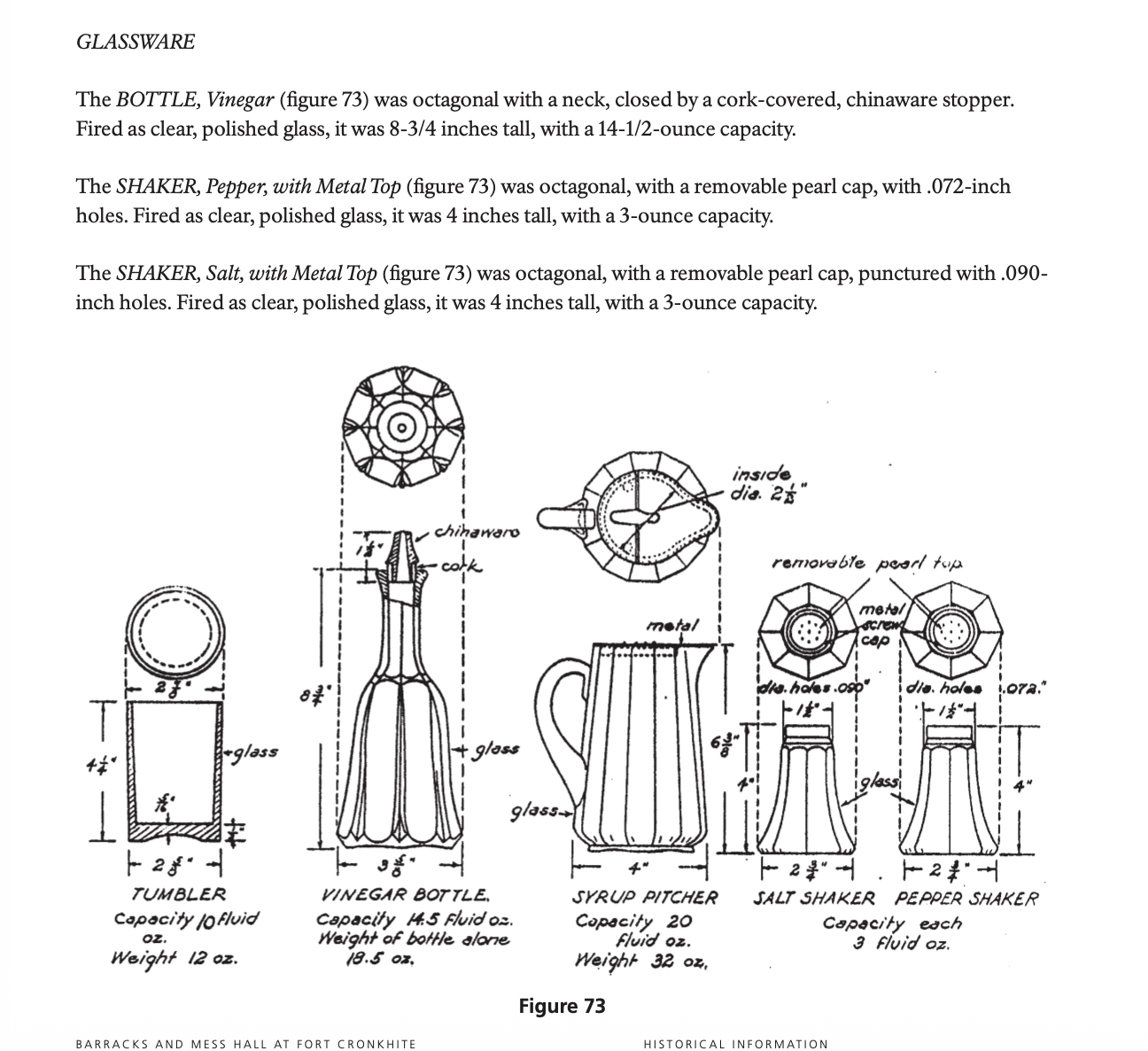
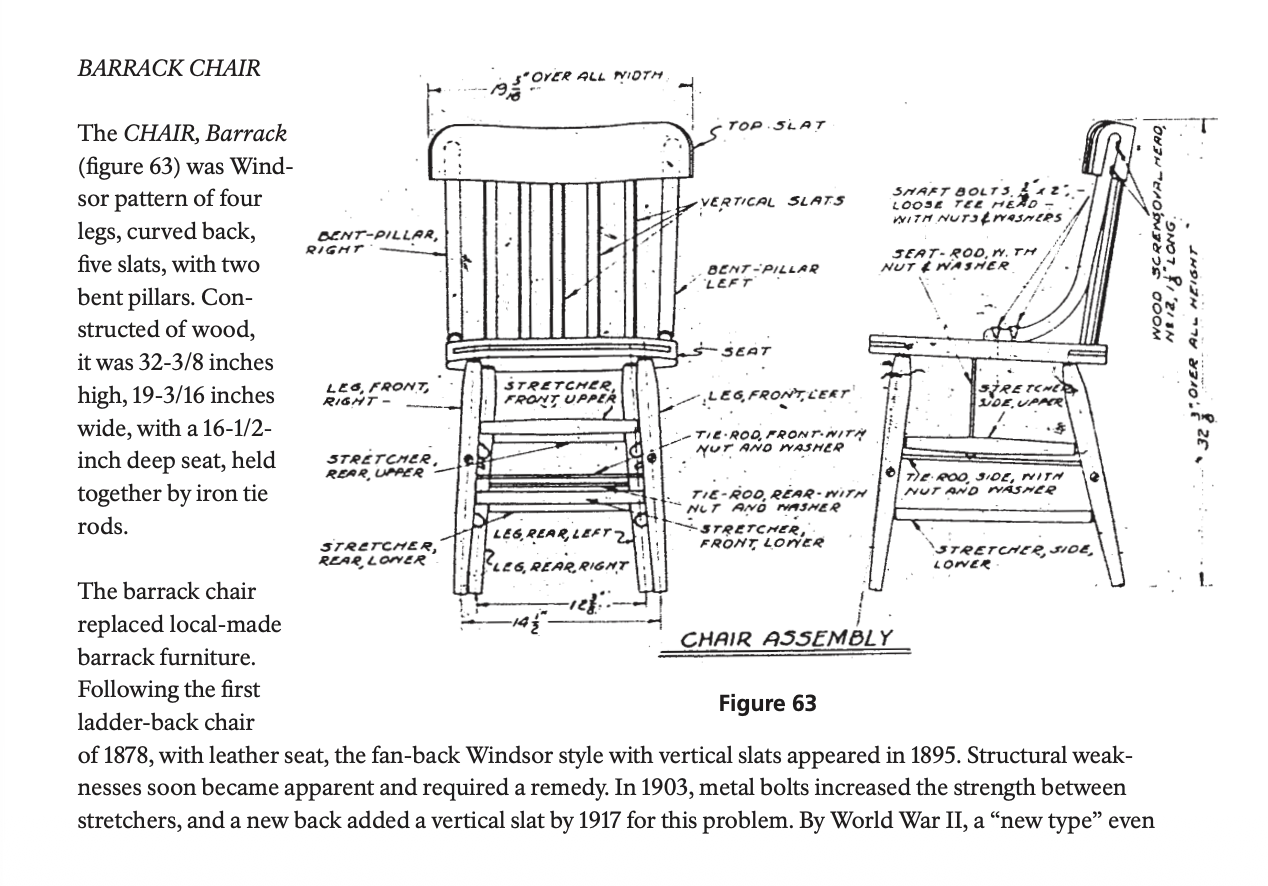
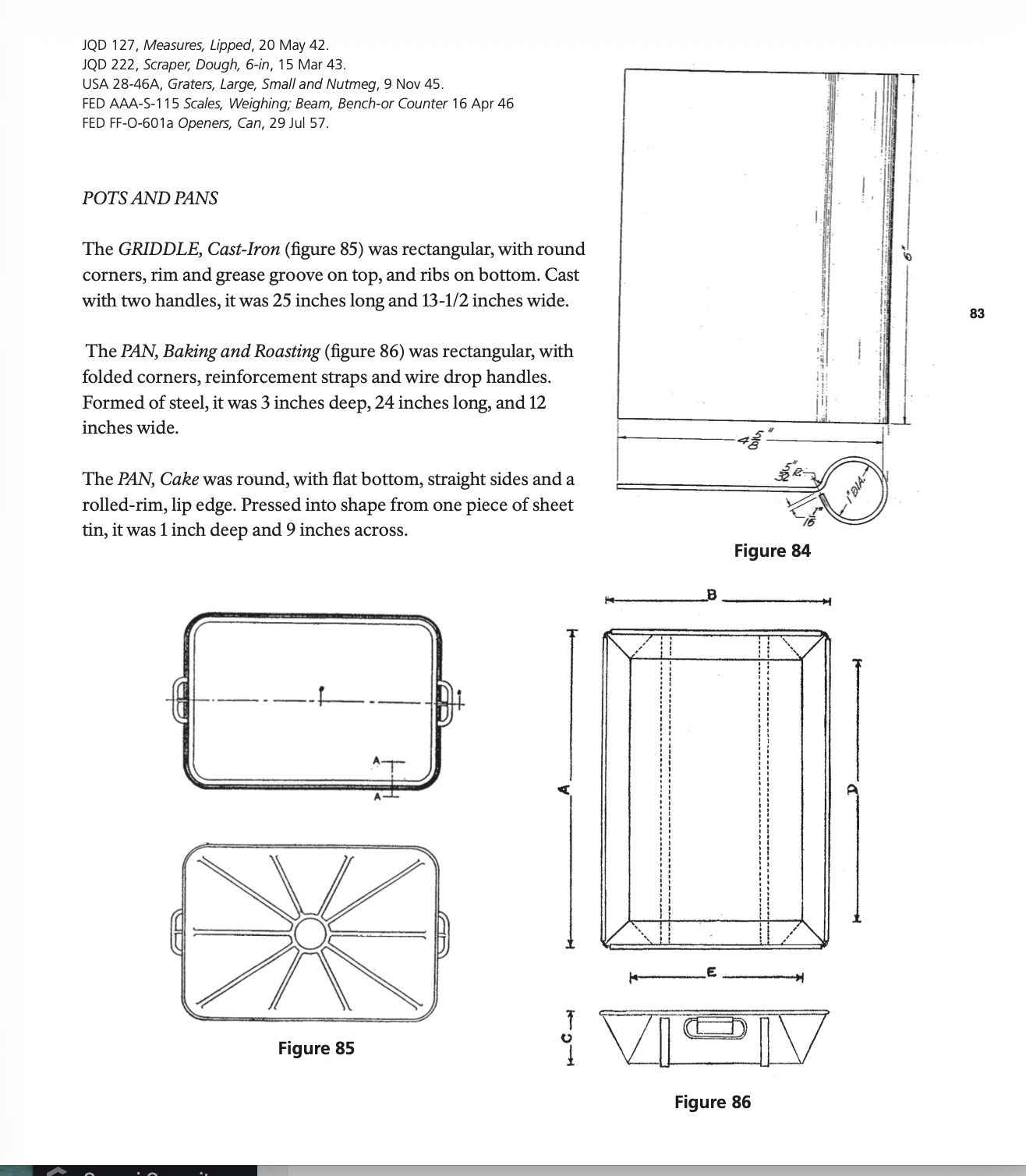
Fort Cronkhite Barracks and Mess Hall Historic Furnishings Report – a fantastic report on all the things that go into building and furnishing a barracks and a mess hall, including chairs, pots and pans, glassware, uniforms etc.
Army Dog Crate 1948 – Post WW2 design.