Posted on

Letters from the AEF

Introduction

Thomas Carlyle wrote, โ€œThe history of the world is but the biography of famous men.โ€ The greater portion of historical literature does indeed appear to be the record of the activities of famous men, and the events, trends and movements that are set in motion by them. The explanation is simple: statesmen and leaders of societyโ€™s institutions keep more detailed records and these become the prime resource material used by the historian. Less is known in all generations of the feelings and passions, the whims and fancies, the loves and hates, and the joys and sorrows of the great mass of people. The discovery of a long-forgotten diary or packet of old letters from someone less than famous is therefore regarded by the historian as valuable evidence to be used in the continuing effort to more accurately record the story of mankind. Such was the case in the discovery of some letters written by a soldier in the trenches of France during the First World War. These letters reveal better than official documents the attitudes and feelings of men suddenly taken from mundane pursuits and transported thousands of miles to a strange land to fight in a bloody war.

The soldier writer of these missives was Cordie Lee Majors who, after the war, became a noted educator and civil servant in McNairy County in West Tennessee. He was for some years, prior to his death in 1971, McNairy County Historian, and it was his sense of history that required the presentation of these letters.

C. L. Majors was born in the Lawton community near Adamsville, Tennessee, in 1889 and was the eldest of nine children born to Robert B. and Louisa Elizabeth Horner Majors. His childhood was in most respects typical of children whose parents eked out a meager existence on marginally productive farms at the turn of the century. And by modern standards his life was one of isolation, for Adamsville was some fifteen miles from the nearest railroad at Selmer, the county seat. Despite modest circumstances, C. L. Majors had a thirst for knowledge, pursued as best he could an education, and achieved, by the standards of the day, a good education.

High school attendance required that he go and take up residence at Bethel Springs, a community four miles north of Selmer. In order to pay for his room and board, he taught in one-room country schools during the summer months. Upon graduation from high school in 1913, he became an assistant principal and teacher at his alma mater. As time passed, he improved upon his qualifications by attending summer school at institutions of higher learning and teacher institutes, or what the modern teacher would call a workshop.

In September 1916, he accepted a position to open a new high school at Ramer, a small village about ten miles southwest of Selmer. A few months later, the United States entered the First World War, and that event interrupted his career, for on October 5, 1917, he was inducted into the army as a private and assigned to Company C, 117th Infantry, of the 30th or โ€œOld Hickoryโ€ Division. After seven months of training, his company sailed for France as part of the American Expeditionary Force, arriving there in late May 1918. Then came more training before Company C went to the front lines in July.

Made company clerk, Majors remained in relative safety much of the time, but his letters and personal journal indicate that he did go into actual combat a few times and was frequently under shell fire. On September 29, he went โ€œover the topโ€ in the attack on the Hindenburg Line. On one occasion he was trapped in โ€œno manโ€™s landโ€ out of reach of rescue for several days. In October 1918, he was reassigned to officer candidate school at La Valbonne and was there at the time of the Armistice.

The selected letters herein are part of forty-four letters and cards in the collection, all addressed to parents or brothers and sisters. These letters remind us of how the United States developed an army in World War I: existing National Guard units were federalized and brought up to full complement with volunteers and draftees. In contrast to subsequent conflicts, recruits from the same community, and even brothers, were often assigned to the same outfit. C. L.โ€™s brother, Carl, was assigned to Company C, but took sick at the port of embarkation, was held there and never sent overseas. There is mention in these letters of Paul Williams, the brother of the husband of sister Hattie, as well as other boys from McNairy County.

The letters offer little information of Majorsโ€™ actual combat experiences or the location and movement of his outfit. No doubt he wanted to avoid parental worry, but his reluctance to discuss military activities was probably due to the relatively strict censorship imposed on the men of the AEF. The Americans adopted two censorship devices used by their British ally: an honor-system envelope and a postcard with appropriate messages on it. The envelope required the soldier to sign a pledge that the letter contained only family and personal matters; the postcard required the soldier merely to cross out inappropriate phrases. All other letters were read and censored by a company officer. It is interesting to note that censorship continued for many weeks after the Armistice. The reason is not clear; bureaucracy is always slow in reacting to changing situationsโ€”perhaps orders calling for the cessation of censorship were slow in reaching the company level, or maybe the authorities simply forgot about it.

These letters provide a glimpse of the varieties in human emotion. There is love for home and country and hate for the enemy and what he stood for. There is an intense homesickness and a desire to get the business at hand over and to return home as quickly as possible. There are complaints about slow mail service and sometimes plaintive, sometimes almost angry, demands for letters from home. The life of a combat soldier is portrayed: long periods of boredom and drudgery, punctuated by moments of terror and with the specter of death ever present. Through it all, there is a conviction, undoubtedly held by many, if not most, of the men of the AEF, that they were making a worthwhile sacrifice. Many must have believed with President Woodrow Wilson that they were fighting a holy cause, a war to end wars, to make the world safe for democracy. This one soldier appears to have been convinced that the world would be a better place because of his sacrifice.

The following letters are in chronological order, beginning with one written a month after his arrival in France. He had yet to receive mail from home.

Thursday, June 25, 1918

Dear Homefolk:

A few lines again tonight to let you know that I am well and enjoying myself fine. Hope you are all well. It surely takes a long time to hear from you all. I have written each one of the family a card or letter, an average of almost one each day for some time. Write and let me know just how many of them you are getting. Have been in France over a month, and gee, if I ever get back, I can never regret the trip. If I donโ€™t get back, I can die with the satisfaction of my duty well done. Work! The more I work, the more I want to do.

Your son, Cordie.

July 12, 1918

Dear Homefolk:

I am wondering how you all are today. Fine, I hope. It is raining here today, and has been raining nearly all the time for two or three days.

Havenโ€™t had a letter from the U.S.A. for a long time, but am expecting some this P.M.

When have you heard from Carl? When you write to him, tell him to write me. He knows my address but I do not know his.

You all must write often, for letters from home are the best thing in the world to keep the โ€œYanksโ€ in good spirits. I havenโ€™t had a letter in so long. I am expecting to get about a dozen today.

Will write again in a day or two. So write often.

Your son, Cordie.

July 13, 1918

Dear Father and Mother and All:

Have just received a letter from Carl and was glad to hear from him, for it had been a long time since I heard from him. Had begun to believe he was on his way across the pond.

Well, I have written so often lately that I cannot think of anything new to write. Am well and enjoying life fine.

The letter from Carl was the only letter I have received in a long time.

Say, why donโ€™t you send me some papers to read? Bundle up some old Enterprises and mail them to me. Am โ€œhungryโ€ for some good old McNairy County news. Have already written for the Independent to be sent to me.

Donโ€™t worry about me, for Iโ€™m doing fine. Answer soon and write often.

Your son, Cordie.

July 17/18th 1918

My dear Mother:

Itโ€™s a โ€œbang!โ€ left and right, and a โ€œboom!โ€ in the air; with the enemy in sight, and our Allied support in the rear somewhere.

The roar of our gun, an explosion of the shell, the soul of some poor Hun sent screaming into Hโ€”II.

From whence it came, no one questions the source, but in Autocracyโ€™s name, it murdered by the Kaiserโ€™s force.

If by killing the enemy, my own life his comrade may take, I meet the end in the name of Democracy and doing my duty for freedomโ€™s sake.

Momma, there may not be much poetry in the above, but from it you can gather an idea of my surroundings, which are not at all pleasant. I was drafted into the service and answered the call as willingly as the man who enlisted. I have never intended that you must not take me to mean that I am not anxious to get home, for I am very anxious for this same favor. I would rather be at home the summer, even in a tent and a cot, than to have to stay over here the rest of the year, all of which are only โ€œmake-belikes.โ€

As I write these few lines in my notebook lying on my back, โ€œhugging close to mother earth,โ€ shells are bursting in the air. Yes, Iโ€™d rather be in Tennessee following at the north end of a southbound mule than to be here. Iโ€™m almost like the Civil War veteran who, upon seeing a rabbit running from the noise of battle, remarked, โ€œGo you, cottontail, if it were not for my reputation, Iโ€™d go with you.โ€

Of course I realize there is a rose for every thorn, a little bit of sweet for every bit of sour, and a little bit of patriotism and love for home and native country in every man. I am getting, it seems, my share of the formerโ€”thorns and sourโ€”but at the same time looking forward optimistically to the day when the other side presents itself to view; and there is enough patriotism in me and love for home and the U.S.A. that will enable me to stick, unless I get a โ€œflighty,โ€ until itโ€™s over โ€œover here.โ€

There are many funny sayings among the โ€œsammies.โ€ When one gets wounded they say, โ€œhe got a flighty.โ€ When they hear one of our shells going over they remark, โ€œI hope that will make some German woman a widow,โ€ or the โ€œKaiserโ€™s mother sonless,โ€ and many others.

Wish I had time and the privilege of writing in details about all I have seen and heard. But then paper is too scarce in Europe for all that. So will just hold back until I get home and will spend the remainder of my days trying to tell it. Wishing you all health and happiness, I am just the same.

Truly, your son,
Cordie

Post mark July 20, 1918

Dear Momma:

Just a few words to let you know that I am well and enjoying myself โ€œSomewhere in Franceโ€ via N. Y. and hope you are all well and enjoying life. You must never forget that I think of you every day with deeper love than ever and I want you to write me often. My address is given somewhere in the body of this letter, that part of it. The card that no doubt you have already received will give the rest of it.

The leagues of land divide us and oceans lie between [us] my love for my dear parents and brothers and sisters is ever the same.

Answer soon.

Your son,
C. L. Majors


July 26, 1918

Dear Momma:

Having done my turn in the front line trenches, am now back in a rest camp enjoying life.

While in the front line I have the pleasure (?) of going on patrol (crawling on the ground on the front of my back, thru grass and weeds) into no manโ€™s land in search of Germanโ€™s. I know and fully realize by experience what war is. Donโ€™t worry about me because I merely went on the patrol for the experience. I am still company clerk and donโ€™t have to do anything of that sort.

I had a card from Chas. Sharp yesterday. Tell him hello for me. Was sure glad to get his card. Also a letter from Carl several days ago and a card from Albert only a few days ago. Give all of them my best regards and tell them to write as often as they can and Iโ€™ll try to write or ans. them some time, but I cannot answer all at once. Tell Mildred hello for me. Did Mary and Jewell and the rest get the cards I sent?

Will write again shortly. Answer soon.

Lovingly your son,
Cordie

July 28, 1918

My dear Father and Mother and All:

The mail to-day brought me great joy, a letter stating you all were well. Was sorry however to know you had not received any mail from me. I have written at least two dozen letters and cards. This leaves me well and enjoying a little rest after being in the front line, where I was under both shell and rifle fire for a time.

Your letter was written June 28th one month from to-day. I have received several from you since landing safely on this side and hope you will continue the good work, but increasing as the days pass by. Letters from home worded by Father and Mother are โ€œlike apples of gold in pictures of silver.โ€

Carlโ€™s Enterprise came to me thru mistake, but I sure was glad to get it. There was a letter in it from Bob Hamilton which I enjoyed very much.

Will now close and write again in a day or two. Hope to hear from you all often.

Your loving son,
Cordie


July 29, 1918

Dear Homefolk:

Another letter from you mailed June 18th. Glad you are all well. I am working hard and doing fine.

You probably have received some of the letters I have written. If all of them reach you at once I know there will be all Charlie will want to carry at once.

I also received a letter from an old school mate, formerly Miss Vennie Strawn. She had gotten my name from the Enterprise. All letters are a source of much satisfaction and consolation to the oversea boys in khaki. Donโ€™t forget to send me every Enterprise you get hold of. I wrote some time ago for the Selmer Independent.

Well, the news is very encouraging, everything going our way, and the โ€œYanksโ€ winning gradually, but finally and inevitably, everything before them, and all along the line. There seems to be good ground for the belief that peace will reign supreme in the land by Xmas.

Give all my best and kindest regards and write me all the news about everything and everybody. You cannot write too often. Will write again tomorrow or next day.

Your loving son,
Cordie

August 2nd 1918

While waiting for the mail to come this P.M. in which I am looking for a letter from you, will let you know that I am well. We are having some rain to-day.

Yesterday I received two copies of the Enterprise dated June 13th and 27th and one copy of the Independent dated June 28th. You don’t know how glad I was to get them.

I wrote you some time ago that I was not in France any more. Will now tell you that we are all in Belgium. The day is coming I hope when we will be in Germany (even Berlin) with everything in our favor. Well, wherever we may be things will be in our favor, for the opposite would be contrary to the spirit and determination of the “Old Hickory” Division. You know where there is a will there can be made a way.

From the June news at hand you have good crops. I hope so anyway. This has been a beautiful country, fine farming country. The crops in the back area are fine, wheat, oats, sugar beets, etc. Wheat harvesting is now beginning. The larger part of this country is an area of devastation and ruin. There is also another harvest in progress, we the harvesters. Read the newspapers for the results.

Lovingly your son
Cordie

August 2, 1918

My dear Homefolk:

Since writing you this morning, the eveningโ€™s mail brought me tidings of great joyโ€”8 letters, 3 of them from home, one from Hattie, fine from Selmer and the rest of them from the good live town of Bethel. One was from Mrs. Hester, telling me of her frying-size chickens, etc. Well, that brought back memories of the long ago, happy memories of the pleasant days spent in the home of A. J. Hester, one of the best families I ever knew.

I was indeed glad to get your sweet letters and to know you were all well, and good crops, etc. The three letters received from you were written July 3rd, 10th, and 13th. According to that, it takes nearly a month for letters to come from you to me.

You spoke of, or rather expressed a desire, that I write about all that I have seen. Well, that would hardly be possible, but if I continue to write so often there will not be much left untold.

This is a busy life for all Sammies. There are many days that require my entire attention from early morn to late at night, with scarcely time to eat. Then a breathing spell will come and you can easily guess how I spend that time. Writing letters, of course, and if I ever receive an answer to every one of them, I will never be lonesome.

You should see these boys sitting around with smiling faces, the happiest bunch I nearly ever saw, reading their letters, almost all received today, from two to a dozen letters. If you want to see a boy from โ€œDixieโ€ shout with joy, let him get a letter from home. One fellow got twelve letters. He has been out there reading them and acting like the biggest fool you ever saw for about an hour, all with joy, of course.

Yesterday I received two copies of the Enterprise dated June 13th and 27th and one copy of the Independent dated June 28th. You donโ€™t know how glad I was to get them. Write often.

From your loving son, Cordie

August 10, 1918

Dear Momma:

Just a few words to let you know that I am still living and well. Wonder how you all are this morning.

There has been rain here every day for a long time, but the prospects this morning indicate a beautiful day. The birds are singing their beautiful songs. Reminds me of sunny Tennessee.

Say I had my hair clipped off short yesterday. Bet you can’t guess why ha. We all dread the “cooties” more than we do the Germans.

Will not write much this time but will write again in a day or two. Hope you have received several of my letters by now. Ans. soon. Love to all.

Your son
C. L. Majors

August 14, 1918

Dear Momma:

I will now proceed to answer your letter just received and which was written July 15th. Everything seems lovely in these parts. The Germans are reluctantly giving way under the pressure of the Allies. Many thousands of prisoners in addition to the dead and hundreds of guns is the booty of the past few days. Germany is doomed to utter defeat. It may be Christmas and it may be in the long spring drive in 1919. It cannot last any longer than that.

Wish I could be at home this summer to help eat fruit and watermelons. Do you have a melon patch?

Hereโ€™s what we had for dinner today: green string beans cooked with Irish potatoes, roast beef, and loaf bread. Gee, how I would like to have some cornbread and biscuits.

With love, your son, C. L. Majors.

August 19, 1918

Dear Homefolk:

In the trenches again, doing our bit, thatโ€™s all. Iโ€™m well and enjoying life.

It is now 5 oโ€™clock. Since 8:00 this morning the enemy have dropped 27 of his big shells in our vicinity, and only 6 of them exploded. The rest were โ€œduds.โ€ We call the ones that do not โ€œgo offโ€ duds. That only goes to show how defective his ammunition is becoming.

I am beginning to wait with patience for another copy of the Enterprise. Have never received but one copy. Am afraid they get lost unless M.O.W. addresses them with pen and ink. All mail addressed with pencil is liable not to reach the addressee because it is usually worn to an extent that it can hardly be read.

Write me all the news as often as you can. Will write you a few lines as I promised in the letter I wrote yesterday. Received your letter about two hours ago, the one you wrote me on August 24th. Was very glad to get it and to know that you were well. This leaves me well and enjoying splendid health.

Wish I was there to help Papa in the sorghum. Hereโ€™s hoping that things will turn out so that I can get home in time to eat and enjoy some of that good old sorghum molasses, and I believe your prayers and mine and my hopes and highest ambitions will come true. If they do, what a happy time I will have relating my experiences.

When the roll is called in Berlin Iโ€™ll be there, Johnny, on the spot, โ€œfor Dixie and Uncle Sam,โ€ and you, and when the roll is called at our own family fireside I want to be there, and then the final roll call when all our work on earth is done, โ€œI want to be there, I do.โ€

I also had another letter from Carl today. He seems to be getting along fine and anxious to come over here. Well, he is and feels about like I did about the matter. A great experience it is and all that kind of stuff, but I feel like kicking his โ€œr-pโ€ if he does not look out for No. 1.

Money couldnโ€™t buy my experiences and what I have learned on the trip, but millions wouldnโ€™t be worth it if I could not have the happy privilege of once more coming back home to you, and once more resuming my school work and, to some extent, satisfying my ambition to do my duty as a citizen of the U.S.

Of course I fully realize that I am performing a sacred duty not only to my fellow associates, both comrades in arms and those loyal supporters at home, but to generations yet to come who will naturally want to live in a free world. However, there will be peacetime duties after the war. Those are the duties I crave to perform, as do millions of others. But all must pay the price, some in one way and some in other ways. The final outcome will be worth the price whatever it may be. We are bound to win. โ€œBerlin or Bust.โ€

One more copy of the โ€œEnterpriseโ€ today, the issue of August 1st. My! Itโ€™s welcome, thrice welcome, more so now than ever before. I havenโ€™t seen Paul in a month, seems like, but am sure heโ€™s getting along fine.

Will close by this time. Write often.

Your son, Cordie.

September 3, 1918

Dear Homefolk:

Received your letter the night before last that you wrote me on July 26. Sorry to hear that Vallie is not well. This leaves me well. Hope by this time Vallie is well of chills.

The weather is not so warm over here now. There is not much difference in it and the weather over there.

This division has recently taken part in a drive, losing a few men and taking several prisoners and gaining one of the enemyโ€™s important positions. They cannot rush the Hun too fast to suit me. The sooner the better, if the โ€œsoonerโ€ is a complete victory over the barbarian brutes. Nothing short of that will be worth the price already paid; anything less will make us unworthy of our inheritance.

God forbid that we should ever fail to live up to the principles set out in the Declaration of Independence and nobly upheld by our grand and good President. โ€œBerlin or Bust,โ€ or Heaven and hell will be synonymous terms. Noโ€”a thousand times no.

Your loving son, Cordie.

September 9, 1918

Dear Father & Mother:

Your letter written August 10th just received and mighty proud to hear from you and to know you all are well. This leaves me well and doing fine.

We certainly are having some rain for the past few days, and mud is everywhere. Wish I was there to take in the meeting.

We are among some mighty fine French people. Do you get all of my letters? You only speak of receiving one now and then. I write at least three to five every week.

It has been two or three weeks since I received the Enterprise. Have received three copies in all. I donโ€™t expect to receive very many unless they are plainly addressed with pen and ink. Pencil addresses are worn out by the time they are received over here. Write me often.

Your loving son, Cordie.

September 20, 1918

My dear Mother:

Will write you a few lines as I promised in the letter I wrote yesterday. Received your letter about two hours ago, the one you wrote me on August 24th. Was very glad to get it and to know that you were well. This leaves me well and enjoying splendid health.

Wish I was there to help Papa in the sorghum. Hereโ€™s hoping that things will turn out so that I can get home in time to eat and enjoy some of that good old sorghum molasses, and I believe your prayers and mine and my hopes and highest ambitions will come true.

If they do, what a happy time I will have relating my experiences. When the roll is called in Berlin Iโ€™ll be there, Johnny, on the spot, โ€œfor Dixie and Uncle Sam,โ€ and you, and when the roll is called at our own family fireside I want to be there, and then the final roll call when all our work on earth is done, โ€œI want to be there, I do.โ€

I also had another letter from Carl today. He seems to be getting along fine and anxious to come over here. Well, he is and feels about like I did about the matter. A great experience it is and all that kind of stuff, but I feel like kicking his โ€œr-pโ€ if he does not look out for No. 1.

Money couldnโ€™t buy my experiences and what I have learned on the trip, but millions wouldnโ€™t be worth it if I could not have the happy privilege of once more coming back home to you, and once more resuming my school work and, to some extent, satisfying my ambition to do my duty as a citizen of the U.S.

Of course I fully realize that I am performing a sacred duty not only to my fellow associates, both comrades in arms and those loyal supporters at home, but to generations yet to come who will naturally want to live in a free world. However, there will be peacetime duties after the war. Those are the duties I crave to perform, as do millions of others. But all must pay the price, some in one way and some in other ways. The final outcome will be worth the price whatever it may be. We are bound to win. โ€œBerlin or Bust.โ€

One more copy of the โ€œEnterpriseโ€ today, the issue of August 1st. My! Its welcome, thrice welcome, more so now than ever before. I havenโ€™t seen Paul in a month, seems like, but am sure heโ€™s getting along fine.

Will close by this time. Write often.

Your son, Cordie.

September 27, 1918

My dear Homefolk:

Will write you a few lines to let you know that I am well. Hope you all are the same.

Well, we are on ground now that was occupied by the Germans less than one month ago and facing the noted Hindenburg Line, but donโ€™t worry, weโ€™re doing and sacrificing something that is worthwhile. Hereโ€™s hoping and praying that I will make it through safe and be permitted to return to you.

I dreamed two nights in succession this week just as plain as daylight of being at home, and last night I dreamed of being in Bethel. Some dreams, but they are sweet just the same.

Hope to hear from you often. With love to all, I am your son and brother, Cordie.

October 7, 1918

The following letter was written after the attack on the Hindenburg Line. He had also just been promoted to sergeant but makes no mention of the promotion except to attach his new rank to his signature.

My dear Father and Mother & All:

I now have three letters from you to answer, one written August 31, one September 3, and one September 7th.

Havenโ€™t written you in several days for it has been almost impossible.

That little piece of prose you sent me is fine. It brought tears to my eyes when I read it. Am keeping it in my little Testament.

I have recently had the experience of going โ€œover the topโ€ and capturing some prisoners. The pencil I am writing with is one I took from the pocket of a German I captured. That was an awful experience, one that no one need care to have, when men were falling all around. If you ever did pray, now is the time.

Paul Williams and Homer Gray made it thru safe. So did all our McNairy County boys except one in โ€œDโ€ Company. His name is Earl Burks from south part of the County.

Write every chance you get.

Sgt. C. L. Majors.

October 10, 1918

My dear Sisters, Jewell and Mary Lou:

I received your sweet letter written August 10th and was mighty proud to get it.

This leaves me well and hope you all are the same.

Yes, I would like to be there to help you pick cotton. But I have a harder job than picking cotton. And that is fighting these dirty Germans. Donโ€™t you wish that we could soon get them whipped?

Well, no one can wish it any stronger than I do. And if we keep on like we have been whipping them for the last ten days, it wonโ€™t last long.

I have some nice souvenirs taken off the Germans. I have one of his leather belts, a Bowie knife, a combination knife and chain, and a nice watch and chain. I have also some German money.

I got your picture and was glad to get it. I cut it out just the size of my little Testament and am going to keep it.

Write me often.

Your loving brother, Sgt. C. L. Majors.

October 11, 1918

Dear Homefolk:

Will now answer your letter of September 10th. This leaves me well and hope you are the same.

I have so many letters to answer that I have to write in a hurry to get them all answered. And besides, havenโ€™t had much opportunity for some time. I received seven letters day before yesterday and was already behind with three letters. So you see I am trying to perform the task tonight of answering ten letters. What do you think of that?

What is the general opinion with everybody and the newspapers over there as to the extent of the war? We donโ€™t think it will last much longer. If we continue successful, the Germans will be back wholly on their own soil within one month and they will have to make peace by Xmas. That is my view of it.

Oscar Hurst got killed day before yesterday.

Write often.

Your loving son, Sgt. C. L. Majors.

October 24, 1918

In mid-October Majors was transferred to officer candidate school at La Valbonne. The following was the first from his new assignment and indicates relief at being away from the front.

Dear Momma:

Am answering your letter written September 26th.

Since writing you last I have had the opportunity of traveling some five or six hundred miles over France. Am now in the Alps Mountains, over 150 miles from the front line, going to an Infantry School. Gee, it is some relief to be out from under shell fire. Guess I will be here for a few weeks.

Am enclosing another letter written several days ago, but havenโ€™t had the opportunity to mail until now.

Write me often. My address is changed to the one given below.

Your loving son, Sgt. Cordie L. Majors.

November 10, 1918

My dear Parents:

I received 15 letters, 4 of them from you dated September 21st, 24th, 26th and 30th. They were all full of news and this leaves me in the best of health and enjoying life to the fullest.

I have asked me if I had a good place to stay. Will say at present I have big stone and concrete buildings. Understand I said โ€œat present,โ€ so there has been shelling some and a hole in the ground, a ditch, anywhere for a little protection. But that day I hope is close at hand for the war is nearly โ€œfinis.โ€

I donโ€™t know exactly how you received my bonds and government. Write me in every letter or two whether or not you received it. If you do not, you will be in trouble. There should be $170 allotted coming to you now and $100 Bonds.

No, I havenโ€™t seen Emery yet. You must remember there are over two million men over here now and scattered over four or five hundred miles of territory. So you see it will be an accident if I ever see him.

I have not received any paper from the U.S. in over a month. Write me often. With love and best wishes for all.

Your son, Cad. Cordie L. Majors.

โ€œDadโ€™s Xmas Letter,โ€ Nov. 24, 1918

My dear Father:

Sunday, itโ€™s a happy day. Happy because of the fact that I am living and appreciative enough to write this letter. Thankful to the good God above for this happiness; appreciative because of the many things that are around me and for the privilege I am enjoying this minute.

I would not take anything on earth now to exchange for this experience, and with foresight, to give impetus to the movement which on this day every boy in France is requested to support.

โ€œDadโ€™s Xmas letter,โ€ and you are probably writing me one too. Perhaps you are thinking it strange that I am writing you a โ€œXmas Letter,โ€ but when you get the letter you will understand. Just a few days ago this morning I crossed the Strait of Dover and landed at Calais, France, where we spent only a few days resting, seeing some of the city and surrounding country, and exchanging clothing.

It was cold, and the weather was miserable. We had thick clothing and were getting some of the favorite expressions that the boys write on the outside of their letters. It is usual to hear the โ€œdoughboysโ€ refer to gas masks and steel helmets as their best friends, this of course after they got under shell fire or were anticipating the move.

During our stay at Calais we were huddled together in round tents. At night we slept on the floor, heads around close to the outer edge and feet toward the center. Long โ€œguysโ€ were not allowed to extend their feet beyond the center pole, because he would then interfere with the comfortable position of the man opposite him. Sandbags were piled around each tent to a height of about three feet, this for protection in case of an enemy air raid. At that time the Germans were trying to break the morale of the Allied forces by continually bombing their sea ports and inland towns and railroads.

From Calais we rode in a second-class passenger train southward about forty miles. Leaving the station we hiked with packs on for about seven miles. It was very pleasantly, sleeping in the barns of French farmers, using hay for beds, and during the daytime training in the tactics of actual defensive and offensive warfare, the bitter dregs of which we had a taste later on.

On July 2nd, two months from the day we left Camp Sevier, we began a three-day hike of about thirty-five miles, arriving in the vicinity of Ypres, where we began holding the front-line trenches at Ypres, a full account of which I cannot give just now. It was here on the night of the 21st that I had my first experience on a patrol into โ€œno manโ€™s land.โ€

My work was in charge of the ration party, going after rations each night. It was not an easy task and there was much that was interesting and exciting about it, but I cannot write it all here. In this sector we played in and out for two months.

In September we moved farther south to the position of the line between St. Quintin and Cambrai, both in France and facing the noted Hindenburg Line. It would take a book and tax the patience of all the censors in the A.E.F. to give a complete description of all I saw in the offensive in which the 30th Division played such an important part. Company โ€œCโ€ was in the fray which broke through that strong German line at Bellicourt. I captured a German and with others helped to get many more. That was on September 29th.

We were glad to take shelter in the concrete dugouts which we took from the Germans on that day. But that day was not the finish. When I left the Company and the Division on October 14th, we had driven the enemy back a distance of more than twenty miles.

The end has finally come and the โ€œHunโ€™sโ€ hellatious warfare of wanton destruction and barbarity on land and sea is finished. The Kaiser has abdicated and the death knell of his autocratic regime has been sounded. I hope that the declaration of peace terms will end his breed of autocracy for all ages to come. There are many, many more things I might write about, but it would be impossible to write it all.

With best wishes for a joyful Xmas, a happy new year, and love to all, I am

Your loving son, Cordie.
Posted on

โ€œIn Good Spirits and Ready to Go to the Frontโ€: The World War I Diary of 2d Lt. Norman A. Bie

By: Donald J. Ivey and Joe Knetsch, Ph.D.

The following diary records a unique time in United States military history. Just prior to the 4th Divisionโ€™s departure for France, the War Departmentโ€™s observers in Europe realized the insufficiency of the armyโ€™s divisional organization, including lack of firepower and poor unit control. An experimental divisional arrangement was created on 8 June 1917 and closely studied during its training phase. The two groups formed to study this arrangement were headed by Gen. John J. Pershing, recently named to head the American Expeditionary Force (AEF), and Col. Chauncey Baker, a noted expert in military transportation. Their conclusions led to further divisional reorganization, including the addition of more firepower and goals to fighting sustained battles. The result was the โ€œsquare divisionโ€ of 28,000 officers and men, which was adopted on 8 August 1917. This divisional organization is reflected in the Bie diary.

According to historian John B. Wilson, this organization proved to be very difficult to manage in combat, often lacking the effective firepower thought to be necessary to carry enemy entrenchments. One of the major reasons for the ineffectiveness of this formation was the lack of reliable communications resulting in the often impossible task of identifying the infantry units as they progressed toward the objective. Rolling barrages often outdistanced the infantry units which were supposed to benefit from the increased firepower, leaving them exposed to enemy machine gun nests and other dangers. The square division arrangement also had difficulty supplying enough troops to carry food, bury the dead, and evacuate casualties. Divisional logistics, already hampered by the relatively poor transportation facilities within the Allied lines, often broke down under the strain of combat. Finally, the lack of experienced staff officers made life miserable for those assigned the duty of coordinating all facets of troop movement.

Donald J. Ivey received his B.A. with honors in history and his Masterโ€™s in public administration from the University of Central Florida in Orlando, Florida. Presently the Curator of Collections at Heritage Village, the Pinellas County Historical Museum in Largo, Florida, he has written and published a wide variety of articles on Florida history. Ivey lives in Largo with his wife Mylene and their four-year-old son John.

Dr. Joe Knetsch, born and reared near Kalamazoo, Michigan, graduated with a B.S. degree from Western Michigan University majoring in history and economics. He received an M.A. degree from Florida Atlantic University, again majoring in history, and earned a Ph.D. at Florida State University, majoring in history. Dr. Knetsch has served as the historian for the Governor and Cabinet, sitting on the Board of Trustees of the Internal Improvement Trust Fund since 1987. In this capacity he serves as the stateโ€™s expert witness in cases involving land titles and navigable waterways. Dr. Knetsch has published more than 100 articles and given more than 130 papers on the history of Florida. He has also edited two books and is the author of a text on the history of Florida surveying. Dr. Knetsch is married to Linda M. Knetsch and lives in Tallahassee, Florida.

Some of the problems outlined above appear vividly in the memoirs of George C. Marshall, then a young colonel on General Pershingโ€™s staff. Marshall noted that it took nine hundred trucks to transport one of these divisions, if trucks were available. During the shifts from the St. Mihiel salient to the Meuse-Argonne, the traffic on the muddy roads caused much confusion and delay. This delay was aggravated by the dependency upon horsepower, which dwindled daily through attrition. Marshall estimated that it took an extra three to six days to travel by horse the ground covered in a single day by a truck. Bieโ€™s diary accurately reflects some of these problems.

Although the young Lieutenant Bie did not realize it, on 30 August 1918 he may have observed General Pershingโ€™s first full day on the job as commander of the American First Army. Bie states that he observed Pershing with a group of Congressmen while he was in Chaumont. It marks an appropriate beginning to this diary and tells us, indirectly, that it was not for public consumption. Bieโ€™s visit to Chaumont also marked the end, as S.L.A. Marshall noted, of the 4th Divisionโ€™s on-the-job training.

In Bieโ€™s diary, we see the problems Colonel Marshall discussed concerning the transportation of troops. He notes the clogging of traffic which delayed his arrival to make it nearly impossible for the ambulances to pass. He allows us to see the impact the new aerial war had upon the troopsโ€”from the need to use camouflage to cover the roads and guns to the โ€œenjoymentโ€ of watching a dogfight in the air. Bieโ€™s entries for 9โ€“13 September show us the intensity of the first full-fledged American offensive opposite the St. Mihiel salient, south of Verdun. This first โ€œvictoryโ€ by an all-American force gave a great boost to morale and enthused even the battle-hardened French and English commanders.

In sum, the Bie diary illustrates the life of an average soldier of the First World War. Bie tries to convey the sense of the war and achieves his goal. It is not a pretentious document and does not purport to give every detail, but its value lies in its almost unconscious perception of the great event that it is.

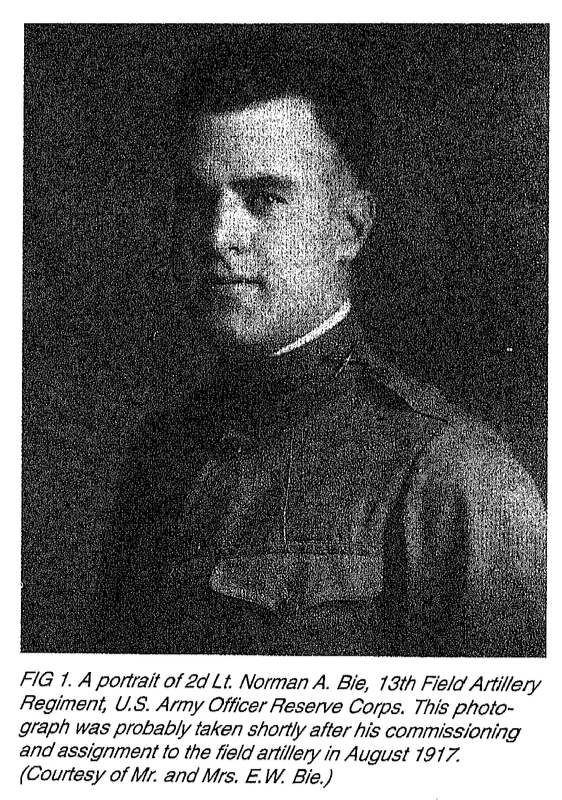
One day during the late summer of 1918, as night began to fall over the scarred battlefields of eastern France during World War I, a young American lieutenant began to keep a diary recounting his experiences on the front lines. Why he chose to begin the journal is a mystery, as he had already been at the front for more than a month, seeing action in both the Aisne-Marne and Oise-Marne offensives. But whatever the reason, for more than five weeks that soldier, 23-year-old 2d Lt. Norman A. Bie of Battery B, 13th Field Artillery, kept a faithful record of his role in the momentous events surrounding him. His diary, recently rediscovered by members of his family some eighty-two years after it was written, provides a fascinating glimpse of that period. It faithfully recounts the long stretches of boredom, punctuated brieflyโ€”but sharplyโ€”by intense action; the hard work and, at times, the almost mind-numbing lack of sleep; the hunger and constant exposure to the elements; all complicated by the risk of facing death at any time, anywhere.

Bie (pronounced โ€œBeeโ€) was born in Tampa, Florida, in 1895. His father, Otto N. Bie, had emigrated to the United States from Norway in 1883 and worked as a civil engineer and steamship captain for the U.S. Army Corps of Engineers. In this capacity, the elder Bie conducted many of the earliest surveys and dredging operations on both the east and west coasts of Florida as master of the dredges Suwanee and Florida. Young Norman frequently accompanied him on these expeditions, including one special operation in 1910 that raised the sunken battleship Maine in Havana Harbor. Later, Norman attended the Porter Military Academy (now the Porter-Gaud School) in Charleston, South Carolina, graduating with honors in 1912.

After graduating from Porter, Bie returned to Tampa. He declined subsequent appointments to both the U.S. Naval Academy in Annapolis in 1914 and to West Point in 1916 in order to pursue a career in real estate. Shortly after war was declared with Germany in April 1917, Bie enlisted and was sent to Officer Candidate School at Fort McPherson in Atlanta, where he attended one of the first OCS classes. On 15 August 1917, after a three-month course of instruction, he was commissioned a second lieutenant in the Officer Reserve Corps and was assigned to the 13th Field Artillery Regiment, then stationed at Camp Stewart in El Paso, Texas. Bie was initially assigned to Battery E of the regiment, then later to Battery B.

In December, the 13th was assigned to the newly formed 4th Artillery Brigade of the 4th Infantry Division, and moved to Camp Greene, North Carolina, where it underwent training under the supervision of both French and British military advisers. By early June 1918, the 4th Division was deemed ready for action, and by the following month had been shipped off to France, where they went into camp and received additional training from the French Army.

When its period of training ended in July, the division was sent to the front. Bie and the 13th Field Artillery seem to have first seen action on the night of 5โ€“6 August, when the 4th Artillery Brigade went on the line to support the operations of the 4th Division as part of the Aisne-Marne offensive.

By the time Bie began his diary on the last day of August 1918, his unit had seen almost three weeks of continuous action on the front lines. At about that same time, the commander of the AEF, Gen. John J. Pershing, was preparing a grand offensive, the first to be organized, led, and fought by American forces. Pershing planned to concentrate his 450,000-man U.S. First Army in a major offensive designed to wipe out the German-occupied St. Mihiel salient south of Verdun.

As Lieutenant Bieโ€™s diary opens, the 13th Field Artillery was preparing to support the U.S. 26th Division in the Rupt Sector along the western edge of the St. Mihiel salient.


Aug. 31, 1918. Camped in woods at Eurvilleโ€”aeroplane discipline becoming more strict. Sent a cable to Dad. Have been on the march for two nights from Blancheville, where we were billeted after arriving from Chery, thru Beuvardes and Chateau Thierry, etc. Part of way on train was sick for two daysโ€”one on march and one at Blancheville. Spent one day, while billeted, at Chaumont, where I had my pay voucher cashed, and ordered new uniform, and obtained part new equipment. Everything I had was salvaged by mistake at Chateau Thierry, but they may be paid for as we were ordered to make out lists of what we lost. Noted today that the 4th Division is mentioned for bravery. The infantry certainly won that for us. My hat is off to the Infantry. Saw General Pershing and a group of Congressmen at Chaumont. The B.C. [Battery Commander]โ€”Lt. Vanderhoofโ€”is in hospitalโ€”Lt. Gann in charge of batteryโ€”I am 2nd in command.

Sept. 1. Camped in woods 3.6 kilometres from Brillon and a few kilometres from Bar-le-Duc after marching all night from Eurville. We were not ordered out of Eurville until 22 oโ€™clock, and as we had to harness and break camp in the dark we did not leave until midnight. Our march was about 15 miles. We had harnessed and broken camp at 18 oโ€™clock once, and were ordered to unharness and make camp again at 19:30. When the second orders came we were all disgusted but there was no grumbling, although we were all tired and sleepy. Animals had no water today. We slept like logs, all except the cooks and the guard. Are moving at 19:30 tonight further toward the front.

Sept. 2. Marched all night from last camp and went into camp near Vaubecourt. Have been on the march now for four nights going anywhere from 15 to 21 miles each night. March discipline is excellent. We are near Verdun now and can see the effects of the severe bombardment the Germans subjected this region to four years ago. The little town near where we are camped is absolutely demolished, and everything is in ruins. The inhabitants have returned but are living in the cellars and ruins of their homes. Stray graves dot the countryside, some in tilled fields, some in gardens, some almost in the road, but all are respected whatever their location. Aeroplane camouflage is one of the things we are working on for perfection for we are evidently going to try to give the Huns the surprise of their lives and it must be a surprise to them. American planes are scarce but the French are evidently coming to our rescue in all we are lacking, as usual, and will co-operate in the air. We spent most of the day resting up, for we are all very tiredโ€”horses in particular. They have done well, the animals, and as we have only a fewโ€”95โ€”we must take care of them.

Sept. 3. Watered the animals last night under cover of darkness at 23 oโ€™clock. Again this morning at 4:30. Slept until 12:00. Stayed in camp the rest of day reading & studying. Expect to see the colonel tonight in order to get permission to go to Bar-le-Duc to wire some money home. The men have been eating green apples and shooting craps all dayโ€”a bad combination. They are in good spirits and are ready to go to the front againโ€”but need new clothes badly. We hope to be supplied tomorrow and it will not be too soon for some have only what they wear. There are some very disagreeable men in the batteryโ€”a worthless lotโ€”that we are trying to get rid of. It would be a good thing for the battery if we do. We changed First Sergeants and mess sergeants today. Both new men are good. My โ€œstrikerโ€โ€”Clementโ€”a Texanโ€”just brought my supper consisting of slum, bread and coffee. A good meal for troops in the field. The officers have canned goods along, so we have a few extras. The men also buy extras, and as they were only recently paid they have plenty. Sgt. Kilcoin of โ€œEโ€ Battery, my first outfit, paid me 20 fr. [francs]. I had loaned him in Toursโ€”a good man and one of my friends. I will have to buy new winter underwear as all mine was lost at Chateau Thierry. Now for the slum.

Sept. 4. Obtained permission to go to Bar-le-Duc to wire money to America. Capt. Sullivan drove me in the colonelโ€™s car. Tried to make purchases for Gathing, Gann, Davis, Ardiff and myself before the captain returned but could not. Everything in Bar-le-Duc is very high and you can obtain very little. The town was pretty well demolished but there remains a good many buildings. Expect I will have to stay overnight.

Sept. 5. Stayed in Bar-le-Duc last nightโ€”no lights at the hotel which caused me to run into a half-opened door and about break my nose. Took dinner with a Red Cross captainโ€”a very interesting manโ€”a veteran of the Cuban and Philippine wars, a Ph.D. of Chicago U. [the University of Chicago], etc. Spent all day and most of my change buying things for the lieutenants of the battery. Met Bill Taliaferro from Tampa accidentally and found out that he came over in the same convoy that I didโ€”he sailing on the Leviathanโ€”ex-Fatherlandโ€”and I on the Great Northern. He was in a hurry and so was I so we had to make the conversation snappy. Left Bar-le-Duc at 17:30 on a narrow gauge. It took me three hours to travel 26 kilometresโ€”noโ€”22 for I walked the other 4. Arrived in camp and everyone was asleep, so I had to talk myself to sleep as lights are not permitted and it was โ€œpas possibleโ€ to read. Sent mother a necklace with a nenette and Rintintinโ€”charms against the Big Berthasโ€”attached. Also an artillery ring.

Sept. 6, 1918. Wrote letters to Mother, Georgie Le Doux and Virginia Bullard. Gathing and Gann off on a reconnaissance toward the front. Held an inspection and general police of camp. Received word that we would probably move out tomorrow and go in support of the 28th Division, plans having been changed. We also expect to fire for 22 hours solid in preparation for drive on Metzโ€”probably. Took water call at 21 oโ€™clock and expect to take it again at 4 in the morning.

Sept. 7. Am writing this on the 8th while mounted waiting to pull out of a woods to make a march of 15 kilo[metre]s to our position. We moved out of our camp last evening at 19 oโ€™clock and marched 22 kilometres to the woods we are in now. It rained all the way and we were all soaked. Very unpleasant. It is dark now and I cannot see to write further.

September 8th. We pulled out of the woods used for a camp at about 22:15, being delayed by a piece from โ€œAโ€ Battery sliding into a ditch. It rained all night and we were delayed for four hours on the road by traffic. Very cold and disagreeable, particularly during one long halt of about two hours when there was no chance for exercise. We have a very good position now, but with wet roads it was difficult to enter. We are 4 kilometres from the front line trenches. Very short distance for heavy artillery. However, if the weather doesnโ€™t hold us up the Front will soon be out of our range of fire. Let us hope so anyhow. There are about 48 batteries now covering a sector of 1 mile front. We have besides large naval gunsโ€”many. If we donโ€™t blow the Dutch off the map it will be because they have as good shelters in this sector as the French. I cannot get it into my head why the French were willing to put so much time on building shelters when they could have been fighting. Some of the positions must have taken six monthsโ€™ work to complete. With the amount of energy expended put into fighting the Germans ought to have been pushed across the Rhine. I am afraid our French friends only fight when they have to, but we must admit they can do something when forced to it. They are like a bunch of kids with all their medals, red pants, and other regalia, but I suppose they must have it. It all seems so funny to me that I donโ€™t feel that any American should say a thing harmful about the French. For if it hadnโ€™t been for their generosity we would have had no guns nor horses for our artillery and we would be negligible as combatants. Also airplanes. Too bad about them. If we had as many as was promised by now it would have been much nearer to a finale.

Sept. 9โ€“10โ€“11โ€“12โ€“13. We have been so busy that I had no time to write up the days. First of all we went into a half-prepared French battery position which required a great amount of work to complete for our purposesโ€”not in making it more safe against shell fire but in doing the things that were necessary to enable us to open fire on the Boche. First of all our guns weighing four tons and more had to be run into their pits by hand and as it had rained for four days solid the ground was exceedingly soft. We finally got them in by using rolling hitches on the wheels and using all cannoneers. Then we had to dig trail pits in the solid rock as there is only a very shallow layer of mud, or earth as it probably is once in a while, over the rock stratum. Also we had to cut branches and make mats for the gun wheels and the hardest job of all was to cut down and top enough trees to enable our guns to shoot at an elevation low enough to reach the German trenches. We cut in all about 75 trees and dug our trenches with 3 axes, 4 short shovels (very small), 3 short picks (also very small) and 2 FOLDING SAWS. It was raining all the while and we had had no breakfast and not over 5 hours sleep in forty-eight. Our men were absolutely exhausted but willing to a superlative degree. At dusk two field officers came around and of course, had fault to find. The only thing we had not done was to dig emergency trenches near the guns, although we had shelter 30 feet away. But it had to be done, so we were ordered to work the men all night until the trenches were dug, the order being obeyed but not in a strict sense as we ran only a pretense at digging, first because it was impossible to dig in solid rock at night without light and again because our men were at that time forced to their utmost. I thought it best that as many as could should get a little sleep, if they could, lying in the mud and waterโ€”and they didโ€”for one hour and a half. Then an ammunition train came up bringing 360 rounds of shells, powder, fuses, and primers. As it was dark beyond any degree and raining it took them until five thirty to get it all off of the trucks and into the dumps. Then we had breakfast, and afterwards began another dayโ€™s stretch by hauling the ammunition to the guns, digging the emergency trenches, and clearing further our field of fire, still raining, all wet and without rest. This continued all day. By the way, the field officers mentioned that there was no use in babying our men when they ordered us to dig all night. At 8 oโ€™clock I, being executive, posted the gun crews and sent the others to bed. We knew we would open fire this night, so I kept one crew with everything in readiness having one of each kind of shell with one of each kind of fuse and one of each powder charge prepared so as to be able to get the first shot off in record time, which is quite an item in Field Artillery. At eleven-thirty 26 trucks of ammunition drove up, while it still rained, and they had to be unloaded. We called out the men and unloaded them where they stopped, as there was no hope of maneuvering them to the dumps on account of the mud. At 22:30 Lieutenant Gann phoned down from the Command Post to be ready. I was. At 1:03 I got the command โ€œFIRE,โ€ having received data just previous in the same message. At 1:08 the first shot was firedโ€”the five minutes being occupied in taking off sight and muzzle covers, in placing the trail, in lighting our aiming stake, and loading. Twelve minutes later โ€œAโ€ Battery got off their first shot. We had schedules to fire from โ€œHโ€ hour, 8 oโ€™clock H minus 7, making it 1 oโ€™clock to โ€œHโ€ hour, firing in all 315 rounds per gun, and we had 90 at each gun. I called out the 2nd gun crews, ammunition detail, and called for volunteers from the cooks, and non-commissioned officers. They all came.

All. And they carried the shells and powder on their backs continuously until ten oโ€™clock on the next morning practically without lights, as we only had candles and five lanterns (candle lanterns). The dumps were located anywhere from 50 yards to 600 yards away from the guns, which made a man walk about ยพ of a mile to get only one round from the last dump. It was very muddy and many slipped with the shells on their backs, and we are heavy artillery, and I know many were hurt, but no one asked to be relieved except one and I have him spotted for asking not to even be called out because he couldnโ€™t get his shoes on. They kept on, these men and my cannoneers until the last shot was fired at 11:30 the next morning, we having received six missions to support the infantry after they went over the top at 8:00, which occupied 3ยฝ hrs. We have 130 men at the guns and they all worked, and my heart comes up even now in my throat when I think of the guts that many of them, most of them, and a few in particular, showed. It rained up until one hour before the infantry went over and then the sun came out strongly, which I am sure was God-sent, for it had rained a week or more previous. We had done all the work, at least my boys had, from 17 oโ€™clock the night before until 11:30 on only a few crusts of bread which I had brought up. But we had breakfast as soon as the last shot was fired and then cleaned our guns and then slept. On the 13th we were ordered out at 1:00 A.M. to get the guns out of their pits, and be ready to follow the doughboys. We got the guns out at 7:00 working all the time, and we have not moved yetโ€”10:30 A.M.

Sept. 14. Because our infantry has gone so far forward we could not catch up. We hear our corpsโ€”the 5th and the 1stโ€”have one to four German divisions bottled upโ€”that the French are driving with us on METZ, and that our infantry had gained their third dayโ€™s objectives in 36 hours. All successful. My battery was not fired on, although I thought we were going to be once when I heard a shell burst nearby. I learned that it was a premature explosion from one of โ€œAโ€ Batteryโ€™s guns just behind us 200 yards. We are now being held here to await rain or darkness and expect to move towards Metz.

Sept. 15. As we were held in camp for further orders, I obtained permission to visit some of the captured territory. โ€œNo manโ€™s landโ€ was one mass of shell holes and shell-torn trees. All of the trenches were well demolished, and plainly showed effects of intense bombardment of light artillery. I visited battery positions mostly. We were told there was an abandoned battery of 77โ€™s nearby but we could not locate them. All dugouts and shelters presented evidence of hasty abandonment, so I entered three or four, having no fear of traps and mines. There was a great wealth of all kinds of supplies, clothing and ammunition. I brought back a pair of field shoes, some letters, and a walking stick. The letters were Austrian, and proved to us the report that we were opposed by mongrel troops. The shoes were too small and I threw the stick away. Machine guns and material were much in evidence. The roads were all excellent except for one strip of the โ€œGrand Tranchรฉeโ€ leading across โ€œno manโ€™s land.โ€ We were ordered not to hit that road as we wanted to use itโ€”if we advanced. We pulled out at 18:30 and arrived at Ancemont at 2:45. There was confusion in getting into our camp and we did not get settled until 6:45. This was due to our being the last in order of march.

Sept. 16. Rested all day after going to Ancemont and scouting up something to eat. The provosts gave me a breakfast with fried potatoes and jam which was the best I have had in a long while. Returned to town at 20:00 but could buy nothing, however the cooks at an officersโ€™ mess fixed us up with a second supper. They were very nice and accommodating, and wanted first-hand information of the drive. Saw papers for the first time in several days.

Sept. 17. Spent the day in resting principally. Cleaned harness and guns in the afternoon. German planes were in evidence all day and we expected the night bombing which we got. The bombs were intended for the mobile hospital right next to us, though I think, as more bombs landed near it than us. Read a Saturday Evening Post for the first time in many days. Had good food also for the first time.

Sept. 18. Had gas masks drill for an hourโ€”issued clothingโ€”watered animals at 4:30 and 18:30โ€”wrote home. Received 2 letters from home. Terrell has been assigned to โ€œBโ€ Battery as commander. Had a long talk with him at night.

Sept. 19. We had quite a little bit of excitement today. Word percolated thru the Regiment that our Major-General had made some remarks to the colonel about โ€œsacrificingโ€ him if he could not handle the Regiment. The colonel has said not a word but we are sure something was said for the 13th has been nagged and nagged until it appears to us as if it was being done solely for pestering usโ€”thru spite. We all call the Brigadier an old Grandma and his staff a Sunday school. They are certainly the worst excuse for their jobs I hope ever to see. We feel that the Major-General has been duped by the Grandma into spiting us, not us, our Colonel who we all worship, for personal reasons. Our colonel is one of the grandest men and most courtly gentlemen I have ever known and he has us all with him. A division is none too good for him and he deserves one. If someone could only put the division commander wise we think he could see the error of his ways. Saw an air battle which was excitingโ€”2 Hunsโ€”5 Americans, one plane forced down and a Major and Lieutenant capturedโ€”the other shot down.

Sept. 20โ€“28. A whole week has passed without an entryโ€”something I never intended should happen, but it is very hard to sit down and write up the day when you are tired and also when there is no light. We left camp on the 22nd and made an 18 kilometer march to a woods on top of a steep hill. The climb up the hill was very long and hard and we did not get in until way along in the morning of the 23rdโ€”about 9:00. We got no orders to pull out that nightโ€”for which we were very thankful. The next day we spent in cleaning guns and harness and also in resting. We moved forward that nightโ€”24thโ€”over a camouflaged road with two lines of troops going forward. We all expected a shelling which never came. The march was long because we made so many stops en route. Finally, we arrived at our battery position which had been prepared for us by a detail of the B.C. and thirty men who had come forward 3 days previous. It, while practically in the open, was good for we were just behind a crest and near a road with the additional facility of having a small narrow gauge railroad running by the battery for hauling ammunition. Lt. Gann took the tour of duty until 7:00 the next morning and I put my cot and four blankets in the pit that was to be the Executiveโ€™s Dugout. Before I had gone to bed we got some gas, and I was further disturbed during the night by having a few small shell fragments drop in on me. The guns were in position next morning when I went on duty and I spent the day in getting up 1200 rounds of powder and shells and in preparing the guns to open fire. We had to be very careful of our camouflage discipline as there were a good many German planes up. We had no shells fall near us at all. Everything was ready by 17:00 and I went off duty at 19:00. The Corps Artillery opened up at 1:00 and raised quite a racket. The batteries forward including ourselves opened up at 5:30 and ceased firing at 9:30โ€”which was zero hour. We did no more firing at all.

I was called out that night to get ammunition for the 2nd and 3rd battalions which went forward. I had a very hard time getting it up, as the road over โ€œno manโ€™s landโ€ and beyond was not fit for traffic. I arrived, however, at about 6:00, it taking me two hours to go about six kilometers. I was relieved when I arrived and walked back to my batteryโ€”an awful walk. The roads were jammedโ€”the ambulances not even being able to get the wounded back. I stopped to beg a meal from an officer who I saw eating one. The officer was Colonel Daly of the 4th Engrs. [Engineers]. He fixed me up and we had a long chat about some Engineer officers I know. He also told me Colonel Spaldingโ€”a friend of my Dadโ€™sโ€”was near here. I will look Col. S. up.

I have spent the day reading and sleeping and we are awaiting orders to go forward but do not hope to get any as we are soon to be relieved by 14th Division. Wrote to the folks.

To Oct. 4. We remained in position waiting our turn to get up to the other two battalionsโ€”but that turn did not come until the night of the 3rd. I made a trip on the 2nd to Lemmes for rationsโ€”returning on the 3rd. We came forward and stopped at Cuisy from 9:00 till 16:30 when we pulled out for our advance position. We have only 68 horses and the hills were steepโ€”so in cases where we encountered steep hills we had to put ten of our worn-out animals on a piece. The Germans tried to shell us with gas and H.E. [High Explosives] coming thru Septarges but did us no damage. We had a hard time pulling into position, as it was dark and the roads were muddy. We had one horse to fall in the dugout. We pulled our guns in and then went to bedโ€”roosting on the ground. Many shells came over, killing one of our few animals and wounding another, but doing no harm to our soldiers. Many infantrymen were hit during the night. I got up once to look for a dugout but as I stepped into my cold wet rubber boots, sans socks, I decided to go back to bed, which I did and I worried no more about the shells as I didnโ€™t awaken until about 7:00. We are in a pocketโ€”Germans on three sidesโ€”so we have to be careful. They are shelling us all the time but have done no damage so farโ€”one man had Lieut. Gathingโ€™s horse shot out from under him this morning. I have been resting all dayโ€”while the position is being preparedโ€”and am going on duty tonight. โ€œEโ€ Battery had a shell with a quick fuse hit a tree near Battalion Headquarters and wound 3 men. Very unfortunate. I think it was due to carelessness as I looked over their position this morning and the field of fire did not look clear to me. Too bad. I bought a case of jam and other things to eat at Lemmes so we are living high on corn willy etc.

I thought I had finished for today but I just had the pleasure of seeing a Boche plane come downโ€”my first. Bullets from the machine guns fell within a few feet of us and as I had no helmet I put a blanket over my head. All the machine and anti-aircraft gunsโ€”hundredsโ€”opened up on the ten or fifteen Boche planes overhead and they were firing at us with their machine guns, when out of the clouds came an American plane and the Dutchman he was after went down in flames. We all were hallooing our heads off for it looked good to us. A German went after the American but did not get himโ€”brave boy. Some excitement. โ€œHooray for our sideโ€โ€”a Battery โ€œBโ€ slogan.

Oct. 5. I rested all day yesterdayโ€”read, ate, and slept a littleโ€”also watched air battles. Saw a shrapnel hit a plane direct and the plane came down in pieces. Some of the boys went over and viewed the remains. There was a pilot and observer. We are told we have the mastery of the air now. I suppose figures show itโ€”even figures can lie. We had a severe gas attack for about an hour and a half last nightโ€”one man gassed severely, a number including myself feeling the effects of it for a while. They played the old game of sending over sneezing gas which irritates the nostrils and throat, then sending the lethal variety. The former prevents the latterโ€™s detection. We got a continued shelling but had only one man injured. We seem to get our full share of injuries but no deathsโ€”thank God. One of our pieces is out of action, so we received no counter-battery work. Two of the pieces received missions to fire between 19:30 and 5:30 of the 6th, firing only 65 rds. each. Slow and tedious. We started the doughboys over again on the morning of the 5th firing from 5:30 to 7:30โ€”hoping to straighten the line and take us out of a pocket. No news as to our success yet as nothing has been passed down. We captured a number of prisoners though, for we saw them pass.
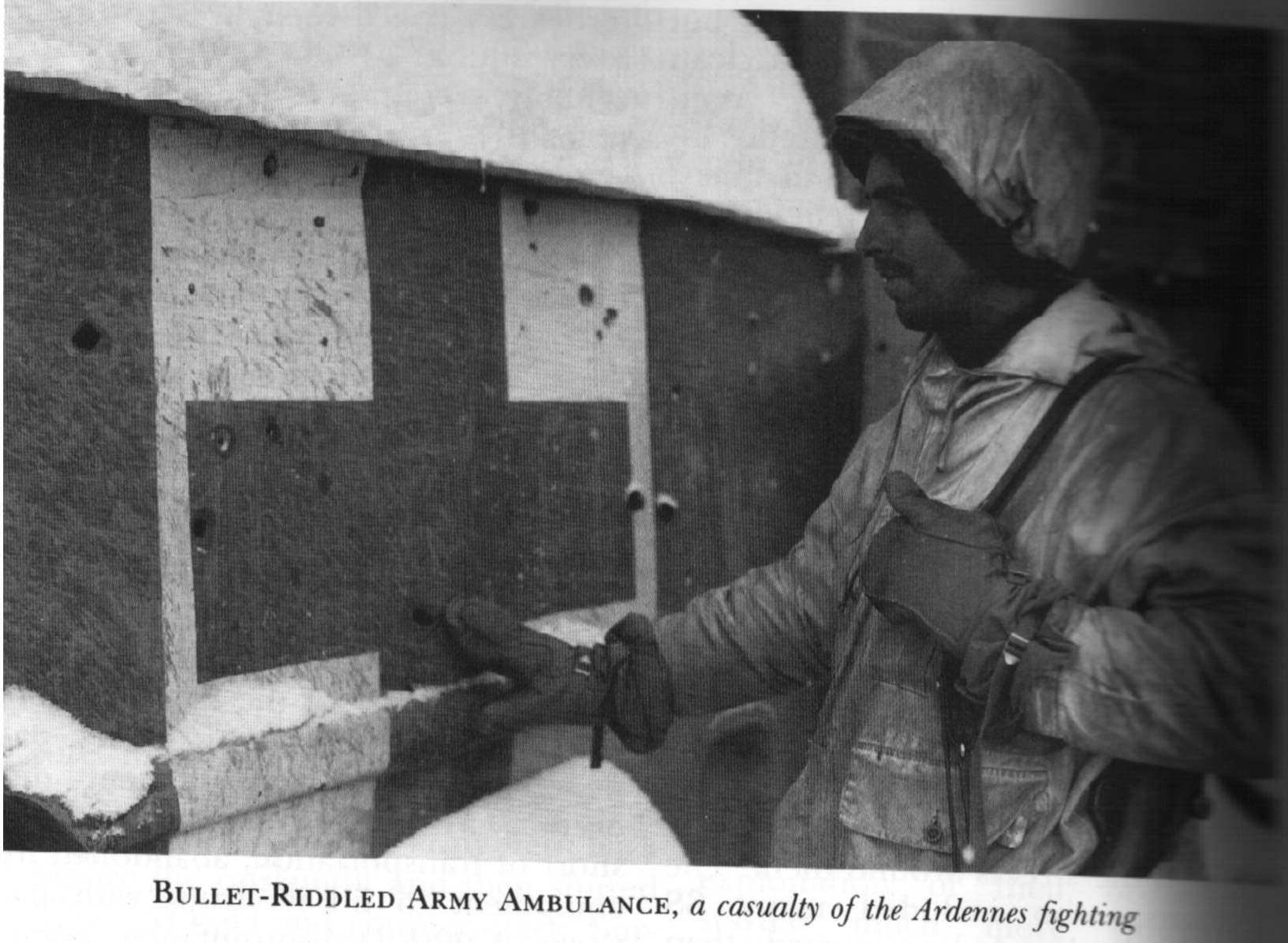
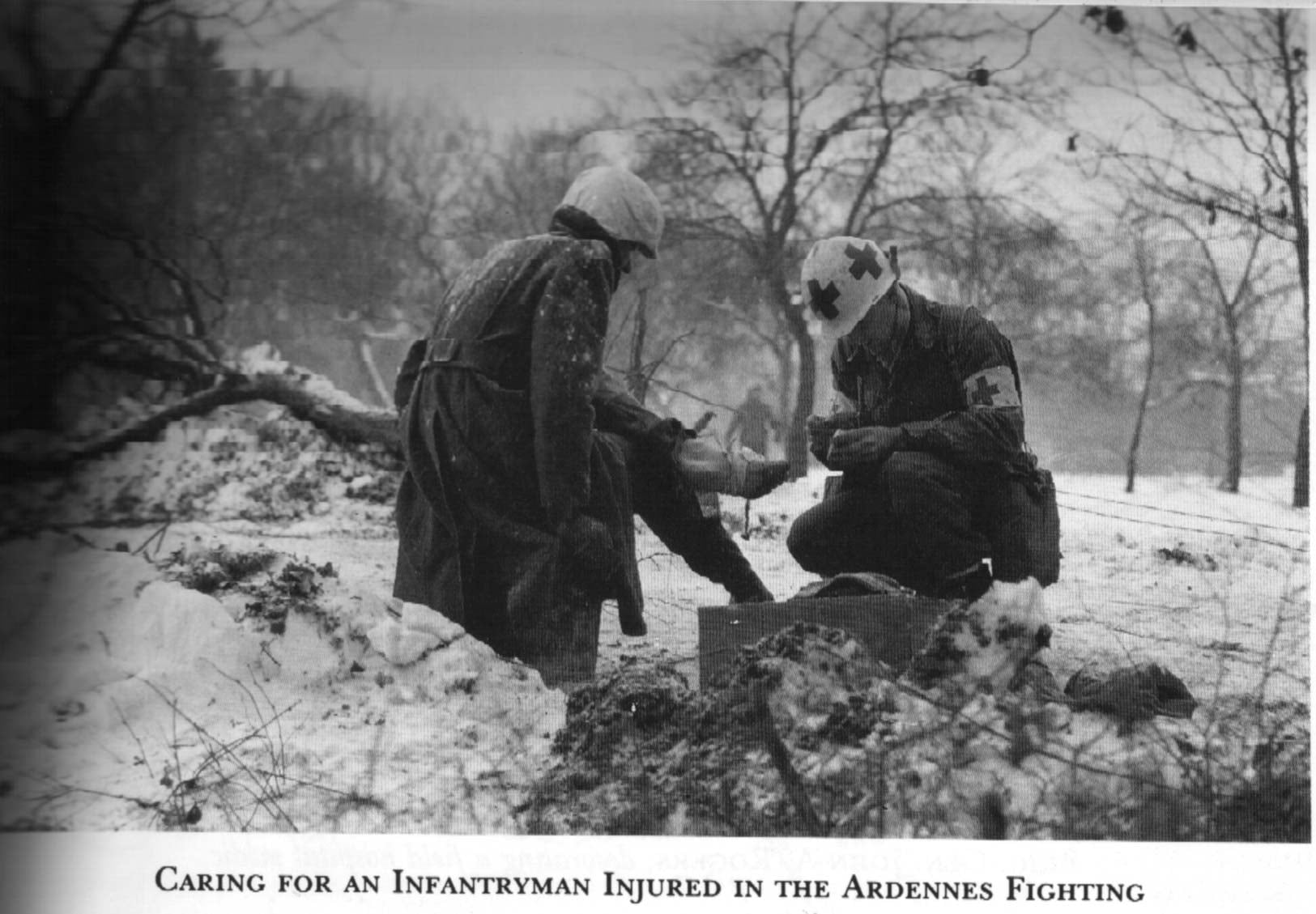

Here the diary abruptly ends. According to Bieโ€™s family, he was ordered at this point to stop making entries for fear of giving possibly sensitive information to the enemy should he be captured.

Although the American offensive in the Meuse-Argonne became bogged down due to difficulties in logistics and terrain, elsewhere British attacks on the German Hindenburg Line proved decisive. By 5 October, the British had punched a hole through the German defenses and by 7 November, Pershingโ€™s army had managed to cross the Meuse River and cut the vital German railroad line that carried supplies to the front. The Alliesโ€™ successes at this juncture induced the Germans to sue for peace, and on 11 November 1918 an armistice between Germany and the Allies was signed in the Forest of Compiรจgne at Rethondes.

When news of the armistice came, Bie was on board a ship waiting to leave France, having received orders to return home only a few days before. Later that same month he returned home to Tampa, where he received a heroโ€™s welcome. An article from the local Tampa Daily Times newspaper quotes him at the time as saying:

โ€œWith the customary modesty of the returned soldier Lt. Bie disclaimed any credit for his services โ€˜over there.โ€™ Accused of being modest, he said: โ€˜No, it is not modesty, only a realization that there are others who have done so much more.โ€™ He paid a sincere tribute to the โ€˜dough-boys,โ€™ or infantrymen, who, he said, have all the hardships, as well as the danger.

โ€˜We all know that they had it much harder than we, for although we were heavily shelled, and had many casualties, we at least had a blanket to sleep in and could depend upon our coffee, and something to eat pretty regularly, whereas the โ€˜dough-boyโ€™ in close combat can neither sleep nor eat, and must suffer unspeakable discomforts.โ€™โ€

After short stints at Camp Meade, Maryland; Fort Sill, Oklahoma; and Camp Zachary Taylor in Louisville, Kentucky, Bie was honorably discharged from the Army on 3 September 1919. He then returned to Tampa, where he resumed his career in real estate and became actively involved in a variety of other ventures. Later, he moved to Indian Rocks Beach in nearby Pinellas County, where he became one of the earliest permanent settlers and where he established a successful real estate business, from which he eventually retired. Married in 1923 to childhood sweetheart Rita Monrose, with whom he had six children, he died in 1974 at the age of 78.

The editors wish to thank Mr. E.W. โ€œBillyโ€ Bie, his wife Shera Haight Bie, and other members of the Bie family (Ellen, Norman Jr., Rita, and O.N. โ€œCappyโ€ Bie), the Florida State Archives and Florida Department of Military Affairs, Florida military historian Robert Hawk and Tampa Tribune columnist Leland Hawes.

Notes

  1. John B. Wilson, โ€œInfluences on U.S. Army Divisional Organization in the Twentieth Century,โ€ Army History, 39 (Fall 1996): 1โ€“3.
  2. George C. Marshall, Memoirs of My Services in the World War, 1917โ€“1918 (Boston: Houghton Mifflin Co., 1976), 145โ€“49.
  3. S.L.A. Marshall, The American Heritage History of World War I (New York: Dell Publishing Co., 1964), 341.
  4. John Keegan, The First World War (New York: Vintage Books, 2000), 411.
  5. Diary of Lt. Norman A. Bie, Battery โ€œB,โ€ 13th Field Artillery Regt., 31 Augustโ€“5 October 1918, in the possession of E.W. โ€œBillyโ€ Bie, youngest son of Norman Bie, Indian Rocks Beach, Florida; military record and honorable discharge certificate of Norman A. Bie, in the possession of E.W. Bie.
  6. Shera Haight Bie, comp., โ€œOur Family Heritage: Bie,โ€ unpublished manuscript, 5 September 2000, 19โ€“22, 26, 36โ€“37 (hereafter cited as Bie, โ€œOur Family Heritage: Bieโ€); โ€œReturns With Honors,โ€ Tampa Tribune, 8 June 1912; โ€œLocal Lad Wins High Honors At Charleston,โ€ Tampa Times, 8 June 1912; diploma of Norman Albion Bie from the Porter Military Academy, Charleston, South Carolina, 5 June 1912, in the possession of E.W. Bie; โ€œCapt. O.N. Bie: โ€˜Capt. O.N. Bie, Pioneer Port Engineer, Dies,โ€™โ€ Tampa Morning Tribune, 23 July 1930; โ€œCapt. O.N. Bie, U.S. Engineer in Tampa, Dies,โ€ Tampa Daily Times, 22 July 1930. Concerning Norman Bieโ€™s early adventures, the Bie family also has in its possession tape recordings made by him that provide fascinating accounts of his life aboard the dredges. See Norman A. Bie Sr., taped presentation to the United Spanish-American War Veterans Reunion in Memphis, Tennessee, on the USS Maine doorknob recovered in 1910, recorded in Miami, 1968; taped reminiscence of life aboard the dredges Suwanee and Florida from 1902โ€“1907, recorded in Memphis, 25 December 1970, copies of which are in the Heritage Village Library and Archives, Largo, Florida.
  7. Bie, โ€œOur Family Heritage: Bie,โ€ 37โ€“40; โ€œSeventeen Tampans Get Commissions At Ft. Mโ€™Pherson School,โ€ Tampa Morning Tribune, 14 August 1917; and Norman A. Bie diary, 3 September 1918. There is some discrepancy as to whether Bie graduated from the first or the second OCS class at Fort McPherson. See โ€œBie Home on Furloughโ€ and โ€œTwo Tampans Arrive in France with Artillery,โ€ from unknown local Tampa newspapers in Bie family scrapbook, in the possession of E.W. Bie. The battery is the smallest and most basic unit of the field artillery. Equivalent to a company in the infantry and a troop in the cavalry, it is generally composed of four guns manned by four officers and about one hundred men.
  8. Janice E. McKenney, comp., Field Artillery, Regular Army and Army Reserve, Army Lineage Series (Washington: Center of Military History, United States Army, 1992), 207; Christian A. Bach and Henry Noble Hall, The Fourth Division: Its Services and Achievements in the World War (N.p., 1920), 1โ€“65 (hereafter cited as Bach and Hall, Fourth Division); Army War College, Order of Battle of the United States Land Forces in the World War (Washington: GPO, 1931), 63 (hereafter cited as Order of Battle).
  9. Bach and Hall, Fourth Division, 115โ€“17; Order of Battle, 67; Calvin D. Linton, The Bicentennial Almanac (Nashville: Thomas Nelson, 1975), 296 (hereafter cited as Linton, Bicentennial Almanac).
  10. Order of Battle, 67โ€“69; Laurence Stallings, The Doughboys (New York: Harper & Row, 1963), 203โ€“07 (hereafter cited as Stallings, The Doughboys).
  11. Bach and Hall, Fourth Division, 149โ€“50; Order of Battle, 69.
  12. Eurville is a small French village located about 53 km. (approximately 33 miles) north of Chaumont along the Marne River. โ€œAeroplane disciplineโ€ refers to the fact that artillery batteries at the front were under constant threat of attack from German airplanes, and had to be carefully camouflaged in order to avoid detection.
  13. Here, Bie is referring to General Orders No. 143 dated 28 August 1918, in which General Pershing paid a glowing tribute to the men of the 1st, 2d, 3d, 4th, 26th, 32d, and 42d Divisions for their part in the Second Battle of the Marne.
  14. This reference indicates that Bie may have been present when General Pershing formally took command of the unified American First Army at his headquarters at Chaumont on 30 August. See Stallings, The Doughboys, 203.
  15. During World War I, American artillery regiments were typically organized to consist of six batteries, with four guns to a battery of either 75mm or, in the case of the 13th, 155mm caliber. Though batteries were usually commanded by captains, some were commanded by a first lieutenant, as seems to be the case here. Bie, as a second lieutenant, then became second in command or executive officer of the battery, which usually involved handling the paperwork, discipline, morale, and other routine administrative duties of the unit. See American Battle Monuments Commission, American Armies and Battlefields in Europe (Washington, D.C.).
Posted on

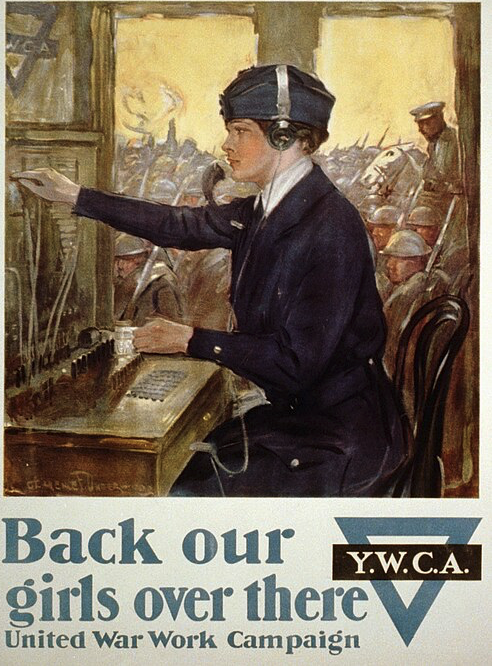
LADY TELEPHONE OPERATORS OF THE AMERICAN EXPEDITIONARY FORCE, 1917-1918

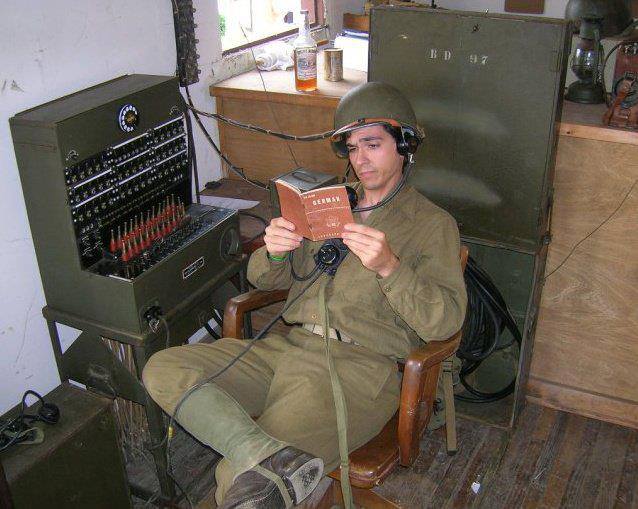
A cable from Headquarters, American Expeditionary Force to the Chief of Signal Corps (SC) on 10 November 1917 asked for 100 French-speaking female switchboard operators.[1] The cable noted, โ€œ…the unquestioned superiority of women as telephone operators…and the desire to release for service in the more dangerous telephone centrals at the front, male operators on duty in the larger offices.โ€[2]

On 10 November, SC asked American Telephone and Telegraph (ATT) to handle the project. When the first 2,500 applicants proved to be unacceptable, SC asked ATT to train French speakers to be operators and the company immediately opened several training schools. Telephone Operator Unit One left for France in early March, 1918, and the demand for operators continued for the rest of the war.[4]

Some 225 operators worked at 14 switches by warโ€™s end.[5] Many stayed to support the Peace Conference in Paris.[6] Some went with the Army of Occupation to Germany in 1919.[7]

Operators had to buy their own uniforms at Weltman and Pollack in New York City, an early sole-source contractor. The Navy blue uniform was a suit (skirt and four-button falling-collar blouse) of winter (woolen) or summer (alpaca) cloth. Shirtwaists were either white in cotton and silk, or blue in silk. Shoes were black or tan laced high-tops. Headgear was either a brimmed hat in velour or straw, or an โ€œaviation cap,โ€ U.S. pattern.[8] Some British patterns were also worn.[9] An ulster and overcoat were authorized.[10] A white brassard was to be worn on the upper left sleeve of the blouse, ulster and overcoat.

Bronze officer-style brass was worn on the blouse, i.e. US on the right, crossed SC flags on the left. Crossed flags were also used on the caps. Orange and white SC hat cords were worn on the hats while SC-colored piping was on the caps.[11]

Rank was embroidered in black on the brassard. The basic operator wore the outline of a telephone transmitter, the supervisor wore two laurel leaves below the transmitter, while the Chief Operator wore the same device but had yellow lightning bolts above it.[12] Pay was according to rank.[13]

The Lady Operators were appointed and took the standard military oath; they wore uniforms and were subject to military control; they had the โ€œ…same allowances as Army nurses;โ€ yet, despite all this, they were considered civilians.[14] Finally, after most of them were dead, these women won official recognition as World War I veterans.[15]

The right-hand figure shows the original style brassard. The large pocket flaps begin just at the bottom of the cloth belt which was sewn to the blouse. Most pockets were cut into the blouse but many sewn-on pocket blouses are seen in photographs. Patches were also worn with GHQ; First, Second and Third Army; Paris District; and Service of Supply as seen in photographs.[16]

Our Chief Operator wears a blouse with falling collar as lapels with a white shirtwaist. Operators did not like the brassard and soon replaced it with insignia done in silver bullion on a blue swatch sewn to the blouse.[17] Service chevrons were also done in silver bullion on blue.[18]

The center figure wears the velour brimmed hat with SC cord. She has service chevrons and a medal ribbon. Although medals were not authorized, ribbons were worn.[19]

Switchboard operators are seen in working clothes of blue and white shirtwaists and blouses, both being worn side by side. The sailor collar of the shirtwaist is also visible. Helmets and gas masks were SOP at the First Army.[20]

(We thank Col. David Kyle, AUS, Mark Hough, Linda Grant De Pauw and Margaret Vining.)

Alan Archambault
Ed Milligan

Posted on

Cartoons in World War Two

Below is a list of Looney Tunes cartoon episodes broken out by year.

AUTHORโ€™S NOTE: Some of the videos contain stereotypes of women, ethnic/racial stereotypes, racism, sexism, homophobia, implicit violence, non-consensual situations, sexual harassment, and other attitudes that are objectively wrong by todayโ€™s standards. The author of this post rejects all of this and offers the information below for historical purposes to exemplify an aspect of World War II material culture.

You can acquire them from this third party site.

1940

  • Patient Porky LT CN COLORIZED CENSORED
  • A Gander at Mother Goose MM
  • Of Fox And Hounds MM BR CN
  • The Sour Puss LT CN COLORIZED
  • The Egg Collector MM BR CN
  • The Sour Puss LT CN COLORIZED
  • Malibu Beach Party MM
  • Africa Squeaks LT NO INTRO COLORIZED
  • Porky’s Baseball Broadcast LT CN COLORIZED UNCUT
  • The Wild Hare MM BR CN
  • Porky’s Poor Fish LT CN COLORIZED
  • Porky’s Last Stand LT CN
  • The Chewin’ Bruin LT CN
  • Porky’s Baseball Broadcast LT CN CENSORED
  • Pilgrim Porky LT CN
  • Elmer’s Candid Camera MM
  • Porky’s Hired Hand LT CN VID
  • Slap Happy Pappy LT CN COLORIZED
  • Busy Bakers MM BR CN
  • Ali-Baba Bound LT COLORIZED BQ
  • Ali-Baba Bound LT COLORIZED GQ
  • Shop, Look & Listen MM
  • Stage Fright MM BR CN
  • Ghost Wanted MM CN
  • Calling Dr. Porky LT CN COLORIZED
  • A Wild Hare MM
  • Tom Thumb in Trouble MM BR CN
  • You Ought to Be in Pictures LT
  • Sniffles Takes a Trip MM BR
  • Confederate Honey MM
  • Good Night Elmer MM CN
  • Bedtime for Sniffles MM BR
  • The Early Worm Gets the Bird MM BR
  • Little Blabbermouse MM BR CN
  • Holiday Highlights MM CN
  • Circus Today MM BR
  • The Bear’s Tale MM BR
  • You Ought to Be in Pictures LT CN COLORIZED
  • Cross Country Detours MM BR
  • The Hardship of Miles Standish MM CN
  • Prehistoric Porky LT CN COLORIZED
  • The Timid Toreador LT
  • Wacky Wildlife MM BR CN
  • Porky’s Last Stand LT AS COLORIZED
  • Africa Squeaks LT
  • Ceiling Hero MM
  • Mighty Hunters MM BR

1941

  • All This and Rabbit Stew MM
  • Sport Chumpions MM CN
  • Goofy Groceries MM BR
  • Porky’s Preview LT COLORIZED CENSORED
  • The Heckling Hare MM CUT
  • Rhapsody in Rivets MM BR
  • Joe Glow, the Firefly LT
  • Inki and the Lion MM BR
  • Hollywood Steps Out MM BR
  • Tortoise Beats Hare MM
  • Porky’s Prize Pony LT
  • Toy Trouble MM BR CN CENSORED
  • Saddle Silly MM
  • Meet John Doughboy LT CN
  • The Haunted Mouse LT
  • Wabbit Twouble MM
  • Porky’s Bear Facts LT CN COLORIZED
  • The Fighting 69ยฝth MM BR CN CENSORED
  • Bug Parade MM BR
  • Porky’s Pooch LT CN
  • The Wacky Worm MM BR
  • Porky’s Snooze Reel LT CN COLORIZED VID
  • Farm Frolics MM BR
  • Aviation Vacation MM
  • Aviation Vacation MM
  • The Crackpot Quail MM CN
  • Hiawatha’s Rabbit Hunt MM CN
  • Bugs Bunny – Hiawatha’s Rabbit Hunt – (1941)
  • The Brave Little Bat MM BR CN
  • Sniffles Bells the Cat MM BR CN
  • The Cat’s Tale MM BR
  • A Coy Decoy LT LOGO
  • The Henpecked Duck LT CN COLORIZED
  • The Trial of Mr. Wolf MM BR CN
  • Bugs Bunny – 1941 – Tortoise Beats Hare
  • Tortoise Beats Hare MM
  • The Henpecked Duck LT
  • Notes to You LT BR COLORIZED
  • Elmer’s Pet Rabbit MM
  • Bugs Bunny – 1941 – Elmer’s Pet Rabbit
  • Porky’s Midnight Matinee LT COLORIZED
  • Snowtime for Comedy MM BR
  • Porky’s Ant LT COLORIZED
  • Rookie Revue MM
  • Robinson Crusoe Jr. LT COLORIZED
  • We, the Animals-Squeak! LT COLORIZED
  • The Cagey Canary MM BR

1942

  • Lights Fantastic MM
  • Double Chaser MM BR CN
  • Bugs Bunny – 1942 – Crazy Cruise
  • Hold the Lion, Please MM CN
  • Hobby Horse-Laffs LT
  • The Hep Cat LT BR
  • Fresh Hare MM LOGO
  • Daffy’s Southern Exposure LT COLORIZED
  • The Hare-Brained Hypnotist MM
  • Porky’s Cafe LT CN COLORIZED
  • Crazy Cruise MM
  • Gopher Goofy LT
  • Nutty News LT CN
  • Bugs Bunny Gets the Boid MM
  • Bugs Bunny – 1942 – Fresh Hare
  • The Sheepish Wolf MM BR
  • Bugs Bunny – 1942 – The Hare-Brained Hypnotist
  • Who’s Who in the Zoo LT CN COLORIZED
  • The Daffy Duckaroo LT
  • Saps in Chaps LT
  • The Dover Boys MM
  • Dog Tired MM CN
  • The Wacky Wabbit MM CN
  • Fox Pop MM BR CN
  • The Bird Came C.O.D. MM CN
  • The Impatient Patient LT CN COLORIZED
  • Foney Fables MM CN
  • Aloha Hooey MM CN
  • Ding Dog Daddy MM CN
  • Porky’s Pastry Pirates LT CN COLORIZED
  • Hop, Skip and a Chump MM BR CN
  • Horton Hatches the Egg MM BR
  • Eatin’ on the Cuff LT
  • A Tale of Two Kitties MM BR
  • The Draft Horse MM
  • The Wabbit Who Came to Supper MM VID
  • The Squawkin’ Hawk MM BR
  • My Favorite Duck LT BR
  • Conrad the Sailor MM
  • Case of the Missing Hare MM
  • Wacky Blackout LT CN
  • The Ducktators LT CN

1943

  • Super-Rabbit MM CN
  • Wackiki Wabbit MM CN
  • The Aristo-Cat MM BR CN
  • Hop and Go LT CENSORED
  • A Corny Concerto MM
  • Greetings Bait MM BR CN
  • To Duck Or Not To Duck LT
  • Tokio Jokio LT
  • Yankee Doodle Daffy LT
  • Tortoise Wins by a Hare MM
  • Flop Goes the Weasel MM BR
  • Puss N’ Booty LT CN
  • Inki and the Minah Bird MM BR
  • Tin Pan Alley Cats MM
  • Coal Black And De Sebben Dwarfs MM
  • Confusions of a Nutzy Spy LT
  • The Unbearable Bear MM BR
  • Hiss and Make Up MM BR CN
  • Fin’n Catty MM BR
  • Scrap Happy Daffy LT
  • Falling Hare MM
  • Pigs in a Polka MM BR
  • An Itch in Time MM BR
  • Porky Pig’s Feat LT
  • Jack-Wabbit and the Beanstalk MM
  • Daffy-The Commando LT
  • The Fifth Column Mouse MM BR
  • The Wise Quacking Duck LT
  • Falling Hare MM CUT RANGE

1944

  • Tick Tock Tuckered LT BR CN
  • Tom Turk and Daffy LT LOGO
  • Duck Soup to Nuts LT BR
  • Little Red Riding Rabbit MM
  • Slightly Daffy MM BR
  • Meatless Flyday MM CN
  • Booby Hatched LT BR CN
  • The Stupid Cupid LT BR CN CENSORED
  • Hare Force MM CN
  • Stage Door Cartoon MM
  • The Weakly Reporter MM
  • Plane Daffy LT
  • The Old Grey Hare MM
  • From Hand to Mouse LT BR
  • Lost and Foundling MM BR
  • Brother Brat LT
  • Swooner Crooner LT BR
  • Buckaroo Bugs LT CN
  • What’s Cookin’ Doc MM VID
  • Russian Rhapsody MM
  • Hare Ribbin’ LT
  • Birdy and the Beast MM CN
  • I Got Plenty of Mutton LT
  • Angel Puss LT
  • Bugs Bunny and the Three Bears MM
  • Goldilocks and the Jivin’ Bears MM
  • Bugs Bunny Nips the Nips MM

1945

  • Nasty Quacks MM CN
  • Hare Conditioned LT
  • Trap Happy Porky LT BR CN CENSORED
  • Fresh Airedale MM BR CN
  • Odor-Able Kitty LT BR CN
  • Ain’t That Ducky LT BR
  • Behind the Meat-Ball LT
  • A Tale of Two Mice LT BR CN
  • Herr Meets Hare MM CN
  • The Unruly Hare LT CN
  • A Gruesome Twosome MM VID
  • Hare Trigger MM CN
  • The Bashful Buzzard LT BR
  • Life with Feathers MM BR
  • Hare Tonic LT CN
  • Draftee Daffy LT
  • Peck Up Your Troubles MM BR
  • Wagon Heels MM
Posted on

US Girl Interprets at Front in GI Garb

Taken from a Stars and Stripes weekly publication, Wednesday, September 27th 1944. Monica Storrs (her name is also Moniqueย Storrsย Booz) ended up getting a La Croix de Guerre for her actions, but never an official commendation.

You can find her family correspondence and history at the Newberry Library in Chicago, IL: https://archives.newberry.org/repositories/2/resources/706

Chicago Miss Is Getting Even With Gestapo And French Jail

By Ralph Harwood
Stars and Stripes Staff Writer

WITH U.S. FORCES NEAR METZ, Sept. 26 โ€” At the front there is a good-looking girl in GI uniform who speaks English with the unmistakable accent of a Midwestern American. She speaks French like a native, too, and that’s her reason for being here.

Her name is Monica Storrs, and she calls Chicago home although she hasn’t been there for five years.

Anxious as she is to get back, however, she doesn’t plan on going until her service as an interpreter for a cavalry reconnaissance troop is no longer needed.

A Young Woman When Nazis Struck

Miss Storrs was in France with her parents in 1939 when the war broke out. The family remained in the country and was at Tours when the lightning German breakthrough occurred in 1940.

Although they could not get out, they had the protection of occupied France as long as Americans remained non-belligerents. Monica, then 23 years old, decided to study nursing.

Miss Storrs eventually became the head of a district for the French Red Cross, but her luck broke and she was denounced by Paris collaborators as soon as … The Gestapo took her into custody and she spent 21 miserable days in jail.

The day that advancing American units approached Blois, Monica was released along with other prisoners by French Resistance patrols. Recovering from Gestapo treatment and anxious to be of service to her country, this American girl walked up to the men of the cavalry reconnaissance troop which had entered the town first and identified herself.

Surprised as the men were to find an American girl in Blois, they were much more surprised when she asked if she could accompany them as an interpreter.

A Deal Is Made

A hurried conference among the troop and it was a deal. Monica Storrs was in โ€” unofficially at first, true but […] Hoyle goes by the board plenty at the front and this was clearly a case of military expedience.

The troop lost no time in putting their new “member” of GI outfit complete, from shoes like she never wore before to helmet netting. That was Aug 15th and she’s been with the outfit since.

They’ve covered hundreds of miles in northern and northeastern France, dashing into scores of towns and villages to get first-hand information about the enemy for the infantry units to which they’re attached.

Monica isn’t particularly concerned with just what her military status is and what would happen to her if she were captured by the enemy.

There have been close calls, but Miss Storrs enjoys the excitement. Nor does she appear uncomfortable in liberated territory, her principal worry being that this manner of living about the countryside day and night in a jeep is doing for her appearance.

“When I get back to the States after this is over,” she said, “I’m going to spend three or four weeks at the hairdresser’s.”

Monica Storrs, 28, American girl who “joined” the Army here after being freed from a Gestapo jail, poses with members of a cavalry reconnaissance unit she accompanies as interpreter. Left to Right: T/5 Clarence E Miller, of Adrian Mich, Alfred Palren of the FFI, Miss Storrs, and Lt Robert Downs of Harrisburg, PA.

The story was republished in an Oct 1944 version of Stars and Stripes