This article will be broken into different sections and contain links to different kinds of paperwork that are printable for us and references for WW2 reenacting.
Most of the paperwork listed will be PDFs. Unless specified differently in terms of size and paper, the PDFs can all be printed on a regular 8.5×11 piece of printing paper.
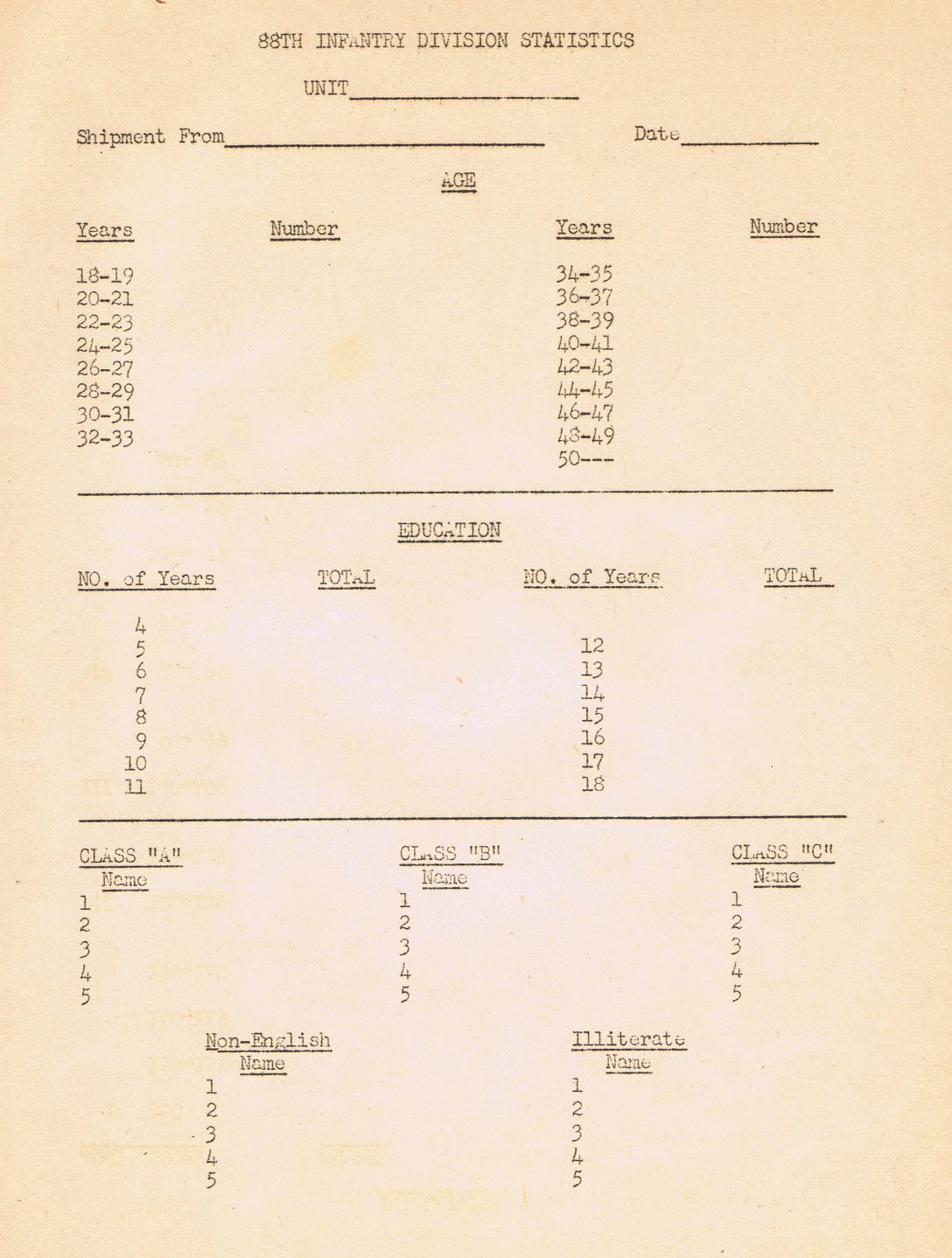
88th Infantry Division Stats Document – A general document to give an idea of what I think might be a shipment of soldiers coming into the unit. The idea is to get a handle on who they are.
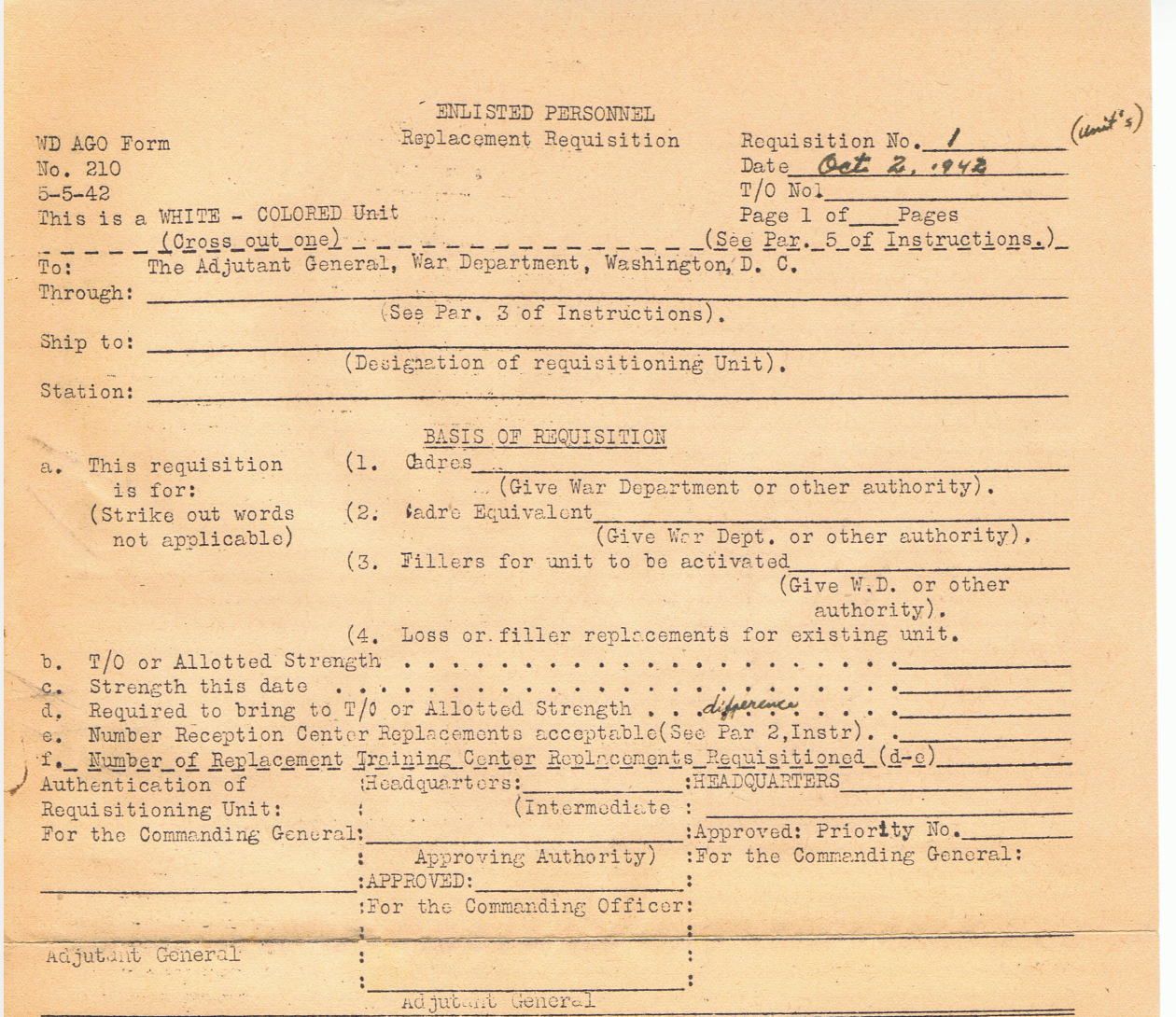
This may have gone with the Enlisted Personnel Replacement Requisition WD AGO Form 210 May 1942
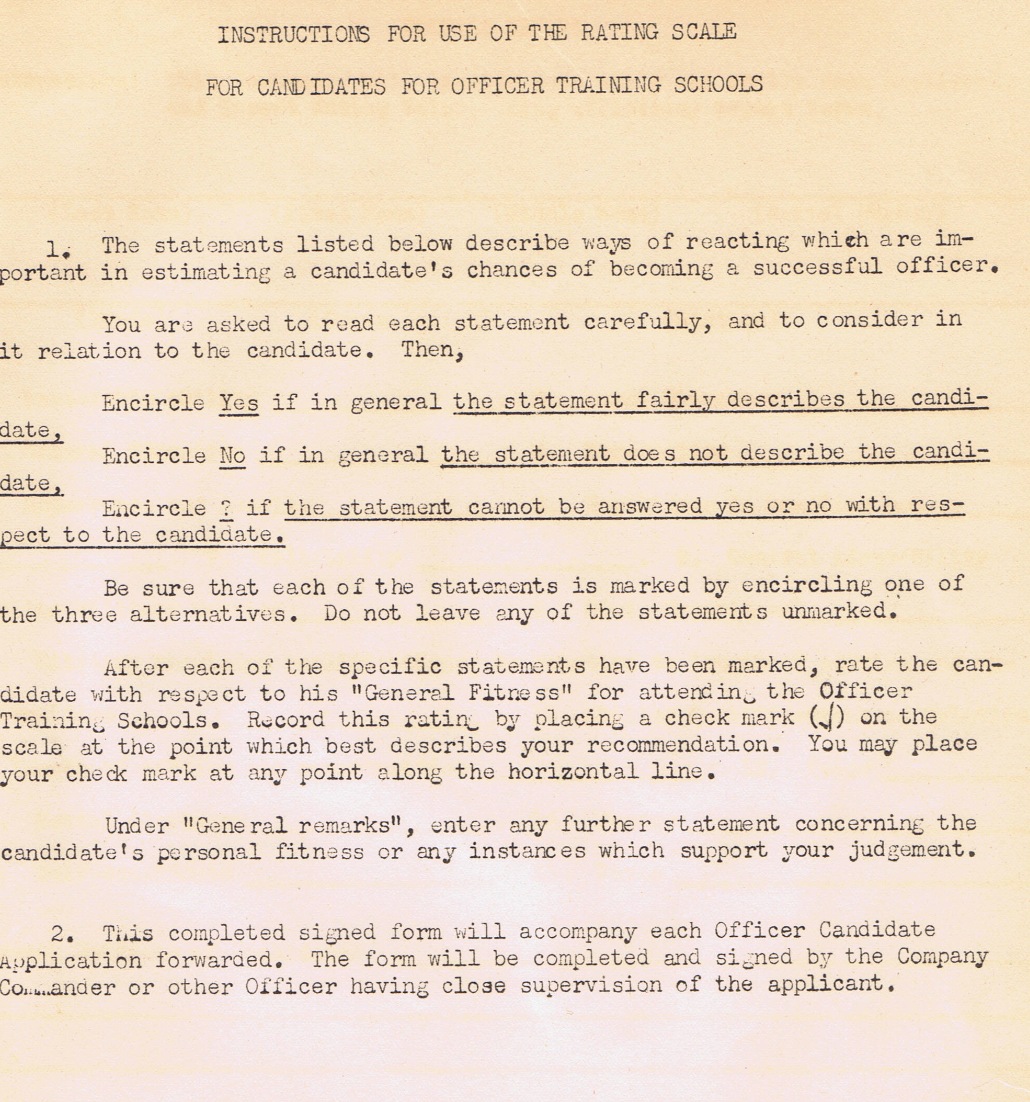
Instructions for Rating Candidates for Officer Training Schools – part of a document used to provide instructions to rate soldiers for candidacy to an officer school. All I have are the instructions.
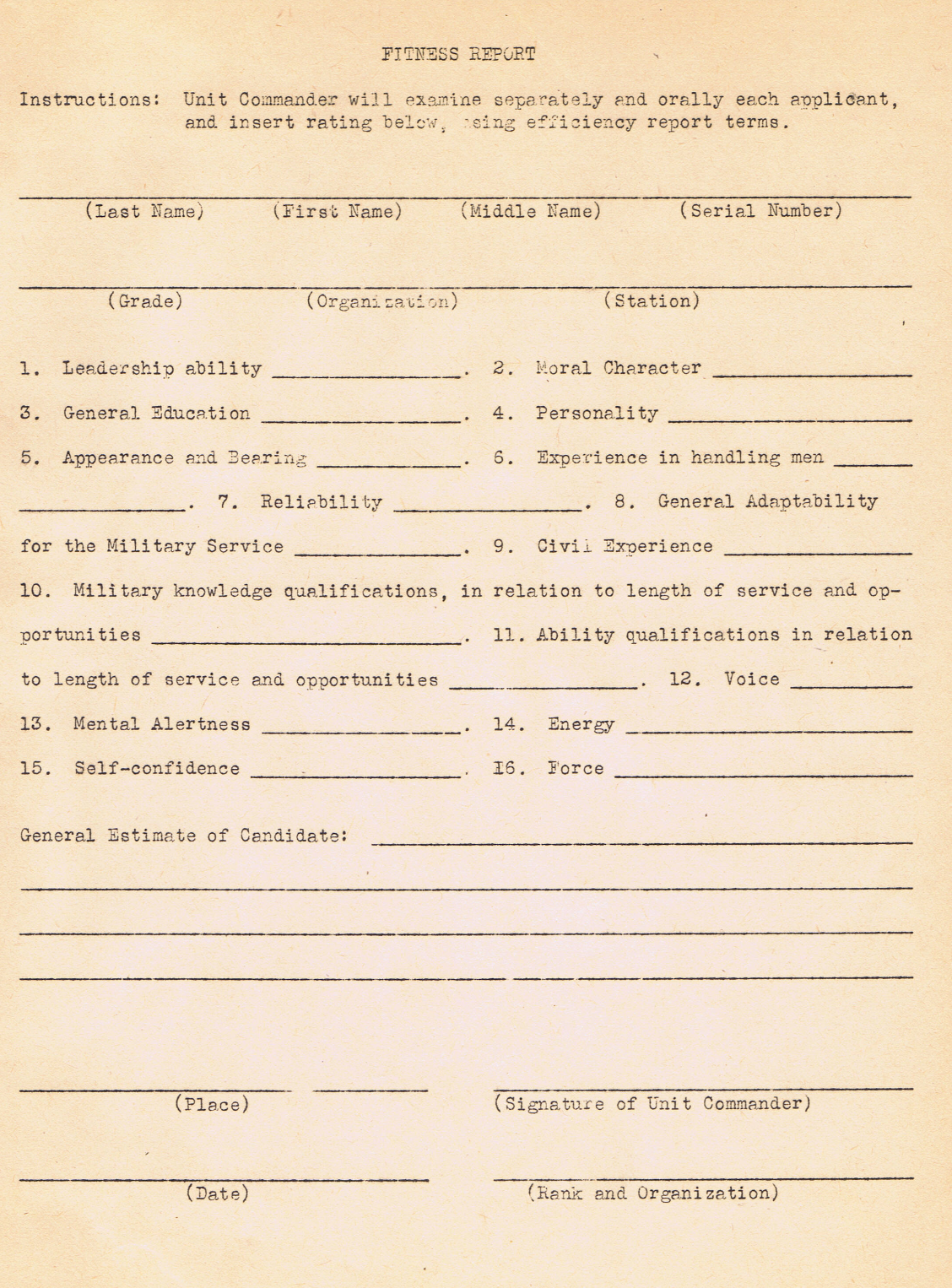
Fitness Report Form – This is a holistic document to assess candidates. My guess is that this went with the Officer Candidate Training instructions and as part of the assessment
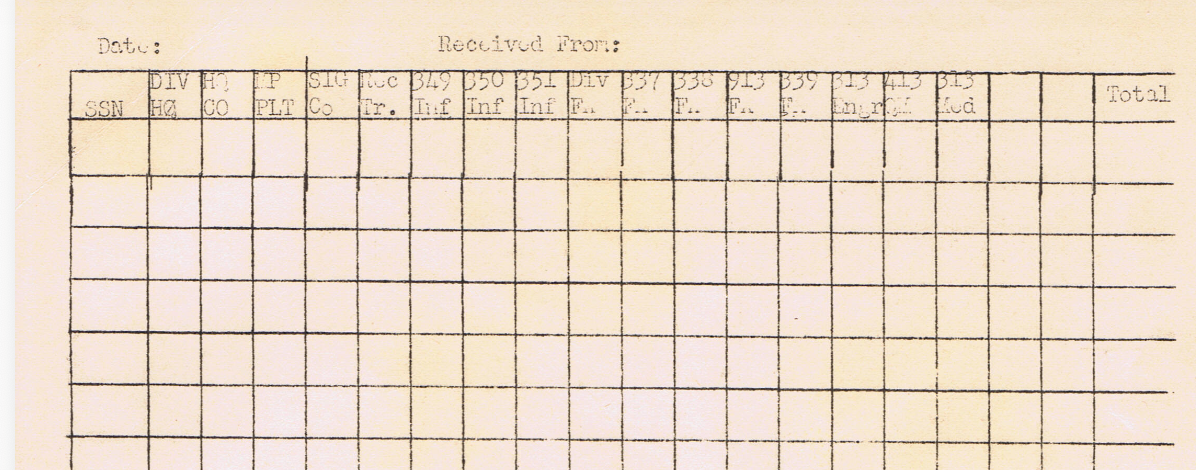
Received from Form – a grid to list out how many men from which 88th Unit got moved around. This is specific to the 88th Infantry Division but all units may have had something similar.
Note that SSN stands for Special Service Number, not Social Security Number
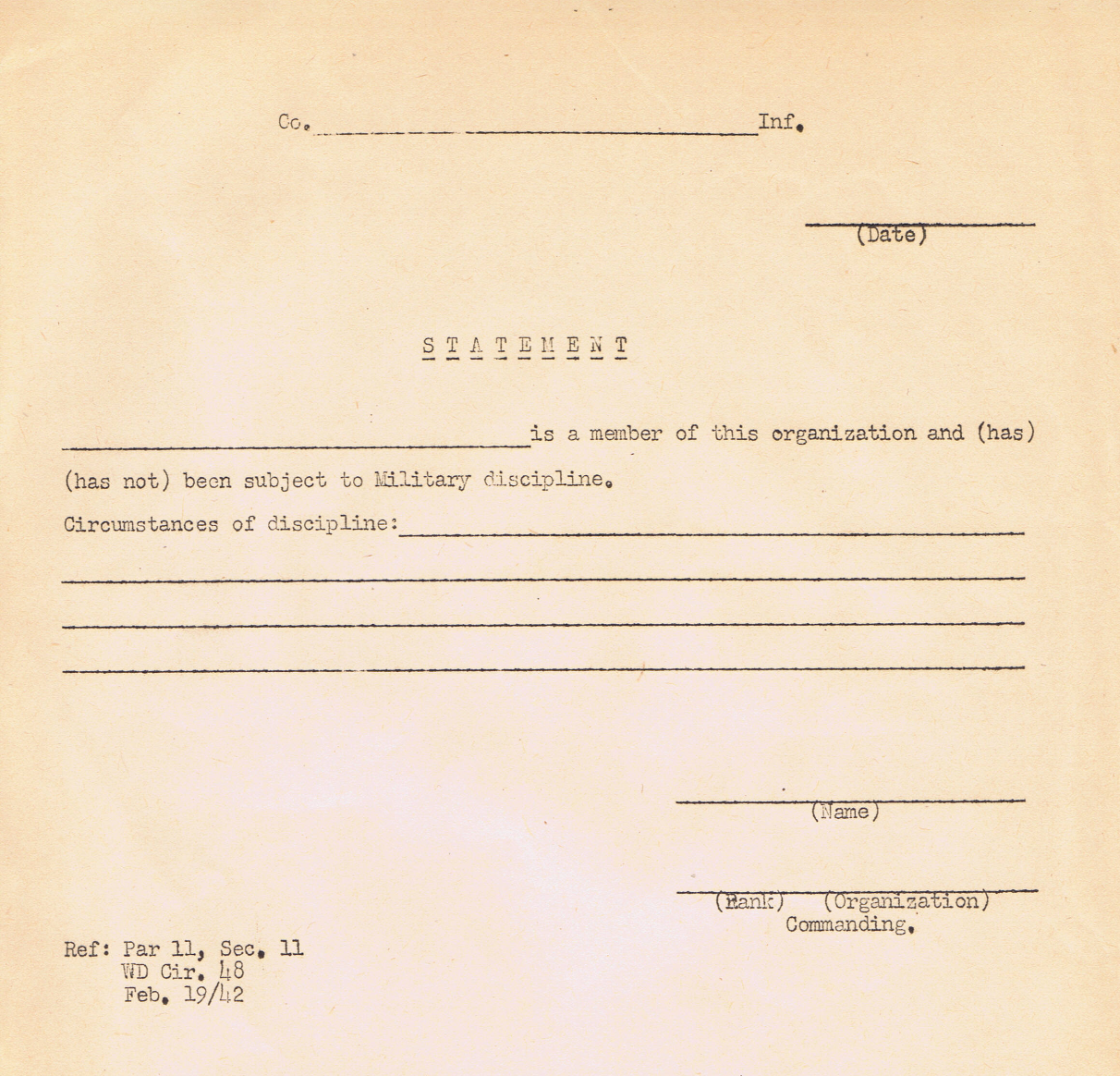
Discipline Statement Form WD Circular 48 Feb 1942 – This is a form used to create a historical record of any disciplinary actions. This was likely an early form used at training camps and bases.
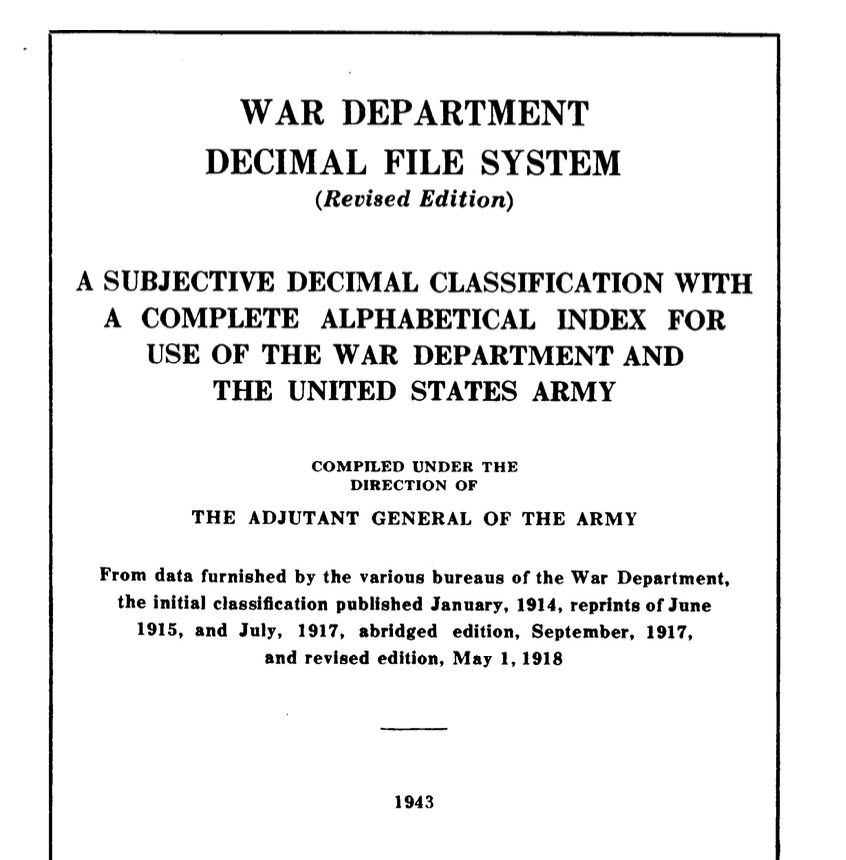
War Department Decimal File System – A subjective decimal classification with a complete alphabetical index for use of the War Department and United States Army, 1943.
Essentially, the official system is used to file paperwork.
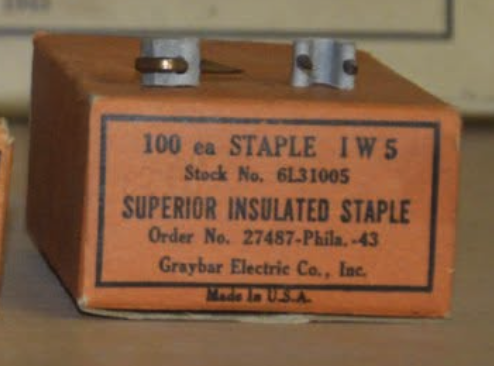
1W-5 Superior Insulated Staple 1943 – These are staples used to tack wires along walls. I suspect the staple is brass or copper, and the insulated part is rubber (nowadays it’s plastic). If I come across a box, I’ll buy it and create a PDF.
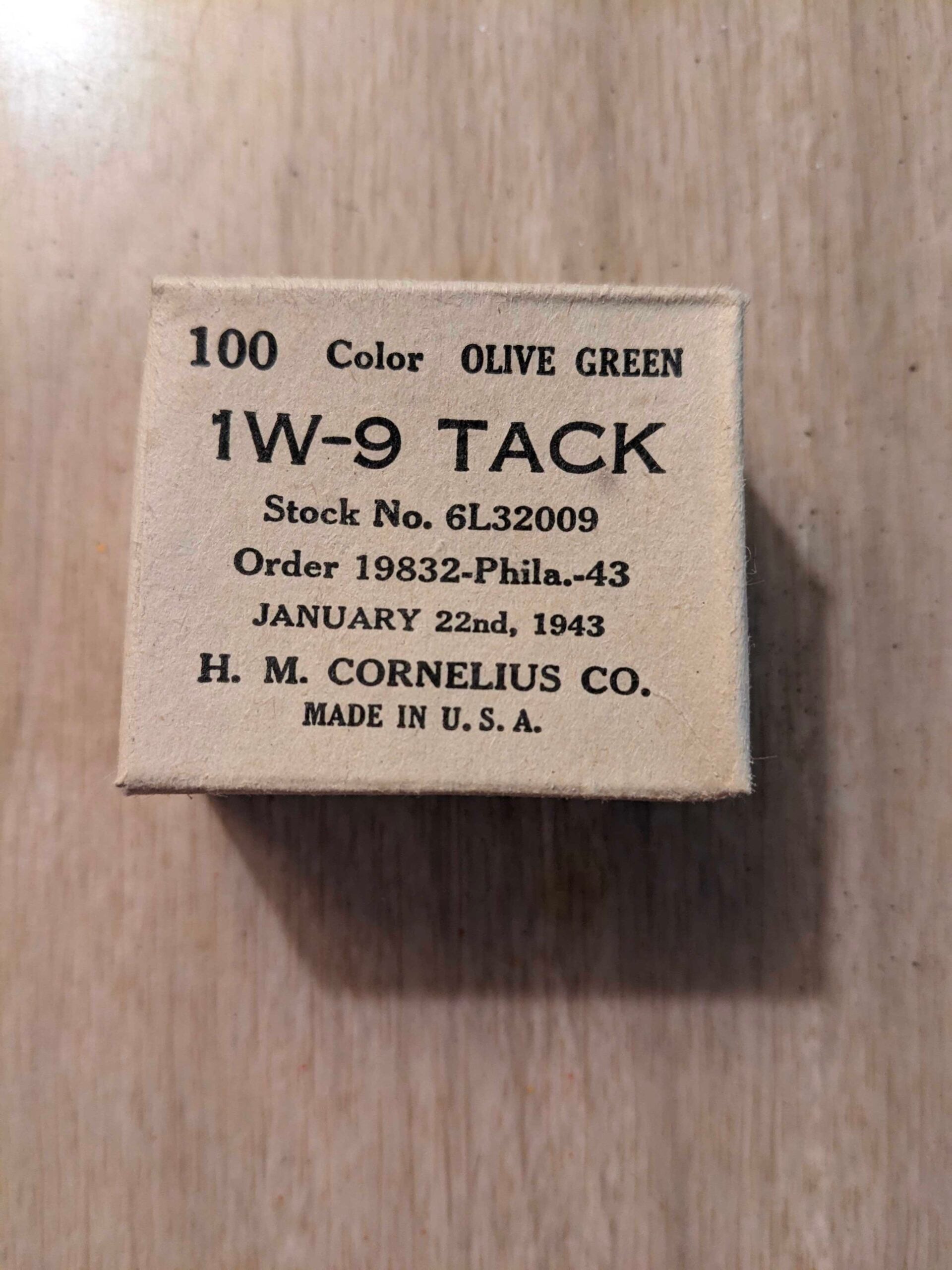
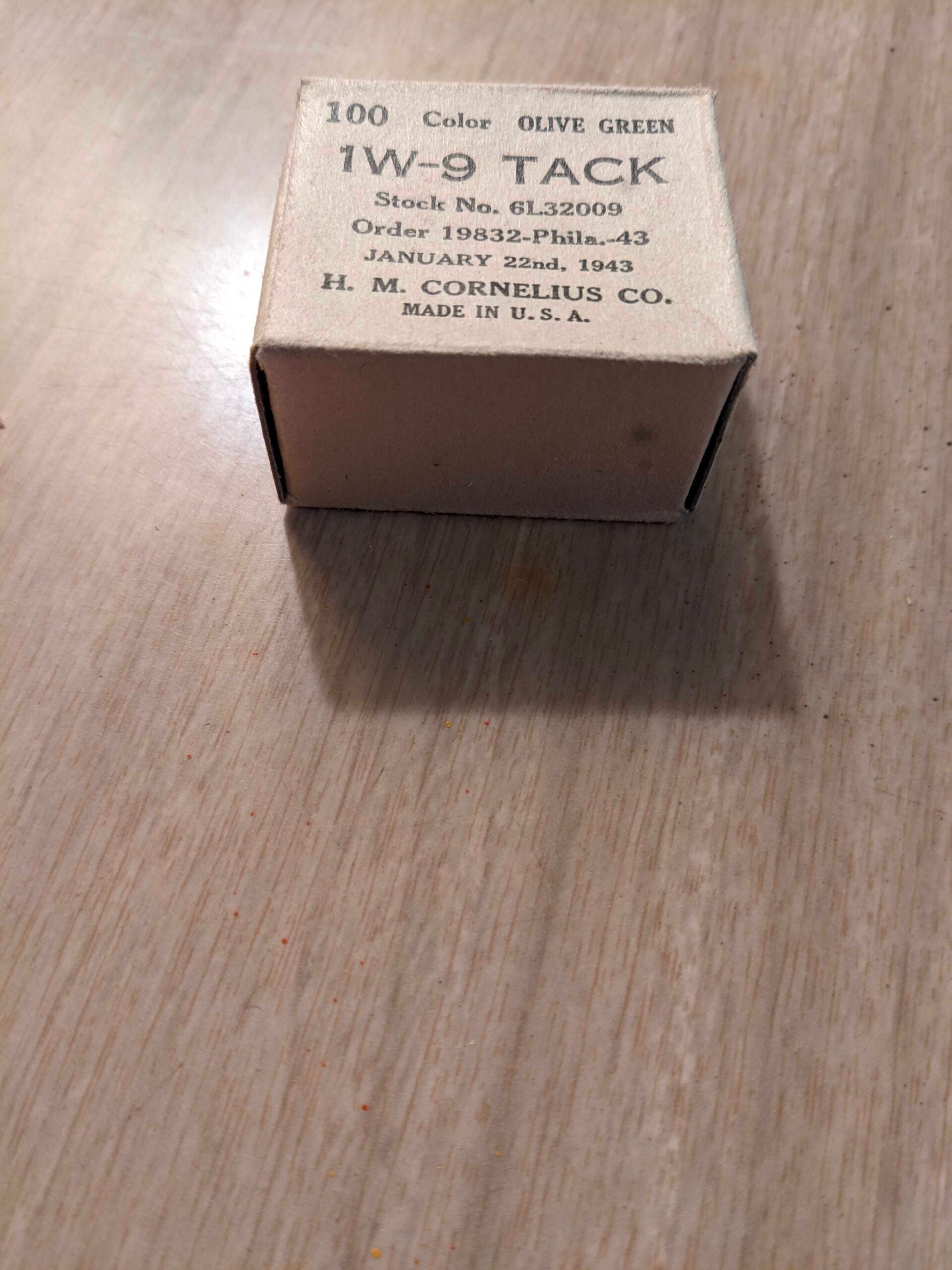
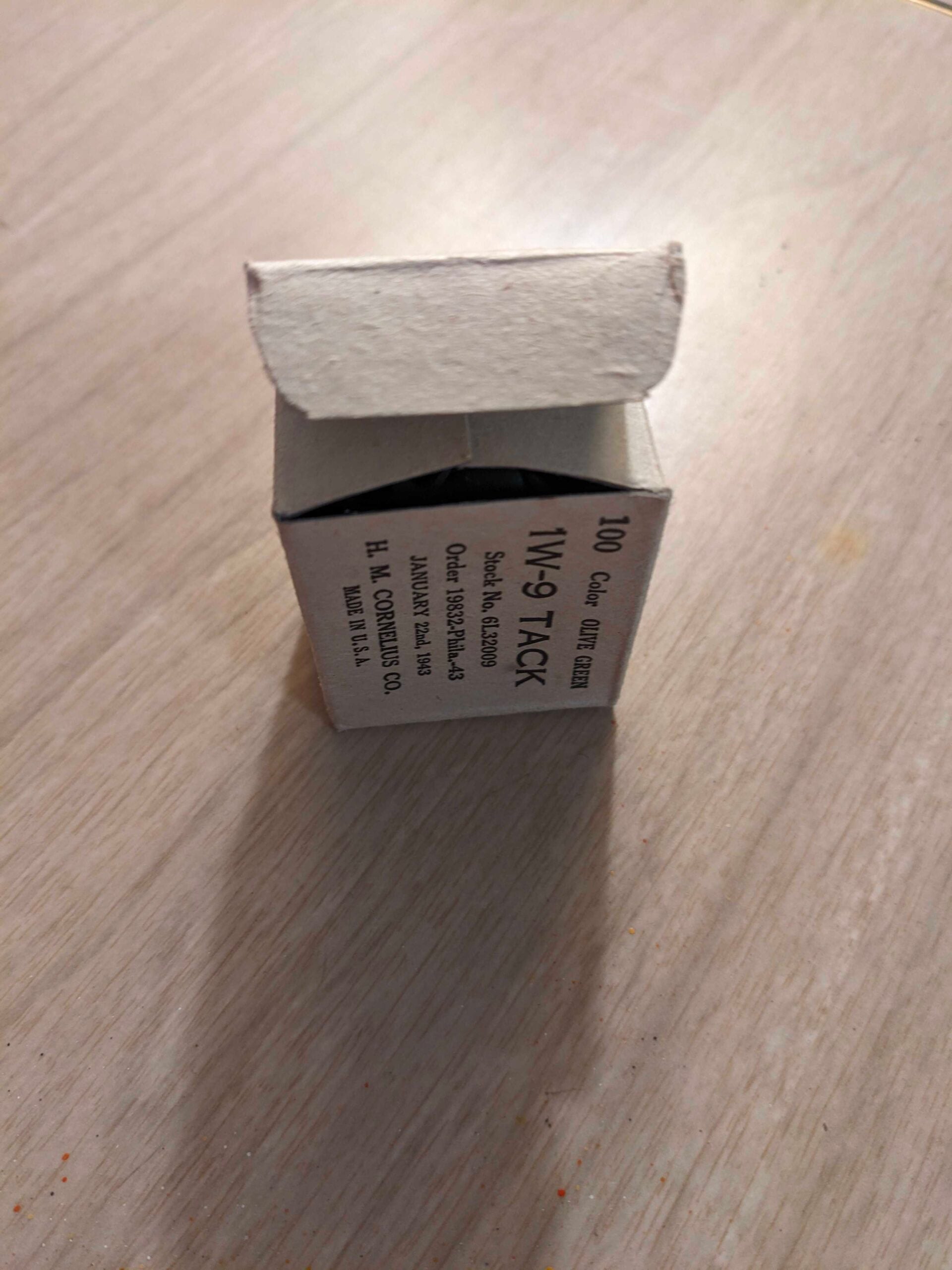
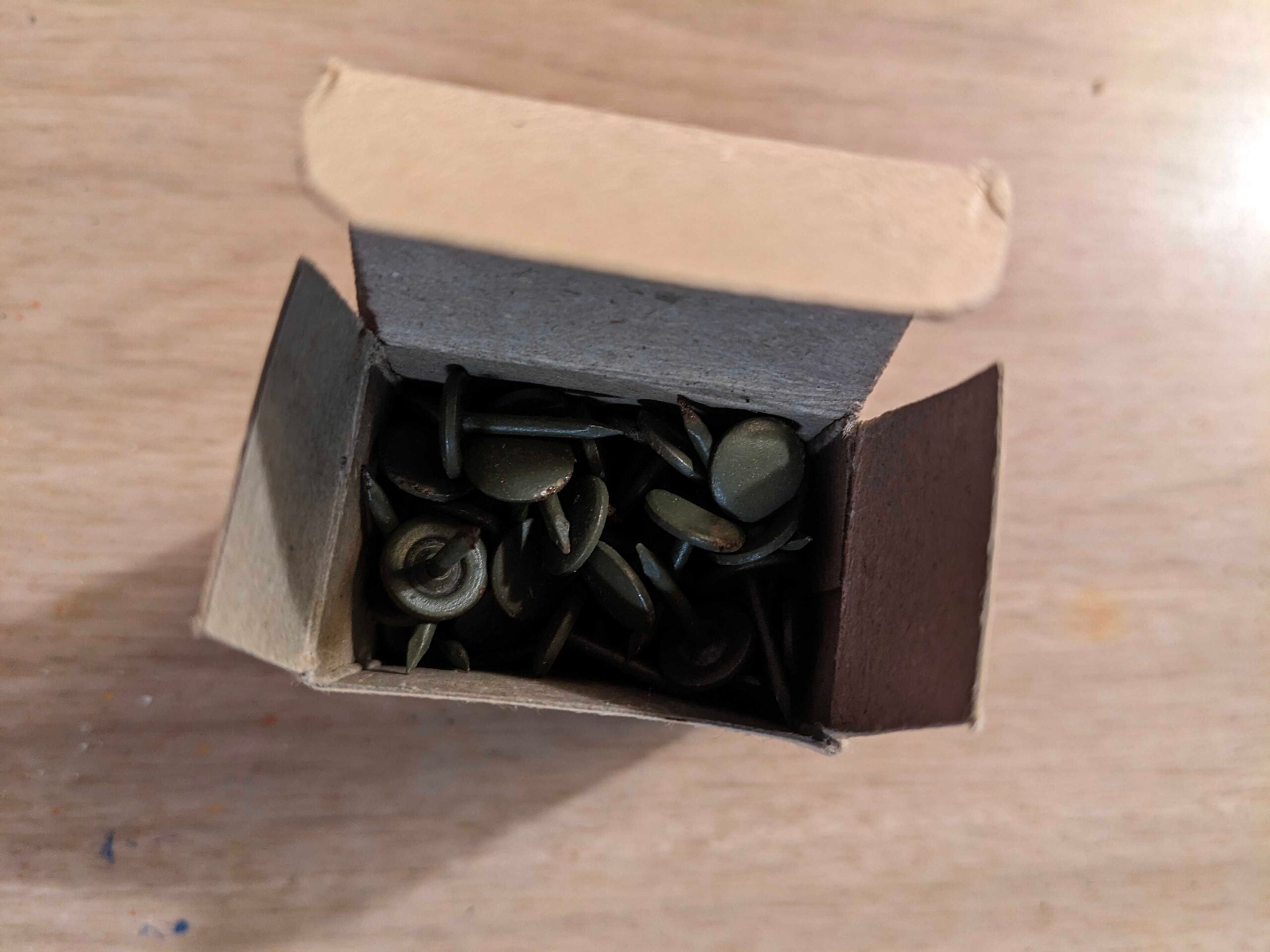
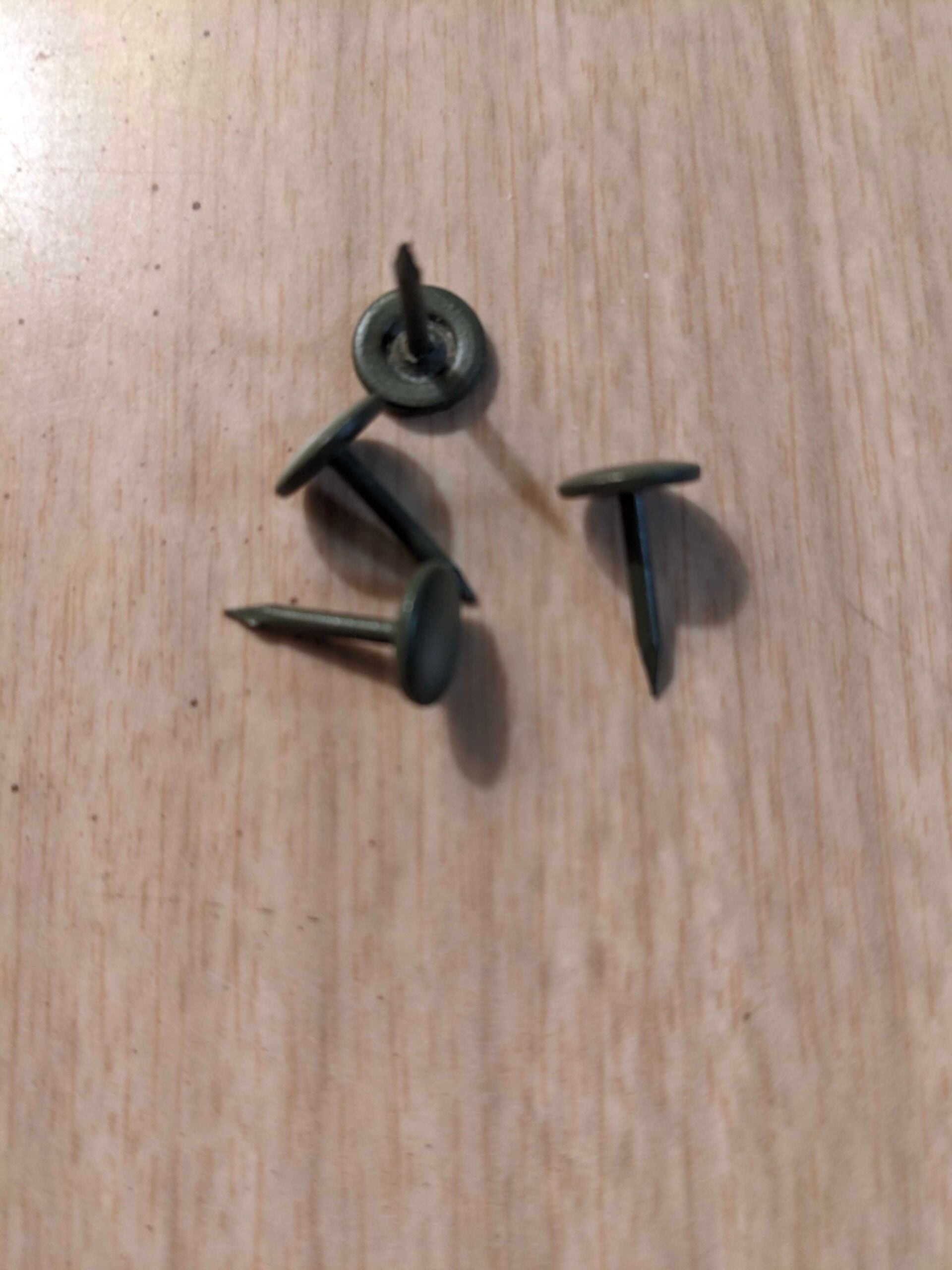
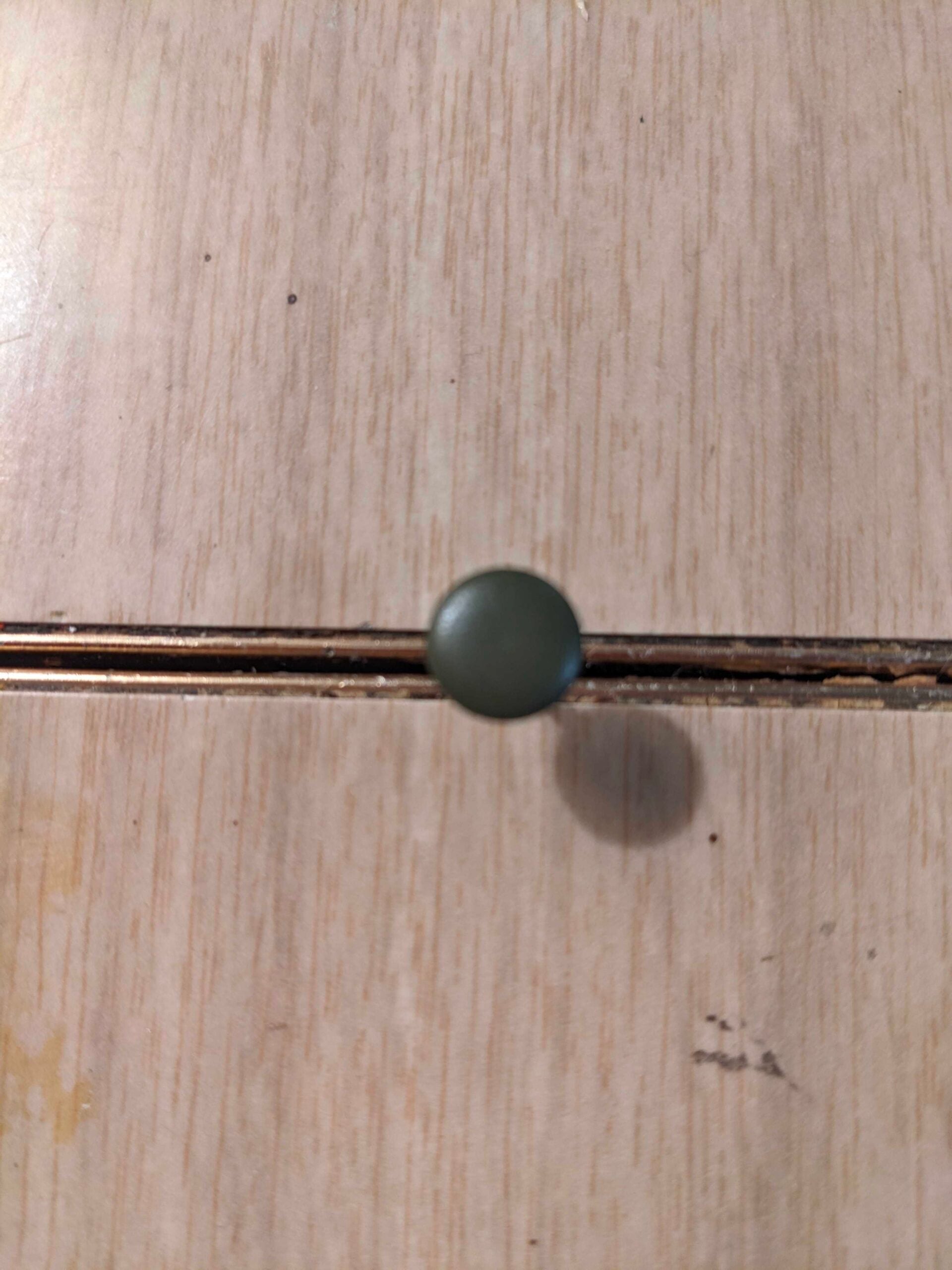
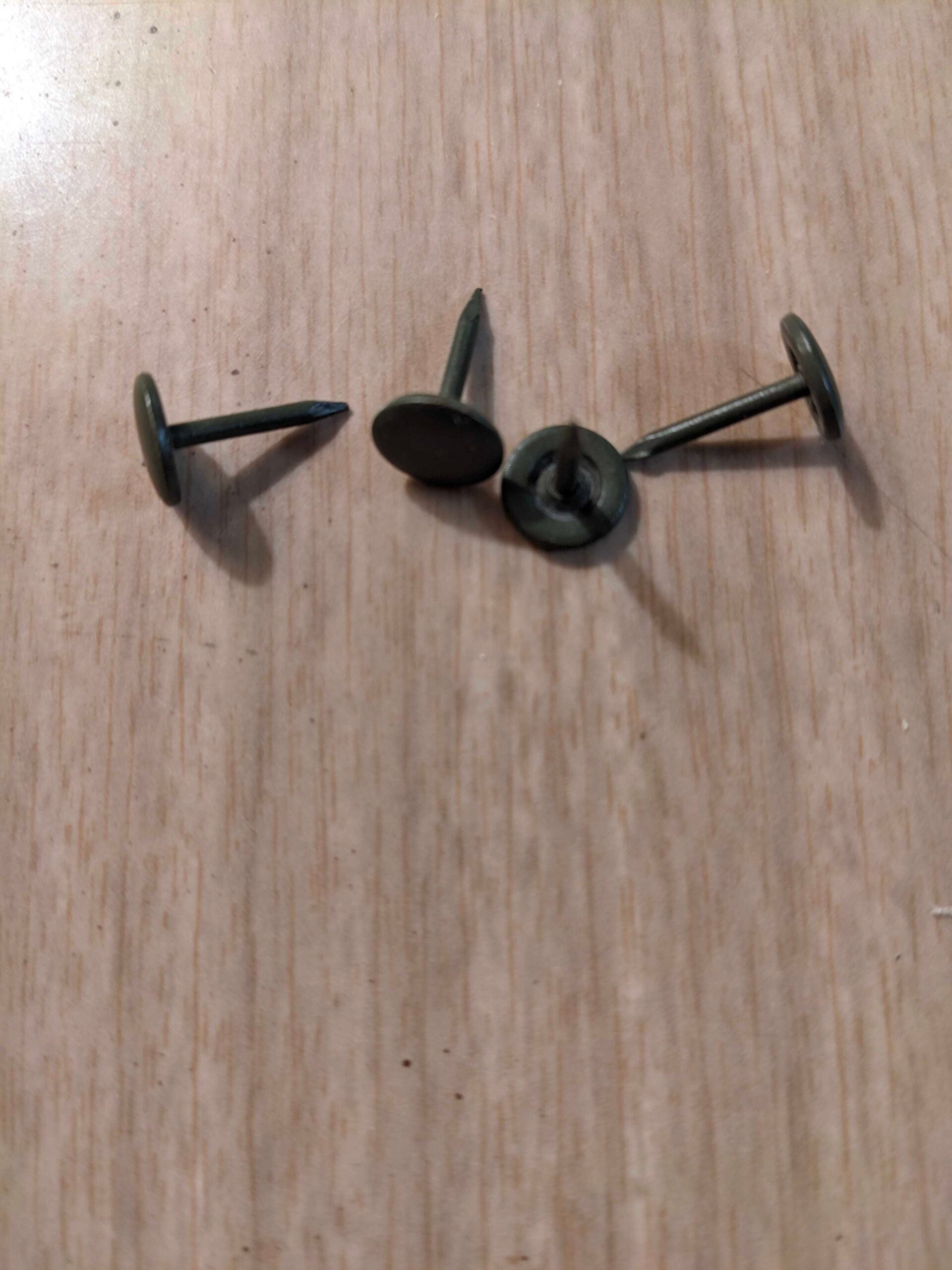
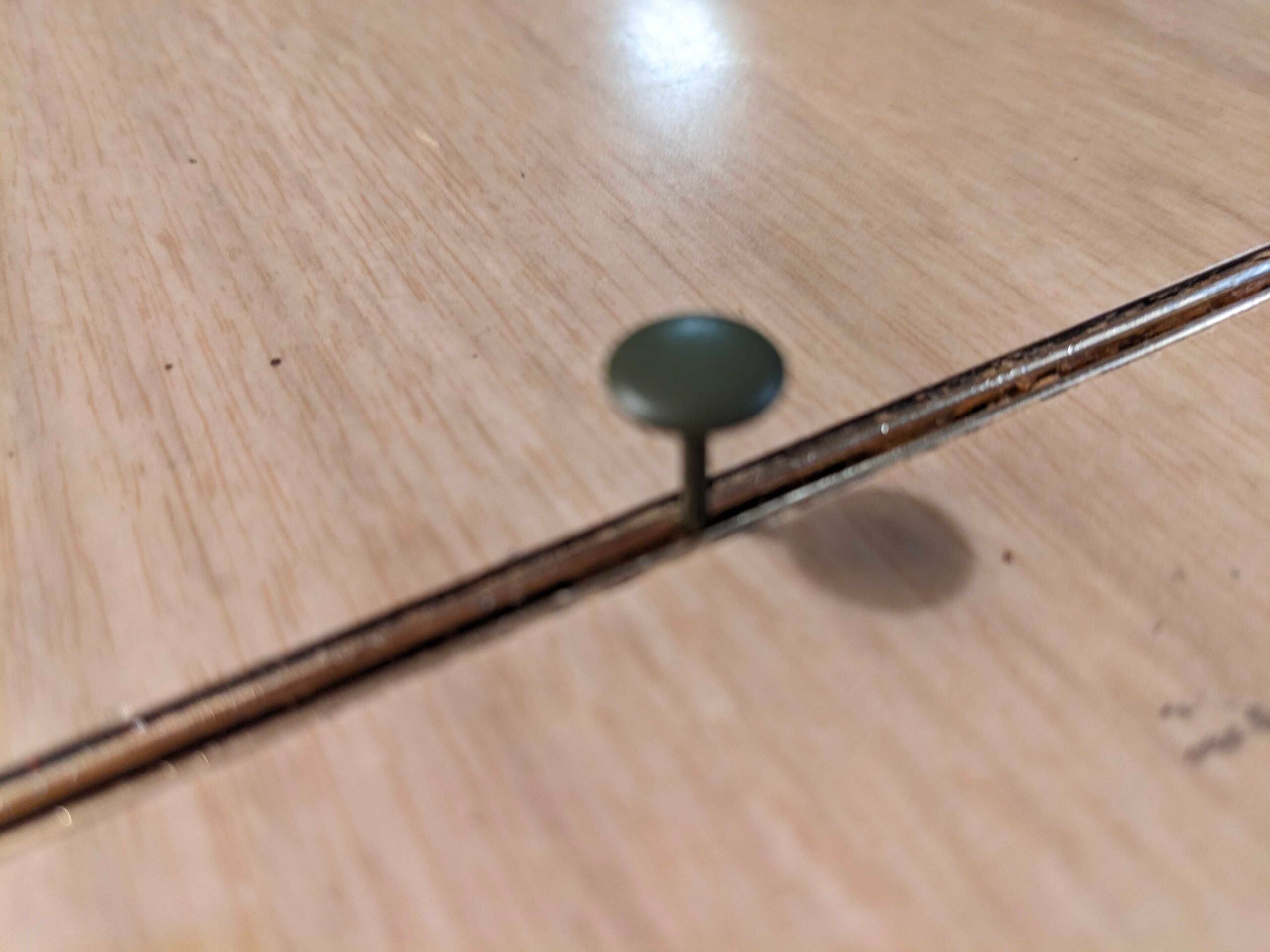
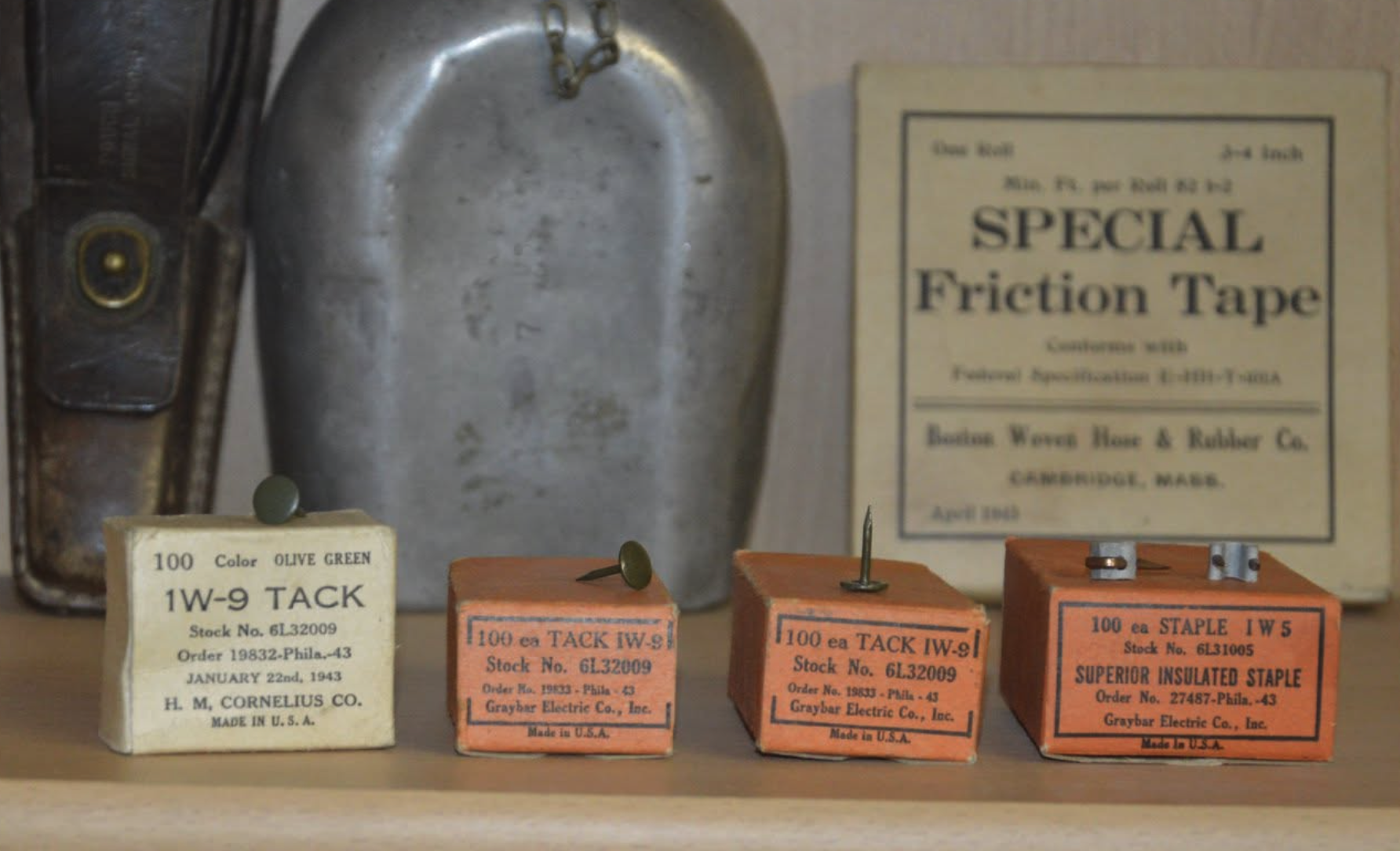
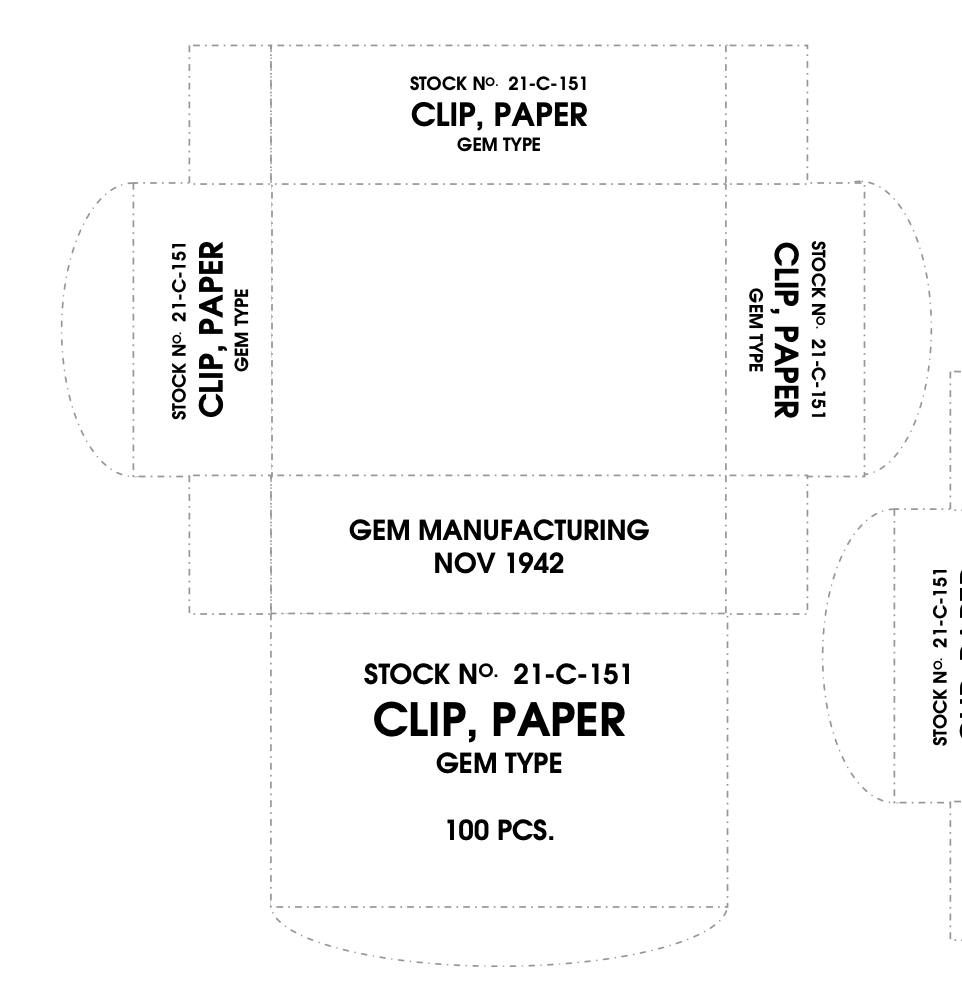
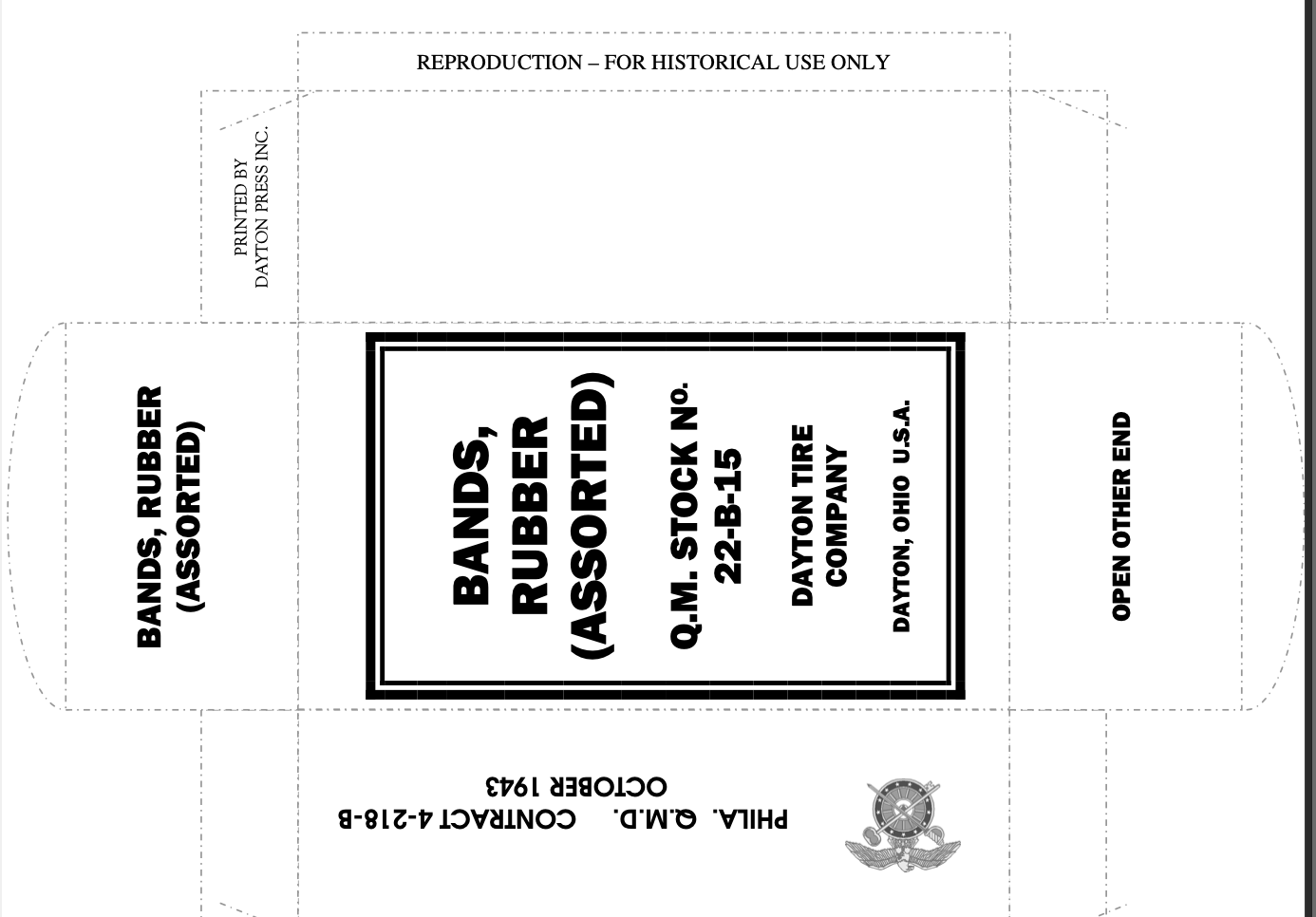
1W-9 Tack Box by H.M. Cornelius Co 1943 – A box of 100 tacks made Jan 22nd 1943. The tacks were made by several different companies (including Greybar Electric Inc) and are used to tack information up onto boards and walls. The tack color is olive green. Boxes came in beige or orange, depending on the company. Looks like Greybar used Orange boxes and others used beige.
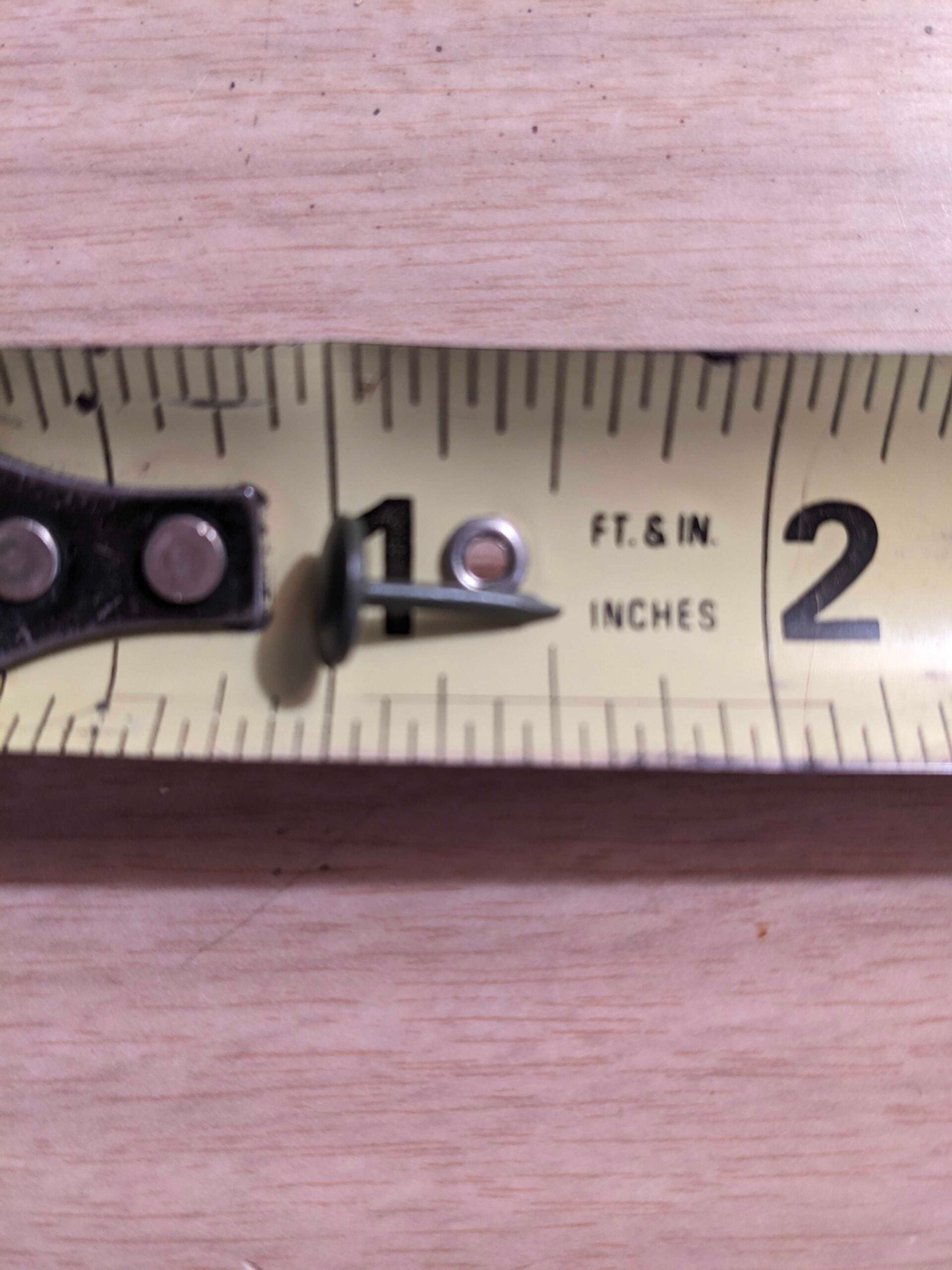
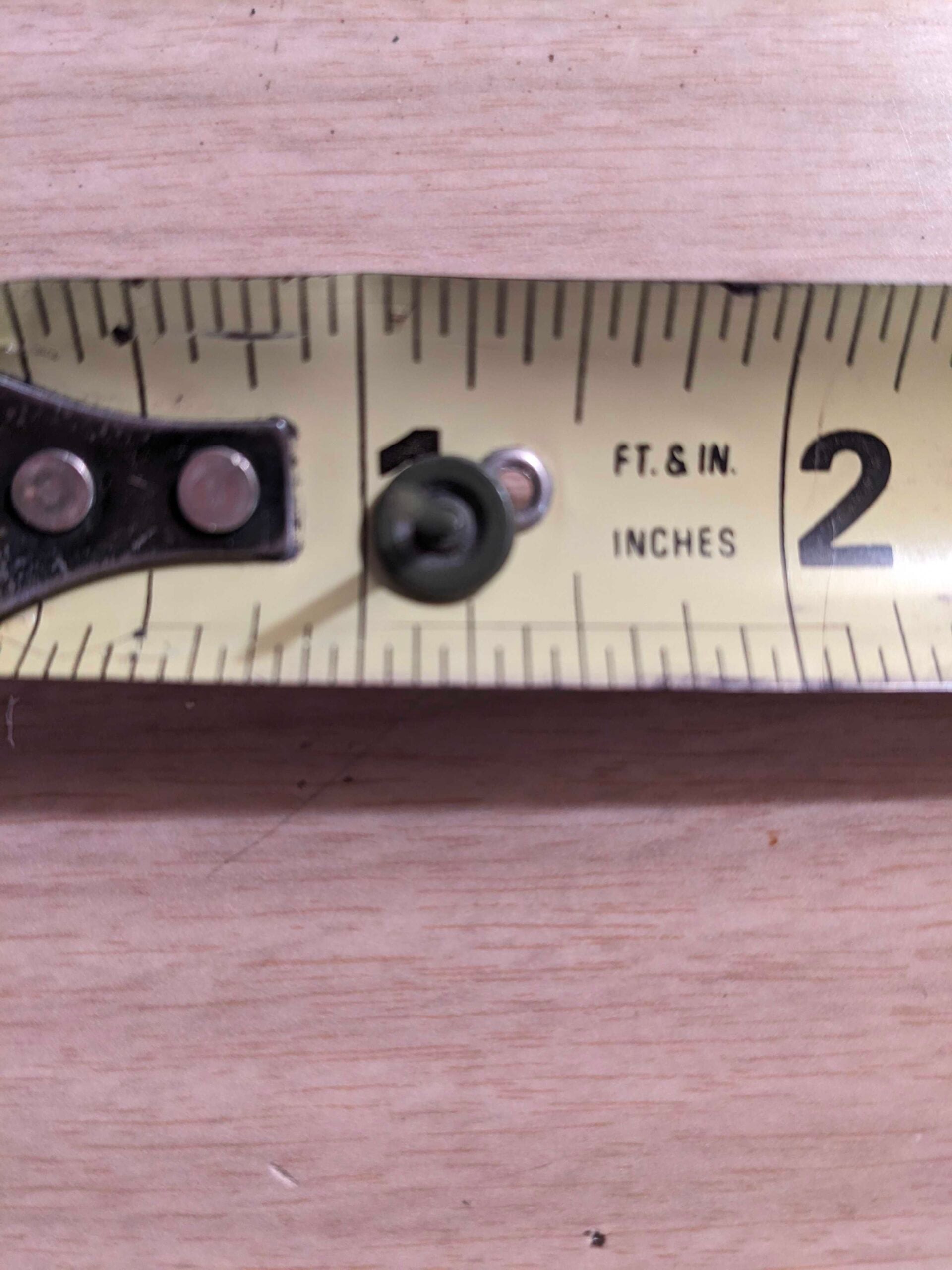
The tack itself seems to be made of steel and is .5 inches long, with the tack head being 5/16ths in diameter.
The PDF is the box scanned from the front and back. I didn’t want to cut open the box for a full scan, and I’m sure someone out there can take the PDFs and use AI to make an easier template. Or maybe I will down the road.
5th Army Airborne Training Center Parachute School – This was a school set up in Morocco to provide parachute training. For more information about the school, see: Fifth Army Abn TC

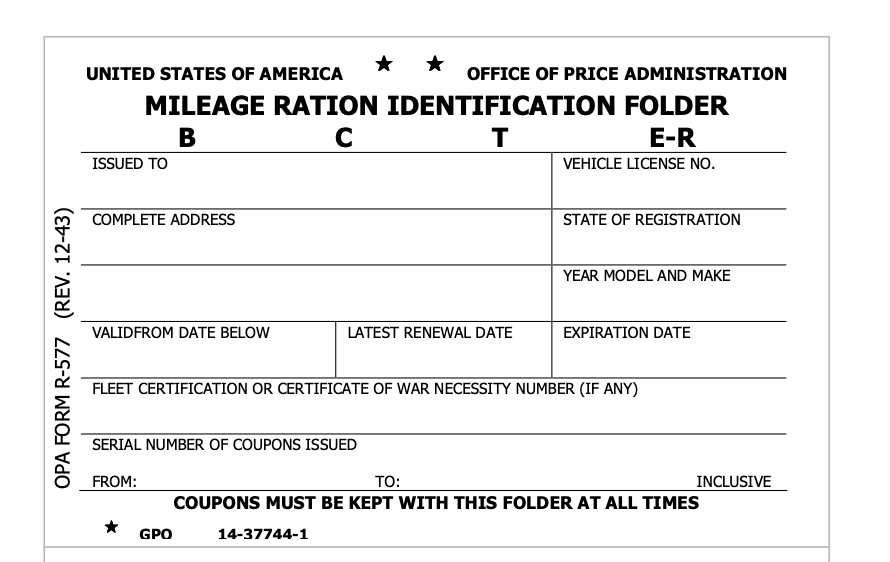
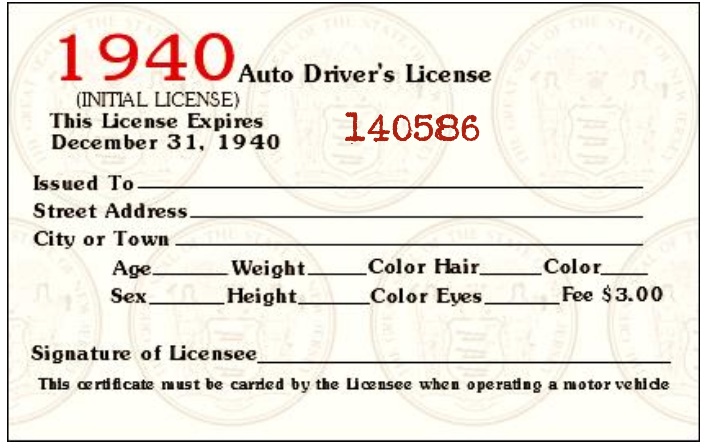
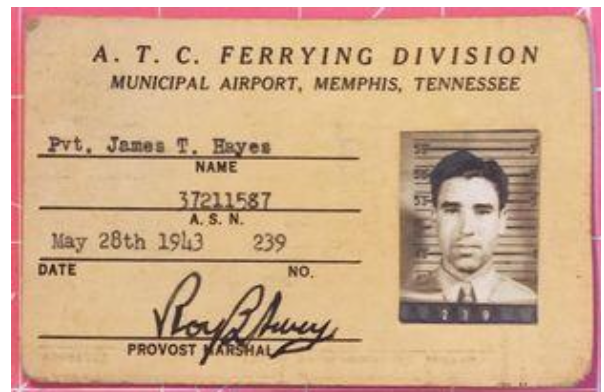

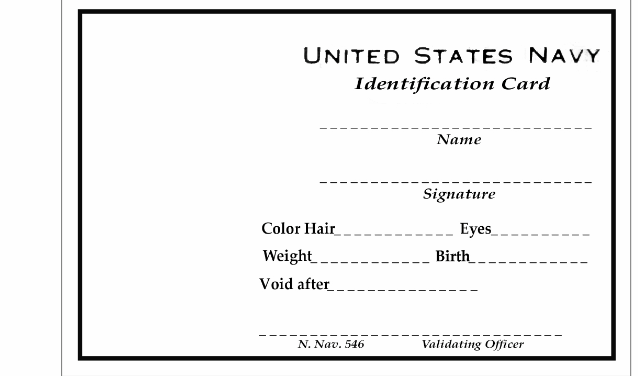
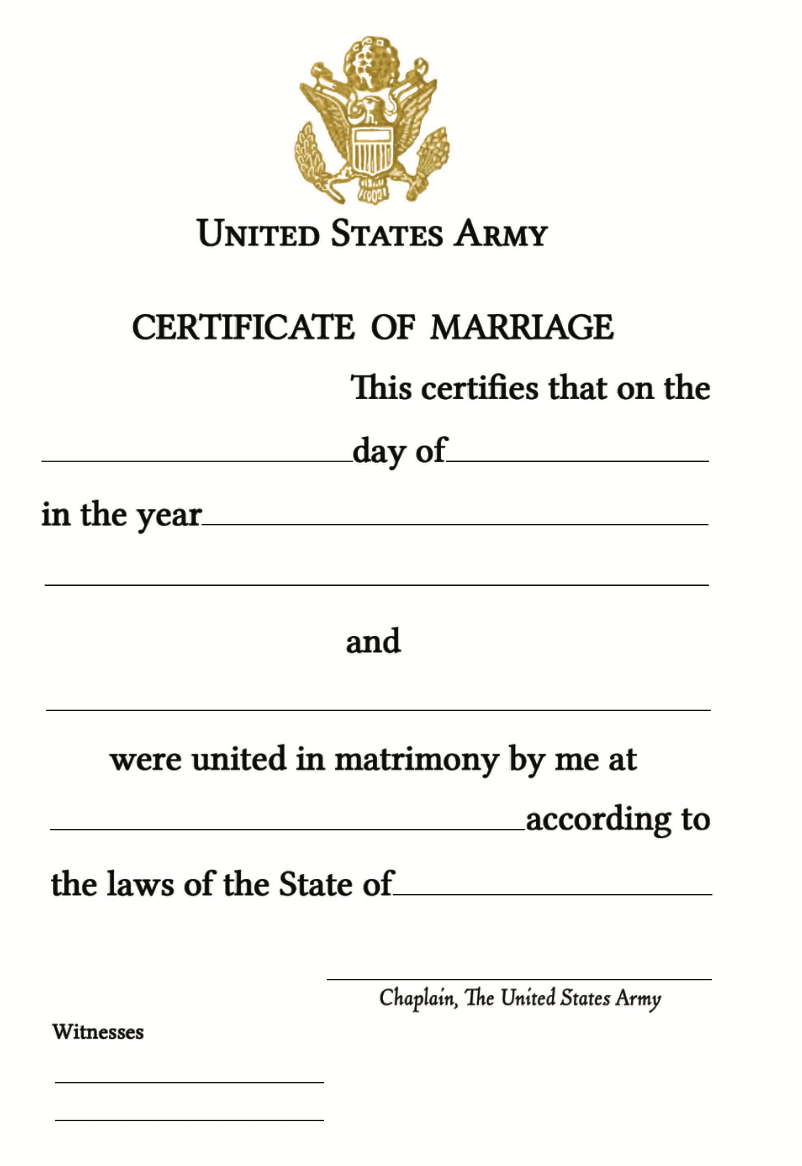
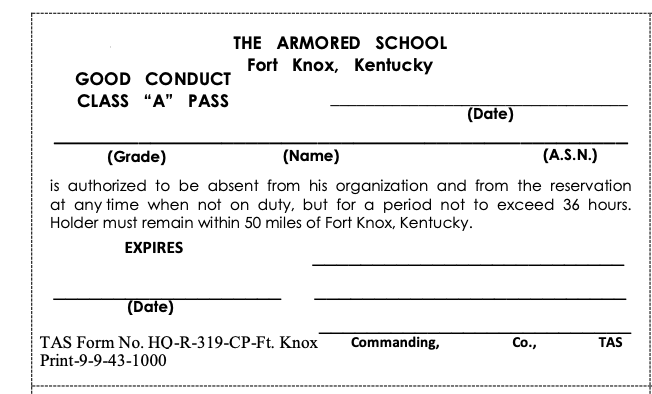
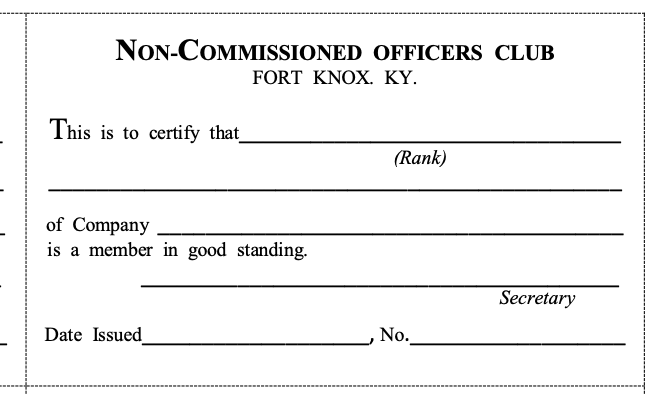
Fort Knox Class A Good Conduct Pass – TAS Form No. HQ-R-319-CP Ft. Knox
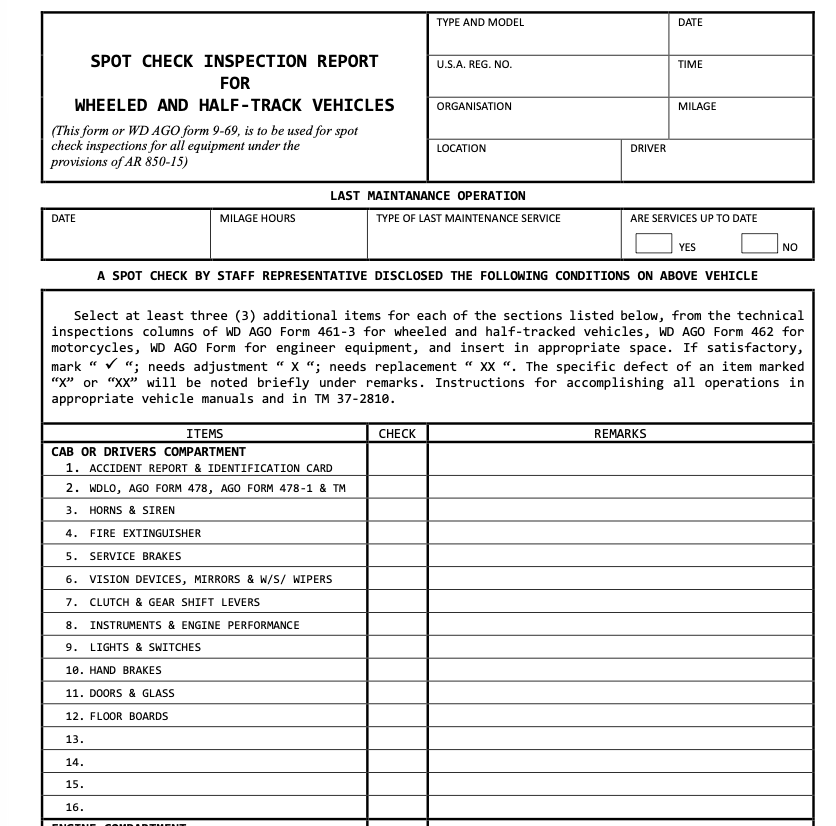
WD AGO FORM 9-68 Jan 1944 – Spot check inspection report for wheeled and half-track vehicles – Form to use to quickly assess vehicle before driving.
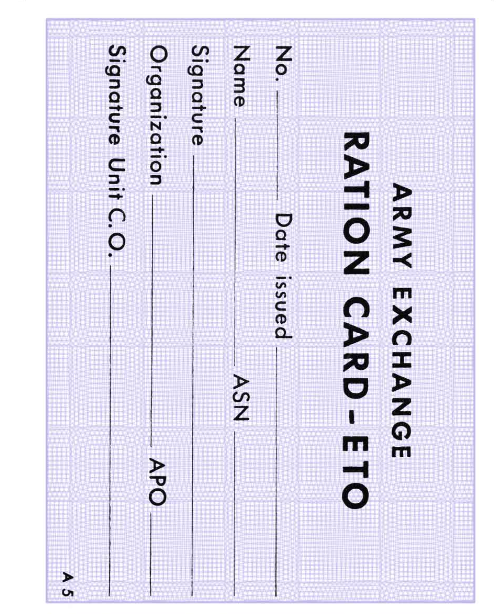
ETO Ration Card – Army Exchange Ration Card ETO
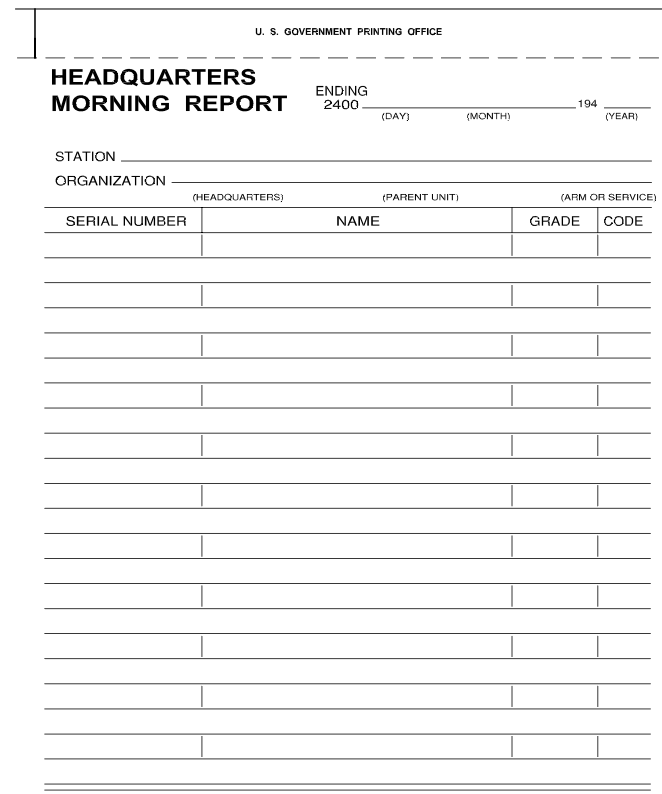
Company and Headquarters Morning Report Forms No 2 and No 2 1943 – Two types of forms. One for the Company and one for the HQ. Zip file.
AAF Diploma (1942) – Diploma awarded upon completion of courses.
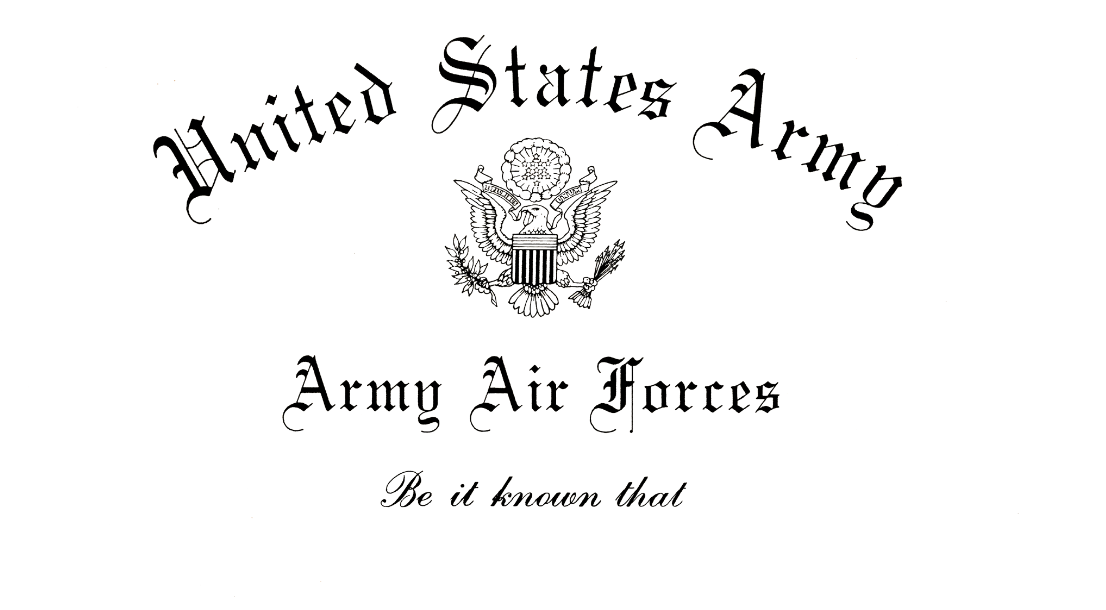
Temporary Pass Oct 1944 – ETTC Form 10-1 for Temporary pass issued by Provost Marshall.
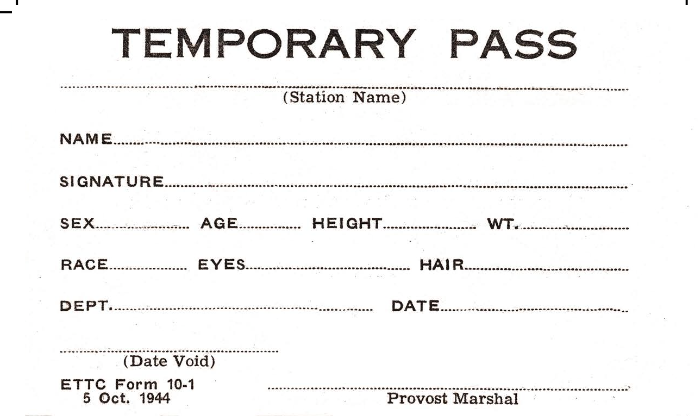
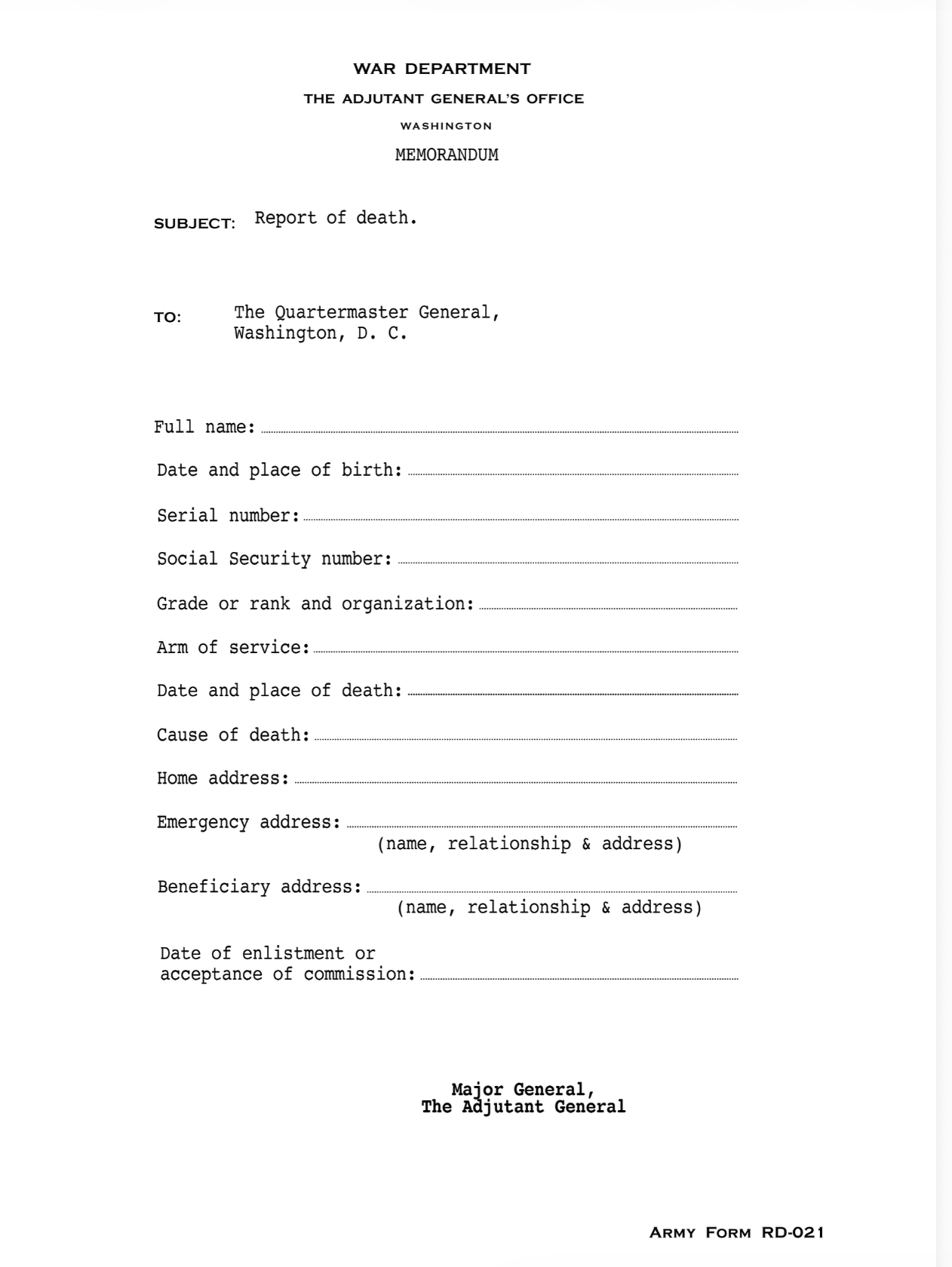
War Operations Death Report | Report to fill out at mortuary.

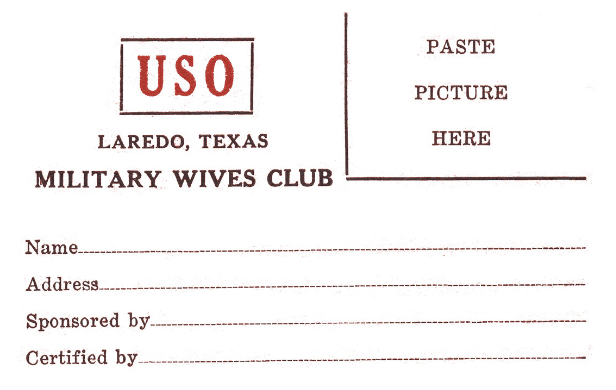
Military Wives Club USO | Identification card for going to the USO club in Laredo, Texas.
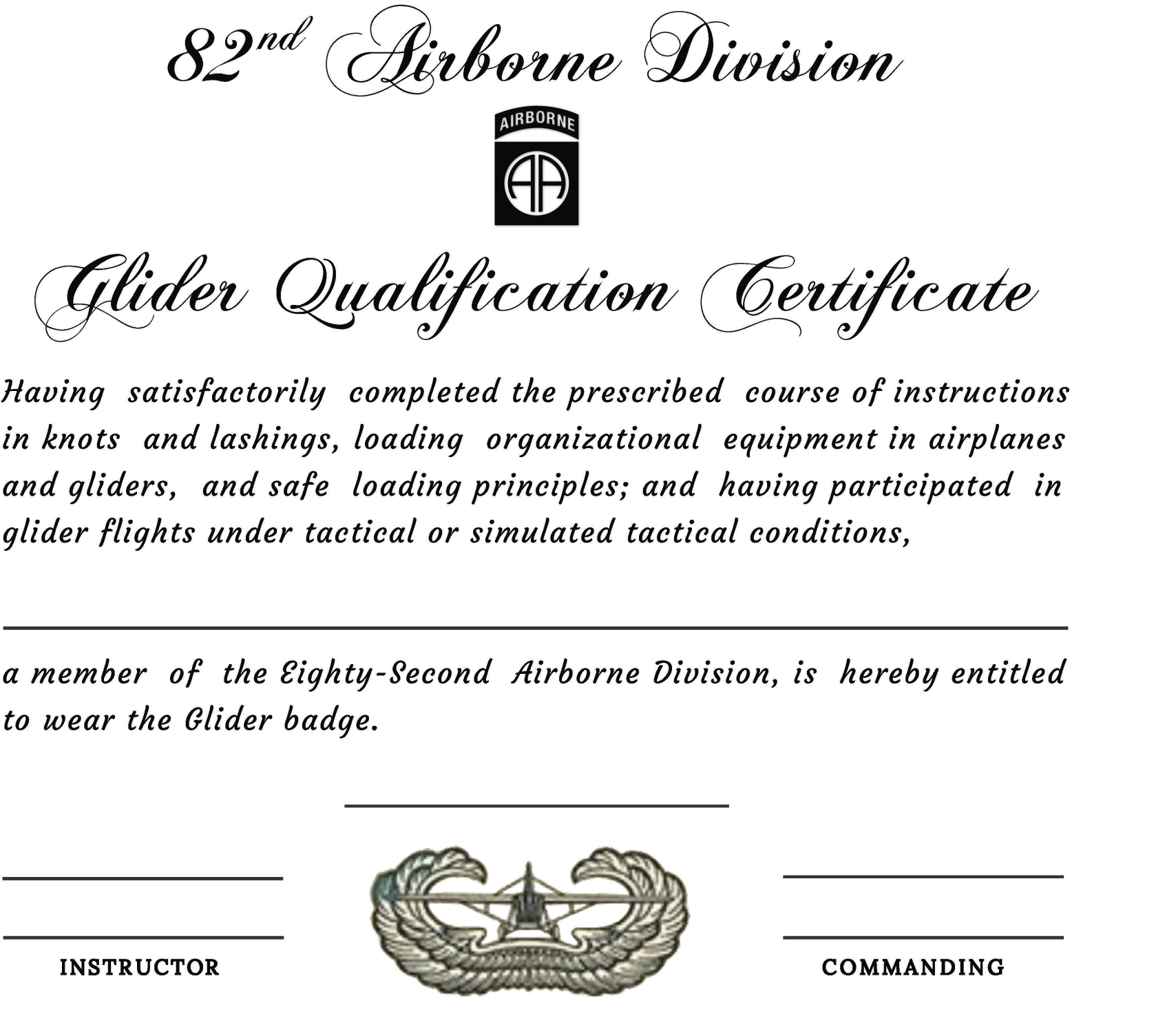
82nd Airborne Division Glider Qualification Certificate – given to those who complete the Glider Riding School.
USMC NAVY Photo ID Background – The height background that appears when a military member has their photo taken. Link is in an .EPS file format, so you may need a photo editing program to view it.

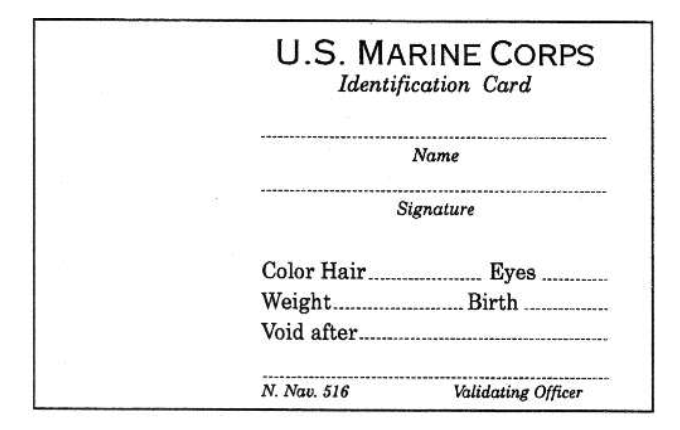
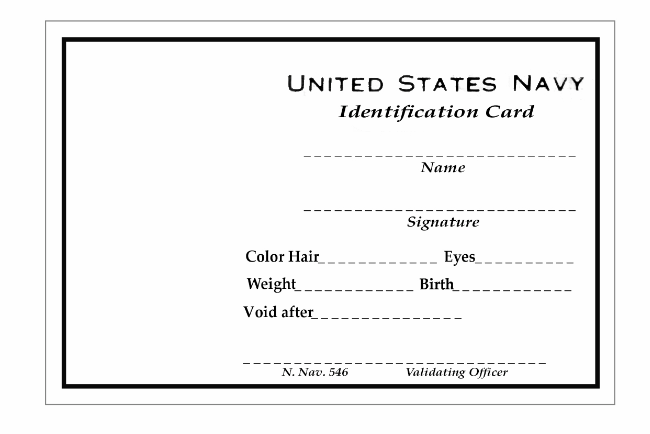
- USMC Identification Card N Nav 516
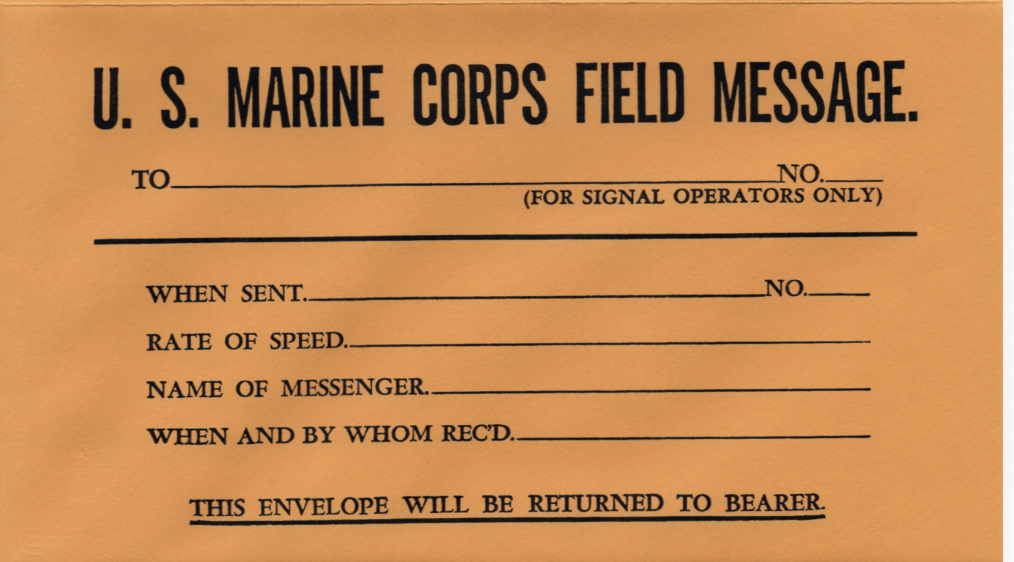
- USMC Field Message Envelope
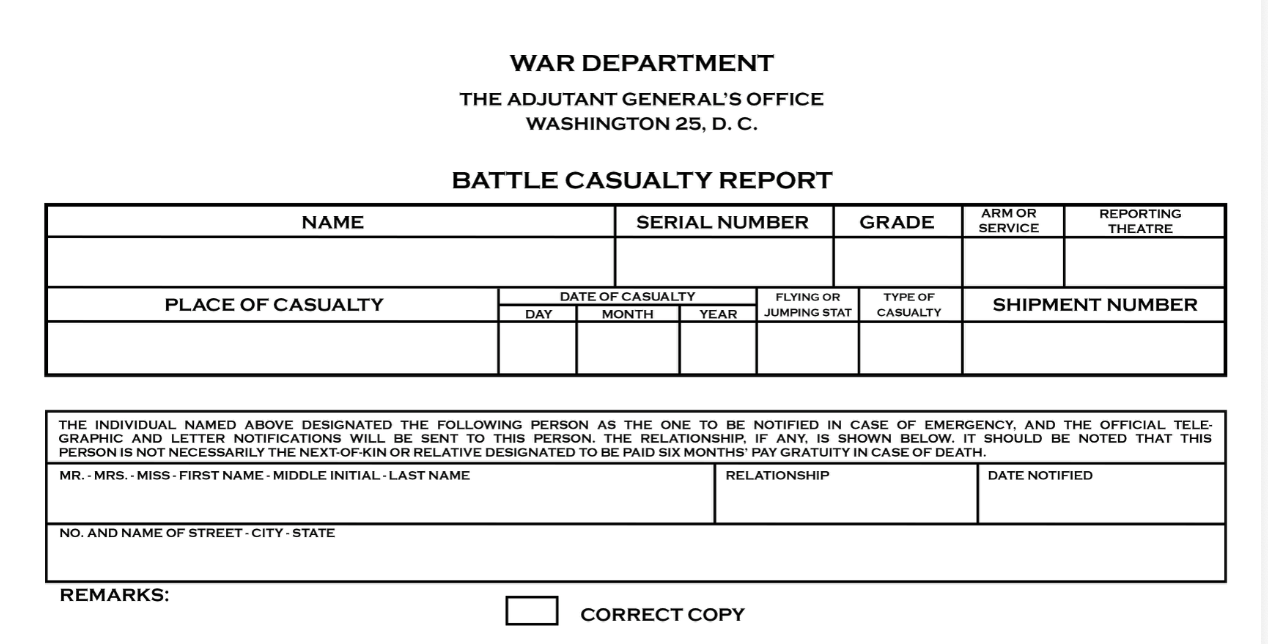
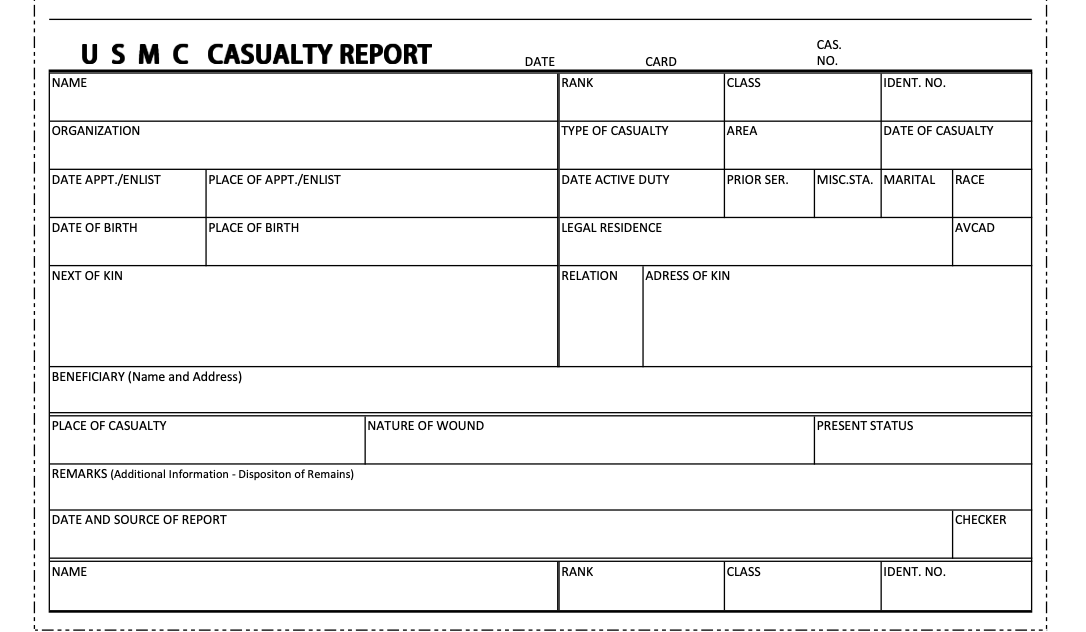
- USMC CASUALTY REPORT – Card format
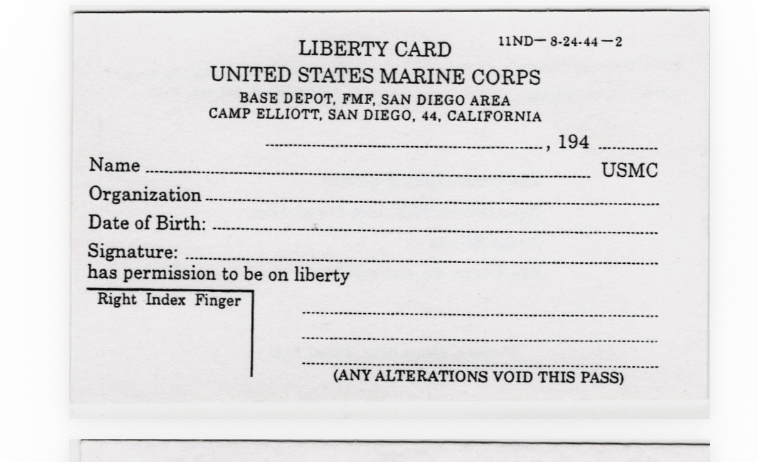
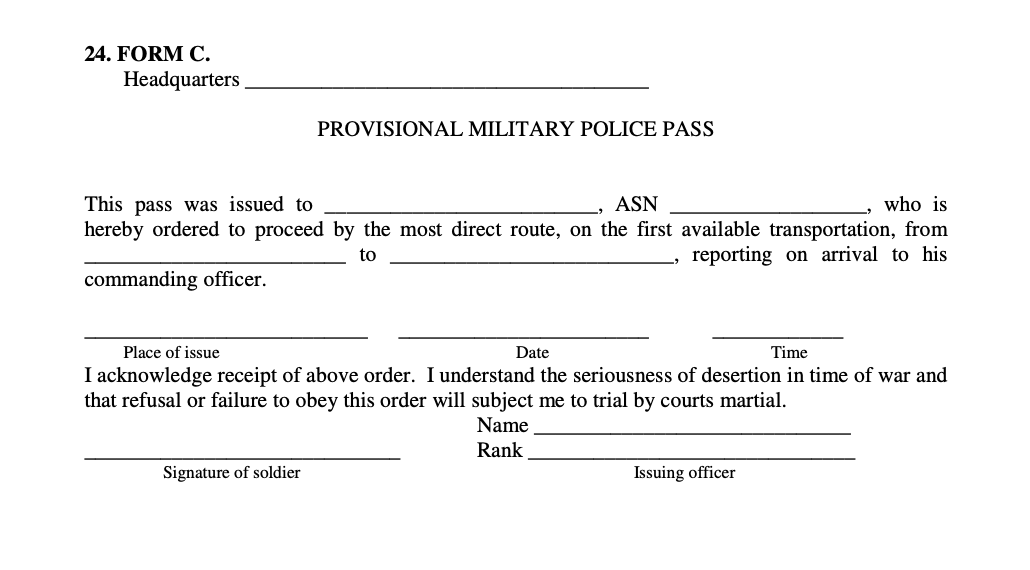
- USMC San Diego Pass Card 1944
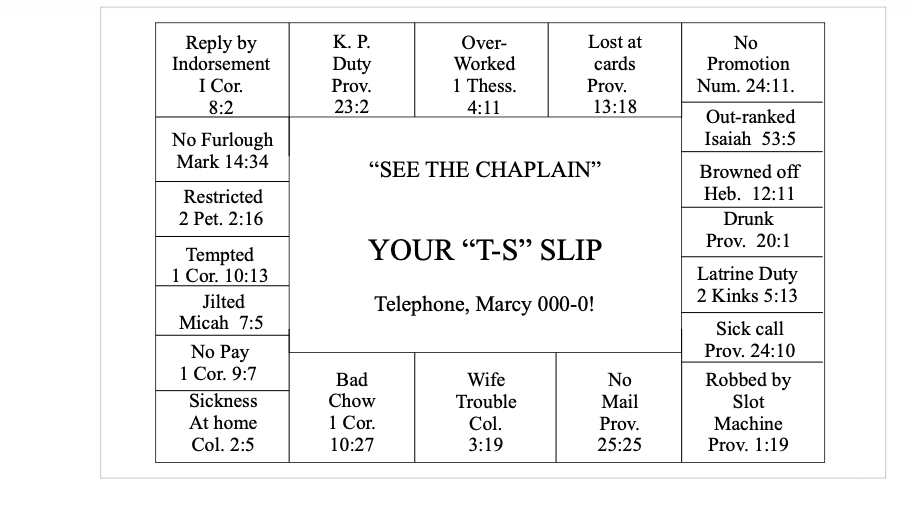
- USMC Theological Card – a humorous card with a listing of reasons to go speak to the Chaplain
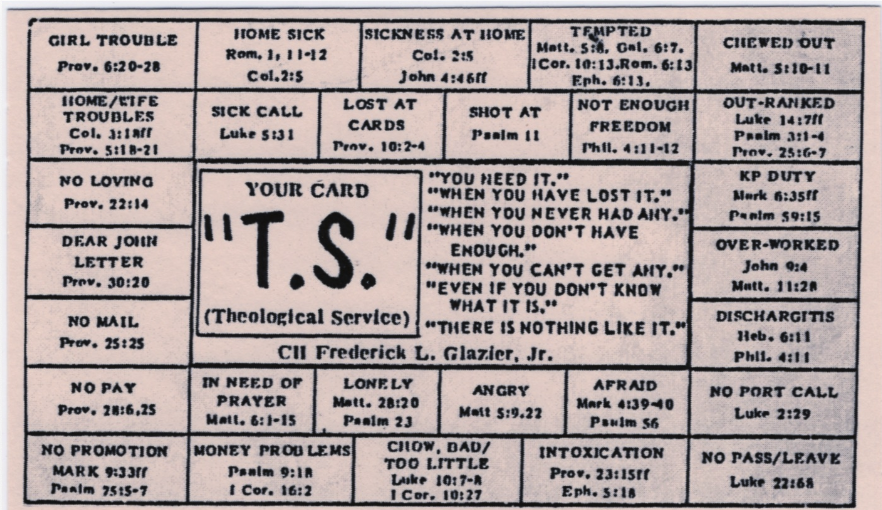
TS Slip – Theological Chaplain card – a humorous card with a listing of reasons to go speak to the Chaplain
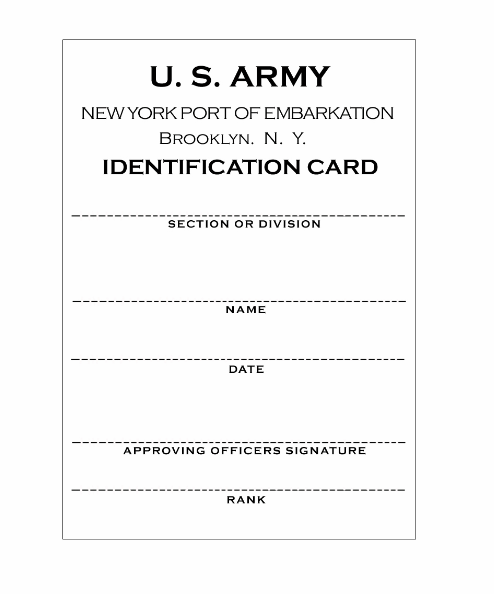
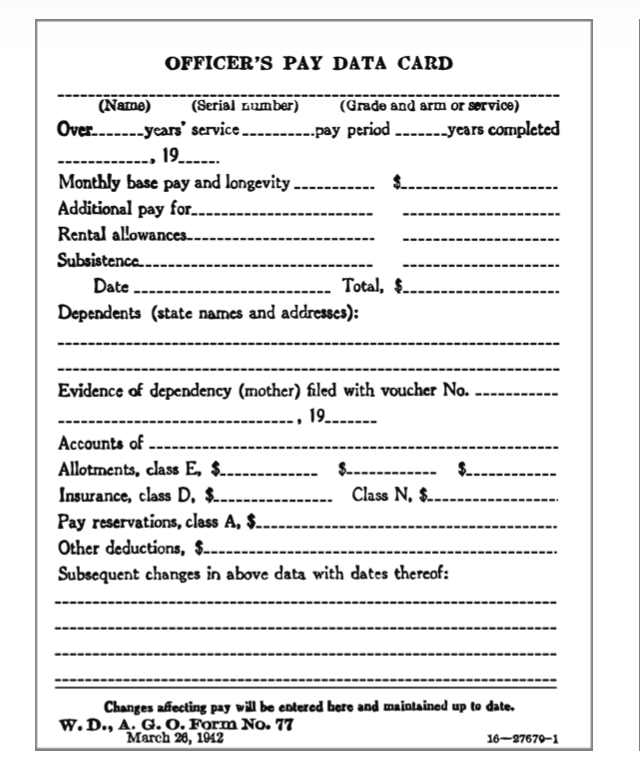
Officers Pay Data Card WD AGO Form No 77 March 1942 –
See MONTHLY RATES OF PAY AND ALLOWANCES OF COMMISSIONED OFFICERS OF THE REGULAR ARMY, ON ACTIVE DUTY, EFFECTIVE JUNE 1, 1942 for a table of pay.
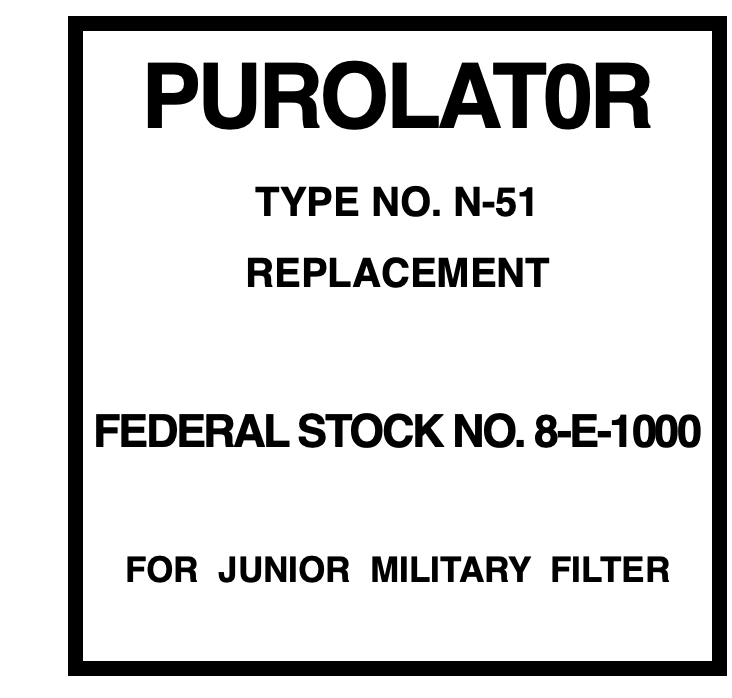
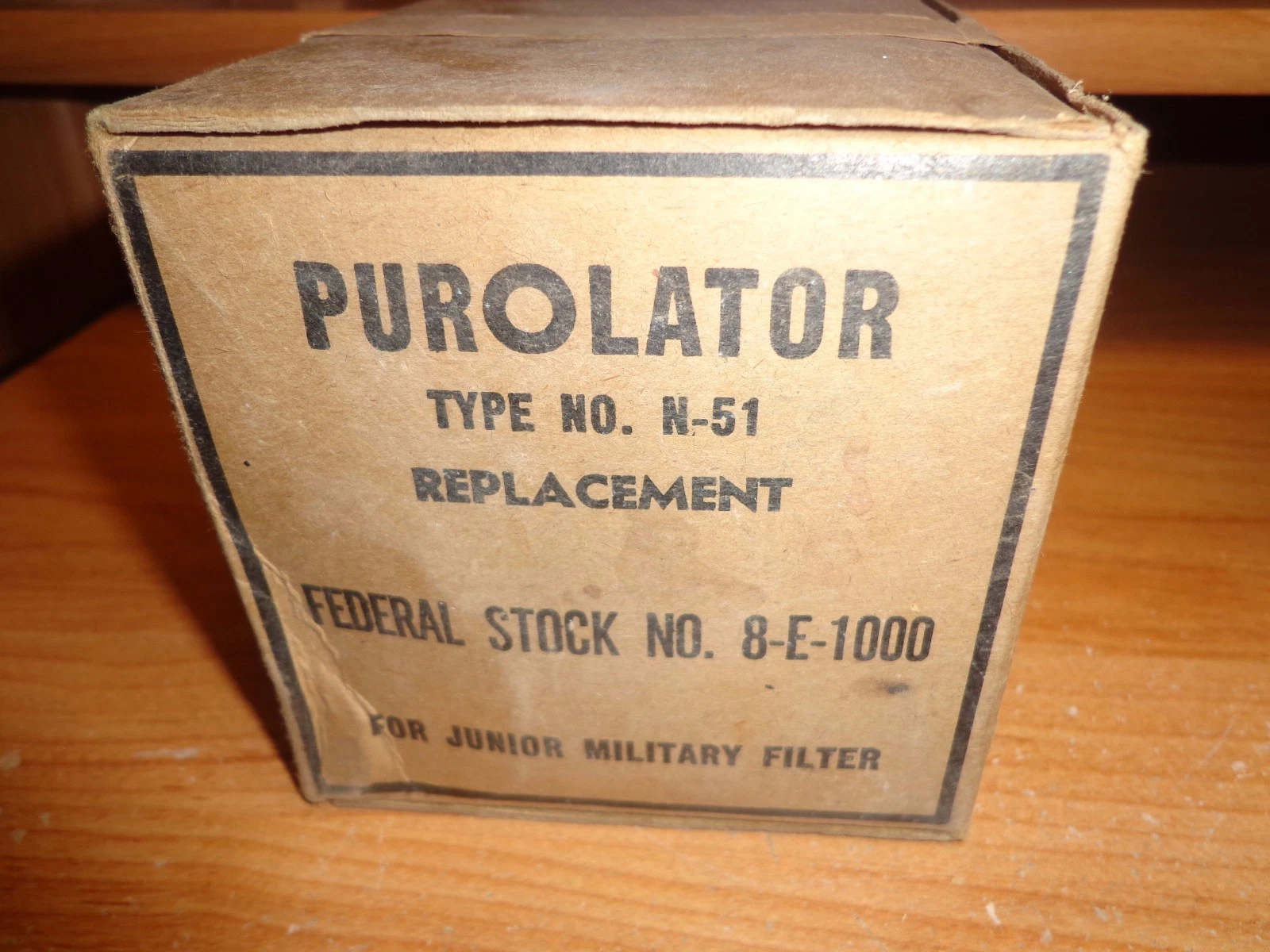
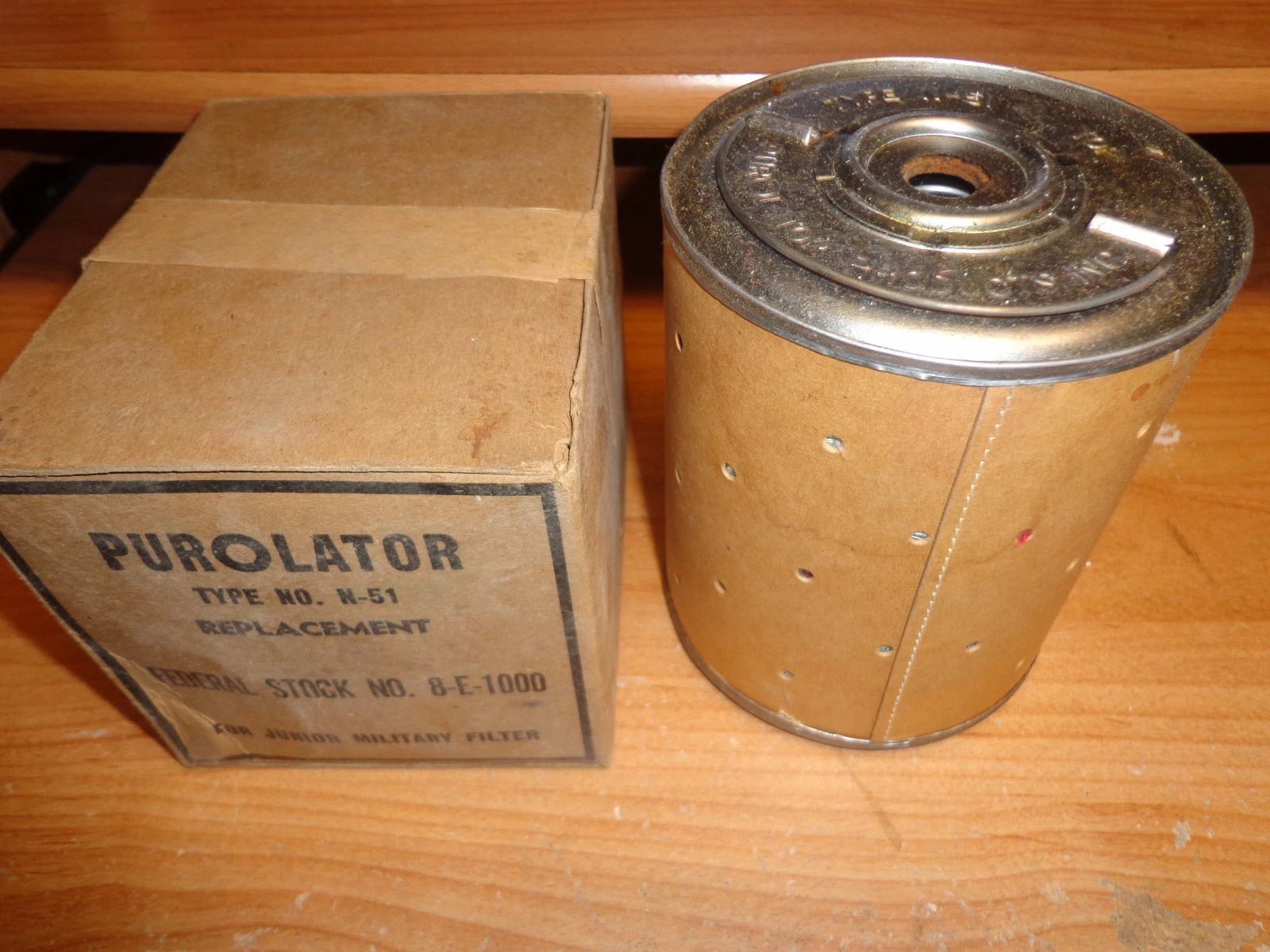
Purolator Type N-51 1941 Willys MA Junior Military Filter Oil Filter 3 – Label for military oil filters. Print on brown cardstock.
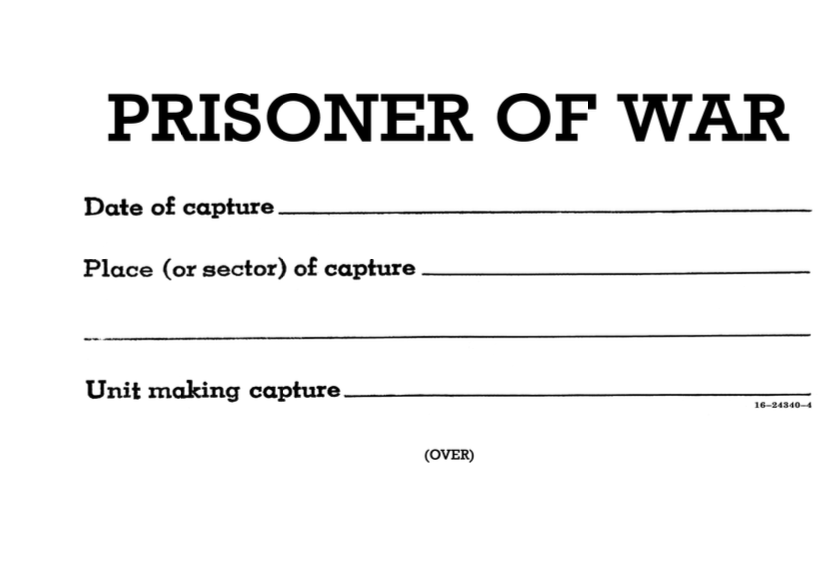
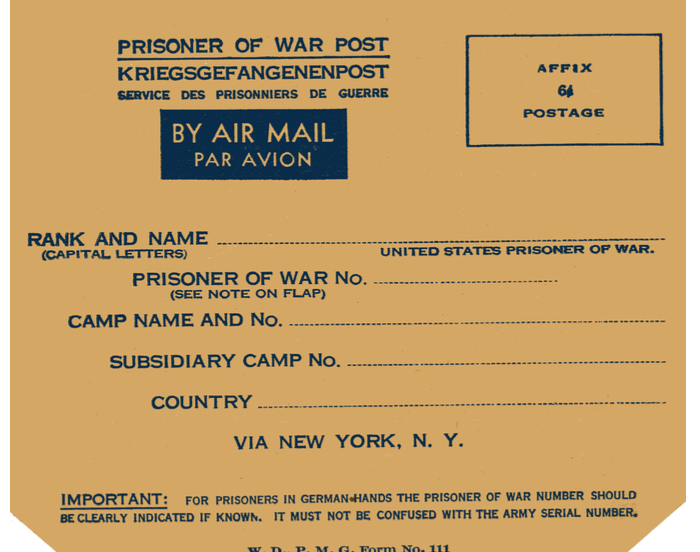
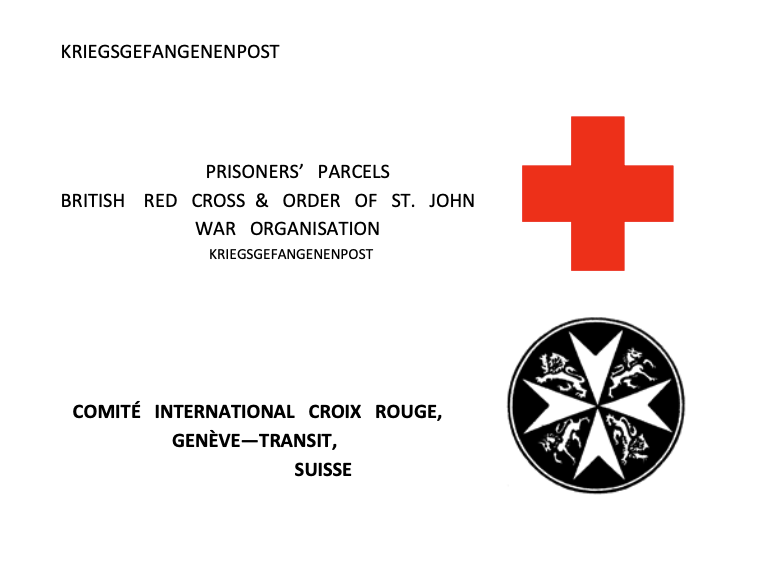
Red Cross Parcel Labels for Packages – a PDF containing examples of –
British PW parcel Red Cross & St. John’s Cross – Sending parcels via the Red Cross to British POWs
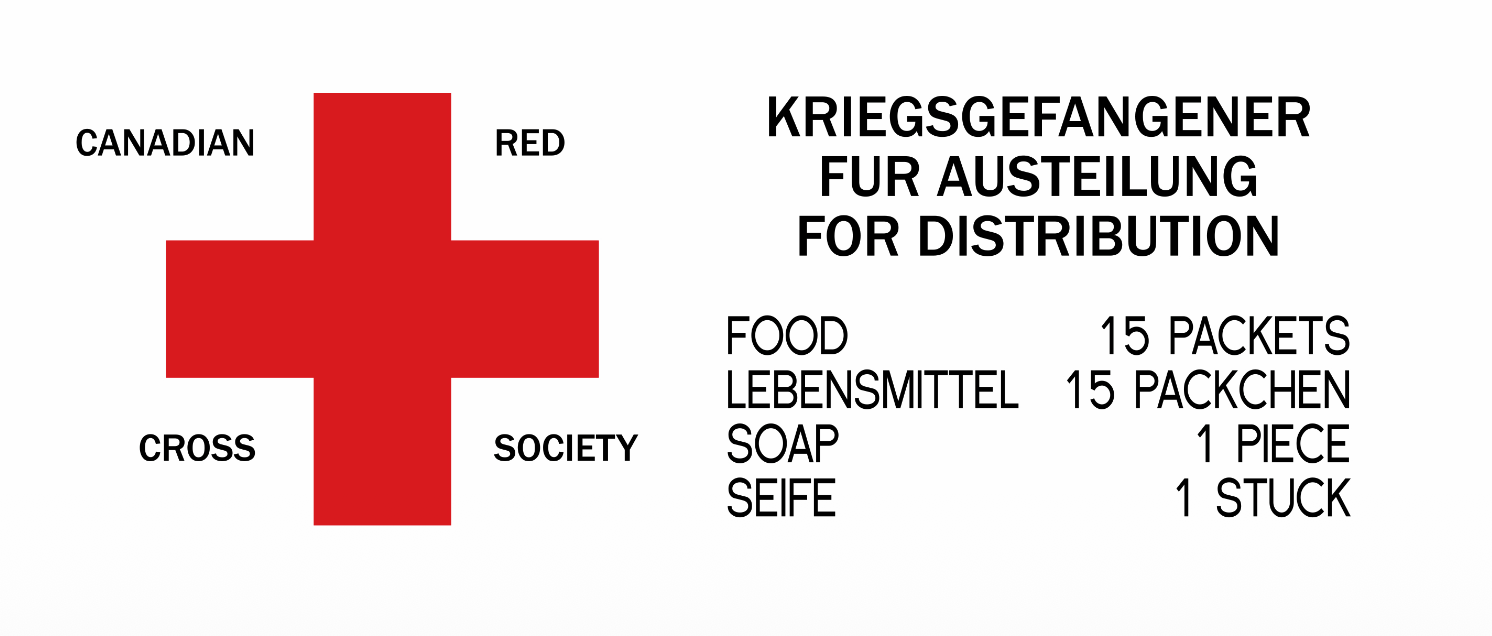
Canadian Red Cross Society – Food and soap
American Prisoner of War Food Package No 10 – food, soap, and other incidentals. The Smithsonian has information on here, as does the Med Dept website here.

US War Ballots Commission Form 1 – Federal War Ballot, you can print off and send to your state’s secretary of state to get a 1944 general or primary election ballot.
Print it off and then flip it so it lines up. The color is a yellow-cream. The size should come out to be 4.5in wide by 3.5in long.
For an analysis of how soldiers voted in WW2, see: Voting in WW2.

Drivers Trip Ticket – Form 48 approved Dec 15th, 1944. Outlines what you need to do before you drive, during your drive, and when you’re done with your drive. You’ll want to use 16lb bond paper (25% cotton content). Try to use a typewriter with 12 characters per inch type. That was the standard/preferred type size for typewriters in the army.
For an earlier version, see the April 1943 one (print double-sided).

Captured Enemy Item Certificate AG USFET Form No 33 – This is a captured weapons certificate allowing you to bring back an enemy souvenir like a firearm or other weapon.
The measurements are 8 1/4in wide x 5 1/2in long.
This is only a document file and not a good one at that. I made it years ago in the late 1990s/early 2000s. Hopefully, someone with better skills can come along and make better edits.
There are a few different versions of this form. This YouTube video from Legacy Collectibles explains more.


Morning Report HQ % 3341 Signal Service Battalion Dec 11th 1944 – An example of a morning report. This report comes from the % 3341st Signal Service Battalion, which was made up of Women’s Army Corps soldiers (WACs).
The % isn’t a typo but a way to designate on paper that the unit is WACs. The battalion operated what was likely the largest message center outside of Washington DC.

1st Division Special Orders 19 May 1945 – An example of a Special Order. The number goes in the top-left and the date in the top-right, and an explanation of what the orders are and who is impacted. In this example, it looks like a bunch of soldiers are transferred to the US for separation or re-assignment following VE Day.

Enlisted Mens Individual Clothing and Equipment Record – A chart that gets filled noting the article, quantity, and date of items issued. Form No 32, Feb 24, 1942.
You’ll want to use 16lb bond paper (25% cotton content). Try to use a typewriter with 12 characters per inch type. That was the standard/preferred type size for typewriters in the army.

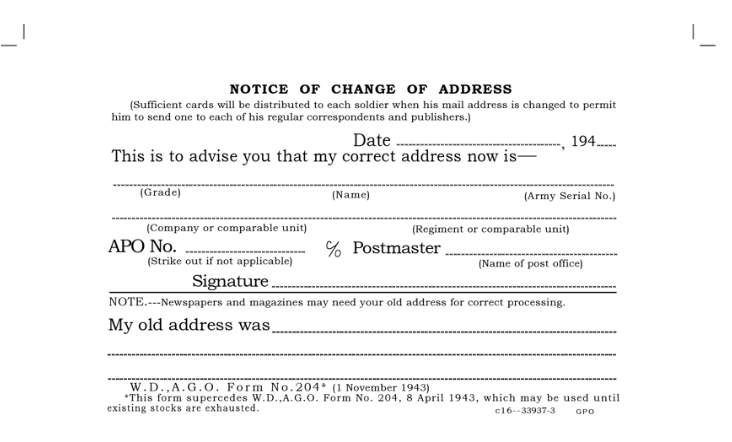
Form 304A Locator Card-1941 – This card was similar to a report of change notice; however, it was used specifically to notify the postal services of where service members were located. TM 12-225: Administrative Procedures goes into more detail on the usage of these cards. Print on tan cardstock or light brown cardstock. 3 can be printed per page. The top right corner has a small notch cut in it as seen in the photo.

Service Record Form – AGO Form 24 – From 1944. An example of how to fill out the form. Form is Audie Murphy’s. Need to use AR 345-125 for instructions on how to fill it out. If I come across that, I’ll add a link. Alternatively, use TM 12-230 Service Record.

The Packing of the Field Desk and Record Chest – Created at Fort Benning, GA, on May 1st, 1943, and describes how to pack the field desk and record chest. There were two types of field desks: an older model and a newer one. The older model field desk is expected to be pressed into service as a record chest (according to the guide). I also wanted to drop some images below of it.
Print double-sided, flip on the long side. Best paper is a light ivory.


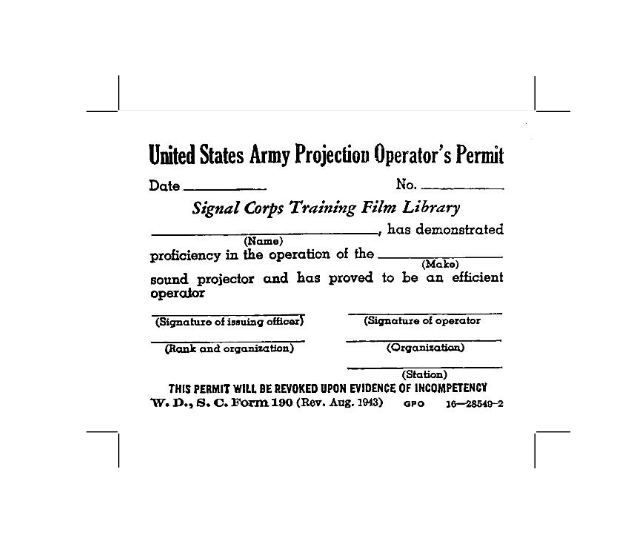
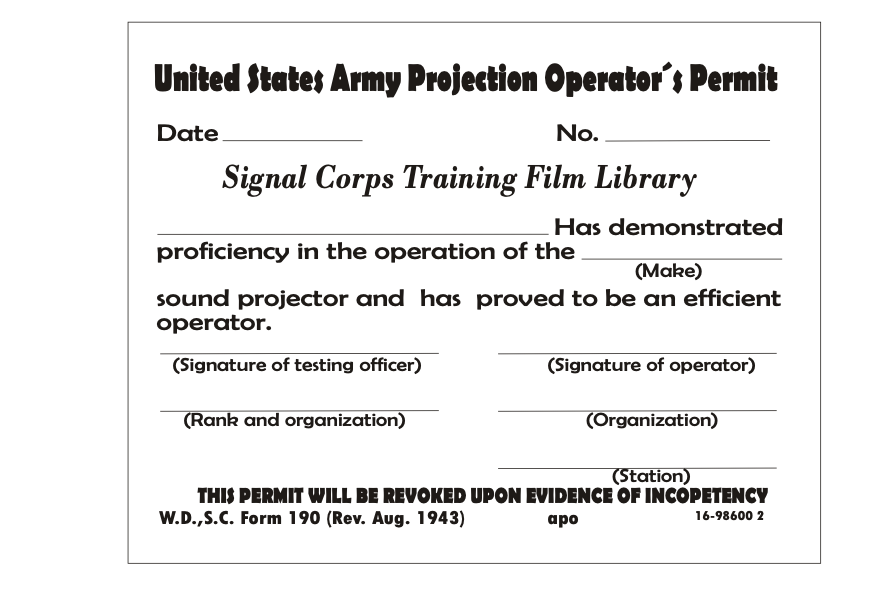
United States Army Projector Operators Permit Form 190, May 1942 and Aug 1943 | Permit to operate a Signal Corps sound projector. This was because film could catch fire, so you wanted someone who could run the projector correctly. It’s a standard US Army ID 2.5 wide x 4 long inches wallet card-type size.
Print it off on paper. Unsure of color, maybe light pink? Almost a salmon?

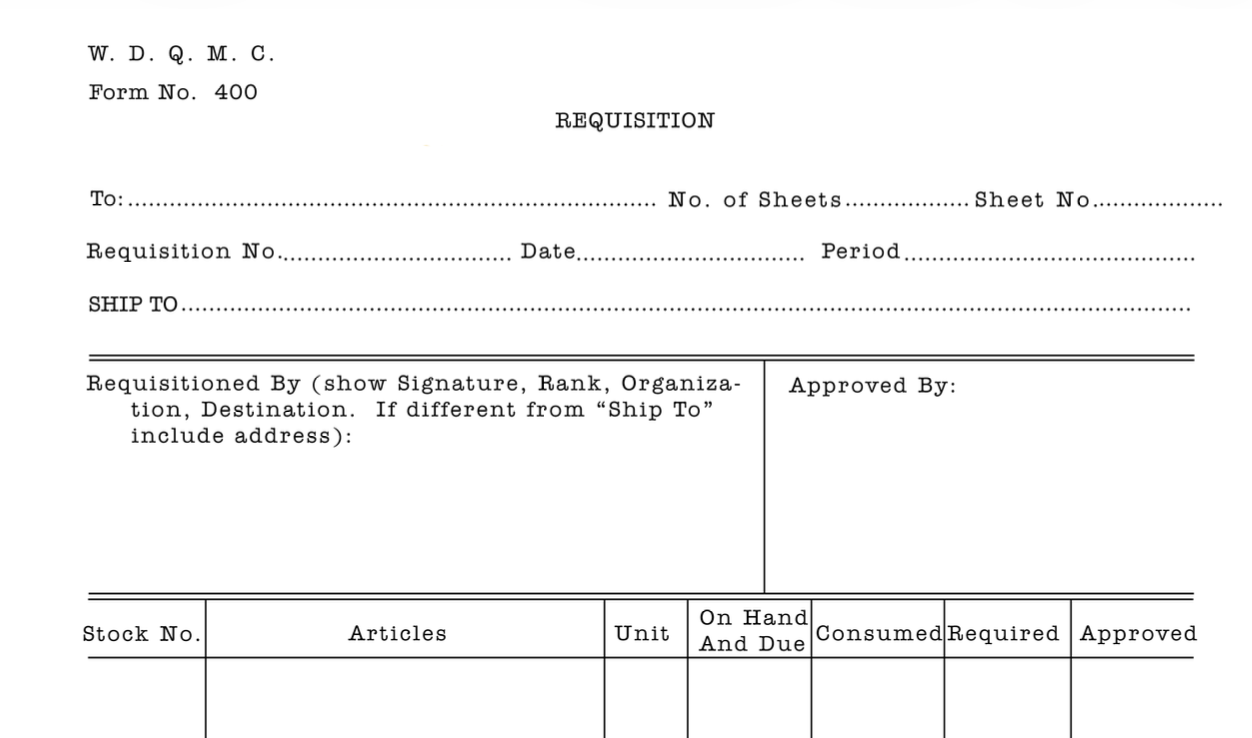
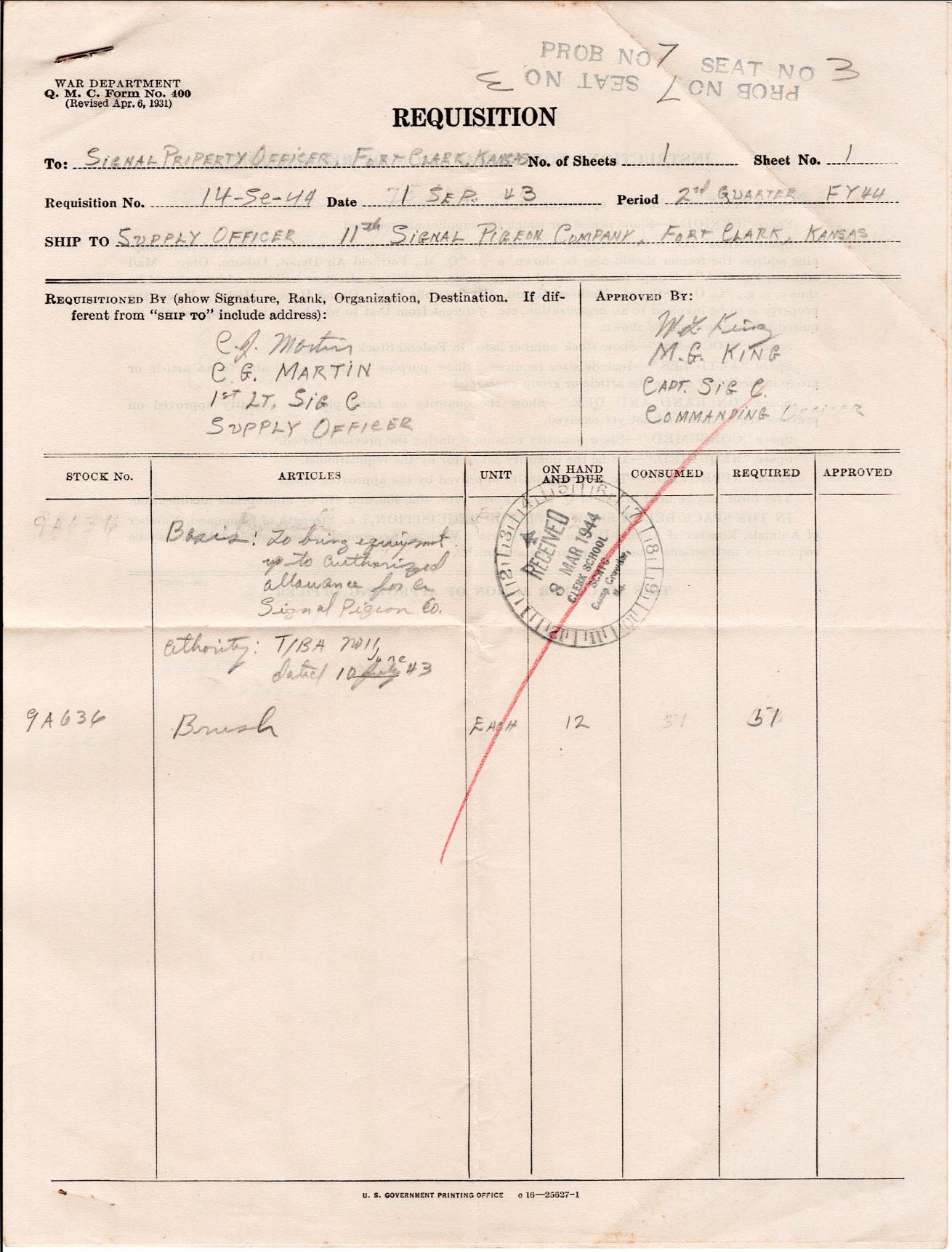
QMC Form No 400 Requisition Form Revised April 6th, 1931 | 10.5 in long by 8 in wide. Used to requisition supplies. This form looks to be a practice form that a person at a clerk school used to practice making requisitions for the 11th Signal Pigeon Company. It came out of a Jan 1943 Central Signal Corps Replacement Training Center book I have.
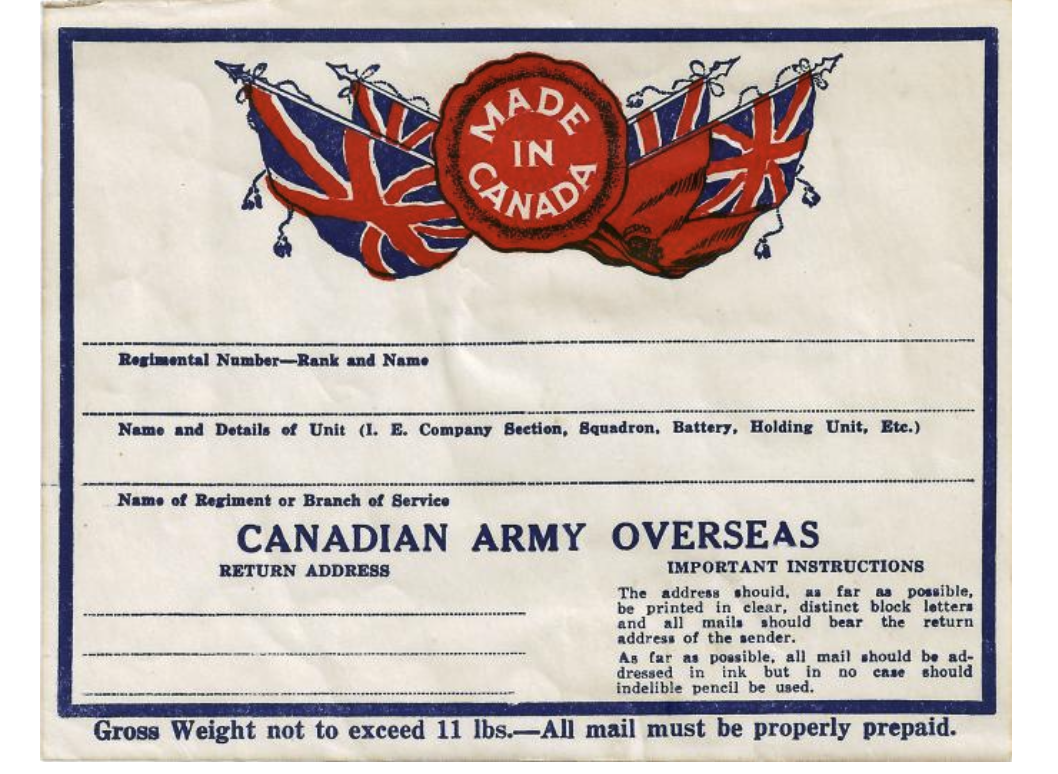
Canada – Mailing from Canada Package – Label Size 13.8cm x 10.8cm or 5.4 x 4.25 inches
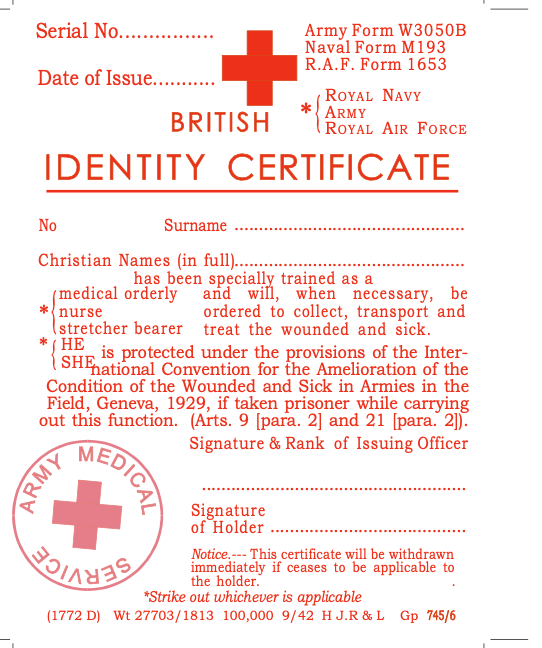
US Marine Correspondence Stationery Letterheads – 3 different kinds, including a Camp Lejeune one.

Fort Oglethorpe Stationery – Print on 8.5 x 11in paper.

US Army Letterhead – Print on 8.5 x 11in paper.
Army Air Force Officers Club Davis-Monthan Field Tucson Arizona Stationery – Print on 8.5 x 11in paper.
American Red Cross Stationery sheets – Print on 8.5 x 11in paper. I’m guessing these would go into a pad, as the letterhead dimensions indicate a half paper?

- WAC Detachment European Command Intelligence School Stationery
- WAAC Stationery
- Transiet Female Company Fort Dix NJ Stationery
- US Navy Stationery
- US Navy Stationery Naval Air Station San Diego CA (forgot to add that one to the zip file)
- German Red Cross Stationery
- 66th Infantry Division Stationery
- US Army Stationery Sheet
- USO Stationery Sheet

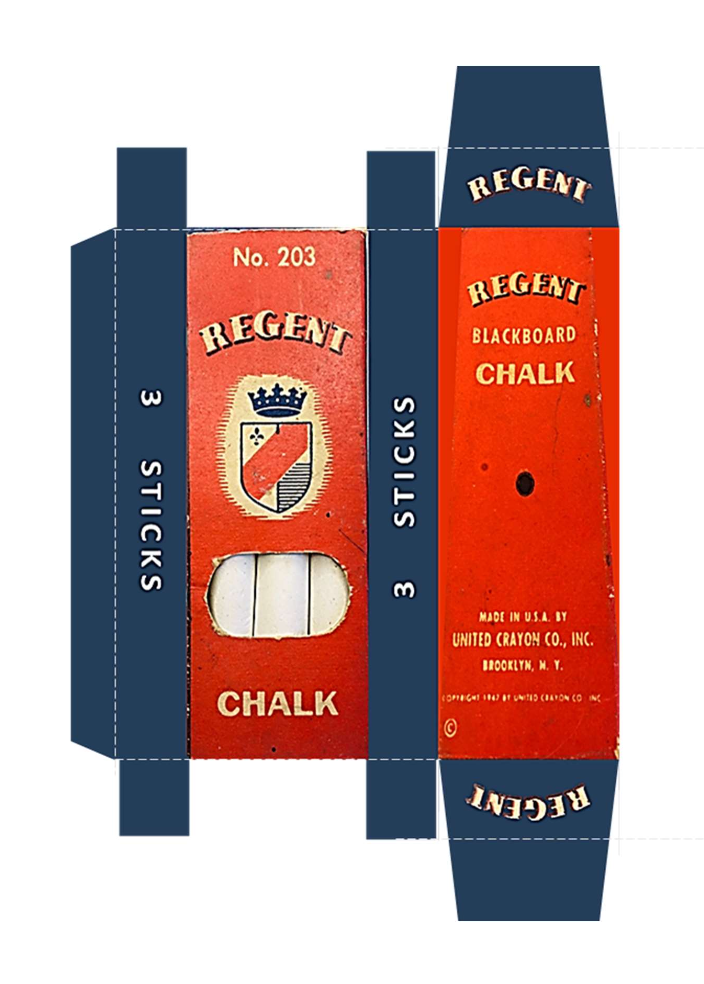
Regent blackboard chalk 3-pack | Chalk would be white
Pencil Writing No 2 Lead by American Lead Pencil Company – For a listing of some of the pencils they produced, this site is good to look at. For vintage pencils for sale, see Brand Name Pencils. I’m guessing a basic, plain No. 2 pencil would work.

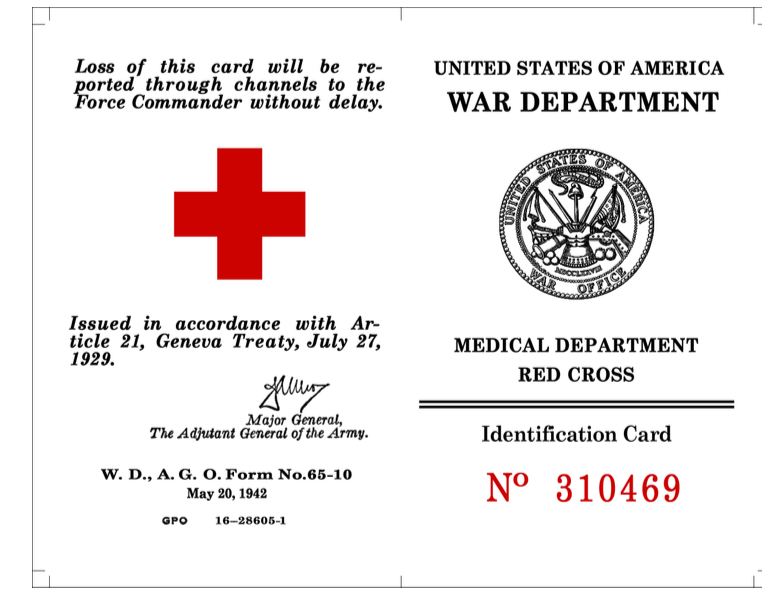
War Department Army ID Card Cover – It looks like paperwork No 16-20107, March 21st, 1942. You should cut it out and glue one side to the other.
You will want to print the front page on maroon cardstock, trimmed to about 1/2″ away from the fonts. The second page can be printed on off-white ivory paper, trimmed to about 1/4″ from the edges. These will be glued together to create your ID card(s). It is suggested to trim them a bit after the glue is dry to make them more uniform in appearance.


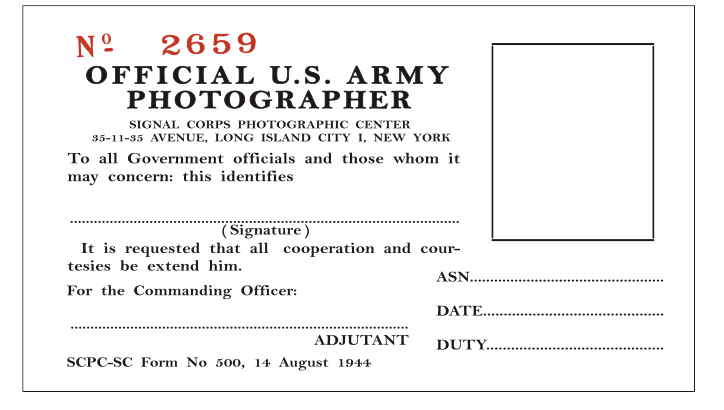
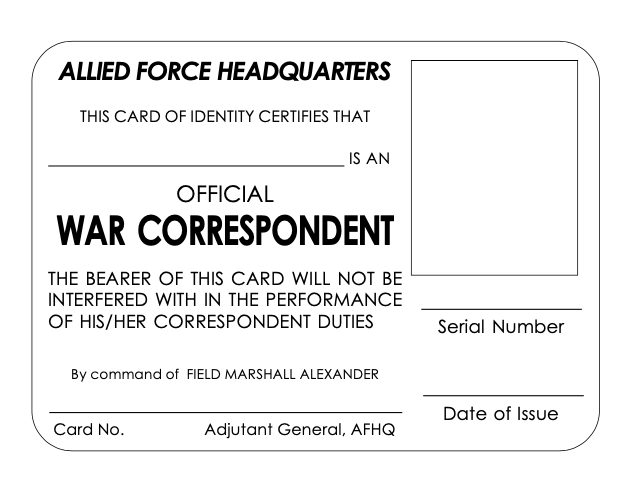
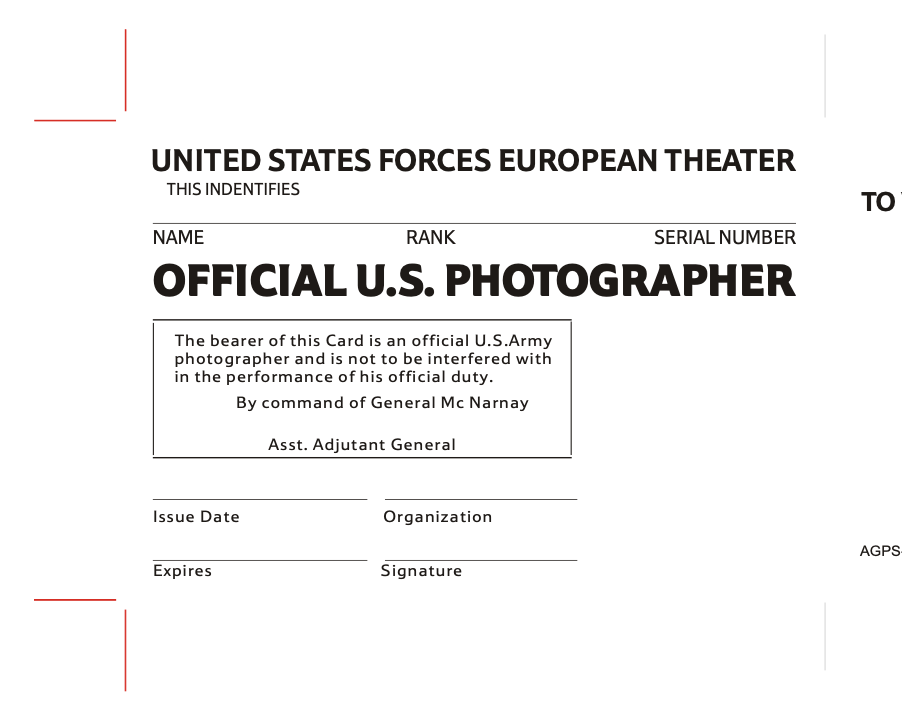
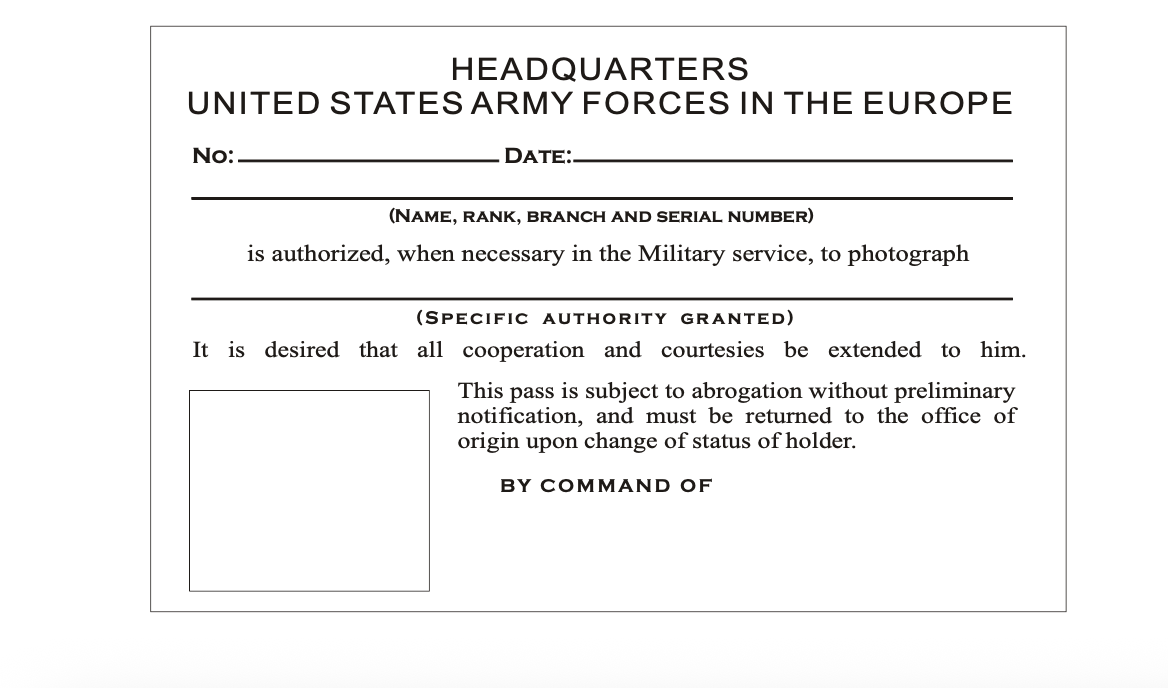
War Correspondent and Photographer Cards – various kinds. Some official cards and the Photo Permit (Europe and Far East) cards seem to be given to a person who could have temporary “ad-hoc” access.
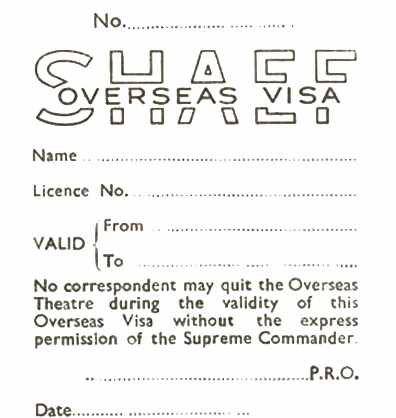
SHAEF Overseas Visa – looks to be given to war correspondents.
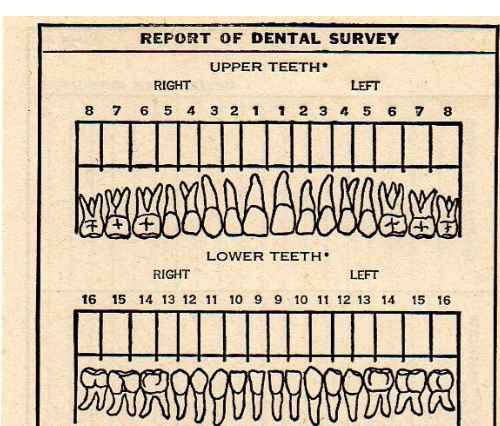
Immunization Register Form 8-117 Sept 1942 Newer Type – This form replaces the older Form 81 and would be filled out by a medical officer and go with your records to the company clerk.
Immunization Register Form 81 Jan 1941 Older Type – This is included for historical reasons and was used only up till Sept 1942, at which the newer form, 8-117 is used. The form is filled out by the medical officer and goes with your records to the company clerk.
Also see an example of a filled-out immunization register.


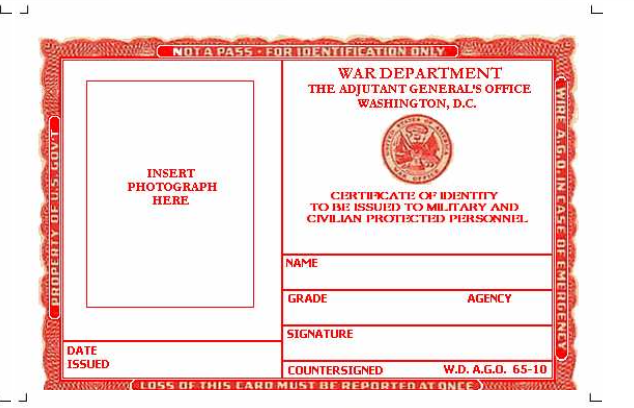
War Department ID – Looks to be From 65. Not sure how this differs from the No 16-20107, March 21st 1942? It might be an updated ID card, possibly from 1944?
You can use Pamphlet 20-9 Preparation of Identification Cards, May 1944 for assistance.

Individual Paybook Record Cover and Individual Pay Record Insides – War Department Form No. 28, March 26th, 1942. This is the cover and back of the pay record. For amounts see this 1943 pay table.
For a historical review of The Servicemans Dependents Allowance Act of 1942, which set up allowances, see Allowances to Dependents of Servicemen in the United States by Denzel C. Cline, the Annals of the American Academy, Volume 227, Issue 1, May 1943.
It’s a little booklet, and the pages are numbered, and you can print it off and staple it using two staples. One near the top and one near the bottom. Make sure the smooth top part of the staple is facing outside so the tines of the staple go inside the pages and grab them altogether.
Print the cover on a light brown cardstock, and the inside pay record sheets on ivory regular paper. There are cut marks to cut down, and each print makes two! Print the inside on both sides, flip on the long side.
Also included in the image gallery are a few examples.


US Army Air Force Paperwork
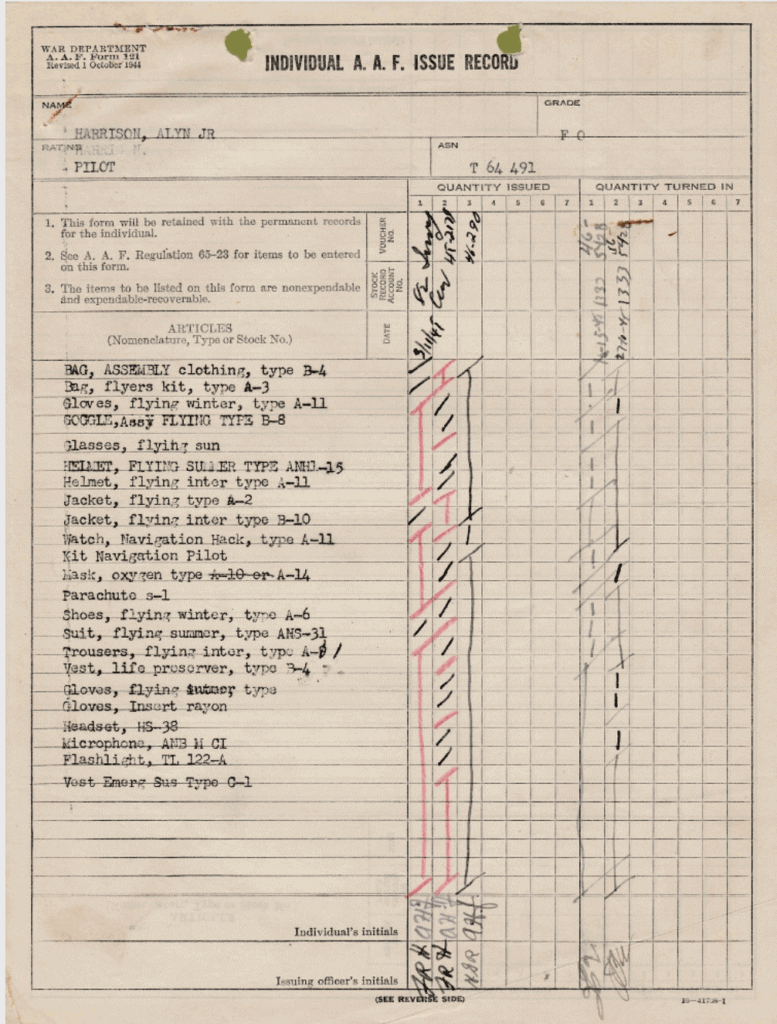
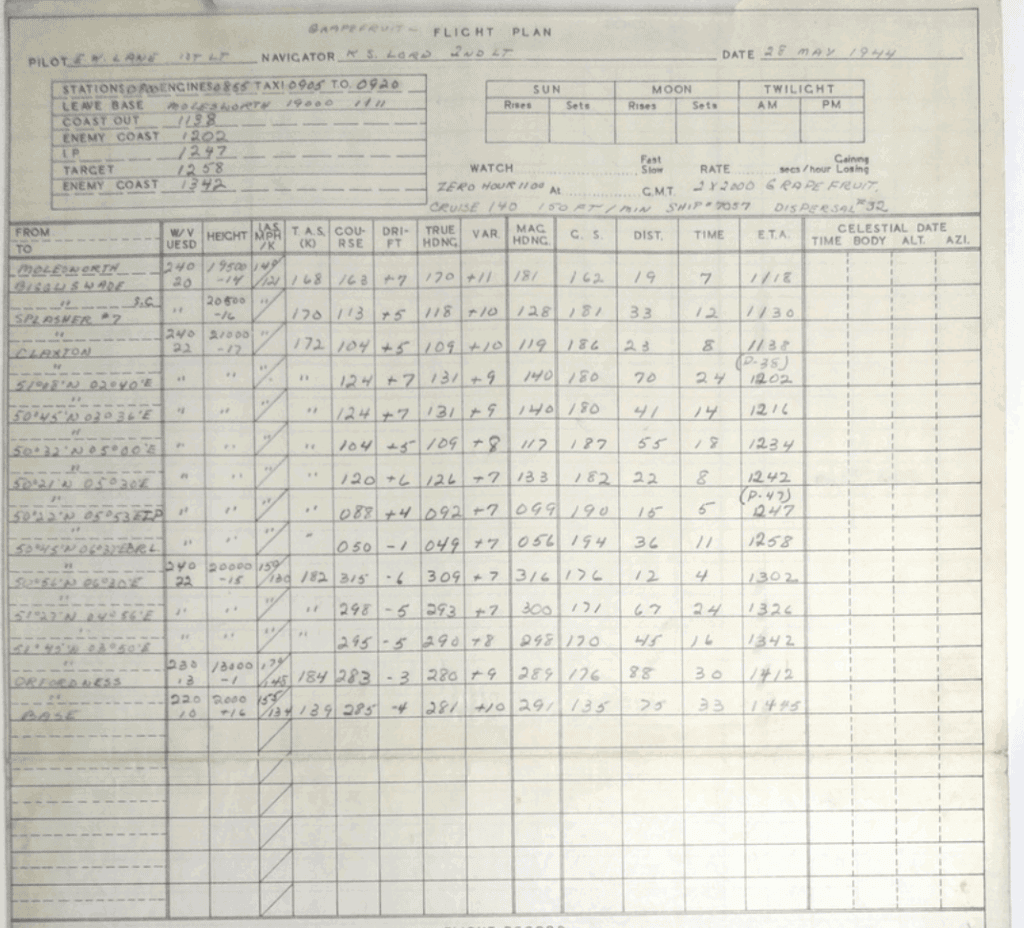
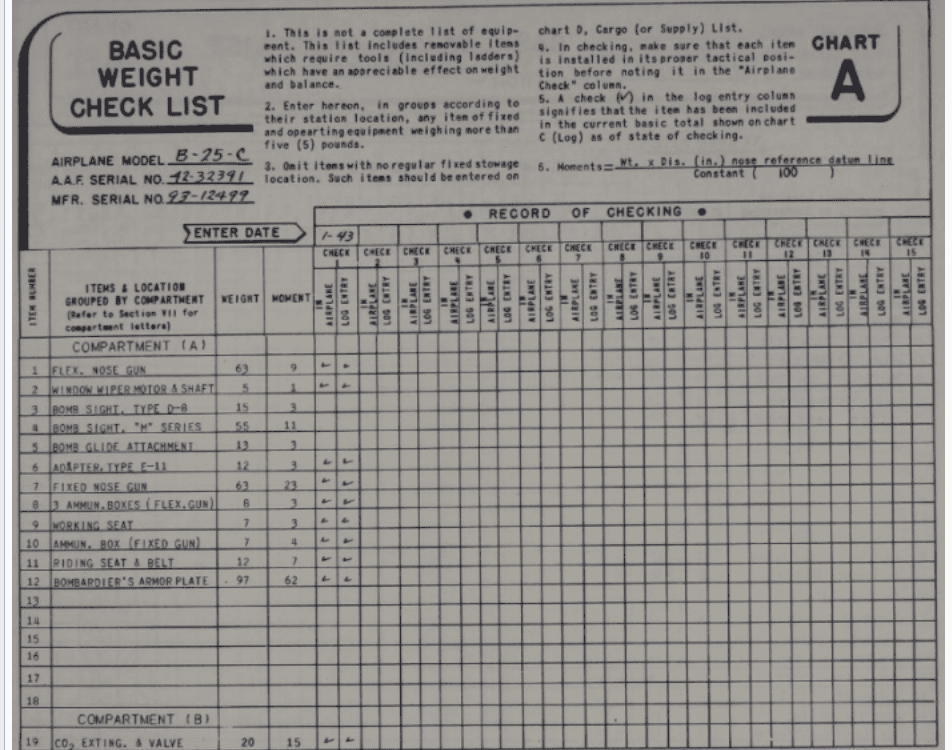
These are cached copies, but if you’re looking for various US Army Air Force paperwork and forms, you can find a set here and here.
Some examples include:
AAF Form No. 121, 104A – the Individual issue form
Flight plan and records
Form A – Weight & Balance Clearance
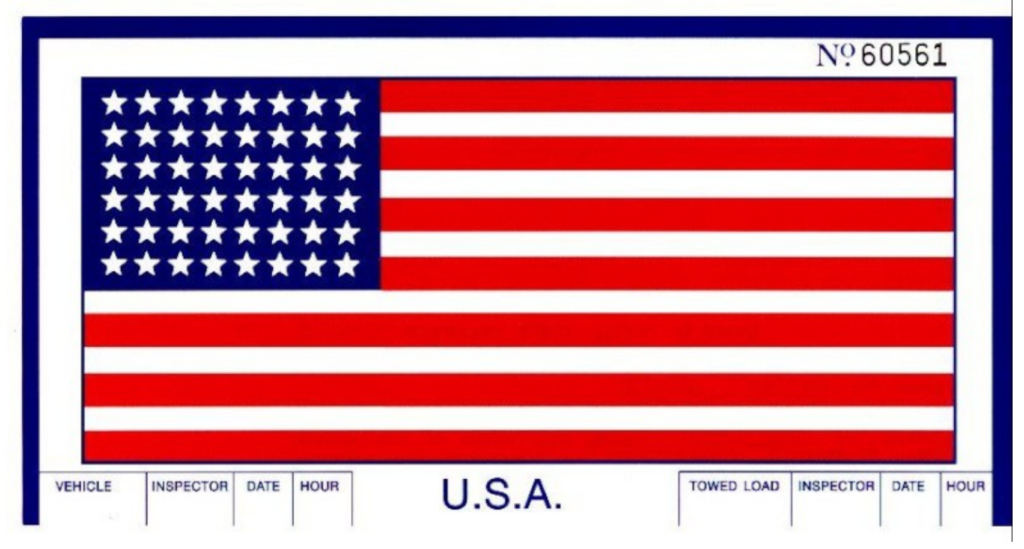
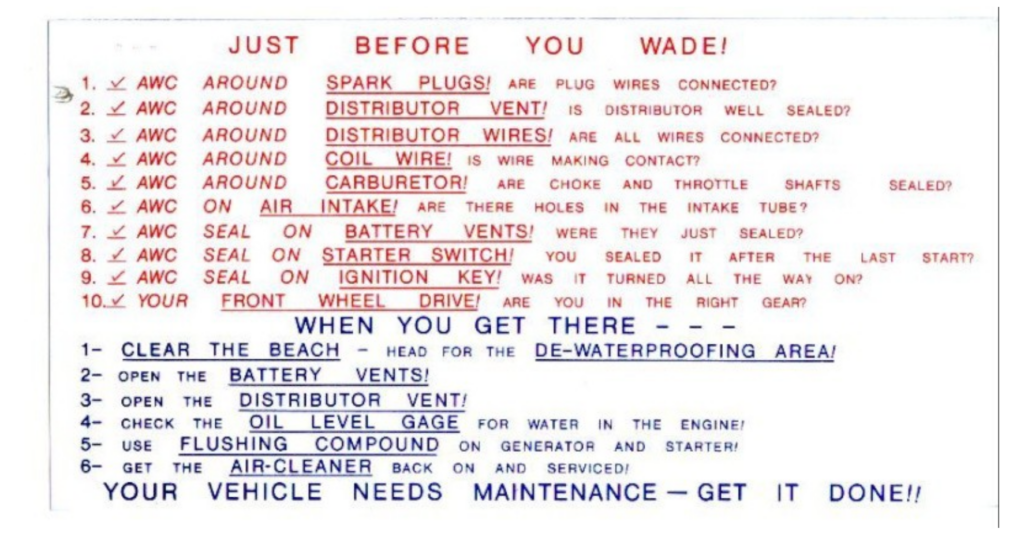
D-Day Invasion vehicle markers 1 and 2– Decals that would go in the windshield of a vehicle showing information about the landing vehicle and some maintenance things to check after landing.
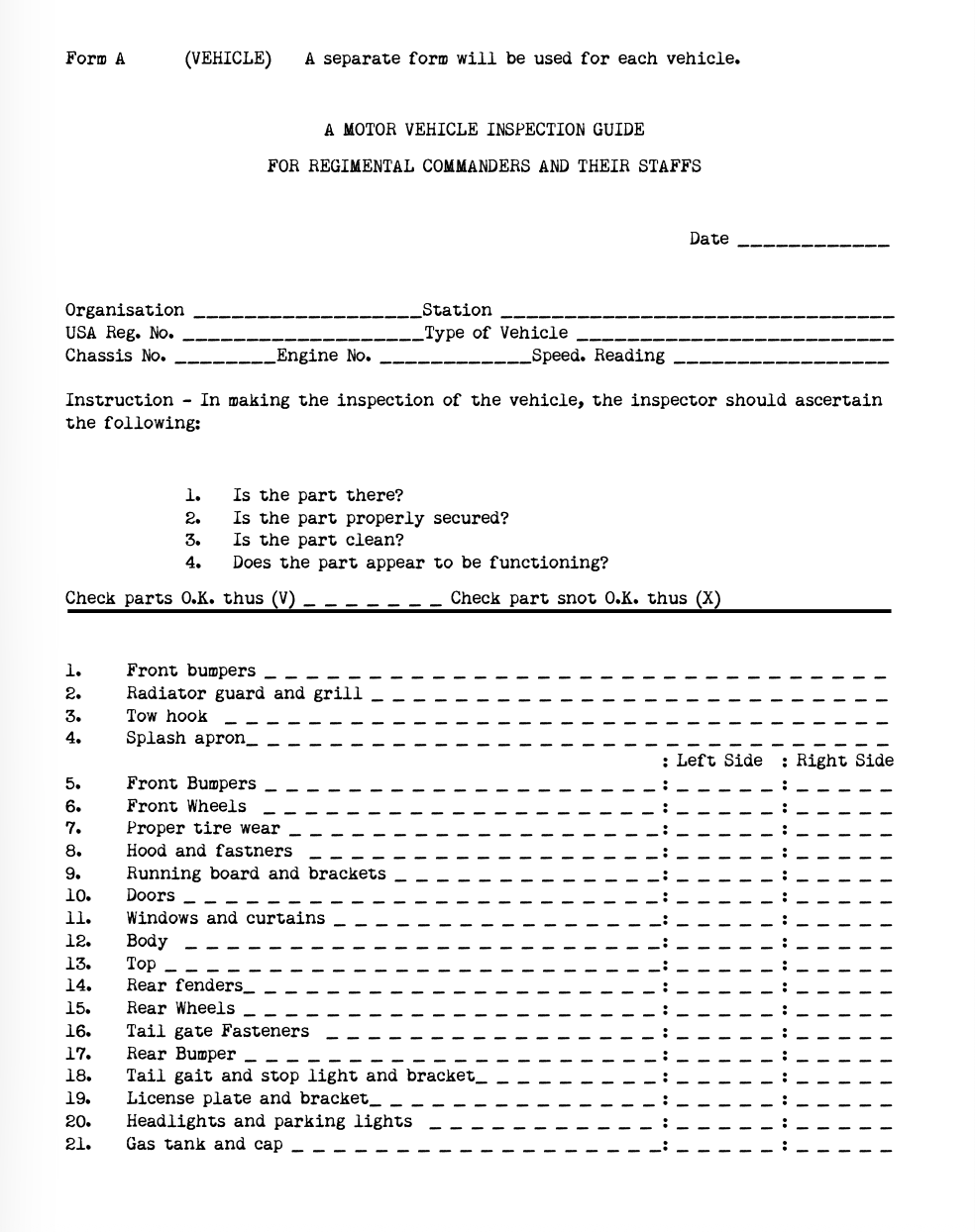
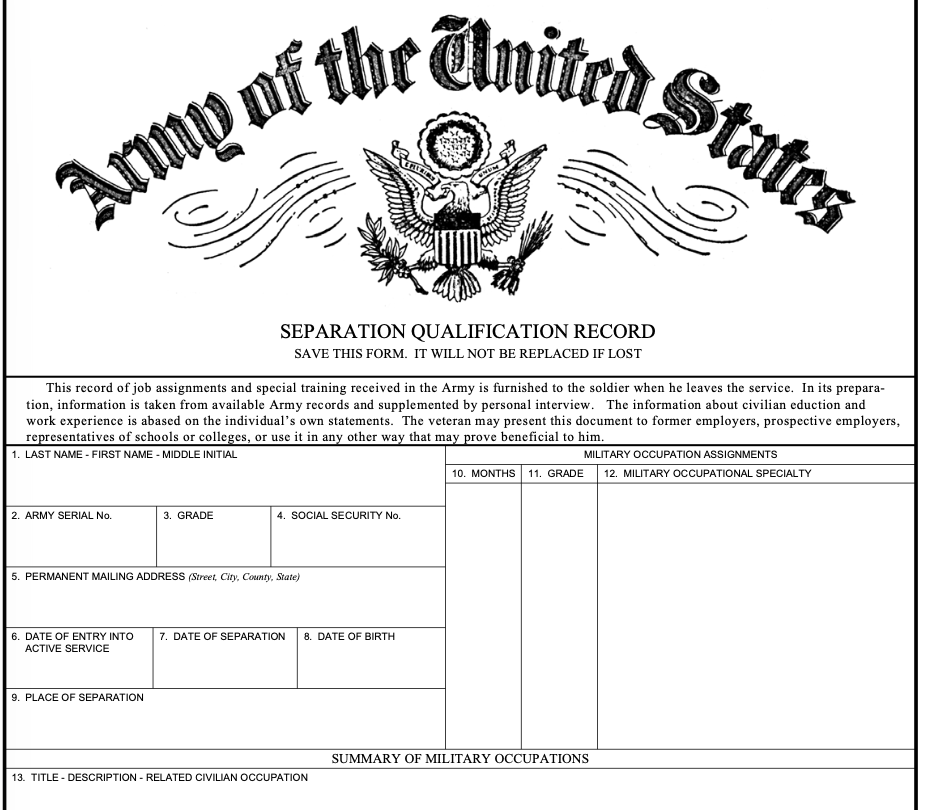
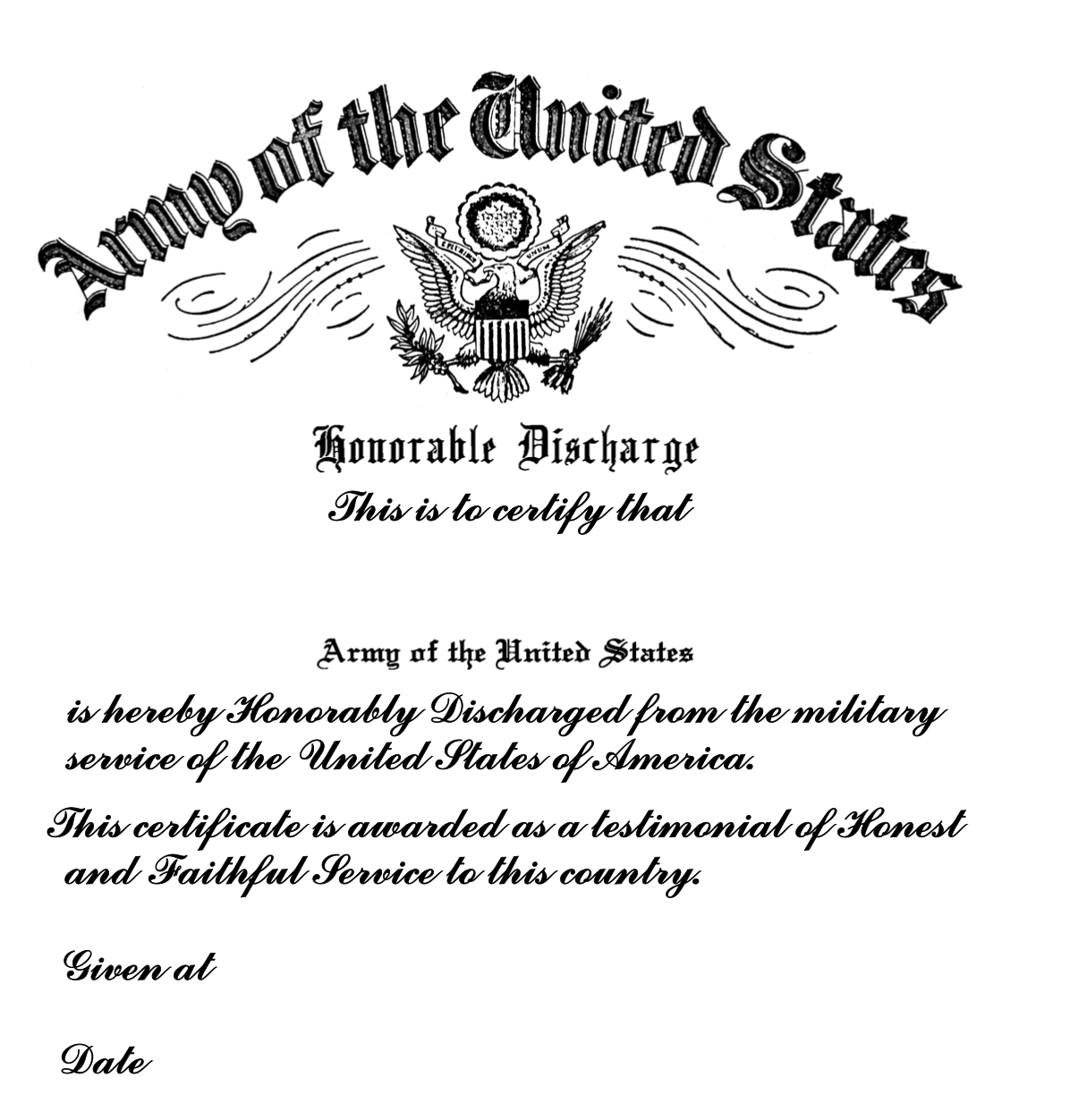
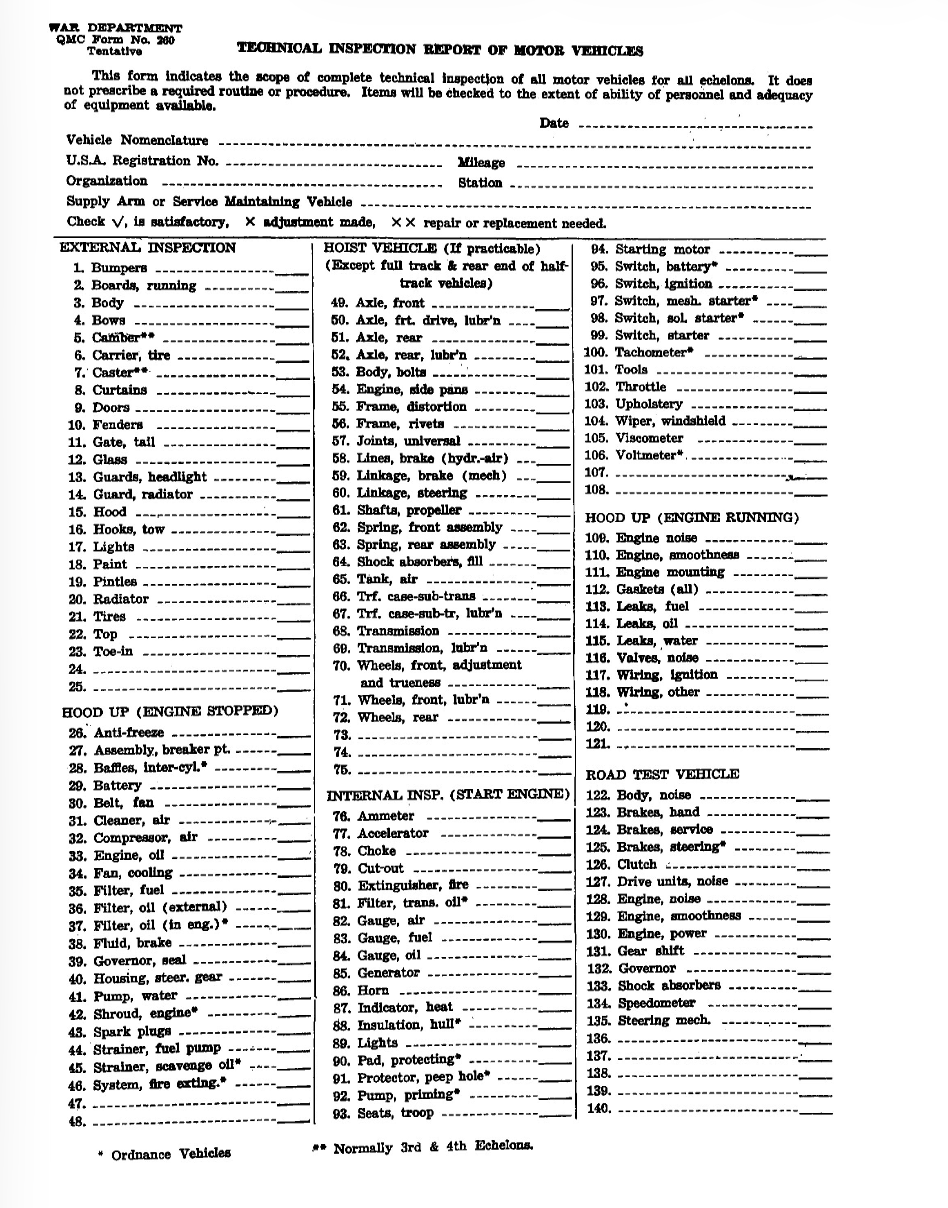
Honorable Discharge Certificate and Paperwork WD AGO Form 53-55 Nov 1944 –
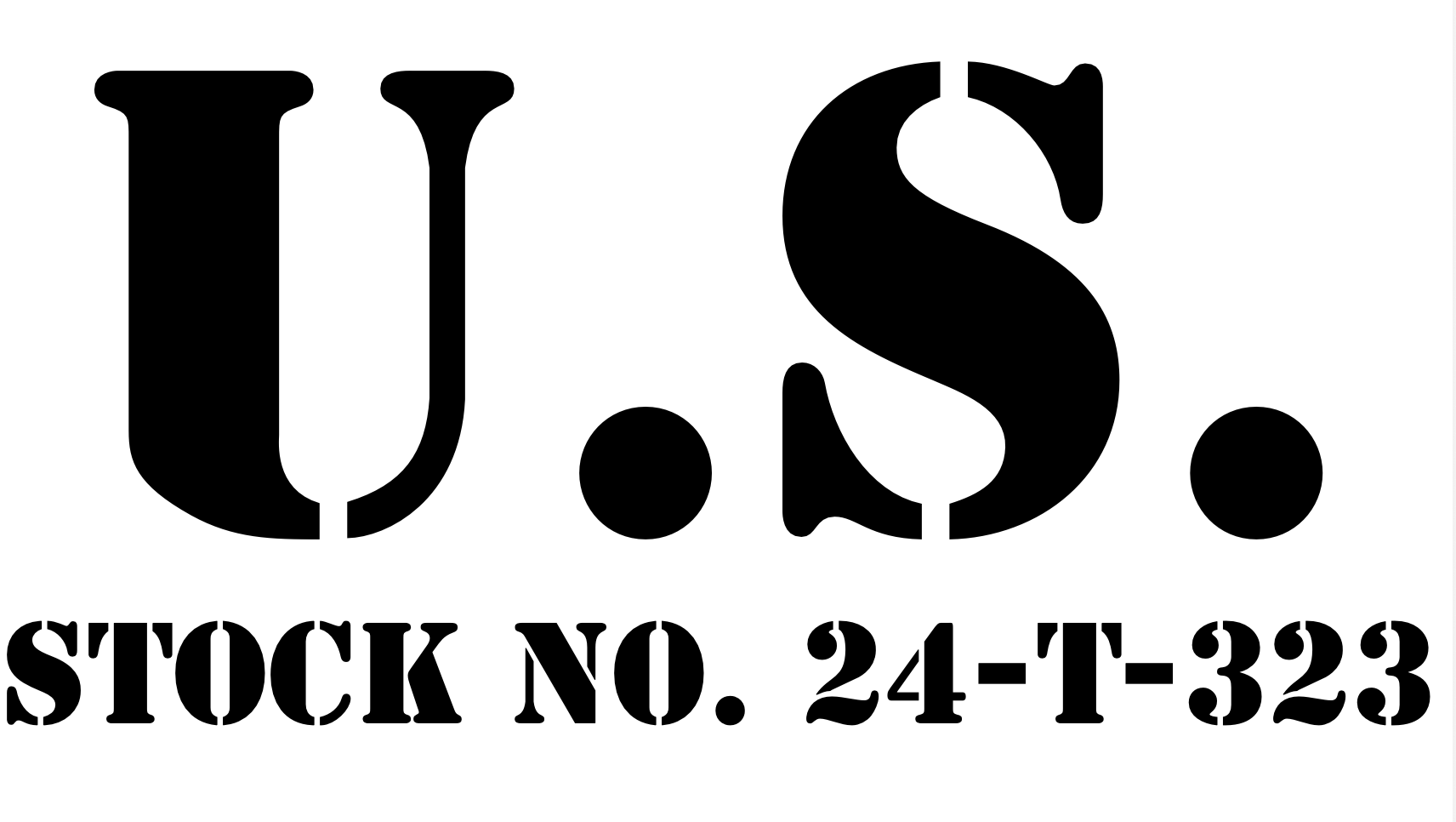
Tent Stencil – I’m unsure what tent this might actually go with, but listed here in case down the road someone figures it out.
Connecticut Defense Council – A certificate stating that the said person has been a member of the CT Civilian Defense Force. This was something Connecticut created in 1917 during WW1 and just carried over into WW2. It helped with various areas of concern, such as food supply, fuel conservation, transportation, military and naval affairs, and publicity. They probably also engaged in Air Ward Warden activities, aircraft and U-boat spotting, and nightly beach patrols. This is not the stupid pro-gun group in CT or any of the idiotic private militias one might come across. Totally different things.
Moresecode Cheat Sheet – Not totally sure if wartime, but good to have around for working communications and signal.
Separation Notice – Form RIUC S-12. I’m not sure if this is a separation notice from the Army, but it could be something civilian contractors or regular workers might have gotten from their jobs back in the 1940s.
It would have been originally done on a carbon stack of paper, cream on top, yellow and pink below. The cream would be submitted to the state, yellow for the employer, and the employee would have the pink. DO NOT PUT YOUR SSN ON THIS SLIP! The reason for separation would be the military branch you are joining.
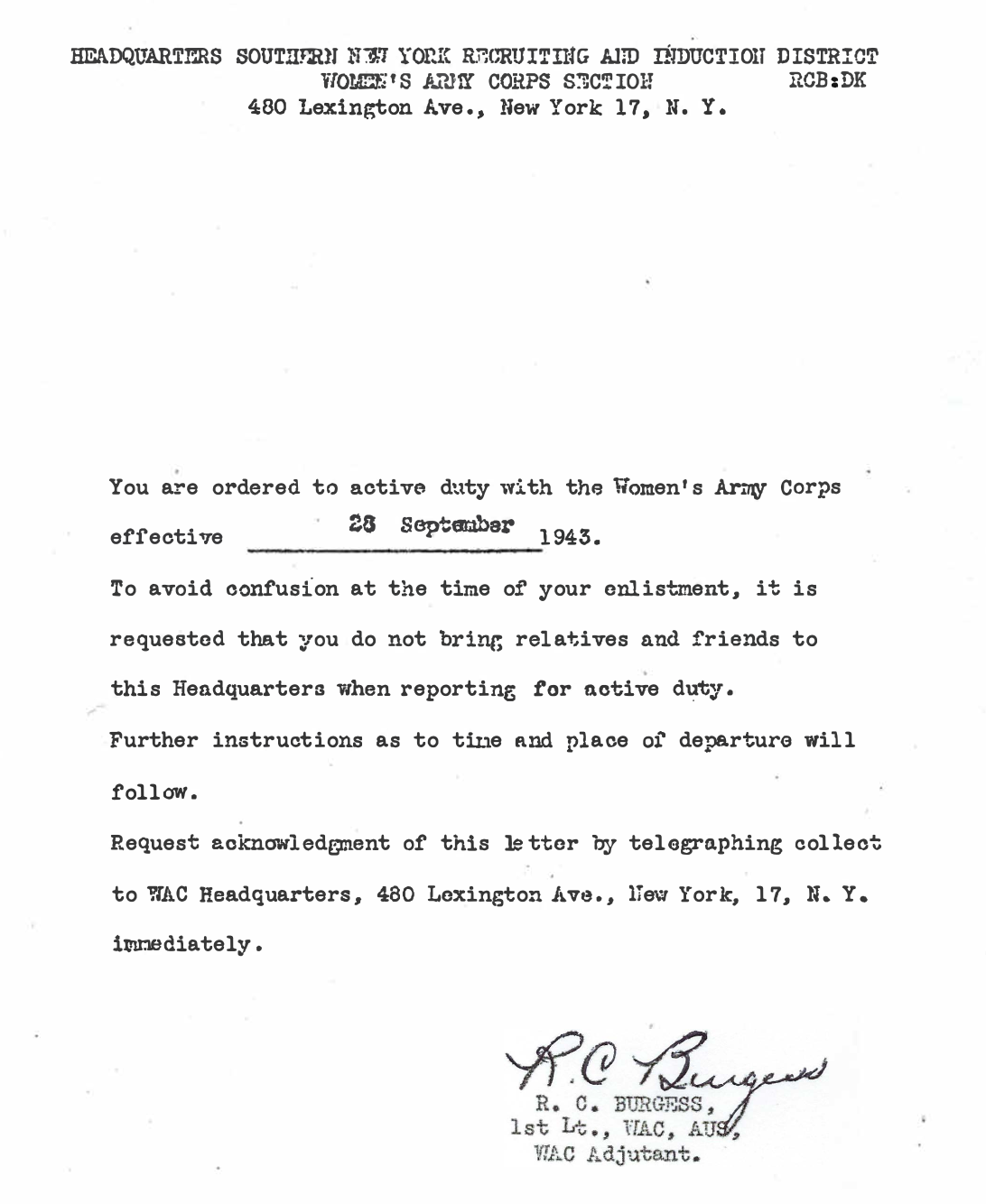
WAC Enlistment Letter – Headquarters Southern New York Recruiting And Induction District Women’s Army Corps Section 480 Lexington Ave, New York 17, NY. This is an enlisted letter that WACs may have gotten. The date is 28th Sept 1943, so you may need to use Photoshop to adjust the date. Hilariously, that location is now a Mexican Restaurant.
How To Use Smith-Corona Portable Typewriters: Floating Shift Models – Likely from 1947 but describes how to use this type of model from that brand. The “float” machines operate quietly thanks to the Smith Floating Shift used in the machine (note the cursive word “Floating” above the shift key). When the shift key was invented, it originally shifted the cylinder, or platen, to be struck in a new position by the capital letters on a typebar. The floating shift moved the typebars up and down instead, allowing for a smoother typing action. You can also download the 1938 version here.
Print first page on a light brown paper, single sided. Print pages 2-7 double sided, flip on long side. Best paper used is a light ivory.
United States Army Color Card of Standard Shades for Slide Fastener Tapes: Dated 1945 and is a supplement to US Army Specification No.100-31. Issued by the Textile Color Card Association (TCAA) of the United States and describes US Army shades for fasteners. The TCCA was created in 1915 as a color consulting, standardizing, and forecasting industry group as the US was cut off from such ideas due to WW1. The TCCA formed close relationships with the US Military and also helped set the standard colors for the US Flag. I dropped the color slide below as it’s kinda neat to see all the colors available –

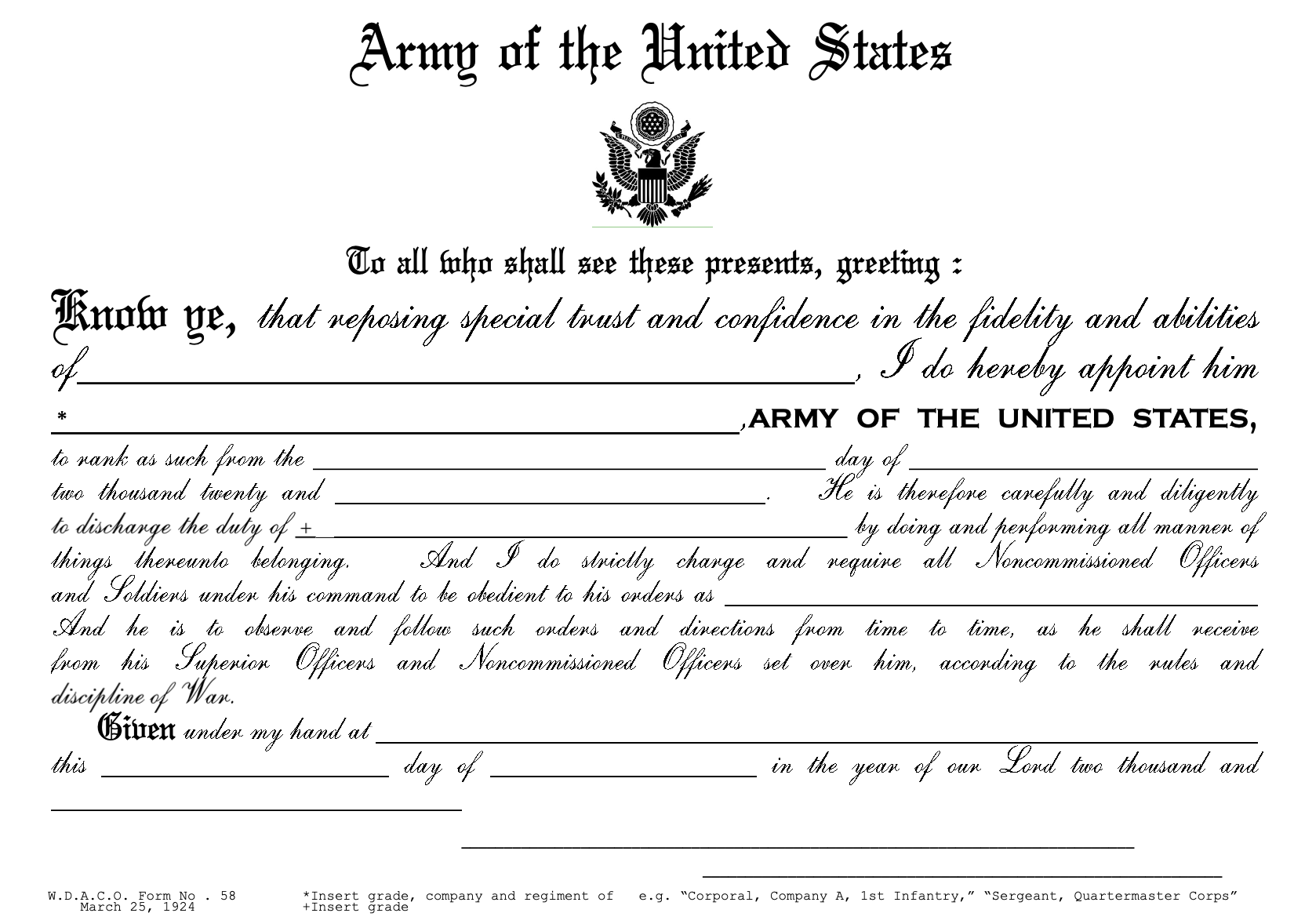
Temporarily Appointed Officer Certificate – Print on ivory legal paper, meaning 8.5″ x 14″.

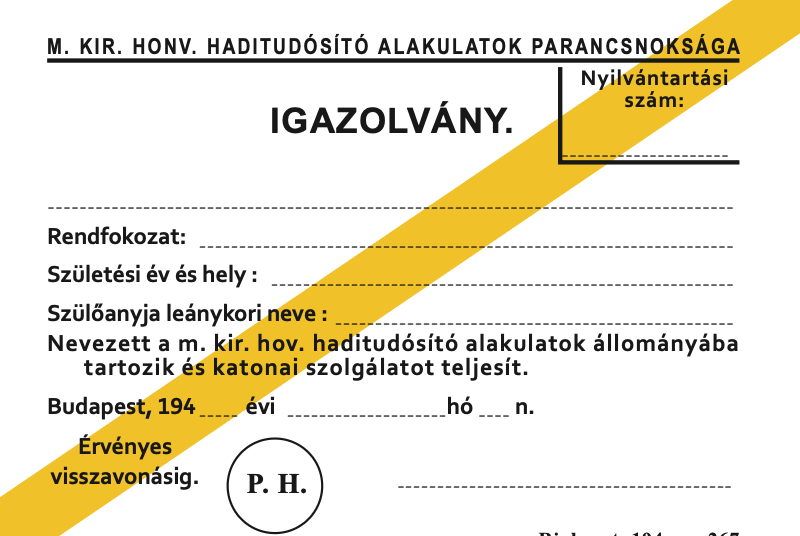
Hungarian
German
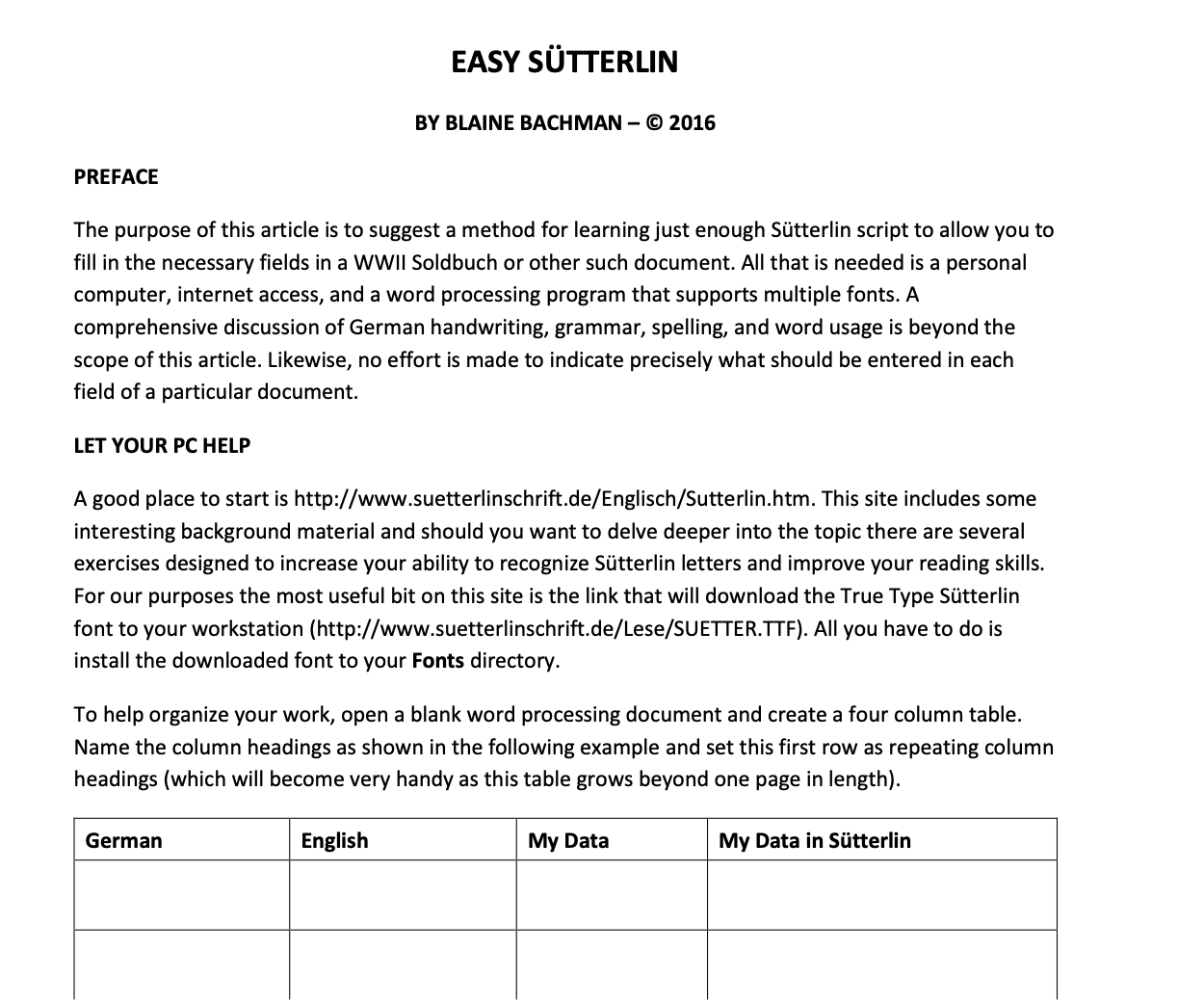
Easy Sutterlin Script Guide – How to write in Sutterlin script quickly.