Lesson Plans World History II SOL 4a: Age of Exploration; Age of Discovery
Standard WH II 4
The student will demonstrate knowledge of the impact of the European Age of Discovery and expansion into the Americas, Africa, and Asia by
Objectives 4a) explaining the roles and economic motivations of explorers and conquistadors.Standard WH II: Lesson Plans
Introduction: A Bell-ringer activity
Notes: Students copy-down and discuss teacher generated notes
Activities: Students complete various in class activities to support learning including video analysis, maps, charts, diagrams, graphic organizers, worksheets, text-book questions, group discussion, KWL Charts etc.
Assessment: Informal, Formal, Exit-Questions, Teacher Questioning. Quizzes, Tests, Projects Essential Knowledge: Factors contributing to the European discovery of lands in the Western Hemisphere
• Demand for gold, spices, and natural resources in Europe
• Support for the diffusion of Christianity
• Political and economic competition between European empires
• Innovations of European and Islamic origins in navigational arts
• Pioneering role of Prince Henry the Navigator
Establishment of overseas empires and decimation of indigenous populations
• Portugal: Vasco da Gama
• Spain: Christopher Columbus, Hernando Cortez, Francisco Pizarro, Ferdinand Magellan
• England: Francis Drake
• France: Jacques Cartier
Lesson Plans World History II SOL 3a, 3b, 3c: Reformation, Counter-Reformation, and Printing Press
Standard WH II: The student will demonstrate knowledge of the Reformation in terms of its impact on Western civilization by
Objectives:
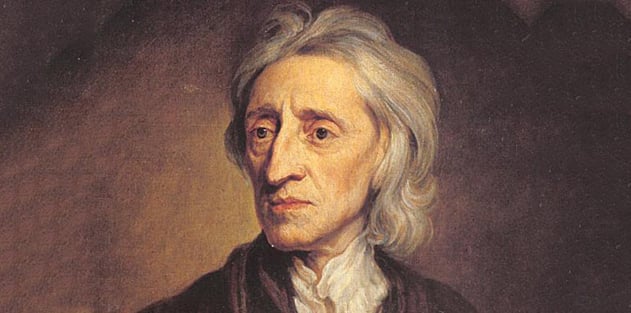
SOL 3a: explaining the effects of the theological, political, and economic differences that emerged, including the views and actions of Martin Luther, John Calvin, Henry VIII, and Elizabeth
SOL 3b: describing the impact of religious conflicts, the Inquisition, and Catholic Reformation on society and government actions.
SOL 3c: describing changing cultural values, traditions, and philosophies, and assessing the role of the printing press. Lesson Plans
Introduction: A Bell-ringer activity
Notes: Students copy-down and discuss teacher generated notes
Activities: Students complete various in class activities to support learning including video analysis, maps, charts, diagrams, graphic organizers, worksheets, text-book questions, group discussion, KWL Charts etc.
Assessment: Informal, Formal, Exit-Questions, Teacher Questioning. Quizzes, Tests, Projects Essential Knowledge:
SOL 3a: Conflicts that challenged the authority of the Church in Rome
• Merchant wealth challenged the Church’s view of
usury.
• German and English nobility disliked Italian
domination of the Church.
• The Church’s great political power and wealth
caused conflict.
• Church corruption and the sale of indulgences
were widespread and caused conflict.
Martin Luther (the Lutheran tradition)
• Views: Salvation by faith alone, Bible as the
ultimate authority, all humans equal before God
• Actions: 95 theses, birth of the Protestant Church
John Calvin (the Calvinist tradition)
• Views: Predestination, faith revealed by living a
righteous life, work ethic
• Actions: Expansion of the Protestant Movement
King Henry VIII
• Views: Dismissed the authority of the Pope in
Rome
• Actions: Divorced; broke with Rome; headed the
national church in England; appropriated lands and
wealth of the Roman Catholic Church in England
Queen Elizabeth I
• Anglican Church
• Tolerance for dissenters
• Expansion and colonialism
• Victory over the Spanish Armada (1588)
SOL 3b: Reformation in Germany
• Princes in Northern Germany
converted to Protestantism, ending
the authority of the Pope in their
states.
• The Hapsburg family and the
authority of the Holy Roman Empire
continued to support the Roman
Catholic Church.
• Conflict between Protestants and
Catholics resulted in devastating
wars (e.g., Thirty Years’ War).
Reformation in France
• Catholic monarchy granted
Protestant Huguenots freedom of
worship by the Edict of Nantes (later
revoked).
• Cardinal Richelieu changed the
focus of the Thirty Years’ War from
a religious to a political conflict.
Catholic Reformation
• Dissenters prior to Martin Luther:
Jan Huss, John Wycliffe
• Counter-Reformation:
– The Council of Trent reaffirmed
most Church doctrine and
practices.
– The Society of Jesus (The Jesuits)
was founded to spread Catholic
doctrine around the world.
– The Inquisition was used to
reinforce Catholic doctrine.
SOL 3c: Changing cultural values, traditions, and philosophies
• Growth of secularism
• Growth of individualism
• Eventual growth of religious
tolerance
Role of the printing press
• Growth of literacy was stimulated by
the Gutenberg printing press.
• The Bible was printed in English,
French, and German.
• These factors had an important
impact on spreading the ideas of the
Reformation and the Renaissance.
Lesson Plans World History II SOL 2d Major Trade Routes
Standard WH II: SOL 2d The student will demonstrate an understanding of the political, cultural, geographic, and economic conditions in the world about 1500 A.D. (C.E.) Objectives:
Analyzing major trade patterns. Lesson Plans
Introduction: A Bell-ringer activity
Notes: Students copy-down and discuss teacher generated notes
Activities: Students complete various in class activities to support learning including video analysis, maps, charts, diagrams, graphic organizers, worksheets, text-book questions, group discussion, KWL Charts etc.
Assessment: Informal, Formal, Exit-Questions, Teacher Questioning. Quizzes, Tests, Projects Essential Knowledge: Traditional trade patterns linking
Europe with Asia and Africa
• Silk Routes across Asia to the
Mediterranean basin
• Maritime routes across the Indian
Ocean
• Trans-Saharan routes across North
Africa
• Northern European links with the
Black Sea
• Western European sea and river
trade
• South China Sea and lands of
Southeast Asia
Importance of trade patterns
• Exchange of products and ideas
Activities That Support Lesson Plans
Crash Course History: Silk Road. Students name 5 facts learned about the Silk Road. Teacher can pause and discuss points made in the video.
Note: The above activities are best used with the Virginia Prentice Hall World History: The Modern Era textbook.
Lesson Plans World History II SOL 2a Major Empires
Standard WH II:
2a The student will demonstrate an understanding of the political, cultural, geographic, and economic conditions in the world about 1500 A.D. (C.E.) Objectives
a) locating major states and empires. Lesson Plans
Introduction: A Bell-ringer activity
Notes: Students copy-down and discuss teacher generated notes
Activities: Students complete various in class activities to support learning including video analysis, maps, charts, diagrams, graphic organizers, worksheets, text-book questions, group discussion, KWL Charts etc.
Assessment: Informal, Formal, Exit-Questions, Teacher Questioning. Quizzes, Tests, Projects Essential Knowledge: Major states and empires in the
Eastern Hemisphere
• England
• France
• Spain
• Russia
• Ottoman Empire
• Persia
• China
• Mughal India
• Songhai Empire
Major states and empires in the
Western Hemisphere
• Incan Empire
• Aztec Empire
Standard WH II:
2b The student will demonstrate an understanding of the political, cultural, geographic, and economic conditions in the world about 1500 A.D. (C.E.) Objectives
Describing artistic, literary, and intellectual ideas of the Renaissance Lesson Plans
Introduction: A Bell-ringer activity
Notes: Students copy-down and discuss teacher generated notes
Activities: Students complete various in class activities to support learning including video analysis, maps, charts, diagrams, graphic organizers, worksheets, text-book questions, group discussion, KWL Charts etc.
Assessment: Informal, Formal, Exit-Questions, Teacher Questioning. Quizzes, Tests, Projects Essential Knowledge:
Renaissance
• “Rebirth” of classical knowledge;
“birth” of the modern world
• Spread of the Renaissance from the
Italian city-states to northern Europe
Contributions of the Renaissance
• Accomplishments in the visual arts:
Michelangelo, Leonardo da Vinci
• Accomplishments in literature
(sonnets, plays, essays): Shakespeare
• Accomplishments in intellectual ideas (humanism): Erasmus
Velvet Tone was introduced in 1925 by Columbia as a budget label. It was discontinued in 1932. The label recorded 1,500 records and focused mainly on pseudonymous performances by Columbia stars and miscellaneous free-lance musicians. The exception was that in 1930 a 7000 series was introduced devoted to blues and race items. The label relied on acoustic recordings rather than the newer technology of electrical recordings.
Record Label: 1925-1932 Velvet Tone with a four-point star and in bright blue and gold coloring.
Columbia introduced Harmony as a budget label in Sept. 1925. It was discontinued in June 1932. Between 1925 and 1932, Harmony focused mainly on pseudonymous performances by Columbia stars. Harmony was priced at 50 cents mainly because the Harmony label did not record in the electrical recording technology. In the summer of 1949, CBS will revive the Harmony label in a puce color but will discontinue it by early 1950 after only about 100 reissues of Columbia material. By mid-1957 CBS will introduce a new redesigned Harmony label in a 45 format and LP format.
Clarion Records was a budget label for Columbia records. Clarion was introduced in Aug. 1930 and was discontinued in June 1932 after only 477 releases. It appears the label started from 5000 and ended with 5477. The label focused mainly on children’s and novelty records. It sold for 35 cents.
Some Clarions are experimental “Longer Playing Disc” with thinner grooves to accompany a longer track (4:30-5:00 minutes). A special note about Clarion was the fact that two other different labels also called Clarion did exist. Below is the label for Columbia.