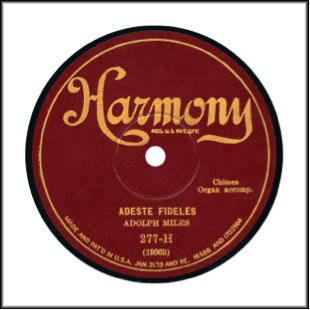
Columbia introduced Harmony as a budget label in Sept. 1925. It was discontinued in June 1932. Between 1925 and 1932, Harmony focused mainly on pseudonymous performances by Columbia stars. Harmony was priced at 50 cents mainly because the Harmony label did not record in the electrical recording technology. In the summer of 1949, CBS will revive the Harmony label in a puce color but will discontinue it by early 1950 after only about 100 reissues of Columbia material. By mid-1957 CBS will introduce a new redesigned Harmony label in a 45 format and LP format.
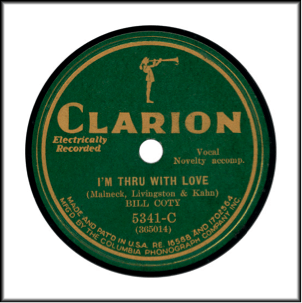
Clarion Records was a budget label for Columbia records. Clarion was introduced in Aug. 1930 and was discontinued in June 1932 after only 477 releases. It appears the label started from 5000 and ended with 5477. The label focused mainly on children’s and novelty records. It sold for 35 cents.
Some Clarions are experimental “Longer Playing Disc” with thinner grooves to accompany a longer track (4:30-5:00 minutes). A special note about Clarion was the fact that two other different labels also called Clarion did exist. Below is the label for Columbia.
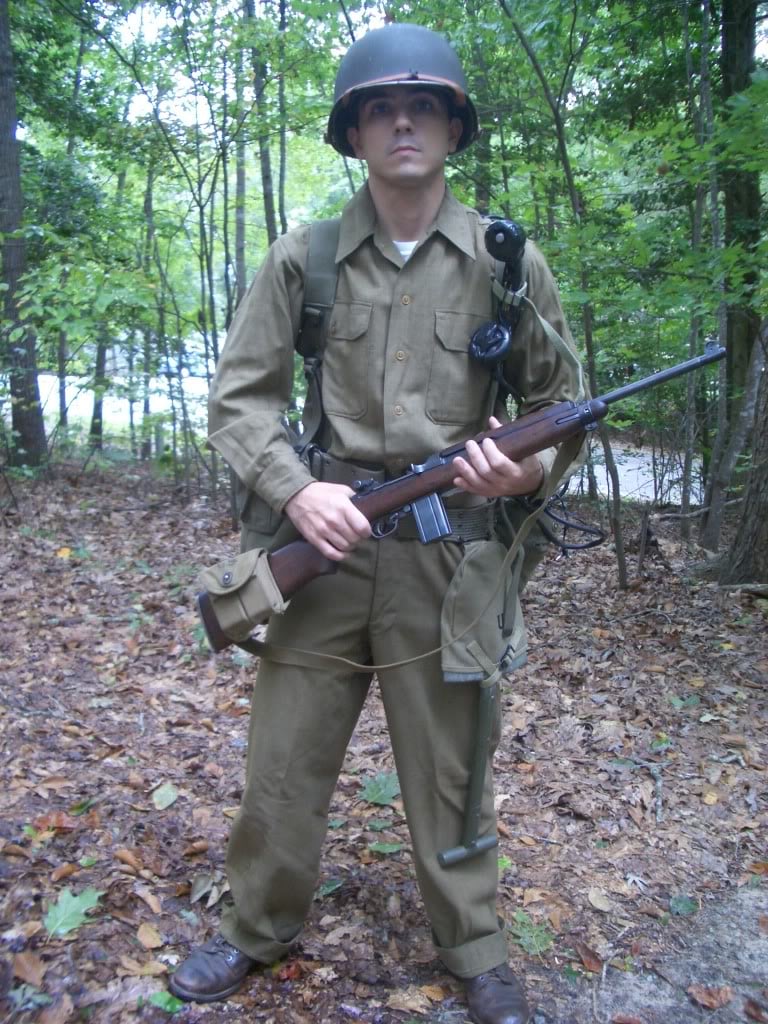
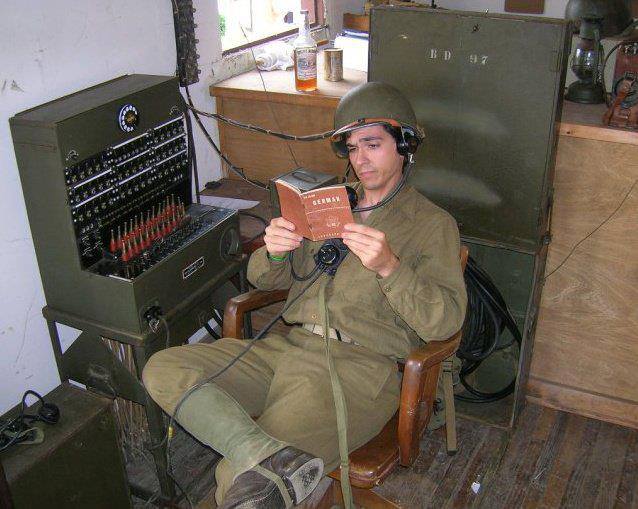
A collaborative effort between historical reenactors on how to use the SCR-300 Radio for World War Two Reenactments.
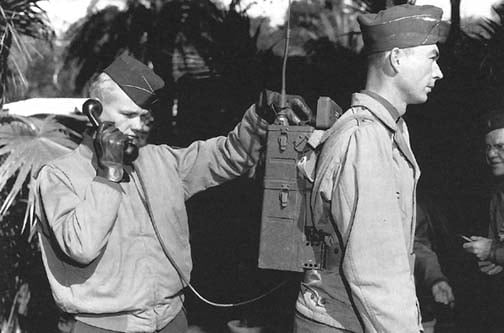
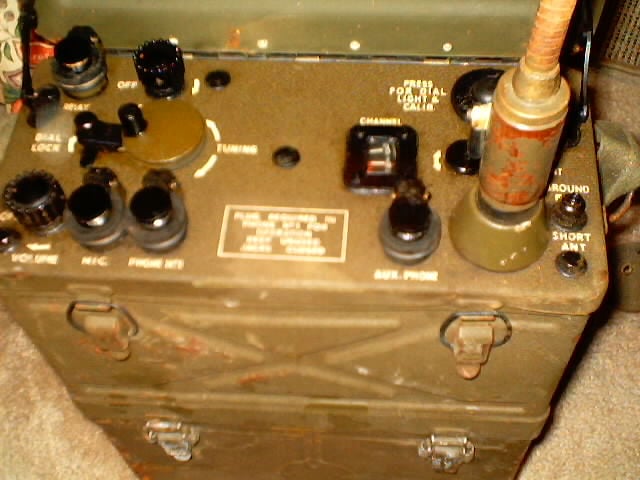
The SCR-300 Radio is a backpack (or man-packed) FM radio designed during WW2 as an inter-company or regiment radio. I purchased several (though they were likely French copies) in the late 1990s during the heyday of Cold War surplus sales.
SCR-300 Radio
Several years ago, I worked with a buddy of mine to make available a resource that World War Two SCR-300 enthusiasts could use to analyze and learn about the radio. The article is posted on his website:
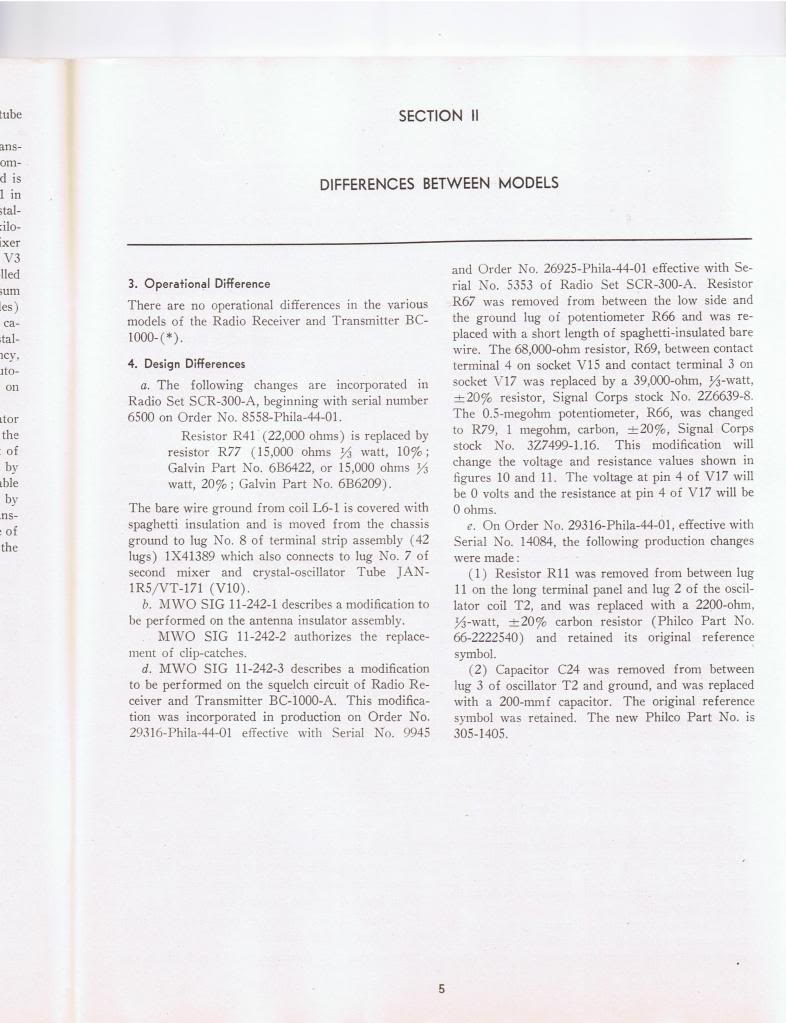
The SCR-300 came in two types, an A and a B. The different models are identified on the data plate. There’s no operational difference between the two types. The differences lie in the parts. For example, different resistors are used, and parts are moved around or dropped. Page 5 of TM-11-4024 Radio Receiver and Transmitters BC1000-A and BC1000-B Repair Instructions (Aug 1945) describes this more (note that this TM doesn’t seem to exist as a PDF on the internet) –
SCR-300 Organizational Placement
The Infantry School Mailing List, Oct 1946, has a chapter on the Infantry Radio Communication and describes usage of the radio, pros and cons (particularly as it relates to range and batteries), as well as where the radios get placed in an organization.
On page 149, it describes the SCR-536 (BC-611). While not the SCR-300 (BC-1000), it’s often seen in conjunction with it –
“The SCR- 536 is a low-power voice radio set. It is designed for two-way communication up to ranges of one mile. Total weight of the set, including batteries and all equipment necessary for transmission and reception contained in one aluminum case, is five and one-half pounds. The set is crystal controlled for both reception and transmission and operates over frequency range of 3,500 to 6,000 kilocycles . Each unit is adjusted to work on only one frequency. (A radio technician can alter the frequency of the set by changing crystals and certain other parts. ) The distribution of the SCR- 536 within the Infantry regi- ment is seven per rifle company and six per heavy weapons company. The principal employment is for maintaining communications from platoon headquarters to company headquarters ; however, they are also suitable for maintain- ing contact with observation posts , outposts and patrols if distances involved are not too great. This set is simple to operate and takes no special training other than learning the correct voice- radio procedure. It is automatically turned on when the lower section of the an- tenna is extended . It should be operated with the antenna fully extended and in an upright position . ( Operation of the set is seriously hampered when the antenna comes in contact with foliage of trees . ) Life of the batteries is normally fifteen hours. When either battery runs down, both should be replaced . The set should be kept as dry as possible at all times as excessive moisture will render it inoperative. While rugged in construction, the SCR- 536 should be handled with care as it is not shockproof.”
On page 152 it describes the SCR-300 usage
“The SCR-300 is a low- power, portable radio set designed for two-way voice communication over short ranges. The set comes equipped with two types of antennas which are commonly referred to as the long and short antennas. The rated range of the set with the long antenna is three miles or over, depending on operating conditions. The range of the set with the short antenna is slightly less. The short antenna should always be used while operating on the move as the set may be seriously damaged if the long antenna catches on low branches or other obstructions. When operating from a fixed position, however, the long antenna will produce the best results. The short antenna has a flexible section which enables it to be adjusted to an upright position. The SCR-300 has 41 channels operating over a frequency of 40 to 48 megacycles ( 40,000 to 48,000 kilocycles ). Each set is hand calibrated at the time of manufacture, thus assuring a high degree of accuracy of tuning by channel setting. The distribution of the SCR-300 is as follows: One……. per rifle company. Five… ..per heavy weapons company. Five… ..per antitank company. Five….. Three… per cannon company. per battalion headquarters company. Twenty-three….. per regimental headquarters company. In the rifle company, the SCR-300 operates in the battalion command net. The five SCR-300s of the heavy weapons company may be used in several different ways, depending on the communication requirements of the company and battalion. The following is an accepted disposition :
A. One with the company commander who is usually near or with the battalion commander. B. One at the mortar position of the 81 -mm mortar platoon. C. One with each of two forward observers for the 81-mm mortars. D. One with the gun platoon. In this case the five heavy weapons company SCR- 300s would be on the same channel and would comprise the heavy weapons company net.
The three SCR-300s of the battalion headquarters company may be distributed as follows: A. One set at the battalion command post. B. One set with the battalion commander. C. One set to be used as a utility set and sent where needed. The battalion command net will then consist of the three rifle companies’ radios, the battalion command post radio, and the battalion commander’s radio. All sets will necessarily operate on the same channel setting.
As the SCR-300s in both the antitank and cannon company are employed in a like manner, only their normal dis- distribution in the antitank company will be discussed. The five SCR-300s may be used to advantage in the following manner: A. One set with the company commander. B. One at the company command post. C. One with each of the three platoon leaders. The command nets of both antitank and cannon companies will then be composed of the company commander, company command post and the three platoon leaders. ( Each of the nine tanks and the tank recovery vehicles are equipped with AN/VRC-3’s . )
The 23 SCR-300s of the regimental headquarters company may be employed as follows: A. One with the counterfire officer and three with each of the three counterfire squads. This accounts for ten sets and would comprise the counterfire net. B. The regimental S-2 net requires five sets; one with the S-2, one with each of the three squads of the I & R platoon, and one utility set. C. The air-ground net is made up of the ground set at the regimental command post and the set mounted in the liaison plane. D.
The above allocation leaves a total of six utility SCR- 300s to be employed as required or used as replacement sets. The SCR- 300 has proved to be of outstanding merit. It is the first of the Infantry sets to use FM ( frequency modulation). Although the subject of frequency modulation is beyond the scope of this article, it is worth noting that FM is finding even greater application in newer military radio sets. “
And an audio file that is original WWII battlefield noise
BC-1000 Control Panel Fasteners
BC-1000 Control Panel Fasteners – This is a PDF that covers how to add new washers, seals, nuts, and screws to the front panel. Looks to be about 8 different screw assemblies.
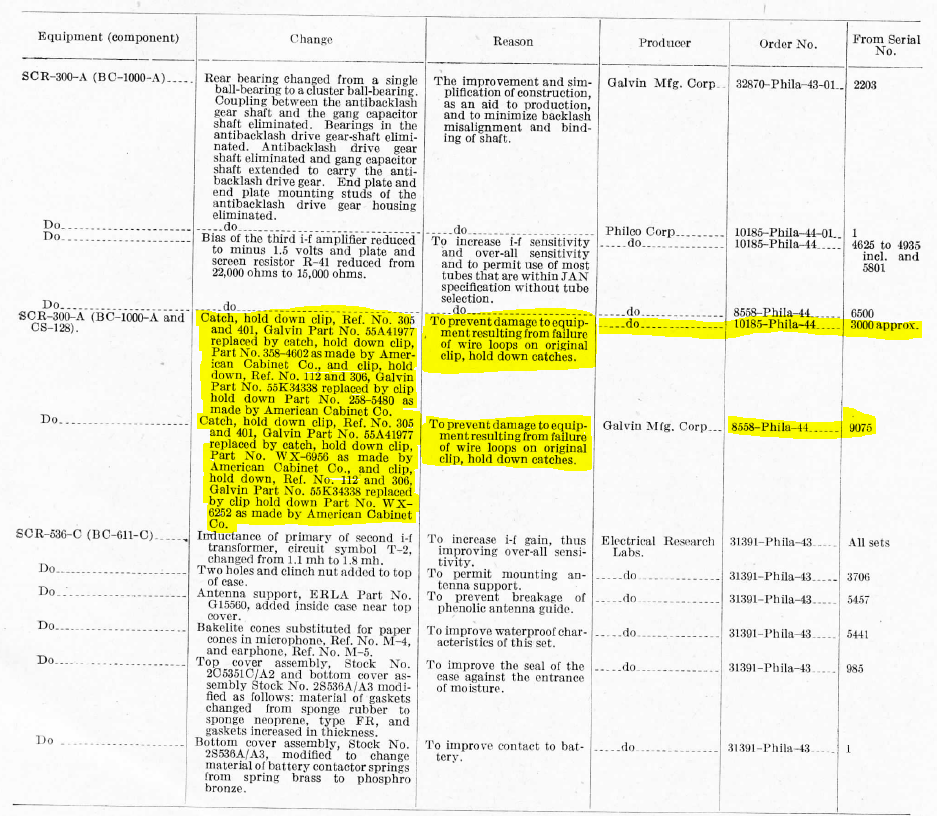
Notes from TM 11-242 on the SCR-300 Wired Loops and Battery Case Catches
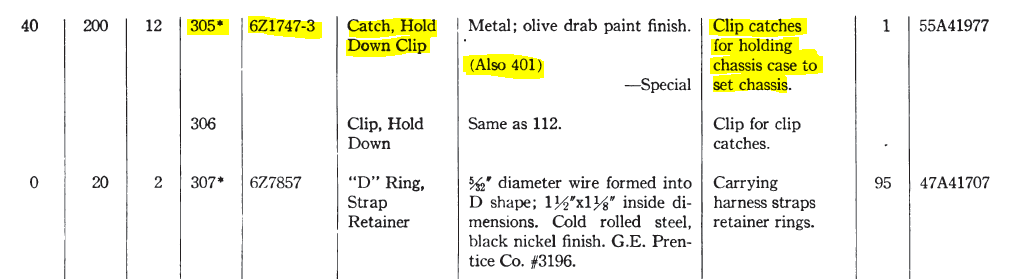
The SCR-300 originally came with wired clips. This is according to TM 11-242, 1943. See below
SCR-300 / BC-1000 Original clips, TM 11-242, 1943.
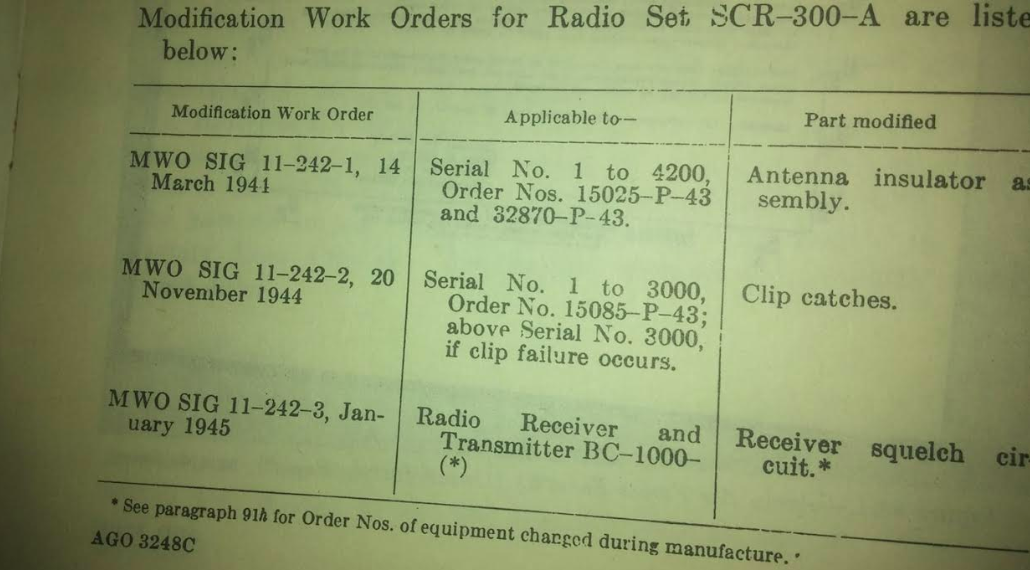
A work order was made in Nov of 1944 for spring catches
Work order for Spring Catches for SCR300/BC1000 World War II Radio
This was then replaced with a New Latch Directive in Jan 1945. The wired loops would fail to hold down the clip so a spring catch was added.
SCR-300 Radio Set: The Development, Operational Employment, and Details of the Famous “Walkie-Talkie”
Mike Roof, SGM, USA (ret.) wrote a 200-page guide on the development of the radio set, which includes great discussions of some of the early war development and post-war variants. As well as new images of the SCR-300 in WW2. Worth checking out to learn a bit more about the unit. He originally posted it in the G503 forum, but it looks like space might be an issue for him, so I re-posted it here.
Below is a listing of some lessons reported in various after-action reports. Some sources are unknown. You can download the image files they were pulled from here. Most of the lessons involve dealing with the antennae, batteries, and resupply.
*The 300 radio has been very useful. It was excellent at Hollandia and did fairly well here. But spare parts are lacking and much care is necessary. A division radio repair unit, not too far behind the regiment would help. The 5lls and 536s were not of much value. As I indicated before, the bazooka ammunition was poor, but the bazookas themselves stood up. Carry plenty of sound power wire, as it is used extensively”
“We make rain covers for the antenna base on our SCR-284 and SCR-300 radios by punching a hole in the bottom of an empty fiber shell case, then shoving the antenna through the hole and sliding the case down to cover the base.” –S-4, 298th Engr Combat
“We found the SCR-300 very satisfactory. The operator should carry the hand set inside his shirt to prevent its freezing.”
“SCR 300 ANTENNAE. 1. Using wire. “We avoid, breaking SOR 300 radio antennae when in heavy brush or woods by substituting a three or four foot piece of German wire from the antenna socket to the strap on the operator’s steel helmet. This gives excellent reception and transmission,”–CO, Co 4, 333đ Inf Regt. – 2. Using lead-in, “When setting up in buildings we get better reception by putting the aerial of the SAR 300 out of a second-story window and running #-130 wire from the base of the aerial to the aerial socket in the radio. The radio can then be placed anywhere in the building.”–Com Sgt, Co D, 3330 Inf Regt. (Notes Other similar reports have been received on improvised antennae for SCR 300 radios, The Signal Section, European Theater of Operations, United States Army, points out that the SCR 300 has a tuned antenna and any variation in length will not affect reception by may reduce the transmission range of the set.)”
“Watch that Antenna Staff Sergeant George J. Bromwell, 29th Infantry Division, FRANCE: “I was carrying our SCR-300 during one attack, and had put it on the ground behind a hedgerow. While waiting for the attack to jump off I had to change from short to long antenna. Inside of 2 minutes Jerry started dropping mortars down my neck. It was called to my attention that the top of the antenna showed above the top of the hedgerow. That’s a point to remember when you’re working close to the enemy.” Communication personnel should always make sure that antennas are concealed or camouflaged. Many radio vehicles, OP’s and CP’s have been spotted by the enemy through carelessness on this point.”
“Improvised Antennae for SCR-300. Replacements being scarce we improvised an aerial for the SCR-300 by soldering to the original base of the AN-130-A a length of French transmission wire, gauge 8 or 10, equal to the original antenna. To support the transmission wire in the base, the seizing wire was wound 2 inches above and below the third solder.” Reports from units of 9th Int Div.
“Antenna repair. Used lengths of open circuit telephone wire have been found valuable for repairing damaged antenna on the SCR 300 and SCR 536 radios.”
“Additional Aerial. Improved range and reception with the SCR 300 resulted whenever we were able to use local material as antenna extension. Broken telephone or electric lines worked well — and we even used water pipes and radiators in houses with good results.”
“Communications; – a. The communications officer stated that infantry communication. units lack parts for SCR-300 radios, thus handicapping this means of tank-infantry communication.” Comments of 70th Tank Battalion Officers.
“…we worked it 12 miles on Saturday just for a little test and the signal was good. It worked until the other set had gotten way down into the valley of the Severn under cover. Also like other high-frequency sets, it is almost line of sight, It weighs 38 pounds. That is quite a load for e men to carry a distance. The set itself is in the top part of this carrier and has 18 tubes. They are varied little tiny tubes as big as the end of your finger. The lad 195 had one tube. The bottom of the carrier contains a battery which lasts from 20 to 25 hours of operation. Well, that’s the 300, Any questions? GENERAL WEAVER: Then it has no key? It is all voice? GENERAL RUMBOUGH: It has no koy. it is voice. I forgot to mention it does have a relay, Any officer Any officer can operate it from a truck or wherever he is at some Jittle distance. from the sot. The set can be placed, for example, up on a little hill while the man operates from cover. COLONEL RAINES: Question. Won’t the battery supply be rather difficult if it is only & 20 hour operation? GENERAL RUMBOUCH: Absolutoly. The battery supply of any radio set is rather difficult. It is expensive and we are wasting lots because we just have to have a supply of reserve batteries in case something should break. You just can’t solve that without having your reserve and wasting your reserve to have this battery. I have forgotten what it weighs, but it weighs more then the rest of the set altogether. You have the great big battery in a tin case. GENERAL WELVER: Thank you.”
“COLONEL NEIL: Chief Signal Officer. GENERAL RUMBOUCH: We have just received the first shipment of a new radio set that I think could be interesting to everyone. This is the SCR 300 that replaces the 194 and 195, It looks very much like them except that they were in a canvas bag. They revolutionized field radio because the 194 and 195 were the first sets that could be carried by a man, walking alone and communicating as he walked. General Danford said of the 194 that it simply revolutionized fire control of artillery. It was as important as the first use of the field telephone for that purpose. Now we are getting these in small lots and we have already supplied one complete division, We are going to supply the others in accordance with the priority set by the Connending General, First Army. This has two antennae. The first one is a small one for communicating short distances, Tho other is for use when you get beyond ranges of about two or three miles. If I were selling this, as an automobile salesmen say, or fishing rod salesmen, there is a little wire cable in there which makes it impossible for a man to lose a section of this rod unless he cuts or breaks the cable. It has a handset which the operator can use as he moves alone. Of course, if he is stationary he put the set upon the ground. There is also a handset which has the new type earphones, instead of having the big cup that used to get in the way. It used to be impossible to get a headset small enough to fit under all types of headgear. This is similar to the thing that goes into the ear of the men who are hard of hearing. It fits in very close with & a little rubber cap which blocks out the outside noises. It makes him quite efficient. The tuning is very simple. It is calibrated and has 40 channels. which means that 40 of these pairs of sets can operate within ranges of each other on 40 to 48 megacycles. This requires a good deal of closer tuning. The books say it has a range of three miles at least.”
“Replacement factors on certain items of Signal equipment had greatly exceeded the percentage planned for by the War Department. The SCR-300 and SCR-536 had an exceptionally high rate of mortality, for example. As it was evident from the number of requests from the…”
“Replacements of AN 130 and AN 131 should be speeded up. These items are to fragile for combat. We now have 64 radio sets tied up because we can’t get antennas.”
“SUBSTITUTE ANTENNA FOR SCR-300 RADIO. The flexible steel antenna from the German pack set mounted on the antenna base for the SCR-300 radio has proved more efficient and durable than the AN-130. It is not affected by the weather” CO, 116th Inf Regt.
“The SCR 300 provides adequate lateral contact if the country is not too wooded, but we like to keep it off the air as much as possible. Cos of adjoining bn or regts maintain lateral contact during an attack by obtaining the frequency of the adjacent bn, and making contact through the bn comdrs, who often have an additional SCR 300 radio for this purpose.” –CO, 313th Inf and Exec 0, 314th Inf
“First Army units have reported unheard of losses of smell radio sets, including the hand carried SCR-536 and the somewhat larger pack set SCR-300. Detailed investigation justified additional demands on the States and to have just had confirmation from New York Port that the required substantial quantities of each set will be available, shipment to be made by air and fast boat.”
“Upon the completion of their task in the Ardennes battle, Signal units had to be refitted for combat. Signal equipment losses were heavy and replacements of these items from the Communications Zone were insufficient to meet demands. By the end of January 1945, the supply of signal equipment, with the exception of field wire, had improved. Wire W-110 and w-130 were rationed to First Army and subordinate units except in cases of operational necessity. Bad weather during this period also caused difficulties in the maintenance and operation of Signal equipment. Due to the absence of standard waterproof bags for radio sets.. bags had to be improvised by “on the spot” means. The supply of pole line equipment was decidedly inadequate to meet the increased requirements for this material. The delivery of radio sets SCR-300 and SCR-536 was very slow, and until the end of February 1945, the flow of Signal equipment left a great deal to be desired.”
“The small front line radio sets (The SCR-536 is used within the Infantry Company and the SCR-300 is used within the Battalion) greatly exceeded the 15% per month. which war Department expenditure factors provide, and even the larger figures that the North African and Sicilian campaigns had found necessary. As the Chief Signal Officer reported at the Commanding General’s conference on 20 July, “Red Ball” requisitions from the First US Army had by ll July exhausted the entire Theater Reserve, and the Signal Corps in the European Theater of Operations was faced with an emergency. Immediate steps were taken to procure additional quantities from the United States. On 13 July a cable was sent to PEMBARK coordinated by General Harrison, Lt Col Wilde, and Col Shearer requesting 1,1ll SCR-300’s and 5,914 SCR-536’s required over and above previous requisitions, based on combat losses. Sixteen days after this cable requisition had been placed on the United States, five tons of these sets were delivered to the Far Shore, and on 31 July a teleprinter message was received from Advance Section on the Continent stating that up to 31, July, 2,198 SCR-536’s and 571 SCR-300’s had been received on the Continent via air shipment from the United States.”
“Air shipment of the following shortages should be made, as signal communications are critical and vital. shortages are real, stocks are not excessive. Honor our figures and adjust later if necessary. Do not delay in furnishing total requirements in common items waiting Air Corps check as these can be adjusted later and utilized to fill authorized reserves if excess in these Items develops but existing data shows they are short. Items tò be airshipped: Headset HS-30, 1228; Radio set SCR-195 or SCR 300, 549; Rodio set SCR-536, 880; Test equipment I-56,89; Telegraph set TC-5. 107; Public address set PA-4 (A), 5; Converter M-209 (A), 214; Test set splicers portable, 20; 21 test set splicers, portable, WE CO 43 A.”
“Functioning in the jungle a. Expect radios to fail to function in the jungle. Reception and transmission is best in North Burma during the middle of the day. b. “Communication for this task force (Merrill’s Marauders) was entirely by radio or liaison-type planes until the airfield at Myitkyina was taken. Radios used were the SCR- 536, 300, 284, and 177. The SCR-536 was not satisfactory due to the type of terrain and the distances between units. The SCR-300 proved very satisfactory but is heavy and uncomfortable to carry for long distances. To lighten the load, the battery sometimes can be carried by another soldier and plugged in when needed. The SCR-284 was found suitable for air-ground work and for working in the regimental net. It also was used between battalions and reconnaissance platoons.” – Col. Charles N Hunter, Burma.
“Subject: SCR-300 for Tank-Infantry Communications Action: In the Daily Journal, 14 June 1944, of the Technical and Liaison Division, the work done by them to fit the SCR-300 into tank M-4 was outlined as follows: “At the initiation of Lt Col Hessel of the London Office, Capt Kusterman of the Cheltenham Technical Liaison Division investigated the possibility of installing the SCR-300 in the turret instead of in the sponson of Tank M-4, and found that it could be done. He is also trying to so arrange it as to permit the retention of the ammunition rack. Sketches of the installation are being prepared.” A cablegram from the WD states that Tank Company T/O and E 17-27 is to be revised to provide seven radio sets AN/SRC-3 at the rate of one per Company Headquarters and two per Tank Platoon, this new set being an adaptation of the SCR-300, The WD message says the new set will be available in about one month. This Office has informed the Armored Force Section, ETO and others concerned, but has reminded them that the one month availability refers to the US” – 16 June 1944, Daily Journal of Chief Signal Officer
“Subject: Air Shipment of SCR-300 and SCR-536 Sets from U.S. to U.K. to Continent. Action : Major Edwards made arrangements with the Allied Expeditionary Air Force to trans ship 10,000 lbs of the above sets daily as they arrive by air from the U.S. and to deliver this equipment by air to the Continent. These sets will be delivered to the Advance Section Communication Zone on the Continent and will, in turn, be delivered to First Army.” – 26 July 1944, Daily Journal of Chief Signal Officer
“Subject: Emergency Supply by Air. Action: Emergency Air Shipment requisition was received from G-4 under requisition number OMAHA SPEEDORD VETG 385 at 1100 hours, calling for 200 each Radio Sets SCR-300, stock number 25300. 192 each SCR-300s and 200 each Batteries BA-80, stock number 3A80, were shipped from C-47 at 1525 hours, 21 June 1944• 8 each SCR=300 and 400 each Batteries BA-70, stock number 3A70 were shipped from G-25″ – 22 June 1944, Daily Journal of Chief Signal Officer
Below are some nuggets of information regarding Radio Security and Lessons Learned while using Radios in World War Two. It was taken from Hardscrabble Farm and reposted here.
Combat Lessons 3
The snippets below come from this guide. You can find the full guide via a PDF which contains a variety of information at my Combat Lessons and Army Talks Post.
Common Violations of Radio Security– Brigadier General Richard B. Moran, Chief Signal Officer, Fifth Army, Italy: “Use of proper names, Christian names, nicknames, etc. to refer to an officer or enlisted man defeats the object of daily changing code signs and helps to identify groups. The authorized code or codex must be used.
“Use of unauthorized code names or codewords may cause confusion. Units may not allot them without permission.
“Long transmissions give the enemy plenty of time to tune in and increases his chances of gleaning information. Keep ‘off the air’ if possible. Keep transmissions short.
“An encoded map reference must not be accompanied by a description of the place referred to.
“Administrative reports must not be sent in the clear. The enemy can often obtain valuable information from them.
“Codex is more secure than the reference-point code and its use should be encouraged.”
Disclosed by Your Code – Official Report, Signal Operations, Sicily: “The continued use by an organization of a code of their own making will easily identify that unit wherever and whenever it moves. Members of a unit captured by the enemy disclose the unit designation. As long as the unit uses its special-type code its identification is certain.”
This looks like regimental-level radio traffic as the operator interacts with different units such as Nudge, Notorious, Red, Blue, Nomad etc. Many have a numbered suffix at the end like “Nutmeg 3” or “Blue 3” suggesting they are part of the same radio traffic net and are either a specific person or unit (like a battalion or company) within the said net.
In looking at it I think when they mention Nutmeg Red or Nutmeg White or Nutmeg Blue (etc) it’s likely the regimental or battalion and Nutmeg Blue 2 (for example) is some additional subdivision like battalion or company?
The 84th Infantry Division Signal Operation Instructions for Radio and Telephone standard operating procedures goes into a bit more detail about how call signs work on both radio and telephone. It approximates the radio log of the 60th. Namely, the Signal Officer assigns the code names, frequencies, and effective dates, and provides for the radio and telephone equipment. If a subdivision is needed they refer to it as a color and if an additional subdivision is needed, they use a letter.
So if I’m using an SCR-536 at the regimental level and I want to contact the D company of the 1st battalion of the 334th Infantry Regiment I could tune to the frequency and say something like ” This is Chow contacting Chisel Blue D”
Note that telephone would be utilized over radio (but uses a similar communication style) unless the officer thinks radio warrants it or they need it for an emergency.
For a listing of Military Code Names in Europe see: Military Code Names for the full listing or this Excel sheet for a breakdown by division. I’m not sure if it’s all of them or if these were dynamic and changed but it’s a piece of paperwork someone would’ve had. These codenames were likely at an Army or Corps level echelon as opposed to a division or regiment or battalion or company.
They also describe the various positions of the units as they move forward clearing out bunkers and pill-boxes. At one point they make mention of losing the slidex which is a handheld encryption device.
For reference the following units are
Nutmeg = 60th Infantry Regiment
Nostrum = 9th Medical Battalion
Notorious = 9th Infantry Division
Noxema = 15th Engineer Battalion
Nudge = 39th Infantry Regiment
Nuptial = 60th Field Artillery Battalion
Nostril = 47th Infanry Regiment
Omaha = 3rd Armored Division
Jacket = 4th Cav Group
Jingle = 438th AAA AW Bn M. Meaning it’s the 438th Anti-Aircraft Artillery, Auto-Weapon Battalion, Mobile. I’m not sure what the “auto-weapon” the unit had is supposed to be.
Jungle = ?
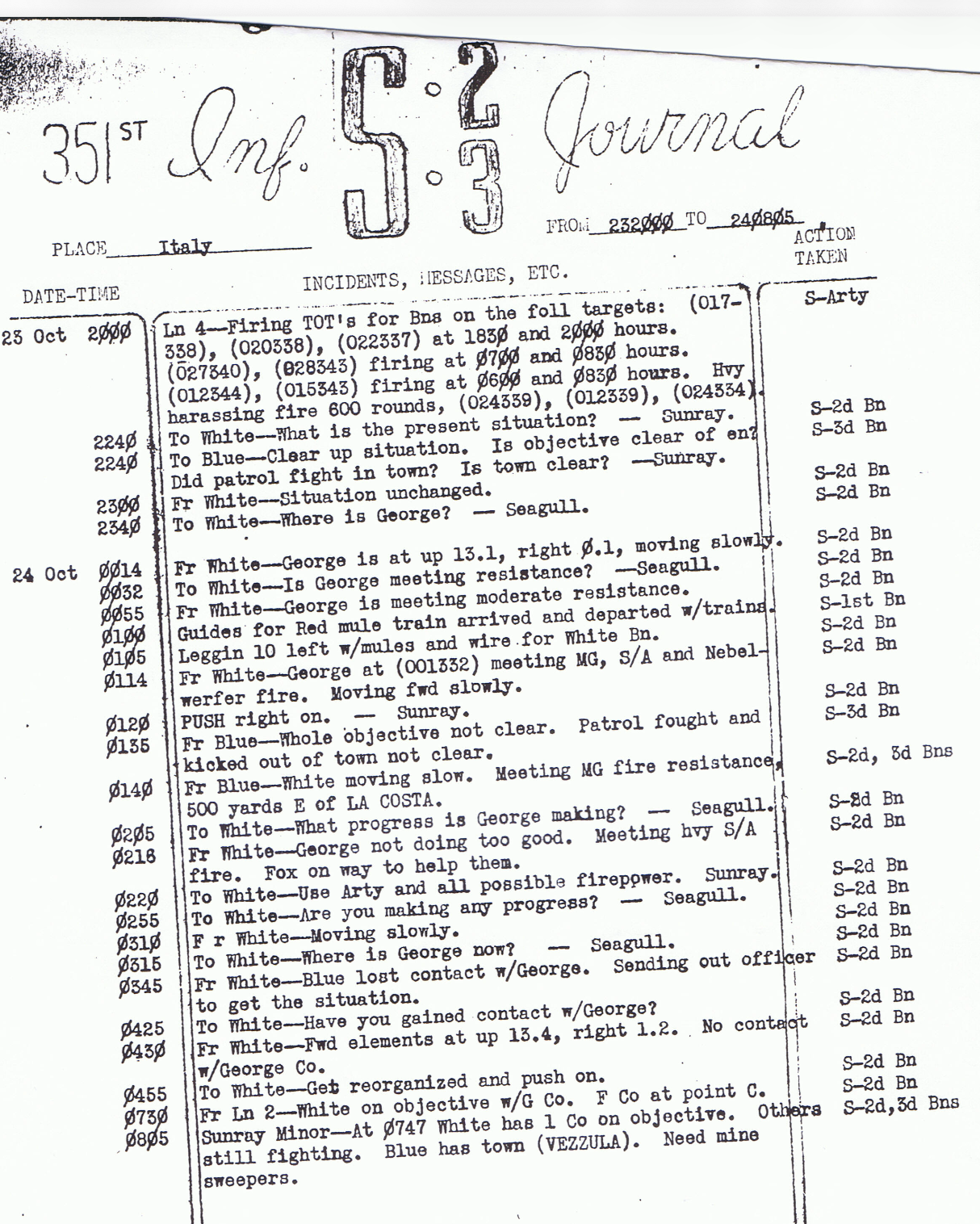
351st S-2 Journal Oct 23rd and 24th 1944 – A neat example of a probable radio operator (though it could be wire!) listening to radio traffic and transcribing it. This is probably at the regimental level as the regiment is communicating with different battalions (white and blue).
Fr means from, and To means to.
I’m unsure who Seagull and Sunray are.
Radio Log Equipment
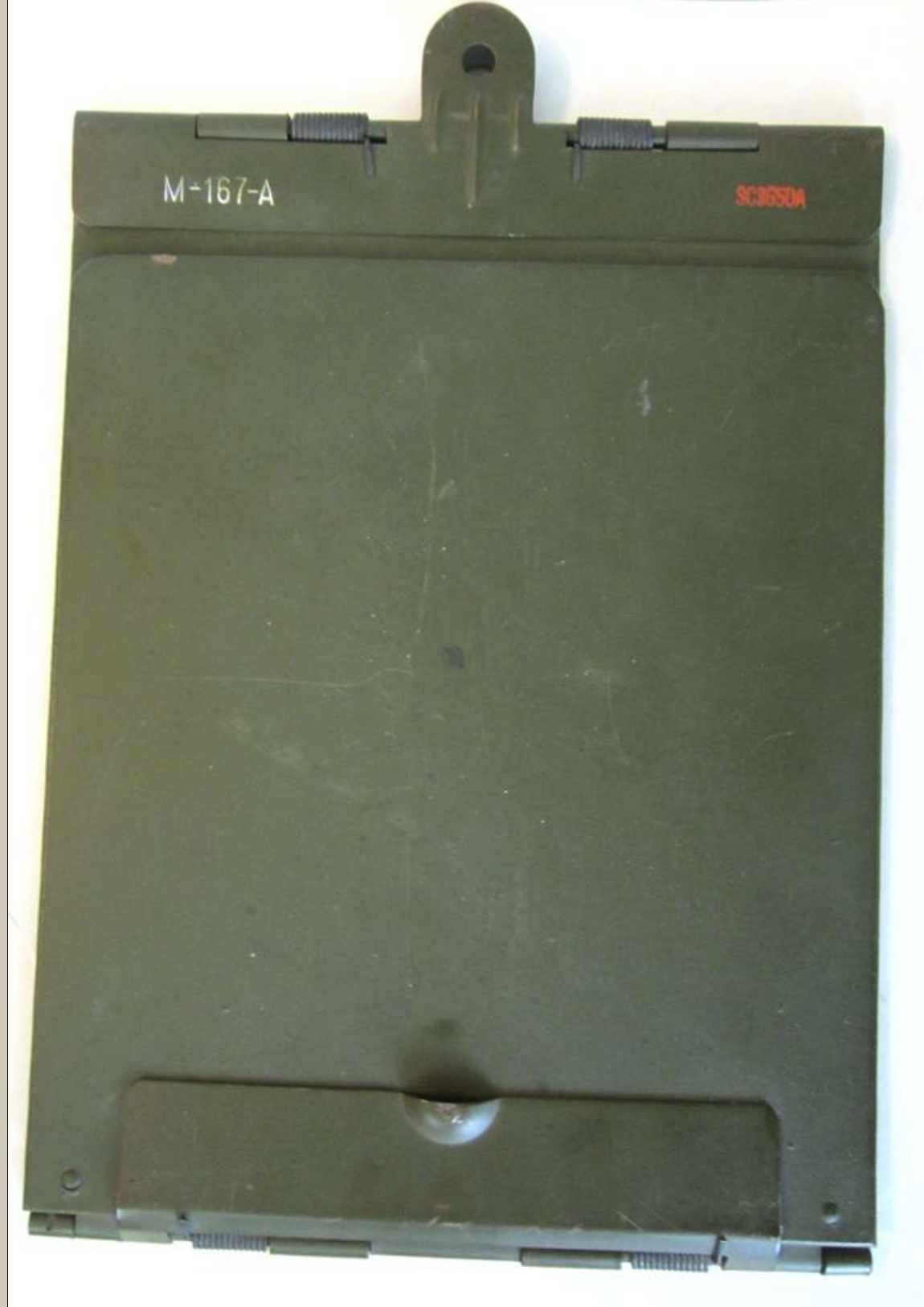
It’s unlikely an SCR-300 would be utilized as some kind of “radio station”, requiring someone to log transmissions, but you may have had ad hoc groupings that acted as such. As such, soldiers may have been given a Holder M-167 or M-167-A clipboard to log radio transmissions. The US Militaria forum discusses this item in more detail.
There were two types. A Holder, M-167, which was aluminum, and an M-167-A, which was steel. These are the two known WW2 variants. It looks like before WW2, SC-D-2998 was used but was phased out with the M-167 models. Other variants of the clipboard include one that seems to be made of fiberboard and/or missing the bottom springs. It’s unknown if they are WW2 era models.
Batteries
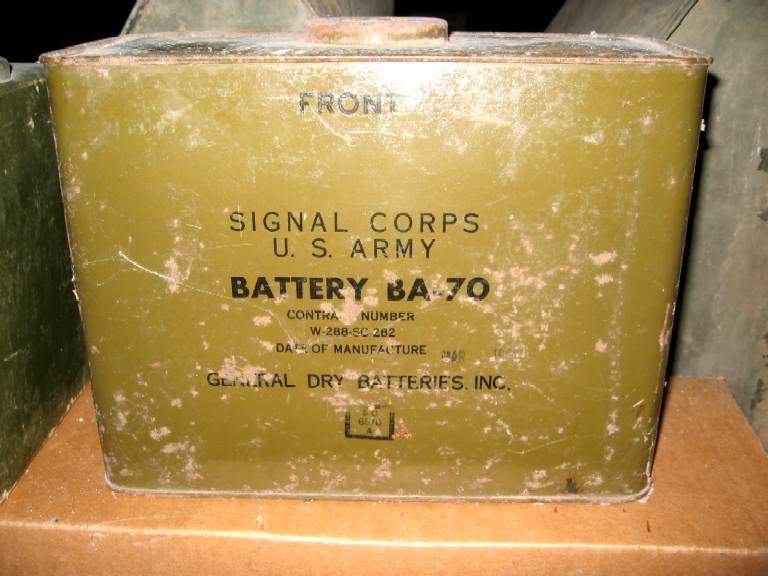
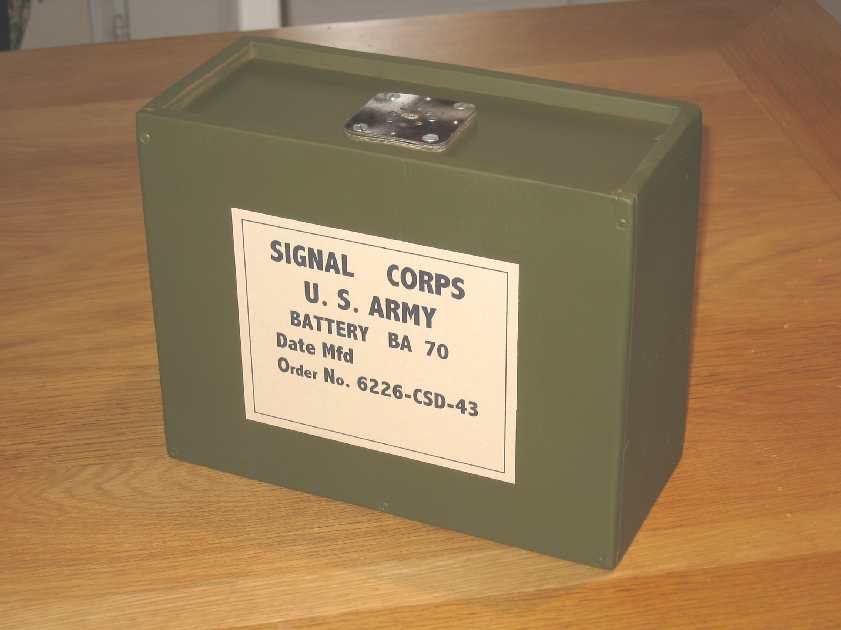
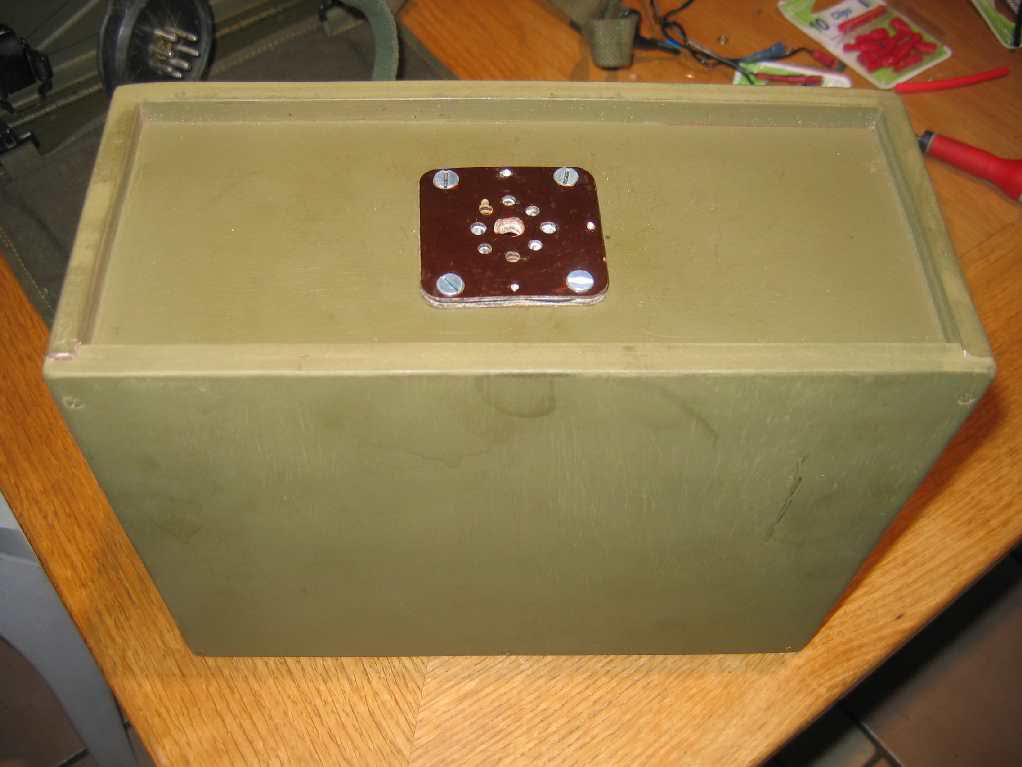
The SCR-300 batteries came as a BA-70, which is the standard model, and a BA-80, which is a lightweight model. There’s no visual difference between them; only the BA-70 has a longer life. The battery would be plugged into the bottom case. BA stands for Battery.
Orignal BA-70 photos
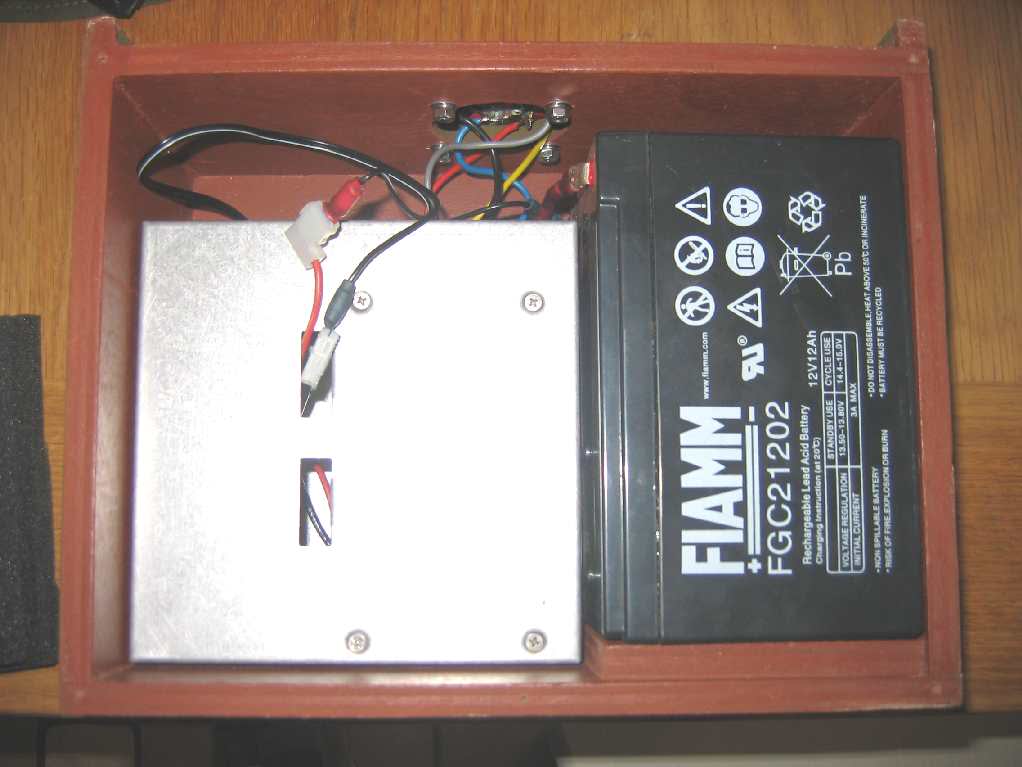
Reproduction BA-70 Photos
There is a guy from Italy who makes them. If I recall who it is, I’ll post the information. The reproduced batteries look like the following –
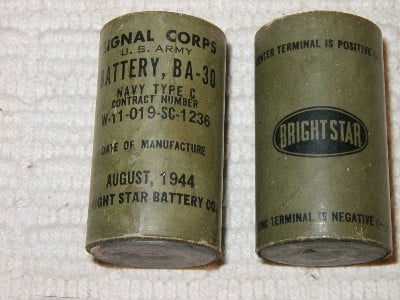
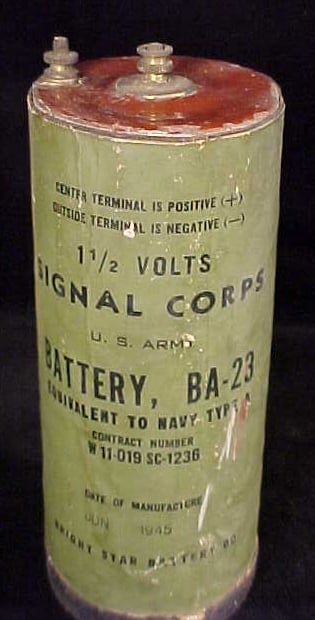
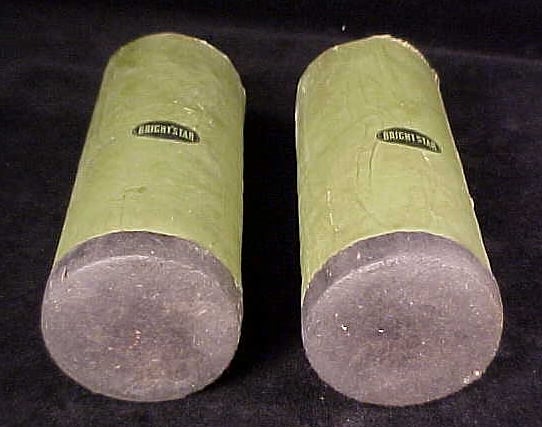
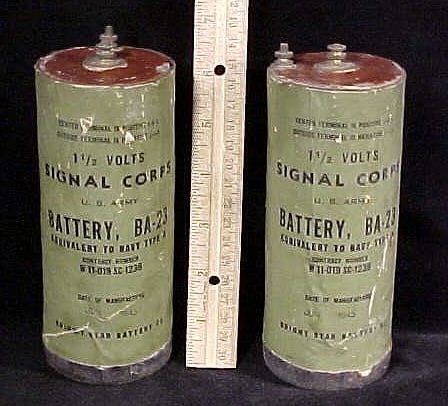
BA-23 and BA-30
Hardscrabble Farm has a write-up on Batteries: BA-23 and BA-30. These aren’t used in the SCR-300, but I posted them here as they are commonly used with various Signal Corps telephone and radio equipment. BA-30 is the equivalent of a D battery. These would’ve seen usage in the EE-8 field phones and switchboards like BD-71 and 72, as well as flashlights.
Radios in WW2 and in some post-war models like the PRC6 used crystals. CR is the Army nomenclature for the crystal. Several different kinds existed, such as CR-18U and CR-23U. The numbers at the end likely refer to the type of crystal structure.
The crystal structure would give an indication of how well the drive, power, ohm level, and oscillation of the crystal would perform. For a complete breakdown of the science behind it, you can refer to: HANDBOOK OF PIEZOELECTRIC CRYSTALS FOR RADIO EQUIPMENT DESIGNERS by John P. Buchanan, Philco Corporation, October 1956. It’s a 700-page tome!
The crystals were then cut to oscillate at certain frequencies. They were then stored in Signal Corps metal cases, typically starting with CS or CY.
For an excellent short history of the crystal industry in the US up to the end of the Korean War, see: A History of the Quartz Crystal Industry in the USA, published by the Ultrasonics, Ferroelectrics, and Frequency Control Society (UFFC), the organizing body to set standards for crystals today.
WW2 SCR-300 Original Photos
The link below takes you to a page that includes a collection of original WW2 photos of the SCR-300 in operation.
I’m occasionally asked where to purchase the radios. Ebay is a good online place to find it. You could also look around on Facebook Marketplace or use an older one like Craigslist.
PRC68 is a website that lists military communication equipment and has loads of links for surplus dealers. A lot go to a 404, but you might get lucky and stumble across a website that has one for sale. International Military Antiques is another place, but you’re likely to pay above market value for it.
Online forums like the G503 are a place to find equipment. You’ll need to make an account.
You can visit surplus dealers either brick and mortar (the US Militaria forum has an active list) or follow a bunch of online-only stores on Facebook and hope one shows up.
Lastly, you can visit shows such as your local militaria show or the larger ones like Show of Shows or The Max.
Purpose: This tutorial demonstrates the process to display the Grid Template in the Edin Theme and troubleshoot some common issues. Audience: Intermediate to Advanced. If you self-identify as a beginning blogger please check out the WordPress Glossary for a better understanding of the key-terms. Version: WordPress 4.0 or above.
Columbia Records in the US had two parts. A manufacturing company called American Graphophone Company (later it became the Columbia Graphophone Manufacturing Company in 1916). A graphophone is a device used to play cylinders.
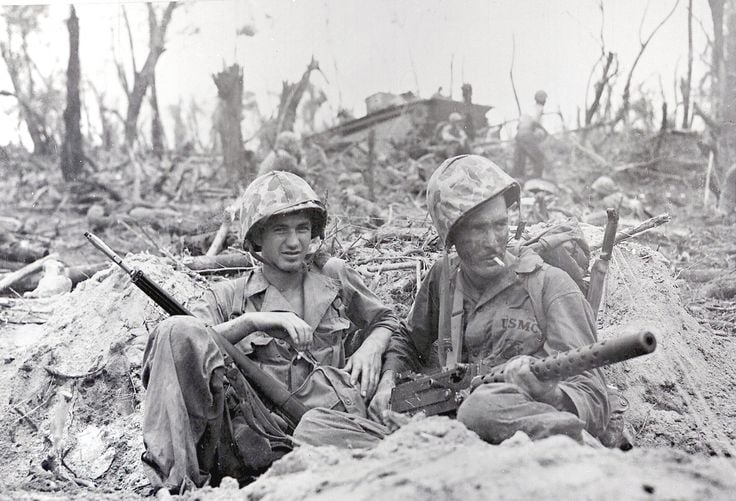
US Marines take a break during the fighting on Peleliu
This article originated after observing a disagreement between two reenactors. One was arguing that the buddy system did in fact exist in World War Two. Another reenactor argued the exact opposite, that such a system was yet another example of a modern military concept grafted onto the World War Two hobby. After all, this individual pointed out, the buddy system is not mentioned in FM 21-100. The truth of the matter is somewhere in the middle.
Troubleshooting WordPress.COM Post Sharing Buttons
Purpose: WordPress allows users to share and publicize their posts. The difference is while sharing buttons passively sit on the site waiting for someone to click, publicizing actively pushes the post to social media networks where the likelihood of a click is much greater. This post will focus on the sharing feature and provide some solutions to common sharing problems.